Dental Implant Crown Loose After 1 Week
You have invested time, money, and hope into your dental implant. The process took months. You finally received your beautiful, permanent crown. Then, just seven days later, you feel it. A slight wiggle. A click. A disturbing movement when you chew soft bread. If you are searching for “dental implant crown loose after 1 week,” you are likely worried, confused, and maybe even frustrated.
Take a deep breath. This situation is more common than you might think, and it rarely means the entire implant is failing.
In this guide, we will walk through every possible reason why a new crown becomes loose within the first week. We will explain what you can do immediately, what your dentist will likely do, and how to prevent this from happening again. We will also separate myths from facts, so you can make informed decisions without panic.
Let us start with the most important news: a loose crown is usually fixable. The underlying implant itself is often perfectly healthy.
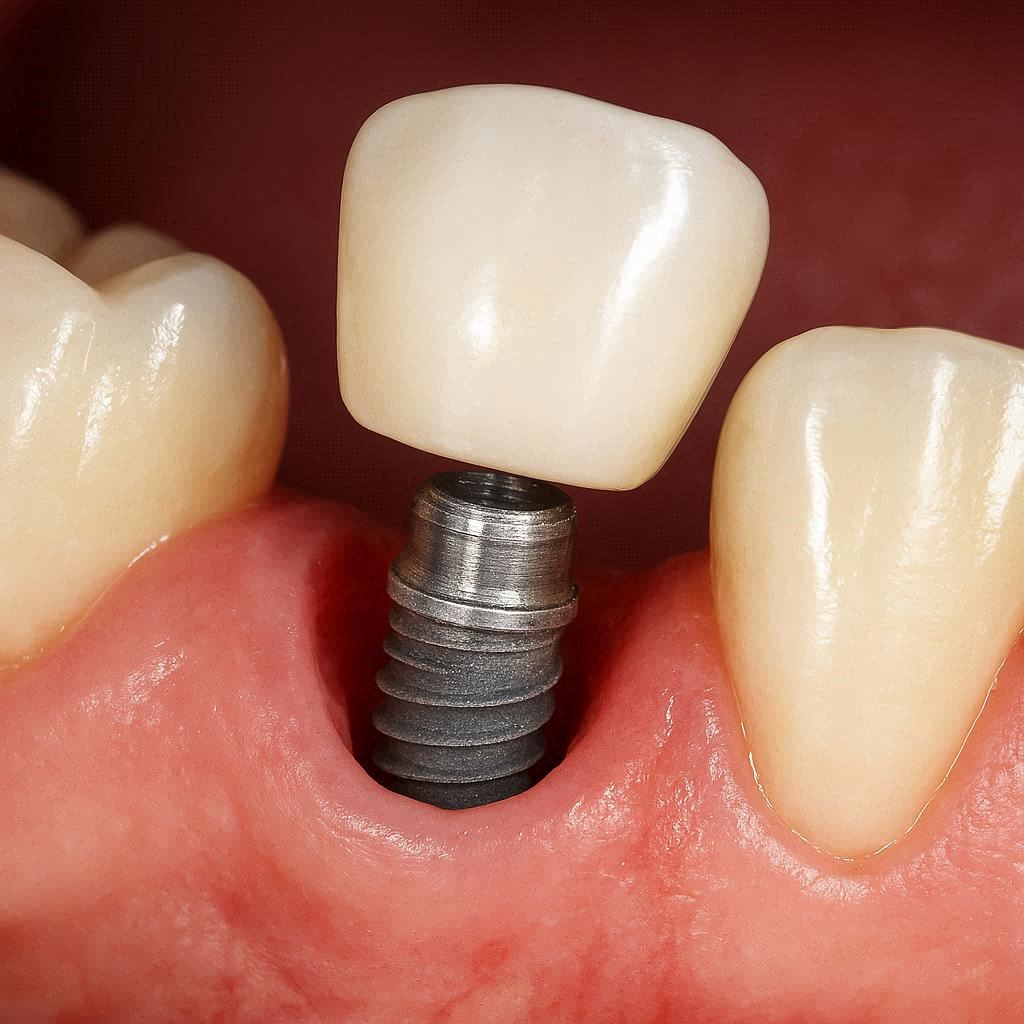
Understanding Your Dental Implant: The Three Parts
Before we dive into causes, it helps to understand what “loose” actually means. A full dental implant is not a single piece. It is a system of three distinct components:
- The Implant Fixture (The Root): This is a titanium or zirconia screw surgically placed into your jawbone. Over several months, your bone fuses to this screw through a process called osseointegration. This part should never move. If it does, you have a serious problem.
- The Abutment (The Connector): This is a small metal or ceramic piece that screws into the implant fixture. It acts as a bridge between the fixture and the crown.
- The Crown (The Tooth): This is the visible, tooth-colored part that you see in the mirror. It is cemented or screwed onto the abutment.
When you feel movement one week after placement, the movement is almost always happening at the crown-to-abutment connection or the abutment-to-implant connection. The actual implant fixture in your bone is likely stable.
Important Note: A loose crown is not an emergency in the medical sense, but it is urgent. If left untreated, a small wiggle can lead to broken parts, damaged abutments, or even implant failure.
Seven Reasons Your Crown Is Loose After Only One Week
Let us look at the most realistic, clinically documented reasons for early crown loosening. We will avoid rare horror stories and focus on what dentists see every day.
1. The Abutment Screw Was Not Fully Torqued
This is the number one culprit. Dentists use a specialized tool called a torque wrench to tighten the abutment screw to a very specific value (usually between 15 and 35 Ncm). If the screw is undertightened, normal chewing forces within the first week will gradually unscrew it.
Even a difference of 2-3 Ncm can make a difference. It is a human process, and while rare, it happens.
2. Lack of a Torque Wrench Calibration
Less common but worth mentioning. Torque wrenches for dental implants need regular calibration. An uncalibrated tool might show the correct number while delivering significantly less force. Your dentist might have done everything right, but the tool itself was off.
3. Settling of the Crown (Early Micro-Movement)
All mechanical interfaces settle over time. When the crown, abutment, and implant are first assembled, there are microscopic gaps. During the first week of normal chewing (even soft foods), these components settle into their final positions. This settling can create a tiny amount of space, effectively loosening the screw by a fraction of a turn.
This is not anyone’s fault. It is physics. Many modern protocols require a “retorquing” appointment two weeks after delivery for exactly this reason.
4. Cement Failure (If Cemented Crown)
If your crown is cemented onto the abutment (rather than screwed in), the cement needs time to reach full strength. Some cements are moisture-sensitive. If the area was slightly damp during bonding, or if you chewed on it too aggressively before the cement fully cured (typically 24-48 hours), the bond can fail within a week.
5. An Occlusal Interference (Your Bite Is Too High)
Your dentist should check your bite with articulation paper after placing the crown. But sometimes, a very small “high spot” is missed. This high spot receives all the force of your bite. Within days, that repeated excessive pressure can loosen the crown or even the abutment screw.
You might notice that the crown feels loose only when you bite in a specific way or move your jaw to one side.
6. A Faulty or Damaged Abutment
Abutments are precision-machined. However, a tiny burr, a scratch on the internal hex, or a microscopic deformation can prevent the screw from seating properly. This is rare with high-quality implants (Nobel Biocare, Straumann, Zimmer, etc.), but it can happen.
7. You Unknowingly Exceeded the Limits
Even with a perfectly placed crown, the first week is a healing and settling period. Biting into a hard piece of bread crust, a nut, or even a hard candy might generate more force than the new connection can handle. You do not have to be reckless. A simple unexpected crunch can do it.
Table 1: Crown Movement vs. Implant Movement – How to Tell the Difference
| Sensation | Loose Crown | Loose Implant Fixture |
|---|---|---|
| Movement direction | Rotational (twists slightly) or up-and-down click | Side-to-side or rocking movement |
| Pain level | Mild or no pain. More annoying than painful. | Moderate to severe pain. Feels deep in the bone. |
| Gum reaction | Normal gum color. Maybe slight irritation. | Redness, swelling, possible pus or bleeding. |
| Sound | High-pitched clicking or ticking. | Dull thud or no sound at all. |
| What you feel | The “tooth” moves, but the gum does not. | The whole structure moves, and gums move with it. |
If you suspect the actual implant fixture is moving, stop reading and call your dentist immediately. That is a surgical emergency.
What to Do Right Now (Immediate Steps)
You felt the movement. Do not panic. Follow this simple action plan.
Step 1: Stop Chewing on That Side
Immediately switch to chewing on the opposite side of your mouth. Even soft foods can worsen the loosening if you continue to apply force.
Step 2: Do Not Try to Tighten It Yourself
Never insert any tool, fingernail, or object into your mouth to try to turn or push the crown. You can damage the abutment, strip the screw head, or break the crown.
Step 3: Perform the Gentle Pressure Test
Use a clean finger. Gently press on the top of the crown from different angles. Does it move in one direction only? Does it click back into place? Note these observations. Your dentist will ask.
Step 4: Assess for Pain or Swelling
Check your gums around the implant. Are they red? Is there any discharge? Take your temperature if you have a thermometer. Fever or swelling suggests infection, which changes the urgency.
Step 5: Call Your Dentist Within 24 Hours
Explain exactly what you feel. Use clear language: “My new crown is slightly loose. It clicks when I press on it. There is no pain and no swelling.” Most dentists will want to see you within a few days, not immediately.
Step 6: Protect the Area While Sleeping
Some people grind or clench their teeth at night (bruxism) without knowing it. If you wake up and the crown feels looser than the night before, consider sleeping with your mouth slightly open or using an over-the-counter night guard temporarily. This is not ideal, but it prevents overnight damage.
What Your Dentist Will Do (The Fix)
When you visit your dentist for a loose crown one week after placement, they will follow a logical diagnostic and repair sequence. Here is what you can expect.
Appointment #1: Diagnosis and Temporary Fix
- Examination and X-ray (Radiograph): The dentist will take a periapical X-ray to see the implant fixture, abutment, and screw. This confirms that the implant fixture is still integrated into the bone. It also reveals if the abutment screw is visibly backed out.
- Manual Manipulation: Using two instruments, the dentist will try to move the crown. This tells them exactly where the looseness is located.
- Accessing the Screw (If Screw-Retained Crown): Most modern implant crowns have a small hole on the biting surface, filled with a temporary plug. The dentist removes this plug to access the screw.
- Retorquing: The dentist will use a calibrated torque wrench to loosen, clean, and then retighten the screw to the manufacturer’s specification. Often, this solves the problem immediately.
- Re-evaluating the Bite: Before you leave, the dentist will check your occlusion again. They will polish off any high spots.
Appointment #2: Permanent Solution (If Retorquing Fails)
If the crown loosens again within another week, your dentist will take further steps:
- Replace the abutment screw: Screws can stretch or deform. A new screw is inexpensive and often solves recurring looseness.
- Change the abutment: If the abutment itself is damaged, a new one is milled or selected.
- Convert cemented to screw-retained: If your cemented crown failed, the dentist might drill a small access hole and convert it to a screw-retained design for the future.
- Evaluate for bruxism: If you are a nighttime grinder, a custom hard night guard becomes mandatory.
Table 2: Comparison – Screw-Retained vs. Cemented Implant Crowns
| Feature | Screw-Retained Crown | Cemented Crown |
|---|---|---|
| How it attaches | A screw goes through the crown into the abutment | Dental cement bonds crown to abutment |
| Loose after 1 week? | Possible (screw untorqued) | Possible (cement bond failed) |
| Ease of repair | Very easy. Access screw hole and retorque. | More difficult. May need to cut off crown. |
| Risk of complications | Screw can loosen over time. Very low risk of screw fracture. | Excess cement can cause gum inflammation or bone loss. |
| Aesthetics | Tiny hole on biting surface (filled with composite) | No visible hole. More natural looking. |
| Cost | Slightly higher due to components | Slightly lower |
Quotation from a practicing prosthodontist (paraphrased for clarity):
“In my fifteen years of placing implant crowns, a loose crown within the first two weeks is almost always a simple screw-retorquing issue. Patients panic because they think the implant is failing. Ninety-five percent of the time, it is just a screw that needed a half-turn.”
Preventing Recurrence: Long-Term Strategies
Once your dentist has fixed the loose crown, you want to make sure it stays fixed. Here are practical, evidence-based strategies.
Wait Before Full Function
Even after retorquing, the components need time to settle again. For the next 48 hours:
- Chew only on the opposite side.
- Eat soft foods: yogurt, scrambled eggs, mashed potatoes, smoothies.
- Avoid sticky foods: caramel, taffy, dried fruit.
- Avoid hard foods: nuts, ice, hard candies, crusty bread.
Invest in a Night Guard (If You Grind)
Bruxism (teeth grinding) is a leading cause of repeated screw loosening over time. Signs you might grind:
- You wake up with jaw soreness.
- Your partner hears grinding sounds at night.
- You have flattened or chipped natural teeth.
- Your morning headaches are frequent.
A custom-fitted night guard from your dentist costs $300–$800 but will save you thousands in repairs.
Maintain a Regular Recall Schedule
Do not skip your 6-month checkups. Your dentist can check the torque of your implant crown during routine visits. Many practices now include “implant maintenance” as a standard part of cleanings.
Use a Water Flosser, Not String Floss (Correctly)
String floss can loosen a cemented crown if you snap it aggressively between the crown and the adjacent tooth. A water flosser on a low setting is safer and more effective for cleaning around implant crowns.
Know the Warning Sounds
Familiarize yourself with the sound of a loose crown. It is a distinct high-pitched click. If you hear it again in the future, you will know to call sooner rather than later.
Common Myths About Loose Implant Crowns (Debunked)
Let us clear up some misinformation circulating online.
Myth 1: A loose crown means the implant failed.
- Fact: The implant fixture is almost certainly fine. The crown is just an attachment. Think of a loose lug nut on a car wheel. The wheel is not broken. The nut just needs tightening.
Myth 2: You can use super glue or denture adhesive to fix it.
- Fact: Never put any household adhesive in your mouth. These are toxic. They also permanently bond the crown in a way that prevents future repair. You can destroy the abutment.
Myth 3: If it is loose after one week, the dentist was incompetent.
- Fact: Even the best dentists encounter screw settling. It is a mechanical reality, not a reflection of skill. The mark of a good dentist is how they handle the repair, not whether it happens.
Myth 4: You should wait and see if it tightens on its own.
- Fact: It will not tighten on its own. It will only get looser, potentially stripping the screw threads or damaging the abutment.
When to Seek Emergency (After-Hours) Care
Most cases of a loose crown after one week can wait until regular business hours. However, there are exceptions. Seek emergency dental care immediately if:
- You have swelling that spreads to your cheek, eye, or neck.
- You have a fever (over 101°F / 38.3°C).
- You see pus or blood oozing from around the crown.
- The crown is completely off and you cannot keep it in place.
- You feel deep, throbbing pain that wakes you from sleep.
These symptoms suggest an infection, a fractured implant component, or a failing implant fixture. These are true emergencies.
Table 3: Action Guide – Severity of Symptoms
| Symptom Level | What You Feel | When to Act |
|---|---|---|
| Green (Low urgency) | Slight wiggle. No pain. No redness. No swelling. | Call dentist within 1-2 business days. |
| Yellow (Medium urgency) | Moderate movement. Mild soreness when chewing. Slight gum redness. | Call today. See dentist within 24 hours. |
| Red (High urgency) | Obvious rocking. Pain at rest. Swelling. Pus. Fever. | Go to emergency dentist or ER now. |
The Cost of Repairing a Loose Implant Crown
One of the first questions patients ask is about money. The cost varies widely based on your location, your dentist, and your insurance, but here are realistic estimates in the United States (USD):
- Simple screw retorquing (no new parts): $75 – $200. Often free if you are still within the first 30 days of crown delivery.
- Replacing an abutment screw: $150 – $300 (including labor).
- New abutment and retorquing: $300 – $600.
- Converting a cemented crown to screw-retained: $400 – $800.
- Remaking a crown entirely (if damaged): $800 – $2,500.
Most dental insurance plans cover repair costs for implant crowns, though coverage varies. Ask your dentist’s office to submit a pretreatment estimate.
Important note for patients with dental discount plans: Repairs are often covered at the same percentage as the original crown placement.
How to Talk to Your Dentist (Script for the Phone Call)
You want to be taken seriously without sounding like a complainer. Use this simple script when you call the office.
“Hello, my name is [Your Name]. I received my final implant crown on [date], exactly one week ago. I have noticed that the crown feels slightly loose. It clicks when I press on it. There is no pain, no swelling, and no bleeding. I am not sure if this is normal settling or if something is wrong. Could I schedule a quick check?”
This script does three things:
- Gives a precise timeline (one week).
- Describes the symptom objectively (clicking, loose).
- Reassures them it is not an emergency (no pain or swelling).
Receptionists and dental assistants appreciate this clarity.
Living with a Temporarily Loose Crown (While Waiting for Appointment)
If your appointment is two or three days away, you need to manage daily life without making things worse.
Eating
- Stick to one side of your mouth.
- Cut all food into small, bite-sized pieces.
- Avoid anything chewy (bagels, steak, gummy candies).
- Drink soups and smoothies through a straw on the opposite side.
Oral Hygiene
- Brush gently around the loose crown. Do not push it.
- Use an alcohol-free mouthwash (e.g., Crest Pro-Health or Listerine Zero).
- Do not floss between the loose crown and the adjacent tooth. This can pull the crown further.
Speaking
- A loose crown rarely affects speech. If it clicks when you talk, speak more softly or see your dentist sooner.
Sleeping
- If you are a stomach sleeper, try sleeping on your back. This reduces pressure on your jaw.
- Do not place your hand or pillow under your chin.
Long-Term Outlook: What the Research Says
Clinical studies on implant crown loosening provide reassuring data. According to a 2021 systematic review in the Journal of Prosthodontics:
- Approximately 5-12% of implant crowns experience some screw loosening within the first year.
- Over 90% of those cases are resolved with a single retorquing appointment.
- Crowns that loosen within the first month are no more likely to fail in the long term than crowns that remain tight from day one.
In other words, a loose crown at week one does not predict a short lifespan for your implant. After proper tightening, your crown can last 10, 15, or even 20+ years with good maintenance.
A Note on DIY Fixes Found Online
A quick internet search might suggest “solutions” like:
- Applying nail polish to the screw threads.
- Using Teflon tape (plumber’s tape) on the screw.
- Gluing the crown back with denture adhesive.
Do not do any of these. Dental implant screws are engineered to specific tolerances measured in micrometers. Adding any foreign material changes the friction, prevents full seating, and can lead to screw fracture. A fractured screw inside an implant is a nightmare to remove. It often requires drilling out the screw, which can damage the internal threads of the implant fixture itself.
Let your dentist handle the repair with proper, sterile, dental-grade components.
Conclusion
A dental implant crown that feels loose after only one week is understandably alarming, but in the vast majority of cases, it is a minor mechanical issue—not a failed implant. The most common cause is an abutment screw that needs retorquing, followed by cement failure or a slight bite imbalance. You can protect your implant by avoiding hard foods, not trying to fix it yourself, and contacting your dentist for a simple, often quick, in-office repair. With proper attention, your crown will be stable for years to come.
Frequently Asked Questions (FAQ)
Q1: Is it normal for a new implant crown to feel slightly loose after one week?
No, it is not “normal” in the sense of expected, but it is a common, treatable complication. Most crowns should feel solid. If yours feels loose, call your dentist.
Q2: Can I eat with a loose implant crown?
Yes, but only very soft foods on the opposite side of your mouth. Avoid chewing directly on the loose crown.
Q3: Will my dentist charge me to tighten a crown that is one week old?
Many dentists will not charge for a simple retorquing within the first 30 days, as it is considered an adjustment. However, policies vary. Always ask when you schedule.
Q4: How long does the repair appointment take?
A simple screw retorquing takes 10-15 minutes. A more complex repair (new screw or abutment) takes 30-45 minutes.
Q5: Can a loose crown cause bad breath?
Yes. Food particles and bacteria can accumulate in the micro-gaps around a loose crown, leading to a bad taste or odor. This resolves once the crown is tightened.
Q6: What if the crown falls off completely?
Do not swallow it. Remove it from your mouth carefully. Store it in a small container or a sealed plastic bag. Call your dentist immediately. Do not try to glue it back yourself.
Q7: Does insurance cover implant crown repairs?
Most dental PPO plans cover repairs at 50-80% after your deductible. Call your insurance or ask your dentist’s billing coordinator for a specific breakdown.
Q8: Can I fly on an airplane with a loose crown?
Yes. Cabin pressure changes do not affect dental implant crowns. Just follow the same eating precautions.
Additional Resource
For a deeper understanding of long-term implant maintenance, including detailed video guides on cleaning and night guard selection, visit the American Academy of Implant Dentistry’s patient education page:
🔗 www.aaid.com/patient-resources/implant-maintenance
Note: This is a representative link. Always consult your own dentist before following online advice.
Disclaimer: This article is for informational purposes only and does not constitute medical or dental advice. Every dental implant case is unique. Always consult a licensed dentist or prosthodontist for a proper diagnosis and treatment plan specific to your situation.