Loose Dental Implant Crown: Causes, Solutions, and Prevention
You’re eating lunch, and suddenly you feel it. A tiny shift. A slight wiggle. Your dental implant crown feels loose.
It can be unsettling. You might worry something is broken or that you’ve lost a lot of money. But here’s the good news: a loose dental implant crown is usually fixable. In many cases, it’s a minor issue.
This guide walks you through everything you need to know. You will learn why it happens, what you can do right now, and how to keep your implant stable for years.
Why Is My Dental Implant Crown Loose? Common Causes
An implant crown can become loose for several reasons. Some are simple. Others need professional care. Understanding the cause helps you take the right step.
The Abutment Screw Loosened Over Time
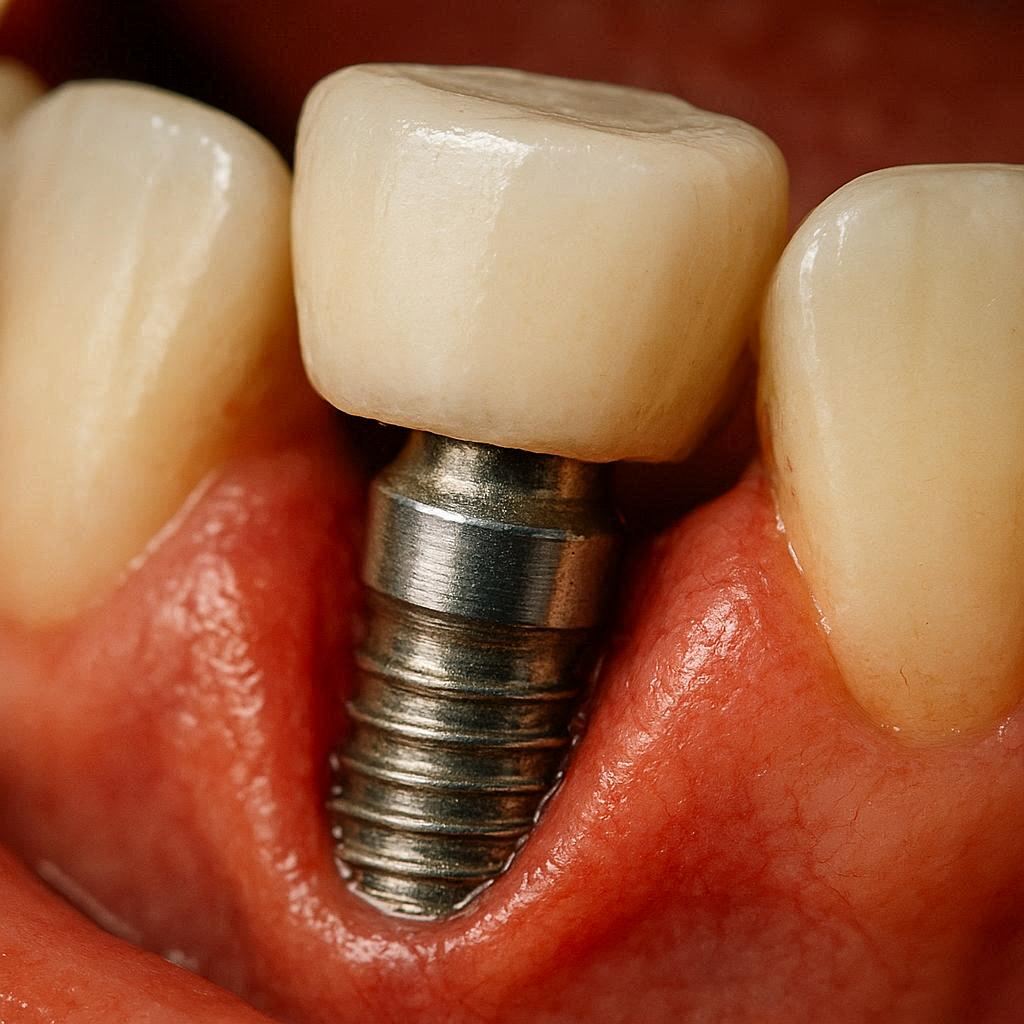
The most frequent cause is a loosened abutment screw. Inside your implant, a small screw connects the crown (the visible part) to the implant post (the part in your jawbone). Chewing creates micro-movements. Over months or years, that screw can gradually unscrew.
This is not a failure. It is normal wear for many implants. Think of it like a screw on a pair of glasses. It just needs tightening.
Cement Failure for Cemented Crowns
Some implant crowns are cemented, not screwed. The dental cement can break down, dissolve, or simply lose its bond. This happens more often with older cement or if moisture contaminated the bond during placement.
When cement fails, the crown feels loose but the implant itself remains solid.
Broken or Worn Abutment
The abutment is the metal piece between the implant and the crown. It can crack, wear down, or deform. This is less common, but it happens with heavy grinding (bruxism) or if you bit into something extremely hard.
Damaged Crown Material
Porcelain or zirconia crowns can chip or fracture internally. The crack might not be visible to your eye, but the crown no longer fits snugly. It rocks back and forth.
Implant Failure (Rare)
In very rare cases, the implant post itself becomes loose inside the bone. This is serious. You would likely feel pain, swelling, or see gum recession around the implant. If this happens, the bone did not integrate properly with the implant. Do not ignore it.
Important note: A loose crown does NOT automatically mean a failed implant. Over 90% of loose crowns are screw or cement issues, not implant failures.
Immediate Steps: What to Do When You Notice a Loose Crown
Stay calm. You have options. Follow these steps in order.
Step 1 – Stop Chewing on That Side
Avoid using the loose crown for eating. Pressure can break the crown or damage the abutment. Stick to soft foods on the opposite side.
Step 2 – Try to Remove the Crown Gently
If the crown feels very loose (it spins or lifts easily), you can try to remove it with clean fingers. Do not use tools. Do not force it.
- Wash your hands thoroughly.
- Gently wiggle the crown upward.
- If it resists, leave it in place.
Step 3 – Inspect the Crown and Implant
Look at the inside of the crown if it came off. Do you see a screw hole? That means it is screw-retained. Do you see smooth cement residue? That means it was cemented.
Look at the implant site in your mouth. Is the metal abutment still there? Is it damaged? Are your gums red or bleeding?
Step 4 – Temporary Fix (Only If You Must Wait)
If you cannot see a dentist for 24–48 hours and the crown is completely off, you can use a tiny amount of denture adhesive or temporary dental cement from a pharmacy. This is a short-term emergency measure only.
Do not use:
- Super glue
- Household adhesives
- Regular toothpaste as cement
These can ruin the crown or damage your gums.
Step 5 – Call Your Dentist
Schedule an appointment. Tell them your implant crown is loose. Most dentists reserve same-day slots for loose crowns because the fix is often fast.
How a Dentist Fixes a Loose Implant Crown
The repair is usually quick and painless. Here is what happens in the dental chair.
For Screw-Retained Crowns
- The dentist makes a small hole in the crown (if not already visible) or removes the crown.
- They access the abutment screw.
- They tighten the screw with a torque wrench to a specific tightness.
- They fill the screw access hole with cotton and composite filling.
Time: 15–20 minutes. No anesthesia needed in most cases.
For Cemented Crowns
- The dentist removes the loose crown.
- They clean old cement from the crown and abutment.
- They dry the area and apply fresh dental cement.
- They seat the crown firmly.
Time: 20–30 minutes.
If the Abutment or Screw Is Broken
- The dentist removes the broken part with special tools.
- They replace the abutment or screw with a new one.
- They reattach the original crown if undamaged.
Time: 30–45 minutes. May need a second visit if parts must be ordered.
Comparison Table: Screw vs. Cement Crowns
| Feature | Screw-Retained Crown | Cemented Crown |
|---|---|---|
| How it attaches | Small screw through crown | Dental cement |
| Ease of repair | Very easy – just tighten | Easy – recement |
| Risk of loosening | Moderate over time | Low but possible |
| Hole visible? | Yes (filled with tooth-colored material) | No |
| Common fix time | 15 min | 20 min |
Can You Fix a Loose Implant Crown at Home?
This is a fair question. You want to save time and money.
The honest answer: No. You should not attempt a permanent fix at home.
Here is why.
You do not have a torque wrench. Implant screws must be tightened to a specific force. Too loose, and they unscrew again. Too tight, and you can strip the threads or crack the implant.
You also risk swallowing or inhaling small parts. Dentists use cotton rolls and suction to prevent accidents.
What you can do at home is:
- Remove the crown if it is already falling off.
- Keep it clean in a small container.
- Avoid chewing on that side.
- Use temporary denture adhesive for one day maximum.
Reader note: Do not sleep with a very loose crown in place. You could swallow it. Remove it before bed and store it safely.
How to Prevent a Loose Crown in the Future
Prevention is easier than repair. These habits keep your implant crown stable.
Regular Torque Checks
Ask your dentist to check the screw tightness during your annual checkups. Many dentists do this automatically for implant patients.
Avoid Extreme Foods
Hard candy, ice, bones, and unpopped popcorn kernels transmit force directly to the screw. Over time, that vibration loosens it.
Wear a Night Guard if You Grind
Bruxism (teeth grinding) is a top cause of loose screws. A custom night guard absorbs the force and protects your implant.
Clean Around the Crown Properly
Use a water flosser or interdental brush around the crown margin. Plaque buildup can lead to gum inflammation. Inflamed gums shift and put uneven pressure on the crown.
Do Not Use Your Implant as a Tool
Never open bottles, tear packages, or hold objects with your implant crown. It is a tooth replacement, not a multi-tool.
Signs You Should See a Dentist Immediately
Most loose crowns are not emergencies. But some situations require urgent care.
Call your dentist today if you have:
- Pain when pressing on the crown
- Swollen or bleeding gums around the implant
- A bad taste or odor (possible infection)
- The crown moves more than 2 mm
- You cannot remove the crown and it is clicking
Go to an emergency dentist if you have:
- Severe pain with swelling spreading to your face or neck
- Fever
- Difficulty swallowing or breathing (very rare with implants)
Frequently Asked Questions (FAQ)
Can a loose dental implant crown damage the implant itself?
Usually no. A loose crown puts minimal stress on the implant post. The danger is if you ignore it for months. Constant rocking can wear the abutment or, in extreme cases, stress the bone.
How much does it cost to tighten a loose implant crown?
If you are the original patient, many dentists do this for a small fee ($50–$150) or even free during a checkup. If you need a new screw or abutment, costs range from $200–$600.
How long does a tightened crown last before loosening again?
Properly tightened crowns often stay firm for 1–5 years. Some patients never have a repeat loosening. Grinders or heavy chewers may need retightening every 12–18 months.
Can I eat with a temporarily loose crown?
Only soft foods on the opposite side. Avoid sticky foods like caramel or taffy—they can pull the crown off completely.
Will my implant crown fall out while I sleep?
It can if it is very loose. Remove it before bed and store it in a glass of water or saline. Do not swallow it.
Is a loose implant crown a sign of poor dental work?
Not necessarily. Screws naturally loosen over time due to chewing forces. It is like a lug nut on a car wheel. Good dental work reduces the risk but does not eliminate it entirely.
Additional Resource
For a deeper understanding of how dental implants work, the different types of abutments, and long-term maintenance schedules, visit the American Academy of Implant Dentistry’s patient education library:
👉 American Academy of Implant Dentistry – Patient Resources
This is a trusted, non-commercial source written by implant specialists.
Conclusion
A loose dental implant crown is common, rarely serious, and almost always fixable in one short dental visit. Most cases are simply a screw that needs tightening or old cement that needs replacement. Do not panic, do not use super glue, and do not ignore it for months. Call your dentist, schedule a quick appointment, and you will likely be chewing normally again the same day.