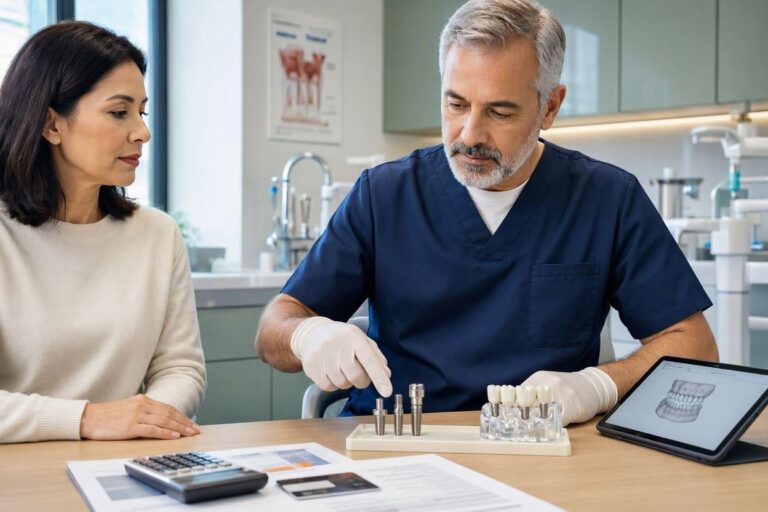
Dental Implants Entire Mouth Cost: Honest Guide for 2026
Deciding to replace all your teeth is a big step. It is not just about looks. It is about eating your favorite foods, speaking clearly, and feeling confident when you smile.
If you are reading this, you have probably asked yourself the same question: “How much does this really cost?”
You have seen advertisements for “teeth in a day” and “cheap implants.” You have also heard horror stories about hidden fees. Let’s clear up the confusion right now.
This guide gives you the real dental implants entire mouth cost. No fake promises. No complex medical jargon. Just honest, helpful information to help you make the best choice for your health and your wallet.
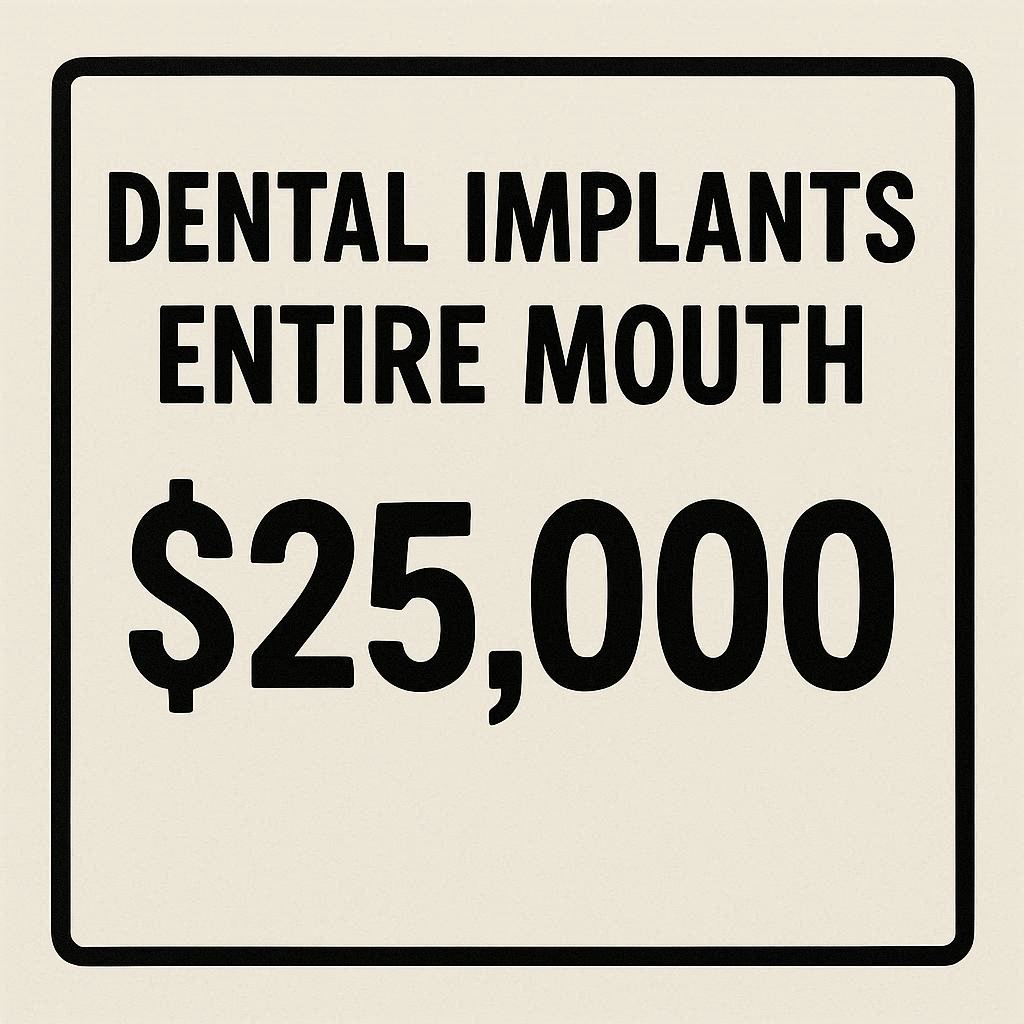
Why the Price Varies So Much (And Why You Should Be Careful)
You will see prices ranging from $15,000 to over $90,000. Why such a big difference? It is like buying a car. A basic used car gets you from point A to point B. A luxury SUV offers comfort, safety, and longevity. Both are cars, but the price is very different.
The same logic applies to dental implants. Several key factors change the final number.
The Two Main Types of Full-Mouth Implants
Before we talk about money, you need to understand what you are buying. There are two common solutions for replacing an entire arch (upper or lower jaw).
1. Removable Implant-Supported Dentures (Overdentures)
Think of these as snap-on dentures. They attach to 2 to 4 implants in your jawbone. You can remove them for cleaning.
- Pros: Lower cost, easier to clean.
- Cons: Less stable than fixed options. The palate may still be covered (affecting taste). The denture may wear out and need replacement after 5-7 years.
2. Fixed Permanent Bridges (All-on-4 or All-on-6)
This is the gold standard. A fixed bridge of 12 to 14 teeth is screwed permanently onto 4, 6, or even 8 implants per arch.
- Pros: Feels like natural teeth. Does not move. No plastic covering the roof of your mouth. Long-lasting.
- Cons: Higher upfront cost. More difficult to repair if something breaks.
Important Note: The “dental implants entire mouth cost” usually refers to both the upper and lower jaws. If you only need one arch (just the top or just the bottom), the price will be roughly half.
The Real Numbers: What You Will Actually Pay in 2026
Let’s get straight to the numbers. These are realistic averages for the United States. They include the surgery, the implants, and the final teeth.
| Type of Full-Mouth Restoration | Average Cost (Per Arch) | Average Total Cost (Both Jaws) |
|---|---|---|
| Traditional Removable Dentures (no implants) | $1,500 – $3,000 | $3,000 – $6,000 |
| Implant-Supported Dentures (2-4 implants per arch) | $7,000 – $15,000 | $14,000 – $30,000 |
| All-on-4 Fixed Bridge (Basic materials) | $15,000 – $20,000 | $30,000 – $40,000 |
| All-on-6 Fixed Bridge (Premium materials – Zirconia) | $25,000 – $35,000 | $50,000 – $70,000 |
| Individual Implants (14-16 per mouth) | $40,000 – $60,000 | $80,000 – $120,000+ |
The most common answer: Most patients pay between $30,000 and $55,000 for a complete, fixed, permanent mouth of dental implants using the All-on-4 technique. This is the sweet spot for quality and price.
The Hidden Costs: What Your Quote Probably Does Not Include
This is where many people get surprised. A low advertised price often excludes essential steps. Always ask: “Is this the final price for everything?”
Here is a list of services that may be extra.
- Diagnostic Imaging: A CBCT scan (3D X-ray of your jaw) is mandatory. This costs $300 – $700.
- Extractions: If you still have failing teeth, removing them costs $100 – $300 per tooth. For a full mouth, this can add $1,500 – $3,000.
- Bone Grafting: This is a big one. If your jawbone is thin or soft, you need a graft to hold the implants. A full-mouth bone graft can cost $3,000 – $10,000 extra.
- Sinus Lift: For upper molars, a sinus lift may be needed. This adds $1,500 – $3,000 per side.
- Temporary Teeth: While your implants heal, you need temporary teeth. Some low-cost quotes do not include this ($2,000 – $5,000).
- Final Teeth Material: Acrylic teeth are cheaper. Zirconia (a white, metal-like ceramic) is stronger and looks better. Upgrading to Zirconia adds $10,000 – $20,000 to the total.
- Anesthesia: IV sedation or general anesthesia (sleeping through the surgery) costs $500 – $1,500 extra.
A quote for $15,000 for a full mouth is almost certainly incomplete. By the time you add extractions, bone grafts, and final teeth, you will likely pay $30,000 or more.
Breaking Down the Payment Journey
Understanding when you pay is as important as how much you pay. The process happens in clear stages.
Stage 1: The Consultation and Planning ($300 – $600)
You pay for the exam, X-rays, and the doctor’s time to create your treatment plan.
Stage 2: The Preparation Phase ($2,000 – $10,000)
This includes tooth extractions, bone grafts, and sinus lifts. You pay this before the implants are placed.
Stage 3: Implant Placement Surgery ($15,000 – $35,000)
The surgeon places the titanium posts into your jaw. You also receive your temporary fixed bridge on the same day (if doing “teeth in a day”).
Stage 4: Healing Period (3-6 months)
No major payments here. You wait for the bone to fuse to the implants (osseointegration). You wear your temporary teeth.
Stage 5: Final Teeth Placement ($5,000 – $15,000)
You pay the remaining balance when your permanent, custom-made teeth are screwed onto the implants.
How to Save Money (Without Losing Quality)
You do not want the cheapest option. Cheap implants often fail, costing you more in the long run. But you can save money intelligently.
1. Consider Dental Schools
Major universities have dental schools where supervised students perform the work. The quality is high because professors check every step. You can save 30% to 50%. The trade-off? Longer appointment times (3-4 hours instead of 1 hour).
2. Look for All-in-One Clinics
Some large dental chains offer “all-inclusive” packages. For one price, you get everything: extractions, bone grafts, implants, temporary teeth, final teeth, and warranty. This avoids surprise bills.
3. Travel for Dental Tourism (With Caution)
Countries like Mexico, Costa Rica, Colombia, and Turkey offer full-mouth implants for $15,000 – $25,000 total. This is a real option.
However, be realistic:
- You must stay in the country for 7-10 days for surgery.
- You must return for follow-ups (3-6 months later).
- If something breaks, your local dentist may refuse to fix another dentist’s work.
- There is little legal recourse if something goes wrong.
4. Use a Dental Savings Plan
This is not insurance. It is a membership card. You pay an annual fee ($100-$200) and get 20-30% off all services from participating dentists.
Financing: How to Pay for a $50,000 Procedure
Very few people have $50,000 in cash. Most patients use financing. Here are the common methods.
Medical Credit Cards (CareCredit, Alphaeon)
- Pros: Easy to apply. Often offer 6-24 months of 0% interest.
- Cons: If you do not pay in full by the deadline, you pay all the deferred interest (often 26%).
Personal Loans (SoFi, LightStream, Upstart)
- Pros: Fixed monthly payments. Lower interest rates than credit cards (8-20%).
- Cons: Requires a good credit score. You pay interest from day one.
Home Equity Loan
- Pros: Lowest interest rates (often 6-10%). Interest may be tax-deductible.
- Cons: You risk your home if you cannot pay.
In-House Payment Plans
- Pros: No credit check. Low or zero interest.
- Cons: Requires a large down payment (often 50%). Very rare for full-mouth cases.
Golden Rule: Never pay the full amount in cash upfront. Always pay in stages as each phase is completed.
Insurance: Will It Cover Anything?
Standard dental insurance is designed for checkups, fillings, and single crowns. It is not designed for full-mouth implants.
- Annual Maximums: Most plans pay only $1,000 to $2,000 per year. A $50,000 procedure is far beyond that.
- Medical Insurance: If your tooth loss is due to an accident, injury, or a medical condition (like oral cancer), your medical plan may cover part of the surgery. You need a letter of medical necessity from your doctor.
Realistic expectation: Insurance will cover less than 10% of your total cost, usually just for the extractions or the diagnostic X-rays.
What to Ask Your Dentist Before Signing Anything
You need to protect yourself. Take this list to your consultation.
- “Is the quoted price per arch or for the whole mouth?”
- “Are extractions and bone grafts included? If not, how much are they?”
- “What material are the final teeth? Acrylic or Zirconia?”
- “Is there a warranty? What happens if an implant fails in 1 year? In 5 years?”
- “Who is doing the surgery? An oral surgeon, a periodontist, or a general dentist?”
- “What type of anesthesia is included?”
- “Do you have before-and-after photos of full-mouth cases you have done?”
- “What is the protocol if I have pain or an infection after hours?”
The Long-Term Value: Why It Is Worth the Investment
Look beyond the upfront price. Think about the cost per year over the rest of your life.
- Traditional Dentures: You pay $5,000 now. But you need new liners every year ($500). New dentures every 5-7 years ($5,000). Adhesives and cleaners ($200/year). Over 20 years, dentures cost $20,000 – $30,000. Plus, you lose jawbone, changing your face shape.
- Permanent Implants: You pay $50,000 now. You need maintenance (cleanings, new clips) of about $500/year. The implants last a lifetime. The teeth last 15-20+ years. Over 20 years, implants cost $60,000. But you keep your bone, your face shape, and your quality of life.
You are not buying teeth. You are buying the ability to bite into an apple. To laugh without covering your mouth. To never use denture glue again.
Red Flags: When to Walk Away
Be careful. There are clinics that take advantage of people seeking affordable care.
- “Today only” discounts: Real medical care is not a used car sale.
- No CBCT machine: A dentist placing implants without a 3D scan is dangerous. Walk out.
- Price seems too good: $10,000 for a full fixed mouth of implants is impossible in the US. It is likely a removable denture on 2 implants, or a scam.
- Pressure to sign same day: A good surgeon wants you to think. They will not pressure you.
- No clear warranty: If they do not guarantee their work, find someone who does.
A Realistic Timeline for Full-Mouth Implants
Patience is key. This is not a one-weekend project (despite what “teeth in a day” marketing says).
| Step | Timeframe | What Happens |
|---|---|---|
| Consultation & Planning | Day 1 | Scans, X-rays, treatment plan, quote. |
| Phase 1 Surgery | Week 1-2 | Extractions, bone grafts, implant placement, temporary bridge. |
| Healing (Osseointegration) | Month 3-6 | Rest. Eat soft foods. Let bone fuse to implants. |
| Uncovery & Impressions | Month 6-7 | Minor surgery to expose implants. Take molds for final teeth. |
| Final Teeth Placement | Month 7-8 | Permanent zirconia or acrylic bridge is screwed on. |
| First Follow-up | Month 9 | Check bite, clean, tighten screws. |
Note: “Teeth in a day” means you get temporary, non-final teeth on the day of surgery. You will not get your permanent, strong teeth for 6-8 months.
Conclusion: Making Your Decision
The dental implants entire mouth cost is significant—typically between $30,000 and $55,000 for a permanent, fixed solution. However, cheap alternatives often lead to higher long-term expenses and frustration. Focus on value, not just the lowest price. Prioritize an experienced surgeon, a clear written contract, and a solid warranty. This investment restores not just your teeth, but your ability to live fully and confidently.
Frequently Asked Questions (FAQ)
1. Can I get all my teeth pulled and implants in one day?
Yes, you can. This is called “immediate loading.” The surgeon extracts teeth, places implants, and attaches a temporary fixed bridge all in one appointment. However, you will return 6-8 months later for your final, stronger teeth.
2. How painful is getting full-mouth implants?
Most patients report less pain than expected. The procedure is done under sedation or general anesthesia, so you feel nothing during surgery. Afterward, over-the-counter pain medication (ibuprofen and acetaminophen) usually controls the discomfort. Most people return to normal activities in 3-5 days.
3. What is the failure rate for full-mouth implants?
The success rate is very high (over 95% for 10+ years) when done by an experienced professional. The most common cause of failure is smoking, uncontrolled diabetes, or poor oral hygiene. If an implant fails, your surgeon will usually replace it at no extra cost if you have a warranty.
4. Can I get Medicare or Medicaid to pay for implants?
Original Medicare (Part A and B) does not cover dental implants. Some Medicare Advantage plans (Part C) offer limited dental benefits, but they rarely cover full-mouth implants. Medicaid coverage varies by state, but it almost never covers implants for adults (only extractions and basic dentures).
5. How do I clean permanent full-mouth implants?
You cannot floss between the teeth because the bridge is one solid piece. Instead, you use a water flosser (like Waterpik), superfloss (threaded under the bridge), and small interproximal brushes. You also need to visit your dentist every 6 months for professional cleaning of the implants.
6. Will my face change shape with implants?
No. This is a major advantage. When you lose natural teeth, your jawbone shrinks (resorption), causing a “sunken” face and wrinkled lips. Implants stimulate the bone, preventing this shrinkage. Your face will maintain its natural shape.
7. Is it better to do individual implants or All-on-4?
For a full mouth, individual implants (14-16 separate implants and crowns) is the strongest but most expensive option (over $80,000). All-on-4 (4 implants supporting a full bridge) is the most common choice because it is less invasive, faster to heal, and costs half the price while still feeling very natural.
Additional Resource
For an independent, non-commercial comparison of implant dentists in your area, including patient reviews and disciplinary histories, visit the American Academy of Implant Dentistry (AAID) patient resource page.
👉 [Find a qualified implant dentist near you (AAID official directory)]
(Link placeholder – replace with your internal resource link or the official AAID URL)
Disclaimer: This article provides general information and does not constitute medical or financial advice. Dental implant costs vary significantly based on geographic location, provider experience, and your individual medical needs. Always consult with a licensed dental professional for a personalized treatment plan and exact pricing.