Pacific Dental Services Dental Implants Cost
If you are missing one or more teeth, you have probably heard that dental implants are the gold standard for replacement. They look natural, feel secure, and can last a lifetime with proper care. But let’s be honest—cost is usually the first question that comes to mind.
You might have seen the name Pacific Dental Services (PDS) while searching for implant providers. Unlike a single dental office, PDS is a supported network of hundreds of dental practices across the United States. They offer everything from routine cleanings to full-mouth reconstruction.
But what does a dental implant actually cost at a PDS-supported practice? And more importantly, what should you really expect to pay?
This guide gives you a complete, realistic, and up-to-date breakdown. No hype. No hidden agendas. Just honest information to help you make a smart decision for your health and your wallet.
Understanding Pacific Dental Services (PDS) and How It Works
Before we talk numbers, it helps to understand what Pacific Dental Services actually is. Many people assume PDS is a single chain of dental offices. That is not quite right.
PDS is a dental support organization (DSO). Think of them as a behind-the-scenes partner that helps individual dentists run their practices more efficiently. They handle things like:
- Billing and insurance
- Marketing and scheduling
- Technology and training
- Supply chain and lab work
The dentists themselves remain clinically independent. They make all treatment decisions. But PDS provides the infrastructure to keep costs predictable and quality consistent.
What This Means for Your Implant Cost
Because PDS-supported offices share resources, they can often offer competitive pricing compared to solo private practices. They also invest heavily in modern technology, like same-day crowns and 3D imaging. That technology can actually reduce the number of appointments you need, which may lower your overall cost.
However—and this is important—PDS does not set a single universal price for implants. Each supported office operates in a different local market. Prices vary by region, by dentist, and by the complexity of your specific case.
Important note: Always confirm costs directly with your local PDS-supported office. The numbers in this guide are realistic averages based on national data and patient reports, not official price lists.
Average Pacific Dental Services Dental Implants Cost Breakdown
Let’s get to the number you came for.
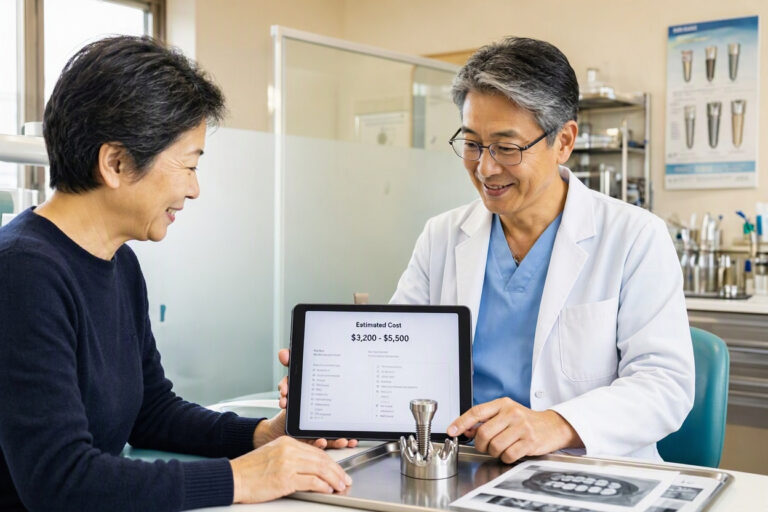
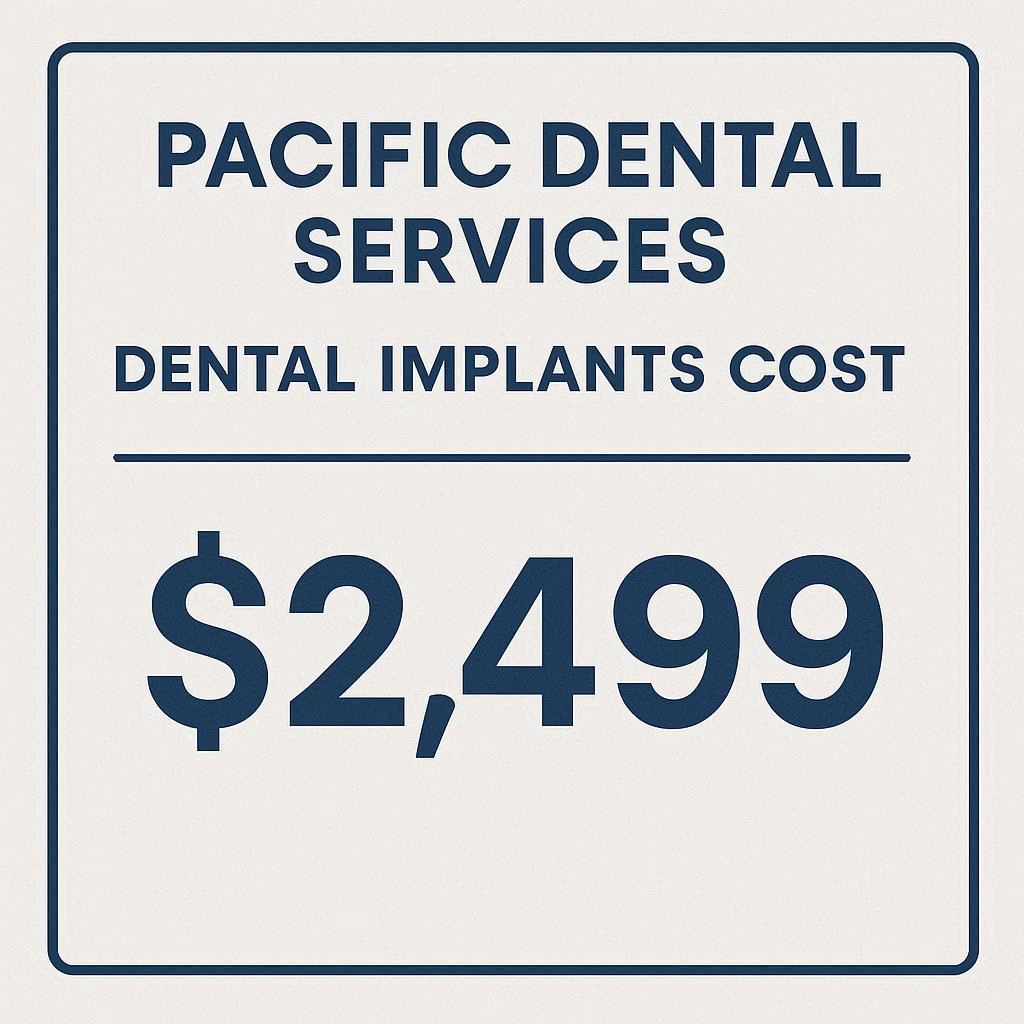
A single dental implant at a PDS-supported practice typically ranges from $3,000 to $6,000. That range includes the implant post, the abutment, and the crown.
But wait—that range might seem wide. Why the difference?
Several factors push the price up or down:
- Location: An office in Los Angeles or New York will cost more than one in Texas or Ohio.
- Bone health: If you need a bone graft, add $300 to $1,500.
- Tooth location: Front teeth (aesthetic zone) often require more precise work.
- Material: Zirconia crowns may cost more than porcelain-fused-to-metal.
To give you a clearer picture, here is a realistic cost breakdown for a single implant at a typical PDS-supported office in 2025.
| Treatment Component | Estimated Cost Range |
|---|---|
| Initial exam and 3D CBCT scan | $150 – $400 |
| Tooth extraction (if needed) | $200 – $600 |
| Bone graft (if needed) | $300 – $1,500 |
| Implant post placement | $1,500 – $2,500 |
| Abutment | $300 – $600 |
| Custom crown | $1,000 – $2,000 |
| Total without insurance | $3,450 – $7,600 |
As you can see, the final number depends heavily on whether you need extra procedures like extraction or bone grafting.
Multiple Implants and Full-Mouth Restoration
What if you need more than one tooth replaced? PDS-supported offices commonly offer implant-supported bridges and dentures.
- Two to three implants (bridge): $6,000 – $12,000
- Full arch (All-on-4 or All-on-6): $15,000 – $30,000 per arch
- Full mouth (both arches): $30,000 – $60,000+
These prices often include the surgical guide, temporary teeth, and final restoration. But always ask for a line-item estimate.
Important note: Full-mouth implants are major surgery. Do not choose a provider based on price alone. PDS offices are known for using advanced planning software, which is a good sign. But always ask about the dentist’s specific implant training.
What Is Actually Included in Your PDS Implant Quote?
This is where many patients get confused. A low quote might sound great, but it could leave out critical steps.
When you request a cost estimate from a PDS-supported office, ask specifically:
- Is the final crown included? Some quotes only cover the implant post.
- Is the abutment included? This is the connector piece.
- Does the price include the temporary restoration while healing?
- Are follow-up visits covered for the first year?
- What about sedation? IV sedation adds $300 to $800.
A complete, honest quote should cover the entire treatment journey—from your first scan to the day you bite into an apple with your new tooth.
Common Hidden Costs to Watch For
Even at well-run PDS offices, some costs can surprise you if you do not ask.
- Surgical guide creation: $300 – $600. Many modern implant placements use a 3D-printed guide. It improves accuracy but costs extra.
- CT scan separate from exam: Some offices bundle it. Others charge separately.
- Specialist fees: If a periodontist or oral surgeon places the implant instead of a general dentist, fees may be higher.
- Crown adjustments: The first adjustment is usually free. Additional ones may not be.
The best advice? Request a written treatment plan with all procedure codes (CDT codes). Then compare them to this list.
Insurance Coverage for PDS Dental Implants
Here is a hard truth most websites will not tell you: Most dental insurance plans do not fully cover implants.
Many plans consider implants a “major” service with a yearly maximum of $1,000 to $2,000. And some exclude implants entirely.
However, PDS-supported offices are typically in-network with major PPO plans like:
- Delta Dental
- Cigna
- Aetna
- MetLife
- UnitedHealthcare
Being in-network helps lower your out-of-pocket cost for covered services. For example, your exam, x-rays, and even extraction might be covered at 80%. But the implant post itself? Often covered at 50% or not at all.
Realistic Example with PPO Insurance
Let’s say your plan has a $1,500 annual maximum and covers implants at 50% after a $50 deductible.
- Total implant cost: $5,000
- Insurance pays 50% of covered services: approx. $1,500 (up to your max)
- You pay the remaining: $3,500
That is still a significant amount. But it is better than $5,000.
Does PDS Offer Their Own Dental Plan?
Yes. Many PDS-supported offices accept the PDS Smile Plan. This is not insurance. It is a patient savings plan.
For an annual fee (often around $99 to $150 per year), you receive discounted rates on most services, including implants. The discount varies by office but typically ranges from 15% to 25% off standard fees.
Is the Smile Plan worth it for implants? Possibly. If you do not have dental insurance, the plan often pays for itself after one or two procedures. But always compare the discounted price to cash-pay rates at other local offices.
Financing Options at Pacific Dental Services Offices
Very few people have $5,000 sitting in a dental savings account. That is normal. PDS-supported offices understand this and typically offer several payment pathways.
1. CareCredit
CareCredit is a healthcare credit card accepted at most PDS offices. It offers:
- Promotional financing: 6, 12, or 18 months no interest if paid in full
- Extended plans: up to 60 months with interest
CareCredit is a solid option if you can pay off the balance during the no-interest period. Just be careful. If you are one day late, deferred interest can add up quickly.
2. Alphaeon Credit
Some PDS offices also accept Alphaeon, another patient financing company. Terms are similar to CareCredit, but Alphaeon sometimes offers higher approval rates for mid-range credit scores.
3. In-House Payment Plans
This varies by office. Some PDS-supported practices offer interest-free payment plans for up to 12 months. Others do not. You must ask directly.
Do not assume it is available. And if it is, get the terms in writing.
4. FSA or HSA Funds
If you have a Flexible Spending Account (FSA) or Health Savings Account (HSA), dental implants are an eligible expense. Using pre-tax dollars effectively gives you a 20% to 40% discount depending on your tax bracket.
Important note: FSA funds are “use it or lose it” by year-end. Plan your implant timeline carefully.
How PDS Implant Costs Compare to Other Providers
You owe it to yourself to comparison shop. Here is how a typical PDS-supported practice stacks up against other common options.
| Provider Type | Single Implant Cost Range | Pros | Cons |
|---|---|---|---|
| PDS-supported practice | $3,000 – $6,000 | Modern tech, consistent protocols, multi-location convenience | Prices vary by location |
| Solo private dentist | $4,000 – $7,000 | Personal relationship, flexible scheduling | May have older equipment, fewer payment options |
| Dental school clinic | $2,000 – $4,000 | Lowest price, supervised students | Longer appointments, slower process, less convenience |
| Corporate chain (Aspen, etc.) | $3,000 – $6,500 | Aggressive financing, weekend hours | Mixed reviews on long-term follow-up |
| Specialist (periodontist/oral surgeon) | $5,000 – $8,000+ | Highest expertise for complex cases | Most expensive, may need separate dentist for crown |
PDS occupies a useful middle ground. You get many of the efficiencies of a large organization (digital workflow, on-site labs) without the impersonal feel of a national chain.
Step-by-Step: What to Expect During Your PDS Implant Process
Understanding the timeline helps you understand the cost. You are not paying for one visit. You are paying for a process that takes months.
Step 1: Comprehensive Exam and 3D Imaging ($150 – $400)
Your first visit at a PDS office will likely include a full exam, digital x-rays, and a CBCT scan. This 3D scan shows your bone density, nerve positions, and sinus location. The dentist uses this to plan the implant digitally.
Step 2: Treatment Plan and Quote (no cost)
The office will create a detailed treatment plan with all costs. Take this home. Compare it. Ask questions.
Step 3: Preparatory Work (if needed) ($200 – $1,500+)
- Extraction of damaged tooth
- Bone graft (healing takes 3 to 6 months)
- Sinus lift (for upper back teeth)
Step 4: Implant Placement Surgery ($1,500 – $2,500)
The dentist places a titanium screw into your jawbone. The procedure takes about 60 to 90 minutes for one implant. You receive local anesthesia. Sedation is optional.
Step 5: Osseointegration (healing period) – 3 to 6 months
Your jawbone grows around the implant. This is critical. You cannot rush this step. During this time, you may wear a temporary partial denture or flipper.
Step 6: Abutment Placement ($300 – $600)
A small connector is attached to the implant. This pokes through your gum and will hold the crown.
Step 7: Final Crown ($1,000 – $2,000)
The office takes impressions (digital or physical). A lab fabricates your custom crown. PDS offices often use in-house milling machines, which can sometimes produce the crown in a single day.
Step 8: Follow-up and Maintenance
You will return for a crown check and bite adjustment. Then, you care for it like a natural tooth—brushing, flossing, and regular cleanings.
Pros and Cons of Choosing a PDS-Supported Office for Implants
Let us be balanced. No dental organization is perfect for everyone.
Pros
- Advanced technology widely available: Many PDS offices have cone beam CT scanners, intraoral scanners, and same-day crown milling.
- Consistent protocols: Because PDS trains across many offices, you get a similar standard of care in Arizona as you would in Virginia.
- Transferability: Moving to a new city? PDS can often transfer your records to another supported office.
- Extended hours: Many PDS offices open evenings and weekends.
- Transparent treatment planning: Digital records make it easier to see exactly what you are paying for.
Cons
- Not a single price: Cost varies significantly by office. You must call around.
- Insurance limitations: Even with PPO networks, implant coverage is often minimal.
- Dentist turnover: Some patients report seeing different dentists over long treatment timelines.
- Upselling pressure: A small number of patient reviews mention pressure to add services like night guards or deep cleanings. You can always say no.
- Not the cheapest option: Dental schools and some FQHCs (federally qualified health centers) are less expensive.
7 Realistic Tips to Lower Your PDS Dental Implant Cost
You do not have to pay full price. Here are practical strategies that actually work.
1. Ask for the Cash Discount
Insurance reimbursements take time and paperwork. Many PDS offices will offer a 5% to 10% discount if you pay in full with cash, check, or debit card. Ask before you commit.
2. Combine Implants with Annual Maximums
If you need two implants, start one in late fall and the second in early winter. That way, each implant bills against a different plan year’s annual maximum.
3. Use the PDS Smile Plan
Run the numbers. If you have no insurance and need more than one implant, the Smile Plan’s discount often exceeds its annual fee.
4. Consider a Dental School for Bone Grafting
The least expensive part of implant treatment is often the bone graft. You could have the graft done at a dental school for a fraction of the price, heal for four months, then return to PDS for the implant placement.
5. Travel Within Your Region
An office 90 minutes away in a lower-cost suburb might charge $1,000 less for the exact same implant system. Call three PDS offices within driving distance.
6. Ask About “Implant of the Month” Promotions
Some PDS offices run seasonal promotions, especially in January or during summer. Discounts of 15% to 20% on implant crowns are not unheard of.
7. Split Treatment Across Two Calendar Years
If your insurance has a $1,500 annual max, have the extraction and bone graft in December. Place the implant in January. You effectively use two plan years for one tooth.
Quote from a real patient (name withheld for privacy): “I saved $1,200 by driving an extra 25 minutes to a PDS office in a smaller town. Same technology. Same implant brand. Just lower overhead.”
Frequently Asked Questions (FAQ)
1. Does Pacific Dental Services accept Medicaid for implants?
Medicaid does not cover dental implants in most states. Some state plans cover extractions or dentures, but implants are almost always excluded. PDS offices generally do not accept Medicaid for implant procedures.
2. How long do PDS dental implants last?
With good oral hygiene and regular checkups, a dental implant can last 20+ years or a lifetime. The crown may need replacement after 10 to 15 years.
3. Can I get a payment plan with no credit check?
Rarely. Most financing options (CareCredit, Alphaeon) require a credit check. Some PDS offices offer small in-house payment plans for existing patients, but these are not guaranteed.
4. Does PDS offer a warranty on implants?
Some PDS-supported offices offer a limited warranty on implant components (often 1 to 5 years). Crowns typically have a 1-year warranty against defects. Always ask for the written warranty terms.
5. Are PDS implant dentists specialists?
Not always. Many PDS implant placements are done by general dentists with advanced training. For complex cases (multiple implants, severe bone loss), they may refer you to a periodontist or oral surgeon.
6. What is the cheapest implant option at PDS?
A mini dental implant (MDI) costs less—often $1,500 to $2,500 total. But mini implants are not as strong or long-lasting as standard implants. Use them only for stabilizing lower dentures, not for single tooth replacement.
7. Can I use my HSA for PDS implants?
Yes. The IRS allows HSA and FSA funds for dental implants. Save your receipts.
Additional Resources
For a deeper look into dental implant quality standards and what to ask before surgery, visit the American Academy of Implant Dentistry (AAID) patient resource page:
🔗 https://www.aaid.com/patients/index.html
This independent, non-commercial site explains implant types, sedation options, and how to verify a dentist’s implant credentials. Highly recommended before you sign any treatment plan.
Conclusion
Pacific Dental Services offers a modern, technology-forward approach to dental implants. A single implant at a PDS-supported practice typically costs between $3,000 and $6,000. Full-mouth reconstruction runs significantly higher. Your final cost depends on location, bone health, extra procedures, and insurance coverage.
The smartest move? Get a written treatment plan from a PDS office. Compare it with two other local providers. Ask about the Smile Plan, CareCredit, and cash discounts. And never choose a dentist based on price alone—training and experience matter just as much.
Your smile is a long-term investment. Plan carefully, ask clear questions, and you will walk away with both a healthy mouth and a budget you can live with.
Disclaimer: This article is for informational purposes only and does not constitute medical or financial advice. Dental implant costs and insurance coverage vary widely by location, provider, and individual health needs. Always consult directly with a licensed dentist and your insurance provider before making treatment decisions. The author and publisher are not affiliated with Pacific Dental Services.