Help with Dental Implants for Low Income Patients
If you are missing teeth, you already know it affects more than your smile. Chewing becomes hard. Speaking feels different. Sometimes, you avoid laughing or meeting new people.
Dental implants are often the best solution. They look natural. They feel strong. And they last a long time.
But there is one big problem: cost.
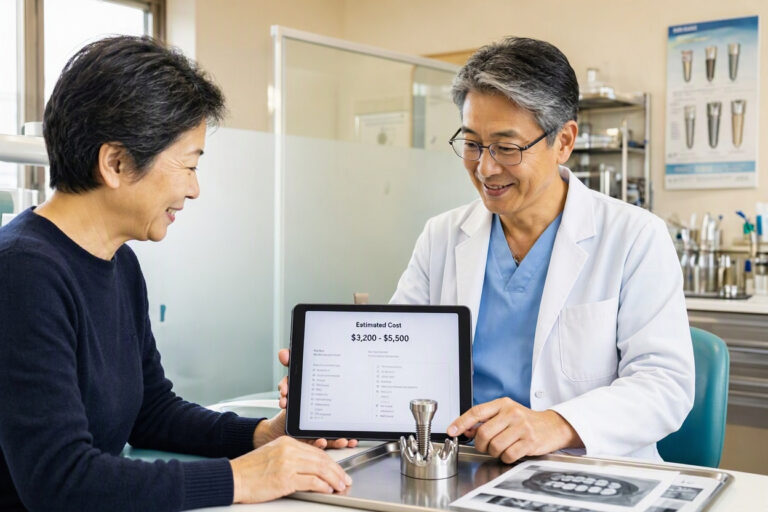
For a low-income patient, the price of implants can feel like a mountain you cannot climb. One single implant can cost between $3,000 and $6,000. A full mouth of implants? That can reach $30,000 or more.
This guide is here to help you. We will not lie to you. We will not promise free implants for everyone. But we will show you real, practical ways to find help with dental implants for low income patients.
Why Dental Implants Are So Expensive (And Why Cheap Options Are Rare)
Before we look for help, it helps to understand why implants cost so much. This is not just about expensive materials.
An implant is a small titanium post. A surgeon places it into your jawbone. Over time, the bone grows around it. Then, a crown is attached on top.
This process requires:
- A skilled oral surgeon or periodontist
- A dental lab to make the crown
- 3D imaging and X-rays
- Multiple visits over several months
- Sometimes bone grafts or extractions first
Each step costs money. When you see a very low price for implants, be careful. Cheap work often leads to failed implants. Then you lose both your money and your time.
Important note: Avoid dental tourism for major implant work unless you have done deep research. Some patients save money abroad, but complications later are hard to fix at home.
Now, let us focus on real solutions.
Start Here: Low-Cost Dental Clinics and Sliding Scale Fees
Many communities have clinics that charge based on what you earn. This is called a sliding fee scale.
Federally Qualified Health Centers (FQHCs)
These are community health centers. They receive federal money to help low-income patients. Most offer dental services. Not all do implants, but some can help with extractions, bone grafts, or refer you to implant specialists at lower rates.
How to find one:
- Visit the HRSA website (Health Resources and Services Administration)
- Search for “FQHC dental near me”
- Call and ask: “Do you offer implant services or referrals at reduced cost?”
Public Hospital Dental Departments
Some public hospitals have dental clinics. These are often attached to larger medical centers. They treat patients regardless of ability to pay. Implants may still cost money, but less than private offices.
Sliding Scale Private Clinics
A small number of private dentists offer sliding scale fees. You show proof of income. They lower their price.
Call local dental offices. Ask directly:
“Do you offer any financial assistance or sliding scale fees for low-income patients?”
Most will say no. That is okay. Keep calling. One “yes” can change everything.
Dental Schools: Your Best Bet for Affordable Implants
This is the most reliable way to get help with dental implants for low income patients.
Dental schools need patients for their students to learn on. But do not worry. Students work under very experienced professors. Every step is checked. Safety is a priority.
How It Works
You go to a university with a dental school. A senior student does your implant work. A licensed dentist or oral surgeon watches everything.
The process takes longer. You may need more appointments. But the cost can be 30% to 50% lower than a private dentist.
What to Expect
- Longer waiting time for your first appointment
- More time in the chair
- Very thorough exams
- High safety standards
- Payment required, but much lower
List of U.S. Dental Schools with Implant Programs
| State | Dental School | Implant Program? | Notes |
|---|---|---|---|
| California | UCLA School of Dentistry | Yes | Full implant clinic |
| Texas | UTHealth Houston School of Dentistry | Yes | Sliding scale possible |
| New York | Columbia University College of Dental Medicine | Yes | High demand, long wait |
| Michigan | University of Michigan School of Dentistry | Yes | Reduced fees for implants |
| Florida | University of Florida College of Dentistry | Yes | Teaching clinic |
| Illinois | University of Illinois Chicago College of Dentistry | Yes | Implant training program |
| Maryland | University of Maryland School of Dentistry | Yes | Low-cost option |
| Massachusetts | Harvard School of Dental Medicine | Yes | Teaching clinic available |
| Washington | University of Washington School of Dentistry | Yes | Reduced fees |
| North Carolina | UNC Adams School of Dentistry | Yes | Implant training |
Important note: Not every dental school does implants. Call first. Ask: “Does your school place dental implants? Do you have a teaching clinic for implants?”
Nonprofit Organizations and Charitable Programs
Some nonprofits help with dental care. Very few pay for full implants. But some help with related costs or provide care through volunteer dentists.
Dental Lifeline Network
This is one of the most respected programs. They connect volunteer dentists with patients who have permanent disabilities or complex medical conditions. If you qualify, you might receive free dental care, including implants in some cases.
Eligibility is strict. You need a referring doctor or social worker.
Mission of Mercy (MOM) Events
These are large, temporary dental clinics. They happen in different states each year. Patients line up early. Care is free. Most events do extractions and fillings, not implants. But some have placed basic implants in recent years.
Check the ADA Foundation website for event schedules.
Give Back a Smile
This program helps survivors of domestic violence. It offers cosmetic dental work, including implants in some cases. You must provide proof of the abuse.
Local Charities and Churches
Small local charities sometimes have dental funds. They might give you $500 to $1,000 toward an implant. Call Catholic Charities, Salvation Army, or local community foundations.
Ask:
“Do you have any emergency dental assistance funds or grants for implants?”
Be honest. Many will say no. But one small grant can help.
Clinical Trials and Research Studies
This is a hidden gem. Dental schools and research centers run clinical trials. They test new implant techniques, materials, or tools. In exchange, you get free or low-cost implants.
Where to Find Trials
- ClinicalTrials.gov (search “dental implant”)
- Major university dental school websites
- Periodontal research centers
What to Expect
You will be screened. You must meet specific criteria. You might receive a new type of implant. You will be monitored closely. This is not for everyone. But for some low-income patients, it is a real answer.
Warning: Read the consent form carefully. Understand the risks. Ask questions. A good trial is safe. A bad trial is not worth it.
Government Programs: Medicaid and Medicare
This section is important. Many people assume Medicaid pays for implants. Most of the time, it does not. But there are exceptions.
Medicaid
Medicaid is state-run. Each state decides what dental care to cover.
- Most states cover extractions and dentures for adults
- Very few states cover implants for adults
- Some states cover implants if medically necessary (after jaw cancer, for example)
Check your state’s Medicaid dental manual. Search online: “[Your state] Medicaid dental coverage adults.”
If you have children, some states cover implants for severe cases.
Medicare
Original Medicare does not cover dental implants. No exceptions for low income.
Medicare Advantage (Part C) sometimes includes dental benefits. But implants are rarely covered. Check your specific plan.
VA Dental Care
If you are a veteran, you may qualify for VA dental benefits. The VA does cover implants in certain cases. You need a service-connected dental condition or be 100% disabled.
Call your local VA medical center. Ask for the dental clinic.
Crowdfunding and Community Support
This is not a sure thing. But many low-income patients have raised money for implants online.
GoFundMe
Create a campaign. Tell your story honestly. Share photos (if comfortable). Share the link on social media. Ask friends and family to share.
Tips for success:
- Explain why implants matter to you (eating, health, job confidence)
- Break down the cost (X-ray, surgery, crown)
- Update donors with your progress
Local Fundraisers
A local church, community center, or small business might host a fundraiser for you. Bake sales, car washes, spaghetti dinners. Old-fashioned, but they work.
Dental Specific Crowdfunding
Sites like Ketto or YouCaring (now part of GoFundMe) have health categories. Some dental nonprofits list crowdfunding tips on their websites.
Payment Plans and In-House Financing
Many dental offices want to help. They just need a way to get paid over time.
In-House Financing
Some dentists offer their own payment plans. No credit check. No interest. You pay $100 or $200 per month until the balance is gone.
Ask every dentist you call:
“Do you offer no-interest or low-interest payment plans directly through your office?”
CareCredit
This is a medical credit card. It works for dental implants. You can get 6, 12, or 18 months with no interest if you pay on time.
The catch: If you miss a payment or are late, interest rates jump very high (over 25%). Only use CareCredit if you are sure you can pay on time.
LendingClub and Proceed Finance
These are patient financing companies. They offer loans specifically for dental work. Interest rates are lower than credit cards but higher than bank loans. You need fair to good credit.
Dental Discount Plans
These are not insurance. You pay an annual fee ($100 to $150). Then you get 10% to 30% off dental services from participating dentists.
Examples: Careington, Aetna Dental Access, Cigna Discount Plans.
Check if implant surgery is included. Some plans exclude major procedures.
Partial Solutions: When Implants Are Still Too Expensive
Let us be honest. Even with help, implants may still be out of reach for some low-income patients. That is hard to hear. But there are other options that can improve your life while you save money.
Mini Implants
Mini implants are smaller. They cost less. They do not last as long as standard implants. But for some patients, they work well.
Cost per mini implant: $500 to $1,500. Much lower than standard implants.
Ask your dentist if you are a candidate.
Implant-Supported Dentures
Instead of replacing every tooth, you get two to four implants. They hold a denture in place. This costs less than full individual implants.
Removable Partial Dentures
These are not implants. They are false teeth on a plastic or metal frame. They cost $300 to $1,000. They are not as stable. But they help you chew and smile.
Many low-income patients start with a partial denture. Then they save for years. Then they upgrade to implants later.
Encouragement: Do not feel ashamed of a partial denture. It is a bridge to a better future. One step at a time.
Step-by-Step Action Plan for Low-Income Patients
You need a plan. Here is a simple one.
Step 1: Get a Free or Low-Cost Consultation
Call dental schools first. Ask about implant consultations. Some charge $50 or less.
Step 2: Ask for a Written Treatment Plan
The dentist should write down:
- What procedures you need
- Total cost
- Timeline
- Payment options
Step 3: Apply for Help
- Call your local FQHC
- Apply for Medicaid (if you haven’t)
- Check Dental Lifeline Network eligibility
- Search ClinicalTrials.gov
Step 4: Compare Financing
Get quotes from:
- CareCredit
- LendingClub
- In-house payment plans
Step 5: Start a Savings Fund
Even $20 per week adds up. In one year, that is over $1,000.
Step 6: Crowdfund
Start a GoFundMe while you wait for appointments.
A Realistic Comparison Table: Implant Help Options for Low Income
| Option | Cost | Wait Time | Best For | Likelihood of Getting Implants |
|---|---|---|---|---|
| Dental School Clinic | 30-50% less | 3-12 months | Patients who can travel and wait | High |
| FQHC Sliding Scale | Low to free | 2-8 weeks | Patients near a large health center | Medium |
| Nonprofit (Dental Lifeline) | Free | 6-24 months | Disabled or medically complex patients | Low |
| Clinical Trial | Free | 1-6 months | Healthy patients who meet study criteria | Medium |
| Medicaid (rare states) | Free or low cost | Varies | Patients with medical necessity | Very low |
| Crowdfunding | Varies | 1-3 months | Patients with strong community support | Low to medium |
| In-House Financing | Full cost over time | Immediate | Patients with steady small income | High |
| CareCredit | Full cost + interest if late | Immediate | Patients with fair credit | High |
Common Questions from Low-Income Patients
Can I get free dental implants if I have no money?
It is very rare. Free implants happen through clinical trials, Dental Lifeline (for qualifying disabilities), or Mission of Mercy events (rarely). Do not believe anyone who promises free implants easily.
How can I find help with dental implants for low income patients near me?
Start with dental schools. Then FQHCs. Then call oral surgeons and ask about charity care. Search online for “low income dental implants [your city].”
Are payment plans safe?
Yes, if they are in writing. Read everything. Never sign without understanding. Avoid “buy now, pay later” dental ads that hide huge interest rates.
What credit score do I need for CareCredit?
Usually 620 or higher. If your credit is low, ask about in-house financing instead.
Can I get just one implant at a time?
Yes. Many patients do this. Get one implant per year. Spread the cost over time.
Additional Resource
For a regularly updated list of free and low-cost dental clinics by state, visit the Free Dental Care Directory at:
https://www.needymeds.org/free-dental-clinics
This resource is trustworthy and free. No sign-up required.
Words of Encouragement
You have read this far. That means you are serious about solving this problem.
Do not give up.
Dental implants are expensive. That is a fact. But help exists. It is not handed out easily. You have to search. You have to call. You have to ask again and again.
And sometimes, you have to accept a partial denture first. Or save for two years. Or drive two hours to a dental school.
That is hard. But it is not impossible.
Thousands of low-income patients have found help with dental implants. They called ten clinics before finding one. They waited six months for a dental school appointment. They raised $2,000 on GoFundMe.
You can do this too.
Start today. Call one dental school. Call one FQHC. Send one email.
One small step. Then another. Then another.
Conclusion
Finding help with dental implants for low income patients is challenging but possible. Your best options are dental school clinics (most reliable), sliding scale FQHCs, clinical trials, and in-house financing. Avoid unrealistic promises of free implants. Start with one phone call today, and build a step-by-step plan that fits your budget and health needs.
Frequently Asked Questions (FAQ)
1. Does Medicaid ever pay for dental implants?
Only in very rare cases, usually after jaw cancer, severe trauma, or congenital defects. Most states exclude implants for adults.
2. Are dental schools safe for implant surgery?
Yes. Every step is supervised by experienced faculty. Safety standards are often higher than private offices. The main drawback is longer appointment times.
3. Can I get dental implants for free through a nonprofit?
Dental Lifeline Network provides free care to qualifying patients with permanent disabilities. Mission of Mercy events rarely offer implants. Free implants are not common.
4. What is the cheapest way to replace a missing tooth?
A removable partial denture ($300–$1,000) or a flipper ($200–$500). These are not implants, but they fill the space affordably.
5. How do I find a dental school near me?
Search “dental school implant clinic [your state]” or visit the American Dental Education Association website for a full list.
6. Can I use a dental discount plan for implants?
Some discount plans include implant surgery at reduced rates. Always call the plan provider and ask for a written list of covered implant services.
7. What should I do if no clinic near me offers implant help?
Expand your search to neighboring states. Consider traveling to a dental school. Save for a mini implant instead. Or use a partial denture while saving.
8. Is crowdfunding reliable for dental implants?
It works for some patients, especially those with active social networks. Success rates are higher when you share your campaign widely and update donors regularly.
Disclaimer: This article is for informational purposes only. It does not constitute medical or financial advice. Dental implant costs, insurance coverage, and nonprofit programs change frequently. Always verify information directly with clinics, schools, and organizations. Consult a licensed dentist for personal medical advice.