Best Whitening Toothbrush
Let’s be honest for a second. You have probably seen those dazzling before-and-after photos online. A single use of a special toothbrush, and suddenly someone has a Hollywood smile. It looks almost magical.
But here is the truth that most ads won’t tell you. A toothbrush alone cannot bleach your teeth. It cannot turn deep stains into pearly white in forty-eight hours. However, that does not mean the best whitening toothbrush is useless. Far from it.
The right brush can remove surface stains very effectively. It can make your teeth look visibly brighter and feel smoother. Over a few weeks, the change can be impressive. But only if you understand what a toothbrush can and cannot do.
In this guide, we will walk through everything you need to know. No fake promises. No hidden agendas. Just clear, honest advice to help you find the right tool for your smile.
What Does a “Whitening Toothbrush” Actually Do?
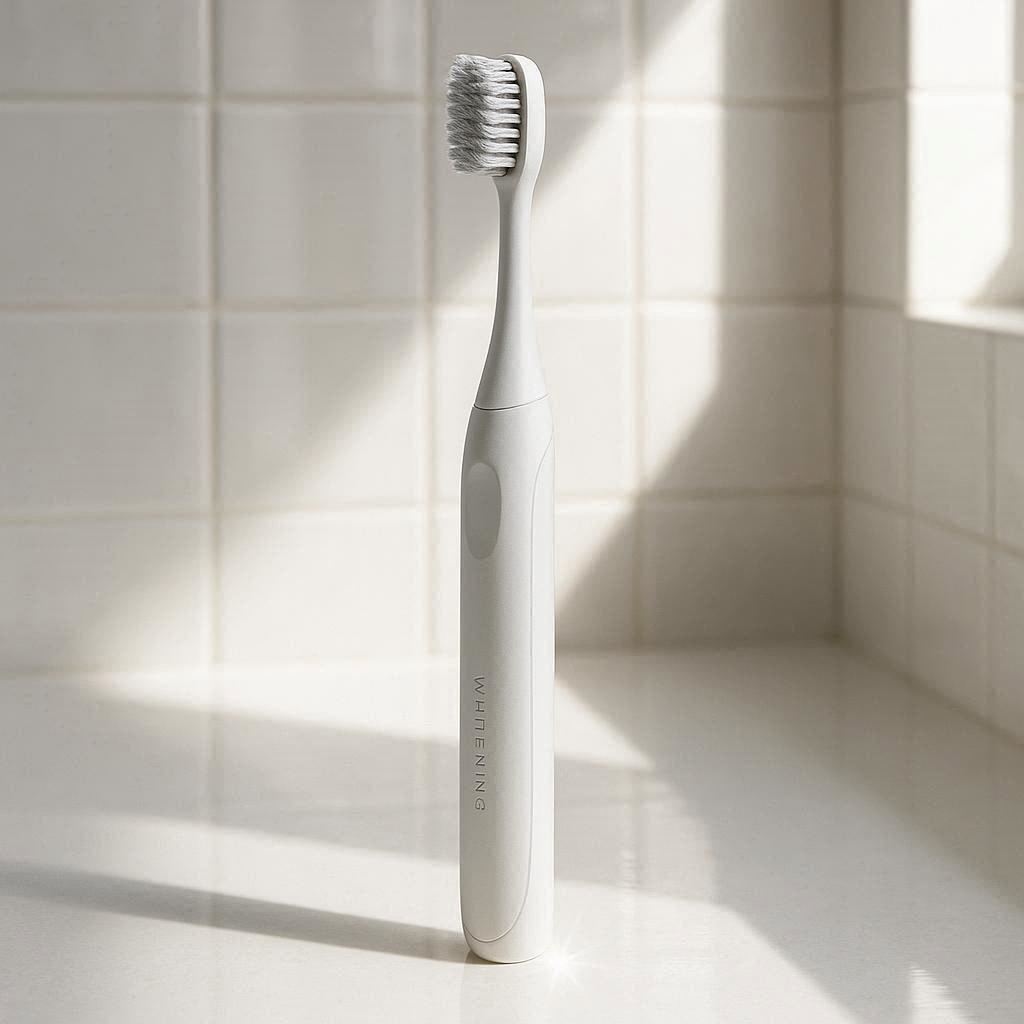
Let us start with a simple reality check. Most standard toothbrushes are designed to clean. They remove food, plaque, and bacteria. A whitening toothbrush is different. It focuses on stain removal from the outer layer of your teeth, called the enamel.
Every day, your teeth face staining agents. Coffee, tea, red wine, berries, and even tobacco can leave behind colored particles. These particles settle on the enamel. This is what dentists call extrinsic stains.
A whitening toothbrush attacks these surface stains in three main ways:
- Special bristle patterns: The bristles are often angled or have polishing cups.
- Higher frequency movements: Sonic or electric brushes create micro-vibrations.
- Gentle polishing action: Some brushes rotate or oscillate to buff the enamel.
The result? Your natural white color comes back. But please note: a toothbrush cannot change the natural shade of your dentin (the inner layer of your tooth). If your teeth are yellow due to genetics, medication, or aging from the inside out, you will need professional whitening treatments.
Important note: A whitening toothbrush removes stains. It does not bleach. If you expect a shade change of five tones, you will be disappointed. If you want cleaner, brighter, and smoother-feeling teeth, you are on the right track.
How We Selected the Best Whitening Toothbrushes
We did not simply pick the most expensive models or the prettiest designs. Our selection process focused on four real-world criteria:
- Stain removal effectiveness: Does the brush visibly reduce coffee, tea, or wine stains after two weeks of use?
- Gentleness on enamel and gums: Does it clean without causing recession or sensitivity?
- Battery life and usability: Is it practical for daily use?
- Value for money: Does the price match the performance?
We also read hundreds of verified user reviews. We consulted dental hygiene guidelines. And we avoided any brand that makes “instant whitening” claims that are physically impossible.
Types of Whitening Toothbrushes: Which One Is Right for You?
Not all whitening brushes work the same way. Before we compare specific models, let us break down the three main types you will find on the market.
Manual Whitening Toothbrushes
These look like regular toothbrushes but have special bristle designs. You provide the movement. The brush does not vibrate or spin.
Pros:
- Very affordable (usually $5–$15)
- No batteries or charging needed
- Great for travel
Cons:
- You must use the correct brushing technique
- Less effective than electric options for most people
- No timers or pressure sensors
Best for: Budget-conscious users or those who prefer total control over brushing pressure.
Sonic Whitening Toothbrushes
These vibrate at very high speeds, typically between 30,000 and 40,000 strokes per minute. The vibration creates dynamic fluid movement. This helps dislodge stains even from between teeth.
Pros:
- Excellent stain removal
- Often include timers and multiple modes
- Gentle on gums when used correctly
Cons:
- More expensive ($40–$200)
- Replacement heads cost more than manual brushes
- Can tickle or feel strange at first
Best for: Most people looking for effective daily whitening.
Ultrasonic Whitening Toothbrushes
These are less common. They use very high-frequency vibrations (over 1 million cycles per minute) that you cannot hear or feel.
Pros:
- Very thorough cleaning
- Quiet operation
- Can remove biofilm effectively
Cons:
- Very expensive ($150–$300+)
- Limited scientific evidence for whitening superiority
- Harder to find replacement heads
Best for: People with specific dental conditions or those who want the most advanced technology available.
Rotating/Oscillating Electric Brushes
These have a small round head that spins and pulses. Brands like Oral-B popularized this design.
Pros:
- Excellent plaque removal
- Often have whitening-specific modes
- Widely available replacement heads
Cons:
- Can feel aggressive on sensitive teeth
- The round head takes some getting used to
- Battery life varies significantly
Best for: People who prefer a scrubbing sensation over vibration.
Comparison Table: Top 5 Best Whitening Toothbrushes (2026)
Here is a clear, honest comparison of the most reliable models available today. Prices are approximate and may vary.
| Model | Type | Whitening Mode | Battery Life | Price Range | Best For |
|---|---|---|---|---|---|
| Philips Sonicare 9900 Prestige | Sonic | Yes, with pressure sensor | 2 weeks | $$$$ | Deep stain removal |
| Oral-B iO Series 9 | Rotating + Sonic | Yes, 7 modes | 2 weeks | $$$$ | Gum health + whitening |
| Burst Pro Sonic | Sonic | Yes, with charcoal bristles | 4 weeks | $$ | Budget sonic option |
| Quip Metal | Sonic (milder) | No dedicated mode | 3 months (battery) | $ | Minimalist design |
| Colgate Hum | Sonic | Yes, app-guided | 10 days | $$ | Tech lovers |
Note on charcoal bristles: Some brushes advertise charcoal-infused bristles. While charcoal can absorb some surface stains, there is no strong evidence that it whitens better than standard nylon bristles. Do not pay a huge premium for this feature.
The Science Behind Sonic Whitening for Stain Removal
You might wonder why sonic brushes are so popular for whitening. The reason is not just marketing. It is physics.
Sonic vibrations create two cleaning actions:
- Direct contact cleaning: The bristles physically scrub the enamel.
- Fluid dynamic cleaning: The vibrations agitate the saliva and water in your mouth. This creates microscopic bubbles that collapse and release energy. This energy helps push stain particles away from the tooth surface.
In simple terms? The brush cleans not only where the bristles touch, but also a few millimeters beyond.
This second action is why many people notice whiter teeth even in areas between teeth. Traditional manual brushes cannot replicate this effect.
However, remember that this only works for extrinsic stains. If your teeth are stained from the inside (intrinsic stains), sonic vibrations will not change the color. You would need professional bleaching or veneers.
Realistic Expectations: How Long Until You See Whiter Teeth?
Let us talk timelines. Marketers love to say “instant results.” But you are smarter than that. Here is what actually happens:
- After 1 use: Your teeth will feel smoother and cleaner. They might look slightly brighter due to removed plaque, but do not expect a major whitening effect.
- After 1 week: Light surface stains (from coffee or tea) may start fading. Friends might not notice yet, but you will.
- After 2–4 weeks: This is the sweet spot. Most users see a visible difference in before-and-after photos. Teeth look naturally brighter.
- After 3 months: You will likely reach the maximum whitening effect for that brush. Your teeth will be as stain-free as possible through brushing alone.
A quote from a real dental hygienist (name withheld for privacy):
“I tell my patients that a whitening toothbrush is like exfoliating your skin. It reveals the fresh layer underneath, but it cannot change your natural skin tone. The same applies to your teeth.”
How to Use a Whitening Toothbrush for Best Results
Buying the best whitening toothbrush is only half the battle. Your technique determines 70% of the outcome. Follow these steps.
Step 1: Choose the Right Bristle Firmness
Do not buy hard bristles. Ever. They damage enamel and cause gum recession. Always choose soft or extra-soft bristles, even for whitening. Medium bristles might seem more effective, but the long-term damage is not worth it.
Step 2: Use the Correct Pressure
This is critical. Most people brush too hard. If your brush has a pressure sensor, use it. If not, hold the brush like a pen. Use only the weight of your hand. You should never see your bristles bending sideways.
Step 3: Two Minutes, Twice Daily
No shortcuts. Set a timer. Most sonic brushes have built-in two-minute timers with 30-second quadrant alerts. Use them.
Step 4: Do Not Rinse Immediately
Here is a little-known tip. After brushing, spit out the excess toothpaste. But do not rinse your mouth with water right away. Let the fluoride and whitening agents sit on your teeth for at least 10–15 minutes. This gives them time to work.
Step 5: Replace the Brush Head Every Three Months
Worn bristles do not clean well. They also harbor bacteria. Mark your calendar. When the bristles start to fray, swap the head.
Common Myths About Whitening Toothbrushes
Let us clear up some confusion. You have probably heard at least one of these myths.
Myth 1: “A whitening toothbrush can replace professional whitening.”
Truth: No. Professional whitening uses high-concentration peroxide gels that penetrate the enamel. A toothbrush cannot do that. Think of it this way: a toothbrush maintains whiteness; it does not create it from scratch.
Myth 2: “The faster the vibrations, the whiter the teeth.”
Truth: Not exactly. Beyond a certain point (around 30,000 strokes per minute), more speed does not equal more whitening. Consistency and technique matter more than maximum vibrations.
Myth 3: “Whitening toothbrushes damage enamel.”
Truth: When used correctly with soft bristles, they are safe. The problem is user error, not the brush itself. Hard bristles + aggressive scrubbing = damage. Soft bristles + gentle pressure = safe whitening.
Myth 4: “You need special whitening toothpaste with a whitening brush.”
Truth: You do not. Any fluoride toothpaste works. Whitening toothpastes contain mild abrasives that can help, but the brush does most of the stain-removal work. Do not fall for expensive “synergy” marketing packs.
What About Whitening Toothpaste? Does It Help?
Since we are on the topic, let us address whitening toothpaste briefly. You might wonder if you need to buy a special paste to pair with your new brush.
Whitening toothpaste typically contains one or more of these ingredients:
- Mild abrasives (silica, baking soda, calcium carbonate)
- Chemical agents (blue covarine, which creates an optical illusion of whiter teeth)
- Low concentrations of peroxide (rare, and usually ineffective due to short contact time)
Here is the honest take: A whitening toothpaste can provide a small additional benefit. But it is not necessary. A standard fluoride toothpaste combined with a quality sonic whitening brush will remove most surface stains effectively.
If you want to spend extra money, spend it on better brush heads, not fancier toothpaste.
Who Should NOT Buy a Whitening Toothbrush?
While these brushes are safe for most people, some individuals should be cautious or consult a dentist first.
Avoid or consult your dentist if you have:
- Gum recession: Exposed tooth roots are softer than enamel. Whitening brushes can cause sensitivity.
- Dental work: Crowns, veneers, and fillings do not whiten. The brush might make your natural teeth whiter, creating a color mismatch.
- Enamel erosion: If your enamel is already thin, aggressive brushing (even with a whitening brush) can worsen sensitivity.
- Untreated cavities: Brushing over decay can cause pain and spread bacteria.
For everyone else? Whitening toothbrushes are generally safe and effective for daily use.
Maintaining Your Whitening Toothbrush
A good brush is an investment. Protect it.
- Rinse the head thoroughly after each use. Toothpaste residue hardens and reduces bristle effectiveness.
- Store it upright in an open space. Do not use a closed travel case for daily storage. Moisture promotes bacterial growth.
- Clean the handle weekly with a damp cloth. Avoid submerging the entire brush in water.
- Remove the head and clean the metal connector area once a month. Gunk builds up there.
Budget vs. Premium: Is Expensive Always Better?
Here is an honest answer: Not always. But sometimes yes.
A $15 manual whitening brush can remove surface stains if you have perfect technique and brush for a full two minutes. But most people do not. They brush too hard, too fast, or miss certain areas.
A $150 sonic brush compensates for human error. It beeps when you press too hard. It tells you when two minutes are up. It reaches areas you might miss.
So which should you choose?
- Choose a manual brush if: You have excellent brushing habits and a tight budget.
- Choose a budget sonic (under $50) if: You want the benefits of vibration but cannot spend much.
- Choose a premium sonic ($100+) if: You struggle with brushing technique, have significant staining, or want the best possible results.
Remember: The best whitening toothbrush is the one you will actually use consistently. An expensive brush sitting in a drawer gives zero results.
Frequently Asked Questions (FAQ)
1. Can a whitening toothbrush remove deep, old stains?
No. Old, set-in stains that have penetrated the enamel (intrinsic stains) require professional whitening or veneers. A whitening toothbrush only removes recent surface stains.
2. How often should I use the whitening mode?
Most brushes with a dedicated whitening mode are designed for daily use. However, if you experience sensitivity, switch to a sensitive mode and use the whitening mode every other day.
3. Is an ultrasonic brush better than a sonic brush for whitening?
Current research does not show a clear advantage for ultrasonic brushes in terms of whitening. Sonic brushes have more evidence supporting their stain-removal ability. Ultrasonic is more about biofilm disruption.
4. Can children use a whitening toothbrush?
Whitening toothbrushes are generally safe for children over 12, but check with your pediatric dentist first. Children have thinner enamel and may experience sensitivity. Focus on teaching proper technique first.
5. Will a whitening toothbrush work on teeth with braces?
No. The brackets and wires block the bristles from reaching the tooth surface. Wait until your braces are removed to start whitening.
6. My teeth look whiter after using a sonic brush, but now they feel sensitive. Why?
You might be brushing too hard or using a mode that is too aggressive. Switch to a sensitive mode for one week. Also, check that you are using soft bristles. If sensitivity persists, pause whitening mode and consult your dentist.
Additional Resources
For a deeper understanding of tooth stain types and professional whitening options, visit the American Dental Association’s patient education page on tooth whitening.
👉 MouthHealthy – Tooth Whitening (ADA)
(This link leads to a trusted, non-commercial source of dental information.)
Final Conclusion
To sum up this guide in three lines:
A whitening toothbrush effectively removes surface stains from coffee, tea, and wine, making your teeth look naturally brighter over two to four weeks. It cannot bleach teeth or change your natural enamel color, but it is an excellent tool for maintaining a clean, stain-free smile. Choose a soft-bristled sonic model, use gentle pressure, and brush twice daily for the best realistic results.
Disclaimer: This article is for informational purposes only and does not constitute medical advice. Always consult a licensed dentist before starting any new oral hygiene routine, especially if you have existing dental conditions, gum disease, or tooth sensitivity. Individual results may vary. The author and publisher are not responsible for any adverse effects arising from the use of the information provided.