care credit for dental implants
If you are reading this, you are probably missing one or more teeth. Or maybe a dentist just told you that a bridge or dentures are not your only options. Dental implants are the closest thing to natural teeth you can get. They look good, feel strong, and can last a lifetime.
But there is one big problem. The price.
A single dental implant can cost between $3,000 and $6,000. Full-mouth implants? That can go up to $30,000 or more. Most dental insurance plans do not cover implants. They call them “cosmetic” or “elective.” That is frustrating, especially when you need to chew, smile, and live without pain.
So people look for financing. And one name comes up again and again: CareCredit.
This guide is not a sales pitch. It is an honest, practical look at using CareCredit for dental implants. You will learn how it works, where it shines, where it hides risks, and what alternatives exist. By the end, you will know exactly if this card is right for your smile—and your wallet.
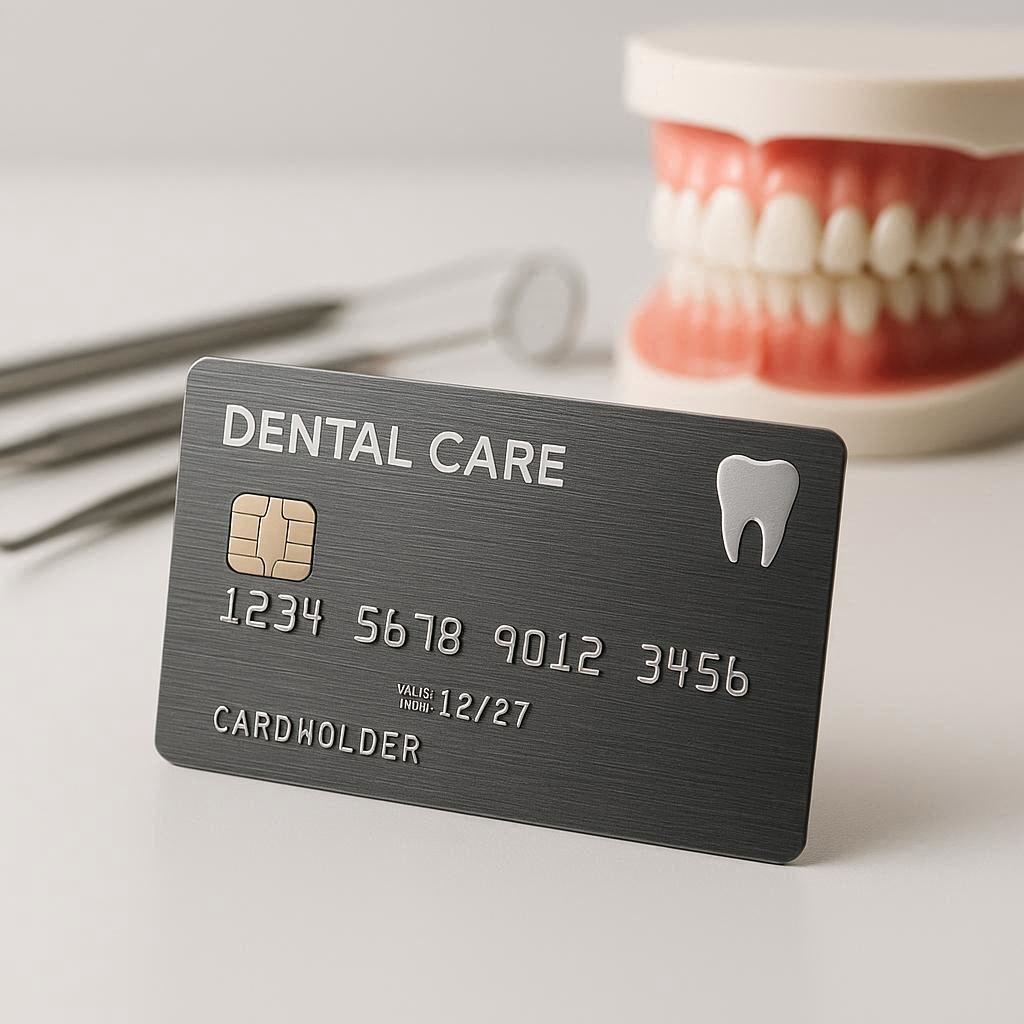
What Is CareCredit? (A Quick Refresher)
CareCredit is not a bank. It is a health, wellness, and medical credit card issued by Synchrony Bank. You can use it at over 250,000 enrolled providers across the United States. These include dentists, dermatologists, veterinarians, optometrists, and even hearing aid specialists.
Think of it as a credit card that only works for healthcare services. You apply online or at a provider’s office. If approved, you get a credit limit. You then use that credit line to pay for treatments like dental implants.
The key difference from a regular credit card? CareCredit offers special financing options, including no-interest promotions if you pay in full within a certain time.
Important note: CareCredit is not a loan in the traditional sense. You are not borrowing a fixed amount for a fixed term at a fixed interest rate (unless you choose their “reduced APR” plans). You are using a revolving credit line. That distinction matters, and we will explain why later.
How Does CareCredit Work for Dental Implants?
Using CareCredit for implants follows a simple process. But simple does not mean risk-free. Let us walk through the steps.
Step 1: Find a Participating Implant Dentist
Not every dentist accepts CareCredit. You need to find one who does. CareCredit has a provider search tool on its website. You can filter by “dentistry” and “oral surgery.”
Here is a tip: Call the office and ask two questions.
- “Do you accept CareCredit for the full implant process?”
- “Which financing promotions do you offer through CareCredit for implants?”
Some offices only accept CareCredit for cleanings or fillings. Larger implant cases sometimes require a different arrangement. Always confirm before you apply.
Step 2: Get a Treatment Plan with a Total Cost
A dental implant is not one procedure. It is a process with multiple stages.
- Consultation and X-rays (or CBCT scan)
- Tooth extraction (if the damaged tooth is still there)
- Bone graft (if your jawbone is too thin or soft)
- Implant placement (surgery)
- Healing period (3 to 6 months)
- Abutment placement
- Crown fabrication and attachment
Each stage costs money. Your dentist should give you a complete treatment plan with a total estimated cost. That total is what you will put on CareCredit.
Do not guess. Get the number in writing.
Step 3: Apply for CareCredit
You can apply online or in the dental office. The application takes about five minutes. You will need your Social Security number, income information, and a government ID.
CareCredit checks your credit. They use a soft pull for pre-approval? No—that is a common myth. For most people, CareCredit performs a hard inquiry on your credit report. This can temporarily lower your credit score by a few points.
If approved, you receive a credit limit. That limit could be $1,000 or $25,000. It depends on your credit history, income, and existing debts.
Step 4: Choose Your Financing Option
This is the most important decision.
When you use CareCredit for purchases of $200 or more, you get to choose between two financing structures:
| Feature | Promotional No-Interest (Deferred Interest) | Reduced APR (Fixed Payments) |
|---|---|---|
| Interest rate | 0% if paid in full by end date | Lower than standard rate (typically 10–15% APR) |
| Payment term | 6, 12, 18, or 24 months | 24, 36, 48, or 60 months |
| Monthly payment | Varies (you decide) | Fixed amount |
| Catch | Deferred interest if late | Interest accrues from day one |
| Best for | Paying off implants within 2 years | Long-term financing (3–5 years) |
Most people choose the no-interest option. That makes sense. But read the fine print carefully.
Step 5: Pay According to the Terms
If you choose the 12-month no-interest plan, you must pay the full balance within 12 months. Not 12 months and one day. Not 11 months and 29 days plus a late fee. The full balance by the due date.
If you miss that deadline, CareCredit charges deferred interest on the original amount from the purchase date. That interest rate is high—often 26.99% APR or more.
Example:
- Implants cost $5,000
- You choose 12 months no interest
- After 12 months, you still owe $500
- CareCredit adds deferred interest on the full $5,000, not just the $500
- You could owe an extra $1,300 or more
That is painful. And it happens more often than people think.
Is CareCredit a Good Idea for Dental Implants?
The honest answer: It depends on your discipline and your timeline.
Let us break it down into clear pros and cons.
The Good (Advantages)
Immediate access to care. You do not need to save for two years. You get implants now and pay over time.
No collateral. Unlike a secured loan, CareCredit does not take your car or home if you default. They will damage your credit, but you will not lose property.
Widely accepted. Most dental offices in the U.S. accept CareCredit. You are not hunting for a special lender.
Possible 0% interest. If you pay on time, you pay exactly the treatment cost. No extra fees. That is rare in consumer finance.
Reusable credit line. Once you pay off your implants, the credit becomes available again for other health needs (root canal, wisdom teeth, even your pet’s surgery).
The Bad (Disadvantages)
Deferred interest trap. This is the biggest risk. Life happens. A car breaks down. You lose a job. You get sick. If you cannot pay in full by the deadline, the interest penalty is brutal.
Hard credit inquiry. Your credit score takes a small, temporary hit when you apply. If you are planning a mortgage or car loan soon, that matters.
High standard APR. If you ever miss a payment or fail to pay off the promotional balance, the interest rate jumps to around 27%. Credit card levels.
Not all dentists offer the long terms. Some offices only offer 6 or 12 months no interest for implants. That is a very short time to pay $10,000.
Does not lower the treatment cost. You still pay full price. Financing does not make implants cheaper. It just spreads the payments.
Real talk: CareCredit is a tool. Like a chainsaw. It works great if you know what you are doing. It can hurt you badly if you are careless.
How Much Do Dental Implants Really Cost? (So You Can Plan)
Before you apply for CareCredit, you need a realistic budget. Here are average U.S. prices as of 2025. Your location and dentist will change these numbers.
| Procedure | Average Cost Range |
|---|---|
| Single implant (titanium) | $3,000 – $6,000 |
| Single implant (zirconia) | $4,500 – $7,000 |
| Implant-supported bridge (3–4 teeth) | $6,000 – $15,000 |
| All-on-4 (full arch, 4 implants) | $15,000 – $25,000 per arch |
| Full mouth implants (both arches) | $25,000 – $50,000 |
| Bone graft (per site) | $300 – $800 |
| Sinus lift | $1,500 – $3,000 |
| CT scan (3D imaging) | $250 – $500 |
Most patients need a bone graft. About 50% of implant candidates have some bone loss. That adds $1,000 to $2,000 to your total.
Also, ask if the crown is included. Some dentists quote the implant and abutment but charge extra for the crown. Others bundle everything.
Example real case:
- Patient in Austin, Texas
- Missing tooth #19 (lower left first molar)
- No bone graft needed
- Implant + abutment + crown: $4,800
- CareCredit limit approved: $5,000
- 18-month no-interest promotion
That patient paid $267 per month for 18 months. Total paid: $4,800. No interest. That is a success story.
Another real case:
- Patient in Orlando, Florida
- Two implants + two bone grafts
- Total: $9,200
- CareCredit limit: $8,000 (had to pay $1,200 cash)
- Chose 12-month no-interest
- Missed the deadline by two months due to medical bills
- Deferred interest added: $2,400
- Total paid: $11,600
The second patient regrets not choosing a longer term or a different loan.
CareCredit vs. Other Ways to Pay for Dental Implants
CareCredit is not your only option. In fact, for some people, it is not the best option. Let us compare.
Comparison Table: Financing Dental Implants
| Option | Best For | Interest Rate | Credit Check | Risk Level |
|---|---|---|---|---|
| CareCredit (no-interest promo) | Paying off in 6–24 months | 0% if on time | Yes (hard) | Medium (deferred interest) |
| CareCredit (reduced APR) | Longer terms (3–5 years) | 10–15% | Yes (hard) | Low to Medium |
| Personal loan (credit union) | Fixed monthly payments | 7–18% | Yes (hard) | Low |
| Dental savings plan | Lower upfront cost | N/A (discounts) | No | Very Low |
| Home equity loan | Large amounts ($20k+) | 6–10% | Yes (hard) | High (lose home) |
| Medical credit card (other brands) | Similar to CareCredit | Varies | Yes | Similar |
| In-house dental payment plan | No credit check | 0% sometimes | No | Low |
| Cash / savings | Avoiding all debt | 0% | No | None |
Alternative 1: Personal Loan from a Credit Union
Credit unions often offer lower interest rates than banks. Some have dental loan programs. For a $10,000 implant procedure, you might get 8% APR for 36 months. Total interest paid: about $1,200. No surprise deferred interest. Monthly payment around $310.
Pros: Predictable. No penalty if you pay early.
Cons: Requires good credit. Takes a few days to fund.
Alternative 2: Dental Savings Plans (Not Insurance)
These are discount plans. You pay an annual fee ($100–$200). You get 15–50% off dental procedures at participating dentists. Some plans cover implants at 30% off.
Example: $5,000 implant becomes $3,500. You still pay upfront, but you save $1,500. Combine with a small personal loan or CareCredit for a smaller amount.
Alternative 3: In-House Financing
Some dental offices offer their own payment plans. No third party. No credit card. You sign a simple agreement. You pay the dentist directly each month.
This is rare for expensive treatments like implants. But it exists. Ask your dentist: “Do you offer in-house financing with zero interest for 12 months?”
If they say yes, that is often better than CareCredit. Why? No deferred interest. No hard credit pull. And you keep the money local.
How to Apply for CareCredit for Dental Implants (Step-by-Step)
Let us assume you decided to move forward with CareCredit. Here is exactly how to apply and use it safely.
Before You Apply
- Check your credit score. You need a score of at least 620 to qualify. 700+ gets you higher limits and better promotions. Get a free score from Experian or Credit Karma.
- Get the exact treatment cost. Do not guess. Ask for a printed treatment plan with procedure codes and prices.
- Confirm the promotion length with your dentist. Not all dentists offer the same terms. Some only offer 6 months. Others offer 24 months. Ask before you apply.
The Application Process
- Go to the CareCredit website or use the link your dentist gives you.
- Fill out the form: name, address, income, SSN, employment.
- Submit. You usually get a decision in under 60 seconds.
- If approved, you see your credit limit instantly. You also see available promotions for your dentist (based on their agreement with CareCredit).
- You can use the card immediately. Your dentist charges the treatment amount.
After Approval (Critical Steps)
- Write down the promotion end date. Put it on your calendar. Set a reminder two months before.
- Calculate the monthly payment needed. Divide the total by the number of months in the promotion. Then add 10% to be safe. Example: $6,000 over 12 months = $500 per month. Pay $550 per month. Finish early.
- Do not use the card for anything else. Keep the balance for implants only. Other charges can complicate your payoff.
- Pay online or by phone. Do not rely on autopay alone. Autopay fails sometimes. Check your account every month.
Warning: Do not choose the 6-month no-interest plan for implants unless you have the cash sitting in a bank account. Six months is too short for most people to pay $5,000–$10,000. Choose 18 or 24 months if available.
Common Mistakes People Make with CareCredit for Dental Implants
I have talked to dozens of patients who regretted their CareCredit choice. Their mistakes are almost always the same.
Mistake #1: Assuming “No Interest” Means “No Cost”
No interest is not no cost if you are late. The cost is deferred interest. And it is huge.
Think of it this way: You are borrowing money for free, but only if you return it exactly on time. If you are one day late, you pay interest for the entire period. That is like a library fine on steroids.
Mistake #2: Only Making the Minimum Payment
CareCredit’s minimum payment is usually 2–3% of the balance. On a $10,000 balance, the minimum is $200–$300. That will not pay off the full balance in 12 months. You would need to pay $833 per month.
Always calculate your own payment. Ignore the minimum.
Mistake #3: Using CareCredit for Multiple Procedures at Once
You get a $10,000 limit. You spend $6,000 on implants. Then you spend $2,000 on your dog’s surgery. Then you spend $1,000 on a root canal. Now you have three different promotions with three different end dates. It becomes confusing. You miss one deadline. Interest hits everything.
Keep it simple. One procedure at a time. One promotion at a time.
Mistake #4: Not Reading the CareCredit Account Agreement
The agreement tells you exactly how deferred interest is calculated. It tells you what happens if you miss a payment. Most people never read it. Then they are shocked when penalties apply.
You can find the agreement online before you apply. Read it. Seriously.
What If You Are Denied for CareCredit?
It happens. About 30% of applicants are denied, especially if they have a credit score under 600, high existing debt, or low income.
If you are denied, do not panic. You have options.
Option 1: Ask the Dentist for a Smaller Down Payment
Some dentists will accept a 50% cash down payment and let you pay the rest over 6 months with no interest. This is in-house financing. It does not require a credit check. The worst they can say is no.
Option 2: Try a “Secured” Personal Loan
A secured loan uses your savings as collateral. You put $2,000 in a savings account. The bank gives you a $2,000 loan. You pay it back over 12 months. If you default, the bank takes the $2,000. Your credit is not damaged. Interest rates are low (3–6%).
Option 3: Apply with a Cosigner
Some credit unions allow cosigners on personal loans. A parent or spouse with good credit can help you qualify. The loan appears on both credit reports. Make every payment on time to protect their credit as well.
Option 4: Save and Wait
This is not fun to hear, but it is honest. If you cannot afford the payments and no financing is available, waiting six months to save $3,000 is better than rushing into a high-interest loan you cannot handle.
The Psychological Side: Why We Choose Bad Financing for Dental Implants
We need to talk about why smart people make expensive mistakes with CareCredit.
Dental pain is urgent. Missing teeth affect confidence. We want the solution now. Financing offers “now.” Our brain stops calculating risk and starts focusing on relief.
Marketers know this. CareCredit’s messaging emphasizes “get care today,” “no interest if paid in full,” and “easy payments.” The deferred interest clause is in the small print.
That does not make CareCredit evil. It makes it a financial product. And financial products reward people who read carefully and punish people who act emotionally.
A better approach: Wait 48 hours before applying. Get the treatment plan. Calculate the monthly payment. Ask yourself: “If I lose my job next month, can I still make this payment?” If the answer is no, choose a cheaper option or wait.
How to Use CareCredit for Implants Without Getting Hurt (Action Plan)
If you decide to use CareCredit, follow this exact plan.
Before Surgery
- Get a written treatment plan with total cost.
- Confirm your dentist offers 18-month or 24-month no-interest for implants.
- Apply for CareCredit. Get your credit limit.
- If your limit is lower than the treatment cost, ask the dentist if you can pay the difference in cash.
- Calculate the exact monthly payment to pay off the balance two months early.
- Set up automatic payments for that amount.
- Also set a manual reminder on your phone for two months before the deadline.
During Treatment
- Do not charge anything else to the CareCredit card.
- Keep your job income stable if possible (do not quit or change jobs until implants are paid off).
- Check your balance online every two weeks.
After Treatment (Payment Period)
- Pay the calculated amount every month. Do not skip.
- If you have extra money, pay more. Early payoff has no penalty.
- Three months before the deadline, check your remaining balance. Increase payments if needed.
- One month before the deadline, call CareCredit to confirm your balance is $0.
After Payoff
- Request a paid-in-full letter from CareCredit.
- Close the account if you are tempted to use it for other debt. Keep it open if you want the available credit for your credit score.
- Celebrate your new smile.
Frequently Asked Questions (FAQ)
Can I use CareCredit for dental implants if I have bad credit?
You can apply, but approval is unlikely with a credit score below 620. Synchrony Bank also looks at recent bankruptcies, late payments, and debt-to-income ratio. If denied, try a secured loan or in-house dental financing.
Does CareCredit charge interest on dental implants from day one?
No, if you choose a no-interest promotion. Yes, if you choose the reduced APR plan. And yes, if you fail to pay off the no-interest balance by the deadline—then interest is applied retroactively from day one.
Can I use CareCredit for the bone graft and the implant crown separately?
Yes. You can use the same CareCredit account for all related procedures. However, each transaction may have its own promotion period. Ask your dentist to bill everything under one charge if possible. If not, track each promotion separately.
What happens if I pay off my CareCredit balance early?
Nothing bad. You save on potential interest. There is no prepayment penalty. Your available credit resets immediately.
Can I get CareCredit for dental implants without a credit check?
No. CareCredit always performs a credit check. If you want no credit check, ask your dentist about in-house payment plans or look for a dental savings plan that reduces upfront costs.
How long does CareCredit approval take for dental implants?
Most people get a decision in under 2 minutes online. Instant approvals are common. If more information is needed, it can take 1–2 business days.
Is CareCredit only for dental implants?
No. You can use it for veterinary care, LASIK, dermatology, hearing aids, cosmetic surgery, and more. But each provider must be enrolled in CareCredit.
Additional Resource
For a completely independent, non-commercial comparison of dental implant financing options—including state-specific assistance programs and nonprofit dental clinics—visit the National Association of Dental Plans (NADP) consumer guide:
🔗 nadp.org/dental-financing-resources (Note: This is the official site; navigate to their consumer education section for impartial guidance.)
This resource does not sell any product. It lists real grants, sliding-scale clinics, and dental school implant programs that many patients never know exist.
Conclusion
CareCredit can help you afford dental implants if you use it correctly. The no-interest promotions are a real opportunity to pay over 12 to 24 months without extra cost. But the deferred interest clause is dangerous. One missed deadline can add thousands of dollars to your bill.
Always get a written treatment plan. Always calculate your monthly payment to finish early. Always read the agreement. And remember: CareCredit is one tool among many. Personal loans, dental savings plans, and in-house financing are often safer and cheaper.
Your smile is worth the investment. Just make sure you finance it with your eyes wide open.
Disclaimer: This article is for informational purposes only and does not constitute financial, medical, or legal advice. Interest rates, credit approval criteria, and dental implant costs vary by provider, location, and time. Always consult with a licensed dentist and a financial advisor before making healthcare or borrowing decisions. The author and publisher are not affiliated with CareCredit or Synchrony Bank.