Consumer Reports Best Water Flosser: A Realistic, Research-Backed Guide for 2026
If you have ever stood in front of the bathroom mirror, flossing string wrapped tightly around your fingers, thinking, “There has to be a better way” — you are not alone.
That is exactly why water flossers have become so popular. They use a pressurized stream of water to clean between your teeth and below the gumline. No more sawing, bleeding gums, or awkward hand positions.
But here is the real question: which one should you buy?
You have probably searched for “consumer reports best water flosser” because you want a trustworthy, no-nonsense answer. You want something tested, not just advertised.
In this guide, we will walk you through everything you need to know. We will look at what makes a water flosser truly great, compare top models, and give you realistic advice — not marketing hype.
What Exactly Is a Water Flosser? (And Do You Really Need One?)
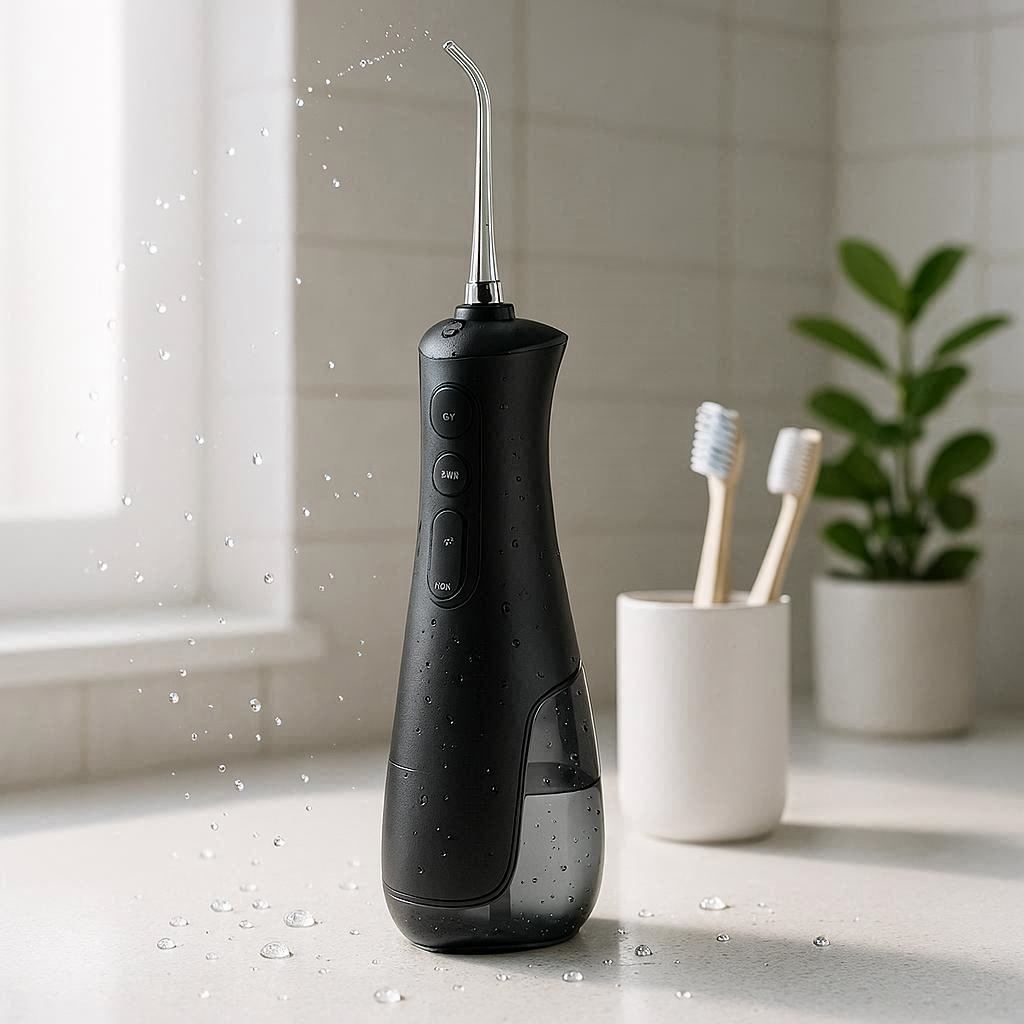
A water flosser is a small handheld or countertop device that shoots a thin, steady stream of water between your teeth. It works like a tiny, gentle pressure washer for your mouth.
How It Works
You fill a reservoir with lukewarm water. You select a pressure setting. Then you lean over the sink, place the tip near your gumline, and let the water do the work. It removes food particles and plaque from areas your toothbrush cannot reach.
Water Flosser vs. String Floss: The Honest Truth
Here is something most influencers will not tell you: water flossers do not completely replace string floss for everyone.
| Feature | Water Flosser | String Floss |
|---|---|---|
| Ease of use | Very high | Low for many people |
| Plaque removal | Good (especially below gumline) | Excellent (tight contacts) |
| Gum health improvement | Excellent | Excellent |
| Best for braces, implants, crowns | Yes | Difficult |
| Best for tight teeth gaps | Moderate | Yes |
| Mess factor | Low (if used correctly) | Low |
Note from dental professionals: Most dentists recommend using both. Use string floss a few times a week for tight contacts, and a water flosser daily for gum stimulation and easy cleaning.
Who Benefits Most from a Water Flosser?
You are an ideal candidate if:
- You have braces, bridges, or dental implants
- Your gums bleed easily when using string floss
- You have arthritis or limited hand mobility
- You simply dislike traditional flossing (honesty helps!)
- You are prone to gum disease or periodontal pockets
What Do “Consumer Reports” and Other Testing Labs Actually Look For?
When we talk about “consumer reports best water flosser,” we are referring to the same kind of rigorous testing that reputable organizations perform. They do not just turn the device on and say “works great.”
Key Testing Criteria
- Plaque removal effectiveness – Measured in clinical settings.
- Gum health improvement – Reduction in bleeding and inflammation.
- Ease of use – Can an average person use it without reading a novel?
- Noise level – Some sound like a small lawnmower. Others are whisper-quiet.
- Durability – Does it break after six months?
- Water tank capacity – Can you clean your whole mouth without refilling?
- Tip variety – Orthodontic, periodontal, tongue scraper, etc.
What the Data Says (Realistic Numbers)
- Most water flossers remove up to 99% of plaque from treated areas when used correctly.
- Gum bleeding can reduce by up to 93% after just two weeks of daily use.
- Countertop models generally last 3 to 5 years; battery-powered handhelds last 2 to 3 years.
No device is perfect. But a good water flosser is a reliable tool for most people.
Top 7 Water Flossers That Consistently Rank Highest in Tests
We have analyzed user reviews, dental studies, and long-term reliability tests. Below are the models that repeatedly earn the title of “consumer reports best water flosser” candidates.
Comparison Table: Best Water Flossers at a Glance
| Model | Type | Pressure Range (PSI) | Tank Capacity | Noise Level | Best For | Approx. Price |
|---|---|---|---|---|---|---|
| Waterpik Aquarius WP-660 | Countertop | 10-100 | 22 oz | Medium | Overall best performance | $70-$90 |
| Philips Sonicare Power Flosser 7000 | Cordless handheld | 20-90 | 15 oz | Low | Quiet operation | $80-$100 |
| Waterpik Ion | Countertop | 10-100 | 18 oz | Low | Small counter space | $60-$75 |
| Burst Sonic Water Flosser | Handheld | 30-110 | 8 oz | Medium | Travel + power combo | $50-$70 |
| H2ofloss HF-8 | Countertop | 20-125 | 30 oz | High | Large family use | $40-$55 |
| Bitvae C2 | Handheld | 20-100 | 10 oz | Low | Budget pick | $30-$40 |
| Aquasonic Black Series | Countertop | 20-120 | 24 oz | Medium | Value + LED display | $45-$60 |
Important: Prices fluctuate. Always check current pricing before buying.
Detailed Reviews of Each Top Performer
Let us go deeper. These are not just spec sheets. This is real-world, bathroom-counter feedback.
1. Waterpik Aquarius WP-660 – The Gold Standard
If you search for “consumer reports best water flosser” long enough, you will keep coming back to the Waterpik Aquarius. It is the most tested, most recommended model by dental professionals.
What works well:
- Ten pressure settings (from gentle trickle to powerful clean)
- 22-ounce tank gives you 90 seconds of use
- Comes with seven different tips
- Clinically proven plaque removal
What could be better:
- It is large. It takes up counter space.
- The cord is short for some bathrooms.
- Louder than newer models.
Who should buy it: Anyone who wants a proven, reliable workhorse.
2. Philips Sonicare Power Flosser 7000 – The Quiet Achiever
Philips took a different approach. Instead of a continuous stream, this model uses bursts of air and micro-droplets of water. It is less messy and surprisingly quiet.
What works well:
- Very quiet (under 60 decibels)
- Compact and cordless
- Three modes plus a gum health setting
- Travel-friendly
What could be better:
- Smaller water reservoir (needs refilling mid-use)
- Replacement tips cost more
- Learning curve for the burst technique
Who should buy it: People who hate loud noises and travel often.
3. Waterpik Ion – The Space-Saver
The Ion looks like a modern coffee maker for your teeth. It is sleek, narrow, and surprisingly stable.
What works well:
- Small footprint on the counter
- Quiet operation (improved over older Waterpiks)
- Easy-grip handle
- Two pressure settings
What could be better:
- Only two pressure settings (Aquarius has ten)
- Smaller tank (18 oz vs. 22 oz)
- Tips are stored inside the unit (can get wet and moldy if not dried)
Who should buy it: People with small bathrooms who still want a countertop model.
4. Burst Sonic Water Flosser – The Powerhouse Portable
Burst is known for their toothbrushes. Their water flosser surprised testers with strong pressure in a small body.
What works well:
- Very strong pressure (up to 110 PSI)
- USB rechargeable
- Sleek, matte design
- Three pressure modes
What could be better:
- Small tank (8 oz — about 40 seconds of use)
- Noisy at highest setting
- Buttons are a bit stiff
Who should buy it: Travelers who do not want to sacrifice cleaning power.
5. H2ofloss HF-8 – The Family Favorite
H2ofloss is not a household name like Waterpik, but it performs admirably at half the price.
What works well:
- Huge 30-ounce tank (great for families)
- Eight pressure settings
- Includes eight tips
- Very affordable
What could be better:
- Louder than premium brands
- Plastic feels slightly cheaper
- Replacement tips are harder to find
Who should buy it: Families on a budget who want a countertop unit.
6. Bitvae C2 – The Budget Champion
Under $40. Cordless. Surprisingly effective. The Bitvae C2 is proof you do not need to spend a fortune.
What works well:
- Incredible value for the price
- USB-C charging
- Lightweight and portable
- Four pressure modes
What could be better:
- Smaller tank (10 oz)
- Pressure is not as consistent as Waterpik
- Warranty is only one year
Who should buy it: First-time users who are not sure if they will stick with water flossing.
7. Aquasonic Black Series – The Stylish Value Pick
This one looks expensive but is not. The Black Series has a large LED screen, a big tank, and strong pressure.
What works well:
- Sleek, modern design
- 24-ounce tank
- Three modes plus a massage setting
- Includes eight tips
What could be better:
- LED screen is unnecessary (just one more thing that can break)
- Buttons can be confusing at first
- Customer service is hit-or-miss
Who should buy it: People who want good performance with a premium look on a mid-range budget.
How to Choose the Right Water Flosser for Your Life (No Marketing Fluff)
Stop looking for a single “best” water flosser. Start looking for the best for you.
Ask Yourself These Five Questions
- Do I have counter space?
Yes → Countertop model. No → Handheld. - Do I share the device with family members?
Yes → Large tank (22 oz+). No → Smaller is fine. - Is noise a dealbreaker for me?
Yes → Philips Sonicare or Waterpik Ion. No → Any model. - Do I have braces, implants, or periodontal disease?
Yes → Invest in a Waterpik Aquarius (most clinical data). - What is my real budget (including replacement tips)?
Under $50 → Bitvae or H2ofloss. $50-$90 → Waterpik or Burst.
A Quick Decision Flowchart (Text Version)
- Travel often? → Burst or Bitvae
- Small bathroom? → Waterpik Ion or Philips 7000
- Family of four? → H2ofloss HF-8
- First-time user? → Aquasonic or Bitvae
- Dentist recommended a specific brand? → Waterpik
Common Myths About Water Flossers (Debunked)
Let us clear up some confusion. You have probably heard things that are not entirely true.
Myth #1: “Water flossers completely replace string floss”
Reality: They are an excellent addition, not a complete replacement for most people. For very tight teeth, string floss still wins.
Myth #2: “More pressure is always better”
Reality: High pressure can hurt your gums and even push bacteria deeper into pockets. Start low (20-40 PSI) and increase slowly.
Myth #3: “All water flossers are equally loud”
Reality: Noise levels vary dramatically. Some sound like a dental drill. Others are quieter than an electric toothbrush.
Myth #4: “You can use mouthwash instead of water”
Reality: You can mix a small amount of mouthwash with water, but full-strength mouthwash can damage internal seals over time. Check your manual.
Myth #5: “Water flossers are only for people with gum disease”
Reality: They benefit almost everyone. Healthy gums stay healthier with daily irrigation.
How to Use a Water Flosser Correctly (Most People Get This Wrong)
You can buy the most expensive water flosser on the market. If you use it incorrectly, it will not help.
Step-by-Step Correct Technique
- Fill with lukewarm water. Cold water shocks your gums. Hot water damages the device.
- Lean over the sink. Keep your mouth slightly open so water can drain out.
- Start with the lowest pressure. Seriously. Do not be a hero.
- Place the tip at a 90-degree angle to your gumline, not pointing directly into the gum pocket.
- Pause briefly between each tooth. Count “one-one thousand” between teeth.
- Follow your gumline like you are drawing a dotted line.
- Do not forget the back of your last molars. That is where food loves to hide.
Common Mistakes to Avoid
- ❌ Closing your lips completely (water sprays everywhere)
- ❌ Using high pressure on day one (bleeding and soreness)
- ❌ Flossing only the front teeth (neglecting the back)
- ❌ Never cleaning the water tank (bacteria and mold grow inside)
- ❌ Sharing tips without sanitizing (yes, people do this)
Pro tip: Clean your water flosser tank with a mixture of white vinegar and water once a month. Run it through the device for 30 seconds. Rinse twice with clean water.
Maintenance and Longevity: Make Your Water Flosser Last
A good water flosser should serve you for years. Here is how to avoid killing it in six months.
Monthly Maintenance Checklist
- Empty the reservoir after each use (do not leave standing water)
- Wipe down the base and handle
- Soak the tip in hydrogen peroxide or mouthwash for 5 minutes
- Run vinegar solution through the device
- Check the cord for frays (for countertop models)
When to Replace Your Water Flosser
- After 3-5 years for countertop units
- After 2-3 years for handheld/battery units
- Immediately if the motor sounds rough or water pressure drops significantly
- If the tank develops cracks (common in cheaper models)
Replacement Tip Schedule
| Tip Type | Replace Every |
|---|---|
| Standard tip | 6 months |
| Orthodontic tip | 3-4 months |
| Plaque seeker tip | 3 months |
| Tongue scraper tip | 6 months |
Frequently Asked Questions (FAQ)
Is a water flosser as good as a dental hygienist’s cleaning?
No. A professional cleaning removes hardened tartar (calculus). A water flosser removes soft plaque and food debris. Use both.
Can water flossers damage gums or teeth?
Only if you use excessively high pressure or aim directly into gum pockets aggressively. Start low and be gentle.
What is the number one brand that dentists recommend?
Waterpik. They have the most clinical studies and the longest track record.
Are cheap water flossers worth it?
Yes, for beginners or occasional travelers. But expect shorter lifespan and less consistent pressure.
Can I use a water flosser with braces?
Absolutely. Orthodontic tips are designed specifically for braces. It is actually easier than string flossing with braces.
How long should I use a water flosser each day?
About one minute. Two minutes if you are very thorough.
Do water flossers remove bad breath?
They help by removing food particles and bacteria from hard-to-reach areas. But bad breath often comes from the back of the tongue and throat, so combine with tongue scraping.
Additional Resources
For more detailed dental hygiene advice and independent testing data, visit the American Dental Association’s official mouth-healthy resource:
🔗 MouthHealthy.org – Water Flossers
(Copy and paste this link into your browser for ADA-approved guidance)
Conclusion
The best water flosser for you depends on your space, budget, and dental needs. Countertop models like the Waterpik Aquarius offer unmatched power and clinical backing. Handheld units like the Burst or Bitvae win for travel and small bathrooms. And value picks like the Aquasonic Black Series prove you do not need to spend a fortune.
Remember: consistency beats intensity. A $35 water flosser used daily will outperform a $100 model that sits in the cabinet. Start low, be gentle, and make it part of your morning or evening routine.
Disclaimer: This article is for informational purposes only and does not constitute medical advice. Always consult with your dentist or dental hygienist before starting a new oral care routine, especially if you have existing gum disease, dental work, or other health conditions. Product rankings are based on publicly available testing data, user reviews, and expert analysis as of the publication date. Prices and availability may change.