The True Cost of Dental Implants in NYC: A Realistic Guide for 2026
Let’s be honest about something right from the start. You are probably reading this because you need a dental implant, you live in or near New York City, and the prices you have seen feel overwhelming. Maybe you’ve seen ads for $999 implants and wondered if they are too good to be true. Or, you received a treatment plan for $6,000 for a single tooth and felt your stomach drop.
This guide is different. We will not make unrealistic promises. We will not give you a single, magic number that applies to everyone because that number simply does not exist. Instead, we will walk through the real, all-in costs you can expect in the NYC area. We will explain why prices vary so dramatically from a specialist’s office on the Upper East Side to a clinic in Brooklyn. We’ll break down the components of the fee, discuss insurance and financing, and help you understand what you are actually paying for. By the end, you will be equipped to make a confident, informed decision for your health and your budget.
Why a Dental Implant Is an Investment, Not Just an Expense
Before we talk about money, let’s reframe the conversation. A missing tooth is not just a cosmetic problem. The space left behind triggers a biological chain reaction. The jawbone, no longer stimulated by the tooth root, begins to dissolve in a process called resorption. The adjacent teeth shift, leaning into the gap. The opposing tooth can super-erupt. Your bite changes, which can lead to TMJ pain, excessive wear on remaining teeth, and further tooth loss.
A dental implant is the only tooth replacement option that halts this process. It mimics a natural tooth root, preserving bone and maintaining facial structure. When you compare the cost of an implant against the accumulating costs of bridges that need replacement every 10-15 years or partial dentures that accelerate bone loss, the implant often becomes the most economical and healthiest solution over a lifetime.
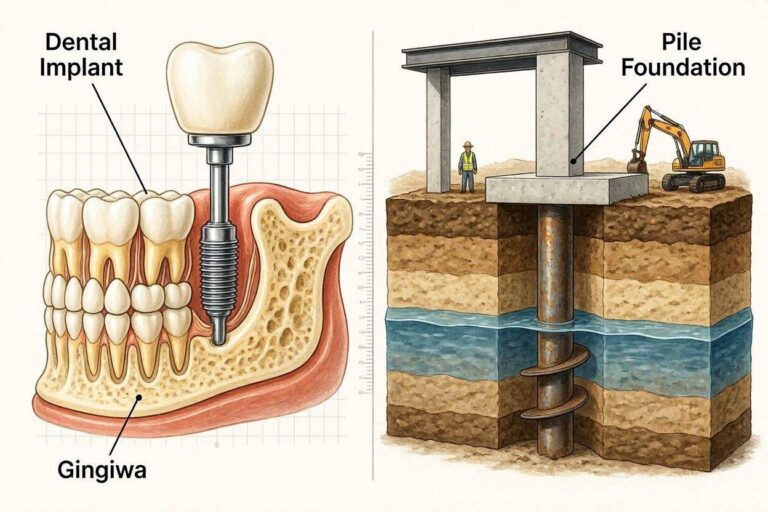
“Think of an implant as a foundation for a house,” says a leading NYC periodontist. “A bridge is a raft. It floats on the surface, relying on the neighbors. The implant is anchored to the bedrock. That stability is what you’re paying for.”
Part 1: The Real Numbers – A Breakdown of Single Implant Costs in NYC
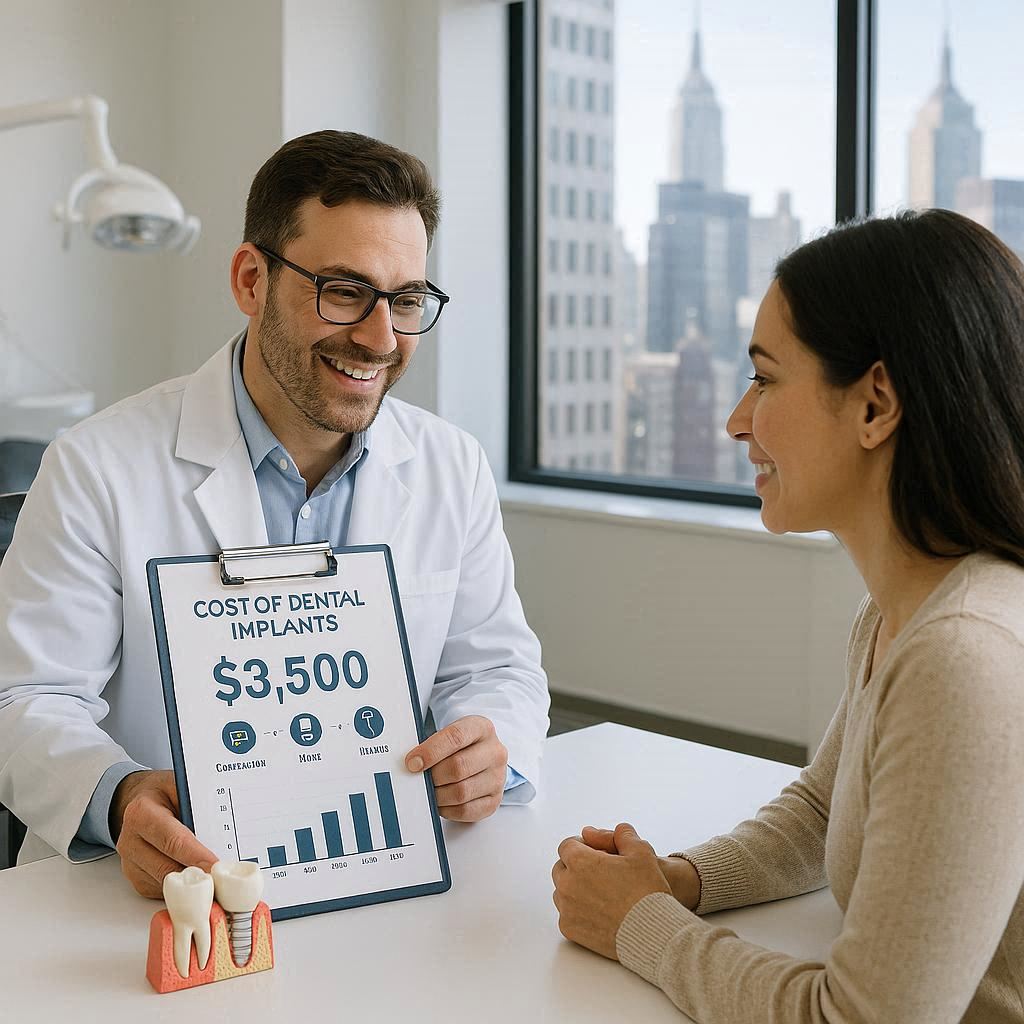
In New York City, the all-in cost for a single dental implant, including the crown, realistically ranges from $3,500 to $7,500. It is crucial to understand that a “$999 implant special” is almost always a marketing tactic to get you in the door. That fee typically covers only the implant fixture itself—a small titanium screw. It rarely, if ever, includes the abutment (the connector) or the custom dental crown (the false tooth), nor the necessary diagnostics and surgical placement.
A trustworthy dental office will provide a treatment plan that is fully itemized. An honest quote for a single tooth should contain several distinct line items.
The Standard Components of a Single Implant Fee
Understanding each component is your first line of defense against hidden fees. Here is what a complete treatment plan should outline.
- Consultation and 3D Imaging (CBCT Scan): This is non-negotiable for safe placement. A Cone Beam CT scan creates a 3D model of your jaw, nerves, sinuses, and bone density. Cost: $200 – $600.
- Implant Fixture Placement (Surgery): This is the surgical placement of the titanium post into your jawbone. The cost reflects the surgeon’s skill and the quality of the implant brand. Cost: $1,800 – $3,500.
- Abutment: A small connector piece that is attached to the implant fixture once it has healed. It bridges the implant and the crown. Cost: $500 – $900.
- Implant Crown: The custom-made porcelain tooth that is fixed to the abutment. This is created from a shade, shape, and material to match your neighboring teeth. Cost: $1,500 – $3,000.
- Bone Grafting (If Needed): In many cases, a patient is not a candidate for an immediate implant. If you’ve been missing the tooth for a while, your body has already resorbed the bone, and a bone graft is needed to rebuild a solid foundation. This is a major factor in variable pricing.
Note: If you don’t have a healthy, sufficient jawbone, the implant fixture has nothing to anchor into. This is like trying to hang a heavy coat on a wall where there’s no stud. You must build the wall first.
Part 2: The Single Biggest Variable – Why You Might Need a Bone Graft
This is where realistic advice matters most. Advertising always shows the ideal patient. In a busy NYC practice, many patients are not the ideal patient. If you lost a tooth years ago due to infection or trauma, the surrounding bone has almost certainly receded.
The need for a bone graft is not a scare tactic—it’s a standard, science-backed prerequisite for success. The cost and type of graft can completely change the total price tag.
Types of Bone Grafts and Their Price Ranges in NYC
| Type of Graft | Typical Use Case | Complexity | Estimated Cost Range (NYC) |
|---|---|---|---|
| Socket Preservation | Done immediately after tooth extraction to prevent bone loss. | Low | $400 – $900 |
| Minor Guided Bone Regeneration | A small localized defect at the implant site. A small amount of graft material and a membrane are used. | Medium | $600 – $1,500 |
| Major Sinus Lift | Required for upper back teeth when the sinus floor is too low. The sinus membrane is lifted and graft material is inserted. | High | $1,800 – $4,500 |
| Block Bone Graft | A significant volume of bone is needed, often taken from the back of the jaw or chin. | High | $2,500 – $5,000+ |
Part 3: Beyond the Single Tooth – The Arch Dilemma
Replacing a single tooth is a straightforward financial equation compared to losing all or most of your teeth. If you are facing complete tooth loss in one or both jaws, the conversations shift from single implants to full-arch restorations. The two most common methods in NYC are implant-supported dentures and the All-on-4 technique.
Implant-Supported Dentures (Snap-On)
This is a traditional approach. Between two and four implants are placed in the jaw, and a custom denture is fabricated with special attachments that “snap” onto the implants. The denture is still removable by the patient for cleaning but is infinitely more stable than a traditional denture floating on gums.
- Typical Implant Number: 2 to 4 per jaw.
- Stability: Good. Eliminates the need for adhesive. Prevents denture from lifting during eating and speaking.
- Cost Per Jaw (NYC): $8,000 – $17,000. This wide range depends on the number of implants, the quality of the denture, and the specialist.
Fixed Full-Arch Restoration (Often Marketed as All-on-4)
The All-on-4 concept is a specific technique where four dental implants are placed at precise angles in a jaw to support a fixed, non-removable bridge of 12-14 teeth. The back implants are often tilted to maximize contact with bone, often avoiding the need for bone grafts and simplifying the process. You cannot remove these teeth; only your dentist can.
- Typical Implant Number: 4 per jaw. (Sometimes 5 or 6 for added security).
- Stability: Excellent. Functions closest to natural teeth.
- Temporary Teeth: You receive a fixed, temporary set of teeth on the same day as surgery in most cases.
- Final Bridge: After a healing period of 3-6 months, a high-strength final bridge (usually zirconia or hybrid composite) is fitted.
- Cost Per Jaw (NYC): $22,000 – $35,000. Beware of quotes that do not include the final bridge material upgrade.
“Many patients get excited by a low starting price for All-on-4, only to learn later that the $18,000 quote was for a basic acrylic temporary,” an implant coordinator shared. “A durable, long-lasting zirconia final bridge can add another $5,000 to $8,000 to the total.”
Full-Arch Cost Comparison: Traditional vs. All-on-4
This table summarizes the key differences a patient must consider when choosing a full-arch solution.
| Feature | Implant-Supported Denture (Snap-On) | Fixed Full-Arch Bridge (All-on-4) |
|---|---|---|
| Removability | Yes, removable by patient. | No, fixed in place (only dentist removes). |
| Number of Implants (Typical) | 2-4 per jaw. | 4-6 per jaw. |
| Palate Coverage | Often has some coverage for strength. | No palate coverage (horseshoe shape). |
| Maintenance | Removed nightly for cleaning; attachments need periodic replacement. | Cleaned like natural teeth with superfloss, waterpik, and regular cleanings. |
| Taste Sensation | Can be reduced from palate coverage. | Completely natural, as palate is free. |
| Cost Range Per Jaw (NYC) | $8,000 – $17,000 | $22,000 – $35,000 |
Part 4: Why “NYC” Is Not a Single Price Zone
You already know this intuitively. A brownstone in Park Slope does not cost the same as an apartment in Inwood. Dental care follows the same real estate principle. The “Cost Of Dental Implants NYC” is a catch-all search term, but the geography within the five boroughs and surrounding suburbs creates a landscape of varying price points.
High-Cost Factors: Manhattan’s Premier Practices
In Manhattan, especially in districts like the Upper East Side, Midtown, and Tribeca, you are paying for the practice’s overhead. These are often facilities with in-house labs, state-of-the-art 3D printers, and specialists with titles like “Board-Certified Prosthodontist” or “Diplomate of the American Board of Periodontology.” These credentials signify years of additional surgical training. The labs they use are likely local master ceramists who hand-craft crowns to an artistic standard. You are paying for that expertise and faster turnarounds on repairs.
Value and Economy: The Outer Boroughs and Suburbs
Brooklyn, Queens, the Bronx, and Staten Island, as well as areas like Westchester in New York or Northern New Jersey, often offer lower prices. The overhead for the practice is lower. This doesn’t inherently mean lower quality. It often means high-volume clinics that have optimized their workflow. A clinic that places 500 implants a year can negotiate a lower rate for implant parts than a specialist who places 50 a year. Their efficiency can translate to savings for you, provided they don’t sacrifice individualized care.
Important Note for Readers:
Do not believe a practice that claims to be “the cheapest” and also provides “the highest personal attention.” These two things rarely coexist. High-volume clinics are excellent if your case is straightforward. If your medical history is complex or your bone loss is severe, a specialist’s depth of experience is worth the premium. Match the practice type to the complexity of your case.
Part 5: The Material Question – Zirconia vs. Titanium
Decades ago, the choice was simple: a titanium screw with a porcelain-fused-to-metal crown. Today, metal-free options exist, and they have different price points. This is a conscious choice you can make for your body.
- Titanium Implant Fixture: The gold standard. It has over 50 years of clinical data proving its biocompatibility. It is lightweight, strong, and osseointegrates (fuses to bone) predictably. It is the more affordable fixture option.
- Zirconia Implant Fixture: A ceramic, white implant. It is a holistic, metal-free alternative. It is chosen by patients with metal sensitivities or those who want absolutely no metal in the body. High-grade one-piece zirconia implants can be more technique-sensitive to place and cost more than titanium fixtures, adding $300-$800 to the implant fee.
When discussing the “crown” portion, the material matters even more for durability and aesthetics.
- Porcelain-Fused-to-Metal (PFM): A metal substructure with porcelain baked on top. Durable but can show a grey line at the gum margin if your gums recede slightly. Economical.
- Layered Zirconia: A white zirconia base with hand-painted porcelain for life-like translucency. No grey line. Excellent aesthetics.
- Full-Contour (Monolithic) Zirconia: A solid block of super-strong zirconia with no added porcelain. It is virtually unbreakable and ideal for posterior molars or bruxers (grinders). The aesthetic can vary.
Part 6: Dental Tourism – A Realistic Risk-Benefit Analysis
When looking at NYC prices, the “Google” response is often to look elsewhere. Flights to Costa Rica, Mexico, or Hungary seem cheap when a clinic quotes $10,000 for a full-arch. Dental tourism is a valid, globalized industry, but it must be understood realistically.
The Benefits of Staying Local in NYC:
- Complication Accountability: A reputable NYC dentist is an Uber ride away. If an implant fails or a crown fractures in year two, you have direct recourse and immediate access to the operating clinician.
- Regulated Materials: US labs must adhere to FDA regulations, which certify the chemical composition of the ceramics and implant surfaces. In some international clinics, substandard “knock-off” implant parts have been found, which can fracture or cause severe biological incompatibility.
- Continuity of Care: An implant is not a one-time transaction. It’s a long-term relationship requiring yearly check-ups, professional cleanings with specific non-metal instruments, and bite assessments. The implant itself may be fine, but the maintenance determines its lifespan.
Important Rule:
Never chase the lowest global price for a surgical procedure that you will have to live with for 30, 40, or 50 years. Implant complications are not trivial. A failing implant can destroy more bone than the original tooth loss, leaving a catastrophic defect that requires a complex, expensive reconstruction to fix. If you go abroad, choose a clinic with international memberships (like the International Congress of Oral Implantologists) and significant documented experience, not a pop-up clinic catering exclusively to foreign tourists.
Part 7: Why Implants Fail and How Preventative Spending Saves You Money
An honest guide must discuss failure. Dental implants boast a 95-98% success rate, but they are not bulletproof. Understanding why they fail will help you see why cutting corners is the most expensive decision you can make.
Two primary enemies exist: peri-implantitis and biomechanical overload.
Peri-implantitis: The Silent Disease
Just like teeth, implants can get a disease that attacks the surrounding gum and bone. Bacteria colonize below the gumline. The body can’t fight it because there’s no blood supply in the tooth—it’s a sterile titanium post. The inflammation quietly destroys bone until the implant becomes mobile. Treatment is difficult and costly, often exceeding $3,000 for debridement and grafting, and full resolution is not guaranteed.
Preventative Maintenance Schedule for Your Implant
This is the real “hidden” long-term cost. A $5,000 implant that is professionally maintained every 6 months for 30 years is a bargain. A $5,000 implant that is ignored and fails after 7 years is a financial disaster.
- Daily Home Care: Superfloss or threader floss under the crown, waterpik, and thorough brushing.
- Professional Maintenance Every 6 Months: Your hygienist must use specific plastic or titanium scalers. A stainless steel scaler will scratch the implant abutment, creating a microscopic “ladder” for bacteria to climb down. This is non-negotiable.
- Annual Bite Check (Occlusal Analysis): Your bite changes over time. Excessive force on a single implant can crack the crown or loosen the screw. An annual adjustment is cheap insurance.
Part 8: Financing the New You – Making It Affordable in NYC
The price of a new smile does not have to be paid all at once, in a lump sum, in a single day. The vast majority of NYC practices work with third-party healthcare financiers. This decouples the treatment from your immediate cash flow.
The Big Three in Dental Financing
| Provider | Key Features | Typical Terms |
|---|---|---|
| CareCredit | The most widely accepted healthcare credit card. Offers short-term 0% interest promotions (e.g., 6, 12, 18 months) if paid in full within the period. | Beware of deferred interest. If a $10,000 balance is not paid in full by month 12, you’ll owe all the accumulated interest from day one. |
| LendingClub | Traditional installment loans with fixed rates and fixed monthly payments, often for larger amounts. | Terms up to 60 months. Good for consolidating the cost into a predictable monthly budget. No deferred interest traps. |
| Proceed Finance | Specializes in larger procedures like full-mouth reconstruction and All-on-4. | Often offers extended-term loans (up to 96 months) which can make monthly payments very low, though total interest is higher. |
Other Avenues to Explore in NYC
- Dental Schools: NYU College of Dentistry offers implant treatment at a significantly reduced cost. The work is performed by highly supervised residents. The trade-off is time. Appointments can be 3 hours long, and the overall timeline from start to finish can be double that of a private practice.
- In-House Membership Plans: Many NYC private practices now bypass insurance companies entirely. They offer their own “wellness plans” for an annual fee, which covers cleanings, exams, and gives a 15-20% discount on all other treatments, including implants.
- Flexible Spending Accounts (FSA) / Health Savings Accounts (HSA): Use pre-tax dollars. If your employer offers these, this is an instant 20-30% savings on your procedure based on your tax bracket. Coordinate timing: you can schedule implant surgery to align with your FSA plan year.
Conclusion
Understanding the true cost of a dental implant in NYC means looking beyond a simple price tag and recognizing a series of clinical and material decisions that determine long-term success. The investment, realistically ranging from $3,500 for a simple single tooth to over $30,000 for a fixed full arch, reflects the surgical precision, material quality, and the priceless value of preserving your jawbone health. By breaking down the fees, vetting your clinician’s credentials, and securing a smart financing plan, you transform an overwhelming expense into a deeply rewarding investment in a lifetime of function and confident smiles.
Frequently Asked Questions
Q: Why is there such a huge difference between a $1,000 implant and a $6,000 implant in NYC?
A: The $1,000 fee is usually a “loss leader” that only covers the titanium post surgery. You must still pay for the abutment and the custom crown, which can bring the real total to $3,500+. The $6,000 fee at a top-tier prosthodontist’s office is all-inclusive, reflecting a master lab technician’s custom crown and the specialist’s advanced training in complex cases.
Q: Does medical insurance cover dental implants?
A: Medical insurance rarely covers elective implants. However, it can provide coverage if the tooth loss was due to a non-biting accident (trauma), a congenital condition, or as part of a reconstruction after cancer surgery. Your dentist’s billing coordinator would need to file a detailed medical claim, not a dental one.
Q: How long does the entire process take, from extraction to final crown?
A: The biological timeline is the part you can’t speed up. After extraction, a site needs about 3-6 months to heal. After implant placement, osseointegration (bone fusion) requires another 3-6 months. A straightforward anterior tooth case can often be done in 4 months with immediate placement. A complex molar with a bone graft can take 9-12 months.
Q: Can I get an MRI if I have a dental implant?
A: Yes. Dental implants are made of titanium or zirconia, which are non-ferromagnetic. They do not heat up or move in an MRI. They can cause some image distortion (“artifact”) if the area being scanned is directly around the jaw, but they are universally safe.