Snap On Dental Implants: The Complete, Realistic Guide for 2026
If you have missing teeth, you have probably heard about dentures. You might also know about traditional implants. But there is a middle ground that many people overlook: Snap On Dental Implants.
This solution combines the stability of implants with the affordability of dentures. It is not magic. It is not a one-day miracle. But for millions of people, it has been life-changing.
In this guide, we will walk you through everything you need to know. No jargon. No false promises. Just honest, practical information to help you decide if snap on dentures are right for you.
We will cover costs, procedures, recovery times, cleaning, pros, cons, and much more. By the end, you will feel confident talking to your dentist about this option.
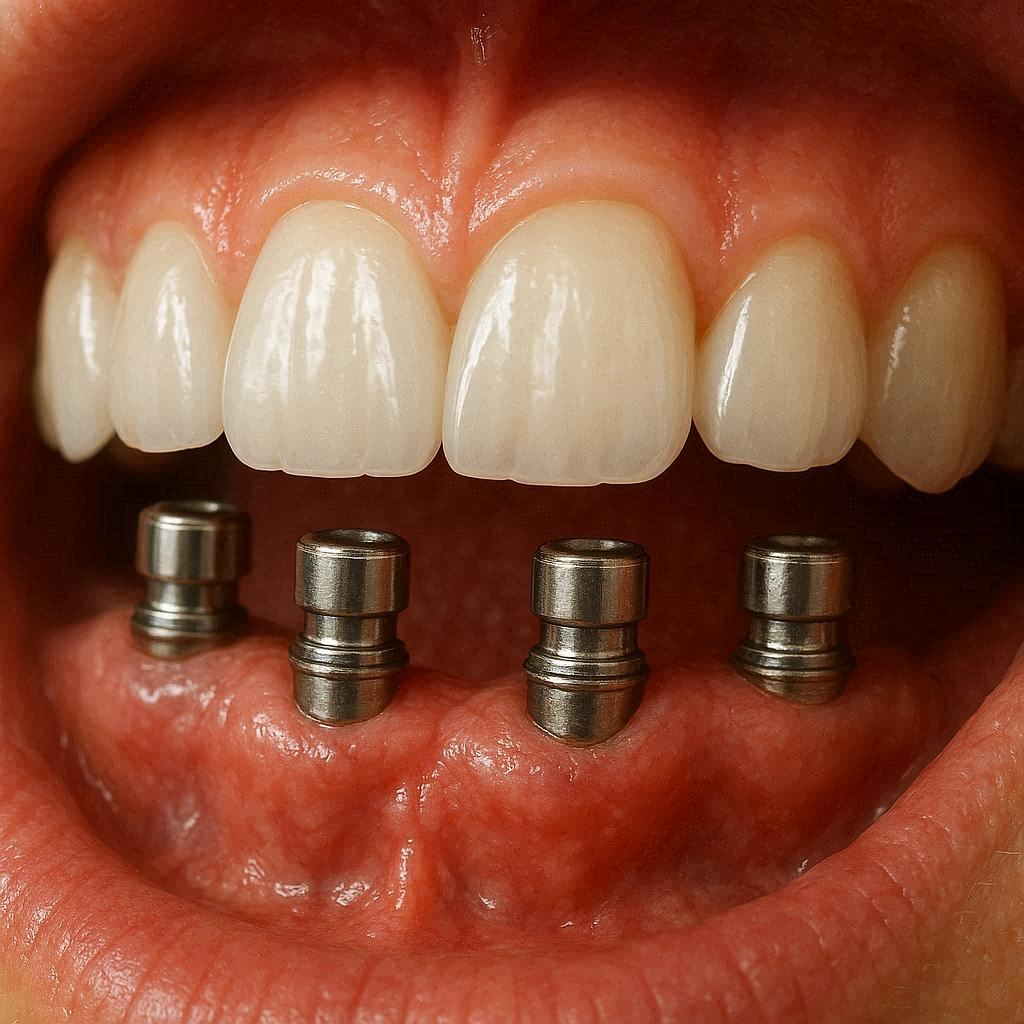
What Are Snap On Dental Implants? (A Simple Explanation)
Imagine a regular denture that stays in place with glue or suction. Now imagine that same denture clicking firmly onto small metal posts implanted in your jawbone. That is the basic idea.
Snap on dental implants — also called implant-retained dentures or overdentures — use two to four implants per jaw. These implants act like anchors. Your denture has special attachments that snap onto these anchors. The result is a prosthetic that stays put when you eat, talk, or laugh.
Unlike fixed bridges or full arch implants (like All-on-4), you can remove these dentures at night for cleaning. But unlike traditional dentures, they do not rock, slip, or cause sore spots.
“For patients who cannot afford fixed bridges but hate loose dentures, snap on implants are the perfect compromise.” — Dr. Sarah Jenkins, prosthodontist.
How Do Snap On Implants Differ from Traditional Dentures?
Let us clarify the differences clearly. Below is a quick comparison.
| Feature | Traditional Dentures | Snap On Dental Implants |
|---|---|---|
| Stability | Low (adhesive required) | High (snaps onto implants) |
| Chewing power | 20–30% of natural teeth | 70–80% of natural teeth |
| Bone preservation | None (bone shrinks over time) | Stimulates bone, reduces loss |
| Removable | Yes (full removal) | Yes (user removable) |
| Comfort | Can cause sore spots | Generally very comfortable |
| Cost (per arch) | $1,000–$3,000 | $5,000–$15,000 |
| Lifespan | 5–7 years | 15–20 years (implants permanent) |
If you want a removable solution that feels secure and lasts longer, snap on implants are a strong candidate.
Who Is a Good Candidate for Snap On Dental Implants?
Not everyone qualifies. And that is okay. Honesty here saves you time and disappointment.
Ideal candidates usually have:
- At least one missing tooth arch (upper or lower).
- Sufficient jawbone density to support implants.
- Healthy gums (no active periodontal disease).
- No uncontrolled medical conditions (diabetes, autoimmune diseases must be managed).
- Realistic expectations (this is not the same as fixed permanent teeth).
Less ideal candidates include:
- Heavy smokers (smoking impairs healing).
- People taking bisphosphonates (bone medications).
- Those with severe bruxism (teeth grinding).
- Patients who refuse daily hygiene routines.
Note: Your dentist will perform a CBCT scan (3D X-ray) to measure bone volume. Do not skip this step.
The Step-by-Step Procedure: What to Expect
The process takes several months. Patience is essential. Here is a realistic timeline.
Stage 1: Consultation and Planning (1–2 visits)
- Oral exam and X-rays.
- CBCT scan for bone assessment.
- Discussion of treatment plan and costs.
- Impressions of your mouth.
Stage 2: Implant Placement Surgery (1 day)
- Local anesthesia (or sedation if needed).
- Small incisions in the gums.
- Titanium implants inserted into the jawbone.
- Healing caps placed on top.
- Temporary denture adjusted to fit.
Duration: 1–2 hours per arch.
Recovery: 7–14 days of soft foods.
Stage 3: Osseointegration (3–6 months)
This is the most critical phase. Your bone grows around the implants, locking them in place. You wear your existing denture during this time. No heavy chewing on the implant sites.
Stage 4: Uncovering and Attachments (1 visit)
- Minor gum surgery to expose implant tops.
- Healing abutments placed.
- After 2–3 weeks, you receive final abutments (locators).
Stage 5: Final Snap On Denture Fabrication (2–3 weeks)
- New impressions taken with implants in place.
- Denture custom-made with embedded metal housings.
- Try-in appointment to check fit and aesthetics.
Stage 6: Delivery and Adjustment (1 visit)
- Denture snapped onto implants.
- Bite and pressure points adjusted.
- You learn how to remove and insert the denture.
By the end, you will have a secure, comfortable smile.
The Cost of Snap On Dental Implants (Real Prices)
Let us talk numbers. Prices vary widely by location, dentist skill, materials, and number of implants.
Typical price ranges in the United States (per arch):
| Number of Implants | Low-End (Basic) | High-End (Premium) |
|---|---|---|
| 2 implants | $4,500 – $7,000 | $8,000 – $10,000 |
| 3 implants | $6,000 – $9,000 | $10,000 – $13,000 |
| 4 implants | $8,000 – $12,000 | $13,000 – $18,000 |
What is included in premium pricing?
- CT scan and surgical guides.
- Sedation dentistry.
- Metal-reinforced denture.
- 5-year warranty.
- Bone grafting (if required).
Additional costs to consider:
- Bone graft: $500 – $2,500 per site.
- Sinus lift (upper jaw): $1,500 – $3,000.
- Temporary denture modifications: $200 – $500.
- Annual maintenance: $200 – $400.
Does insurance cover snap on dentures?
Most dental insurance plans cover part of the denture (often 50% up to $1,500). Implant surgery is rarely covered. Medicare does not cover implants. Some Medicaid plans may cover them for low-income patients.
Financing options:
- CareCredit.
- LendingClub (dental loans).
- In-house payment plans (ask your dentist).
Important: Do not chase the cheapest price. Failed implants cost more to fix than quality ones cost to place.
Snap On Dentures vs. All-on-4 Fixed Bridges
This is a common point of confusion. Let us break it down.
| Feature | Snap On Dentures | All-on-4 Fixed Bridge |
|---|---|---|
| Removability | Yes (nightly) | No (only dentist removes) |
| Number of implants | 2–4 | 4 per arch |
| Fixed or removable | Removable | Fixed screw-retained |
| Chewing efficiency | 70–80% | 90–95% |
| Cost per arch | $6k–$15k | $20k–$30k |
| Cleaning | User removes to clean | Dentist cleans professionally |
| Palate coverage | Full (upper denture) | Open palate option |
Which one to choose?
- Choose snap on if: budget matters, you want to clean thoroughly, or your bone is moderate.
- Choose All-on-4 if: you want the closest feel to natural teeth and budget is not a constraint.
Advantages of Snap On Dental Implants
Let us focus on the positives. These are real benefits patients report.
1. Incredible Stability
You can bite into an apple. You can eat corn on the cob. No adhesive strips. No embarrassing slips during conversations.
2. Bone Preservation
Implants stimulate your jawbone. This stops the sunken, aged look that occurs with long-term denture wear.
3. Improved Taste and Speech
No large palate-covering base (in some designs). Your tongue moves freely. Your words come out clearly.
4. Easier Cleaning
Because you remove the denture, you can scrub every surface. You also clean around the implants with a soft brush.
5. Long-Term Economy
Implants last 20+ years. The denture part will need replacement every 8–10 years. Over two decades, this is cheaper than multiple traditional dentures.
6. Less Gum Irritation
No rubbing plastic on tender gums. The implants bear the chewing load, not your soft tissues.
Disadvantages and Risks (Honest Reality Check)
No solution is perfect. Snap on implants have downsides.
1. Higher Initial Cost
You pay $5,000–$15,000 upfront. Traditional dentures cost $1,500. If your budget is extremely tight, this may not work.
2. Multiple Surgeries
You undergo at least two minor surgical procedures. Recovery takes time. If you fear dental work, this adds stress.
3. Maintenance Commitment
Every night, you must:
- Remove the denture.
- Brush the implants.
- Soak the denture.
- Brush your gums.
If you skip hygiene, inflammation (peri-implantitis) can destroy the implants.
4. Possible Implant Failure
About 5–8% of lower jaw implants fail. Upper jaw has slightly higher rates (8–12%). Smoking and poor hygiene increase failure dramatically.
5. Annual Professional Checks
You cannot ignore these. Your dentist must check the attachment housings, replace worn nylon inserts (every 6–12 months), and clean deep areas.
6. Denture Can Still Move (Slightly)
With only 2 implants, some rotational movement occurs. Four implants eliminate almost all movement.
“Patients with two implants sometimes complain of slight rocking. Three or four implants feel rock solid.” — Dr. Michael Torres, implant dentist.
How to Clean and Maintain Your Snap On Dentures
Good hygiene is non-negotiable. Follow this daily routine.
Morning:
- Rinse the denture under cool water.
- Brush the denture with soft brush and non-abrasive cleanser.
- Reinsert by snapping onto implants (you will hear a click).
Evening:
- Remove denture by pulling upward (lower) or downward (upper).
- Brush implants with a small interproximal brush.
- Brush your natural teeth and gums.
- Soak denture in water or denture solution overnight.
- Rinse implants with salt water or chlorhexidine (if prescribed).
Weekly:
- Use denture cleaning tablets (Efferdent or Polident).
- Inspect nylon inserts (small colored rings inside denture). If they crack, replace them.
Every 6 months (dental visit):
- Professional cleaning around implants.
- Check torque of implant abutments.
- Replace worn attachments ($50–$100).
What Do Real Patients Say? (Quotes from Users)
“I wore regular dentures for eight years. I could not eat salad without everything slipping. My snap ons cost $9,500 for the lower jaw. Now I eat steaks. I laugh without holding my hand over my mouth. Worth every penny.”
— Ruth, 67, Florida.
“Honestly, the surgery was easier than a tooth extraction. Healing took two weeks of yogurt and soup. The worst part was waiting 4 months for osseointegration. But now? I forget I even have dentures.”
— James, 59, Texas.
“I tried saving money abroad. The implants failed because the dentist used cheap parts. I had to redo everything in the US for $14,000. Do not go cheap on this.”
— Linda, 62, California.
Common Questions About Snap On Dental Implants
Can I sleep with my snap on dentures in?
No. Dentists strongly recommend removing them at night. This gives your gums time to recover and prevents fungal infections (denture stomatitis).
Do snap on implants hurt?
The surgery itself is painless due to anesthesia. Afterward, you feel soreness for 3–7 days. Over-the-counter painkillers (ibuprofen) usually suffice.
How long do the implants last?
Titanium implants can last 30+ years if properly maintained. The denture part lasts 8–12 years. The nylon attachments need replacement every 6–18 months.
Can I have snap on dentures if I have bone loss?
Maybe. You may need bone grafting first. Minimal bone requirements:
- Lower jaw: 10mm height, 5mm width.
- Upper jaw: 8mm height, 5mm width.
Are snap on implants removable by the dentist only?
No. You remove them daily for cleaning. This is a major difference from fixed bridges.
Will my insurance cover implant attachments?
Some PPO plans cover portions of implant abutments and dentures. Call your provider with the code D6010 (implant placement) and D5866 (denture attachment).
Snap On Dentures for the Upper Jaw vs. Lower Jaw
There is a major difference.
Lower Jaw Snap On Dentures
- Usually very successful.
- 2 or 3 implants suffice.
- Retention is excellent.
- Less bone available (but usually enough).
Upper Jaw Snap On Dentures
- Requires more implants (3–4 minimum).
- Bone is softer and less dense.
- Sinus proximity complicates surgery.
- Some patients prefer a palate-less design (horseshoe shape).
Critical note: Many patients find upper snap on dentures less stable than lower ones. Ask your dentist about 4 implants for the upper jaw for best results.
The Psychological Benefits (Often Overlooked)
Missing teeth affect more than chewing. They affect self-esteem. Traditional dentures carry a constant fear of slipping. That fear changes behavior.
People with snap on implants report:
- Greater willingness to smile in photos.
- Eating out without anxiety.
- Speaking clearly in meetings.
- Feeling younger and more confident.
One patient told us: “I stopped cupping my hand over my mouth when I laughed. That alone was worth the money.”
Step-by-Step Guide to Choosing a Dentist for Snap On Implants
Not all dentists offer this service. Here is how to find the right one.
Step 1: Look for specific credentials
- Prosthodontist (3 years extra training) or
- Oral surgeon (for complex bone cases) or
- Implantologist (with AAID or ICOI certification).
Step 2: Ask these five questions
- How many snap on overdenture cases have you done in the past year?
- Do you use a CBCT scan for planning?
- What brand of implants do you use? (Nobel Biocare, Straumann, Zimmer are top)
- Can I speak to a past patient?
- What happens if an implant fails? (Free replacement or refund?)
Step 3: Compare two or three treatment plans
Do not accept the first quote. Bring your X-rays to multiple consultations.
Step 4: Check before-and-after photos
Look for natural aesthetics. Gums should not look fake. Teeth should match your complexion.
Step 5: Read online reviews with a critical eye
Focus on reviews mentioning overdentures, snap ons, or implant dentures. Ignore generic “great dentist” comments.
Snap On Implants vs. Mini Implants (MDIs)
Mini implants are narrower (1.8mm–2.4mm) than standard implants (3.5mm–4.5mm). They are sometimes used for snap on dentures.
| Feature | Standard Implants | Mini Implants |
|---|---|---|
| Diameter | 3.5–4.5 mm | 1.8–2.4 mm |
| Bone requirement | More | Less |
| Cost per implant | $1,500–$3,000 | $800–$1,500 |
| Longevity | 20+ years | 5–10 years |
| Best for | Most patients | Severe bone loss |
Our advice: Choose standard implants when possible. They last longer and have higher success rates (95% vs 85–90% for mini implants).
Traveling for Snap On Dental Implants (Dental Tourism)
Many patients consider Mexico, Costa Rica, or Colombia for lower prices.
Typical savings:
- US: $10,000–$15,000 per arch.
- Mexico (Los Algodones): $5,000–$7,000.
- Costa Rica: $6,000–$8,000.
- Turkey: $4,000–$6,000 (plus flight).
Risks of dental tourism:
- No legal recourse if implants fail.
- Different sterilization standards.
- Difficulty returning for adjustments.
- Language barriers (consent forms may be unclear).
- No continuity of care.
“We see many failed tourism cases. They look great for six months. Then infection starts. By then, the foreign dentist has vanished.” — US-based implant surgeon.
If you go abroad, stay at least two weeks. Get a written warranty. And budget for eventual repairs at home.
Long-Term Outlook: Will These Dentures Last Decades?
Yes — with proper care.
- Implants: 95% success rate at 10 years.
- Denture base: Replace every 8–12 years (wear and tear).
- Attachment housings: New nylon inserts every 6–18 months ($50–$100).
- Prosthetic teeth: May wear down after 5–7 years (can be replaced without new base).
Annual maintenance costs average $300–$500. That is less than replacing traditional dentures every 5 years ($1,500 every 5 years = $300 per year anyway).
Signs Your Snap On Dentures Need Professional Adjustment
Do not ignore these warning signs:
- The denture feels loose or rotates easily.
- You hear clicking noises when chewing.
- One side feels higher than the other.
- Your gums look red or feel sore.
- Food traps constantly around implants.
- The denture does not snap firmly.
If you notice any of these, call your dentist. Worn nylon inserts are the usual culprit. Replacing them takes 15 minutes.
Comparison Table: Snap On Implants vs. Full Arch Fixed vs. Traditional Dentures
Here is a final side-by-side overview.
| Criterion | Traditional Denture | Snap On Implants | Fixed Full Arch |
|---|---|---|---|
| Initial cost | $ | $$ | $$$ |
| Long-term expense | $$ (frequent replacement) | $ (low maintenance) | $$ (stable) |
| Stability while eating | Poor | Very good | Excellent |
| Removable | Yes | Yes | No (dentist only) |
| Requires surgery | No | Yes (minor) | Yes (major) |
| Time to complete | 3–4 weeks | 4–8 months | 4–9 months |
| Need for bone graft | No | Sometimes | Often |
| Comfort rating (1–10) | 4 | 8 | 9 |
| Patient satisfaction | Moderate | High | Very high |
Conclusion: Are Snap On Dental Implants Worth It?
Snap on dental implants offer a powerful middle ground. They give you the security to eat and smile without fear. They preserve your jawbone. They cost less than fixed bridges. And you can remove them for easy cleaning.
They are not for everyone. You need enough bone. You need discipline for daily hygiene. You need patience for the 4–6 month healing period. But for millions of people, the trade-offs are worth it.
If you currently hate your loose dentures, this solution could change your life. If you cannot afford $30,000 for All-on-4, snap ons are your best alternative.
Final advice: Consult two implant dentists. Ask for CBCT scans. Compare prices and warranties. And do not rush. Your smile deserves the right foundation.
Frequently Asked Questions (FAQ)
1. Can I get snap on dentures if I already have regular dentures?
Yes. Your existing denture can often be converted into a snap on version by adding attachment housings. However, a new denture usually fits better.
2. How many implants do I really need?
Minimum 2 for lower jaw. Minimum 3 for upper jaw. Four implants provide maximum stability.
3. Do snap on dentures look natural?
Yes. The denture teeth look identical to traditional dentures. The only visible difference is that they do not move when you talk.
4. What is the failure rate?
About 5% for lower jaw implants, 10% for upper jaw implants over 10 years. Most failures occur in the first year due to poor healing.
5. Can I eat anything with snap on implants?
Almost anything. Avoid extremely hard foods (ice, hard candies) and sticky foods (caramels, taffy) that could unseat the denture.
6. Is the surgery painful?
No. You receive local anesthesia. Post-operative soreness feels like a tooth extraction. Most patients manage with ibuprofen.
7. How long does each step take?
Implant surgery: 1–2 hours. Healing: 3–6 months. Denture fabrication: 2–3 weeks. Total: 4–8 months.
8. Do I need to take antibiotics?
Often yes — one dose before surgery and 5–7 days after. Your dentist will prescribe based on your medical history.
9. Can I get snap on dentures on one arch only?
Yes. Many patients do lower jaw only (since lower dentures are less stable). Upper jaw traditional dentures often stay in place better without implants.
10. What happens if I lose one implant?
Your denture may still work with the remaining implants. Your dentist can add a new implant later if bone permits.
Additional Resources
For more trusted information, visit the American College of Prosthodontists official patient guide:
🔗 www.gotoapro.org (Search: “Implant overdentures”)
You can also read patient stories on the National Institute of Dental and Craniofacial Research website:
🔗 www.nidcr.nih.gov (Search: “Dental implants”)
Disclaimer
This article is for informational purposes only and does not constitute medical advice. Dental procedures carry risks. Always consult a licensed dentist or prosthodontist for a personal examination before making any treatment decisions. Individual results vary. Prices mentioned are estimates based on US averages in 2025–2026 and may change. The author and publisher disclaim any liability for any adverse effects arising from the use or application of information contained in this guide.