Implant Supported Dentures: The Complete Guide to a Stable, Confident Smile
If you are reading this, you are probably tired of dentures that click, slip, or make you feel self-conscious when you eat or laugh. You are not alone. Millions of people face the same frustration. The good news is that modern dentistry offers a powerful solution that blends the affordability of dentures with the security of dental implants.
Welcome to the world of implant supported dentures.
Think of this not as a simple dental procedure, but as a life upgrade. This guide will walk you through everything you need to know. We will talk about costs, pain levels, types, pros and cons, and the honest reality of living with them. No confusing jargon. No unrealistic promises. Just clear, helpful information to help you make the best decision for your health and happiness.
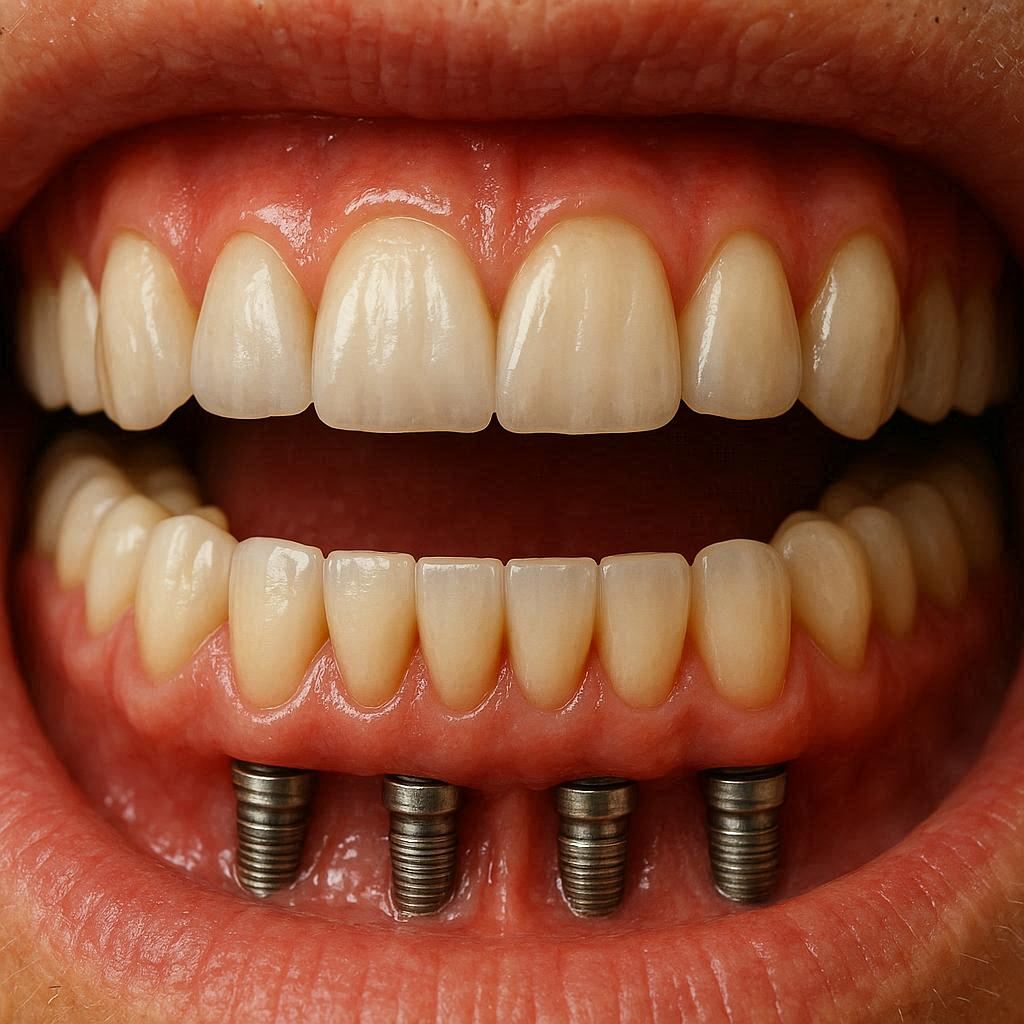
What Exactly Are Implant Supported Dentures?
Let’s start with the basics. Traditional dentures rest directly on your gums. They rely on suction, adhesive creams, or a delicate balance to stay in place. Implant supported dentures are different. They snap onto small titanium posts that a dentist surgically places into your jawbone.
Imagine a wooden table. A regular denture is like placing a book on a table without glue—it can slide. An implant supported denture is like snapping a lid onto a Tupperware container. It clicks into place and stays there until you decide to remove it.
These dentures are designed for people who have lost most or all of their teeth but still have enough jawbone to support implants. They offer a happy medium between removable dentures and fixed bridges.
How Do They Actually Stay in Place?
The secret is the attachment system. The implants (small screws in your bone) have special connectors called abutments. The denture has corresponding housings with rubber O-rings or clips. When you push the denture down, these parts click together. The fit is snug but removable.
Important Note: Not all implant dentures are the same. Some are “fixed” (only a dentist can remove them). Others are “removable” (you take them out for cleaning). We will explore both types below.
Why Choose Implant Supported Dentures? (The Real Benefits)
You already know that loose dentures are annoying. But the advantages of switching to an implant supported system go far beyond just stopping the wobble.
1. Eat the Foods You Love Again
With traditional dentures, biting into an apple or a crusty piece of bread can be a nightmare. The front of the denture tips up when you bite. Implants lock the denture in place. You regain about 70% to 90% of your natural biting force. This means steak, nuts, raw carrots, and even corn on the cob are back on the menu.
2. No More Adhesives
Say goodbye to messy creams, powders, and strips. You will never have to worry about glue oozing out of your gums during a business lunch or a family dinner. The mechanical snap does all the work.
3. Preserve Your Jawbone
This is a hidden benefit most people don’t think about. Your jawbone needs stimulation from tooth roots to stay healthy. When you lose teeth, the bone shrinks (atrophies). Traditional dentures sit on top of the bone and actually accelerate bone loss because they compress the gum tissue. Implants mimic real tooth roots. They stimulate the bone, keeping it strong and preventing that “sunken face” look.
4. Improved Speech
Loose dentures often cause clicking sounds or a lisp. Because implant supported dentures are stable, your tongue and lips move freely. Your speech sounds natural.
5. Confidence
This is the biggest one. You will never worry about your dentures falling out halfway through a sentence. You will laugh harder, smile wider, and sleep better knowing your teeth are secure.
The Different Types of Implant Supported Dentures
Dentists do not use a “one size fits all” approach. The type you choose depends on your budget, your bone density, and your personal preference. Here is a breakdown of the main options.
Fixed vs. Removable Implant Dentures
The first big decision you need to make is whether you want a denture that stays in 24/7 or one you can take out at night.
| Feature | Fixed (Non-Removable) | Removable (Overdenture) |
|---|---|---|
| Removal | Only by a dentist | You remove it daily for cleaning |
| Number of Implants | Usually 4 to 6 per arch | Usually 2 to 4 per arch |
| Cost | Higher | Lower |
| Cleaning | Requires flossing under the bridge | Easy to clean like a regular denture |
| Feeling | Most like natural teeth | Very stable, but you feel the palate |
| Best for | Patients wanting a permanent solution | Patients on a budget or with less bone |
The “All-on-4” Concept
You have probably heard this term. “All-on-4” is a specific type of fixed implant denture. A dentist places four implants strategically in your jaw (the back two are angled to avoid nerves). They then screw a full bridge of teeth onto those implants. You cannot remove this bridge. It feels incredibly natural.
Bar-Retained Dentures
This is the most common type for removable overdentures. A thin metal bar follows the curve of your jaw. The dentist attaches this bar to the implants. The denture has clips (or housings) that snap onto the bar.
- Pros: Extremely stable. The bar distributes pressure evenly.
- Cons: Slightly more expensive than ball attachments. Harder to keep clean underneath.
Ball-Retained (Stud) Dentures
This system uses individual implants that stick up like little buttons. The denture has sockets that snap directly onto these buttons.
- Pros: Easier to clean. Less hardware in the mouth. Usually cheaper than a bar.
- Cons: If you only have two implants, the denture might still rock slightly side-to-side.
Number of Implants Needed (A Realistic Guide)
How many implants do you actually need? This depends on the jaw.
- Lower Jaw (Mandible): The lower jaw is dense. Two implants are often enough to stabilize a removable denture. For a fixed bridge, you usually need four to six.
- Upper Jaw (Maxilla): The upper bone is softer. You generally need at least four implants for a removable denture. Most dentists prefer six for fixed bridges.
Important Note: Do not let a dentist sell you a “two-implant upper overdenture.” It usually fails because the sinus cavity limits bone height. Stick to four implants minimum for the top.
The Step-by-Step Procedure
The journey from missing teeth to a secure smile is a process. It requires patience. Most treatments take between 4 and 9 months to complete. Here is what a realistic timeline looks like.
Step 1: Initial Consultation (Day 1)
You will get a CT scan of your jaw. This 3D image shows bone density, nerve locations, and sinus position. The dentist will determine if you are a good candidate.
Step 2: Preparatory Work (Sometimes necessary)
Not everyone has enough bone. If you have worn traditional dentures for years, your jawbone might be thin.
- Bone grafting: Building up the bone height. This adds 4-9 months to the process.
- Sinus lift: Specific to the upper jaw. Lifting the sinus membrane to make room for implants.
Step 3: Implant Surgery (Day of surgery)
You will receive local anesthesia or sedation. The dentist makes small incisions in your gum and drills holes into the bone. They insert the titanium implants. The gums are stitched closed.
- Time: 1 to 2.5 hours per arch.
- Pain level: Minimal during surgery. You will feel pressure, not sharp pain.
Step 4: Healing and Osseointegration (3 to 6 months)
This is the longest waiting period. Your jawbone grows tightly around the implants. This process is called osseointegration. You will wear your old denture (modified with soft liner) during this time.
Step 5: Uncovery and Abutment Placement (Month 4-6)
A small second surgery (very quick) uncovers the tops of the implants. The dentist attaches the abutments (the snapping parts).
Step 6: Denture Fabrication (2 to 4 weeks)
The dentist takes impressions of your implants. A dental lab builds your custom denture. You will do a “try-in” appointment to check the color and shape of the teeth.
Step 7: Delivery Day (The big day!)
Your dentist snaps the final denture onto the implants. You will hear a satisfying “click.” You will feel the stability instantly. Keep tissues handy. Many patients cry happy tears.
Cost Breakdown: How Much Should You Pay?
Let’s talk money. This is the hardest part of the decision. Implant supported dentures are expensive, but they are also an investment in your health.
Prices vary wildly by location (urban vs. rural), the dentist’s skill level, and the materials used.
Average Costs in the United States (Without Insurance)
| Type of Implant Denture | Price Range Per Arch (Upper or Lower) |
|---|---|
| 2-Implant Removable Overdenture (Lower only) | $3,000 – $8,000 |
| 4-Implant Removable Overdenture (Bar retained) | $7,000 – $15,000 |
| All-on-4 Fixed Bridge (4 implants) | $15,000 – $30,000 |
| All-on-6 Fixed Bridge (Premium) | $24,000 – $45,000 |
These prices usually include:
- CT scan and consultation.
- Implant fixtures and abutments.
- The final denture/bridge.
- Surgical placement.
These prices usually do NOT include:
- Bone grafting or sinus lifts ($500 – $3,000).
- Temporary dentures.
- Sedation anesthesia.
Insurance and Financing
Most dental insurance plans do not cover implants fully. However, many will cover part of the denture itself or the extraction costs.
- Look for: PPO plans with high annual maximums ($2,000+).
- Alternatives: CareCredit, LendingClub, or in-house dental financing plans.
Honest advice: If a price seems too good to be true (like $5,000 for All-on-4), it is. Cheap implants often fail quickly. You want a dentist who offers a warranty on the implants (usually 5-10 years).
Pain, Recovery, and Realistic Expectations
People worry about pain. Here is the honest truth.
During surgery: You feel pressure and vibration. No pain.
Hours 4-12 after surgery: The numbness wears off. You will feel soreness, like a deep bruise. Swelling starts.
Day 2-3: Peak swelling and tenderness. Eat soft foods (smoothies, yogurt, soup). Use ice packs.
Day 7: Stitches dissolve or come out. Most patients take over-the-counter ibuprofen only.
What about the denture itself?
Once the final denture snaps on, you will likely feel “pressure” on your gums for a few weeks. It is not pain, but a sensation of fullness. Your mouth adjusts. Within one month, you will forget you are wearing dentures.
Can you sleep with them?
- Removable type: Remove them at night. Your gums need a rest. Soak the denture in water.
- Fixed type: You sleep with them in. They are permanent.
Will food get stuck underneath?
Yes. Especially with bar-retained dentures. You must use a water flosser (Waterpik) or special super-floss to clean under the bar. If you neglect this, bacteria will cause gum infection.
The Pros and Cons (A Balanced View)
No treatment is perfect. Let’s put everything side by side.
The Pros (The Good)
- Stability: 90% less movement than standard dentures.
- Bone preservation: Stops facial collapse.
- Taste: Removable types allow you to taste food because the palate is often uncovered.
- Cost-effective long term: Lasts 15-20 years vs. 5 years for regular dentures.
- High success rate: Titanium implants have a 95% success rate over 10 years.
The Cons (The Real Challenges)
- High upfront cost: $10k to $40k is a lot of money.
- Surgery required: Not everyone wants oral surgery.
- Time commitment: 6 to 12 months from start to finish.
- Maintenance: You must see the dentist every 6-12 months to tighten the clips or O-rings. They wear out every 1-2 years (cost: $100-$300).
- Implant failure: Smoking, uncontrolled diabetes, or poor hygiene can cause implants to fail.
Caring for Your Implant Supported Dentures
You have invested a lot. Protect it.
Daily Cleaning Routine (Removable Type)
- Remove the denture.
- Brush the denture with a soft brush and non-abrasive toothpaste (no regular paste—it scratches).
- Clean the implants: Use a small soft brush to scrub around the abutments on your gums.
- Soak overnight in denture cleaning solution.
- Rinse and snap back in in the morning.
Daily Cleaning Routine (Fixed Type)
- Use a Waterpik on low pressure to flush food from under the bridge.
- Thread floss under the bridge (use super-floss with a stiff end).
- Brush like normal teeth.
What to Avoid
- Hard candy and ice: You can crack the denture teeth.
- Staining liquids: Coffee and red wine will stain the acrylic over time.
- Metal tools: Never use metal scrapers near the implants.
Frequently Asked Questions (FAQ)
Q: Are implant supported dentures painful to get?
A: No. The surgery is done under local anesthesia. Post-surgery soreness is similar to having a tooth pulled. Most patients say the anxiety is worse than the reality.
Q: How long do implant supported dentures last?
A: The denture itself (the teeth) lasts 10-15 years. The titanium implants can last a lifetime if you maintain good oral hygiene. The rubber O-rings need replacement every 6-12 months.
Q: Can I get them if I have bone loss?
A: Possibly. It depends on how much bone you have lost. Many patients need bone grafting first. If you have severe bone loss, mini-implants (smaller diameter) might be an option, though they are less durable.
Q: Will my insurance cover any of this?
A: Most plans do not cover the implants, but many cover the “prosthesis” (the denture part) and extractions. Call your provider and ask about the “implant denture rider.”
Q: How do I find a good dentist for this?
A: Look for a “Prosthodontist” (specialist in replacing teeth) or an “Oral Surgeon” working with a restorative dentist. Ask to see before/after photos of their own work. Avoid “corporate dental chains” that pressure you into signing a contract the same day.
Q: Can I smoke with implant dentures?
A: Smoking dramatically increases the risk of implant failure. Nicotine restricts blood flow to the bone. If you smoke, your success rate drops from 95% to roughly 80%. Quitting before surgery is highly recommended.
Is It Worth It? A Final Realistic Conclusion
Here is the bottom line. Implant supported dentures are not magic. They require money, time, and a commitment to cleaning. They are surgery, and surgery always carries risks.
But for the right person? They are life-changing.
You will stop cupping your hand over your mouth when you laugh. You will stop eating alone because you are embarrassed. You will look in the mirror and see the same face you had twenty years ago, not a sunken version of yourself.
If you have the budget and the health for it, this treatment is the closest thing to getting your natural teeth back. If you cannot afford it yet, save up. Skip the cheap discount dentist. This is your body. You only get one set of bones.
Summary: Implant supported dentures lock dentures into place using titanium screws. They preserve jawbone, restore chewing power, and eliminate adhesives. While costly and time-intensive, they offer a 95% success rate and a permanent solution to tooth loss.
Additional Resource
For a deeper look into finding an affordable, high-quality provider, read this external guide from the American College of Prosthodontists:
👉 Find a Prosthodontist Near You (External link)
Disclaimer: This article is for informational purposes only and does not constitute medical advice. Always consult with a licensed dentist or prosthodontist to evaluate your specific oral health condition. Dental procedures carry risks, including infection, nerve damage, and implant failure. Individual results vary.