Endosteal Implants: The Complete, Honest Guide to the Most Popular Dental Implant
If you have ever looked into replacing a missing tooth, you have probably come across the term “Endosteal Implants.” It sounds highly technical and maybe a little intimidating. But here is the simple truth: these devices are the workhorses of modern dentistry.
This guide is designed to be your friendly, reliable companion. We will walk through what these implants actually are, how the procedure feels, what it costs, and whether you are a good candidate. No overly complex jargon. No unrealistic promises. Just honest, clear information to help you make a confident decision.
What Exactly Are Endosteal Implants? (A Simple Explanation)
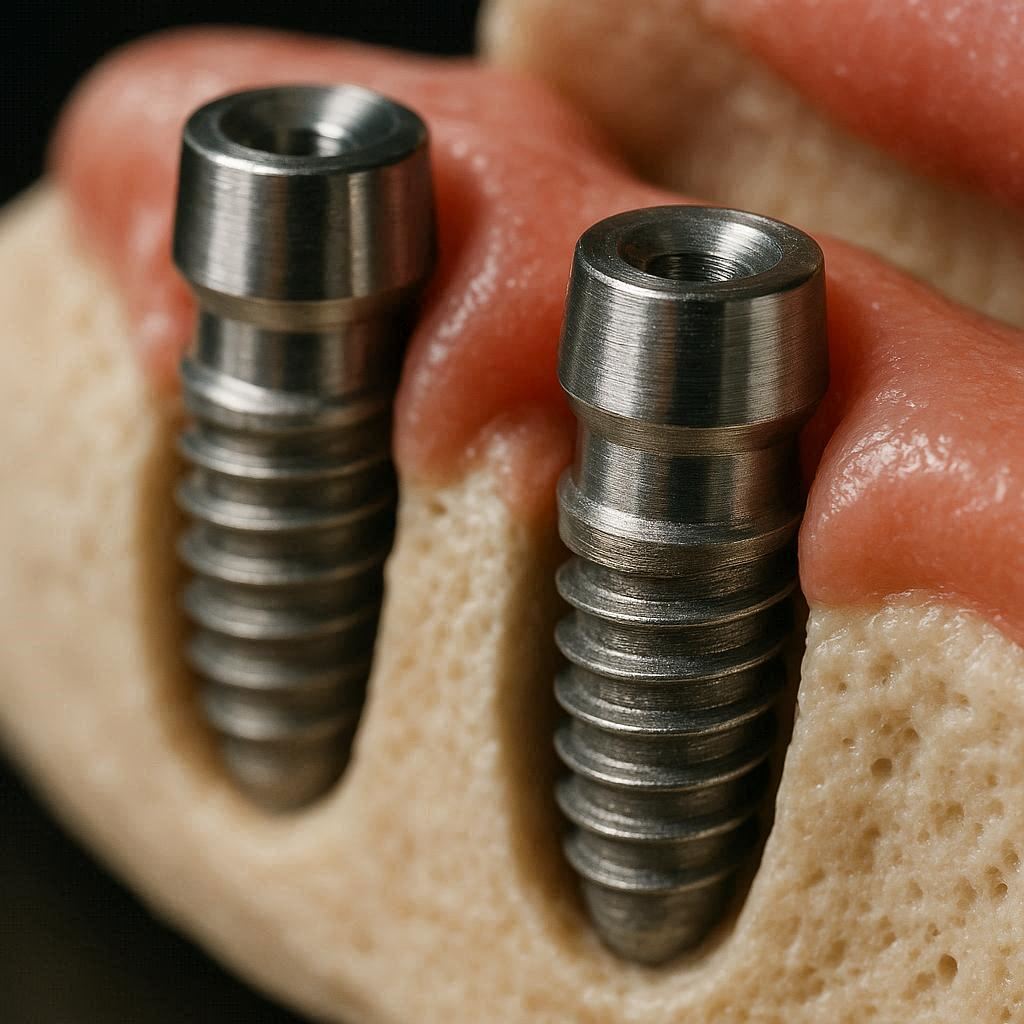
In the simplest terms, an endosteal implant is a small, screw-shaped post made of titanium or zirconia. A dentist surgically places this post directly into your jawbone. Think of it as an artificial tooth root.
Once the implant is in place and the bone has healed around it (a process called osseointegration), your dentist attaches a connector piece (an abutment) and finally, a natural-looking dental crown.
The word “endosteal” comes from “endo” (meaning “in”) and “osteal” (meaning “bone”). So, it is a device that lives inside the bone.
Why Are They So Popular?
Over 95% of all dental implants placed today are endosteal. There is a good reason for that. They are incredibly stable, versatile, and have a proven track record of success.
| Feature | Endosteal Implant |
|---|---|
| Placement | Directly into the jawbone |
| Shape | Screw, cylinder, or blade (screw is most common) |
| Best For | Single tooth, multiple teeth, or full arch replacements |
| Success Rate | 95% – 98% in healthy patients |
| Healing Time | 3 to 6 months (for osseointegration) |
Important Note: While they are the gold standard, endosteal implants are not for everyone. Your jawbone needs to be thick and healthy enough to support them. We will cover that in detail later.
How Do Endosteal Implants Differ from Other Types?
To really understand their value, it helps to see how they compare to other implant types. The main alternative is the subperiosteal implant.
- Subperiosteal Implants: These rest on top of the jawbone but under the gums. They use a metal framework that sits on the bone rather than inside it. This was a common solution for people with very thin jawbones who could not undergo bone grafting.
However, because endosteal implants integrate with the bone, they are much more stable and long-lasting. Subperiosteal implants are now rarely used, reserved only for patients who cannot have bone grafts and cannot wear traditional dentures.
A quick comparison table for clarity:
| Endosteal Implant | Subperiosteal Implant | |
|---|---|---|
| Position | Inside the jawbone | On top of the jawbone |
| Stability | Very high (osseointegration) | Moderate |
| Surgery | Two phases (implant then abutment) | Single procedure (custom framework) |
| Long-term success | Excellent (20+ years common) | Less common today |
| Bone requirement | Moderate to good bone density | Minimal bone required |
For the vast majority of patients today, an endosteal implant is the recommended choice.
The 5 Key Benefits of Choosing Endosteal Implants
Why go through surgery when you could get a bridge or a denture? Here are the real-world advantages that patients love.
1. A Natural Look and Feel
Because the implant fuses with your bone, it becomes a permanent part of your body. It does not move or slip like dentures. Chewing feels natural again. The crown is custom-made to match the color and shape of your other teeth. No one will ever know it is an implant unless you tell them.
2. Protecting Your Jawbone (This One Is Huge)
When you lose a tooth, the jawbone no longer receives stimulation from chewing. Over time, that bone begins to resorb (shrink away). An endosteal implant replaces the tooth root, providing that essential stimulation. It stops bone loss and preserves your facial structure. This prevents that “sunken” look that often happens to people who have worn dentures for many years.
3. Long-Term Reliability
A well-maintained endosteal implant can last 20, 30, or even 50 years. Traditional bridges often need replacement every 7 to 10 years. While the upfront cost is higher, the long-term value is undeniable. You are investing in a solution that, with good oral hygiene, could serve you for the rest of your life.
4. Preserving Healthy Teeth
A traditional dental bridge requires shaving down the two healthy teeth next to the gap. An implant does not touch the neighboring teeth. It stands independently. This is often the deciding factor for many patients. Why damage two perfectly healthy teeth to fix one missing tooth?
5. Restoring Chewing Power
Dentures typically restore about 20-30% of your natural chewing power. Dental bridges restore about 60-70%. Endosteal implants restore nearly 90-100% of your natural chewing ability. You can eat an apple, a steak, or corn on the cob without worry.
Are You a Good Candidate? The Honest Truth
Let us be realistic. Not everyone is a candidate on day one. But many people can become candidates with a little preparation.
Ideal Candidate Profile:
- Good general health: Uncontrolled chronic diseases (like severe diabetes or autoimmune disorders) can slow healing.
- Healthy gums: No active gum disease (periodontitis).
- Adequate jawbone density: This is the most common obstacle. The bone must be thick enough to hold the implant securely.
- Non-smoker or willing to quit: Smoking dramatically increases the risk of implant failure. The nicotine reduces blood flow to the gums, preventing proper healing.
- Commitment to oral hygiene: Implants can still get a form of gum disease called peri-implantitis. You must brush, floss, and see your dentist regularly.
What If You Lack Bone Density?
This is a very common concern, so let us address it directly. If your dentist tells you that your jawbone is too thin or too soft, do not lose hope. You have two excellent options:
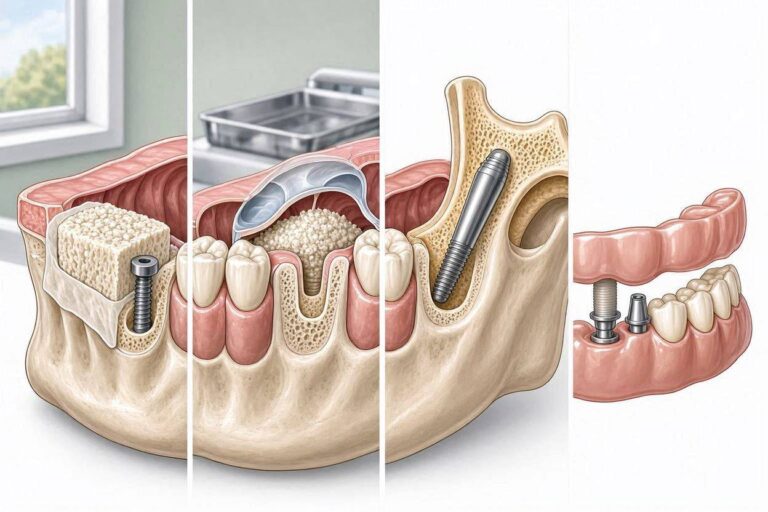
- Bone Grafting: This is a routine procedure where a dentist adds bone material (from your own body, a donor, or a synthetic source) to your jaw. It takes a few months to heal, but after that, you become a perfect candidate for an endosteal implant.
- Zygomatic Implants: These are much longer implants that anchor into the cheekbone (zygoma) rather than the upper jaw. This is a complex procedure for extreme bone loss, but it is an option.
Remember: A thorough consultation with a good implant dentist is essential. They will take 3D scans (CBCT) of your jaw. These images show the bone quantity and quality with incredible detail. No guesswork is involved.
The Step-by-Step Procedure: What to Expect
Knowing exactly what happens can remove a lot of fear. The process is not a single appointment. It is a journey over several months. But the vast majority of patients say the discomfort is less than they expected.
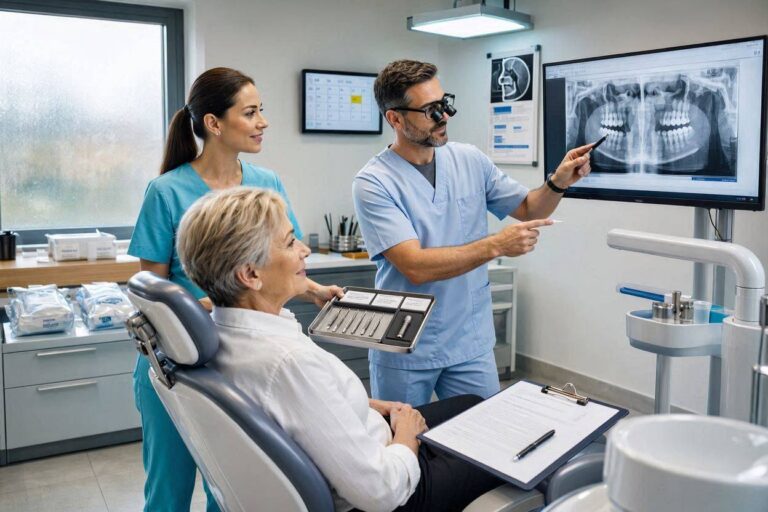
Step 1: The Initial Consultation (1-2 hours)
- Comprehensive exam: Your dentist will examine your teeth and gums.
- Imaging: They will take a CBCT scan. This is a 3D X-ray that shows your bone structure.
- Treatment plan: Based on the scan, the dentist creates a surgical guide. This is a 3D-printed template that ensures the implant goes exactly where it needs to go during surgery.
- Cost and timeline discussion: You will get a clear breakdown of the fees and the schedule.
Step 2: Preparatory Work (If Needed)
- Extractions: Any failing teeth in the area will be removed.
- Bone grafting: If your bone is thin, this is done now. You then wait 4-9 months for the graft to heal and integrate.
Step 3: The Implant Surgery (1-2 hours per implant)
- Anesthesia: The area is numbed completely with local anesthetic. You are awake but feel no pain. For anxious patients, sedation dentistry (pill or IV) is available.
- Incision: The dentist makes a small cut in your gum to expose the bone.
- Drilling: Using a special series of drills, they create a precise hole in the bone.
- Placement: The titanium implant screw is threaded into the hole.
- Closing: A healing cap or a cover screw is placed on top, and the gum is sutured (stitched) around it.
How does it feel? You will feel pressure and vibration, but not sharp pain. Most patients compare it to a simple tooth extraction.
Step 4: Osseointegration (The Waiting Period – 3 to 6 Months)
This is the most critical phase. You go home and let your body do the work. During this time, your jawbone grows and fuses to the surface of the implant. It becomes a solid, biological anchor.
- Temporary teeth: You will have a temporary partial denture or a flipper to fill the gap for cosmetic reasons.
- Soft diet: For the first week or two, stick to soft foods like yogurt, soup, and smoothies.
- No chewing on the site: Do not put pressure on the healing implant.
Step 5: The Abutment Placement (A short appointment – 30 minutes)
Once osseointegration is confirmed (via X-ray), you return to the dentist.
- The dentist re-opens the gum to expose the top of the implant.
- They remove the healing cap and screw on an abutment. This is a small metal connector that will hold the crown.
- The gum heals around the abutment for about two weeks.
Step 6: The Crown Placement (The final step – 1 hour)
- Your dentist takes impressions of your abutment and surrounding teeth.
- A dental lab fabricates your custom crown. This takes 2-4 weeks.
- You return, and the dentist permanently cements or screws the crown onto the abutment.
Congratulations. You now have a new tooth.
Recovery and Aftercare: A Realistic Timeline
The internet is full of horror stories. Let us stay grounded. Here is what a normal, healthy recovery looks like.
The First 24-48 Hours:
- Swelling and bruising: This is normal. Use an ice pack on your cheek for 15 minutes on, 15 minutes off.
- Minor bleeding: Some oozing is normal. Bite gently on a gauze pad.
- Pain: Over-the-counter ibuprofen (Advil) or what your dentist prescribes usually manages it well. Most people say the pain is a 2-3 out of 10.
- Diet: Cold liquids, smoothies, pudding, applesauce.
Days 3 to 7:
- Swelling peaks and decreases: The worst is usually day 2 or 3.
- Continue soft foods: Mashed potatoes, scrambled eggs, pasta.
- Oral hygiene: Rinse gently with warm salt water several times a day. Do not spit forcefully. Do not brush the surgical site.
Week 2 to Osseointegration:
- Comfort returns: You will likely forget the implant is there.
- Resume normal brushing (but be gentle around the gum).
- Use a water flosser (like Waterpik) on a low setting to keep the area clean.
- Avoid hard, crunchy, or sticky foods on that side.
Long-Term Maintenance (For Life):
An implant cannot get a cavity, but it is not invincible. The surrounding gum and bone are vulnerable to infection.
| Do This | Avoid This |
|---|---|
| Brush twice daily with a soft brush | Smoking or using any tobacco |
| Floss daily (use implant-specific floss or superfloss) | Chewing ice or hard candy |
| Use a low-abrasive toothpaste (no baking soda or charcoal) | Using your teeth as tools (opening packages) |
| Visit your dentist every 6 months for cleanings | Skipping dental checkups |
| Use an interdental brush to clean around the abutment | Ignoring bleeding or tenderness around the implant |
Quote from a real patient:
“I was terrified before my implant surgery. I imagined days of agony. The reality? The worst part was the sound of the drilling, not the pain. I had a mild ache for two days and then it was fine. It has been five years now, and I honestly forget I have an implant.” – David R., Chicago
Costs and Financing: Putting It in Perspective
Let us talk money. Dental implants are an investment. Prices vary enormously based on where you live, the dentist’s experience, and what is needed.
Typical Cost Breakdown in the USA (Per Single Tooth):
| Service | Estimated Cost Range |
|---|---|
| Consultation & CBCT scan | $150 – $500 |
| Implant placement surgery | $1,500 – $3,000 |
| Abutment | $300 – $500 |
| Custom crown | $1,000 – $3,000 |
| Total (Single Implant) | $3,000 – $7,000 |
| Bone grafting (if needed) | $250 – $3,000 (per site) |
Why the wide range?
- Geographic location: New York City or Los Angeles are more expensive than rural areas.
- Specialist vs. General dentist: A periodontist or oral surgeon charges more but brings advanced expertise.
- Material: Zirconia implants are often more expensive than titanium.
- Technology: Dentists using 3D-guided surgery may charge a premium for precision.
Ways to Make It Affordable:
- Dental Insurance: Traditional plans often do not cover implants, but some now cover a portion (e.g., $1,500 toward the crown). Call your provider.
- Dental Savings Plans: These are discount plans (not insurance). You pay an annual fee and get 20-50% off procedures from participating dentists.
- In-House Financing: Many dental offices offer payment plans (e.g., 12-24 months interest-free through CareCredit or similar services).
- Dental Schools: This is a fantastic option. Dental schools need patients for their residents. The work is supervised by experienced faculty, and costs are often 50-60% lower. The only downside is longer appointment times.
Warning: If you see an offer for “implants for $999,” be very skeptical. That price almost certainly does not include the abutment, the crown, the scan, or any necessary bone grafting. You will likely end up paying much more later. Always ask for a complete, written treatment plan.
Risks and Complications: An Honest Discussion
Being informed means knowing what can go wrong, even if it is rare. For a healthy person, serious complications occur in less than 5% of cases.
Common (But Usually Minor) Issues:
- Pain and swelling: Expected and manageable.
- Minor bleeding: Normal.
- Screw loosening: The abutment screw can sometimes loosen over time. Your dentist can tighten it in 5 minutes.
Less Common but Serious Issues:
- Infection (Peri-Implantitis): This is the biggest threat. It is gum disease around an implant. Symptoms include bleeding, swelling, and pus. If untreated, it destroys the bone and causes implant failure. Good hygiene and regular dental visits prevent it.
- Implant Failure (Osseointegration Failure): The bone refuses to fuse with the implant. The implant becomes mobile. This is more likely in smokers and people with uncontrolled diabetes. The solution is to remove the implant, let the bone heal, and try again, often with a bone graft.
- Nerve Damage (Rare): In the lower jaw, the implant can be placed too close to the inferior alveolar nerve. This can cause numbness, tingling, or pain in the lip, chin, or gums. A skilled dentist using a CBCT scan virtually eliminates this risk.
- Sinus Problems: In the upper jaw, an implant that is too long can protrude into the sinus cavity. This can cause sinusitis or infection. A sinus lift (a type of bone graft) prevents this.
The bottom line: The risks are real but manageable. Choose an experienced dentist who uses 3D imaging. Follow their aftercare instructions to the letter.
Endosteal Implants for Full Arch Restoration (All-on-4)
So far, we have talked about replacing one tooth. But these implants shine even brighter for patients missing all or most of their teeth.
A technique called All-on-4 uses just four endosteal implants to support an entire arch (upper or lower) of fixed teeth.
How All-on-4 Works:
- Two implants are placed vertically in the front of your jaw.
- Two implants are placed at a 45-degree angle in the back of your jaw. This angled placement allows them to use the densest available bone, often avoiding the need for bone grafting.
Advantages of All-on-4:
- Same-day teeth: Many patients receive a temporary fixed bridge on the same day as surgery.
- No bone grafting needed (usually): The angled placement avoids areas of low bone density.
- Lower total cost: Four implants plus a bridge is less expensive than 8-10 individual implants.
- Life-changing stability: No more adhesives, no more slipping, no more embarrassing moments.
Disadvantages:
- Harder to floss: Cleaning under the fixed bridge requires special floss threaders or a water flosser.
- Not removable: Unlike dentures, only your dentist can remove the prosthetic.
- Higher upfront cost than dentures: While less than full individual implants, it can be $20,000 to $30,000 per arch.
Comparing Endosteal Implants to Other Tooth Replacement Options
Let us put everything side-by-side to help you see the big picture.
| Feature | Endosteal Implant | Fixed Dental Bridge | Traditional Denture |
|---|---|---|---|
| Replaces tooth root? | Yes | No | No |
| Affects neighboring teeth? | No | Yes (shaving down healthy teeth) | Yes (can cause bone loss over time) |
| Bone preservation? | Yes | No | No (accelerates bone loss) |
| Chewing power | 90-100% | 60-70% | 20-30% |
| Lifespan | 20-50+ years | 7-15 years | 5-10 years (needs relining) |
| Upfront cost | $$$$ | $$ | $ |
| Long-term value | Excellent | Moderate | Poor (due to ongoing costs) |
| Requires surgery? | Yes | No | No |
| Comfort | Like natural teeth | Good | Can be uncomfortable or loose |
Frequently Asked Questions (FAQ)
Q1: Does getting an endosteal implant hurt?
A: The surgery itself is not painful because of local anesthesia. Most patients report that the post-operative discomfort is less than a tooth extraction. Over-the-counter pain relievers are usually sufficient.
Q2: How long do endosteal implants last?
A: With proper care and regular dental checkups, a titanium implant can last 30 years or a lifetime. The crown on top may wear out after 15-20 years and need replacement, but the implant itself is built to last.
Q3: What is the success rate?
A: For single-tooth implants in healthy non-smokers, success rates are between 95% and 98%. Smokers have a significantly higher failure rate (closer to 85-90% success).
Q4: Can I get an implant if I have gum disease?
A: No, not actively. You must treat the gum disease first. Once your gums are healthy and stable, you can proceed with implants. Placing an implant into infected gum tissue is a recipe for failure.
Q5: Is the metal in titanium implants safe?
A: Yes. Titanium is biocompatible, meaning the human body does not reject it. Metal allergies to titanium are extremely rare (less than 0.6% of the population). For those with metal concerns, zirconia implants are a metal-free option.
Q6: Can I have an MRI or CT scan with an implant?
A: Yes. Titanium is non-ferromagnetic (not magnetic), so it is completely safe for MRI and CT scans. It may cause a minor artifact (blurring) around the implant site, but does not create a hazard.
Q7: What if my implant fails years later?
A: Failure years later is almost always due to peri-implantitis (infection) or trauma (injury). If it fails, a dentist can remove it, clean the site, perform a bone graft if needed, and place a new implant.
Q8: Are endosteal implants covered by insurance?
A: Traditional plans often exclude them, but many PPO plans now offer partial coverage (e.g., 50% of the crown or $1,500 toward the total). Medicare generally does not cover implants.
Your Next Steps: A Practical Action Plan
If you are reading this, you are likely considering an implant for yourself or a loved one. Here is a simple, three-step plan to move forward without feeling overwhelmed.
Step 1: Get a Consultation (Not a Commitment)
- Find an implant dentist or oral surgeon. Look for someone with a Fellowship in the International Congress of Oral Implantologists (ICOI).
- Go in for a CBCT scan. Most offices offer a reduced-fee or free initial consult.
- Ask these three questions:
- “Based on my bone scan, am I a candidate for an endosteal implant?”
- “Do I need any preparatory work like a bone graft or sinus lift?”
- “Can you provide a complete, written estimate including all phases?”
Step 2: Review Your Finances
- Call your dental insurance to verify implant coverage.
- Get a second opinion. Prices vary wildly.
- Explore financing: CareCredit, LendingClub, or an in-office payment plan.
Step 3: Prepare Your Health
- If you smoke, create a quit plan with your doctor.
- Get your blood sugar under control if you have diabetes (optimal HbA1c under 7.0).
- Develop a rigorous oral hygiene routine now. Healthy gums are the foundation.
Additional Resource for In-Depth Learning
For those who want to dive even deeper, we highly recommend the patient education portal of the American Academy of Implant Dentistry (AAID) . They offer a “Find an Implant Dentist” tool and a library of peer-reviewed patient articles.
👉 Resource Link: https://www.aaid.com/ (Look for the “Patients” section for FAQs, a glossary, and a search tool for accredited implant dentists in your area).
Conclusion (Summary in Three Lines)
Endosteal implants are the safest, most reliable, and most natural-feeling solution for missing teeth because they fuse directly with your jawbone like a natural root. While the upfront cost and surgical process require a significant commitment, the long-term benefits for your oral health, bone preservation, and quality of life are unmatched by bridges or dentures. If you have healthy gums and adequate bone density (or are willing to undergo a bone graft), an endosteal implant is an investment in a permanent, confident smile.
Disclaimer: This article is for informational purposes only and does not constitute medical or dental advice. Every patient is unique. You should always consult with a licensed dental professional to diagnose your specific condition and determine the best treatment plan for your individual needs. The author and publisher disclaim any liability for any adverse effects arising from the use or application of the information contained herein.