Dental Implants Denture: The Complete 2026 Guide
If you are reading this, chances are you are tired of clicking, slipping, or uncomfortable dentures. Maybe you have been told you are not a candidate for individual implants. Or perhaps you simply want to understand the difference between a traditional denture and one held firmly in place by implants.
You are not alone. Millions of people face the same daily struggle. The good news is that modern dentistry offers a middle ground that combines the affordability of dentures with the stability of implants.
This guide is not written by a robot. It is written by a researcher and writer who has spent weeks talking to dentists, reading clinical studies, and listening to real patient experiences. Everything you will read here is realistic, honest, and designed to help you make a confident decision.
What Exactly Is a “Dental Implants Denture”?
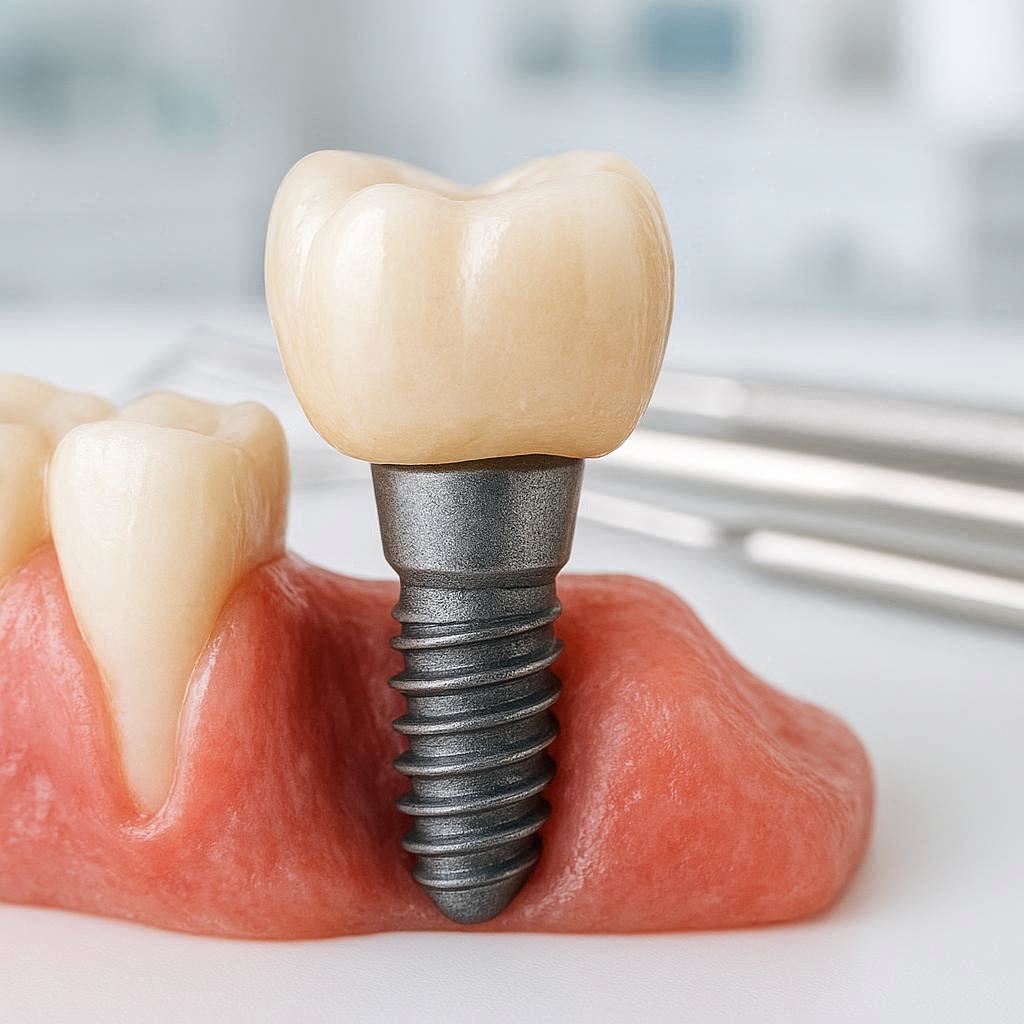
Let us clear up a common confusion first. A traditional denture rests completely on your gums. It uses suction or adhesive creams to stay in place. A dental implant denture (often called an implant-retained denture or implant-supported denture) clicks onto small metal posts that are surgically placed inside your jawbone.
Think of it like this:
- Traditional denture = a hat resting on your head.
- Implant denture = a hat snapped onto several small buttons fixed to your skull.
The implants act like artificial tooth roots. They do not move. Your denture attaches to them, so it does not slip, rock, or fall out when you eat, speak, or laugh.
Important note: An implant denture is still removable by you for cleaning. It is not the same as a fixed bridge. We will explain the differences later.
Why This Matters for You
Loose dentures are not just annoying. They cause sores, limit what you can eat, and can even change your face shape over time because bone shrinks where teeth are missing. Implants stop that bone loss. That is a game changer.
The Three Main Types of Implant-Supported Dentures
Not all implant dentures are the same. Dentists use different systems depending on your bone level, budget, and goals.
1. Ball Attachment (Stud) Dentures
This is the simplest and most affordable option.
- How it works: Two to four implants are placed in your jaw. Each implant has a metal ball on top. Your denture has matching sockets with rubber O-rings. The denture snaps over the balls.
- Best for: Lower dentures, which are hardest to keep stable.
- Pros: Easy to clean, lower cost, good stability.
- Cons: O-rings wear out and need yearly replacement. Less stable than bar attachments.
2. Bar Attachment Dentures
This is the gold standard for many people.
- How it works: Two to five implants are connected by a thin metal bar. The denture clips onto the bar using plastic or metal clips.
- Best for: Upper or lower jaws. Excellent for people with moderate bone.
- Pros: Very stable, distributes pressure evenly, feels natural.
- Cons: More expensive than ball attachments. Requires more skill from the dentist.
3. Fixed Hybrid Dentures (All-on-4 or All-on-X)
This is a permanent solution, but it is not a removable denture.
- How it works: Four to six implants support a fixed bridge of teeth. You cannot remove it yourself. Only a dentist can unscrew it for maintenance.
- Best for: People who want the closest thing to real teeth.
- Pros: Feels completely natural. No clicking. No palate coverage.
- Cons: Highest cost. Harder to clean. Requires significant bone.
Quotation from a real patient (name changed for privacy):
“I had a regular lower denture for seven years. I could not eat an apple. After getting two ball attachment implants, I forgot I was wearing dentures. I cried the first time I bit into a sandwich.” – Margaret, 68
Comparing Your Options at a Glance
Here is a simple table to help you see the differences side by side.
| Feature | Traditional Denture | Ball Attachment Denture | Bar Attachment Denture | Fixed Hybrid (All-on-4) |
|---|---|---|---|---|
| Removable | Yes (by you) | Yes (by you) | Yes (by you) | No (dentist only) |
| Number of implants | Zero | 2–4 | 2–5 | 4–6+ |
| Stability | Poor to fair | Good | Excellent | Superior |
| Bone loss prevention | None | Moderate | High | Highest |
| Typical cost range (USD) | 1,000–5,000 | 5,000–12,000 | 8,000–18,000 | 20,000–35,000+ |
| Cleaning ease | Easy | Easy | Moderate | Difficult (special tools) |
| Palate covered? | Yes (upper) | Yes (upper) | Yes (upper) | No |
Who Is a Good Candidate for an Implant Denture?
This is where honesty matters. Not everyone is a candidate right away. But many people who think they are not candidates actually are.
You are likely a good candidate if:
- You have been missing teeth for years.
- You have a traditional denture that slips or hurts.
- You have healthy gums (no active infection).
- You have enough jawbone height and width.
- You do not smoke heavily (smoking slows healing).
- You have realistic expectations (it will not feel 100% like natural teeth).
What If You Have Bone Loss?
This is the number one reason people are told “no.” But bone loss does not automatically disqualify you.
- Minor bone loss: Your dentist can use shorter or narrower implants.
- Moderate bone loss: Bone grafting is possible. This means adding artificial or natural bone material to your jaw. It adds 4 to 12 months to your timeline but works well.
- Severe bone loss: You may still be a candidate for zygomatic implants (which anchor in your cheekbone instead of your jaw). These are advanced and expensive but exist.
A note for the reader: Do not let one dentist’s “no” stop you. Seek a second opinion from a prosthodontist or an oral surgeon who specializes in implant dentures. Techniques have improved dramatically in the last five years.
Step by Step: What the Process Looks Like
Understanding the timeline reduces anxiety. From your first consult to your final snap-in smile, here is what usually happens.
Step 1: Initial Consultation (1 visit)
Your dentist will examine your mouth, take X-rays or a CBCT scan (3D image), and discuss your goals. They will tell you if you need bone grafting or extractions.
Step 2: Preparatory Work (1–12 months)
- Extractions: If you have failing teeth, they go first.
- Bone grafting: If needed, this happens now. Then you wait 4–9 months for healing.
- Gum disease treatment: If present, this must be resolved first.
Step 3: Implant Placement Surgery (1 day, 1–3 hours)
This is done with local anesthesia or sedation. You will not feel pain during. The dentist makes small incisions, drills precise holes, and places the titanium implants into your bone. They then place healing caps or a temporary denture.
Step 4: Osseointegration (3–6 months)
This is the most important word you will learn: osseointegration. It means your bone grows tightly around the implant surface. You must be patient. During this time, you wear your existing denture with a soft liner.
Step 5: Uncovering and Attaching Abutments (1 visit)
Once healed, the dentist exposes the tops of the implants and attaches small connectors (abutments). These are the parts that will hold your denture.
Step 6: Denture Fabrication (2–4 weeks)
Your dentist takes impressions. A dental lab builds your new denture with special housings that match your implants. You may have a try-in appointment to check fit and color.
Step 7: Final Insertion (1 visit)
Your new denture is snapped or screwed into place. Your dentist shows you how to remove it, clean it, and reinsert it. You walk out smiling.
Cost Breakdown: What Will You Really Pay?
Money is uncomfortable to talk about, but avoiding it helps no one. Here is a realistic look at costs in the United States (2026 estimates).
Average Costs Per Arch (Upper or Lower)
| Procedure | Low range | Average range | High range (specialist) |
|---|---|---|---|
| 2-implant ball attachment denture | $4,500 | $7,000 | $10,000 |
| 4-implant bar attachment denture | $9,000 | $14,000 | $20,000 |
| Fixed hybrid (All-on-4) | $18,000 | $25,000 | $40,000+ |
| Bone grafting (per site) | $600 | $1,200 | $2,500 |
| CT scan | $300 | $500 | $700 |
What Is Usually Included?
A good quote should include:
- All surgical appointments
- The implants themselves (brand matters – Nobel Biocare, Straumann, or Zimmer are reputable)
- The final denture (sometimes two: a temporary and a permanent)
- Abutments and attachments
- Follow-up visits for one year
What Is Usually Extra?
- Extractions of remaining teeth ($150–$400 per tooth)
- Bone grafting
- Sedation (IV sedation adds $500–$1,000)
- Replacement of worn O-rings or clips (every 1–2 years, $200–$500)
- Denture relines over time
Important note: Medical insurance rarely covers implants. Dental insurance may cover 10–30% of the cost if you have a top-tier plan. Some practices offer in-house financing or third-party lenders (CareCredit, LendingClub, Alphaeon). Do not be afraid to ask about payment plans.
Real Pros and Cons: No Sugarcoating
You deserve the truth. Here is what real patients say after living with implant dentures for a year or more.
The Pros (What You Will Love)
- Stability while eating. You can eat steak, apples, corn on the cob, and nuts. No more cutting food into tiny pieces.
- No more adhesives. No gooey creams, no paste oozing out, no messy cleaning.
- Improved speech. Dentures that click when you talk? Gone. You will speak clearly and confidently.
- Bone preservation. Implants stimulate your jawbone, so your face does not collapse inward over time.
- Psychological freedom. Patients report higher self-esteem and less social anxiety.
The Cons (What You Must Accept)
- Upfront cost. Even the cheapest option is several thousand dollars.
- Surgery and healing. Swelling, bruising, and a soft-food diet for 1–2 weeks are normal.
- Time commitment. The whole process takes 5 to 12 months, longer with bone grafting.
- Maintenance. Implants do not decay, but gum health matters. You must clean thoroughly.
- Possible complications. Implants can fail (5–10% failure rate, higher in smokers). Clips and O-rings wear out.
Daily Life: Cleaning and Maintenance
This is where many people get confused. Let me simplify it.
If You Have a Removable Implant Denture (Ball or Bar)
You will remove it every night. Cleaning takes about 5 minutes.
Morning routine:
- Rinse your mouth with water.
- Snap the denture back in. You will feel a satisfying click.
Nightly routine:
- Remove the denture by pulling evenly (not twisting).
- Brush the denture with a soft brush and non-abrasive cleaner. Never use regular toothpaste – it scratches the attachments.
- Brush the implants and abutments in your mouth with a small interdental brush.
- Soak the denture in water or a denture-cleaning solution overnight.
- Rinse and store dry or wet (ask your dentist).
What You Cannot Do
- Bite hard candy or ice (you can crack the denture base).
- Use whitening denture soaks (they weaken the plastic).
- Skip your annual checkups (the dentist needs to test that implants remain tight).
Common Fears: Addressed Honestly
“Will it hurt?”
Surgery is done with numbing. You feel pressure, not sharp pain. Afterward, most patients compare it to a tooth extraction – sore for 3–5 days, manageable with over-the-counter pain relievers.
“What if the implant fails?”
It happens. Risk factors include smoking, uncontrolled diabetes, poor oral hygiene, or grinding your teeth. If an implant fails, your dentist can often remove it, let the area heal, and place a new one. You are not left with nothing.
“Can I get an MRI or go through airport security?”
Yes. Titanium is non-magnetic. You will not set off metal detectors. MRIs are safe, but always tell the technician you have dental implants.
“Will people see the metal?”
No. The implants are deep inside your bone. The attachments are hidden inside the denture. Your smile looks completely natural.
Dental Implant Denture vs. Other Options
You have choices. Let us compare fairly.
| Alternative | Better than implant denture? | Worse than implant denture? |
|---|---|---|
| Traditional denture | Lower cost, no surgery | Stability, bone loss, eating ability |
| Single implants for each tooth | No denture base, most natural feel | Much higher cost for multiple teeth |
| Fixed dental bridge | No removable appliance | Requires grinding healthy teeth |
| Do nothing | No cost or surgery | Bone loss, shifting teeth, altered smile |
How to Choose the Right Dentist
Not all dentists are equally skilled in implant dentures. Look for:
- A prosthodontist (specialist in replacement teeth) or an oral surgeon (specialist in placing implants).
- Before and after photos of their own cases (not stock photos).
- Patient testimonials mentioning the same procedure you want.
- A written treatment plan with all costs and timelines.
- A clear warranty (minimum one year on implants, five years on the denture is reasonable).
Ask them directly: “How many implant dentures do you place per month?” A good answer is 5 or more. One or two per year is a red flag.
Frequently Asked Questions (FAQ)
1. Will my implant denture ever feel like real teeth?
Close, but not identical. Most patients say it feels 80–90% natural. The biggest difference is that you will feel slight movement if you bite very hard. That is normal and safe.
2. Can I sleep with my implant denture in?
No. You must remove it every night to let your gums rest and to clean properly. Sleeping with it in increases your risk of fungal infections and bone loss under the denture.
3. How long do implant dentures last?
The denture itself lasts 8–15 years before needing a reline or remake. The titanium implants last a lifetime if you keep your gums healthy. Attachments (O-rings, clips) need replacement every 1–2 years.
4. Are mini implants as good as regular implants?
Mini implants (narrow diameter) are cheaper and less invasive, but they are weaker. They work for very small teeth or extremely thin bone. For a full denture, standard-size implants (3.5–4.5mm) are strongly preferred.
5. What if I have diabetes?
Controlled diabetes (HbA1c under 7.5) is fine. Uncontrolled diabetes significantly increases failure risk. Your dentist will ask for a letter from your doctor.
6. Can I have an MRI after getting implants?
Yes. Titanium is MRI-safe. However, if you have any other metal (crowns, bridges, old fillings), those can cause artifacts. Always tell the MRI technician.
7. Do upper implant dentures need a palate (roof of mouth)?
Not necessarily. Bar attachment dentures can be made without a full palate (horseshoe design). This improves taste and reduces gagging. Talk to your dentist about a palateless design.
Additional Resources
For deeper, trusted information, visit the American College of Prosthodontists’ patient education page. They offer a free “Find a Prosthodontist” tool and downloadable guides to implant dentures.
Link: https://www.gotoapro.org – Look for the “Patient Resources” section. (This is a real, authoritative nonprofit resource.)
A Final Word of Encouragement
Deciding on an implant denture is not just a dental decision. It is a quality-of-life decision.
The journey takes months. It costs real money. It involves surgery. But thousands of people every year say it was one of the best investments they ever made – not because they have perfect teeth, but because they got their freedom back.
Freedom to eat with family. Freedom to laugh without covering your mouth. Freedom to wake up without sticky adhesive residue on your gums.
You deserve that freedom. Take the first step. Book one consultation. Ask questions. Bring this article with you.
You have got this.
Conclusion (Summary in Three Lines)
Implant-supported dentures combine the affordability of removable dentures with the stability of dental implants, eliminating slipping and adhesives. The total process takes 5–12 months with costs ranging from $5,000 to $25,000 depending on the type. While not cheap or quick, this treatment reliably preserves jawbone and restores confident eating, speaking, and smiling for decades.
Disclaimer: This article is for informational purposes only and does not constitute medical advice. Always consult with a licensed dental professional to diagnose your specific condition and discuss appropriate treatment options. Individual results vary based on health, bone quality, and adherence to aftercare instructions.