What Is a Dentist Called That Does Implants?
If you are missing a tooth—or several teeth—you have probably heard that dental implants are the gold standard for replacement. They look natural, feel secure, and can last a lifetime with proper care. But when you start searching for a professional to perform the procedure, you quickly run into a confusing question: what is a dentist called that does implants?
The short answer is that there is no single title. Several types of dental professionals place implants, and each brings a different set of skills to the treatment room. Some are general dentists with advanced training. Others are specialists who focus exclusively on surgery, gum health, or tooth restoration.
This guide walks you through every type of implant dentist, what makes each one unique, and how to choose the right professional for your specific situation. By the end, you will feel confident, informed, and ready to book a consultation.

Why the Title Matters More Than You Think
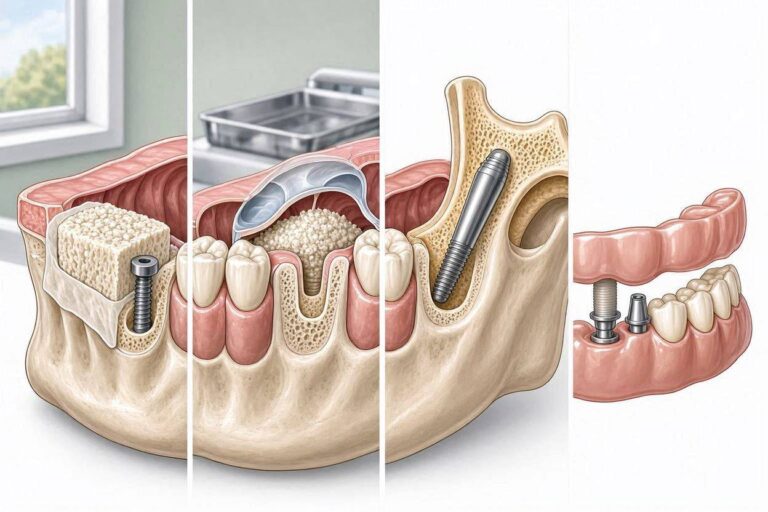
Before we dive into the specific names, let us talk about why this question is so important. Placing a dental implant is not like filling a cavity. It is a surgical procedure that involves:
- Drilling into your jawbone.
- Inserting a titanium (or ceramic) post.
- Allowing the bone to fuse with the implant (a process called osseointegration).
- Attaching a custom-made crown, bridge, or denture on top.
Because this is surgery, the training and experience of your provider directly affect your safety, comfort, and long-term success. Knowing the correct title helps you search for the right professional, verify their credentials, and ask better questions during your consultation.
Important Note: In most countries, placing dental implants is legally restricted to licensed dentists. However, not every general dentist chooses to offer implants. Among those who do, experience levels vary widely.
The Main Types of Dentists Who Place Implants
Let us answer the core question directly. Below are the most common titles you will encounter when looking for an implant provider.
Oral and Maxillofacial Surgeon
An oral surgeon is often the first professional people think of for dental surgery. These specialists complete four to six years of additional hospital-based training after dental school. Their focus includes:
- Wisdom tooth removal.
- Jaw reconstruction.
- Facial trauma.
- Bone grafting.
- Dental implant placement.
Why choose an oral surgeon for implants?
They are experts in bone health, nerve anatomy, and complex surgical cases. If you need a bone graft, sinus lift, or have very little jawbone density, an oral surgeon is usually the best choice. They also offer deeper levels of sedation, including IV sedation or general anesthesia, which helps anxious patients stay comfortable.
Periodontist
A periodontist specializes in the gums and the supporting structures of your teeth. Their three years of extra training focus on:
- Preventing and treating gum disease.
- Performing gum grafts.
- Placing dental implants.
- Managing soft tissue around implants.
Why choose a periodontist for implants?
Healthy gums are essential for a successful implant. If you have a history of gum disease, receding gums, or thin gum tissue, a periodontist is an excellent option. They are masters at creating a beautiful, healthy gum contour around your new tooth. Many patients do not realize that poor gum health is one of the top reasons implants fail, so a periodontist’s perspective is incredibly valuable.
Prosthodontist
A prosthodontist focuses on the restoration and replacement of teeth. Their three years of advanced training cover:
- Crowns, bridges, and veneers.
- Full-mouth reconstruction.
- Dentures (removable and implant-supported).
- Complex bite problems (TMJ disorders).
- Dental implants, including the final tooth (crown) placement.
Why choose a prosthodontist for implants?
This specialist thinks about the big picture. If you are missing many teeth, have worn-down teeth, or need an entire arch of implants (like All-on-4), a prosthodontist is ideal. They design your smile and your bite so that everything works together comfortably. However, note that some prosthodontists place the implant themselves, while others work with an oral surgeon or periodontist for the surgical part.
General Dentist with Advanced Implant Training
Many general dentists now place implants after completing hundreds of hours of continuing education. Some earn credentials like:
- Fellow of the International Congress of Oral Implantologists (FICOI) .
- Diplomate of the American Board of Oral Implantology .
- Certification from implant education centers like the Misch International Implant Institute.
Why choose a general dentist for implants?
Convenience is a major factor. A general dentist can often handle the entire process in one office: the implant surgery, the temporary tooth, and the final crown. You have fewer appointments, one point of contact, and sometimes a lower cost. For single-tooth implants in healthy patients with good bone and gum tissue, an experienced general dentist is a perfectly valid choice.
A word of honesty: Not all general dentists who offer implants have the same level of skill. Always ask how many implants they have placed and what their success rate is. A dentist who places 10 implants per year is different from one who places 200.
Comparison Table: Which Specialist Is Right for You?
| Specialist | Best For | Extra Training | Sedation Options |
|---|---|---|---|
| Oral Surgeon | Complex bone loss, sinus lifts, multiple implants, high anxiety patients | 4-6 years hospital residency | IV sedation, general anesthesia |
| Periodontist | Thin or receding gums, history of gum disease, esthetic gum shaping | 3 years gum & bone specialty | Oral sedation, local anesthesia, sometimes IV |
| Prosthodontist | Full arch implants, worn or broken teeth, complex bite issues | 3 years restorative specialty | Usually local anesthesia + oral sedation |
| General Dentist | Single tooth, healthy gums and bone, convenience | Variable (courses + mentorship) | Usually local + oral sedation |
| Implantologist (self-given title) | Unclear – not a recognized specialty | Unregulated | Depends on their actual training |
Understanding the Term “Implantologist”
You might also come across the term “implantologist.” This title can be confusing because it sounds official, but it is not a recognized dental specialty in most countries (including the US, UK, Canada, and Australia).
An implantologist is usually a general dentist who has taken many implant courses and chooses to focus their practice on implants. Some use the term to signal their experience. Others use it simply for marketing.
What to do if you see “implantologist” on a website:
- Look for their actual degree (DDS, DMD, BDS, etc.).
- Check if they are a licensed dentist in your state or province.
- Ask about additional credentials from recognized boards (like the American Board of Oral Implantology).
- Request numbers: How many implants do they place per month? What is their failure rate?
“There is no license for ‘implantology’ as a specialty. If a dentist calls themselves an implantologist, ask them to explain their training in clear, verifiable terms.” – American Academy of Implant Dentistry (paraphrased for clarity)
Who Places the Implant vs. Who Makes the Tooth?
Here is a key point that many patients miss. A dental implant procedure actually involves two separate phases:
- Surgical phase: Placing the titanium post into the bone.
- Restorative phase: Designing, creating, and attaching the visible tooth (crown).
Sometimes the same dentist does both. Other times, you will see a team approach.
Common team combinations:
- Oral surgeon (surgery) + general dentist (crown). Your surgeon places the implant. Your regular dentist makes the crown. This works well if you trust your general dentist for the final aesthetics.
- Periodontist (surgery) + prosthodontist (crown). Ideal for complex cases where both gums and bite are challenging.
- General dentist (both phases). Simple and convenient, provided they have good restorative skills.
- Prosthodontist (both phases, if trained in surgery). Some prosthodontists surgically place implants. Others refer the surgery out.
Why this matters:
When you ask the question “what is a dentist called that does implants,” you now know that you should also ask: Who makes the final tooth? A beautifully placed implant with a poorly made crown is still a disappointing result.
How to Find the Right Implant Dentist for Your Case
Now that you know the titles, let us match them to real-life situations.
Scenario 1: One missing tooth, healthy gums, good bone
Recommended: General dentist with implant experience or a periodontist.
You do not necessarily need a surgical specialist. A well-trained general dentist can handle this easily. However, if the missing tooth is in your front smile line, a periodontist may offer better gum aesthetics.
Scenario 2: Multiple missing teeth in a row
Recommended: Periodontist or oral surgeon for surgery + prosthodontist for the bridge.
When you replace several teeth, the position and angle of each implant become critical. A specialist’s surgical precision pays off here.
Scenario 3: All teeth missing on top or bottom (full arch)
Recommended: Prosthodontist or oral surgeon with full-arch experience.
Procedures like All-on-4 require advanced planning. You want someone who does this surgery weekly, not monthly.
Scenario 4: Low bone density or need a sinus lift
Recommended: Oral surgeon (or periodontist with bone grafting training).
Bone grafting and sinus lifts are advanced surgical procedures. Do not let a general dentist with minimal training attempt these unless they have a verifiable track record.
Scenario 5: History of heavy smoking, diabetes, or gum disease
Recommended: Periodontist.
Underlying gum disease is a silent implant killer. A periodontist can treat your gum disease first, then place your implant in healthy tissue.
List: Five Red Flags When Choosing an Implant Dentist
Look out for these warning signs:
- No before-and-after photos of their own implant cases (not stock photos).
- Vague answers about how many implants they place (“a lot” is not an answer).
- No discussion of bone health or gum condition during the first visit.
- Pressure to sign up immediately with discounts that expire in 24 hours.
- Unusually low pricing (if it sounds too good to be true, it usually is).
Credentials and Certifications to Look For
When you research a dentist’s website, look for these legitimate credentials. They indicate serious implant training.
In the United States:
- Diplomate, American Board of Oral Implantology (ABOI) – Highest level of certification.
- Fellow or Master, International Congress of Oral Implantologists (FICOI / MICOI) .
- Board certification in Periodontics, Oral Surgery, or Prosthodontics from the relevant American board.
In the United Kingdom:
- MFGDP (UK) or MClinDent in Implant Dentistry from a GDC-recognized program.
- Diploma in Implant Dentistry from the Royal College of Surgeons.
In Canada:
- Fellow of the Royal College of Dentists of Canada (FRCDC) in a relevant specialty.
- Diplomate of the American Board of Oral Implantology (many Canadian dentists hold this).
Internationally:
- European Board of Oral Implantology (EBOI) certification.
- MSc or Diploma in Implantology from a recognized university (not a weekend course).
Important: Do not be impressed by “certificates” from one-day courses. Real implant training requires hands-on work with live patients under supervision over months or years.
Questions to Ask Before You Commit
You have every right to interview potential implant dentists. Here is a practical script you can use during consultations.
Question 1: “How many dental implants have you placed in your career?”
- A good answer: “Over 500” (for a general dentist) or “Over 1,000” (for a specialist).
Question 2: “What is your success rate for single implants? For full arches?”
- A realistic range: 95% to 98% for non-smokers in good health. Anyone claiming 100% is not being honest.
Question 3: “What happens if the implant fails?”
- A responsible dentist will explain: They will refund the implant cost or replace it at no charge (excluding lab fees for the crown). Get this in writing.
Question 4: “Do you handle the surgical and restorative phases, or do you work with another specialist?”
- A good answer is transparent. “I place the implant, and my colleague Dr. X makes the crown” is fine as long as you meet both providers.
Question 5: “What kind of imaging do you use?”
- Standard: 3D cone beam CT scan (CBCT). If they use only 2D X-rays (panoramic), that is outdated and risky.
What About Costs? Does the Title Affect the Price?
Yes, prices vary significantly based on who performs the work. Below is a general guide for the US market (2025 estimates). These are averages for a single implant, including the crown.
| Provider Type | Estimated Cost (Single Implant + Crown) |
|---|---|
| General Dentist (experienced) | $3,500 – $5,500 |
| Periodontist | $4,500 – $6,500 |
| Oral Surgeon | $5,000 – $7,000 |
| Prosthodontist | $5,500 – $8,000 |
| Dental School (supervised students) | $2,000 – $3,500 |
Why the difference?
Specialists pay for longer training, more advanced equipment (3D scanners, surgical guides), and higher liability insurance. You are paying for expertise, especially in complex cases.
A cost-saving note: For a straightforward single implant, a skilled general dentist is often the best value. You do not always need the most expensive specialist. For complex cases, paying a specialist upfront can save you from a failed implant that costs more to fix later.
The Team Approach: Why Multiple Dentists Might Be Involved
Do not be alarmed if your treatment involves more than one dentist. This is actually a sign of responsible care.
A typical team might include:
- Your general dentist – Identifies the missing tooth, takes initial X-rays, and refers you.
- An oral surgeon – Places the implant and any bone grafts.
- A prosthodontist – Designs the final crown or bridge for perfect fit and bite.
- A dental lab technician – Actually crafts the ceramic tooth (a very skilled professional).
Some large dental practices house all these professionals under one roof. Others coordinate across separate offices. Both models work well when communication is clear.
Quotation from a real patient (paraphrased with permission):
“I thought one dentist would do everything. Instead, my general dentist sent me to an oral surgeon for the implant, then to a prosthodontist for the crown. At first I was annoyed by the extra appointments. But my final tooth fits perfectly, and two years later I have zero problems. Now I realize they each did the part they are best at.”
Risks of Choosing the Wrong Provider for Implants
Let us be honest about what can go wrong. Placing implants is surgery, and surgery carries risks. The provider’s skill directly influences these risks.
Common complications from inexperienced implant dentists:
- Nerve damage: Numbness in the lip, chin, or tongue. Sometimes permanent.
- Sinus perforation: The implant pokes into the sinus cavity, leading to infections.
- Poor angulation: The implant is placed at a bad angle, making it impossible to attach a natural-looking crown.
- Implant failure (early): The implant never integrates with the bone because of overheating, contamination, or poor surgical technique.
- Implant failure (late): Gum disease around the implant (peri-implantitis) from poor crown design that traps plaque.
The good news: When you choose a qualified specialist or an experienced general dentist, these risks drop dramatically.
Note: Even the best dentist cannot guarantee an implant will last forever. But a well-placed implant with good oral hygiene has a success rate of over 95% at 10 years.
Additional Resources and How to Verify a Dentist’s Credentials
You do not have to take a dentist’s word at face value. Use these free resources to verify their training and disciplinary history.
For US patients:
- American Board of Oral Implantology (ABOI) – Search for diplomates.
- American Academy of Periodontology (AAP) – Find a periodontist.
- American Association of Oral and Maxillofacial Surgeons (AAOMS) – Find an oral surgeon.
- American College of Prosthodontists (ACP) – Find a prosthodontist.
- State Dental Board – Check for malpractice claims or license suspensions.
For UK patients:
- General Dental Council (GDC) – Verify registration and any restrictions.
- Royal College of Surgeons (RCS) – Search for implant diploma holders.
- Association of Dental Implantology (ADI) – Find accredited members.
For Canadian patients:
- Royal College of Dentists of Canada (RCDC) .
- Your provincial dental college (e.g., Royal College of Dental Surgeons of Ontario).
For Australian patients:
- Australian Health Practitioner Regulation Agency (AHPRA) .
- Australian Society of Implant Dentistry (ASID) .
Link to additional resource:
For a detailed checklist on how to evaluate an implant dentist before your first visit, visit the American Academy of Implant Dentistry’s patient education page (opens external site).
Frequently Asked Questions (FAQ)
1. Can a general dentist place an implant without a specialist?
Yes, as long as they have adequate training, experience, and the proper equipment (CBCT scanner, surgical guides). Many general dentists place implants successfully for straightforward cases.
2. What is the difference between an oral surgeon and a periodontist for implants?
An oral surgeon focuses on bone and nerve anatomy, making them ideal for complex bone grafting and sinus lifts. A periodontist focuses on gums and soft tissue, making them ideal for esthetic cases and patients with gum disease history.
3. Do prosthodontists do implant surgery?
Some do, but not all. Many prosthodontists focus on designing and attaching the final crown, while they refer the surgical placement to an oral surgeon or periodontist. Always ask.
4. What is a dentist that does implants called in simple terms?
There is no single simple term. The most accurate answer is either “implant dentist” (if they are a general dentist with training) or by their specialty name (oral surgeon, periodontist, prosthodontist).
5. Is an “implantologist” a real specialist?
No. It is not a legally recognized specialty in most countries. It is usually a marketing term. Always verify their underlying degree and board certifications.
6. How many implants should a dentist place per year to be considered experienced?
A reasonable benchmark: 50-100 implants per year for a general dentist; 200+ per year for a specialist. These numbers show regular, ongoing practice.
7. Can a dentist refuse to place an implant if my bone is too thin?
Yes, and that is a sign of a responsible dentist. They should refer you to an oral surgeon for a bone graft first. A dentist who attempts an implant without enough bone is taking an unnecessary risk.
8. Are dental implants covered by insurance?
Sometimes partially. Medical insurance may cover the surgical portion if the tooth loss resulted from an accident or tumor removal. Dental insurance typically covers 10-50% of the crown. Always verify before treatment.
9. How long does the entire implant process take?
From extraction (if needed) to final crown: 4 to 12 months. Complex bone grafts add more time. Immediate load implants (same-day teeth) are possible but not for everyone.
10. What is the failure rate for implants placed by general dentists vs. specialists?
Studies show no significant difference in failure rates when the general dentist has comparable training and experience. The key variable is the individual provider’s skill, not their title.
Conclusion (Summary in Three Lines)
Dental implants can be placed by several types of qualified professionals: oral surgeons, periodontists, prosthodontists, and experienced general dentists. The right choice depends on your specific case—bone health, gum condition, number of missing teeth, and esthetic demands. Always verify credentials, ask about experience, and choose a provider who is transparent about their training and success rates.
Disclaimer: This article is for informational purposes only and does not constitute medical or dental advice. Always consult with a licensed dental professional for diagnosis and treatment recommendations. The author and publisher are not liable for any actions taken based on the content of this article. Individual results vary, and implant success depends on many factors including your overall health, oral hygiene, and the provider’s skill.