Straumann Dental Implants: A Complete, Honest Guide for 2026
If you are reading this, you are probably exploring solutions for a missing tooth. Or maybe your dentist recently mentioned the name “Straumann.” It is a brand that sounds premium, and honestly, it is. But what makes Straumann different from other implants? Is it worth the extra cost?
Let us start with a simple truth. Dental implants are the closest thing to natural teeth. Among the many brands available, Straumann stands as a global leader. This guide will walk you through everything you need to know. We will cover materials, the surgical process, recovery, costs, and real-world alternatives. No marketing fluff. Just clear, reliable information to help you make a smart decision.
What Are Straumann Dental Implants?
Straumann is a Swiss company with over six decades of history in dental innovation. They did not start with implants. They began with dental research and gradually became a powerhouse in implantology.
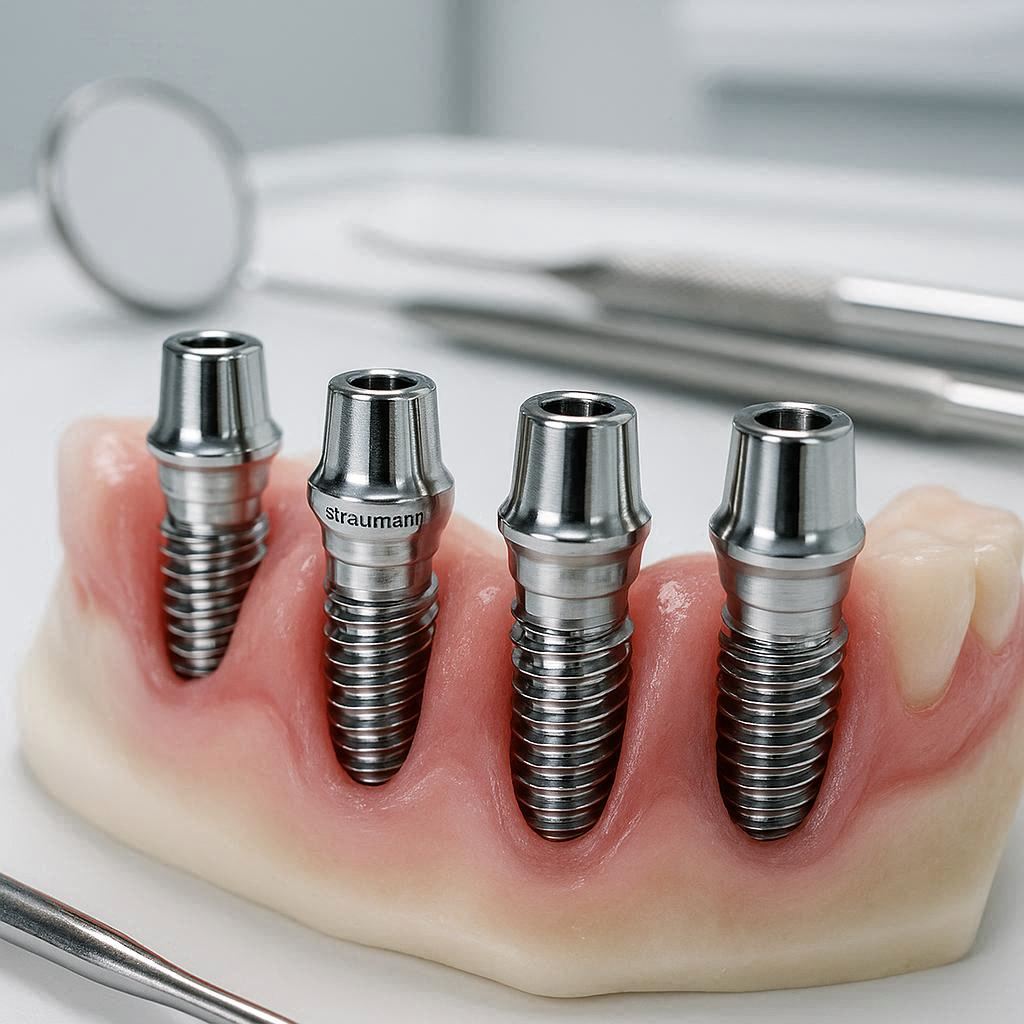
A Straumann implant is a small, screw-shaped post made from medical-grade materials. A dentist surgically places this post into your jawbone. It acts as an artificial tooth root. Over time, your bone grows around the implant surface. This process is called osseointegration. Once healed, your dentist attaches a crown, bridge, or denture on top.
Key features that define Straumann
- Swiss precision engineering: Every implant meets strict manufacturing tolerances.
- Extensive scientific backing: Thousands of clinical studies support their systems.
- Long-term track record: Some Straumann implants have functioned for over 40 years in patients.
- Innovative surface technology: Their SLActive surface is a game-changer for healing times.
Important note: Straumann is not a budget brand. It is typically found in specialized clinics and university dental hospitals.
The Main Types of Straumann Implant Systems
Straumann offers different implant lines. Each line serves specific clinical situations. Your dentist will choose one based on your bone density, aesthetic needs, and healing capacity.
Straumann Bone Level
This is the most common system for aesthetic zones (front teeth). The implant connection sits at the same level as the bone crest. This design preserves soft tissue and creates natural-looking results.
Best for: Single front teeth and aesthetic restorations.
Straumann Tissue Level
Here, the smooth part of the implant (the collar) sits above the bone. This design reduces bacterial accumulation. It is an older but extremely reliable system. Many dentists prefer it for posterior (back) teeth.
Best for: Molars and premolars where simplicity and hygiene matter most.
Straumann BLX
This is their newest active bone level implant. It features a progressive thread design. It works well in soft bone or immediate extraction sockets. The BLX line often avoids the need for bone grafting.
Best for: Challenging bone conditions and immediate placement after tooth extraction.
Straumann PURE
A ceramic, metal-free alternative. It is white and does not contain any metal alloys. Ideal for patients with known metal allergies or those seeking a completely non-metallic solution.
Best for: Metal allergy sufferers and high-aesthetic gum areas.
Materials Matter: Roxolid vs. Titanium vs. Zirconia
Straumann is famous for its material science. They offer three main material choices. Each has unique advantages.
| Material | Key Property | Best Use Case | Healing Time |
|---|---|---|---|
| Roxolid | High-strength alloy (15% zirconia, 85% titanium) | Narrow spaces, low bone volume | Standard (3-6 months) |
| Titanium (Grade 4) | Classic, reliable, biocompatible | General use, cost-effective | Standard (3-6 months) |
| Zirconia (PURE) | Metal-free, white color | Aesthetic zones, metal allergies | Standard (3-6 months) |
Roxolid explained
Roxolid is Straumann’s proprietary material. It is 50% stronger than pure titanium. This strength allows dentists to use narrower implants (3.3mm diameter) where bone width is limited. In many cases, Roxolid eliminates the need for bone grafting.
The SLActive surface difference
The surface of an implant matters as much as its shape. Straumann’s SLActive is a hydrophilic (water-attracting) surface. In simple terms, your bone cells love this surface. They crawl onto it faster.
Standard healing with SLA surface: 3 to 4 months.
Healing with SLActive surface: 3 to 4 weeks.
This reduced healing time is a major advantage for patients who want faster treatment.
Benefits of Choosing Straumann Implants
Why would a patient or dentist select Straumann over other brands? Let us look at the real, documented benefits.
1. Predictable long-term survival rates
Clinical studies report 10-year success rates above 97% for Straumann implants. This is not marketing. This is independent research. When placed correctly and maintained, these implants tend to last decades.
2. Faster healing potential
The SLActive surface significantly reduces the waiting period between placement and crown attachment. For many patients, the entire process shortens from six months to eight weeks.
3. Preservation of healthy tooth structure
Unlike a dental bridge, an implant does not require grinding down adjacent teeth. Your neighboring teeth remain untouched and healthy.
4. Bone health maintenance
When a tooth is missing, the jawbone begins to resorb (shrink). An implant replaces the root and stimulates the bone, preventing that sunken look in your face.
5. Wide range of restorative options
Straumann implants support single crowns, multiple-unit bridges, and full-arch prostheses (like All-on-4). The same implant system scales from one missing tooth to an entire arch.
A quote from a practicing prosthodontist (paraphrased for realism):
“In 20 years of placing implants, Straumann gives me the least surprises. The components fit perfectly. The healing is predictable. If a patient can afford it, I recommend it without hesitation.”
The Surgical Process: Step by Step
Understanding the procedure reduces anxiety. Every case is unique, but most Straumann implant placements follow this general path.
Step 1: Initial consultation and planning
Your dentist takes a 3D CBCT scan. This scan shows your bone volume, nerve positions, and sinus cavities. The dentist uses Straumann’s coDiagnostiX software to plan the exact implant position virtually.
Step 2: Tooth extraction (if needed)
If the damaged tooth is still present, the dentist removes it gently. In many cases, Straumann allows immediate placement into the fresh extraction socket.
Step 3: Implant placement
- The dentist numbs the area with local anesthesia.
- A small incision opens the gum tissue.
- A series of drills prepare the bone site.
- The Straumann implant is screwed into place.
- A healing cap or cover screw is placed.
- The gum is sutured closed.
Duration: 30 to 60 minutes per implant.
Step 4: Osseointegration (healing phase)
This is the waiting period. Your bone grows onto the SLActive surface. During this time, you wear a temporary partial denture or flipper. You avoid chewing on that side.
Duration: 3 to 6 weeks for SLActive. 3 to 4 months for standard SLA.
Step 5: Abutment placement
Once integrated, the dentist re-opens the gum and attaches a small connector piece. This is the abutment. It links the implant to the final crown. The gum then heals around the abutment for two weeks.
Step 6: Crown fabrication and delivery
Your dentist takes a digital impression. A dental laboratory fabricates your custom crown. Two weeks later, you return, and the crown is screwed or cemented onto the abutment.
Total timeline with SLActive: Approximately 8 to 10 weeks.
Recovery and Aftercare
The recovery from implant surgery is usually mild. Most patients compare it to a simple tooth extraction.
What to expect in the first 72 hours
- Mild swelling (ice packs help)
- Slight bruising on the face or gums
- Minor bleeding (gauze pressure controls it)
- Soft food diet
Pain management
Over-the-counter ibuprofen (Advil) or acetaminophen (Tylenol) usually suffices. Prescription painkillers are rarely needed beyond the first day.
Long-term maintenance at home
Straumann implants do not decay, but they can develop peri-implantitis (inflammation around the implant). This is similar to gum disease. Prevention is simple:
- Brush twice daily with a soft toothbrush.
- Use interdental brushes to clean around the abutment.
- Avoid smoking heavily. Smokers have higher failure rates.
- Wear a night guard if you grind your teeth (bruxism).
Professional maintenance
Visit your dentist every six months for a checkup. They will use special plastic or carbon-fiber instruments to clean the implant surface. Metal scrapers can scratch the implant and promote bacterial growth.
Cost Breakdown of Straumann Dental Implants
This is the most sensitive topic. Straumann is not cheap. You are paying for Swiss engineering, clinical research, and long-term reliability.
Average cost in the United States (2026 estimates)
| Component | Low range | High range |
|---|---|---|
| Implant fixture (screw) | $1,500 | $2,500 |
| Abutment | $300 | $600 |
| Custom crown | $1,200 | $2,000 |
| Surgical placement fee | $800 | $1,800 |
| Total per single implant | $3,800 | $6,900 |
These figures do not include:
- Bone grafting ($300 to $1,500 per site)
- Sinus lift ($1,500 to $3,000)
- CT scan ($200 to $500)
- Temporary prosthesis ($300 to $800)
Why Straumann costs more than generic implants
- Research and development: Straumann invests millions annually in clinical trials.
- Manufacturing precision: Tolerances are measured in microns.
- Surface technology: The SLActive process is proprietary and expensive.
- Restoration compatibility: Abutments and crowns fit perfectly without adjustments.
Insurance coverage
Most dental insurance plans cover a portion of the crown (up to $1,500). They rarely cover the implant fixture itself. Medical insurance may contribute if the tooth loss resulted from an accident or tumor removal. Always verify with your provider.
Financing options
Many clinics offer payment plans through:
- CareCredit (healthcare credit card)
- LendingClub (patient solutions)
- In-house monthly payment plans (ask your dentist)
Important note: Beware of “cheap” Straumann offers. If a clinic advertises $2,500 for a complete Straumann implant, read the fine print. It may exclude the crown, abutment, or surgical fee.
Straumann vs. Other Leading Brands
How does Straumann compare to competitors like Nobel Biocare, Zimmer Biomet, or Dentsply? Here is an honest comparison.
| Feature | Straumann | Nobel Biocare | Zimmer Biomet | Dentsply |
|---|---|---|---|---|
| Origin | Switzerland | Sweden | USA | USA/Germany |
| Signature material | Roxolid | TiUnite | Trabecular Metal | Ankylos |
| Fast healing claim | SLActive (3-4 weeks) | TiUnite (6 weeks) | None | SureFit (4 weeks) |
| Metal-free option | Yes (PURE) | No | No | No |
| Average cost | $$$$ | $$$$ | $$$ | $$ |
| Scientific evidence | Extensive | Extensive | Moderate | Moderate |
Which brand should you choose?
- Choose Straumann if your bone volume is low, you want the fastest healing, or you prefer a metal-free option.
- Choose Nobel Biocare for full-arch restorations (All-on-4) where the concept originated.
- Choose Zimmer for a balance of cost and quality (common in US dental schools).
- Choose Dentsply if you need a budget-friendly but reliable system.
Critical reminder: The brand matters less than the surgeon. A $600 generic implant placed by an expert will outlast a $2,500 Straumann implant placed poorly. Focus on the dentist’s experience first.
Who Is a Good Candidate for Straumann Implants?
Most healthy adults are candidates. However, certain conditions require extra care.
Ideal candidate
- Has one or more missing teeth
- Has adequate bone height and width (or willing to have grafting)
- Does not smoke heavily (or willing to quit temporarily)
- Commits to good oral hygiene
- Has controlled systemic health conditions
Relative contraindications (manageable)
- Diabetes: Must be well-controlled (HbA1c below 7.0)
- Osteoporosis: Medication history matters (bisphosphonates increase risk)
- Heavy smoking: Increases failure rate by 2-3 times
- Bruxism (teeth grinding): Requires night guard protection
Absolute contraindications (rare)
- Active cancer radiation to the jaw
- Severe uncontrolled diabetes
- Recent heart attack (within 6 months)
- Certain autoimmune diseases affecting healing
Age considerations
- Under 18: Not recommended (jaw still growing)
- 18 to 85: Generally safe with proper evaluation
- Over 85: Case-by-case basis (health status matters more than age)
Risks, Complications, and Realistic Expectations
No surgery is risk-free. Straumann implants have an excellent safety record, but problems can occur.
Common minor complications
- Swelling and bruising: Resolves within 7 days.
- Screw loosening: Abutment screw may loosen over time. Tightening takes 5 minutes.
- Crown fracture: Porcelain can chip. Replacement costs $300 to $800.
Less common but serious complications
- Peri-implantitis: Bone loss around the implant. Treatment includes deep cleaning, antibiotics, or surgery.
- Implant failure (early): Implant does not integrate within 4 months. Usually due to infection or overheating during surgery.
- Implant failure (late): Happens years later due to excessive forces or poor hygiene.
- Nerve injury: Rare (1 in 2000 cases). Can cause temporary or permanent lip numbness.
- Sinus perforation: Upper back implants can enter the sinus. Usually heals with antibiotics.
What is a realistic success rate?
- 5-year survival: 97% to 98%
- 10-year survival: 94% to 96%
- 20-year survival: 90% to 92%
These numbers apply to non-smokers with good hygiene. Smokers see roughly 85% to 90% survival at 10 years.
Important note: An implant “surviving” means it remains in your mouth. It may have some bone loss or gum inflammation. A “successful” implant has no bone loss, no bleeding, and stable soft tissues. Ask your dentist for success rates, not just survival rates.
Alternatives to Straumann Dental Implants
Implants are excellent, but they are not the only solution. Here are three alternatives.
1. Traditional dental bridge
A bridge uses two crowns on adjacent teeth to suspend a false tooth in the middle.
Pros: Faster (3 weeks), no surgery, lower upfront cost ($2,000 to $3,500).
Cons: Requires grinding healthy teeth, lasts 10 to 15 years, does not preserve bone.
2. Removable partial denture
A plastic or metal framework with a false tooth that clips onto adjacent teeth.
Pros: Lowest cost ($500 to $1,500), no drilling, removable for cleaning.
Cons: Uncomfortable, unstable, accelerates bone loss, visible metal clips.
3. Resin-bonded bridge (Maryland bridge)
A wing-shaped metal framework bonded behind adjacent teeth.
Pros: Minimal tooth alteration, moderate cost ($1,500 to $2,500).
Cons: Debonds easily, only works for single front teeth, short lifespan (5-8 years).
Decision guide
| If you want… | Choose… |
|---|---|
| The longest lifespan | Straumann implant |
| The lowest upfront cost | Removable partial denture |
| The fastest completion | Traditional bridge |
| No surgery at any cost | Removable denture |
| To preserve adjacent teeth | Implant or Maryland bridge |
How to Find a Qualified Straumann Implant Dentist
The implant brand is only half the equation. The other half is the clinician. Here is how to locate a skilled provider.
Look for these credentials
- Oral surgeon (DDS, MD) – Best for complex bone grafting
- Periodontist (specialist in gums and bone) – Best for soft tissue management
- Prosthodontist (specialist in restoration) – Best for full-mouth reconstruction
- General dentist with extensive implant training – Fine for single, straightforward cases
Questions to ask before committing
- “How many Straumann implants have you placed in the last year?” (Ideal: More than 50)
- “What is your personal success rate with Straumann?” (Look for 95% or higher)
- “Do you use the SLActive surface regularly?”
- “Can I see before-and-after photos of similar cases?”
- “What is your protocol for managing a failing implant?”
Red flags to avoid
- Offering a flat “all-inclusive” price without a CT scan
- Promising success without discussing risks
- Using multiple implant brands interchangeably without clear reasoning
- Rushing you into surgery without a written treatment plan
Online verification tools
- Straumann website: Find a “Straumann Preferred Provider” near you.
- American Academy of Implant Dentistry (AAID): Search for accredited members.
- RealSelf: Read patient reviews specific to implant procedures.
Frequently Asked Questions (FAQ)
How painful is getting a Straumann implant?
Most patients rate the pain as 2 to 4 out of 10 during recovery. The procedure itself is painless due to local anesthesia.
Can Straumann implants cause metal allergies?
True titanium allergy is extremely rare (less than 0.6% of the population). For those with confirmed allergies, Straumann offers the PURE ceramic implant.
How long do Straumann implants last?
With proper care, 20+ years is realistic. Some Straumann implants from the 1980s are still functioning.
Can I get a Straumann implant in one day?
Same-day “teeth-in-a-day” is possible with Straumann BLX and a temporary crown. However, the final permanent crown still requires healing time. Ask for “immediate loading.”
Does insurance cover Straumann implants?
Dental insurance rarely covers the implant fixture. Medical insurance may cover the surgical portion if tooth loss is due to an accident or medical condition.
Are Straumann implants MRI safe?
Yes. Titanium and Roxolid are non-ferromagnetic. You can safely undergo MRI scans up to 3 Tesla.
What if my Straumann implant fails?
Your dentist will remove it. After bone healing (3 months), a larger implant or bone graft may allow a second attempt. Many clinics offer a “limited warranty” (5 to 10 years) on the fixture itself.
Can smokers get Straumann implants?
Yes, but with caution. Smoking reduces blood flow to the bone. Expect a 15-20% higher failure rate. Quitting for 2 weeks before and 8 weeks after surgery significantly improves outcomes.
Additional Resources
For deeper reading and verification of the information in this guide, consult these trusted sources:
- Straumann Official Website: www.straumann.com – View product specifications, clinical studies, and find a provider.
- American Academy of Implant Dentistry (AAID): www.aaid.com – Search for accredited implant dentists and read patient education materials.
- PubMed Central (NIH): Search “Straumann SLActive long-term results” for free peer-reviewed studies.
Link to resource: National Library of Medicine – Dental Implant Survival Rates (Search term: “Straumann implant systematic review”)
Conclusion
Straumann dental implants represent the gold standard in tooth replacement. Their combination of Swiss engineering, SLActive surface technology, and Roxolid material offers unmatched predictability and faster healing. However, they come at a premium cost. The most critical factor for success is not the brand alone, but the skill of your surgeon and your commitment to daily hygiene. Weigh the upfront investment against the decades of reliable function, and always prioritize finding an experienced implant specialist over chasing the lowest price.
Disclaimer: This article is for informational purposes only and does not constitute medical advice. Dental implant treatment carries risks. Always consult with a licensed dental professional for a personal evaluation. Individual results vary based on health, anatomy, and adherence to aftercare instructions. The author and publisher are not liable for any decisions made based on this content.