Best Dental Implants: A Complete, Honest Guide for 2026
Losing a tooth can feel frustrating. Maybe you feel self-conscious when you smile. Perhaps eating certain foods has become a challenge.
You are not alone. Millions of adults face this situation. The good news is that modern dentistry offers a solution that looks, feels, and functions like a natural tooth: dental implants.
But what are the best dental implants for you? This is the real question. Walk into any dental clinic, and you will hear different brands, materials, and prices. It can get confusing fast.
This guide avoids complicated medical terms. It avoids sales pitches. Instead, we will explore realistic options, compare materials, look at costs, and help you make a confident choice. No false promises. Just honest, helpful information.
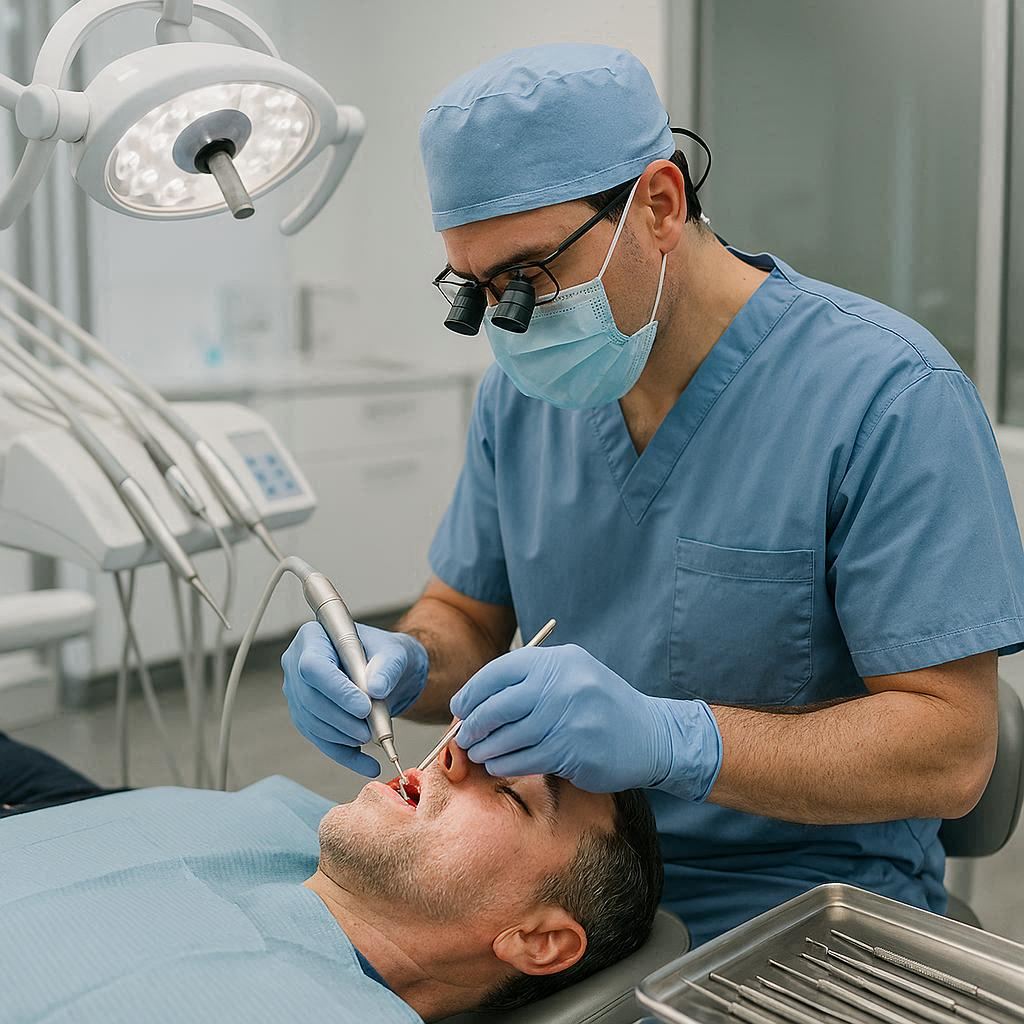
What Exactly Is a Dental Implant? (A Simple Explanation)
Imagine a natural tooth. It has a crown (the part you see) and a root (the part under the gum). A dental implant replaces that root.
In technical terms, a dental implant is a small titanium or zirconia screw that a surgeon places into your jawbone. Over time, your bone grows around it. This creates a solid foundation. Then, your dentist attaches an abutment (a connector) and finally, a dental crown on top.
Key takeaway: The implant itself is not the tooth. It is the anchor. The crown is the visible tooth.
Why Do People Choose Implants Over Other Options?
You have alternatives like bridges or dentures. Why go for implants? Here is a quick comparison:
| Feature | Dental Implants | Traditional Bridge | Removable Dentures |
|---|---|---|---|
| Bone health | Preserves jawbone | Does not prevent bone loss | Accelerates bone loss |
| Adjacent teeth | No damage to neighbors | Requires filing down healthy teeth | No impact, but poor fit |
| Stability | Permanent, like natural teeth | Stable but can decay underneath | Can slip or click |
| Lifespan | 20+ years (often lifetime) | 5–10 years | 3–7 years |
| Eating comfort | Eat anything | Most foods okay | Soft foods only often |
“Implants changed my daily life. I had no idea how much I was avoiding hard foods until I got my implants. Now I forget I even have them.” — Carol, 62, implant patient.
The Different Types of Implants: Which One Fits Your Case?
Not all implants are the same. The “best dental implants” depend on your bone density, budget, and how many teeth you are missing.
Endosteal Implants (The Most Common)
This is the standard type. The implant goes directly into the bone.
- Best for: Most people with healthy jawbone.
- Shape: Screw or cylinder.
- Healing time: 3–6 months before placing the crown.
Subperiosteal Implants (For Low Bone Density)
If you have lost significant bone and cannot (or do not want) a bone graft, this alternative rests on top of the bone but under the gum.
- Best for: Patients with minimal bone height.
- Pros: No bone grafting needed.
- Cons: Less common today; long-term data is shorter.
Zygomatic Implants (Complex Cases)
These are longer implants that anchor into the cheekbone (zygoma) instead of the upper jaw.
- Best for: Severe upper jaw bone loss.
- Pros: Avoids complex bone grafting.
- Cons: Complex surgery; only a few specialists do it.
Titanium vs. Zirconia: The Great Implant Debate
This is where many readers get confused. Two main materials dominate the market. Neither is universally “better.” The choice depends on your health and preferences.
Titanium Implants (The Gold Standard)
Titanium has been used for over 50 years. It is biocompatible, meaning your body accepts it well.
Pros:
- Extremely high success rate (over 95%).
- Affordable compared to zirconia.
- Many dentists are highly experienced with it.
- Osseointegration (bone bonding) is predictable.
Cons:
- Grayish metal color can show through thin gums.
- Contains metal (a concern for some patients with metal allergies, though rare).
Zirconia Implants (Metal-Free Alternative)
Zirconia is a white, ceramic material. It became popular in the last two decades as a metal-free option.
Pros:
- White color looks natural, even if gums recede.
- Hypoallergenic (safe for metal-sensitive patients).
- Resists plaque buildup better than titanium.
Cons:
- Success rates slightly lower (still above 90% for good candidates).
- More expensive.
- Can be more brittle under extreme pressure.
- One-piece design (difficult to adjust the angle).
Quick Comparison Table
| Feature | Titanium | Zirconia |
|---|---|---|
| Color | Silver-gray | White |
| Metal-free | No | Yes |
| Success rate (10 years) | 95–98% | 90–95% |
| Average cost per implant | $1,500 – $2,500 | $2,000 – $3,500 |
| Proven long-term data | 50+ years | 15+ years |
Important note: If you have known metal allergies, ask your dentist for a patch test. For most people, titanium remains an excellent, safe choice.
Top Dental Implant Brands: Who Makes the Best?
Brands matter in implants. Some companies have decades of research. Others are newer, cheaper, and less proven. Here is a realistic look.
1. Nobel Biocare (Sweden/USA)
One of the original pioneers. Nobel invented the modern dental implant.
- Known for: High-quality materials, excellent long-term studies.
- Popular product: NobelActive (great for difficult bone conditions).
- Best for: Patients who want the most researched option.
2. Straumann (Switzerland)
Straumann is Nobel’s main competitor. They focus heavily on surface technology that helps bone attach faster.
- Known for: SLActive surface (heals in 3–4 weeks instead of months).
- Best for: Smokers, diabetics, or those with slower healing.
- Cost: Premium (higher than average).
3. Dentsply Sirona (USA/Germany)
Massive company with many mid-range to high-end products. Their Astra Tech line is very popular in Europe and the US.
- Known for: Good balance of price and quality.
- Best for: Routine cases with healthy bone.
4. Zimmer Biomet (USA)
Strong reputation, especially in North America. Their Tapered Screw-Vent is a workhorse implant.
- Known for: Reliable, durable, good for immediate loading.
- Best for: Posterior (back) teeth that need extra strength.
5. Hiossen / Implantium (South Korea)
These are value brands. They have gained popularity because they are more affordable while meeting safety standards.
- Known for: Lower price, but less long-term research.
- Warning: Success depends heavily on the dentist’s skill. Cheap implants in inexperienced hands fail faster.
A word of advice from a prosthodontist: “I have placed Nobel, Straumann, and Hiossen. The brand matters, but the surgeon matters more. A cheap implant placed well can last decades. An expensive implant placed poorly will fail. Focus on the doctor first, then the brand.”
The Step-by-Step Process of Getting Implants (What to Expect)
Many people fear the process because they think it is painful. Let me walk you through reality.
Step 1: Initial Consultation
Your dentist examines your mouth. They take a 3D CBCT scan (a special X-ray) to see your bone levels. They check for gum disease.
Questions to ask:
- “How many implants have you placed in the last year?”
- “Do you do the surgery or refer out?”
- “What happens if the implant fails?”
Step 2: Preparatory Work (If Needed)
If your bone is too thin or soft, you may need a bone graft. This adds healing time but is common.
- Small bone graft: Heals in 4–6 months.
- Sinus lift (upper back teeth): Heals in 6–9 months.
Do not skip this step. Placing an implant without enough bone is like building a house on sand.
Step 3: Implant Placement Surgery
This is a minor surgical procedure. You will receive local anesthesia (like for a filling). You should feel pressure but not pain.
Time: 30–90 minutes depending on how many implants.
What happens: The surgeon makes a small cut in your gum, drills a precise hole, and screws the implant into the bone. Then they stitch the gum over or around it.
Step 4: Osseointegration (Healing Phase)
This is the most important phase. Your bone grows onto the implant surface. Do not rush this.
- Lower jaw: 3–4 months.
- Upper jaw: 5–6 months (bone is softer here).
During this time, you wear a temporary tooth or denture. You eat soft foods for a few weeks.
Step 5: Abutment Placement
Once healed, your dentist uncovers the implant and attaches a small metal or zirconia connector (the abutment).
Healing after abutment: 2 weeks for gums to shape around it.
Step 6: Crown Placement
Your dentist takes an impression (digital or physical). A lab creates your permanent crown. Two weeks later, they screw or cement it onto the abutment.
Total time from start to finish: 4 to 12 months.
Important note: Some clinics offer “teeth in a day” (immediate loading). This is only for specific cases. If a clinic promises this for everyone, be careful. It increases failure risk.
How Much Do the Best Dental Implants Cost? (Realistic Numbers)
Cost varies wildly. Location, brand, dentist skill, and your bone health all affect price.
Single Tooth Implant Breakdown (USA average)
| Component | Cost Range |
|---|---|
| Consultation & CT scan | $150 – $500 |
| Implant placement (surgery) | $1,500 – $3,000 |
| Abutment | $300 – $600 |
| Crown | $1,000 – $2,500 |
| Total average | $3,000 – $6,500 |
Full Mouth Implants (All-on-4 or All-on-6)
This uses 4–6 implants per arch to support a fixed bridge.
- Budget option (mini implants): $7,000 – $12,000 per arch (not recommended for heavy grinding).
- Standard implant bridge: $15,000 – $25,000 per arch.
- Premium (brand name, fixed zirconia bridge): $30,000 – $50,000 per arch.
How to Save Money Without Sacrificing Safety
- Dental schools: Universities offer procedures at 40–60% less. Supervised students and faculty do the work. Excellent for low-risk cases.
- Travel dentistry (Mexico, Costa Rica, Turkey): Can save 50–70%. But if complications occur, your local dentist may not want to touch another’s work.
- In-house membership plans: Some clinics offer annual plans with discounted implant pricing.
- FSA/HSA accounts: Use pre-tax dollars to pay.
Warning: Avoid “cheap implants” offers like $999 per implant. These often exclude the crown, bone grafts, or use low-quality parts. Read the fine print.
Who Is a Good Candidate for Implants?
You want honest answers. Not everyone is ideal for implants on the first try.
Good candidates have:
- Healthy gums (no active periodontal disease).
- Adequate bone (or willing to get a graft).
- No uncontrolled medical conditions (diabetes, autoimmune disorders, radiation to jaw).
- Non-smoker or willing to quit (smoking doubles failure risk).
- Realistic expectations (implants last decades, but crowns can chip).
Situations that need caution:
- Heavy grinders/clenchers: You need a night guard. Grinding can crack crowns or implants over time.
- Young patients (under 18): Jaw still grows. Implants would look too short later.
- Pregnancy: Elective surgery should wait.
Important note: Age is not a barrier. Healthy 80-year-olds get implants successfully. Your biological health matters more than your birthday.
Risks and Complications: Being Realistic
Anyone who says implants have zero risks is not being honest. Let me tell you the truth.
Common (but usually fixable):
- Swelling and bruising: Normal for 5–7 days.
- Minor bleeding: Normal for 24 hours.
- Screw loosening: Dentist can tighten it.
Less common (but serious):
- Peri-implantitis: Gum infection around the implant. This is the #1 cause of late failure (after 1+ years). Treatable if caught early.
- Implant fracture: Rare (under 1% for titanium). Zirconia has slightly higher fracture risk.
- Nerve damage: Can cause numbness in lip or chin. Skilled surgeons avoid this with 3D planning.
- Failure to integrate: Bone never attaches. This happens in 2–5% of cases. Smoking, infection, or poor bone quality are top reasons.
Success rate: After 10 years, about 90–95% of implants are still functioning. After 20 years, about 85–90%.
How to Choose Your Implant Dentist (More Important Than the Brand)
Listen carefully: The best dental implants are the ones placed by a skilled, experienced dentist. Period.
Do not choose based on:
- The cheapest price.
- The shiniest website.
- A coupon or Groupon.
Do choose based on:
- Experience: “How many implants do you place per year?” (Look for 50+).
- Training: Did they take extra courses? Are they a prosthodontist, oral surgeon, or periodontist (specialists)?
- Before/after photos: Ask to see cases similar to yours.
- Technology: Do they use a CBCT scanner and digital impressions? This reduces nerve injury risk.
- Guarantee: Do they offer a warranty on the implant and crown? (5 years is good; lifetime is rare).
- Reviews: Read negative reviews about complications. How did the clinic handle problems?
Questions to ask before surgery:
- “Will I see the actual implant box with the serial number?” (Yes – this ensures you get the brand you paid for).
- “Who handles emergencies if the implant fails after hours?”
- “Do you use a torque wrench to place the implant?” (Yes – this measures proper tightness).
Recovery and Aftercare: Making Your Implants Last Decades
You pay thousands for implants. Here is how to protect that investment.
First 2 Weeks After Surgery
- Do not spit, use a straw, or smoke (dry socket and infection risk).
- Eat soft foods: yogurt, smoothies, mashed potatoes, scrambled eggs.
- Ice packs on cheek (15 min on, 15 off) for first 48 hours.
- Salt water rinses (starting day 2) – gentle swishing, no spitting.
Long-Term Maintenance (Like a Car, Not a Toilet)
Implants do not decay, but they can get infected.
Your daily checklist:
- Brush twice a day (soft bristle brush).
- Floss daily – but use superfloss or water flosser (regular floss is too thin).
- Use a proxy brush (small interdental brush) to clean around the abutment.
- Avoid biting ice, hard candy, or pens (crowns can crack).
Professional maintenance:
- See your hygienist every 6 months.
- Ask them to use plastic scalers (metal scalers scratch implant surfaces).
- X-rays every 12–24 months to check bone levels.
“My first implant failed at year 8 because I stopped flossing around it. I thought since it was fake, it didn’t need care. I was wrong. My second set is now 12 years old and perfect because I treat them like my real teeth.” — David, 58.
Alternative Options: When Implants Are Not Right for You
Implants are fantastic, but they are not for everyone. Here are honest alternatives.
1. Fixed Bridge
Three crowns fused together. The middle replaces the missing tooth. The two sides anchor onto adjacent teeth.
Pros: Faster (3 weeks), cheaper ($2,000–$4,000).
Cons: Requires shaving healthy teeth. Harder to floss (decay risk under bridge).
2. Removable Partial Denture
A plastic or metal framework with a fake tooth.
Pros: Cheapest option ($500–$1,500). No surgery.
Cons: Uncomfortable. Can break. Speeds bone loss.
3. Do Nothing
You can leave the gap.
Pros: Free.
Cons: Adjacent teeth tilt into the gap. Opposite tooth drifts upward. Bone shrinks over time. Future implant becomes harder (need graft).
Common Myths About Dental Implants (Debunked)
Let me clear up misinformation I see online.
Myth 1: “Implants are painful.”
Reality: The surgery hurts less than a tooth extraction. Most patients report mild discomfort for 2–3 days.
Myth 2: “My body will reject the implant.”
Reality: True rejection (allergic immune response) is almost impossible with titanium. “Failure” is usually infection or poor bone bonding.
Myth 3: “Once I get implants, I never need a dentist again.”
Reality: The crown can chip. The gum can get infected. You still need checkups.
Myth 4: “All-on-4 implants last forever.”
Reality: The implants may last decades. But the acrylic or zirconia bridge on top may need replacement after 10–15 years.
Myth 5: “I can get implants covered by insurance.”
Reality: Most dental insurance has a low annual max ($1,000–$2,000) and often excludes implants. Medical insurance rarely covers elective implants (but may cover trauma or cancer reconstruction).
Real Patient Scenarios: Which Implant Is Best for You?
Scenario A: Missing one front tooth, healthy bone, no gum recession
Best choice: Titanium implant + zirconia crown. (The crown hides the metal color.) Straumann or Nobel.
Scenario B: Missing one lower molar, thin gums, visible metal would show
Best choice: One-piece zirconia implant. More expensive but no gray line.
Scenario C: Smoker, diabetic, missing three back teeth
Best choice: Titanium implant with SLActive surface (Straumann or Nobel). Faster healing reduces infection risk.
Scenario D: Very tight budget, missing one tooth, good bone
Best choice: Hiossen or Implantium implant placed by an experienced general dentist + crown at a dental school.
Scenario E: Full upper missing teeth, severe bone loss, cannot do graft
Best choice: Zygomatic implants (specialist required) or traditional denture (if graft is refused).
Questions You Should Ask Your Dentist (Print This Section)
Take this list to your consultation:
- “What is the total all-in cost including the crown, abutment, surgery, CT scan, and anesthesia?”
- “Do I need a bone graft? How much extra will that cost?”
- “What brand of implant do you use? Can I see the packaging?”
- “What is your success rate for patients similar to me?”
- “If the implant fails at 3 months, do you replace it for free?”
- “Do you provide a temporary tooth during healing?”
- “How many of these procedures have you done?”
- “Can you show me before/after photos of your own work?”
- “What is your policy on nighttime emergencies?”
- “Do you offer sedation options if I am anxious?”
The Future of Dental Implants: What’s Coming?
Exciting developments are on the horizon.
- 3D-printed titanium implants: Custom-shaped for your exact bone. Already available in some clinics.
- Antibacterial implant surfaces: Coated with silver or peptides to prevent infection (in clinical trials).
- Smart implants: Sensors that detect early infection and alert your phone (experimental).
- Stem cell tooth regeneration: Re-growing a real tooth? Possibly 15–30 years away. Not ready today.
For now, traditional titanium and zirconia implants remain the proven standard.
Conclusion (Three-Line Summary)
Choosing the best dental implants depends on your bone health, budget, and medical history—not just a brand name. Titanium implants offer the longest track record and highest success rate, while zirconia provides a metal-free aesthetic option. Always prioritize an experienced dentist over marketing hype, and commit to daily cleaning to make your implants last decades.
Frequently Asked Questions (FAQ)
Q1: How long do dental implants last?
With proper care, most implants last 20+ years. Many last a lifetime. The crown may need replacement after 10–15 years.
Q2: Can I get implants if I have gum disease?
Not active gum disease. You must treat the disease first, then wait for healing. Otherwise, infection will destroy the implant.
Q3: Are mini implants as good as regular implants?
Mini implants (narrow diameter) are less stable. They work for lower dentures but not for single crowns. Avoid them for back teeth.
Q4: What is the fastest way to get implants?
Same-day implants (immediate loading) exist only for solid bone and non-smokers. Otherwise, standard 4–12 month healing is safer.
Q5: Do dental implants hurt?
During surgery: no (numb). After anesthesia wears off: mild discomfort for 2–4 days, like a tooth extraction.
Q6: Can I get implants covered by Medicare or Medicaid?
Original Medicare does not cover implants. Some Medicare Advantage plans or state Medicaid for low-income adults may cover basic implants (very rare).
Q7: What happens if I wait too long to replace a missing tooth?
The bone shrinks, adjacent teeth shift, and the opposite tooth moves up/down. You may need a more complex (expensive) procedure later.
Q8: Can I smoke with implants?
Smoking increases failure risk by 100–300%. Quitting before surgery and during healing dramatically improves success.
Q9: Are implants safe for seniors over 70?
Yes. Age is not a problem. Health is. Many seniors get implants successfully to improve nutrition and quality of life.
Q10: How do I clean implants properly?
Use a soft brush, water flosser, and proxy brushes. Avoid metal scrapers at the dentist. Never use a toothpick aggressively around the gum.
Additional Resource
For a visual guide and patient testimonials, visit the American Academy of Implant Dentistry’s public education page:
🔗 aaid.com/patient-resources (opens in new window)
This site offers a dentist locator tool to find accredited implant specialists in your area.
Disclaimer: This article is for informational purposes only and does not constitute medical advice. Dental implant outcomes vary by individual. Always consult with a licensed dentist or oral surgeon for a personal examination and treatment plan. The author and publisher are not responsible for any decisions made based on this content.