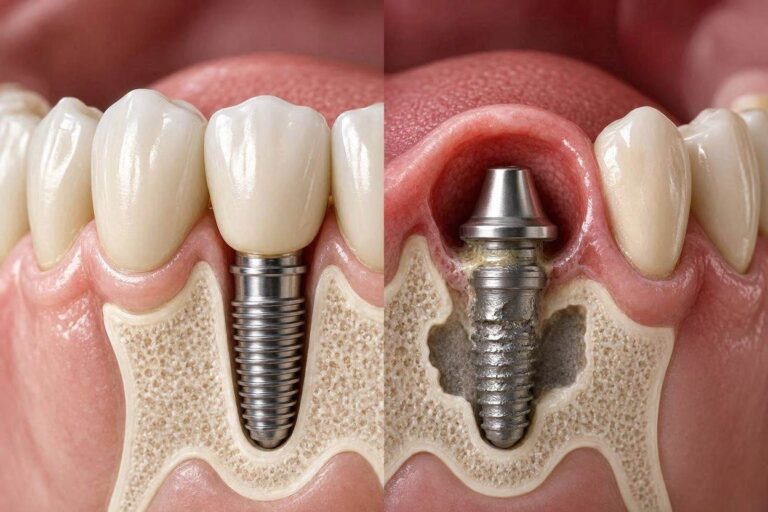
Options For Dental Implants: A Complete Guide to Replacing Missing Teeth
Losing a tooth can feel like a big deal. And honestly? It is. But here is the good news: modern dentistry has come a long way from the days of uncomfortable dentures and long bridges that damage healthy teeth.
Today, you have real choices.
Whether you are missing one tooth, several teeth, or an entire arch, there is likely an implant solution that fits your mouth, your lifestyle, and your budget.
This guide walks you through every major option for dental implants. No confusing jargon. No hard selling. Just clear, honest facts to help you talk confidently with your dentist.
What Exactly Is a Dental Implant?
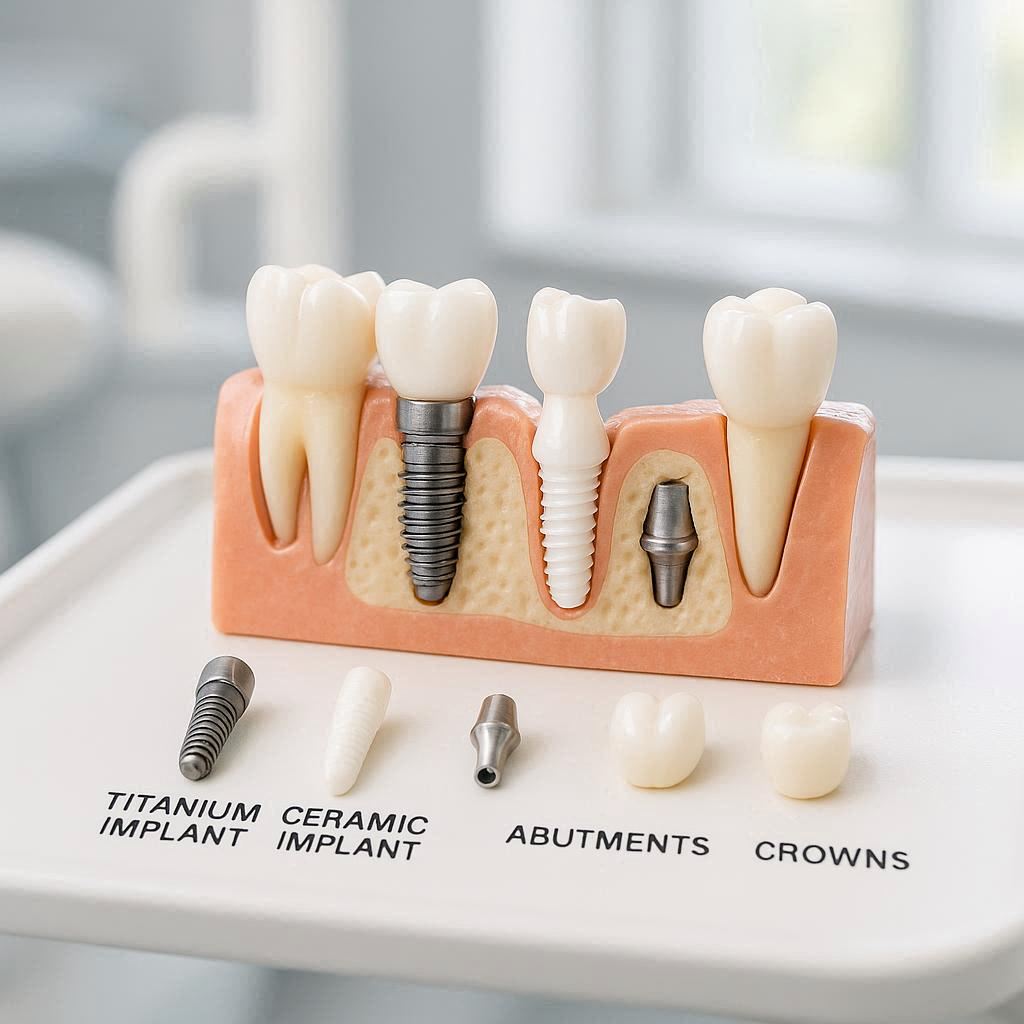
Before we explore the different options, it helps to understand what an implant actually is. Think of it as an artificial tooth root. A small, screw-shaped post, usually made of medical-grade titanium, is placed into your jawbone.
Over a few months, your bone grows tightly around this screw. This process is called osseointegration. Once that bond is strong, your dentist attaches a custom-made crown on top. The result? A tooth that looks, feels, and functions like a natural one.
Important note: Not everyone is an immediate candidate for implants. You need healthy gums and enough bone density to support the post. If you lack bone, do not worry. There are solutions for that too, which we will cover later.
Why Consider Implants Over Other Options?
You might be wondering: why go through surgery when a bridge or denture is cheaper? That is a fair question.
Bridges often require shaving down two healthy teeth to support the fake tooth. Dentures can slip, click, or make eating difficult. Implants, on the other hand, stand alone. They leave neighboring teeth untouched. They also stimulate your jawbone, which prevents the sunken-face look that sometimes happens with long-term denture use.
| Feature | Dental Implants | Traditional Bridge | Removable Dentures |
|---|---|---|---|
| Preserves bone | Yes | No | No |
| Affects neighbors | No | Yes (shaving teeth) | No |
| Stability | Permanent | Permanent | Can slip |
| Lifespan | 20+ years | 5–15 years | 5–8 years |
| Cleaning | Like normal teeth | Floss threaders needed | Requires soaking |
Now, let us look at your actual options.
Single Tooth Implants
This is the most straightforward option. If you have a single missing tooth—maybe from an accident, decay, or infection—a single implant with a crown is the gold standard.
How It Works
Your dentist places one small post into the gap. After healing, they screw a custom crown onto an abutment (a small connector piece). The crown is color-matched to your surrounding teeth.
Nobody will ever know it is not real.
Who Is This For?
- People missing only one tooth.
- Those with healthy bone levels in the gap.
- Patients who want to avoid grinding down two healthy teeth for a bridge.
Realistic Expectations
The process takes about three to six months from start to finish. Why so long? Because your bone needs time to heal around the post. You are not walking around with a hole in your smile during this time. Your dentist will give you a temporary tooth or a partial denture to wear.
Costs in the US typically range from 3,000to5,000 for the whole procedure (surgery, abutment, and crown). Insurance rarely covers the entire amount, but many plans pay a portion of the crown.
Multiple Tooth Implants (Implant-Supported Bridge)
Missing two, three, or four teeth in a row? You do not need one implant per tooth. That would be expensive and overkill.
Instead, dentists use an implant-supported bridge.
How It Works
Two or three implants are placed at strategic points along the gap. These implants act as anchors for a bridge that spans the entire space. The bridge is fixed—it does not come out.
For example, if you are missing three front teeth, your dentist might place two implants (one on each end) and suspend the middle false tooth between them.
Benefits Over Single Implants Per Tooth
- Lower cost. Fewer implants means less surgery.
- Fewer surgeries. Less time in the chair.
- Same stability. The bridge does not move.
Who Is This For?
- People with two to four consecutive missing teeth.
- Patients who want a fixed solution but want to save money.
- Those with adequate bone at the anchor points.
Reader tip: Always ask your dentist if you qualify for an implant-supported bridge instead of individual implants. It can save you thousands of dollars.
All-on-4 and All-on-6 (Full Arch Replacement)
This is where things get interesting. If you are missing all of your upper teeth, all of your lower teeth, or both, the All-on-4 technique changed the game completely.
Traditional methods required one implant for every missing tooth. That meant up to 14 implants per arch. Too much surgery. Too much cost. Too long to heal.
The Smart Solution
With All-on-4, your dentist places just four implants in specific positions: two straight in the front and two angled in the back. The angled back implants avoid the sinus cavity (upper jaw) and nerve canal (lower jaw), so you often do not need bone grafting.
These four implants support a fixed, full-arch prosthesis—a complete set of 12 to 14 teeth attached to a comfortable acrylic or zirconia base.
All-on-6 uses six implants for extra support, usually recommended if your bone density is average or if you want a longer-lasting zirconia bridge.
Why Patients Love It
- One surgery. You walk in with no teeth and out with a full smile.
- Fixed teeth. These are not removable. They feel like natural teeth.
- Eat normally. Steak, apples, corn on the cob—no problem.
- No palate covering. Unlike traditional dentures, the roof of your mouth is open. You taste food again.
A Honest Word on Costs
All-on-4 is not cheap. But compared to individual implants for a full arch, it is a bargain.
| Treatment | Approximate Cost (per arch) | Time to final teeth |
|---|---|---|
| All-on-4 (acrylic teeth) | 15,000–20,000 | Same day |
| All-on-4 (zirconia teeth) | 25,000–30,000 | 4–6 months |
| All-on-6 (zirconia) | 30,000–40,000 | 4–6 months |
| Traditional 8+ implants per arch | 40,000–60,000 | 6–12 months |
Important note: These are out-of-pocket estimates. Some clinics offer financing or in-house membership plans.
Implant-Supported Dentures
Maybe you already wear dentures. Maybe you are afraid of committing to fixed teeth like All-on-4. There is a middle path.
Implant-supported dentures are removable dentures that snap onto two to four implants in your jaw.
How They Work
Small metal attachments (locators) are built into your denture. These snap firmly onto the implant abutments. The denture stays put during talking and eating, but you can take it out at night to clean it.
The Two Main Types
1. Ball-retained dentures. The implants have a ball-shaped end. The denture has a rubber ring that snaps over it. Simple and effective.
2. Bar-retained dentures. A metal bar connects two to four implants. The denture clips onto the bar. This is more stable but slightly more expensive.
Who Loves This Option?
- Patients who have worn traditional dentures for years and hate the movement.
- People with less bone who cannot support fixed bridges.
- Those on a tighter budget than All-on-4.
Implant-supported dentures cost between 7,000and15,000 per arch. That is roughly half the price of All-on-4.
Mini Dental Implants (MDIs)
This option is smaller, faster, and cheaper. Mini dental implants are about the width of a toothpick. They are a single piece (the post and ball are connected), and they are placed through a less invasive procedure.
When Are Mini Implants Used?
- Stabilizing lower dentures. A lower denture has no suction like an upper denture. Two to four mini implants can lock it in place.
- Small teeth replacement. For tiny lower incisors where a regular implant is too wide.
- Patients with thin bone who cannot or will not get bone grafting.
The Trade-Offs
Mini implants are not as strong as traditional implants. They are not recommended for heavy chewing areas like back molars. They also have a higher long-term failure rate.
That said, for denture stabilization, they work beautifully. And the cost is lower—around 500to1,500 per mini implant versus 2,000to3,000 for a standard implant.
Reader warning: Be cautious of clinics advertising “same-day mini implants” for full smiles. They often break within a few years. Mini implants have a place, but that place is not supporting a full arch of chewing teeth.
Zygomatic Implants
This is the heavy artillery of dental implants.
For patients who have severe bone loss in the upper jaw—maybe from decades of denture wear, injury, or disease—there is often not enough bone for regular implants. Sinus lifts and bone grafting can help, but sometimes even those are not possible.
The Solution
Zygomatic implants are extra-long implants (up to 50mm) that anchor into your cheekbone instead of your jawbone. The cheekbone—called the zygoma—is extremely dense and rarely resorbs (melts away) over time.
What to Expect
- You need a very experienced surgeon. This is not a general dentist procedure.
- surgery is more complex. Recovery takes longer.
- Costs are higher. Figure 25,000to40,000 per arch.
But for people who have been told “you cannot have implants,” zygomatic implants are life-changing.
Bone Grafting and Sinus Lifts (The Pre-Implant Options)
Before we go further, we need to talk about preparation. Many people read about implants, get excited, and then hear their dentist say, “You do not have enough bone.”
Do not panic. This is fixable.
Bone Grafting
Your jawbone needs to be about 5mm wide and 10mm tall to hold a standard implant. If yours is smaller, your dentist can add bone. The graft material (usually from a donor or synthetic source) is placed into the socket or ridge. It heals for four to nine months, and then you get your implant.
Costs range from 300to800 per graft site.
Sinus Lift (Upper Molars Only)
Your maxillary sinuses sit right above your upper back teeth roots. When those teeth are lost, the sinus cavity can expand into the bone space. A sinus lift gently pushes the sinus membrane up and packs bone graft material underneath.
This adds 30 to 60 minutes to your surgery and costs 1,500to3,000.
Ridge Expansion
If your jaw is too narrow, your dentist can split the bone ridge and widen it with graft material. This is less common but very effective.
The takeaway? Bone loss is rarely a dead end. It just adds time and cost.
Same-Day Implants (Teeth-in-a-Day)
You have seen the ads: “Get new teeth in one day!” Is that real?
Yes and no.
True same-day implants work like this: Your dentist extracts your failing teeth, places implants, and attaches a temporary fixed bridge all in one appointment. You leave with teeth.
However, those are temporary teeth. You cannot chew hard food on them for three to six months while the implants heal. The final, permanent teeth come later.
Same-day is an incredible convenience. But it is not magic. The healing biology is the same.
Comparing Your Options: A Quick Reference Guide
Here is a simple chart to help you compare all the options side-by-side.
| Option | Best for | Number of implants | Fixed or removable? | Relative cost |
|---|---|---|---|---|
| Single implant | One missing tooth | 1 | Fixed | $$ |
| Implant-supported bridge | 2–4 missing teeth in a row | 2–3 | Fixed | $$$ |
| All-on-4 | Full arch (all teeth missing) | 4 | Fixed | $$$$ |
| All-on-6 | Full arch, more bone support | 6 | Fixed | $$$$$ |
| Implant-supported denture | Denture wearers wanting stability | 2–4 | Removable | $$$ |
| Mini implants | Lower denture stabilization | 2–4 | Removable | $$ |
| Zygomatic | Severe upper bone loss | 2–6 | Fixed | $$$$$+ |
What About Cost and Insurance?
Let us be real. Implants are an investment. A single tooth might cost as much as a used car. A full mouth might cost as much as a new sedan.
But here is what people often miss: an implant, properly cared for, can last 30 years or a lifetime. A bridge lasts 10 years on average. Over a lifetime, the implant is often cheaper because you are not replacing it every decade.
Does Insurance Help?
Most dental insurance plans cover a portion of the crown (the visible part) but not the implant post. Why? Because insurance companies still categorize implants as “major restorative” or sometimes “cosmetic.” This is changing slowly.
Typically, you can expect your plan to pay 500to1,500 toward the crown. The rest is out-of-pocket.
Creative Financing Options
- Dental savings plans (discount plans, not insurance). You pay an annual fee and get 15–30% off implant services.
- CareCredit or other medical credit cards. Interest-free if paid within 12–18 months.
- In-house membership plans. More clinics now offer 200–400 annual memberships that give you 10–20% off all services.
- Dental schools. This is the best kept secret. Major universities have implant programs where supervised students perform surgery for 40–60% less than private practice.
Step-by-Step: What the Implant Journey Actually Looks Like
The process sounds scary in writing. In real life, it is mostly waiting and healing. Here is what actually happens.
Step 1: Consultation and Imaging
Your dentist takes a 3D CT scan of your jaw. This shows bone height, width, and density. They also check your medical history. Uncontrolled diabetes, heavy smoking, or certain autoimmune conditions can affect healing.
Step 2: Preparation (If Needed)
Bone graft? Sinus lift? This happens now. Then you wait 4–9 months for healing before the implant surgery.
Step 3: Implant Placement
A simple surgery. Most people compare it to a tooth extraction in reverse. You are numb. You may feel pressure but not pain. It takes 30–90 minutes depending on how many implants.
Step 4: Healing (Osseointegration)
This is the long part. You wait 3–6 months. You wear a temporary tooth or denture. You eat soft foods for the first few weeks. The implant fuses with your bone.
Step 5: Abutment Placement
A small second surgery (often done with just topical numbing) to attach the abutment. Then heal for 2–4 more weeks for the gums to shape around it.
Step 6: Final Crown or Bridge
Your dentist takes impressions. A lab makes your permanent teeth. Two weeks later, you come in and they screw or cement them into place.
You are done.
How to Choose the Right Option for You
No single option is “best.” The best option depends on you. Ask yourself these three questions.
1. How many teeth are you missing?
One tooth? Single implant. Three in a row? Implant bridge. All of them? Look at All-on-4 or implant dentures.
2. What is your budget?
Be honest. If you cannot afford All-on-4 today, implant-supported dentures or mini implants for your lower denture might be the smart first step. You can always upgrade later.
3. How much bone do you have?
Only a CT scan can answer this. If you have bone loss, budget extra for grafting. If you have severe loss, ask about zygomatic implants.
A personal note from a writer who has been through this: I waited three years to replace a missing molar because I was afraid of the cost and the surgery. When I finally did it, the surgery was easier than a filling. The recovery was two days of ibuprofen. And now, eight years later, I never think about it. Do not let fear stop you from at least getting a consultation.
Keeping Your Implants Healthy for Life
Implants do not get cavities. But they can get something called peri-implantitis—an infection of the gum and bone around the implant. It is treatable early, but late-stage peri-implantitis can cause implant failure.
Prevention is simple.
- Brush twice a day. Use a soft brush. Pay attention to the gumline around the implant.
- Floss daily. Use implant-specific floss or superfloss with a stiff end.
- Water flosser. Highly recommended. It cleans around the abutment connection.
- Regular cleanings. See your hygienist every 6 months. They have special plastic scalers that will not scratch your implant.
- No smoking. Smoking dramatically increases implant failure rates. If you smoke and want implants, this is the time to quit.
Common Questions Patients Ask
Let me answer a few fears directly.
“Does it hurt?” Less than a tooth extraction for most people. You are numb during surgery. Afterward, mild soreness for 2–4 days. Over-the-counter pain relievers usually handle it.
“How long do they last?” With good care, 20 years to life. The crown may need replacement after 10–15 years from normal wear, but the implant post stays.
“Can I get implants if I have gum disease?” Not until the disease is treated and controlled. Active gum disease eats the bone implants need. Get your gums healthy first.
“Am I too old?” Age is not a barrier. Healthy 80 and 90-year-olds get implants. Bone health and general health matter, not your birthday.
“What if the implant fails?” It happens in about 5% of cases (higher for smokers). Most failures occur early, within the first three months. Your dentist will remove the implant, let things heal, and try again—often at no extra charge if you signed a warranty agreement.
A Word on Going Abroad for Dental Implants
You have seen the ads for dental tourism: Mexico, Costa Rica, Turkey, Thailand. Prices that look too good to be true.
Here is the honest truth. There are excellent dentists outside the US and Europe. There are also terrible ones. The same is true at home.
If you go abroad:
- Do not chase the lowest price. A full mouth of implants for $5,000 is a red flag.
- Plan for complications. If your implants fail six months later, will you fly back? Will the clinic honor a warranty?
- Get a treatment plan in writing. Know exactly what materials they are using (brand names matter in implants).
- Have a home dentist who agrees to manage you. Many US dentists refuse to work on foreign implants because they do not know the parts or connection types.
Is it worth it? For simple cases like a single implant, probably not after travel costs. For full-arch All-on-4, savings of 10,000–15,000 are real. Just do your homework.
The Future of Dental Implants
This field moves fast. Three exciting developments are coming to mainstream dentistry.
1. 3D-Printed Implants
Custom implants printed to match your exact bone anatomy. Better fit, faster healing.
2. Antibacterial Implant Surfaces
New coatings that kill bacteria on contact. This could nearly eliminate peri-implantitis.
3. Smart Implants
Experimental implants with sensors that monitor bone health and bite force. Your dentist could “read” the implant at checkups to catch problems early.
None of these are standard yet. But they tell you where the technology is headed.
Conclusion (Three-Line Summary)
Dental implants offer a permanent, natural-looking solution for missing teeth, ranging from single-toon posts to full-arch All-on-4 systems. Your best option depends on how many teeth you are missing, your jawbone health, and your budget. Talk to an implant dentist for a CT scan—you likely have more options than you think.
Frequently Asked Questions (FAQ)
1. How long does the entire implant process take?
From extraction to final crown, plan on 4 to 9 months. Most of that is healing time, not active treatment.
2. Can I get dental implants if I smoke?
Yes, but your failure rate is significantly higher (up to 20% vs 5%). Many dentists require you to quit or reduce drastically before surgery.
3. Are dental implants covered by Medicare or Medicaid?
Original Medicare does not cover dental implants. Some Medicare Advantage plans (Part C) offer limited implant coverage. Medicaid coverage varies by state but is rare.
4. What is the cheapest option for replacing a missing tooth?
A removable partial denture (300–800) is the cheapest upfront. But over 20 years, an implant is often cheaper because you never replace it. A bridge sits in the middle.
5. Can I have an MRI if I have dental implants?
Yes. Titanium implants are not magnetic. They are safe for MRI and CT scans. However, they may create mild image distortion around the mouth area.
6. Do implant-supported dentures look like real teeth?
Yes. The denture base is pink like your gums, and the teeth are high-quality acrylic or porcelain. Most people cannot tell the difference.
7. What happens if I wait too long to replace a missing tooth?
The neighboring teeth tilt into the gap. The opposing tooth may super-erupt (grow longer). And you lose jawbone. The longer you wait, the more complex and expensive the implant becomes.
8. Can I get a dental implant years after losing a tooth?
Yes. But you will likely need a bone graft to rebuild the lost ridge. Still very possible.
9. Which is better: All-on-4 or implant-supported dentures?
If you can afford it and have enough bone, All-on-4 feels more like natural teeth. If budget is tight or bone is limited, implant dentures offer great stability at half the cost.
10. Do implants set off metal detectors?
Rarely. A single titanium implant is too small. Multiple implants (like All-on-4) might occasionally trigger airport detectors, but it is uncommon. Carry your implant card just in case.
Additional Resource
For a free, unbiased guide to finding a qualified implant dentist near you and understanding real patient reviews, visit:
The American Academy of Implant Dentistry (AAID) Patient Resource Page
Link: www.aaid.com/patients
This resource includes a searchable directory of credentialed implant dentists, a cost estimator tool, and downloadable guides to asking the right questions during your consultation.
Disclaimer: This article is for informational purposes only and does not constitute medical or dental advice. Every patient is unique. Always consult with a licensed dental professional to determine the best treatment plan for your specific health situation. The author and publisher are not liable for any outcomes resulting from the use of this information. Implant costs and insurance coverage vary widely by region and provider—always verify current pricing and policies directly with your dental office.