Dental Implant Loans: Your Complete, Honest Guide to Financing a New Smile
Let’s be real for a second. You’ve been told you need dental implants. Maybe you’re missing one tooth, several teeth, or you’re tired of struggling with uncomfortable dentures. You’ve done your research. You know implants are the best long-term solution for your oral health and confidence.
Then comes the hard part: the price tag.
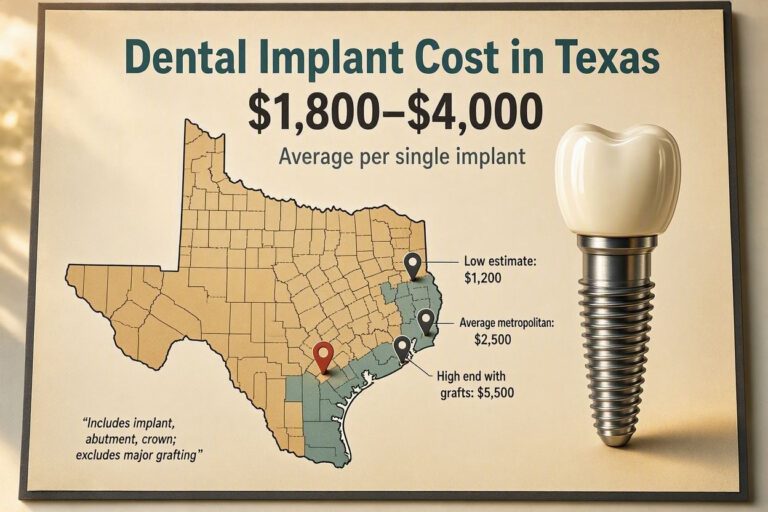
A full set of implants can cost anywhere from 3,000to30,000 or more, depending on your needs. Most people don’t have that kind of cash sitting in a savings account.
That’s where dental implant loans enter the picture.
But here’s the thing: not all loans are created equal. Some can save you money. Others can bury you in interest if you are not careful. This guide will walk you through everything you need to know. You will learn what options exist, how to avoid common traps, and how to make a confident, affordable choice for your smile.
Why Do So Many People Need Loans for Dental Implants?
First, let’s talk about why this topic matters so much.
Dental insurance is famously limited. Most plans focus on prevention: cleanings, fillings, and basic extractions. When it comes to major restorative work like implants, many insurance plans cover little to nothing. Some offer a small benefit, often capped at 1,000–1,500 per year. Others classify implants as “cosmetic,” even though missing teeth can lead to bone loss, shifting teeth, and digestive problems.
Important note: Missing teeth are not just a cosmetic issue. They affect your ability to chew properly, which can impact your nutrition and overall health. Consider implants a medical investment, not just a beauty treatment.
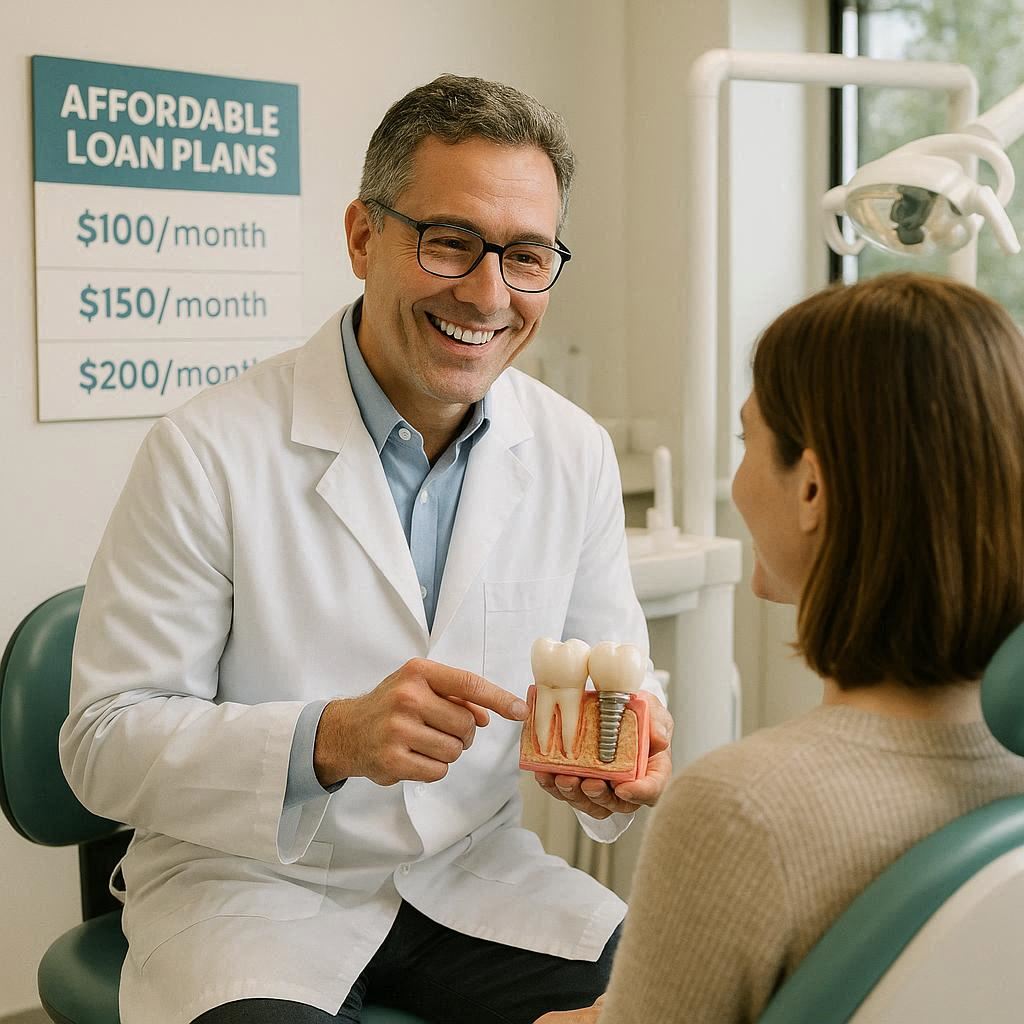
Because dental practices rarely offer in-house payment plans for large amounts, patients turn to external financing. Dental implant loans fill that gap. They let you spread the cost over months or years, making treatment possible today rather than years from now.
What Exactly Are Dental Implant Loans?
Great question. The short answer: a personal loan you use specifically to pay for dental implant surgery and related procedures.
Unlike a car loan or a mortgage, a dental implant loan is typically unsecured. That means you do not put up your house or car as collateral. The lender approves you based on your credit score, income, and existing debt.
Once approved, the lender sends the money directly to you (or sometimes directly to your dentist). You then pay back the loan in fixed monthly installments over a set term, usually 12 to 84 months.
Key features of most dental implant loans:
- Fixed interest rates – Your monthly payment stays the same.
- No collateral required – Your credit history does the work.
- Fast funding – Many lenders deposit money within 1–3 business days.
- Flexible amounts – You can borrow as little as 1,000orasmuchas50,000+.
How Dental Implant Loans Compare to Other Payment Options
You have more than one way to pay for implants. Let’s look at a clear comparison. This table will help you see which path makes the most sense for your situation.
| Payment Method | Pros | Cons | Best For |
|---|---|---|---|
| Dental implant loan | Fixed payments, no collateral, fast approval | Interest costs, credit check required | People with fair to good credit who need 3k–30k |
| CareCredit (medical credit card) | Promotional 0% interest offers, easy application | Deferred interest traps, high regular APR | Short-term financing paid off within 6–18 months |
| In-house dental payment plan | No credit check, flexible terms | Rare for large amounts, short repayment windows | Small procedures under $2,000 |
| Health savings account (HSA) / FSA | Tax-free dollars, no interest | Limited to what you already saved, annual contribution caps | People with existing HSA/FSA funds |
| Personal loan from bank/credit union | Competitive rates for good credit | Slower approval, stricter requirements | Borrowers with excellent credit |
| Saving up cash | No debt, no interest | Delays treatment by months or years | People who can wait and save aggressively |
Important note: Be very careful with “0% interest” offers. Many come with deferred interest. That means if you do not pay the full balance before the promotional period ends, you owe all the back interest at a very high rate (often 25–30%).
Where Can You Find the Best Dental Implant Loans?
Not all lenders understand dental care. Some treat it like any other personal loan. Others specialize in medical and dental financing. Below are the most common and trustworthy sources.
1. Online Lenders Specializing in Medical/Dental Financing
These companies work directly with dental practices or with patients. They often offer higher approval rates and better terms for medical procedures.
- CareCredit – The most well-known medical credit card. Accepted at thousands of dental offices. Look for promotional financing offers like 12 months no interest.
- Alphaeon Credit – Similar to CareCredit but focused on elective and cosmetic procedures, including implants.
- LendingClub – Offers personal loans for medical expenses. You can apply online and receive multiple offers.
- Prosper – A peer-to-peer lender. Real people fund your loan. Rates can be competitive for fair credit.
2. Local Credit Unions
Credit unions are non-profit. They often offer lower interest rates than big banks. Many have “medical expense loans” or “dental loan programs.” You usually need to become a member first, which is often easy and cheap.
Why credit unions are worth your time:
They look at more than just your credit score. If you have been a member for a while, they may approve you when a bank says no. Their customer service is also much more personal.
3. Traditional Banks (Wells Fargo, Chase, etc.)
Major banks offer personal loans that you can use for dental implants. They work best if you already have a checking or savings account there. You may get a small discount on the interest rate for automatic payments.
Downside: Banks are stricter. If your credit score is below 660, your chances of approval drop significantly.
4. Your Dentist’s Recommended Financing Partner
Many dental offices partner with one or two financing companies. The dentist does not get a kickback in most cases (though some do). Ask upfront: “Do you receive any payment for referring me to this lender?”
A good dentist will be transparent. They recommend partners because those lenders pay reliably and approve many patients. But always compare their recommended lender with at least two other options before signing anything.
Step-by-Step: How to Apply for a Dental Implant Loan
Let’s walk through the actual process. You will feel more confident knowing exactly what to expect.
Step 1: Get a Detailed Treatment Plan
Before you borrow a single dollar, ask your dentist for a written treatment plan. This document should list:
- Every procedure (consultation, extractions, bone grafts, implant placement, abutment, crown)
- The cost of each step
- The total estimated cost
- How long the entire process will take (implants can take 3–9 months)
Why this matters: You cannot borrow the right amount without knowing the full cost. Under-borrow, and you will scramble for more money mid-treatment. Over-borrow, and you pay interest on cash you do not need.
Step 2: Check Your Credit Score
Your credit score largely determines two things:
- Whether you get approved at all.
- What interest rate you will pay.
You can check your credit score for free through services like Credit Karma, Experian, or your bank’s mobile app.
- 720+ (Excellent): You will qualify for the best rates (6–10% APR).
- 660–719 (Good/Fair): You will likely get approved with moderate rates (10–18% APR).
- 580–659 (Fair/Poor): Approval is possible but expect higher rates (18–30% APR) or require a co-signer.
- Below 580: You may need to look at secured loans, in-house plans, or save up first.
Step 3: Prequalify with Multiple Lenders
Most online lenders and credit unions offer a “soft credit check” for prequalification. A soft check does not hurt your credit score. You will see potential loan amounts, rates, and terms without any commitment.
Apply for prequalification with at least three lenders. Compare them side by side.
Step 4: Compare the Real Numbers
Do not just look at the monthly payment. Look at the total cost of borrowing. Here is an example.
Imagine you need $15,000 for dental implants.
| Lender | Interest Rate (APR) | Loan Term | Monthly Payment | Total Interest Paid | Total Paid |
|---|---|---|---|---|---|
| Lender A | 9.5% | 36 months | $480 | $2,280 | $17,280 |
| Lender B | 14.9% | 48 months | $416 | $4,968 | $19,968 |
| Lender C | 7.2% | 24 months | $672 | $1,128 | $16,128 |
Lender C has the highest monthly payment but saves you the most money overall. Choose based on what you can afford each month, but always understand the trade-off.
Step 5: Submit a Formal Application
Once you choose a lender, submit a full application. This triggers a “hard credit check,” which may lower your credit score by a few points temporarily (usually 3–10 points). The effect fades within a few months.
You will need to provide:
- Government ID
- Proof of income (pay stubs or tax returns)
- Proof of address
- The treatment plan from your dentist (some lenders ask for it)
Step 6: Receive Funds and Schedule Treatment
After approval, the lender sends the money. Depending on the lender, this happens within 1–7 business days. Some lenders pay the dentist directly. Others deposit the money in your bank account, and you pay the dentist yourself.
Once the funds arrive, schedule your implant procedure. Start your journey toward a complete smile.
Common Mistakes People Make with Dental Implant Loans
I see these mistakes all the time. Avoid them, and you will save real money and stress.
Mistake #1: Only Looking at the Monthly Payment
A low monthly payment feels good in the moment. But that usually means a longer loan term. A longer term means many more months of interest payments. You could end up paying thousands extra.
Better approach: Choose the shortest term you can comfortably afford. Even adding 50–100 to your monthly payment can save you hundreds in interest.
Mistake #2: Ignoring Fees
Some lenders charge origination fees (1–8% of the loan amount). Others charge prepayment penalties if you pay off the loan early. Read the fine print. A loan with a slightly higher rate but zero fees might actually cost less.
Mistake #3: Borrowing More Than You Need
Getting approved for 25,000doesnotmeanyoushouldtakeallofit.Borrowonlywhatyourtreatmentplanshows.Ifyourdentistestimates14,500, borrow 15,000tohaveasmallbuffer,not25,000.
Mistake #4: Not Asking Your Dentist for a Discount
This sounds strange, but it works. Many dental offices offer a 3–7% discount if you pay in full with cash or a loan. Why? Because they avoid the 2–4% credit card processing fee. Ask politely: “If I pay in full with a loan check, can you offer a discount?” You might be surprised.
Mistake #5: Applying for Too Many Loans at Once
Every hard credit inquiry within a short period can lower your score. Stick to prequalification offers (soft pulls) first. Only submit formal applications for your top two choices.
Alternatives to Dental Implant Loans You Should Consider
A loan is not your only option. In some cases, other paths make more sense.
Alternative 1: Dental Schools
Dental schools need patients for their training programs. Supervised students perform the work at 30–50% lower costs. A full set of implants that costs 20,000ataprivatepracticemightcost10,000–$12,000 at a dental school.
Trade-offs:
- Appointments take longer (sometimes twice as long)
- You may see different students over the course of treatment
- Location may not be convenient
Is it safe? Yes. Licensed faculty dentists supervise every step. Many patients choose this route successfully.
Alternative 2: Dental Tourism (Mexico, Costa Rica, Colombia, Turkey)
Traveling abroad for dental implants has grown rapidly in the last decade. You can save 50–70% compared to U.S. prices. A 25,000caseintheU.S.mightcost8,000–$12,000 abroad, including travel.
Realistic warnings:
- Follow-up care is difficult if something goes wrong after you return home
- Language barriers can cause misunderstandings
- Quality varies widely. Research the clinic thoroughly. Look for international accreditation (like JCI).
Who this works for: People who need multiple implants, have flexible schedules, and can stay abroad for 1–2 weeks (sometimes two separate trips).
Alternative 3: Crowdfunding
Websites like GoFundMe and YouCaring now have medical sections. You create a campaign explaining why you need implants. Share it with friends, family, and your community.
This works best if you have a compelling story and an active social network. It is not reliable for most people, but it can supplement other funding.
Alternative 4: Negotiating a Payment Plan Directly with Your Dentist
Some independent dentists (not large corporate chains) offer in-house financing. Terms are often shorter: 6–12 months. Interest may be low or zero. But they usually require a significant down payment (20–50%).
Ask your dentist: “Do you offer any no-interest or low-interest payment plans for patients without outside financing?”
How to Improve Your Chances of Loan Approval
If you are worried about being denied, take these steps first. They will improve your credit profile and your approval odds.
Step 1: Pay Down Existing Credit Card Balances
Lenders look at your credit utilization ratio. That means how much of your available credit you are using. Aim to keep it below 30%. If you have a 10,000creditlimit,keepyourbalanceunder3,000.
Step 2: Dispute Errors on Your Credit Report
One in five credit reports contains an error. Get free copies from AnnualCreditReport.com. Look for accounts that are not yours, late payments you never made, or outdated information. Dispute any errors. This can raise your score quickly.
Step 3: Add a Co-signer
A co-signer with good credit (parent, spouse, sibling) agrees to pay the loan if you cannot. This reduces the lender’s risk. You may get a much lower rate. The co-signer takes on real risk, so only ask someone you trust completely.
Step 4: Offer a Down Payment
Even a 10–20% down payment shows the lender you are committed. It also reduces the amount you need to borrow. Some lenders offer better rates for borrowers who put money down.
Realistic Example Scenarios (So You Can See How This Works)
Let’s look at three common patient profiles. See which one matches your situation.
Scenario 1: Sarah, Age 34 – Single Tooth Implant
- Total cost: $4,500
- Credit score: 710 (good)
- Savings available: $1,000
Sarah decides to put 1,000downandborrow3,500. She uses a credit union personal loan at 8.5% APR for 24 months.
- Monthly payment: $159
- Total interest paid: $316
- Total paid with interest: $3,816
Sarah feels comfortable because the payment is low, and she will be debt-free in two years.
Scenario 2: Michael, Age 55 – Full Upper Arch (All-on-4)
- Total cost: $24,000
- Credit score: 640 (fair)
- Savings available: $2,000
Michael gets denied by his bank. He prequalifies with an online medical lender at 18.9% APR for 60 months. He puts 2,000down,borrowing22,000.
- Monthly payment: $570
- Total interest paid: $12,200
- Total paid with interest: $34,200
Michael is not thrilled about the interest, but he gets his implants. He plans to make extra payments each year to shorten the term and save on interest.
Important note: Michael could improve his situation by waiting six months to raise his credit score. But he has a medical need (trouble eating) and decides the benefit outweighs the cost.
Scenario 3: Lisa, Age 42 – Multiple Missing Teeth (6 Implants)
- Total cost: $18,000
- Credit score: 780 (excellent)
- Savings available: $5,000
Lisa uses a mix of strategies. She puts 5,000down.Sheborrows10,000 through CareCredit with a 12-month 0% promotional offer. She borrows the remaining $3,000 from her HSA.
- Promotional period payment: $833/month for 12 months
- Interest on 10,000:0 (paid in full within promo period)
- HSA funds: tax-free, no interest
Lisa pays off the CareCredit balance aggressively in 10 months. She never pays a cent of interest. This is the ideal scenario for those with excellent credit and existing savings.
Frequently Asked Questions (FAQ) About Dental Implant Loans
1. Can I get a dental implant loan with bad credit?
Yes, but your options are more limited. You will likely face higher interest rates (20–30% APR). Some lenders specialize in bad credit medical loans. You may also need a co-signer or a secured loan (using an asset like a car as collateral). Consider improving your credit for 6–12 months before applying if your situation is not urgent.
2. Is CareCredit a loan or a credit card?
CareCredit is a healthcare credit card. For practical purposes, it works like a loan when you use promotional financing. But technically, it is revolving credit. The key difference: if you miss a payment or do not pay off the full balance during the promotional window, you can be charged deferred interest on the original amount.
3. How long does it take to get approved for a dental implant loan?
Prequalification takes minutes online. Full approval after a hard credit check usually takes 1–2 business days. Funding takes another 1–3 business days. From application to money in hand: 2–5 days on average.
4. Can I use a dental implant loan for bone grafts and extractions too?
Absolutely. A quality treatment plan includes everything from preparation to the final crown. You can borrow for the entire process. Do not get separate loans for each step. One loan for the total cost is simpler and often cheaper.
5. What happens if my treatment costs more than the loan?
Always build a 10–15% buffer into your loan request. Dental work can uncover unexpected issues like infection or poor bone density. If you still come up short, you could request a loan increase from your lender (not always approved) or pay the difference from savings.
6. Can I pay off my dental implant loan early without penalty?
Many lenders allow this. Some charge a prepayment penalty. Always ask before signing. Look for lenders with “no prepayment penalty” written clearly in the terms.
7. Will a dental implant loan affect my credit score?
Yes, in three ways:
- The hard credit inquiry temporarily lowers your score a few points.
- Opening a new loan changes your credit mix, which can help your score over time.
- Making on-time payments builds positive history. Missing payments hurts your score significantly.
8. Are dental implant loans tax-deductible?
Generally, no. The IRS allows medical expense deductions only if your total medical costs exceed 7.5% of your adjusted gross income (AGI) and you itemize deductions. For most people, dental implant loans are not tax-deductible. Speak with a tax professional about your specific situation.
Additional Resources
For a deeper dive into comparing loan offers and understanding interest calculations, visit the Consumer Financial Protection Bureau’s (CFPB) personal loan guide.
Link: consumerfinance.gov/personal-loans/
This government resource provides unbiased tools to compare APR, fees, and loan terms across different lenders. It also explains your rights as a borrower.
Important Notes for Readers (Please Read Carefully)
- Do not borrow more than you can reasonably repay. Dental implants improve your life, but financial stress can harm your health too.
- Always get a second opinion on your treatment plan. Implant costs vary wildly between dentists. A second opinion might save you thousands before you even apply for a loan.
- Ask your dentist about payment due dates. Implant treatment takes months. Some lenders require you to start payments immediately, even before your surgery. Others offer a deferment period. Plan accordingly.
- Read every word of your loan agreement. If you do not understand a fee or a term, call the lender and ask. Do not sign until you understand exactly what you owe, when, and at what rate.
- Consider waiting if your credit is poor and your situation is not urgent. Six months of credit building could save you thousands in interest.
Conclusion
Dental implant loans make life-changing dental care affordable when you do not have thousands in cash upfront. Compare multiple lenders, choose the shortest term you can afford, and always read the fine print to avoid hidden fees or deferred interest traps. With careful planning, you can restore your smile and your confidence without drowning in debt.