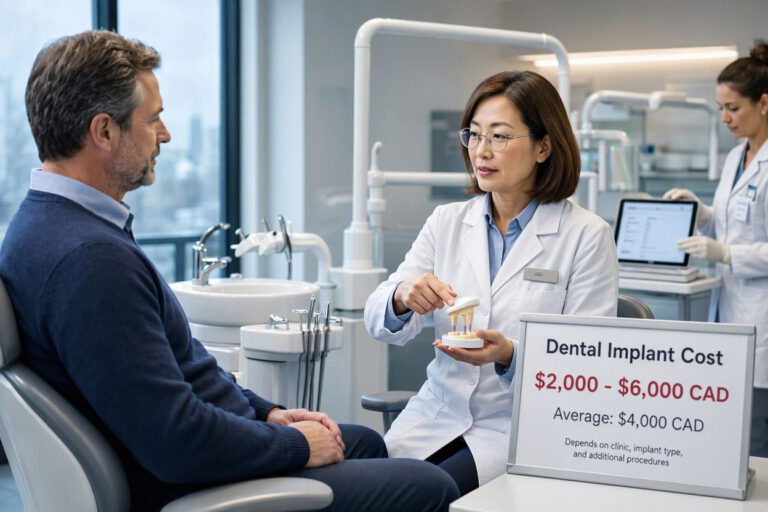
Tooth Implant Timeline
Deciding to get a dental implant often brings a wave of questions. How long will it take? Will it hurt? What happens on each visit?
You are not alone if you feel a little overwhelmed. The truth is, a tooth implant is not a one-day procedure. It is a journey. But understanding that journey step by step removes the fear.
This guide walks you through the complete tooth implant timeline. We will look at what happens before surgery, the day of the operation, the long healing period, and finally, the placement of your new tooth.
We will be honest about the waiting times. We will explain why bone healing takes months, not weeks. And we will give you realistic expectations so you can plan your life and your budget.
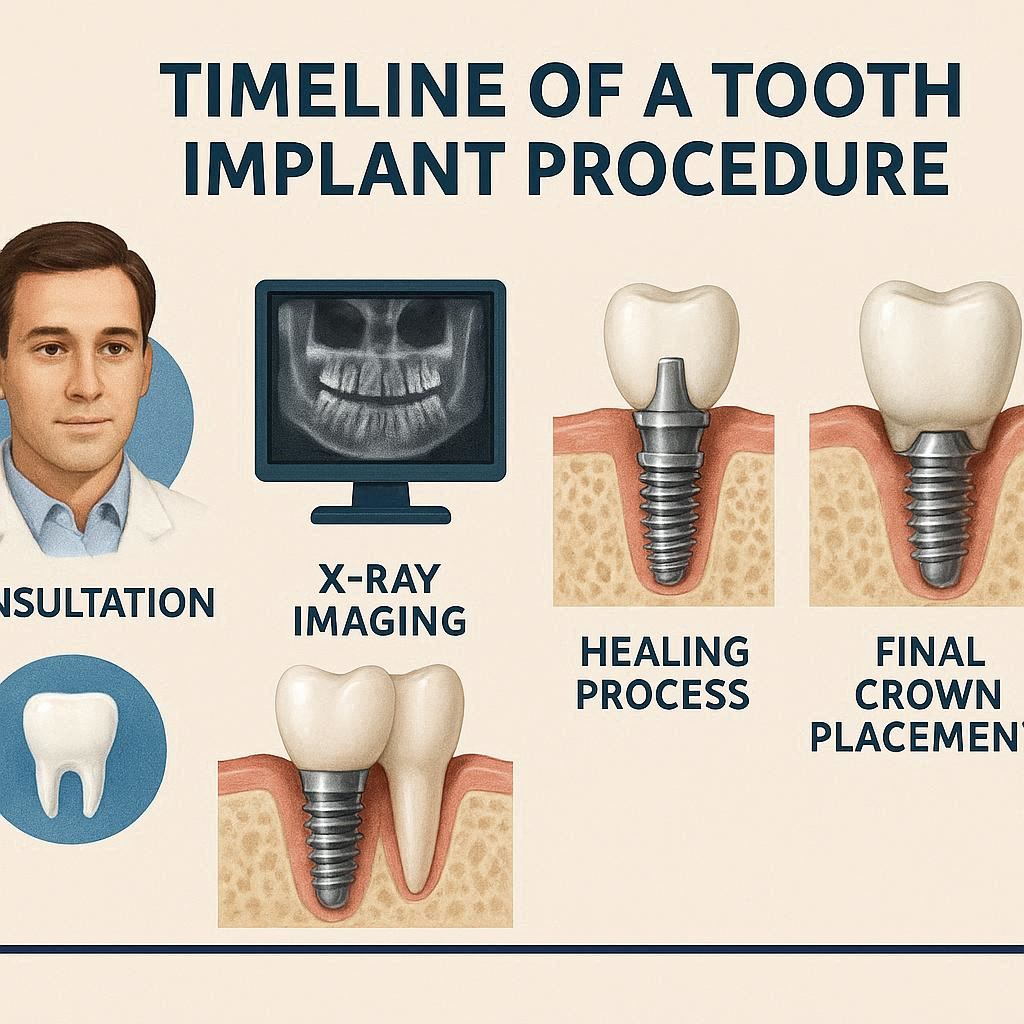
Understanding the Basics of a Tooth Implant
Before we look at the calendar, let us understand what an implant really is. Many people imagine a fake tooth screwed into the jaw. That is partly true, but there is more to the story.
A dental implant has three main parts.
First, there is the implant post. This is a small screw, usually made of titanium. The surgeon places this screw into your jawbone. It acts as the new root for your missing tooth.
Second, there is the abutment. This is a connector piece. It sits on top of the implant post and sticks out just above your gum line. You can think of it as a small metal peg.
Third, there is the dental crown. This is the visible white part that looks like a natural tooth. The crown attaches to the abutment.
| Component | Material | Function |
|---|---|---|
| Implant Post | Titanium or Zirconia | Acts as an artificial tooth root |
| Abutment | Titanium or Gold | Connects the post to the crown |
| Dental Crown | Porcelain or Ceramic | The visible, natural-looking tooth |
The magic of modern implants lies in a process called osseointegration. This is a fancy word for a simple idea. Your jawbone grows around the titanium screw. It fuses with the metal, just like it would with a natural root. This bond is incredibly strong. It is what makes implants last for decades.
Because bone grows slowly, osseointegration takes time. This is the main reason the tooth implant timeline extends over several months. No surgeon can speed up biology.
Important note: Not everyone starts at the same point. Some patients have strong, healthy bone. Others have bone loss due to gum disease or long-term tooth absence. Your starting point changes your personal timeline.
The Complete Step-by-Step Timeline
Let us break down the entire process into clear stages. We will look at typical waiting times, but remember these are averages. Your dentist will give you a personalized calendar.
Initial Consultation and Evaluation (1 to 2 weeks)
Your journey does not begin in the operating room. It begins in a consultation room. This first visit is crucial. The dentist needs to see if you are a good candidate for an implant.
During this phase, you can expect a few things:
- A full medical history review (diabetes, heart conditions, and smoking habits matter)
- A visual examination of your mouth and gums
- X-rays or a CBCT scan (a 3D image of your jawbone)
- A discussion about your goals and budget
The CBCT scan is particularly important. It shows the dentist the exact density and height of your bone. They need at least 1mm of bone around the implant for safety. If your bone is too thin or too soft, you will need a bone graft first.
How long does this step take? Most offices complete the evaluation in one or two visits over 7 to 14 days. You will leave with a treatment plan and a total cost estimate.
Preparatory Procedures: Bone Grafts and Sinus Lifts (3 to 12 months)
This is the stage that surprises many patients. You might assume you can get the implant right away. But if your jawbone is not ready, you must wait. It is like building a house on soft soil. You need a solid foundation first.
Why would you need a bone graft? When you lose a tooth, the bone that supported it starts to dissolve. This is called resorption. The body thinks, “We do not need this bone anymore.” Over a few years, the bone shrinks significantly.
A bone graft adds artificial or natural bone material to the empty socket. Your body slowly replaces this material with living bone.
| Type of Graft | Typical Healing Time |
|---|---|
| Small socket graft (after extraction) | 3 to 4 months |
| Larger block bone graft | 6 to 9 months |
| Sinus lift (upper back jaw) | 8 to 12 months |
A sinus lift is a specific procedure for upper molars. The sinus cavity (an air space above your upper teeth) can drop down when teeth are missing. The surgeon lifts this membrane and places bone graft material underneath. This creates enough height for the implant.
What is the realistic timeline here? If you need a simple bone graft, add three months. If you need a sinus lift, add nine to twelve months before your implant surgery.
Tooth Extraction and Immediate Implant Placement (1 day)
Sometimes, you still have the damaged tooth in your mouth. The dentist needs to remove it before placing an implant. There are two ways to handle this.
Option A: Extract and wait
The dentist pulls the tooth. Then, you wait for the socket to heal. This healing takes about 8 to 12 weeks. After that, the surgeon places the implant in a second surgery.
Option B: Immediate implant placement
If your infection is minimal and the bone is healthy, the surgeon can extract the tooth and place the implant on the same day. This saves you one surgery and several weeks of waiting.
Honest reality: Immediate placement sounds great, but not everyone qualifies. You need perfect conditions. No active infection. No major bone loss. Most general dentists prefer to wait.
Implant Surgery: Placing the Post (90 minutes)
Finally, we arrive at the main event. Implant surgery is surprisingly routine. You will not feel pain, but you will feel pressure and vibrations.
Here is what happens behind the scenes:
- Anesthesia: The dentist numbs the area completely. You might also receive sedation if you are nervous.
- Incision: A small cut opens your gum tissue.
- Drilling: Using a series of increasing drills, the dentist creates a hole in your bone. This is precise work. The hole matches the exact size of your implant.
- Placement: The titanium post screws into the hole.
- Closing: The dentist places a healing cap or a cover screw on top. Then, they stitch the gum tissue around or over the implant.
The entire procedure takes between 30 and 90 minutes for a single implant. For multiple implants, expect two to three hours.
Will you be awake? Most patients stay awake with local anesthesia. You can drive yourself home. If you choose IV sedation, you will need a ride.
Osseointegration: The Healing Phase (3 to 6 months)
Now comes the longest part of the tooth implant timeline. You must wait for the bone to grow. This is the osseointegration phase we mentioned earlier.
During this time, the implant is completely below the gum line. You cannot see it. You might feel a small bump if you run your tongue over the area.
What happens biologically? Bone cells called osteoblasts migrate to the surface of the titanium screw. They deposit new bone matrix. Over weeks and months, this new bone locks the implant in place as if it were a natural root.
How long does it take?
- Lower jaw: 3 to 4 months (lower bone is denser and heals faster)
- Upper jaw: 5 to 6 months (upper bone is softer and takes longer)
Pro tips for successful healing:
- Eat soft foods for the first week
- Do not smoke (smoking severely reduces success rates)
- Avoid chewing directly on the implant site
- Practice excellent oral hygiene around the area
A note of caution: If you rush this phase, the implant will fail. The bone will not hold the screw tightly. Do not let anyone pressure you into a faster crown placement than nature allows.
Abutment Placement (1 hour)
After osseointegration is complete, you need a second minor surgery. This is the abutment placement. Many people worry about this step, but it is much smaller than the first surgery.
The dentist makes a tiny hole in your gum to expose the top of the implant. They remove the healing cap and screw on the abutment. Then, they stitch the gum tissue around the abutment.
Do you need anesthesia? Yes, but only local numbing. The procedure takes about 15 to 30 minutes for one implant.
Healing after abutment placement: Your gum needs to heal and form a nice collar around the abutment. This takes about 2 to 4 weeks. During this time, you will see a small metal nub sticking up from your gum.
Crown Fabrication: Impressions and Lab Work (2 to 4 weeks)
Now we make your beautiful new tooth. This step does not involve surgery. It involves art and engineering.
First, the dentist takes an impression. They can use traditional putty or a digital 3D scanner. The impression captures the exact position of the abutment and the surrounding teeth.
The dentist sends this impression to a dental lab. A skilled technician designs your crown. They match the color, shape, and size to your natural teeth.
Two types of crowns:
- Screw-retained: The crown screws directly into the abutment. It is stronger but may have a small visible hole.
- Cement-retained: The lab cements the crown onto the abutment. It looks more natural but can be harder to repair.
Modern technology offers same-day crowns using CAD/CAM machines. Your dentist scans you in the morning. A machine mills the crown from a ceramic block. You wear it home in the afternoon. Not every office has this technology, and it often costs more.
Final Crown Placement (30 minutes)
The last appointment is purely celebratory. The dentist removes your temporary crown (if you had one). They test the fit of your permanent crown on the abutment.
They adjust the bite. Do you close your mouth naturally? Does the new tooth hit your opposing tooth too early? These small adjustments prevent headaches and tooth damage later.
Once the fit is perfect, the dentist permanently cements or screws the crown onto the abutment.
What does it feel like? For the first few days, your new tooth might feel “high” or foreign. Your tongue notices the smooth surface. Within one week, you forget it is there. That is the magic of implants.
What Affects Your Personal Timeline?
Every patient wants a simple answer: “How many months from start to finish?” But the truth depends on many variables. Let us look at the most important factors.
Bone Health and Density
Younger patients or those with strong, thick jawbones heal faster. Older patients or those with osteoporosis may need longer. The dentist cannot predict your healing speed perfectly. They will monitor you with periodic x-rays.
Smoking
This is a big one. Smoking constricts your blood vessels. Less blood flow means less oxygen and nutrients reach the healing bone. Smokers have failure rates up to 20% higher than non-smokers. Many surgeons refuse to place implants in heavy smokers unless they quit for the healing period.
Number of Implants
One implant takes about 6 to 8 months from surgery to crown. Getting six implants for a full arch takes the same healing time—but more surgical time. Your body heals all implants simultaneously.
Medical Conditions
- Uncontrolled diabetes: High blood sugar slows healing and increases infection risk.
- Autoimmune diseases: Conditions like lupus or rheumatoid arthritis may require longer healing.
- Cancer radiation to the jaw: This can damage bone permanently. Your timeline might be years, not months.
Always share your full medical history with your dentist. They need to coordinate with your primary doctor.
Post-Operative Care and Recovery
Your behavior after surgery dramatically impacts the timeline. Let us break down what you can expect in terms of pain, diet, and cleaning.
The First 24 Hours
You will go home with gauze over the surgical site. Bite down gently for 30 to 60 minutes. Expect some minor bleeding. This is normal.
Pain level: Most patients rate implant surgery pain at 3 out of 10. It is less painful than a tooth extraction. Over-the-counter ibuprofen usually works.
What to do:
- Apply ice packs to your face (20 minutes on, 20 minutes off)
- Eat cold soft foods (yogurt, smoothies, ice cream)
- Sleep with your head elevated
- Do not spit, use a straw, or smoke
Weeks 1 to 2
The gum tissue heals quickly. Your stitches may dissolve or require removal (ask your dentist). You can return to work the next day for a desk job. Manual labor requires 3 to 5 days off.
Diet progression:
- Days 1 to 3: Liquids and pureed foods
- Days 4 to 7: Soft foods (eggs, mashed potatoes, pasta)
- Week 2: Semi-soft foods (toast, soft meats, cooked vegetables)
You must avoid chewing directly on the implant site for the entire osseointegration period. This is non-negotiable. The bone needs absolute stability to grow around the screw.
Oral Hygiene During Healing
Keeping the area clean prevents a condition called peri-implantitis (infection around the implant). This is the number one cause of late implant failure.
Special tools you will need:
- A soft toothbrush
- Interdental brushes (small bottle brushes)
- A water flosser (highly recommended)
- An antimicrobial mouthwash (as prescribed)
Clean around the healing cap gently. Do not scrub aggressively. Think of it as “massaging” rather than “scrubbing.”
Long-Term Outlook and Success Rates
Here is the good news. Dental implants have the highest success rate of any medical implant. For healthy non-smokers, the success rate is 95% to 98% over 10 years.
Even after 20 years, most implants continue to function perfectly. Compare this to dental bridges, which often fail after 7 to 10 years.
What does failure look like? An implant can fail early (within the first 3 months) or late (years later). Early failure is usually due to poor bone healing or infection. Late failure is often due to poor oral hygiene or bite problems.
| Time Period | Success Rate |
|---|---|
| At crown placement (6-8 months) | 98% |
| At 5 years | 96% |
| At 10 years | 94% |
| At 20 years | 90% |
A realistic promise: An implant cannot get a cavity. But it can get gum disease. You must clean around the gum line just like you clean your natural teeth. Regular dental checkups are mandatory.
Comparing Implants to Other Tooth Replacement Options
Many readers wonder, “Is all this time and money worth it?” Let us compare implants to bridges and dentures honestly.
Traditional Bridge
A bridge grinds down the two healthy teeth next to the gap. Then, the dentist cements a three-unit false tooth across the gap.
- Timeline: 2 to 3 weeks
- Pros: Fast, cheaper upfront
- Cons: Damages healthy teeth; lasts 7-10 years
Removable Partial Denture
A plastic plate with a false tooth. Metal clasps hook onto your natural teeth.
- Timeline: 2 to 4 weeks
- Pros: Lowest cost; non-invasive
- Cons: Uncomfortable; moves when you eat; accelerates bone loss
Single Tooth Implant
- Timeline: 5 to 8 months
- Pros: Preserves bone; lasts 20+ years; feels natural
- Cons: Higher upfront cost; requires surgery
| Feature | Implant | Bridge | Denture |
|---|---|---|---|
| Preserves jawbone | Yes | No | No |
| Damages adjacent teeth | No | Yes | No |
| Feels like natural tooth | Yes | No | No |
| 20-year success rate | 90% | ~30% | Not applicable |
| Average cost | 3,000−6,000 | 2,000−4,000 | 500−1,500 |
Our honest advice: If you are young or want a permanent solution, the implant timeline is a wise investment. If you need a cheap temporary fix, consider the bridge or denture. But remember, you will likely replace a bridge twice in your lifetime.
Frequently Asked Questions (FAQ)
Can I get a tooth implant in one day?
No. Some marketing calls “teeth in a day” use temporary teeth attached to healing implants. The final, permanent crown still requires 3-6 months of healing. Be skeptical of anyone promising a permanent implant crown in 24 hours.
Does the implant surgery hurt?
The surgery itself is painless due to anesthesia. Afterward, most patients compare it to a routine extraction. Discomfort peaks at 6-8 hours post-surgery and resolves within 3 days.
What happens if the implant fails?
Your dentist will remove the failed implant. After the bone heals for 2-3 months, you can try again. Often, a larger implant or bone graft solves the problem.
Can I get an MRI with a dental implant?
Yes. Titanium is not magnetic. You can safely have an MRI. Tell the technician you have an implant, but it will not cause problems.
How much does a full tooth implant timeline cost?
A single implant in the US costs 3,000to6,000 total (surgery + crown). Bone grafts add 500to3,000. Many dental insurance plans cover part of the crown but rarely the implant surgery.
Can I eat normally during the healing phase?
You can eat on the opposite side of your mouth. Avoid hard, crunchy, or sticky foods near the implant. Nuts, popcorn, and hard candy are dangerous.
Will my insurance cover the entire timeline?
Most dental insurance considers implants “cosmetic” or “major restorative.” They often cover 50% of the crown but 0% of the implant post. Check your policy carefully.
Additional Resources
For those who want to dive deeper into implant science and patient experiences, we recommend the following authoritative resource:
- American Academy of Implant Dentistry (AAID) – Offers a patient education section with detailed videos, a dentist locator, and downloadable guides.
Link: https://www.aaid.com/patients/
This organization sets the safety standards for implant training in the US. Their patient FAQ section answers advanced questions about bone grafting, sinus lifts, and full-arch restorations.
Conclusion
The complete tooth implant timeline spans roughly three to eight months from the initial consultation to the final crown. This period includes a mandatory three to six months of quiet healing called osseointegration, where your jawbone fuses with the titanium post. While the journey requires patience and a higher upfront investment, the result is a permanent, natural-feeling tooth that can last a lifetime with proper care.
Disclaimer: This article provides general educational information and does not constitute medical advice. Every patient’s oral health condition is unique. Timelines and outcomes vary based on individual healing, bone quality, and adherence to post-operative instructions. Consult with a licensed dentist or oral surgeon to create a treatment plan specific to your needs. The author and publisher disclaim any liability for any adverse effects arising from the use or application of the information contained herein.