Temporary Tooth Implants: Your Complete Guide to Healing with Confidence
Losing a tooth can feel like a big deal. It affects how you smile, how you eat, and sometimes, how you feel about yourself.
If you are considering dental implants, you have probably heard the term “temporary tooth implant.” You might think it is a fake tooth you wear while the implant heals. But the reality is a bit different.
In this guide, we will walk you through everything you need to know. No confusing medical jargon. Just honest, clear advice to help you understand what happens between the day you lose a tooth and the day you get your final smile.
What Exactly is a Temporary Tooth Implant?
Let us clear up a common misunderstanding right away.
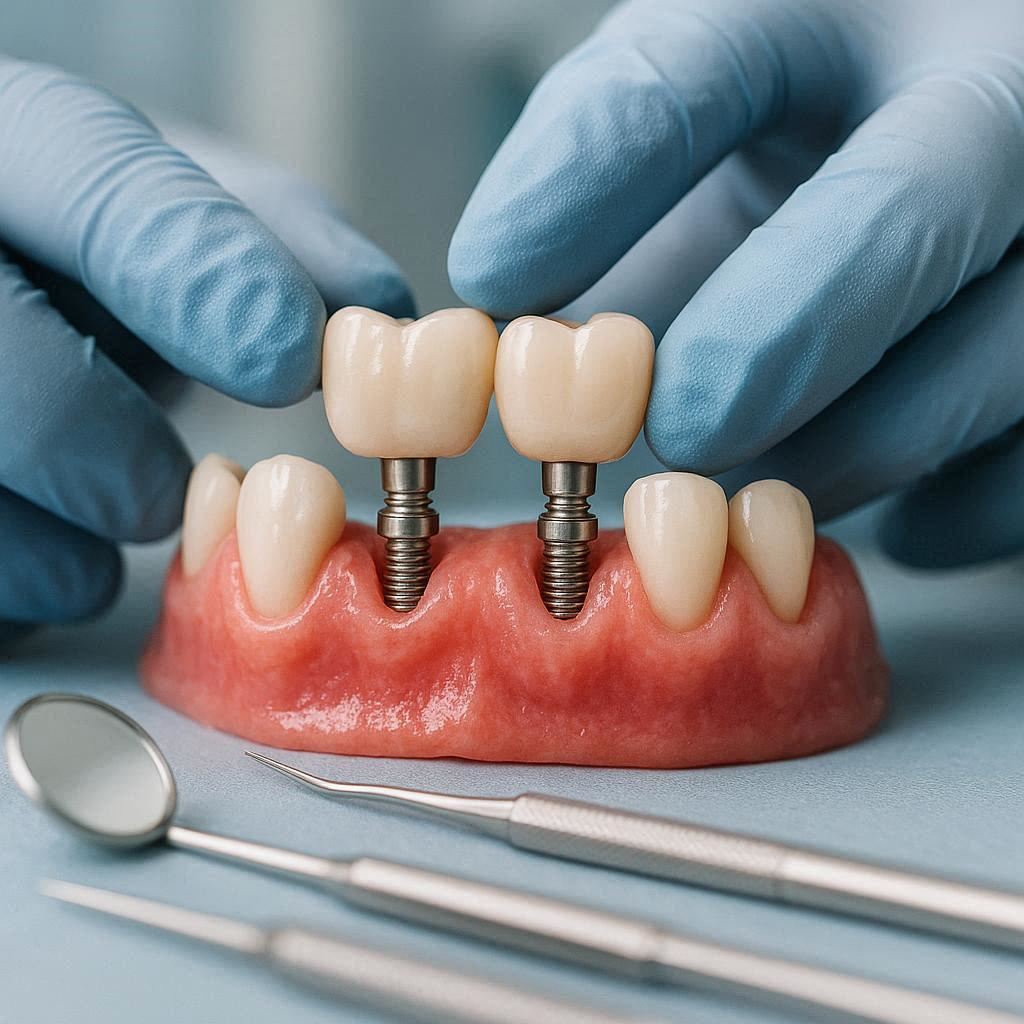
A “temporary tooth implant” is not a small titanium screw that acts as a permanent root. Instead, it usually refers to a temporary restoration placed on top of a healing implant.
In simple terms, the process involves two main steps:
- The Implant: A titanium post placed into your jawbone.
- The Crown: The visible part that looks like a tooth.
When dentists say “temporary tooth implant,” they often mean a provisional crown or a removable partial denture that fills the gap while the titanium post heals.
Why Do You Need a Temporary?
You might wonder why you cannot just wait with an empty space. There are three very good reasons.
- Aesthetics: You can smile, talk, and work without feeling self-conscious.
- Function: You can chew food more comfortably.
- Protection: The temporary prevents nearby teeth from shifting into the empty space.
The Honest Timeline: How Long Does Temporary Last?
Patience is the hardest part of getting dental implants. Unlike a filling that takes one hour, implants take months.
Here is a realistic timeline.
| Stage | Duration | What Happens |
|---|---|---|
| Extraction & Implant Placement | Day 1 | Surgeon places the titanium post into the bone. |
| Osseointegration Period | 3 to 6 months | Bone grows around the screw. No pressure on the implant. |
| Temporary Restoration | During healing | A removable fake tooth or a temporary crown. |
| Permanent Crown Placement | 6 to 9 months | Final, strong tooth is screwed or cemented on. |
Important Note: You will never walk out of the surgery with a permanent tooth. Healing takes time. Do not trust anyone who promises a permanent tooth in one day without checking your bone health first.
Types of Temporary Tooth Solutions
Not every gap is the same. Your dentist will choose the right temporary based on where the missing tooth is and how much force your bite creates.
1. Removable Partial Denture (The Flapper)
This is the most common and affordable option. It is a plastic retainer with a fake tooth attached. You take it out at night to clean it.
- Pros: Low cost. Easy to clean. No stress on the healing implant.
- Cons: Feels bulky. Can move when you eat sticky foods. Not very comfortable.
2. Temporary Crown on the Implant (Immediate Loading)
In very specific cases, a dentist will attach a temporary crown directly to the implant on the same day of surgery. However, you need to have excellent bone density. Plus, that temporary crown must not touch your opposing teeth when you bite down.
- Pros: Fixed in place. Feels more natural.
- Cons: Higher risk of implant failure if you accidentally chew on it.
3. Resin-Bonded Bridge (Maryland Bridge)
A metal or ceramic wing is glued to the back of your natural teeth next to the gap. The fake tooth hangs in the space.
- Pros: Non-invasive. Does not touch the implant site.
- Cons: The glue can fail. It requires healthy neighboring teeth.
4. Essix Retainer (Clear Plastic)
Similar to an Invisalign tray, this clear plastic covers your other teeth and holds one fake tooth in the gap.
- Pros: Very aesthetic. Thin and comfortable.
- Cons: Can crack easily. You must remove it to eat.
Comparison Table: Which Temporary is Right for You?
To help you decide, look at this comparison based on real-life use.
| Feature | Partial Denture | Temporary Crown | Essix Retainer |
|---|---|---|---|
| Visibility | Noticeable plastic | Looks like a tooth | Almost invisible |
| Eating | Avoid sticky foods | Soft food only | Remove before eating |
| Cost | 300–800 | 500–1,500 | 200–500 |
| Comfort | Moderate | High (feels fixed) | High (thin plastic) |
| Risk to Implant | Zero risk | Moderate (pressure) | Zero risk |
The Healing Process: What Happens Under the Gum?
Understanding the science helps you relax.
When the titanium post goes into your jaw, your body does not reject it. Instead, it grows living bone cells right onto the surface of the metal. This process is called osseointegration.
Think of it like this: You are planting a tree. The “temporary” period is the time the roots need to grow deep into the ground. If you try to hang a heavy swing on the tree too early, the tree falls over.
Why You Must Avoid Chewing on the Side with the Implant
Even if you have a temporary tooth, you must treat that side of your mouth like a construction zone.
- Month 1: Very fragile. Eat on the opposite side only.
- Months 2-3: Still healing. Avoid nuts, ice, or hard bread.
- Month 6: Usually ready for the final crown.
Direct Answer: Can You Get a Temporary Tooth Implant in One Day?
Yes and no. Let us be specific.
You can get a temporary restoration in one day. For example, a dentist can extract your broken tooth, place a plastic temporary fake tooth on a healing abutment, or give you a flipper denture before you leave the office.
However, you cannot get a fully functional, permanent implant that is ready to chew steak in one day.
Some clinics advertise “Teeth in a Day.” In this case, they place four or more implants and screw a full bridge of temporary teeth onto them immediately. Those teeth are temporary. You still need a soft diet for months. And that procedure requires a massive amount of planning and bone.
Disclaimer: Information provided here is for educational purposes only. Every patient heals differently. Only a licensed dentist who has taken your X-rays can give you medical advice.
How to Care for Your Temporary Tooth
Taking care of a temporary tooth is different than caring for a real tooth. You are protecting the future implant, not the fake plastic.
Do’s:
- Use a soft toothbrush: Gently clean the area twice a day.
- Salt water rinses: Use warm salt water 24 hours after surgery to keep the gums clean.
- Keep the temporary clean: Food stuck around a temporary causes bad breath and gum infection.
- Remove dentures at night: Your gums need rest.
Don’ts:
- Do not chew ice: Never. Not ever.
- Do not eat sticky candy: Caramel, toffee, and gum can pull off a temporary crown.
- Do not skip follow-ups: Your dentist needs to check if the implant is integrating.
The Cost Factor: Budgeting for the Temporary Phase
One frustration patients share is surprise costs. They budget for the implant and the final crown, but forget the temporary.
Here is a realistic breakdown.
| Item | Estimated Cost (USD) | Insurance Coverage |
|---|---|---|
| Implant placement (surgery) | 1,500–3,000 | Partial (50% usually) |
| Abutment (connector piece) | 500–1,000 | Often covered |
| Temporary flipper denture | 300–800 | Often not covered |
| Permanent Crown | 1,000–2,500 | Partial (50% usually) |
Pro tip: Ask your dentist if the temporary is included in your treatment plan. Sometimes, if you are getting a single implant, the lab will make a temporary crown for free. Other times, the temporary is a separate fee.
Common Problems and How to Solve Them
Even with good planning, things can go wrong. Here is what to expect.
The Temporary Feels Loose
If you have a removable denture, it might rock. That is normal. But if a temporary crown on the implant wiggles, call your dentist immediately. It might mean the screw is loosening.
Food Gets Stuck Underneath
This happens often with fixed temporaries. Use a water flosser on a low setting or a interdental brush to gently remove debris. Never use a metal pick.
The Temporary Broke
Plastic breaks. If your flipper denture cracks, do not glue it yourself (super glue is toxic). Take it to your dentist for a professional repair.
What Happens on the Day You Get the Permanent Crown?
The day you have been waiting for.
After 4 to 6 months of healing, your dentist will remove the temporary restoration. They will test the implant to ensure it is solid and painless.
- Step 1: Impression or digital scan of your mouth.
- Step 2: The lab creates your final porcelain crown.
- Step 3: You return to the office. The dentist removes the temporary and screws or cements the permanent crown.
The feeling is incredible. For the first time in months, you have a stable, beautiful tooth.
Living with Temporary Implants: A Realistic Week-by-Week Guide
Day 1 (Surgery Day): You feel numb. You go home with gauze and ice packs. You wear a temporary flipper denture, but you might take it out because your gums are sore.
Week 1: Swelling peaks at day 2, then drops. Eat yogurt, smoothies, and mashed potatoes. The temporary feels weird in your mouth.
Week 2: Stitches dissolve or get removed. You can wear the temporary for more hours. You start chewing soft bread on the other side.
Month 1: You forget you have a temporary. Life feels normal. But remember: the bone is only 30% healed.
Month 3: X-rays show bone growing around the implant. You might upgrade to a fixed temporary if your dentist allows it.
Month 6: Celebration time. You are ready for the final crown.
Frequently Asked Questions (FAQ)
1. Does getting a temporary tooth implant hurt?
The temporary itself does not hurt. However, the surgery to place the implant post will cause soreness for a few days. Over-the-counter pain relief usually solves this.
2. Can I sleep with a temporary tooth implant?
It depends. If you have a removable flipper denture, take it out at night to let your gums breathe. If you have a fixed temporary crown, you can sleep with it, but you must clean it very well before bed.
3. How long can you keep a temporary tooth implant?
Ideally, only 4 to 9 months. The plastic or acrylic of a temporary is not as strong as porcelain. After one year, a temporary will stain, wear down, or break. You cannot keep it forever.
4. Why does my temporary tooth smell bad?
Food debris is trapped under the temporary or between the teeth. Use a water flosser or floss threader to clean thoroughly. If the smell persists, the temporary might have a crack trapping bacteria. See your dentist.
5. Can I eat pizza with a temporary tooth implant?
Yes, but carefully. Cut the pizza into small pieces. Chew on the side of your mouth that does not have the implant. Avoid the hard, crispy crust.
6. Is a flipper denture better than nothing?
Absolutely. A flipper keeps space open. Without any temporary, your natural teeth will drift into the gap. That ruins your bite and makes placing the permanent implant much harder later.
7. What happens if I skip the temporary?
You save money in the short term. But in the long term, your adjacent teeth will tilt. The opposing tooth may grow longer (supereruption). This makes implant placement complex and sometimes impossible without braces first.
Additional Resource
For a deeper dive into the science of how bone heals around titanium, and to see clinical case studies of successful restorations, visit the American Academy of Implant Dentistry patient education portal.
👉 Link to AAID Patient Resources (Note: Ensure you consult .gov or .edu sites for unbiased clinical data, or ask your dentist for specific brochures.)
Conclusion
Temporary tooth implants are not a luxury. They are an essential part of the healing journey. While they require patience and care, they allow you to live your life without an embarrassing gap in your smile. Remember to avoid chewing on the implant side, keep the area clean, and follow your dentist’s timeline. By protecting the healing process today, you ensure a strong, permanent smile that can last for decades tomorrow.