Dental Implants in Ogden UT: A Complete, No-Fear Guide to Restoring Your Smile
If you are missing one tooth or several teeth, you have probably looked for solutions that feel natural and last a long time. You are not alone. Many people in Ogden face the same situation after an injury, decay, or gum disease.
The good news is that modern dentistry offers a solution that looks, feels, and functions like a real tooth. That solution is the dental implant.
In this guide, we will walk through everything you need to know about getting dental implants in Ogden UT. We will cover costs, the step-by-step process, types of implants, recovery tips, and how to choose the right dentist near you.
No jargon. No pressure. Just honest, practical information to help you smile with confidence again.
What Are Dental Implants? A Simple Explanation
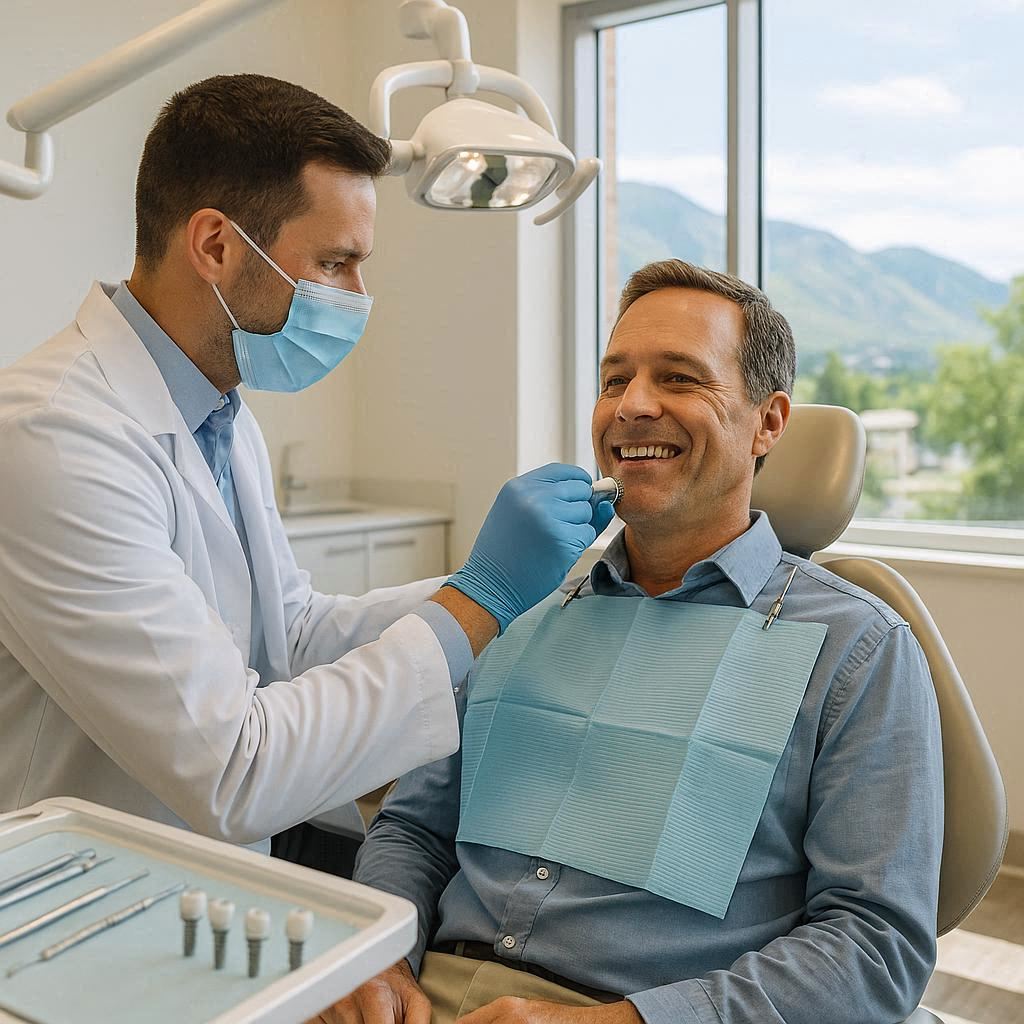
A dental implant is not actually a tooth. It is a small, screw-like post made of titanium. A dentist places this post into your jawbone where your tooth root used to be.
Once the implant heals and fuses with your bone, the dentist attaches a custom-made crown on top. The crown is the part you see and use to chew.
Think of it like this:
- Implant = new root
- Abutment = connector piece
- Crown = visible tooth
This design makes implants much stronger than bridges or dentures. They do not slip. They do not damage nearby teeth. And with good care, they can last decades.
Note: Dental implants are not for everyone, but most healthy adults qualify. Even if you have bone loss, many Ogden dentists can rebuild bone with a graft before placing the implant.
Why Choose Dental Implants in Ogden UT Over Other Options?
You have choices. Bridges, partial dentures, and full dentures are all cheaper upfront. But they come with trade-offs.
Let us compare them side by side.
| Feature | Dental Implants | Traditional Bridge | Removable Denture |
|---|---|---|---|
| Looks like a real tooth | Yes | Good, but visible metal sometimes | Fair |
| Prevents bone loss | Yes | No | No |
| Requires special cleaning | No | Yes (flossing underneath) | Yes (soaking, adhesives) |
| Affects nearby teeth | No | Yes (files down healthy teeth) | No |
| Long-term cost | Lower over time | Higher if replaced | Higher due to relines and replacements |
| Eating comfort | Like natural teeth | Good | Fair to poor |
People in Ogden often choose implants because they want to eat steak, corn on the cob, or apples again without worry. They also like not having to remove their teeth at night.
One patient from South Ogden told us:
“I had a denture for three years. I never got used to it. My implants feel like my own teeth. I forget they are even there.”
Types of Dental Implants Available in Ogden
Not all implants are the same. Depending on how many teeth you are missing, a dentist will recommend a specific type.
Single Tooth Implant
This replaces one missing tooth. It includes one post, one abutment, and one crown. It does not touch the neighboring teeth. This is the most common type.
Implant-Supported Bridge
If you have two or three missing teeth in a row, a dentist can place two implants and attach a bridge between them. This avoids putting a separate implant for every single missing tooth.
All-on-4 or Full-Arch Implants
For people missing all teeth on the upper or lower jaw, the All-on-4 technique uses four implants to support a full set of fixed teeth. You cannot remove these at home. They stay in your mouth like real teeth.
Implant-Supported Dentures
These dentures snap onto two to four implants. You can remove them for cleaning, but they stay firmly in place while eating and talking. This is a good middle-ground option for people with significant bone loss.
Important: Not every dentist in Ogden offers all these options. Always ask, “What type of implant system do you use, and what is my specific case type?”
The Step-by-Step Process for Dental Implants in Ogden UT
The process takes time. That is normal. Rushing an implant can lead to failure. Most treatments take three to nine months from start to finish.
Here is what you can expect.
Step 1: Initial Consultation and Imaging
Your dentist will examine your mouth, take X-rays, and often a 3D CBCT scan. This scan shows the exact amount of bone you have. The dentist will also review your medical history.
Step 2: Treatment Planning
The dentist explains how many implants you need, which type, and the total cost. You will receive a written treatment plan. Do not leave without understanding every line.
Step 3: Any Preparatory Work
If your bone is too thin or soft, you may need a bone graft. This adds bone material to your jaw. Healing from a graft takes four to six months before implant placement.
Sometimes a sinus lift is needed for upper back teeth. This is also a routine procedure.
Step 4: Implant Placement Surgery
This is done with local anesthesia. You are awake but numb. If you feel anxious, many Ogden dentists offer sedation options like laughing gas or oral sedation.
The dentist makes a small cut in your gum, drills a precise hole into the bone, and places the titanium post. Then they stitch the gum closed over or around the implant.
The surgery itself usually takes one to two hours.
Step 5: Osseointegration (Healing Period)
This is the most important phase. Your bone grows tightly around the implant surface. This takes three to six months. During this time, you eat soft foods and avoid chewing directly on the implant site.
Step 6: Abutment Placement
Once the implant is stable, the dentist reopens the gum and attaches a small metal connector (abutment). This sticks out above the gum line. The gum then heals around it for two weeks.
Step 7: Crown Delivery
Your dentist takes impressions of your mouth. A lab creates your permanent crown, matching the color of your natural teeth. At your final visit, the dentist screws or cements the crown onto the abutment.
That is it. You now have a new tooth.
How Much Do Dental Implants Cost in Ogden UT?
Cost is often the biggest concern. Let us be realistic. Dental implants are an investment. They cost more upfront than a bridge, but they can last two to three times longer.
Here are average price ranges in Ogden, UT (without insurance):
| Procedure | Average Cost |
|---|---|
| Single implant (post + abutment + crown) | 3,500–6,000 |
| Implant-supported bridge (2 implants, 3 crowns) | 7,000–12,000 |
| All-on-4 per arch | 15,000–25,000 |
| Implant-supported denture (2-4 implants) | 8,000–15,000 |
| Bone graft (if needed) | 500–2,500 per site |
| Sinus lift | 1,500–3,000 |
These amounts do not include X-rays, CT scans, or sedation.
Does Insurance Cover Implants in Ogden?
Some dental plans cover part of the crown or the abutment. Very few cover the implant post itself. However, if you lost teeth due to an accident, your medical insurance may contribute.
Always call your insurance before your consultation. Ask specifically:
“What is my implant coverage for missing tooth #(number)?”
Affordable Options in Ogden
Many local offices offer:
- Payment plans through CareCredit or Proceed Finance
- In-house membership plans (no insurance required)
- Discounts for paying in cash or scheduling during slow months (January–March)
Note: Be very careful with “cheap implants” advertised online. Extremely low prices often mean lower-quality materials, rushed treatment, or lack of follow-up care. Your jawbone is not the place to bargain hunt.
Choosing the Right Dentist for Dental Implants in Ogden UT
Not every general dentist places implants. Some only restore them (make the crown). Others both place and restore.
You want a dentist with training and experience. Ask these questions during your consultation:
- How many implant cases have you completed in the last year?
- Do you use a CT scan for every implant case?
- What brand of implants do you use? (Leading brands include Nobel Biocare, Straumann, Zimmer, Hiossen)
- Do you handle complications or refer me elsewhere?
- Can I speak to a past patient who had a similar case?
Types of Providers in Ogden
| Provider Type | Places Implants? | Restores Implants? | Best For |
|---|---|---|---|
| General dentist with implant training | Yes | Yes | Single or few implants |
| Oral surgeon | Yes | No | Complex cases, bone grafts |
| Periodontist | Yes | No | Gum health, soft tissue issues |
| Prosthodontist | Sometimes | Yes | Full mouth reconstruction, All-on-4 |
Many people in Ogden start with a general dentist who partners with an oral surgeon for the surgery phase. That works well.
Local tip: Check if the dentist is a member of the American Academy of Implant Dentistry (AAID) or the International Congress of Oral Implantologists (ICOI). These memberships indicate extra training.
Recovery and Aftercare: What to Expect
Healing from implants is usually easier than people fear. Most patients say the discomfort is less than a tooth extraction.
First 24 Hours After Surgery
- Bite on gauze to stop bleeding
- Apply ice packs to your face (20 minutes on, 20 off)
- Eat only cold or lukewarm soft foods (yogurt, smoothies, mashed potatoes)
- Do not spit, use a straw, or rinse forcefully
Days 2 to 7
- Swelling peaks around day two or three, then goes down
- Rinse gently with warm salt water after meals
- Switch to warm soft foods (soup, scrambled eggs, oatmeal)
- Take prescribed or over-the-counter pain medication as needed
Weeks 2 to 6
- Most people return to normal activities the next day
- Avoid chewing on the implant side
- Do not smoke or use tobacco (this is critical – smoking greatly increases implant failure)
Long-Term Care
Once your crown is placed, care is simple:
- Brush twice a day
- Floss normally (use a floss threader or interdental brush around the abutment)
- Visit your dentist every six months for checkups
- Avoid chewing ice, hard candy, or pens
Properly cared for implants have a success rate above 95% over ten years.
Risks and Complications: Honest Talk
No medical procedure is 100% risk-free. But implant complications are rare and usually fixable.
Possible risks include:
- Infection at the implant site
- Nerve damage (numbness in lip or chin – very rare with CT guidance)
- Implant failure (the bone does not fuse)
- Sinus problems (for upper back implants)
Signs of a problem:
- Pain that gets worse after the first week
- The implant feels loose
- Pus or bad taste coming from the site
- The gum around the implant turns dark red or blue
If you notice any of these, call your dentist the same day. Early treatment can often save the implant.
Important: Smokers have a much higher failure rate. If you smoke, some Ogden dentists will not place implants unless you commit to quitting. Be honest with your dentist about your tobacco use.
Frequently Asked Questions About Dental Implants in Ogden UT
1. Are dental implants painful?
The surgery itself is not painful because of local anesthesia. Afterward, most patients rate the discomfort as mild to moderate – less than a tooth extraction.
2. How long do dental implants last?
With good oral hygiene and regular dental visits, implants can last 20 years to a lifetime. The crown may need replacement after 10–15 years due to normal wear.
3. Can I get a dental implant years after losing a tooth?
Yes, but you may need a bone graft if the bone has shrunk. Many people in Ogden get implants decades after tooth loss.
4. Does insurance cover dental implants in Ogden UT?
Some plans cover part of the crown or abutment. Very few cover the implant post. Check your specific plan.
5. How do I clean my implant?
Brush normally. Use a floss threader or water flosser to clean around the abutment. Avoid metal scrapers.
6. Can implants fail?
Yes, but the success rate is over 95% in healthy non-smokers. Most failures happen within the first few months and can often be replaced.
7. Is the All-on-4 procedure available in Ogden?
Yes. Several local prosthodontists and oral surgeons offer All-on-4. It is a good choice for people missing all teeth in one jaw.
8. How long do I have to wait between implant placement and the crown?
Usually three to six months for the lower jaw and up to seven months for the upper jaw. This allows proper bone fusion.
9. Can I have an MRI after getting dental implants?
Yes. Titanium implants are not magnetic. They are safe for MRI machines.
10. What is the youngest age for dental implants?
Dentists usually wait until jaw growth is complete – around ages 18 to 20 for women and 20 to 22 for men.
Additional Resource
For official, science-based information on dental implants, visit the American Academy of Implant Dentistry’s patient education page:
https://www.aaid.com/patients
This resource includes implant animations, a dentist locator, and detailed answers to complex medical questions.
Conclusion
Dental implants in Ogden UT offer a safe, long-lasting way to replace missing teeth. They look natural, feel stable, and protect your jawbone. While the upfront cost is higher than bridges or dentures, the long-term benefits often make implants the better choice. Choose an experienced local dentist, follow the healing guidelines carefully, and you can expect a restored smile that lasts for decades.
Disclaimer: This article is for informational purposes only and does not constitute medical or dental advice. Always consult with a licensed dentist in Ogden, UT, for a personal evaluation and treatment plan. Individual results vary based on health, bone condition, and adherence to aftercare instructions.