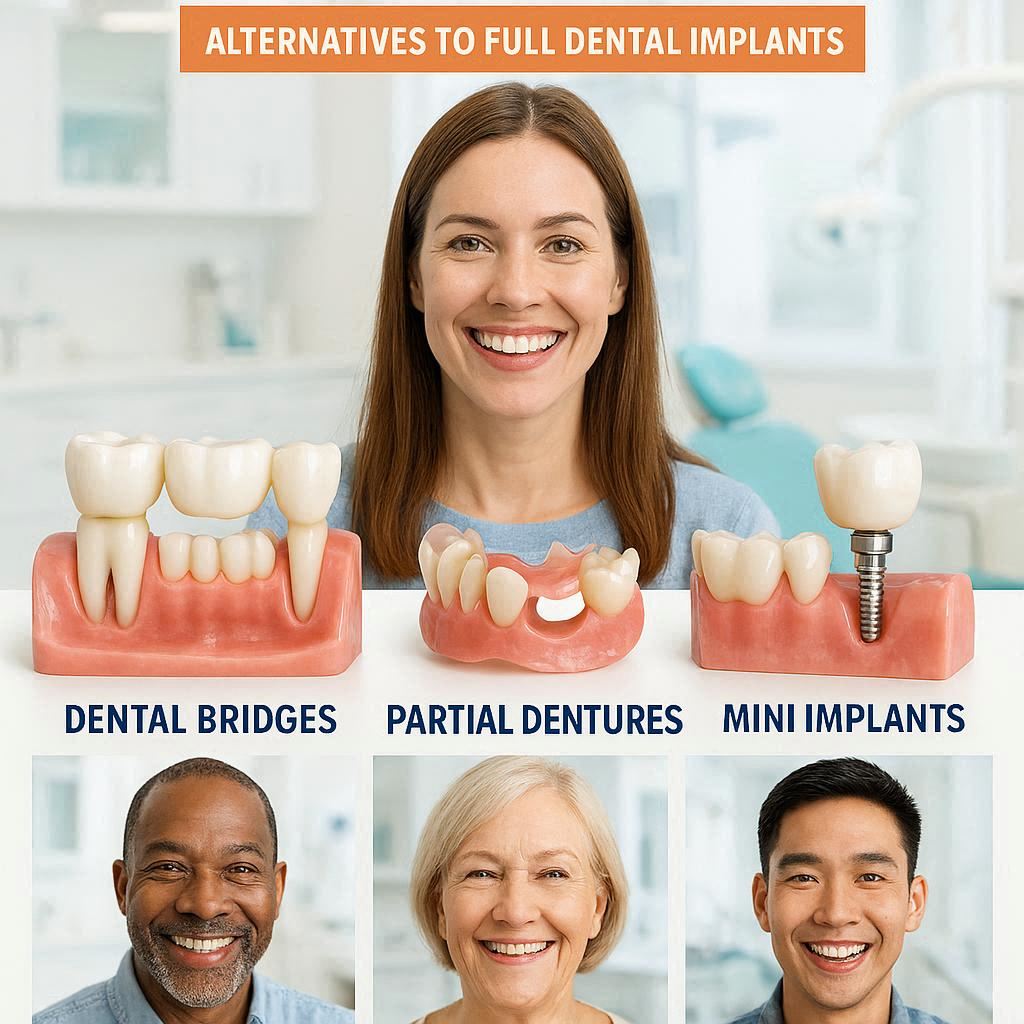
Best Low-Cost Alternatives To Full Dental Implants
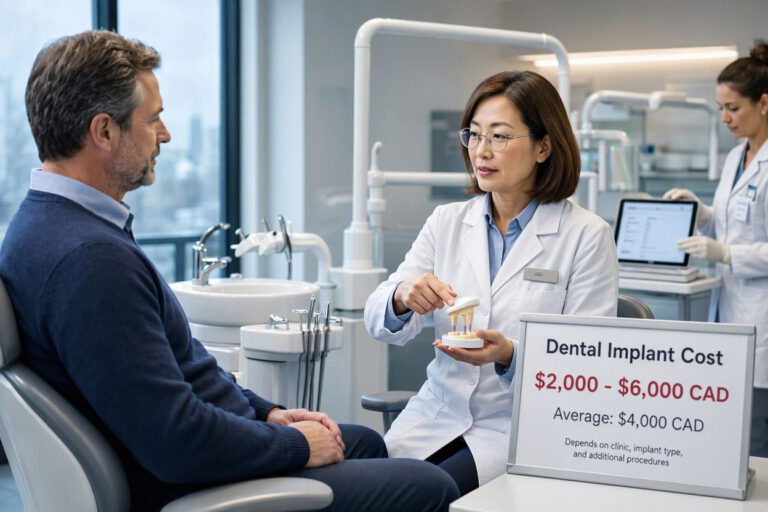
Let’s be honest for a moment. You have been searching online. You have seen the price tags for full-mouth dental implants. And your stomach probably dropped.
You are not alone. Millions of adults need tooth replacement but simply cannot afford the surgical route. The good news? Full dental implants are excellent, but they are not the only game in town.
You have real, functional, and budget-friendly options. This guide walks you through each one. No fluff. No false promises. Just the honest truth about what works, what costs, and what to expect.
Important Note: This article is for educational purposes only. Always consult a licensed dentist or prosthodontist before making a final decision about your oral health.
Why Full Dental Implants Are Not For Everyone
Before we explore the alternatives, let us acknowledge why you are likely looking for another path.
Full dental implants (often called “all-on-4” or “all-on-6”) require surgery. They require healthy jawbone density. They require healing time. And most importantly, they require a significant financial investment.
In the United States, a full set of implant-supported dentures can cost between 25,000and25,000and55,000 per arch. That is simply out of reach for a huge portion of the population.
But here is what most expensive dental clinics will not tell you: You do not need implants to live a happy, functional, and confident life. Many people thrive with alternative solutions.
Let us look at the seven best low-cost alternatives available today.
1. Traditional Removable Dentures (Full or Partial)
This is the oldest solution on our list, but do not dismiss it too quickly. Modern dentures have improved significantly.
How They Work
A custom-molded acrylic base sits directly on your gums. It holds a full set of artificial teeth. For partial dentures, a metal or pink acrylic framework clasps onto your remaining natural teeth.
Cost Overview
| Type | Average Cost (Without Insurance) |
|---|---|
| Basic Full Dentures | 600–1,500 per arch |
| Mid-Range Dentures | 1,500–3,000 per arch |
| Premium Dentures | 3,000–8,000 per arch |
Pros
- Most affordable option available.
- No surgery or recovery time.
- Repairable and relinable over time.
- Covered by most dental insurance plans.
Cons
- Can feel loose or uncomfortable.
- Requires adhesive for stability.
- Does not prevent jawbone shrinkage.
- Needs replacement every 5 to 8 years.
Who Is This Best For?
You have relatively healthy gums but limited bone structure. You want a quick, non-invasive solution. You are okay with removing your teeth at night for cleaning.
Reader Note: Many people wear dentures for decades and eat, smile, and speak perfectly well. The key is getting them properly fitted by an experienced dentist, not a mail-order company.
2. Snap-In Dentures (Implant-Retained Dentures)
Think of this as the bridge between cheap dentures and expensive full implants.
How They Work
A dentist places two to four small implants into your jawbone. Your denture then snaps onto these implants. You can remove the denture for cleaning, but it stays firmly locked during the day.
Cost Overview
| Number of Implants | Approximate Total Cost |
|---|---|
| 2 implants per arch | 6,000–10,000 |
| 4 implants per arch | 10,000–15,000 |
Pros
- 80% more stable than regular dentures.
- No messy adhesives required.
- Preserves jawbone where implants are placed.
- Easier to chew tough foods.
Cons
- Still requires minor surgery.
- More expensive than traditional dentures.
- Implants need periodic tightening.
Who Is This Best For?
You want the security of implants but cannot afford a full set. You have enough jawbone density for at least two implants. You are willing to undergo two minor procedures.
3. Resin-Bonded Bridges (Maryland Bridges)
This is a fantastic option if you are missing only one or two teeth, especially front teeth.
How They Work
A false tooth (pontic) attaches to metal or ceramic wings. These wings bond directly to the back of your adjacent natural teeth. No drilling. No crowns.
Cost Overview
| Procedure | Average Cost |
|---|---|
| Single resin-bonded bridge | 1,500–2,500 |
Pros
- Minimally invasive.
- Preserves healthy tooth structure.
- Quick procedure (two visits).
- Much cheaper than a single implant.
Cons
- Not suitable for back teeth (molars).
- Wings can detach after 5 to 10 years.
- Not ideal for heavy chewing forces.
Who Is This Best For?
You are missing a front tooth or a premolar. Your adjacent teeth are healthy and strong. You want a fixed (non-removable) solution without surgery.
4. Traditional Fixed Bridges (Crown-Supported)
If you need to replace one to three teeth in a row, this is the gold standard non-implant option.
How They Work
A dentist grinds down the teeth on either side of the gap. These teeth receive dental crowns. The false teeth sit in between, creating one solid piece.
Cost Overview
| Bridge Length | Average Cost |
|---|---|
| 3-unit bridge (replaces 1 tooth) | 2,500–5,000 |
| 5-unit bridge (replaces 3 teeth) | 5,000–8,000 |
Pros
- Feels like natural teeth.
- Permanently fixed in your mouth.
- Restores 70-80% of chewing power.
- Does not require implant surgery.
Cons
- Requires shaving down healthy teeth.
- Harder to clean underneath.
- May need replacement after 10 to 15 years.
Who Is This Best For?
You have healthy teeth adjacent to the gap. You want a permanent, non-removable fix. You are willing to sacrifice some enamel for stability.
5. Flipper (Acrylic Partial Denture)
This is the most budget-friendly temporary solution. Many people use it as a permanent option when money is extremely tight.
How They Work
A small acrylic plate holds one or two false teeth. Small wire clasps hook onto neighboring teeth. It looks like a miniature retainer with teeth attached.
Cost Overview
| Type | Average Cost |
|---|---|
| Single-tooth flipper | 300–500 |
| Two-tooth flipper | 500–800 |
Pros
- Extremely affordable.
- Created in a few days.
- No tooth preparation required.
- Great as a long-term temporary.
Cons
- Less durable (2 to 3 years).
- Can break easily.
- May feel bulky in the mouth.
- Does not support chewing on hard foods.
Who Is This Best For?
You need an immediate solution after an extraction. You are saving money for a better option later. You only miss one or two teeth.
Reader Note: A flipper is not a scam. It is a legitimate stopgap. Thousands of people wear flippers for five years or more while they save for implants.
6. Flexible Partial Dentures (Valplast and Similar)
Say goodbye to metal wires and hard acrylic. Flexible partials are comfortable, lightweight, and virtually invisible.
How They Work
A nylon-based thermoplastic material (like Valplast or Flexite) forms the base. It bends with your gum tissue. No metal clasps are visible.
Cost Overview
| Arch Type | Average Cost |
|---|---|
| Single partial (3-6 teeth) | 1,000–2,500 |
| Full arch partial | 2,500–4,000 |
Pros
- Extremely comfortable to wear.
- No metal visible when smiling.
- Hypoallergenic material.
- Does not break easily.
Cons
- More expensive than acrylic dentures.
- Cannot be relined easily (often requires remake).
- Not as strong for back teeth chewing.
Who Is This Best For?
You have a metal allergy. You want a removable option that feels natural. You are missing several teeth but still have most of your natural ones.
7. Dental Tourism With Mini Implants
This is a hybrid approach. It combines a lower-cost implant type (mini implants) with traveling to a country where dentistry costs 60-70% less.
How They Work
Mini implants are narrower than traditional implants (1.8mm vs. 3.5mm+). They require less bone and cost less. Many clinics in Mexico, Costa Rica, Colombia, and Thailand offer complete packages.
Cost Comparison
| Location | Full Arch Mini Implants (4-6 implants) |
|---|---|
| United States | 12,000–18,000 |
| Mexico (border cities) | 4,000–7,000 |
| Costa Rica | 5,000–8,000 |
| Thailand | 6,000–9,000 |
Pros
- Significant cost savings.
- Same materials as US clinics (many use US brands).
- Often includes hotel and transport.
- Mini implants require less healing time.
Cons
- Travel costs add up.
- Difficult if complications arise after returning home.
- Language barriers in some clinics.
- Mini implants are less studied than standard implants.
Who Is This Best For?
You are missing multiple teeth but want a true implant solution. You can take two weeks off work. You are willing to research clinics thoroughly (look for international accreditation like JCI).
Important Warning: Do not book the cheapest clinic you find online. Look for dentists trained in the US or Europe. Ask for patient references. Request a remote consultation first.
Quick Comparison Table: All Alternatives At A Glance
| Solution | Cost Range | Surgery Required? | Permanent? | Chewing Power | Lifespan |
|---|---|---|---|---|---|
| Traditional Dentures | 600–3,000 | No | Removable | 30-40% | 5-8 years |
| Snap-In Dentures | 6,000–15,000 | Yes (minor) | Removable | 60-70% | 10-15 years |
| Resin-Bonded Bridge | 1,500–2,500 | No | Fixed | 50-60% | 5-10 years |
| Traditional Bridge | 2,500–8,000 | No | Fixed | 70-80% | 10-15 years |
| Flipper | 300–800 | No | Removable | 20-30% | 2-3 years |
| Flexible Partial | 1,000–4,000 | No | Removable | 40-50% | 5-10 years |
| Dental Tourism (Mini) | 4,000–9,000 | Yes | Fixed | 70-80% | 10+ years |
How To Choose The Right Option For Your Budget
You might feel overwhelmed. That is normal. Let us simplify the decision process with three realistic scenarios.
Scenario A: You have less than $1,000
Your best bet: A flipper or basic acrylic partial denture.
This will not be your forever solution. But it buys you time. You will be able to smile in photos and speak clearly. Avoid eating steaks or nuts on that side.
Scenario B: You have 1,500–4,000
Your best bet: A traditional fixed bridge or flexible partial denture.
If your missing teeth are in the front or middle of your mouth, a resin-bonded bridge is excellent. If you are missing many teeth, a Valplast partial offers comfort without metal.
Scenario C: You have 5,000–10,000
Your best bet: Snap-in dentures (2 implants) or high-quality traditional dentures.
At this price point, you can add implant stability. Two implants in your lower jaw completely change your denture experience. You will eat corn on the cob again.
Scenario D: You have $10,000+
Your best bet: Full 4-implant snap-in dentures or dental tourism for complete fixed implants.
If you can save up to this range, you have legitimate options. Some US dental schools offer full implant procedures for 12,000to15,000. Otherwise, research international clinics carefully.
Frequently Asked Questions (FAQ)
1. Are cheap alternatives painful?
No. Traditional dentures cause sore spots during the adjustment period (2 to 4 weeks). Bridges require mild tooth sensitivity after preparation. But neither involves the surgical pain of implants.
2. Can I eat normally with these alternatives?
Yes, but with adjustments. Dentures limit you to softer foods. Bridges and snap-in dentures allow almost normal eating. Avoid extremely sticky or hard candies.
3. How long will low-cost alternatives last?
- Flipper: 2-3 years
- Acrylic denture: 5-8 years
- Traditional bridge: 10-15 years with good hygiene
- Flexible partial: 5-10 years
4. Will my insurance cover any of these?
Most dental insurance plans cover 50% of dentures and bridges. Few cover implants. Check your policy under “major restorative services.”
5. What if I have no teeth at all?
You need full dentures or snap-in dentures. Without any natural teeth, bridges are not possible. Your options are removable full dentures or implant-retained full dentures.
6. Are mail-order dentures safe?
Generally, no. Companies like “Dentures by Mail” or online kits often cause gum sores, poor fit, and jaw pain. Always see a dentist in person for impressions.
7. What is the absolute cheapest option?
A single-tooth flipper at a dental school. Some dental schools charge 150to300 for a flipper. You cannot beat that price, but you get student work (supervised by professors).
Additional Free Resource
For a detailed, state-by-state list of dental schools offering low-cost dentures and bridges, visit:
👉 The American Dental Association (ADA) “Find a Dental School” Tool
[Link: https://www.ada.org/en/member-center/oral-health-care-resources/find-a-dental-school] (This is an official, trusted resource. These clinics reduce costs by 30% to 60% compared to private practices.)
Conclusion
Let us summarize the most important information in three clear lines.
First: Full dental implants are excellent but unaffordable for most people. You have at least seven realistic alternatives ranging from 300flippersto10,000 snap-in dentures.
Second: Traditional bridges and flexible partials offer the best balance of cost, comfort, and durability for most patients without surgery.
Third: Always start with a consultation at a dental school or community health center. They provide the same quality at a fraction of the price. Your smile matters, but so does your bank account.
Disclaimer: This article is for general informational purposes only and does not constitute medical or dental advice. Individual results vary. You should consult with a licensed dental professional to evaluate your specific oral health condition, bone density, and budget before proceeding with any tooth replacement option. The author and publisher disclaim any liability for any decisions made based on this content.