Winnipeg Dental Implants: The Definitive Guide to a Permanent Smile
If you are missing one tooth, several teeth, or even all of your teeth, you have likely already discovered that traditional dentures and bridges come with a list of frustrations. They slip. They click. They limit what you can eat.
You deserve better.
In Winnipeg, dental implants have become the gold standard for tooth replacement. Unlike temporary solutions, implants are designed to last a lifetime. They look natural, feel secure, and preserve the health of your jawbone.
This guide will walk you through everything you need to know. We will cover the science, the costs, the local specialists, and the honest realities of recovery. No fluff. No exaggerated claims. Just reliable advice to help you make an informed choice.
What Exactly Are Dental Implants?
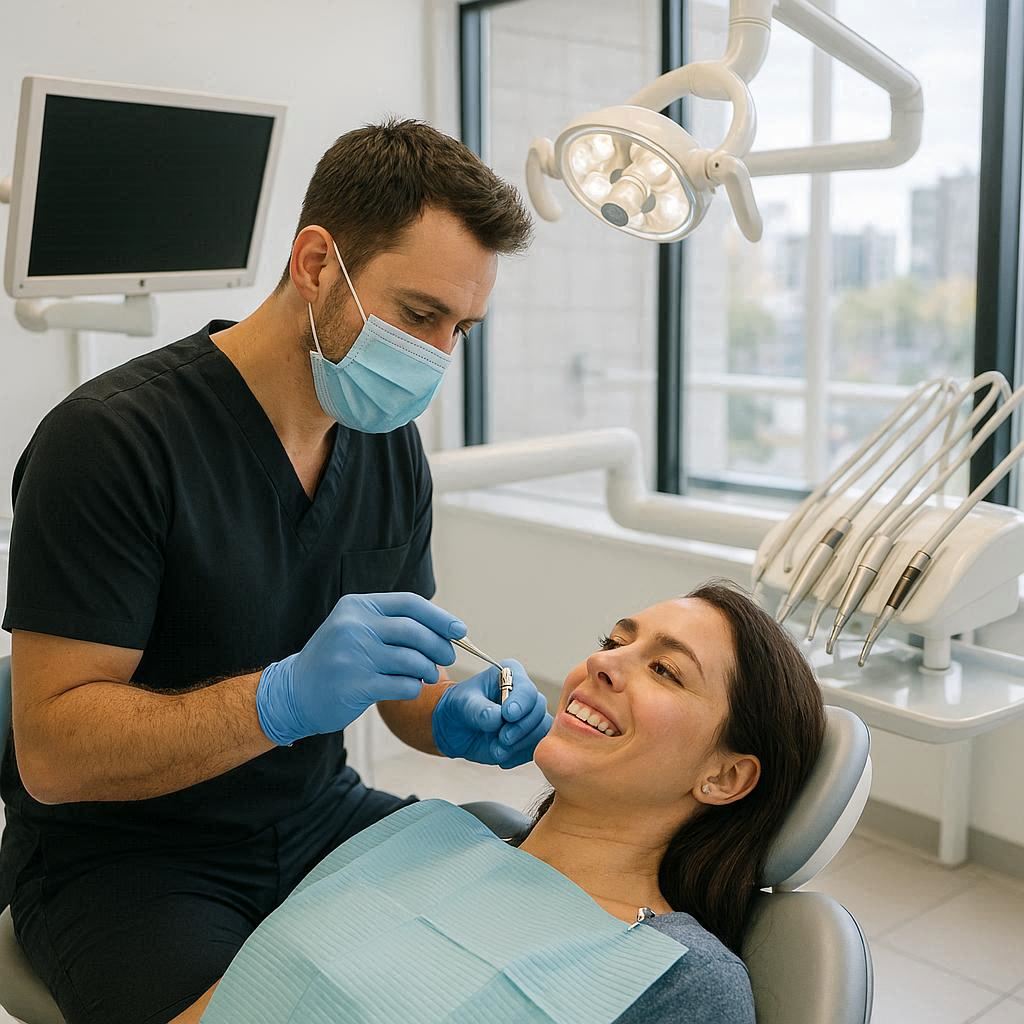
Let us start with the basics. A dental implant is not actually a “tooth.” It is a small, sturdy post made of medical-grade titanium. A dentist surgically places this post into your jawbone, right where your natural tooth root used to be.
Think of it as a new foundation.
Once the implant is in place, your bone will grow right around it. This process is called osseointegration (a big word for a simple idea: your bone fuses with the titanium). That fusion creates incredible strength. After the bone heals, the dentist attaches a connector piece (an abutment) and finally, a custom-made crown on top.
The result? A tooth that feels, functions, and looks just like the real thing.
Who Is a Good Candidate for Implants in Winnipeg?
The short answer: most healthy adults.
However, there are a few honest requirements you need to meet. You do not need to be in perfect athletic condition, but you do need a healthy mouth.
- Sufficient jawbone density. Your bone must be thick enough to hold the implant screw. If you have been missing teeth for years, you might have bone loss. The good news? Bone grafting can fix this.
- Healthy gums. Gum disease is the enemy of implants. Before placing an implant, your dentist must treat any existing infection.
- Non-smoker (or willing to quit). Smoking dramatically reduces blood flow to the gums. This slows healing and increases the risk of implant failure.
- Commitment to oral hygiene. Implants cannot get cavities, but your gums around them can still get infected (peri-implantitis). You must brush and floss daily.
Note: Age is rarely a barrier. Healthy seniors in Winnipeg receive implants every day. As long as you are healthy enough for a routine tooth extraction, you are likely a candidate.
The Complete Winnipeg Dental Implants Procedure: Step by Step
Understanding the timeline helps manage expectations. This is not a one-day procedure. Rushing the process leads to failure. A responsible Winnipeg dentist will take several months to ensure your results last for decades.
Step 1: Initial Consultation and Digital Imaging
Your journey begins with a conversation. During this first visit, your dentist will:
- Examine your teeth, gums, and jawbone.
- Take 3D CBCT scans (these are like 3D X-rays that show bone density and nerve locations).
- Discuss your medical history and any medications you take.
- Explain the total cost and create a payment plan.
This appointment usually lasts 60 to 90 minutes. Do not be afraid to ask questions. Bring a notebook.
Step 2: Preparatory Procedures (If Needed)
Not everyone needs this step, but many do. If your bone is too thin or soft, you need a bone graft. The graft can come from a donor, a synthetic material, or from another area of your own jaw.
Healing from a bone graft takes four to twelve months. I know that sounds like a long time. But skipping this step is like trying to build a house on mud. Patience here prevents failure later.
Sometimes, patients also need a sinus lift (if implants are going into the upper back jaw, near the sinus cavity).
Step 3: Implant Placement Surgery
This is the main event.
Your dentist will numb the area completely with local anesthetic. If you feel nervous, ask about sedation options (nitrous oxide or oral sedatives). Many Winnipeg clinics offer “sleep dentistry” for anxious patients.
During the surgery:
- The dentist makes a small incision in your gum.
- They drill a precise hole into the jawbone.
- They screw the titanium implant post into that hole.
- They close the gum over the top of the implant or attach a healing cap.
The surgery itself takes 60 to 90 minutes per implant. For full-mouth reconstructions (All-on-4 implants), the procedure can take three to four hours.
You will feel pressure but not pain. After the numbness wears off, you can expect mild soreness, similar to having a tooth pulled.
Step 4: Osseointegration (The Healing Phase)
Now, you wait. And that waiting is productive.
Over the next three to six months, your jawbone grows tightly around the titanium post. This creates a bond that is incredibly strong. During this time, you will wear a temporary denture or bridge so you can eat and smile normally.
It is vital to avoid chewing directly on the implant site during this phase. Your dentist will give you a list of soft foods to stick to.
Step 5: Abutment Placement
Once osseointegration is complete, you need a small connector piece: the abutment.
This is a minor procedure. The dentist reopens the gum to expose the implant, screws on the abutment, and then allows the gum tissue to heal around it. Healing takes about two weeks.
Step 6: Crown Fabrication and Fitting
The final step is the crown (the visible “tooth” part). Your dentist takes impressions of your mouth and sends them to a dental lab. In Winnipeg, labs typically take two to four weeks to craft a custom ceramic crown.
They will match the color, shape, and size to blend perfectly with your natural teeth.
When the crown is ready, you return to the clinic. The dentist screws or cements the crown onto the abutment. You look in the mirror, and you see a complete smile again.
| Stage | Duration | Pain Level | Success Factor |
|---|---|---|---|
| Consultation & Imaging | 1 day | None | Choosing the right dentist |
| Bone Graft (if needed) | 4-12 months healing | Mild | Bone quality |
| Implant Placement | 1-2 hours surgery | Moderate (post-op) | Surgical precision |
| Osseointegration | 3-6 months | Very low | Your body’s healing ability |
| Abutment Placement | 30 minutes | Minimal | Gum health |
| Crown Fitting | 1 hour | None | Lab quality |
Why Choose Dental Implants Over Bridges or Dentures?
You might wonder, “Why go through all this when I can just get a bridge?” That is a fair question. Let me give you an honest comparison.
Traditional Bridges
A bridge relies on the two teeth next to your gap. The dentist shaves down those healthy teeth and caps them to hold a false tooth in the middle.
The problem? You are damaging perfectly good teeth to fix one missing tooth. Those supporting teeth become harder to clean and more prone to decay. A bridge also does nothing to stop bone loss. Underneath that false tooth, your jawbone slowly melts away.
Average lifespan of a bridge: 7 to 10 years.
Conventional Dentures
Dentures sit on top of your gums. They do not replace the tooth root. Over time, your jawbone resorbs (shrinks) because it no longer has roots to stimulate it.
Denture wearers often look older over time because their lower face height collapses. They struggle to eat apples, corn on the cob, or steak. Adhesives (glues) can fail at embarrassing moments.
Dental Implants
- Bone preservation. Implants stimulate your jawbone just like natural roots. Your bone stays strong and healthy.
- No damage to neighbors. Your adjacent teeth remain untouched.
- 85% to 98% success rate after 10 years (depending on location and your health).
- Eat anything. Bite force with implants is nearly identical to natural teeth.
“I wore dentures for twelve years. The constant clicking drove me crazy. Now with implants, I honestly forget these aren’t my real teeth.” — Margaret, Winnipeg (St. James area)
Types of Dental Implants Available in Winnipeg
Not all implants are the same. Your specific situation determines which type works best.
Single Tooth Implant
Exactly what it sounds like. One implant post replaces one missing tooth. This is the most common and straightforward case.
Implant-Supported Bridge
If you are missing three teeth in a row, you do not need three implants. Two implant posts can support a three-tooth bridge. This saves money while still providing excellent stability.
All-on-4 (Full Arch Implants)
For patients missing all teeth on the upper or lower jaw, the All-on-4 technique is revolutionary.
The dentist places four titanium posts strategically (two straight in front, two angled in the back). These four posts support a full set of 12 to 14 permanent teeth. You never remove them. They feel like natural teeth.
The cost is significantly lower than placing eight or ten individual implants. Many Winnipeg clinics specialize in this specific procedure.
Mini Implants (MDIs)
Mini implants are narrower than standard implants. They are sometimes used to stabilize a lower denture. Instead of replacing the denture, the denture snaps onto two or four mini implants. This stops the denture from moving around.
However, mini implants are less durable for chewing hard foods. Most dentists prefer standard-width implants when bone allows.
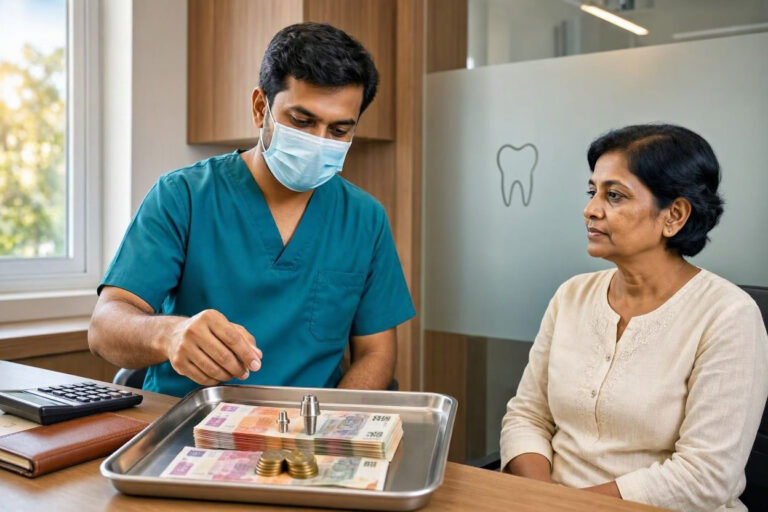
The Real Cost of Winnipeg Dental Implants (Transparent Pricing)
Let us talk money. This is the number one concern for most readers.
Dental implants are an investment. Up front, they cost more than a bridge or dentures. But a bridge needs replacement every 7 to 10 years. Dentures need relining every few years. Over a lifetime, implants are often cheaper or equal in total cost.
Here are realistic price ranges in Winnipeg (2025-2026 estimates). These are total out-of-pocket costs before insurance:
| Procedure | Price Range (CAD) |
|---|---|
| Consultation & CBCT scan | 150−350 |
| Single implant (post and crown) | 4,500−6,500 |
| Bone graft (per site) | 1,000−2,500 |
| Sinus lift | 1,500−3,000 |
| Implant-supported bridge (3 units) | 9,000−13,000 |
| All-on-4 (per arch) | 18,000−25,000 |
| Full mouth reconstruction (both arches) | 35,000−50,000 |
Does Manitoba Health Cover Implants?
Generally, no. Manitoba Health (insured services) does not cover dental implants because they are considered cosmetic or elective procedures.
However, there are exceptions:
- Dental insurance (private plans through work). Many plans cover 50% of major restorative services up to a yearly limit (often 1,500to2,500).
- NIHB (Non-Insured Health Benefits for First Nations and Inuit). This federal program does cover dental implants in specific medical necessity cases (e.g., birth defects, severe trauma).
- Employer health spending accounts. Some Winnipeg employers allow you to use pre-tax dollars from an HSA for implants.
Making Implants Affordable in Winnipeg
Do not let the price scare you away from asking. Most clinics offer:
- In-house financing (12 to 60 months, 0% interest for the first year often)
- Third-party lenders like Dental Card or iFinance Canada
- Payment plans split across the treatment timeline (pay for the surgery first, then the crown six months later)
Always ask for a written treatment plan with all fees listed before committing.
Risks, Complications, and Honest Realities
I promised you a realistic guide. So let us be honest. Dental implants are highly successful, but they are not magic. There are risks.
Common (but treatable) Issues
- Infection at the implant site. This is rare (around 2% of cases) if you follow post-op care. Antibiotics usually clear it.
- Nerve damage. In the lower jaw, an implant placed too close to the inferior alveolar nerve can cause numbness in your lip or chin. This is why 3D scans are essential. Good dentists map the nerve location precisely.
- Sinus problems. Upper implants that protrude into the sinus cavity can cause sinusitis. A sinus lift surgery before placement prevents this.
Late Complications (Months or Years Later)
- Peri-implantitis. This is gum disease around the implant. It causes bone loss. If caught early, it is treatable with deep cleaning. If ignored, the implant will fail.
- Implant fracture. Rare (titanium is extremely strong), but possible if you grind your teeth severely without wearing a night guard.
- Crown loosening. The screw holding your crown can sometimes loosen over time. This is a simple fix. Your dentist tightens it in five minutes.
Signs of Implant Failure
Contact your dentist immediately if you experience:
- Persistent pain that worsens instead of improves after one week
- The implant feels wobbly or moves
- Pus or bleeding around the gumline
- The gum around the implant turns purple or dark red
The good news? Even if an implant fails, you can usually try again. The dentist removes the failed implant, lets the bone heal (with a graft if needed), and places a new one.
Finding the Best Dentist for Winnipeg Dental Implants
Your results depend more on the skill of the surgeon than on the brand of the implant. Here is how to choose wisely in Winnipeg.
Credentials to Look For
- Oral Surgeon or Periodontist (gum specialist). These experts have three extra years of surgical training beyond general dentistry.
- Fellowship with the International Congress of Oral Implantologists (ICOI).
- Experience. Ask directly: “How many implants have you placed?” You want someone who places at least 100 per year.
Questions to Ask Before Booking
- Can I see before-and-after photos of your own patients? (Not stock photos from the internet.)
- Do you use CBCT cone beam technology? (Avoid anyone placing implants with only regular X-rays.)
- What brand of implants do you use? (Reputable brands: Nobel Biocare, Straumann, BioHorizons, Zimmer.)
- What happens if my implant fails? Do you replace it for free? (Some clinics offer a warranty.)
- Can I speak to a past patient of yours?
Top Clinics to Research in Winnipeg (Neighborhood Guide)
Note: I do not rank clinics as “best” because your specific needs vary. However, these areas have highly regarded implant providers:
- Osborne Village & Corydon: Several boutique clinics focusing on cosmetic implant dentistry.
- St. Boniface: Home to periodontists who specialize only in gums and bone.
- Downtown Winnipeg (Portage Avenue): Larger multidisciplinary clinics with oral surgeons on staff.
- South Pembina (near the university): Often more competitive pricing due to student teaching clinics (University of Manitoba College of Dentistry offers reduced fees, but procedures take longer).
Important warning: Be skeptical of “same-day implants” advertised on social media. While immediate loading is possible in perfect conditions, most cases require healing time. A clinic promising cheap, fast, same-day implants for every patient is cutting corners.
Recovery Guide: What to Eat and Avoid
Your healing diet matters enormously. The wrong food can dislodge the blood clot, introduce bacteria, or put pressure on the implant.
First 24 Hours (Very soft, cold foods)
- Smoothies (no seeds or straws)
- Greek yogurt
- Pudding, applesauce
- Ice cream (keeps swelling down)
- Lukewarm broth
Days 2 to 7 (Soft, room-temperature foods)
- Scrambled eggs
- Mashed potatoes
- Oatmeal (cooled)
- Cottage cheese
- Well-cooked pasta (cut into small pieces)
Weeks 2 to 6 (Soft chew foods)
- Soft bread (no hard crusts)
- Steamed fish
- Meatloaf
- Bananas
- Avocado
Foods to Avoid for 6 Weeks
- Crunchy: Chips, nuts, popcorn, hard crackers
- Sticky: Caramel, taffy, dried fruit, gum
- Hot: Anything boiling hot (increases bleeding risk)
- Alcoholic beverages (interferes with healing and blood clotting)
- Straws (the sucking motion can dislodge the clot)
Long-Term Maintenance: Making Your Implants Last
You have invested thousands of dollars. Protect that investment.
Daily Home Care
- Brush twice daily with a soft-bristled toothbrush. Nylon brushes are gentler on the crown surface than charcoal or hard brushes.
- Floss daily using superfloss or implant-specific floss (it has a stiff end to thread under the bridge).
- Water flosser. A Waterpik is excellent for flushing food debris from around abutments.
- Avoid metal tools. Do not use metal scrapers or toothpicks. They can scratch the titanium surface.
Professional Maintenance
- Every 6 months: Regular cleaning and exam. Your hygienist will use plastic or graphite instruments to avoid scratching.
- Every 12 months: Perio charting (measuring gum pockets around the implant). Healthy pockets are 2-3mm. Anything over 5mm suggests peri-implantitis.
- Every 2-3 years: New bitewing X-rays to check the bone level around the implant.
Lifestyle Changes
If you grind your teeth (bruxism), you must wear a custom night guard. Grinding places extreme lateral force on implants. Unlike natural teeth, implants have no ligament to absorb shock. That force goes straight to the bone.
Implants vs. Dental Tourism: Should You Leave Winnipeg?
You may have seen ads for dental tourism in Mexico, Costa Rica, or Turkey. A full set of implants for 10,000insteadof40,000. Sounds tempting, right?
Here is the honest risk.
Potential Problems with Dental Tourism
- No continuity of care. If your implant fails six months later, you cannot fly back easily. The Winnipeg dentist who sees you for the emergency has no obligation to work for free.
- Different sterility standards. Most international clinics are excellent. Some are not. Bloodborne diseases are a real risk in unregulated clinics.
- Material quality. You might receive off-brand implants with no documentation. If the abutment breaks, no dentist in Winnipeg will have the matching part.
- Time and travel costs. You need at least two trips (surgery and crown placement). That means two flights, two hotels, two weeks of lost vacation time.
The Middle Ground
If budget is a primary concern, consider:
- University of Manitoba Dental Clinic. Supervised students perform the work at approximately 50-60% of private practice fees. Procedures take longer, but quality is high.
- Mount Carmel Dental Clinic (low-cost sliding scale for Winnipeg residents).
- Ask about “implant study clubs.” Sometimes local periodontists offer reduced fees if you allow them to film the procedure for educational purposes (with your consent).
Frequently Asked Questions (FAQ)
1. How painful is getting a dental implant?
Most patients report less pain than a tooth extraction. You are completely numb during surgery. The soreness afterwards is managed with over-the-counter ibuprofen or prescribed medication for 2-4 days.
2. How long do dental implants last?
With proper care, 20+ years is common. Many patients keep their original implants for 30 to 40 years. The crown may need replacement after 15 years due to normal wear.
3. Can I get implants if I smoke?
Yes, but your failure rate is significantly higher (up to 20% vs 2-5% for non-smokers). Your dentist will likely require you to stop smoking for at least two weeks before and two months after placement. Vaping carries similar risks.
4. What is the success rate for implants in Winnipeg?
Across reputable clinics, success rates are 95% or higher for single teeth. All-on-4 has a 10-year success rate of approximately 94%.
5. Can dentures be turned into implants?
No. You cannot attach implants to an existing denture. You would remove the denture, place the implants, heal, and then attach a new, specially fabricated implant-retained denture.
6. Do dental implants feel natural?
Yes. Most people say they cannot tell the difference between their implant and their natural teeth. You feel pressure and temperature normally. The only difference is the lack of a periodontal ligament (so you cannot sense “micro-movements” the way you can with natural teeth).
7. Will my insurance cover any of this?
Check your maximum annual benefit. Some plans cover 50% of major services. Call your provider and ask specifically about “single tooth implant prosthesis” (not just “implant”).
8. Can I have implants placed if I have diabetes?
Controlled diabetes (A1C under 7.0) is generally fine. Uncontrolled diabetes significantly impairs healing. Your dentist will request a letter from your doctor clearing you for surgery.
Additional Resources
For further reading and to verify the information in this guide, consult these trusted sources:
- College of Dental Surgeons of British Columbia (excellent patient guides on implant risks)
- Canadian Dental Association – Search “Dental Implants: A Patient’s Guide”
- Peri-Implantitis: A Compendium for Patients (free PDF from the American Academy of Periodontology)
Link suggestion for your website: Create an internal link to your “New Patient Form” and your “Financing Options” page directly after the pricing section.
Conclusion: Your Next Step Toward a Complete Smile
Dental implants in Winnipeg offer a permanent, natural-looking solution that preserves your jawbone and restores your quality of life. While the upfront cost and treatment time are higher than bridges or dentures, the long-term benefits—decades of confident eating, smiling, and speaking—make them a worthwhile investment for most healthy adults.
Your journey starts with a single consultation. Choose an experienced local specialist, follow the healing guidelines, and commit to daily maintenance. You will soon forget you ever had a missing tooth.
Disclaimer: This article is for informational purposes only and does not constitute medical or dental advice. Individual results vary. Always consult a licensed dentist in Winnipeg for a personal examination and treatment plan. The prices and success rates mentioned are estimates based on typical Manitoba clinics as of 2025-2026 and may change.