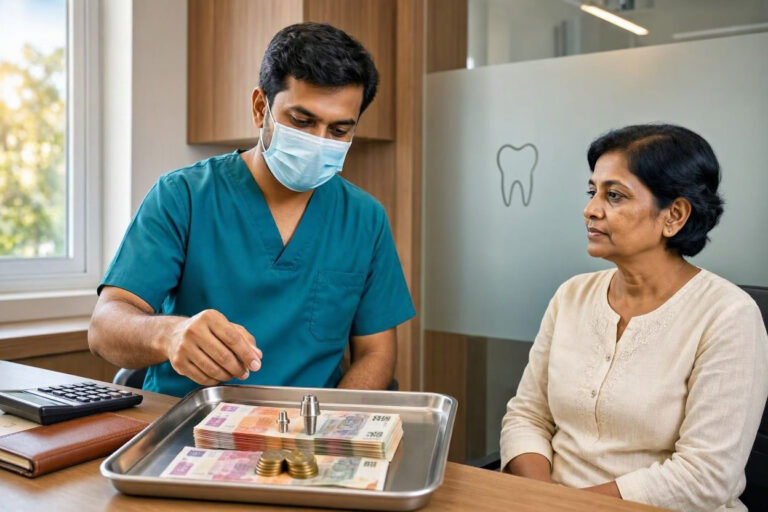
Salem Dental Implants: Your Complete, No-Fear Guide to a Perfect Smile
Losing a tooth can feel embarrassing. It might make eating your favorite foods difficult. Maybe you hide your smile in photos.
You are not alone. Millions of adults face this issue every year.
The good news? You have options. And one of the best long-term solutions right here in town is the dental implant.
This guide is for regular people in Salem who want the truth. No confusing medical terms. No hard selling. Just clear, friendly, and reliable information to help you decide if Salem dental implants are right for you.
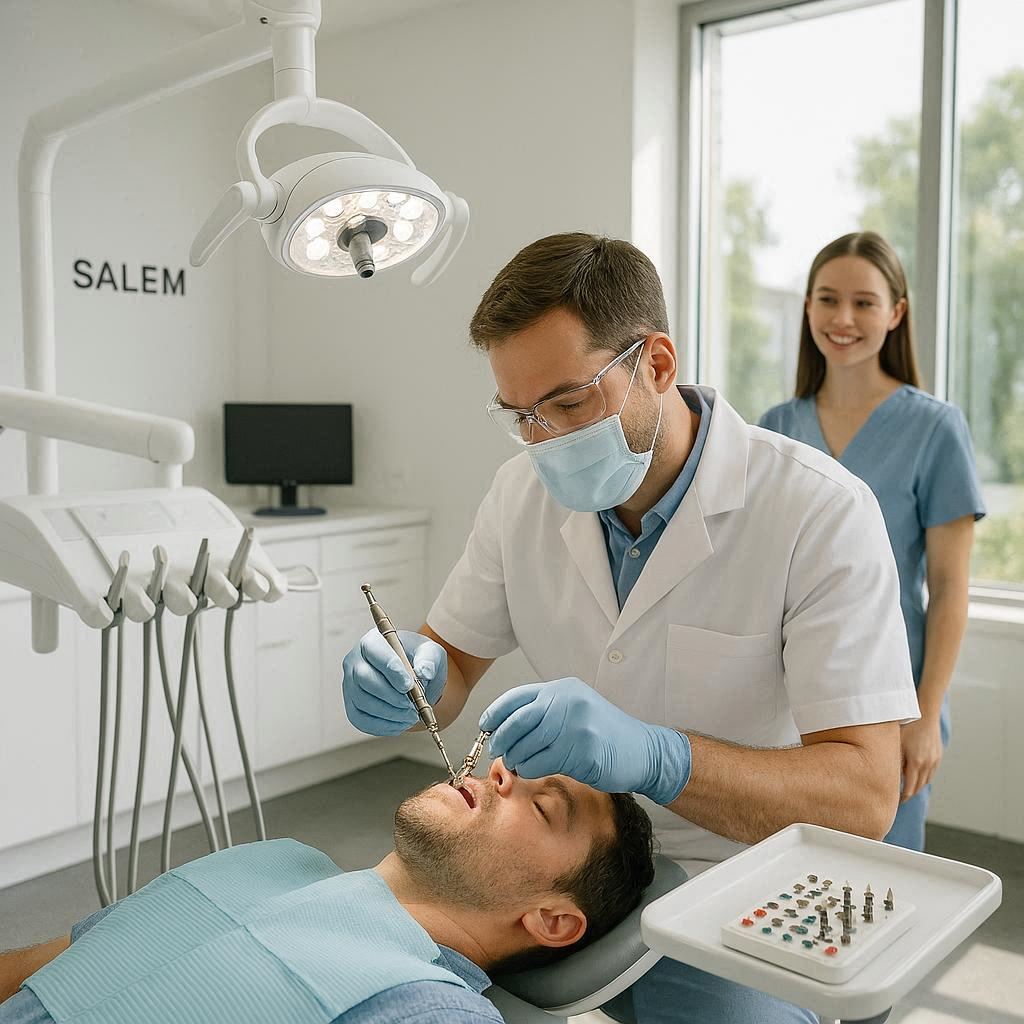
Why Consider Dental Implants in the First Place?
You might ask: Why not just get a bridge or dentures?
That is a fair question.
Traditional dentures sit on top of your gums. They can slip. They can click when you talk. Many people find them uncomfortable after a few years.
Bridges rely on cutting down healthy teeth next to the gap. That means damaging two good teeth to fix one bad one.
Implants are different. They replace the entire tooth: the root and the crown.
Think of an implant as a tiny titanium post. A Salem dentist places that post into your jawbone. Over time, your bone grows around it. It becomes part of you. Then, they add a natural-looking crown on top.
The main benefits you will notice:
- Eat normally again. Bite into an apple. Enjoy a steak. No worries.
- Speak clearly. No slipping dentures to change your words.
- Protect your jawbone. When you lose a tooth, the bone shrinks. Implants stop that.
- Keep your face shape. Missing teeth can make your face look sunken. Implants prevent that.
- Last a very long time. With good care, many implants last 20, 30 years or more.
Realistically, implants cost more upfront than a bridge or denture. But over a lifetime, they often save you money because you do not keep replacing them.
What Exactly Are Salem Dental Implants? (The Simple Version)
Let us break this down into pieces you can picture.
A complete dental implant has three parts:
- The Implant Post (The Root)
This is a small screw made of medical-grade titanium. Your dentist places it into your jawbone. You cannot see this part. It lives under your gum. - The Abutment (The Connector)
A tiny metal piece that screws onto the post. It sticks up just above the gum line. Think of it as a bridge between the post and your new tooth. - The Crown (The Tooth)
This is the white part that looks like a real tooth. A dental lab custom-makes it to match the color, shape, and size of your natural teeth.
Important note: Some people need a temporary denture or bridge while the implant heals. Your Salem dentist will explain if that applies to you.
One Tooth vs. Multiple Teeth
- Single implant: Replaces one missing tooth.
- Implant-supported bridge: Two implants hold a bridge of two, three, or four teeth. You do not need one implant per missing tooth.
- Implant-retained dentures: A denture snaps onto four to six implants. This is popular for people missing all teeth on a full arch (top or bottom).
Am I a Good Candidate for Implants? Let’s Find Out.
Not everyone qualifies immediately. But many people do. Let us be honest about the requirements.
Good candidates usually have:
- Healthy gums (no active gum disease)
- Enough jawbone density to hold the post
- Good overall health (certain conditions need extra care)
- A commitment to daily brushing and flossing
- No heavy smoking (smoking slows healing)
What if you lack enough bone?
Do not worry. Modern dentistry has solutions.
A Salem dentist can perform a bone graft. They add bone material to a thin jaw area. After a few months of healing, you become a good candidate for implants.
What about age?
There is no upper age limit. Healthy 80 and 90-year-olds get implants successfully. The lower limit is usually around 18 for females and 17 for males, when the jaw stops growing.
“I was 67 years old and thought I was too old for implants. My Salem dentist laughed and said, ‘You are never too old to eat corn on the cob again.’ I got two implants last year. Best decision I ever made.” — Robert, Salem resident.
The Step-by-Step Procedure: What Happens in the Chair?
Let us walk through the entire process from start to finish. Knowing what comes next reduces fear.
Step 1: The Consultation (60-90 minutes)
Your first visit is just talk and pictures.
The dentist will:
- Examine your mouth
- Take X-rays or a 3D CT scan
- Review your medical history
- Discuss your goals and budget
- Give you a written treatment plan with costs
Ask these questions at your consultation:
- How many implants have you placed?
- Do you use a 3D guide for placement?
- What type of warranty do you offer?
- What happens if the implant fails?
Step 2: Preparatory Work (If Needed)
Some patients need a tooth extraction first. Others need a bone graft. Sometimes removing a failed root canal is necessary.
This step adds healing time. Be patient. Good foundations make successful implants.
Step 3: Placing the Implant Post (30-60 minutes per implant)
The big day arrives.
Here is what to expect:
- The dentist numbs the area with local anesthesia. You are awake but feel no pain.
- They make a small cut in your gum.
- They drill a tiny hole into the jawbone.
- They screw the implant post into that hole.
- They place a healing cap over it.
- They stitch the gum closed.
How does it feel? Most patients say the pressure is strange but not painful. You will drive yourself home after a single implant.
Step 4: Osseointegration – The Magic Healing Phase (3 to 6 months)
This is where the implant becomes part of you.
Your bone cells grow onto the titanium surface. This is called osseointegration (say: ah-see-oh-in-tuh-gray-shun).
During this time, you eat soft foods on that side. You keep the area clean. You let your body do its work.
Step 5: Placing the Abutment (1 hour)
Once the bone bonds with the post, you return to the dentist.
They:
- Numb the area again
- Make a tiny opening in the gum
- Remove the healing cap
- Screw on the abutment
- Take impressions for your crown
Then you wait two to three weeks while a lab builds your permanent crown.
Step 6: Attaching the Crown (30 minutes)
The final visit is the most satisfying.
The dentist checks the fit and color. They screw or cement the crown onto the abutment. They adjust your bite so it feels natural.
That is it. You walk out with a new tooth that looks and acts like a real one.
Total Timeline: From First Visit to Biting an Apple
Here is a realistic schedule:
| Step | Typical Duration |
|---|---|
| Consultation & planning | 1 day |
| Extraction or bone graft (if needed) | 1 day + 3-6 months healing |
| Implant post placement | 1 day |
| Osseointegration healing | 3-6 months |
| Abutment placement & impressions | 1 hour |
| Crown fabrication | 2-3 weeks |
| Final crown attachment | 30 minutes |
Total from start to finish: Usually 5 to 9 months.
Yes, that sounds long. But remember – the implant post does most of its healing while you live your normal life. You are not in pain that whole time. Most people say the waiting is easier than they expected.
How Much Do Salem Dental Implants Cost? (Real Numbers)
Let us talk money openly and honestly.
The price varies based on your specific situation. But here are real-world ranges for Salem, Oregon in 2025.
| Procedure | Typical Cost Range |
|---|---|
| Single implant (post, abutment, crown) | 3,500–5,500 |
| Implant-supported bridge (2 implants, 3 teeth) | 7,000–10,000 |
| Implant-retained denture (per arch) | 12,000–20,000 |
| Full mouth implants (All-on-4 per arch) | 20,000–30,000 |
| Bone graft (if needed) | 500–2,500 |
| CT scan (3D imaging) | 300–600 |
Important note: These prices assume you have no dental insurance. If you have insurance, they may pay for part of the crown or the extraction. Most plans do not cover the implant post itself, but some newer plans are starting to.
Why the big price range?
- Materials: Premium brand implants (like Nobel Biocare or Straumann) cost more than generic brands.
- Dentist experience: A specialist (periodontist or oral surgeon) charges more than a general dentist.
- Location of the tooth: Front teeth are easier. Back molars are trickier.
- Temporary teeth: Some patients need a temporary partial denture during healing.
Ways to Make Implants Affordable
Do not let the price scare you away. Most Salem dental offices offer:
- In-house payment plans (no credit check, spread over 12 months)
- CareCredit (medical credit card with 6-12 months no interest)
- LendingClub or Ally Health (low-interest medical loans)
- Dental schools (OHSU in Portland offers reduced fees – about 40% less)
- Health Savings Account (HSA) or Flexible Spending Account (FSA) – these dollars are tax-free for implants
*“I saved for two years. Then my dentist offered a 0% in-house plan for the remaining balance. Do not assume you cannot afford it. Ask about financing first.”* — Maria, South Salem.
Top 5 Benefits That Matter in Daily Life
Let us move beyond clinical facts. Here is how implants change your ordinary Tuesday.
1. You forget it is there.
After the first month, you stop thinking about your implant. It becomes background noise. That is the goal.
2. No food restrictions.
Denture wearers avoid sticky candy, tough meat, and crunchy vegetables. Implant patients eat everything.
3. No embarrassing moments.
No clicking sounds. No slipping during a work presentation. No soaking in a glass at night.
4. Your other teeth stay healthy.
Bridges require grinding down healthy teeth. Implants leave neighboring teeth untouched.
5. Your smile looks natural.
A good crown reflects light like a real tooth. No one will know unless you tell them.
Risks and Realistic Challenges (Because Nothing Is Perfect)
You deserve the full truth. Implants are highly successful – about 95% to 98% after 10 years. But problems can happen.
Possible risks include:
- Infection at the implant site (rare with proper care)
- Nerve damage (temporary numbness in lip or chin, very rare in skilled hands)
- Sinus problems (for upper back teeth – a sinus lift prevents this)
- Implant failure (the bone rejects the post – more common in smokers)
- Peri-implantitis (gum disease around the implant – preventable with cleaning)
Who has higher failure risk?
- Smokers (failure rate doubles)
- Uncontrolled diabetics
- People who grind their teeth at night (need a night guard)
- Patients who had radiation to the jaw
What if an implant fails?
Your Salem dentist will remove it, let the area heal for a few months, and try again. Sometimes a larger implant works. Other times, a bridge becomes the backup plan.
Finding the Right Implant Dentist in Salem
Not all dentists are equal here. Some place one implant a year. Others place hundreds.
Your checklist for choosing a provider:
- How many implants have you placed? (Look for 500+)
- What is your success rate? (Should be 95% or higher)
- Do you use guided surgery? (3D planning makes placement safer)
- What brand of implants do you use? (Premium brands offer better long-term data)
- Do you handle the entire process in-house? (Some dentists place the post but outsource the crown – that can cause fit problems)
- What happens after hours? (Do they have an emergency number?)
Types of providers in Salem:
| Provider Type | Best For | Typical Cost |
|---|---|---|
| General dentist with implant training | Single, uncomplicated cases | $$ |
| Periodontist (gum specialist) | Cases with gum disease or aesthetics | $$$ |
| Oral surgeon | Complex cases, bone grafts, full arch | $$$ |
| Prosthodontist | Full mouth reconstruction | $$$$ |
Local tip: Many Salem patients drive to Portland for consultations at OHSU’s Dental School. The wait is longer, but the price is significantly lower. However, you will have students doing the work under supervision.
Recovery and Aftercare: Your Week-by-Week Guide
First 24 Hours
- Bite on gauze to stop bleeding
- Apply ice packs outside your mouth (20 minutes on, 20 off)
- Eat only cold, soft foods (yogurt, smoothies, pudding)
- Do not spit, rinse, or use a straw
- Take prescribed pain medicine before numbness wears off
Days 2 to 7
- Swelling peaks around day 3, then drops
- Rinse gently with warm salt water (no swishing, just tilt your head)
- Transition to warm soft foods (mashed potatoes, soup, scrambled eggs)
- Brush other teeth normally but avoid the implant site
- No exercise, no heavy lifting (increases bleeding risk)
Weeks 2 to 6
- Most swelling and bruising gone
- You can eat most soft-solid foods (pasta, soft bread, cooked vegetables)
- Return to work fully (most people take only 1-2 days off)
- The area will feel different but not painful
Months 3 to 6 (Healing Phase)
- You forget you have an implant
- Eat normally on the opposite side
- Keep all follow-up appointments so the dentist can check bone bonding
After Final Crown (Permanent Care)
Once your crown attaches, treat it like a natural tooth.
Daily care checklist:
- Brush twice a day (electric toothbrush is fine)
- Floss around the implant (use superfloss or implant-specific floss)
- Use a water flosser on low pressure (excellent for cleaning the gum line)
- Avoid very hard foods (ice, hard candy, popcorn kernels)
- Wear a night guard if you grind your teeth
- See your dentist every 6 months for regular checkups
What not to do:
- Do not use metal scrapers at home
- Do not smoke (major cause of late implant failure)
- Do not skip cleanings – gum disease around an implant is serious and expensive to treat
Dental Implants vs. Alternatives: A Clear Comparison
Not everyone needs implants. Sometimes a bridge or denture is the smarter choice. Let us compare honestly.
| Feature | Dental Implant | Traditional Bridge | Removable Denture |
|---|---|---|---|
| Looks like a real tooth | Yes | Mostly | Sometimes |
| Feels like a real tooth | Yes | No (it sits on top) | No |
| Affects neighboring teeth | No | Yes (grinds them down) | No |
| Stops bone loss | Yes | No | No |
| Lifespan | 20+ years | 5-10 years | 5-7 years |
| Upfront cost | $$$ | $$ | $ |
| Long-term cost | Lowest | Medium | Highest (replacements) |
| Requires special cleaning | No | Yes (floss threaders) | Yes (daily soaking) |
| Comfort | Excellent | Good | Fair |
When a bridge might be better:
- You cannot afford the wait time for implant healing
- You have medical conditions that make surgery risky
- You only need the tooth to last 5-10 years
When dentures might be smarter:
- You are missing all teeth on an arch but cannot afford full implants
- Your jawbone is too thin for bone grafting
- You prefer not having any surgery
5 Common Myths About Salem Dental Implants (Busted)
Myth #1: “Implants hurt a lot.”
Truth: Most patients say a tooth extraction hurts more. The procedure itself is painless due to numbing. Afterward, over-the-counter ibuprofen usually handles the soreness.
Myth #2: “My body will reject the titanium.”
Truth: True allergic reactions to titanium are extremely rare – less than 0.6% of patients. Titanium is biocompatible, meaning your body accepts it readily.
Myth #3: “Implants are only for old people.”
Truth: Adults of all ages get implants. The main requirement is a fully grown jawbone, not age.
Myth #4: “Insurance never covers implants.”
Truth: More Oregon dental plans include implant coverage every year. Even if your plan excludes the post, it often covers the crown and extraction.
Myth #5: “Once you get implants, you are done forever.”
Truth: The crown on top can wear out after 10-15 years. It is replaceable. The implant post itself almost never fails if you maintain good oral hygiene.
Special Situations: Implants for Specific Needs
Implants for Seniors in Salem
Age is not a barrier. However, many seniors take medications that affect healing. Blood thinners (like warfarin or Eliquis) require coordination with your prescribing doctor.
The good news: Medicare Advantage plans in Oregon increasingly offer dental implant benefits. Call your plan and ask for a “dental implant rider.”
Implants for Smokers
Let us be direct. Smoking significantly increases implant failure.
If you smoke:
- Your failure rate climbs from 5% to 15%
- Healing takes longer
- Gum infections happen more often
What works: Quitting for 2 weeks before surgery and 2 months after improves success rates dramatically. Some Salem dentists offer nicotine replacement therapy consultations.
Implants for Diabetics
Controlled diabetes (A1c under 7.0) has similar success rates to non-diabetics. Uncontrolled diabetes (A1c above 8.0) leads to much higher failure.
If you have diabetes:
- Get your A1c tested before scheduling surgery
- Take your medications exactly as prescribed
- Eat a protein-rich meal before your appointment to stabilize blood sugar
How to Prepare for Your Implant Consultation
Walk into your first appointment feeling confident. Bring these items:
- Your insurance card (even if you think implants are not covered)
- List of all medications (including over-the-counter and supplements)
- Recent dental X-rays (if you have them from another dentist)
- Your preferred payment method (they will ask for a deposit on the treatment plan)
- Written questions (do not trust your memory – write them down)
Three questions that separate good dentists from great ones:
- “Do you use a surgical guide from a CBCT scan?” (Yes = modern, precise)
- “What is your protocol if the implant fails in the first year?” (Free replacement = confident)
- “Do you provide a written warranty?” (Yes = stands behind their work)
Real Patient Journey: A Salem Story
Let me tell you about David, a 52-year-old electrician from West Salem.
David lost his lower left first molar at age 45. He ignored it for seven years. He chewed on the right side only. His face started looking asymmetrical. The teeth next to the gap began tilting.
In 2023, he decided to act.
His timeline:
- January: Consultation and CT scan
- February: Extraction of a broken root (the original tooth fell apart)
- March: Bone graft (his jawbone had thinned from years of no tooth)
- July: Implant post placement (after bone graft healed)
- November: Abutment and impressions
- December: Final crown attached
His cost: $4,800 for everything (bone graft, implant, crown). He used CareCredit with 12 months no interest.
His words six months later:
“I forgot which tooth was missing. That is the whole point, right? I eat steak again. I smile in meetings. Worth every penny and every month of waiting.”
Frequently Asked Questions (FAQ)
Q: How long do Salem dental implants last?
A: The implant post typically lasts a lifetime with good care. The crown on top lasts 10-15 years before needing replacement.
Q: Is the procedure painful?
A: The surgery itself is not painful due to local anesthesia. Most patients report mild soreness for 2-3 days afterward, similar to a tooth extraction.
Q: Can I get dental implants if I have gum disease?
A: Not until the gum disease is treated and controlled. Active gum disease significantly increases failure risk. Your dentist will treat the gums first.
Q: Does insurance cover dental implants in Salem?
A: Some plans cover part of the cost, especially the crown and extraction. Oregon dental plans are gradually adding implant benefits. Always check your specific policy.
Q: How do I clean dental implants?
A: Brush normally and floss daily. A water flosser on low pressure is excellent for the gum line around the implant. Regular dental cleanings every 6 months are essential.
Q: Can implants fail years later?
A: Yes, but it is rare (about 2-5% over 10 years). The main cause is peri-implantitis – gum disease around the implant. Good oral hygiene prevents this.
Q: What is the success rate for dental implants?
A: Overall, 95-98% after 10 years. Smokers and uncontrolled diabetics have lower success rates (85-90%).
Q: Can I have an MRI if I have dental implants?
A: Yes. Titanium is non-ferromagnetic, meaning it is safe for MRI and will not heat up or move.
Q: How soon can I return to work?
A: Most people return to desk jobs the next day. Physical jobs may require 2-3 days off to avoid bleeding.
Q: Do I need a bone graft?
A: Only if your jawbone is too thin or soft. Your dentist determines this with a CT scan. About 50% of patients need some type of graft.
Additional Resource
For verified, unbiased information about dental implants, review clinical data, and find ADA-approved dentists in Oregon, visit the American Academy of Implant Dentistry’s public resource center:
👉 https://www.aaid.com/patients/index.html
This link leads to a non-commercial, professional organization. You will find implant statistics, patient safety guides, and a “find a dentist” tool.
Conclusion: Three Key Takeaways
Dental implants in Salem offer the closest thing to a natural tooth, with a 95%+ long-term success rate and the ability to eat normally again. The process takes 5 to 9 months and costs 3,500to5,500 for a single tooth, but payment plans and financing make it achievable for most budgets. Your best first step is booking two or three consultations with experienced Salem implant dentists to compare treatment plans, warranties, and payment options.
Disclaimer: This article is for informational purposes only and does not constitute medical advice. Always consult with a licensed dentist in Salem, Oregon, for a personal examination and treatment plan. Individual results vary based on health history, anatomy, and adherence to aftercare instructions.