Is A Dental Implant Falling Out An Emergency
You are going about your day—eating lunch, brushing your teeth, or simply relaxing—when you notice it. Something feels different. You gently touch the area with your tongue, and to your surprise, your dental implant feels loose. A small wave of panic sets in. Is this normal? Should you call your dentist immediately? Or can it wait until morning?
The short answer is: it depends on the situation, but most cases require urgent professional attention.
A loose or falling-out dental implant is not something to ignore. However, not every situation calls for a midnight trip to the emergency room. Understanding the difference between a minor complication and a true dental emergency can save you pain, money, and unnecessary stress.
In this guide, we will explore exactly what happens when an implant fails, how to recognize an emergency, what steps to take right now, and how to protect your investment in your smile.
Let us start with the most important question first.
What Does “Falling Out” Really Mean?
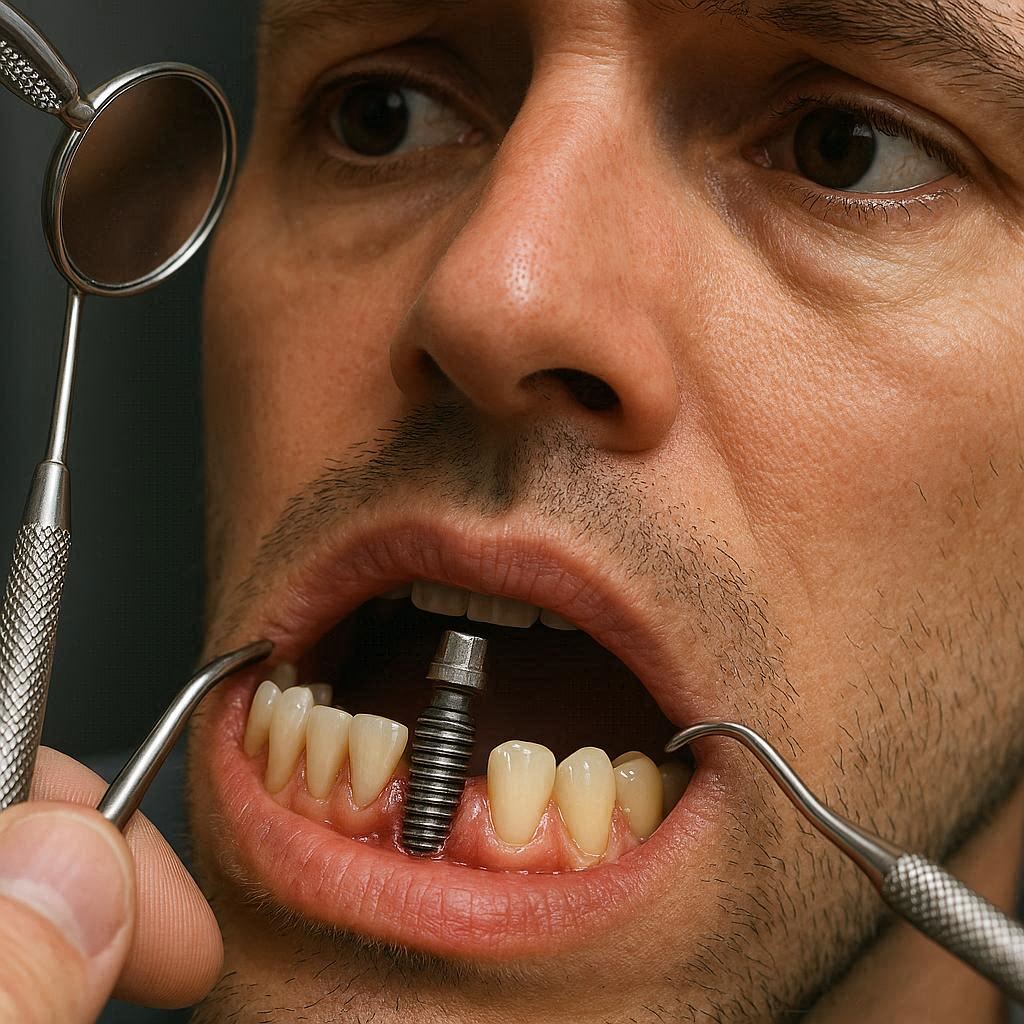
For many people, the phrase “dental implant falling out” brings to mind an image of a whole tooth suddenly dropping onto their lunch plate. In reality, a dental implant is made of three distinct parts. Understanding these parts helps you identify what is actually happening.
| Component | Description | What happens when it fails |
|---|---|---|
| The Implant Post (Fixture) | A titanium or ceramic screw surgically placed into your jawbone. This acts as the new “root.” | This almost never falls out on its own. It requires major bone loss or trauma. |
| The Abutment | A small connector piece screwed into the implant post. It holds the crown. | This can become loose over time. It feels like the whole tooth is wiggling. |
| The Crown (The Tooth) | The visible, ceramic part that looks like a natural tooth. | This is the most common part to loosen or fall off. |
Important Note for Readers: If the crown falls off but the implant post remains firmly in your jawbone, you are not in a critical emergency. You have a prosthetic problem, not a surgical one. If the entire implant post comes out—often with bleeding and a visible hole in your bone—that is a serious situation.
So, when we ask “Is a dental implant falling out an emergency?” we first need to ask: Which part is falling out?
The Three Types of Implant Failure
Before we label something an emergency, let us look at the three main ways an implant can fail. Each has a different level of urgency.
1. Crown Loosening or Fracturing (Most Common)
This happens when the cement breaks down or the screw holding the crown to the abutment becomes loose. You may feel a slight click when chewing, or notice the crown rotating slightly.
Is this an emergency? Rarely. But it needs attention within a few days to prevent damage to the abutment or surrounding teeth.
2. Abutment Screw Loosening
The small screw inside the implant backs out over time due to chewing forces. The crown may feel wobbly, and you might see a tiny gap between the crown and the gum line.
Is this an emergency? It is semi-urgent. If left too long, the rocking motion can stress the implant post and the bone around it.
3. Implant Post Failure (The True Emergency)
This is the least common but most serious type. The titanium post itself becomes mobile. You may notice bleeding, pain on pressure, or even see the top of the metal post moving when you push it with your finger.
Is this an emergency? Yes. This requires immediate evaluation, ideally within 24 hours.
Is A Dental Implant Falling Out An Emergency? A Quick Decision Guide
To help you decide what to do right now, let us walk through a simple decision tree.
Step 1: Can you see metal or just ceramic?
- Only ceramic (tooth-colored material) is loose. → Low urgency. Call your dentist within 1-3 days.
- You see a metal post or metal piece moving. → Moderate to high urgency. Call today.
Step 2: Is there active bleeding?
- No bleeding or only minor spotting. → You likely have a crown or abutment issue. Safe to wait a day.
- Bright red blood flowing from the gum line. → High urgency. Seek care within hours.
Step 3: Does it hurt when you press on the area?
- No pain, just movement. → This is often a simple screw loosening.
- Sharp pain or a dull ache when biting. → Possible bone loss or infection around the implant.
Step 4: Did the whole thing come out in one piece?
- Yes, you are holding the crown + abutment + post together. → This is a significant event. Call your dentist immediately. Do not try to reinsert it yourself.
| Situation | Emergency Level | What To Do |
|---|---|---|
| Crown fell off, post feels rock solid | Low | Save crown. Call dentist within 72 hours. |
| Crown wiggles but does not come off | Low to medium | Avoid chewing on that side. Call within 24-48 hours. |
| Metal abutment is visible and loose | Medium | Call same day. Do not try to tighten it yourself. |
| Whole implant (post) is moving or came out | High | Seek emergency dental care within 12 hours. |
| Bleeding, swelling, fever, or foul taste | High | Go to an emergency dentist or ER if after hours. |
“A loose crown is a nuisance. A loose implant post is a red flag. Never ignore movement at the gum line.” — Dr. Elena Marques, prosthodontist.
Why Do Dental Implants Fall Out or Loosen?
Understanding the root cause helps you prevent it from happening again. Here are the most common reasons, ranked from most to least frequent.
Reason 1: Mechanical Complications (Over 60% of cases)
The small screw that holds the abutment to the implant can slowly unscrew over time. This is not a failure of the implant itself. It is simply wear and tear. Chewing hard foods, grinding your teeth (bruxism), or having a very strong bite can accelerate this.
Signs: A clicking sensation, the crown rotating slightly, food trapping more than usual.
Reason 2: Cement Failure (For Cemented Crowns)
Some implants use dental cement to hold the crown to the abutment. Over months or years, this cement can break down, especially if you eat sticky or hard foods.
Signs: The crown feels loose but does not rotate. You may hear a faint clicking sound.
Reason 3: Peri-Implantitis (Silent Bone Loss)
This is the most serious biological complication. It is essentially gum disease around an implant. Bacteria accumulate below the gum line, causing inflammation and gradual bone loss. As the bone disappears, the implant loses its anchor and begins to move.
Signs: Bleeding when brushing around the implant, bad taste, redness, and eventually, mobility of the post itself.
Reason 4: Overloading Too Soon
If an implant was restored with a permanent crown too early (before the bone fully integrated with the metal), the chewing forces can break the bond. This is rare with modern protocols but still happens.
Signs: Sudden loosening within the first six months after crown placement.
Reason 5: Trauma or Injury
A direct blow to the mouth—from a fall, sports accident, or car accident—can fracture the bone around the implant or break the internal screw.
Signs: Immediate pain and looseness following an identifiable accident.
Step-by-Step: What To Do Right Now
Let us assume you have just discovered that your implant feels loose or has partially come out. Follow these steps to protect yourself.
Step 1: Stay Calm and Stop Chewing
Remove any food from your mouth. Do not test the looseness by wiggling it with your tongue or fingers repeatedly. The more you move it, the more damage you can cause to the surrounding bone and gum tissue.
Step 2: Remove Loose Pieces (If They Are Already Detached)
If the crown has fallen off completely:
- Find it and rinse it gently with water (no soap, no scrubbing).
- Store it in a small container or a sealed plastic bag. A drop of water or saliva keeps it from drying out.
- Do not try to glue it back in with super glue or toothpaste.
If a metal piece has come out (abutment or screw):
- Keep it safe. Your dentist may be able to reuse it.
- Do not attempt to reinsert the screw yourself. The torque needs to be precise.
Step 3: Manage Pain and Swelling
- For mild discomfort: over-the-counter ibuprofen (Advil) or acetaminophen (Tylenol).
- For swelling: apply a cold compress to the outside of your cheek for 15 minutes at a time.
- Avoid aspirin if you are actively bleeding, as it thins the blood.
Step 4: Protect the Area While You Wait
- Eat only soft foods on the opposite side of your mouth.
- Avoid sticky candies, nuts, crusty bread, and chewy meats.
- Rinse gently with warm salt water twice a day (one teaspoon of salt in a cup of warm water). This keeps the area clean without aggressive rinsing.
Step 5: Call Your Dentist Immediately
Even if you are not sure it is an emergency, call. Explain exactly what you feel:
- “My implant crown is loose but the post feels solid.”
- “The entire implant is moving when I push it.”
- “The crown fell off but I see a metal post in my gum.”
Your dentist will tell you whether to come in today, tomorrow, or next week.
Can You Wait To See Your Dentist?
Many people want to know: Can I put this off until my next scheduled cleaning?
Here is a honest answer. For a loose crown, yes, you can usually wait 1-2 weeks, though it is not ideal. For a loose abutment, waiting more than a week increases the risk of damaging the internal threads of the implant. For a mobile implant post, waiting more than a few days can lead to irreversible bone loss.
Do not wait if any of these are true:
- You have swelling in your face or neck.
- You have a fever.
- You see pus or discharge around the implant.
- The area smells or tastes bad.
- You cannot close your mouth properly because the implant has shifted.
In those cases, time is working against you. The infection or bone loss will only get worse.
Can You Fix A Loose Implant Yourself?
The short answer is no.
There are no safe, effective do-it-yourself solutions for a failing dental implant. Online videos may show people tightening their own abutment screws with makeshift tools. Do not do this.
Why self-repair is dangerous:
- You can overtighten and crack the internal threads of your implant (this ruins it permanently).
- You can undertighten, causing the screw to fall out and get swallowed or inhaled.
- You can introduce bacteria deep into the implant, causing a severe infection.
- You will mask the problem, delaying proper diagnosis.
The only home care that is safe is gently cleaning the area and protecting it until you see a professional.
What Will Your Dentist Do?
Knowing what to expect reduces anxiety. Here is a walkthrough of the typical steps your dentist will take.
For a Loose Crown (Post is Solid)
- Examination: Your dentist will check the crown’s fit and take an X-ray to confirm the implant post is stable.
- Re-cementing or Screw Tightening: If cemented, the old cement is cleaned off, and new cement is applied. If screw-retained, the screw is removed, cleaned, and retightened with a torque wrench.
- Outcome: The crown is reattached. You leave the same day.
For a Loose Abutment
- Removal: The crown is carefully removed. The abutment screw is taken out.
- Inspection: The screw and the internal threads of the implant are checked for damage.
- Replacement: A new screw (or new abutment) is placed and torqued to the manufacturer’s specification. The crown is reattached.
- Outcome: Most cases resolved in one visit. Cost is usually low to moderate.
For a Mobile Implant Post (True Emergency)
This is more complex.
- Assessment: Cone beam CT scan to evaluate remaining bone.
- Options:
- If minimal bone loss: The implant may be stabilized and left to heal.
- If significant bone loss: The implant must be removed.
- Removal procedure: The dentist uses a special instrument to unscrew the implant. Local anesthesia is used. A bone graft may be placed immediately.
- Healing: You wait 4-6 months for the graft to heal before placing a new implant.
- Outcome: One implant is lost. Replacement is usually possible.
How To Prevent An Implant From Falling Out
Prevention is always easier (and cheaper) than treatment. Here are proven strategies to keep your implant secure for decades.
Daily Home Care That Matters
- Brush twice a day with a soft-bristled toothbrush. Pay special attention to the gum line around the implant.
- Floss daily using implant-specific floss or superfloss. Regular floss can shred and get stuck under the crown.
- Use a water flosser: This is highly recommended. A water flosser removes debris from around the abutment connection.
- Avoid abrasive toothpaste: No baking soda, charcoal, or “whitening” pastes with large particles. They can scratch the crown surface.
Professional Maintenance
- Regular checkups every 6 months: Your dentist will check the tightness of the screw (for screw-retained crowns) and examine the gum health.
- Annual X-rays: A single periapical X-ray once a year allows your dentist to see bone levels around the implant.
- Night guard if you grind your teeth: Bruxism is a leading cause of screw loosening. A custom night guard absorbs the extra force.
Lifestyle Adjustments
| Behavior | Effect on Implant |
|---|---|
| Chewing ice or hard candy | High risk of crown fracture or screw loosening |
| Using teeth as tools (opening packages) | Can crack the crown or bend the abutment |
| Smoking | Increases risk of peri-implantitis by 300% |
| Poor diabetes control | Slows healing, increases infection risk |
| Eating sticky caramels or taffy | Can pull off cemented crowns |
A helpful list for long-term success:
- Do not bite into whole apples, corn on the cob, or crusty baguettes with your implant crown.
- Cut hard foods into small pieces.
- Quit smoking or using vaping products. Nicotine restricts blood flow to the bone around implants.
- Report any change in bite or sensation to your dentist immediately.
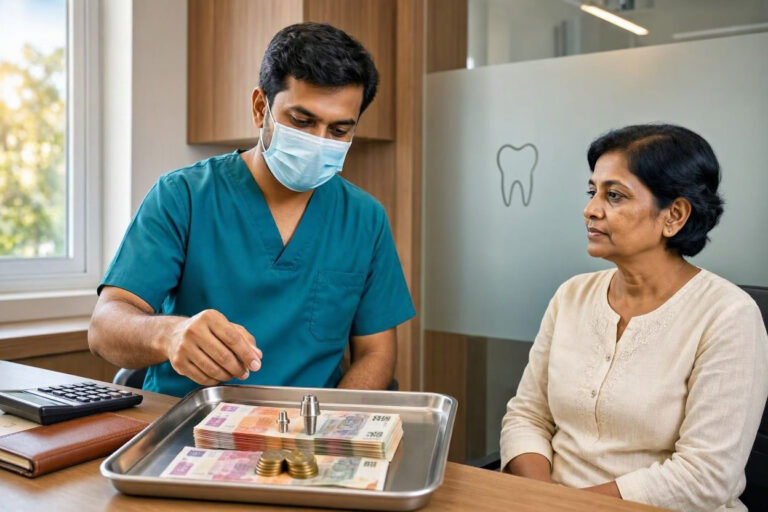
Cost Implications: Emergency vs. Routine
Let us talk about money. Many people delay care because they are worried about the cost. This often backfires.
| Situation | Typical Cost (US estimates) | Why It Matters |
|---|---|---|
| Routine crown re-cementing | 150−350 | Quick, same-day fix |
| Replacement of abutment screw | 200−500 | Parts are inexpensive, but expertise matters |
| Emergency visit after hours | 300−600 + procedure costs | The urgency fee adds significant cost |
| Full implant removal + bone graft | 1,500−3,500 | You lose your original investment (4k−6k) |
| New implant placement | 4,000−6,000 | Replacing a failed implant from scratch |
Important Note for Readers: Treating a loose crown early costs as little as a restaurant dinner. Waiting until the implant post fails costs as much as a used car. Emergency prevention is far more affordable.
If cost is a barrier, ask your dentist about payment plans. Many offices offer CareCredit or in-house financing. Do not let cost stop you from at least getting an examination.
What If The Whole Implant Falls Out Completely?
This is the scenario that scares people the most. Let us walk through exactly what happens.
You are eating, and suddenly you feel something hard in your mouth. You spit it out, and it is the entire implant—metal post, abutment, and crown all together.
Do not panic. This is rare, but it happens.
Immediate steps:
- Rinse the implant component gently with saline or water. Do not scrub.
- Place it in a clean container with a little water or saliva.
- Rinse your mouth gently with warm salt water.
- Apply gentle pressure with a clean gauze or tea bag to the area if it is bleeding.
- Call your dentist immediately.
What your dentist will do:
- Examine the hole in your bone (the implant site).
- Determine if there is enough bone left to place a new implant immediately.
- More likely: place a bone graft to rebuild the lost bone.
- Prescribe antibiotics to prevent infection.
Can the same implant be reinserted? Almost never. Once an implant has failed and come out, the surface is contaminated. A new implant is required.
Is it an emergency? Yes. You need to be seen within 24 hours to assess bone damage and start the healing process.
Living With Dental Implants: Long-Term Realities
Dental implants are one of the most successful restorative procedures in medicine, with success rates above 95% over 10 years. But they are not magic. They require maintenance just like natural teeth.
Here is an honest truth that many articles avoid: Implants do not last forever without care. However, with proper maintenance, the vast majority will last 20 years to a lifetime.
Five signs that your implant is healthy:
- No bleeding when brushing around it.
- No bad breath originating from that area.
- The crown does not move at all when you press it with a finger.
- You cannot feel the edge of the crown with your tongue (fit feels smooth).
- Your annual X-ray shows stable bone levels.
Five signs that trouble is coming:
- The gum around the implant looks redder than surrounding gums.
- You can floss “too easily” (suggesting gum recession).
- You feel a slight click when biting down.
- Food constantly gets stuck around one side of the crown.
- There is a dull ache when you tap on the crown with your fingernail.
If you notice any of the five warning signs, schedule a non-emergency appointment within two weeks. You may prevent a future emergency.
Special Situations: When To Go To The ER Instead Of The Dentist
Most dental implant problems are handled by a dentist. However, some situations require a hospital emergency room.
Go to the ER immediately if you experience:
- Difficulty breathing or swallowing (swelling may be blocking your airway).
- Swelling that has spread to your eye or neck.
- A fever over 101°F (38.3°C) combined with implant loosening.
- Uncontrollable bleeding that does not stop after 20 minutes of direct pressure.
- You have swallowed or inhaled a loose implant component and are having trouble breathing or chest pain.
Note: The ER will not reattach your implant. They will stabilize you—treat severe infection, control bleeding, or rule out aspiration. You will still need to see a dentist for the implant repair afterward.
Frequently Asked Questions (FAQ)
1. Can a dental implant fall out years after placement?
Yes, but it is uncommon. Late failure is almost always due to peri-implantitis (bone loss from infection) or grinding/clenching that loosens screws over time.
2. What does a loose implant feel like?
It can feel like a natural tooth that is slightly wiggly. You might notice a clicking sensation when you push it with your tongue or when you bite down on something hard.
3. Can I still eat with a loose implant?
You should avoid chewing on that side entirely. Stick to soft foods like yogurt, smoothies, mashed potatoes, and scrambled eggs until you see your dentist.
4. Is it safe to sleep if my implant feels loose?
Yes, if there is no bleeding, swelling, or severe pain. Sleeping is safe. Just be careful not to grind your teeth. If you are a grinder, consider sleeping with your night guard.
5. Will my dental insurance cover emergency implant repair?
Most dental insurance plans cover diagnosis and simple repairs (like re-cementing a crown) but often exclude implant replacement. Check your policy’s “implant services” section.
6. How long can I wait if the crown is just slightly loose?
You can safely wait up to two weeks as long as there is no pain, bleeding, or mobility of the metal post. However, sooner is always better.
7. What happens if I ignore a loose implant for months?
The constant micro-movement can damage the bone around the implant. You may eventually lose the implant entirely. You also risk breaking the internal screw, making removal more difficult.
8. Can stress cause an implant to fall out?
Indirectly, yes. Stress often increases teeth grinding (bruxism), which multiplies the forces on your implant screws. Over months or years, this can loosen components.
9. Are some people more prone to implant failure?
Yes. Smokers, people with uncontrolled diabetes, patients with severe bruxism, and those with poor oral hygiene have significantly higher failure rates.
10. Can a falling implant damage nearby natural teeth?
Rarely. But a severely loose implant can trap food and bacteria, leading to decay or gum disease in adjacent teeth. This is another reason to address it promptly.
Additional Resource
For a deeper understanding of how to maintain healthy gums around your implants and recognize early warning signs, the American Academy of Implant Dentistry (AAID) offers a free patient guide titled “Your Implants: A Lifetime of Care.”
👉 Visit the AAID Patient Education Center (external link, opens in new tab)
This resource includes downloadable checklists, illustrations of healthy vs. unhealthy implants, and a directory of implant specialists near you.
Conclusion
Let us summarize everything in three lines:
A dental implant falling out is not always a middle-of-the-night emergency, but a loose crown needs attention within days, while a moving metal post requires immediate care. Most cases are simple screw loosening or cement failure—easily fixed by your dentist—but ignoring the problem risks bone loss, infection, and losing the implant entirely. Protect your investment by acting quickly, avoiding DIY repairs, and maintaining regular checkups.
You have invested time, money, and hope in your dental implant. That investment deserves respect. When something feels wrong, trust your instincts. Call your dentist. Ask questions. Get it checked. Most problems are small when caught early.
Your smile is worth it.
Disclaimer: This article is for informational purposes only and does not constitute medical or dental advice. Always consult with a licensed dental professional for diagnosis and treatment of your specific situation. Do not delay seeking care based on information read here.