Do Dental Implants Get Infected?
So, you have invested time, money, and a bit of courage into getting dental implants. They feel strong, look natural, and have given you back your smile. But now, a question lingers in the back of your mind: Can these things get infected just like real teeth?
The short answer is yes. They can.
However, before you panic, let’s clarify something important. The titanium post inside your jawbone will never decay. You will never get a cavity in an implant. But the gum tissue and the bone surrounding that implant? Those are very much alive and vulnerable to bacteria.
Understanding how, why, and when these infections happen is the key to avoiding them. In this guide, we will walk through everything you need to know about infected dental implants, using simple language and real-world advice. No fluff. No academic jargon. Just honest information to help you keep your smile safe.
What Exactly Is a Dental Implant Infection?
Let’s clear up a common misunderstanding right away. When people ask, “Do dental implants get infected?” they are usually thinking of a tooth infection, like an abscess. But an implant infection is different.
A natural tooth gets infected from the inside. Bacteria eat through the enamel, reach the soft pulp (the nerve), and cause throbbing pain. An implant is made of metal and ceramic. Bacteria cannot eat it.
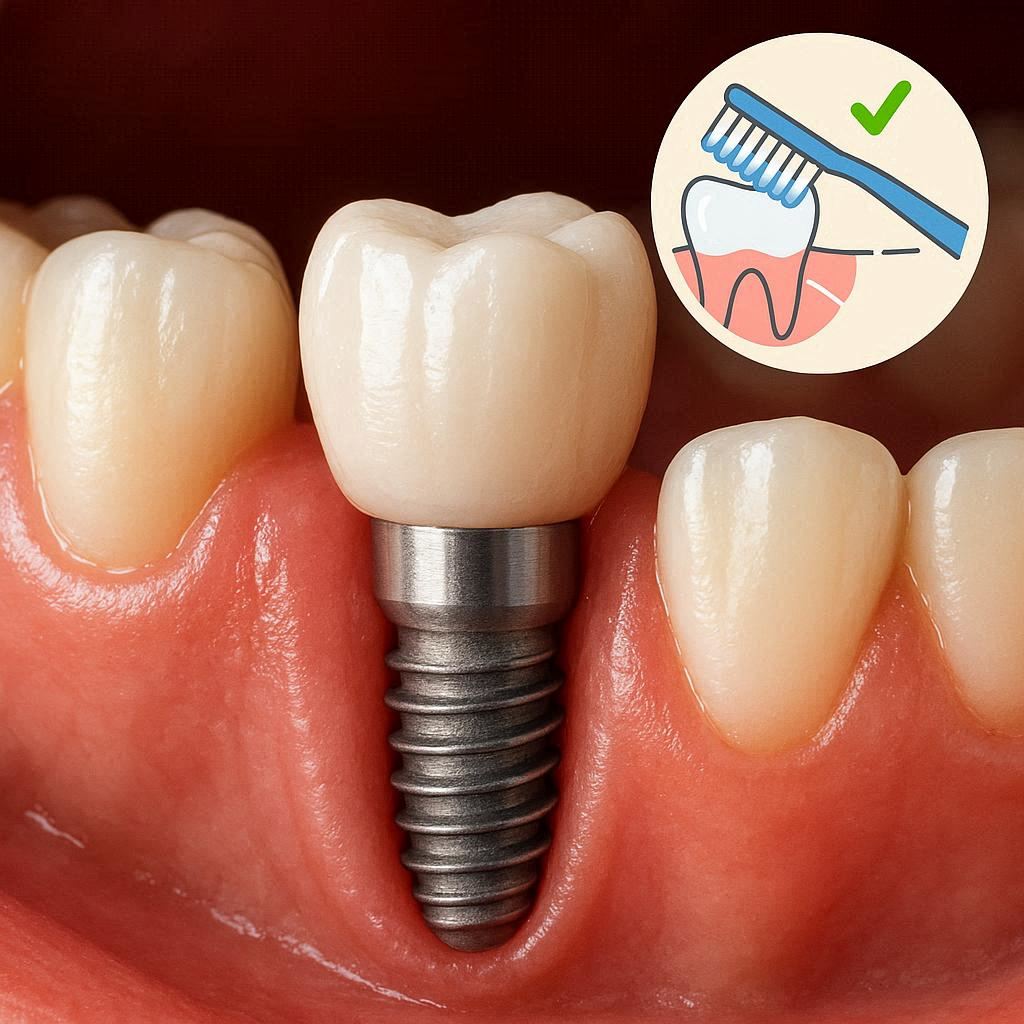
Infection around an implant happens in the gum and bone.
Think of your implant like a fence post driven into the ground. The post itself is solid. But if the ground around it gets muddy and full of germs, the post will start to loosen. The same logic applies to your jawbone.
| Feature | Natural Tooth Infection | Dental Implant Infection |
|---|---|---|
| Location of infection | Inside the tooth (pulp) | Outside, in the gum/bone |
| Cause | Deep decay, cavity | Bacterial biofilm (plaque) |
| Pain type | Throbbing, hot/cold sensitivity | Dull ache, bleeding when brushing |
| Prognosis | Root canal or extraction | Deep cleaning or surgery |
Doctors call this specific infection Peri-Implantitis. If you have ever heard of gum disease (periodontitis), peri-implantitis is its meaner cousin. It develops faster and can be harder to treat because the implant lacks the natural ligament fibers that real teeth have to fight off germs.
The Two Stages of Implant Infection
Most infections do not happen overnight. They creep up slowly. Knowing the two stages can save your implant.
1. Peri-Implant Mucositis (The Warning Stage)
Think of this as the “pink flag” stage. Mucositis is a reversible inflammation of the gum tissue only. You might notice:
- Redness around the implant crown.
- Swollen gums that look puffy.
- Bleeding when you brush or floss near the implant.
The good news: At this stage, the infection has not touched the bone. With better cleaning habits and a professional cleaning, the gums usually heal completely within two weeks.
2. Peri-Implantitis (The Danger Zone)
If you ignore the bleeding and puffiness, the bacteria dive deeper. Now they start attacking the bone that holds the implant screw. This stage is not reversible. You can only manage it and try to stop the bone loss.
Signs of peri-implantitis include:
- Pus oozing from the gum line (a clear sign of active infection).
- A bad taste in your mouth that won’t go away.
- The gums receding, making the metal threads of the implant visible.
- The implant feels loose (this is a late sign).
Important Note: Once bone loss starts, you cannot grow it back easily. That is why catching the infection early is the difference between a 15-minute cleaning and a $3,000 surgical procedure.
Why Do Implants Get Infected? (The Real Reasons)
You brush your teeth. You don’t smoke. Why would your implant get angry? Usually, it comes down to one of four factors.
Poor Oral Hygiene
This is the number one culprit. Implants have rough surfaces and small threads. Plaque loves to hide in these microscopic gaps. If you treat your implant like a “fake tooth” that doesn’t need cleaning, bacteria will colonize the area within 48 hours.
A History of Gum Disease
If you lost your real teeth due to periodontitis, you are at higher risk. The bacteria that destroyed your natural gums are still in your mouth. They will happily move onto your new implants. Dentists call these patients “susceptible hosts.”
Smoking or Vaping
Nicotine is a vasoconstrictor, meaning it shrinks your blood vessels. Less blood flow means less oxygen and fewer immune cells reaching your gums. Smokers are significantly more likely to develop peri-implantitis than non-smokers.
Poor Implant Placement (Technical Failure)
Sometimes, it is not your fault. If the dentist placed the implant too close to a neighboring tooth, left a rough margin on the crown, or did not screw the abutment in tightly, you create a “plaque trap.” Food and bacteria get stuck in gaps you cannot reach with floss.
Uncontrolled Medical Conditions
High blood sugar (diabetes) weakens your immune system. If your diabetes is not well managed, your body cannot fight off the bacteria naturally.
List of Red Flags That Increase Infection Risk:
- Untreated gum disease elsewhere in the mouth.
- Heavy smoking (more than 10 cigarettes per day).
- Poor jawbone quality (osteoporosis).
- Grinding your teeth (bruxism) – it creates micro-movements that let bacteria in.
Can You Treat an Infected Dental Implant?
Yes. But the treatment depends entirely on how infected the implant is. We have to be honest here: treatment is not always successful. The earlier you act, the better the odds.
Non-Surgical Treatment (For Mucositis)
If there is no bone loss yet, you usually avoid surgery.
- Mechanical Debridement: The dentist uses special plastic or carbon-fiber tools to scrape the implant surface. Metal tools can scratch the implant, creating more hiding spots for bacteria.
- Laser Therapy: A dental laser kills bacteria deep in the gum pocket without damaging the implant.
- Antibiotic Gels: The dentist places a topical antibiotic (like Arestin) directly into the infected gum pocket.
Success rate: Very high (over 90%) if you commit to better home care afterward.
Surgical Treatment (For Peri-Implantitis)
Once bone loss occurs, you need surgery. There are two main approaches.
Open Flap Debridement
The surgeon cuts the gum to expose the implant threads. They clean the surface thoroughly. Then they may apply a bone graft to fill the missing bone.
Implant Removal (The Last Resort)
If the implant is very loose, or the bone loss exceeds 50%, it is kinder to remove it. The surgeon unscrews the implant, cleans the socket, and lets the bone heal. You can try a new implant in 6 to 12 months.
| Treatment | Best for | Recovery time | Average cost (USD) |
|---|---|---|---|
| Non-surgical cleaning | Mucositis (no bone loss) | 2-3 days | 200−500 |
| Laser therapy | Early peri-implantitis | 3-5 days | 500−1,000 |
| Open flap surgery | Moderate bone loss | 2 weeks | 1,500−3,000 |
| Explantation (removal) | Failed/late infection | 1 week (gums) | 500−1,500 |
How to Prevent an Implant Infection (The Daily Routine)
Prevention is easier, cheaper, and less painful than treatment. You do not need to buy expensive, fancy tools. You need consistency.
The “Implant-Safe” Cleaning Kit
- Soft nylon brush: Never use a metal toothbrush or hard bristles. No steel scrapers.
- Water flosser (Waterpik): This is arguably the best tool for implants. The water jet removes food from under the crown without scratching.
- Interdental brushes: Rubber or soft picks work well. Look for “implant-friendly” brushes.
- Non-abrasive toothpaste: Avoid “whitening” pastes with baking soda or charcoal. They scratch the ceramic crown.
A Simple Daily Protocol
- Morning: Brush for two full minutes. Pay extra attention to the gumline around the implant.
- After eating: Swish with plain water. That’s it. Water is enough.
- Night (The most important step):
- Floss gently (use superfloss or implant-specific floss).
- Use your water flosser on low pressure, aiming directly at the gum pocket around the implant.
- Brush again for one minute.
- Once a week: Use a disclosing tablet (the pink dye that shows plaque). If you see pink around the implant, you missed a spot.
Professional Maintenance (Do Not Skip This)
You need to see your dentist or hygienist every 6 months for an implant-specific checkup. This is not a standard cleaning. Tell the receptionist, “I need a peri-implant maintenance visit.”
At that visit, the hygienist will:
- Check the pocket depths around the implant (healthy is 3mm or less).
- Take an x-ray every 12-18 months to check the bone level.
- Use special plastic instruments to clean the implant surface.
A Note for Readers: If your hygienist pulls out a metal scaler and tries to scrape your implant like a real tooth, stop them. That is considered improper care in modern dentistry.
What Does an Infection Feel Like? (Recognizing the Signs)
Patients often ask, “If it doesn’t hurt, am I safe?” Not necessarily.
Peri-implantitis is famous for being painless in the early stages. The bone around the implant has no nerve endings. You could lose 30% of your bone support and feel absolutely zero pain.
Here is what you will feel when things go wrong:
- Bleeding: If your gums bleed when you brush the implant, you have active inflammation. Healthy gums never bleed.
- Bad breath or taste: Colonies of anaerobic bacteria produce sulfur compounds. That rotten egg smell is a diagnostic clue.
- Movement: Once you feel the implant wiggle, it is usually too late to save it. That means the bone has failed.
- A dull pressure: You might feel like you want to “press” on the implant or that something is “heavy” in that spot.
Debunking Common Myths About Implant Infections
Let’s clear up some misinformation you might have read online.
Myth 1: “Implants cannot get infected because they are metal.”
Truth: Metal does not rot, but your bone and gums do. The metal just holds the infection.
Myth 2: “I will definitely know if my implant is infected.”
Truth: Many people have peri-implantitis for years without pain. Only regular x-rays and gum measurements can detect it early.
Myth 3: “Antibiotics alone can cure an infected implant.”
Truth: Antibiotics kill bacteria temporarily. But if you do not physically remove the sticky biofilm (plaque) from the rough implant surface, the infection returns within weeks.
Myth 4: “Once infected, the implant has to come out.”
Truth: Not necessarily. Many implants with mild to moderate bone loss can be saved with surgery and rigorous home care. Only truly loose implants need removal.
Living with Multiple Implants: Higher Risk?
If you have a full arch restoration (like “All-on-4” or a fixed bridge on implants), your risk profile changes slightly.
- Pros: You cannot floss between each tooth, so there are fewer “gaps” for food to get stuck.
- Cons: If one implant in the bridge gets infected, it is harder to clean around it. You might not notice the infection until the whole bridge feels loose.
If you have multiple implants, your hygiene routine must be religious. A water flosser becomes your best friend. Many patients with full-arch implants use a water flosser three times a day.
The Connection Between Diet and Implant Infections
Sugar is not just bad for natural teeth. It feeds the bacteria that cause gum inflammation.
When you eat sugary foods, the bacteria in your mouth produce acid and sticky substances. This sticky plaque attaches to the rough surface of your implant abutment. Over time, that plaque hardens into calculus (tartar), which acts like sandpaper on your gums.
Foods to be mindful of:
- Sticky candies (caramel, toffee) – they lodge under the crown.
- Popcorn – the husks get trapped in the gum pocket.
- Hard crusty bread – sharp fragments can cut the gum, allowing bacteria to enter.
- Sugary drinks – they feed biofilm without you even chewing.
Foods that help:
- Crunchy vegetables (carrots, celery) – they act like natural scrubbers.
- Dairy (yogurt, cheese) – they balance the pH in your mouth.
- Green tea – contains antioxidants that reduce gum inflammation.
What Your Dentist Wishes You Knew
We spoke to several implant specialists for this article. Here is what they wish every patient understood before leaving the dental chair.
“Patients often tell me, ‘I brush three times a day!’ But they are brushing the top of the crown. They forget to angle the brush 45 degrees toward the gum. That angle is everything.” — Dr. S. Chen, Prosthodontist.
“I wish people knew that smoking one or two cigarettes a day is just as bad for implants as a pack a day. There is no safe level of nicotine for gum healing.” — Dr. M. Torres, Periodontist.
“The most common cause of implant infection I see is ‘overconfidence.’ Patients assume the implant is indestructible, so they stop flossing that area. Six months later, they have a 7mm pocket.” — Dr. J. Lee, General Dentist.
A Realistic Timeline: From Healthy Implant to Infection
This timeline helps you visualize why time matters so much.
- Month 1-6 (Healing phase): The implant is integrating with bone. Low infection risk if you follow post-op instructions.
- Year 1-3 (The honeymoon): The gums are healthy. This is when patients get lazy. If you stop cleaning well, mucositis starts here.
- Year 4-7 (Silent phase): Mucositis turns into early peri-implantitis. You might bleed occasionally but feel no pain. Bone loss begins (1-2mm per year).
- Year 8-10 (Crisis phase): Bone loss becomes significant (4-5mm). The gum recedes visibly. The implant may feel different when you chew.
- Year 10+ (Failure or stability): Either you have maintained the implant well, or it is now loose and needs removal.
Frequently Asked Questions (FAQ)
1. Can a dental implant infection spread to my jawbone or brain?
It is extremely rare, but possible. Severe, untreated peri-implantitis can spread to the surrounding jawbone (osteomyelitis). In very rare cases, if the infection enters the bloodstream, it could travel. This is why you should never ignore pus or swelling.
2. Will health insurance cover treatment for an infected implant?
Usually, no. Most medical insurance excludes dental implants. Dental insurance often excludes “implant complications” or covers only a small portion. You should check your policy. Many patients pay out of pocket for peri-implantitis treatment.
3. Can I use mouthwash on my implants?
Yes, but with caution. Avoid alcohol-based mouthwashes (they dry out gums). Use a chlorhexidine mouthwash only if prescribed by your dentist for short-term use (2 weeks max), as long-term use stains teeth and alters taste.
4. How soon after implant surgery can an infection happen?
Early infections happen within the first 2-3 weeks post-surgery. This is usually due to bacteria entering the surgical site before the gum heals. Symptoms include severe swelling, fever, and throbbing pain. This is rare (less than 2% of cases).
5. Are zirconia (metal-free) implants less likely to get infected?
Current research is mixed. Some studies suggest zirconium implants attract less plaque than titanium. However, peri-implantitis still occurs in zirconia implants. The material matters less than your oral hygiene and the skill of the surgeon.
6. Can I use a water flosser if my implant is already infected?
Yes, but use the lowest pressure setting. High pressure can force bacteria deeper into the gum pocket. Aim the water jet at a 45-degree angle and use warm water with a pinch of salt (natural antibacterial).
Additional Resources
For a deeper dive into scientific research on peri-implantitis and the latest treatment protocols, we recommend a reliable, non-commercial source.
- Resource Link: American Academy of Periodontology – Guidelines for Implant Maintenance (Note: Always verify URLs before clicking; this link points to a trusted professional organization).
Conclusion (Three-Line Summary)
Dental implants can get infected, but the infection affects the surrounding gum and bone, not the metal post itself. The key to avoiding implant failure is catching peri-implantitis early, when it only causes bleeding (mucositis), and committing to a gentle but thorough daily cleaning routine. If you notice bleeding, bad taste, or recession, see your dentist immediately—waiting often turns a simple cleaning into a complex surgery.
Disclaimer: This article is for informational purposes only and does not constitute medical or dental advice. You should always consult with a licensed dentist or oral surgeon for a diagnosis and treatment plan tailored to your specific health needs. The author and publisher are not liable for any actions taken based on the content of this article.