Dental Implants in Everett
Losing a tooth can feel frustrating. It might affect your confidence, your ability to eat, or even the way you speak. If you live in Everett or the surrounding Snohomish County area, you have good news. Modern dentistry offers a long-term solution that looks, feels, and functions like a natural tooth.
That solution is the dental implant.
This guide is for anyone in Everett who is curious about implants. Maybe you have a missing tooth. Maybe your dentures feel loose or uncomfortable. Or perhaps you just want to understand your options before making any decision.
We will walk through everything. The process, the costs, the timeline, the local experts, and the real-life pros and cons. No fluff. No fake promises. Just honest, helpful information.
What Exactly Is a Dental Implant?
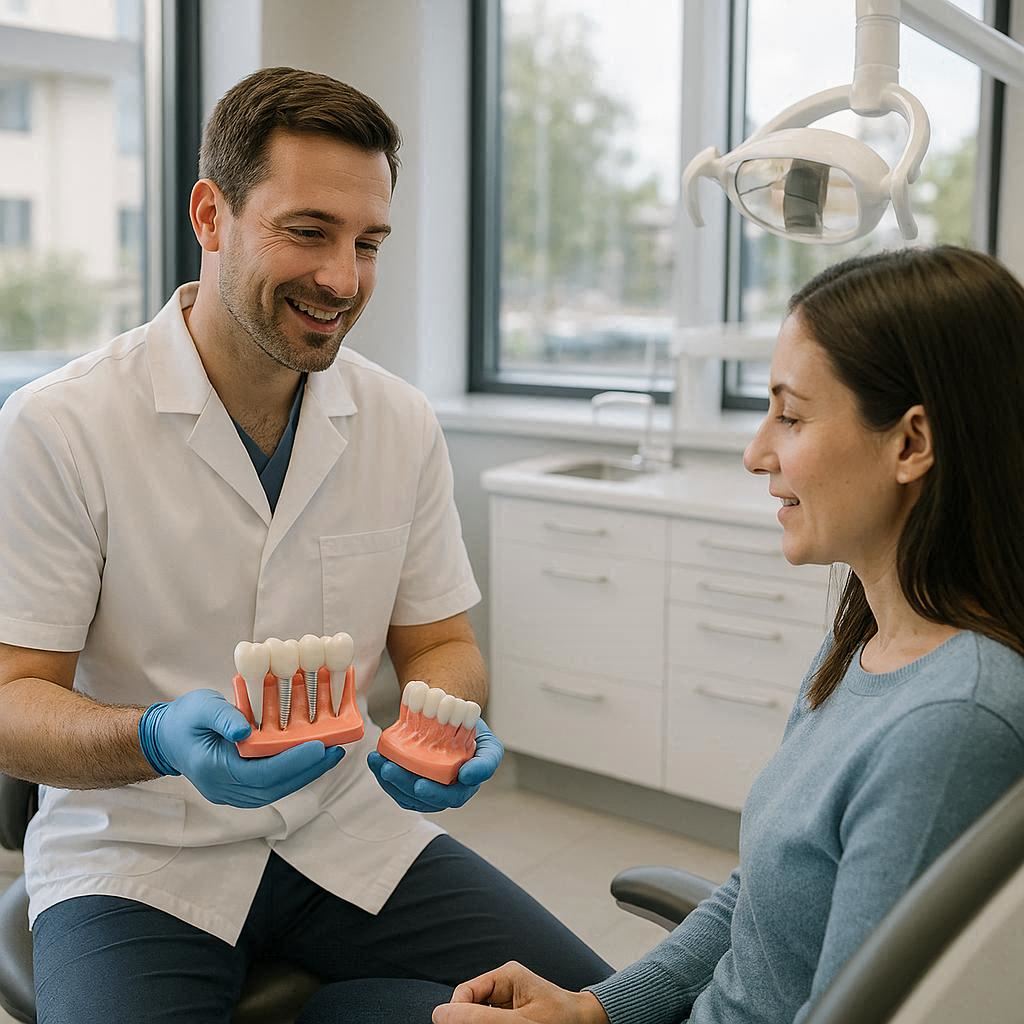
A dental implant is not a fake tooth in the way you might think. It is actually a small, strong post. This post is usually made of medical-grade titanium. A dentist surgically places this post into your jawbone, right where your old tooth root used to be.
Think of it as a new, artificial root. Over time, your jawbone grows around the implant. This is a process called osseointegration. It sounds complicated, but it just means the implant becomes part of you.
Once the implant is secure, the dentist adds an abutment. That is a small connector piece. On top of that, they place a dental crown. The crown is the part you see. It is custom-made to match the color, shape, and size of your other teeth.
So, an implant is three parts working as one:
- The post (in the bone)
- The abutment (connector)
- The crown (visible tooth)
Why Everett Residents Choose Implants Over Other Options
You have choices. Bridges, partial dentures, full dentures. Each has its place. But implants offer unique benefits that many Everett patients love.
- They stop bone loss. When you lose a tooth, your jawbone starts to shrink. Implants stimulate the bone, just like a natural root. This keeps your face shape normal.
- They last decades. With good care, an implant can last 20, 30, or even more years. Bridges usually last 7 to 10 years.
- They do not harm nearby teeth. A traditional bridge requires shaving down healthy teeth. Implants stand alone.
- They feel natural. No clicking, slipping, or awkward rubbing. You can eat apples, corn on the cob, or steak without worry.
“I had a partial denture for three years. I never got used to it. My implant feels like my real tooth. I honestly forget it is there.” — Linda R., Everett
Are You a Good Candidate for Dental Implants in Everett?
Most healthy adults can get implants. But there are some important factors to check first.
The Ideal Candidate
You are likely a good candidate if you:
- Have one or more missing teeth
- Have a fully grown jawbone (usually over age 18)
- Have enough bone density to support the implant
- Have healthy gums (no active gum disease)
- Do not smoke heavily, or are willing to quit during healing
- Are committed to good oral hygiene
When You Might Need Extra Steps
Some patients need a little preparation before implants. That is normal. Do not worry.
| Condition | Solution |
|---|---|
| Low bone density | Bone grafting procedure |
| Gum disease | Periodontal treatment first |
| Heavy smoking | Smoking cessation program |
| Uncontrolled diabetes | Medical clearance and stabilization |
| Teeth grinding (bruxism) | Night guard during healing |
Note: Age is rarely a barrier. Healthy seniors in their 80s and 90s get implants successfully. Your overall health matters more than your age.
A Word on Bone Grafting
If a dentist tells you that you need a bone graft, do not panic. This is very common. When a tooth has been missing for years, the bone naturally melts away. A graft adds a small amount of bone material to build up the area. It adds 3 to 6 months to your timeline, but it makes the implant possible.
The Complete Process: From First Visit to Final Crown
Let us walk through the entire journey. Every patient is unique, but most follow a similar path.
Step 1: The Consultation (1 hour)
Your first visit is all about information. The dentist will:
- Examine your mouth
- Take x-rays or a 3D CT scan
- Review your medical history
- Discuss your goals and budget
- Give you a written treatment plan with costs
What to ask during your consultation:
- How many implants have you placed?
- What type of implant system do you use?
- Do you offer sedation options?
- What is included in the quoted price?
Step 2: Treatment Planning
The dentist studies your scans. They map out exactly where each implant will go. This prevents damage to nerves and sinuses. Modern software makes this very precise.
Step 3: The Implant Placement Surgery (1 to 2 hours)
On surgery day, you will receive local anesthesia. You can also ask for sedation if you feel nervous. Many patients choose nitrous oxide (laughing gas) or oral sedation.
The dentist makes a small cut in your gum. They drill a tiny hole into the bone. Then they place the implant post into that hole. Finally, they close the gum tissue over or around the implant.
How it feels: You should feel pressure but not pain. Most patients compare it to a filling or a tooth extraction.
Step 4: Healing and Osseointegration (3 to 6 months)
This is the waiting period. Your jawbone grows tightly around the implant. During this time, you will have a temporary tooth replacement if needed. You can eat soft foods and go about normal life. You just need to be gentle in that area.
Step 5: The Abutment Placement (15 minutes)
Once the implant is solid, the dentist reopens the gum slightly. They attach the abutment. This is a small metal or ceramic piece that sticks up above the gum line. It acts as the base for your crown. The gum then needs about two weeks to heal around the abutment.
Step 6: The Crown Placement (1 hour)
The final step is the best one. The dentist takes impressions of your mouth. A lab creates a permanent crown that matches your teeth perfectly. You come back for a short visit. The dentist screws or cements the crown onto the abutment.
And just like that, you have a new tooth.
Types of Dental Implants Available in Everett
Not all implants are the same. The right type depends on how many teeth you are missing.
Single Tooth Implant
One missing tooth. One implant. One crown. This is the most common type.
Implant-Supported Bridge
Two or three missing teeth in a row. You do not need one implant per tooth. Instead, two implants support a bridge that fills the whole gap. This saves money and surgery time.
Implant-Supported Dentures
For patients missing all teeth in an arch (upper or lower). Traditional dentures rest on your gums. Implant dentures snap onto 4 to 6 implants. They do not move. They do not require adhesives. You can eat and smile without fear.
| Type | Number of Implants | Best For |
|---|---|---|
| Single tooth | 1 | One missing tooth |
| Implant bridge | 2 | 2-4 missing teeth in a row |
| Overdenture (removable) | 4-6 | Full arch, budget conscious |
| Fixed hybrid denture | 4-6 | Full arch, permanent feel |
All-on-4 in Everett
You may hear this term. All-on-4 is a specific technique. Four implants support a full arch of fixed teeth. You get the teeth on the same day as surgery. It is ideal for patients who have lost most or all of their teeth and have some bone loss.
The Cost of Dental Implants in Everett
Let us talk about money. This is often the biggest concern for patients.
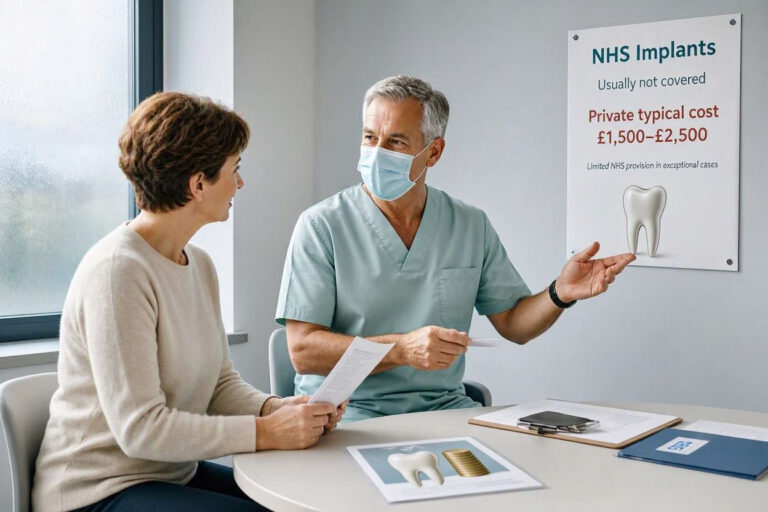
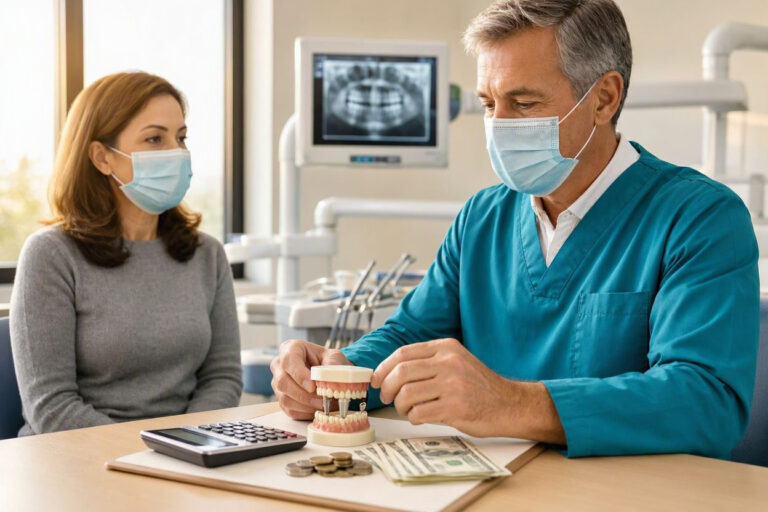
A single dental implant in Everett typically costs between 3,500and3,500and6,000. That includes the implant, abutment, and crown. But prices vary based on your specific needs.
Here is a realistic breakdown:
| Procedure | Typical Cost Range |
|---|---|
| Consultation and CT scan | 200−500 |
| Bone graft (if needed) | 500−2,000 |
| Implant placement surgery | 1,500−2,500 |
| Abutment | 300−600 |
| Custom crown | 1,200−2,000 |
| Total single implant | 3,500−3,500−6,000+ |
For a full arch (All-on-4), total costs range from 15,000to15,000to30,000 per arch.
Does Insurance Cover Implants?
It depends. Many dental insurance plans do not cover implants. But some are starting to. Even if your plan does not pay for the implant, it may cover parts like:
- The crown
- The extraction of the bad tooth
- The bone graft
- The CT scan
Important tip: Call your insurance company and ask for the exact numbers. Do not rely on assumptions.
Payment Options in Everett
Most dental offices in Everett offer:
- CareCredit (medical credit card, 6-12 months no interest)
- In-house membership plans (discounts for uninsured patients)
- Third-party financing (LendingClub, Alphaeon, Proceed Finance)
- Payment plans (monthly installments over 12-24 months)
Some offices offer discounts if you pay in full with cash or check. Always ask.
“I saved for two years. It was worth every penny. My implant has paid for itself compared to replacing bridges every decade.” — Mark T., South Everett
How to Choose the Right Implant Dentist in Everett
Your results depend heavily on who places the implant. Do not just pick the cheapest option. Do your homework.
Credentials to Look For
- DDS or DMD degree (standard dental degree)
- Surgical experience (implants are surgery)
- Continuing education in implant dentistry from places like the American Academy of Implant Dentistry (AAID) or the International Congress of Oral Implantologists (ICOI)
Questions to Ask Before Booking
- How many implants have you placed in your career? (Look for hundreds or thousands)
- Do you use 3D CT scanning for planning?
- What happens if my implant fails? Do you offer a warranty?
- Do you handle the entire process, or do you refer out for the crown?
- Can I speak to a former patient?
Types of Providers
| Provider Type | Pros | Cons |
|---|---|---|
| General dentist with implant training | Convenient, one location | May do fewer implants per year |
| Periodontist (gum specialist) | Expert in bone and gums | Requires separate crown dentist |
| Oral surgeon | Handles complex cases, sedation | Usually more expensive |
| Prosthodontist | Best for full-mouth reconstruction | Long wait times |
For a single implant in a straightforward case, a skilled general dentist is fine. For complex cases (multiple missing teeth, low bone, sinus issues), see a specialist.
Top Implant Dentists in Everett – What to Look For
While I cannot endorse specific offices, I can tell you what the best ones in Everett share:
- Online reviews with before/after photos
- Transparent pricing on their website
- Free or low-cost initial consultations
- Modern equipment (in-house CT scanner)
- Same-day crown options (CEREC)
Spend 30 minutes reading Google reviews for Everett implant dentists. Look for comments about pain management, follow-up care, and final aesthetics.
Recovery: What to Expect After Implant Surgery
This scares many people. But most patients are surprised by how easy the recovery is.
First 24 Hours
- Bite on gauze to stop bleeding
- Do not spit or use a straw (this can dislodge the blood clot)
- Apply ice packs to your face (20 minutes on, 20 off)
- Eat only cold soft foods (yogurt, smoothies, pudding)
- Take prescribed or OTC pain medication before the numbness wears off
Days 2 to 7
- Swelling peaks around day 2 or 3, then goes down
- Stick to warm soft foods (mashed potatoes, soup, eggs)
- Rinse gently with warm salt water after meals
- Do not brush the surgery site
- Avoid exercise, lifting, or bending over
Weeks 2 to 8
- Resume normal brushing but be gentle around the implant
- Avoid chewing on that side
- Return to work and normal activities
- Go to your follow-up appointment for suture removal
Long-term Healing (3 to 6 months)
You will barely notice the implant. But the bone is still growing around it. Avoid hard, sticky, or crunchy foods on that side until your dentist gives the green light.
When to call your dentist:
- Bleeding that does not stop after 2 hours
- Severe pain that medication does not touch
- Fever over 101°F (38.3°C)
- The implant feels loose at any time
Risks and Complications: Being Honest
No medical procedure is 100% risk-free. But implants have a success rate of 95% to 98% in healthy patients. Let us be realistic about the possible problems.
Common, Minor Issues
- Swelling and bruising (normal, fades in a week)
- Minor bleeding (normal for 1-2 days)
- Soreness around the site (manage with OTC pain relievers)
Uncommon but Possible Issues
| Complication | Likelihood | Solution |
|---|---|---|
| Implant fails to integrate | 2-5% | Remove implant, graft bone, try again |
| Infection (peri-implantitis) | <5% | Antibiotics, deep cleaning, sometimes removal |
| Nerve damage (numbness) | <1% | Usually temporary; rare with 3D planning |
| Sinus perforation (upper back teeth) | <1% | Repairs itself or minor surgery |
How to Reduce Your Risk
- Choose an experienced dentist who uses 3D CT scans
- Follow all aftercare instructions carefully
- Do not smoke during healing (nicotine restricts blood flow)
- Keep your follow-up appointments
- Brush and floss like your life depends on it
Caring for Your Dental Implant Long-Term
Implants do not get cavities. But they can get gum disease. And gum disease around an implant is called peri-implantitis. It is the number one cause of late implant failure.
Good news: care is simple.
Daily Home Care
- Brush twice a day with a soft toothbrush. Pay attention to the gum line around the implant.
- Floss daily. Use unwaxed floss or special implant floss with a stiff end.
- Use a water flosser (like Waterpik) on a low setting. This cleans under the bridge area if you have multiple implants.
- Avoid using metal scrapers or hard picks near the implant.
Professional Maintenance
See your dentist or hygienist every 6 to 12 months. They will:
- Check the implant for mobility
- Take x-rays every 1 to 2 years to check the bone level
- Clean around the implant with special plastic instruments (metal can scratch the surface)
What Shortens Implant Life
- Smoking or vaping
- Poor oral hygiene
- Skipping dental checkups
- Grinding or clenching your teeth without a night guard
- Uncontrolled diabetes or autoimmune diseases
“My hygienist says my implant looks as good as the day it was placed. That was 12 years ago. I just brush and floss like normal.” — Diane K., Everett
Dental Implants vs. Alternatives: A Clear Comparison
You have options. Let us see how implants stack up.
| Feature | Implant | Fixed Bridge | Removable Partial Denture | Full Denture |
|---|---|---|---|---|
| Looks natural | Excellent | Very good | Fair | Fair |
| Feels natural | Excellent | Good | Poor | Poor |
| Prevents bone loss | Yes | No | No | No |
| Affects healthy teeth | No | Yes (shaving down) | No (but can loosen) | No |
| Average lifespan | 20+ years | 7-10 years | 5-7 years | 5-7 years |
| Upfront cost | Higher | Medium | Lower | Lower |
| Long-term cost | Lower | Higher | Higher | Higher (adhesives, relines) |
Real Talk: When an Implant Might Not Be the Best Choice
Implants are great. But they are not for everyone in every situation.
Consider a bridge or denture if:
- You have a medical condition that makes surgery risky (severe uncontrolled diabetes, recent radiation to the jaw, certain autoimmune disorders)
- You take blood thinners and cannot stop them
- You have very limited budget right now and need an immediate solution
- You are not committed to good oral hygiene
That is fine. A good dentist will never pressure you into implants. They will explain all options and let you decide.
Finding Affordable Dental Implants in Everett
Let us be honest: implants are an investment. But “affordable” does not mean “cheap.” It means getting real value for your money.
Ways to Save
- Dental schools. The University of Washington School of Dentistry in Seattle is about 30 minutes from Everett. Dental students place implants under expert supervision for about 50% less. The only catch? Longer appointment times.
- Dental tourism. Some Everett residents travel to Mexico or Colombia. You can save 50-70%. But factor in travel costs and the risk if something goes wrong. No local follow-up care.
- In-house discount plans. Many Everett offices offer their own membership plans. Pay a yearly fee (300−500). Get 15-30% off all services, including implants.
- Negotiate. Ask for a cash discount. Some offices give 5-10% off if you pay upfront.
Watch Out For “Cheap” Implants
If a price sounds too good to be true, it probably is. Some clinics advertise “$999 implants.” Read the fine print. That usually does not include the crown, abutment, or CT scan. By the time you finish, you are back in the normal price range.
Red flags:
- No CT scan used
- Same-day implants without proper healing time
- No written warranty
- Dentist cannot show you many before/after photos
The Emotional Side of Restoring Your Smile
We have talked about bone, crowns, and costs. But there is another part of this story. How you feel.
Living with missing teeth is hard. Many patients tell me they stopped smiling in photos. They cover their mouth when they laugh. They avoid restaurants because they cannot chew.
Getting implants changes that. Slowly but surely.
One Everett patient, a 58-year-old retired teacher, told me: “I cried when I saw my new teeth. I had not felt whole in over a decade. My implant gave me back my laugh.”
This is not vanity. It is about participating in life without embarrassment. And that has real value.
Step-by-Step Checklist: Your Implant Journey in Everett
Use this simple checklist to stay on track.
3-6 months before surgery:
- Schedule consultations with 2-3 implant dentists
- Ask for written treatment plans with all costs
- Check your insurance coverage
- Apply for financing if needed
- Get any necessary medical clearance from your doctor
1 month before surgery:
- Schedule the surgery date
- Arrange time off work (2-3 days minimum)
- Stock up on soft foods (soup, yogurt, protein shakes)
- Fill any prescriptions
- Stop smoking (or at least reduce drastically)
Day of surgery:
- Arrange a ride home (if using sedation)
- Eat a light meal beforehand (unless told otherwise)
- Wear comfortable, loose clothing
- Bring headphones and music to relax
After surgery:
- Apply ice packs for first 24 hours
- Take pain medication before the numbness fades
- Sleep with your head elevated
- Do not spit, use straws, or smoke
- Call the dentist if something feels wrong
Frequently Asked Questions About Dental Implants in Everett
Q: How painful is getting a dental implant?
A: Most patients say it is less painful than a tooth extraction. The surgery itself is painless due to local anesthesia. Afterward, you may have mild soreness for a few days. Over-the-counter ibuprofen usually handles it.
Q: How long do dental implants last?
A: With good care, 20 years to a lifetime. The crown may wear out after 10-15 years and need replacement, but the implant post can last indefinitely.
Q: Can I get dental implants if I have gum disease?
A: Not yet. You must treat gum disease first. Once your gums are healthy, you can proceed with implants. Your dentist will help you with this step.
Q: Does insurance cover dental implants in Everett?
A: Some plans cover part of the cost. Many do not. Always call your insurance company for a pre-treatment estimate. Even if they do not cover the implant, they may cover the crown or the extraction.
Q: How long does the entire implant process take?
A: Usually 4 to 9 months from start to finish. This includes healing time. If you need a bone graft, add another 3 to 6 months.
Q: Can I get a same-day implant in Everett?
A: Yes, some offices offer same-day implants for select cases. This is called “immediate loading.” Not everyone is a candidate. Your dentist will tell you if you qualify.
Q: What is the success rate for dental implants?
A: Around 95% to 98% for healthy non-smokers. Smokers have a lower success rate (85-90%). Your dentist will discuss your personal risk factors.
Q: Can I eat normally after getting an implant?
A: After full healing (3-6 months), yes. You can eat anything. During healing, stick to soft foods and avoid chewing on that side.
Q: Are dental implants covered by Medicare or Medicaid?
A: Original Medicare does not cover dental implants. Washington State Apple Health (Medicaid) covers implants only in very limited cases (usually for minors or specific medical needs). Most adults pay out of pocket.
Q: What happens if my implant fails?
A: Your dentist will remove it (simple procedure). You may need a bone graft. After healing, you can try again with a new implant. Many offices offer a warranty or reduced fee for a replacement.
Additional Resource
For more unbiased, research-backed information on dental implants, visit the American Academy of Implant Dentistry (AAID) patient education page.
👉 Link: https://www.aaid.com/patients/index.html
This resource explains implant types, risks, and how to find a qualified implant dentist in your area.
Conclusion
Dental implants in Everett offer a safe, permanent, and natural-looking solution for missing teeth. The process takes several months and requires an upfront investment, but the long-term benefits—bone preservation, comfort, and confidence—far outweigh the temporary inconveniences. With the right dentist, realistic expectations, and good home care, your implant can last a lifetime.
Disclaimer: This article is for informational purposes only and does not constitute medical or dental advice. Always consult with a licensed dental professional in Everett for a personal examination and treatment plan. Individual results and costs vary. References to specific procedures or outcomes are based on general clinical experience and published research, not guarantees of your personal results.