Permanent Dentures Implants: The Real Guide to a Fixed Smile
Losing teeth can feel like losing a part of yourself.
You might avoid smiling in photos. You might stick to soft foods. You might even notice that your regular dentures click, slip, or rub against your gums until they are sore.
There is a better option.
Permanent dentures implants are changing how people think about replacing teeth. Unlike traditional dentures that sit on top of your gums, these solutions attach directly to dental implants. The result? Teeth that feel strong, look natural, and stay exactly where they belong.
But let us be clear about something upfront. The phrase “permanent” does not always mean what you think. And not everyone is a perfect candidate.
This guide walks you through everything you need to know. No unrealistic promises. No confusing dental jargon. Just honest, practical information to help you decide if this solution is right for you.
What Exactly Are Permanent Dentures Implants?
Let us start with a simple definition.
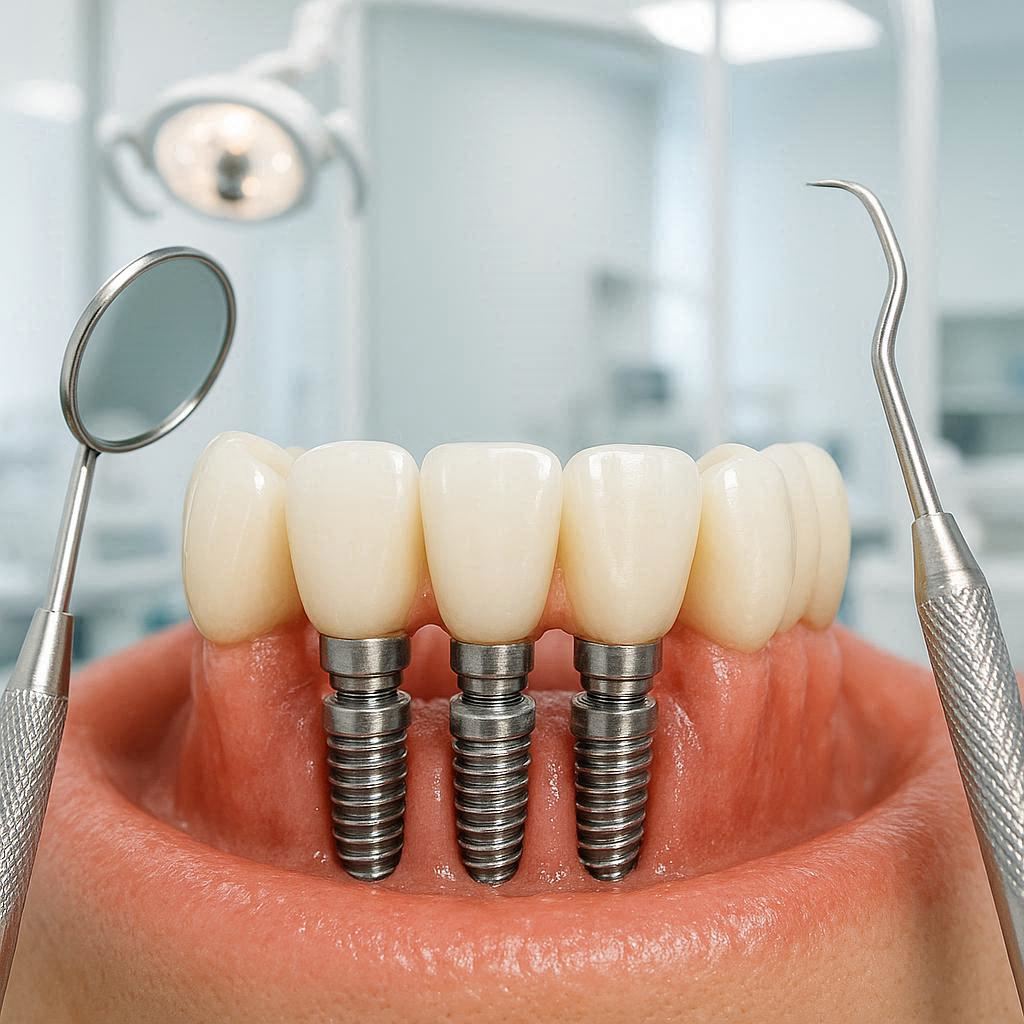
Permanent dentures implants are replacement teeth that attach securely to titanium posts placed inside your jawbone. Unlike snap-on dentures that you remove at night, these are fixed in place. A dentist cannot even remove them without special tools.
Think of them as a bridge between traditional dentures and individual dental implants.
| Feature | Traditional Dentures | Permanent Implant Dentures |
|---|---|---|
| Removal | Removed daily | Fixed in place |
| Stability | Moves with chewing | Rock-solid |
| Jawbone Health | Accelerates bone loss | Preserves bone density |
| Cleaning | Soak overnight | Brush like natural teeth |
| Speech | May cause slurring | Natural speech |
These restorations typically replace a full arch. That means all teeth on your upper jaw, all teeth on your lower jaw, or both.
Why “Permanent” Can Be Misleading
Here is where we need to be honest with you.
No dental restoration lasts forever. Even natural teeth eventually wear down. Permanent dentures implants can last 20 years or more with excellent care. But the prosthetic teeth themselves may need replacement after 5 to 10 years due to normal wear and tear.
The implants are designed to last a lifetime. The teeth attached to them are not.
This distinction matters. When dentists say “permanent,” they mean “non-removable by the patient.” Not “indestructible.”
How They Differ from Snap-In Dentures
Many people confuse permanent implant dentures with snap-in versions. They are not the same.
Snap-in dentures use locator attachments. You can pop them out for cleaning at night. Permanent versions are screwed or cemented onto a titanium bar. You cannot take them out yourself.
Snap-in pros: Easier to clean. Lower cost.
Snap-in cons: Still moves slightly. Requires daily removal.
Permanent pros: Most stable option. Feels most like natural teeth.
Permanent cons: Harder to clean underneath. Higher initial cost.
The Main Types of Permanent Implant Dentures
Not all permanent solutions look the same. Your dentist will choose a design based on your bone structure, budget, and aesthetic goals.
Fixed Hybrid Dentures
This is the gold standard for most patients.
A fixed hybrid uses a titanium framework that attaches to 4 to 6 implants. The framework holds a full arch of acrylic or porcelain teeth. Pink gum-colored material fills the space between the implants, hiding any missing bone or tissue.
Why patients love them:
- Extremely stable for chewing
- No palate coverage (upper arch)
- Natural feel against your tongue
Trade-offs:
- Bulkier than natural teeth
- Requires special flossing tools
All-on-4 and All-on-6
These are specific treatment methods, not different devices.
All-on-4 uses four implants per arch. Two are placed straight, and two are angled. The angle allows the implants to grab better bone, often avoiding the need for bone grafting.
All-on-6 uses six implants for even more support.
| All-on-4 | All-on-6 | |
|---|---|---|
| Number of Implants | 4 per arch | 6 per arch |
| Bone Graft Often Needed? | Less often | Sometimes |
| Stability | Excellent | Superior |
| Cost | Lower | Higher |
| Best For | Average bone density | Thin bone or heavy chewers |
A quote from Dr. Sarah Chen, a prosthodontist with 15 years of experience:
“I tell my patients that All-on-4 is like a four-legged stool. It works beautifully for most people. But if you grind your teeth or have very soft bone, All-on-6 provides better long-term security.”
Screw-Retained vs. Cemented
Both methods make the denture permanent, but they work differently.
Screw-retained: Small screws pass through holes in the denture and tighten into the implants. The dentist covers the screw holes with composite resin.
Pro: Easy to repair. No cement to trap bacteria.
Con: Screw holes may show if not placed perfectly.
Cemented: The denture cements onto abutments attached to the implants.
Pro: No visible screw holes. Looks more natural.
Con: Difficult to remove for repairs. Excess cement can cause gum disease.
Most specialists prefer screw-retained for lower arches and cemented for upper arches. But your specific anatomy will determine the best choice.
The Step-by-Step Procedure
Understanding the process reduces fear. Here is exactly what happens, from first consultation to final smile.
Phase 1: Initial Evaluation (1 to 2 visits)
Your dentist needs answers to three questions before moving forward.
- Do you have enough bone? A CT scan measures your jawbone thickness and height.
- Are your gums healthy? Active gum disease must be treated first.
- Can you heal properly? Conditions like uncontrolled diabetes or heavy smoking affect healing.
Important note for readers: Some clinics will place implants on the same day as extractions. This is called immediate loading. It is convenient, but not right for everyone. If you have infected teeth or poor bone quality, waiting 4 to 6 months for healing produces better results.
Phase 2: Bone Grafting (If Needed)
Approximately 40% of patients need some form of bone grafting.
The procedure sounds scarier than it is. Your dentist takes bone from a donor source or synthetic material and packs it into areas where your jaw has thinned. Healing takes 4 to 9 months.
Why grafting matters: Implants need a minimum of 10mm of bone height and 5mm of width. Without enough bone, implants fail.
Phase 3: Implant Placement Surgery
This is a surgical procedure, but you will not feel pain during it.
Your dentist administers local anesthesia or IV sedation. Then they make small incisions in your gums and drill precise holes for the implants. The titanium posts are screwed into these holes.
How long does it take?
- Single arch: 1.5 to 2.5 hours
- Both arches: 3 to 5 hours
Most patients receive a temporary fixed denture on the same day. This temporary is not as strong as the final version, but it allows you to eat soft foods and smile normally during healing.
Phase 4: Osseointegration (The Waiting Period)
Here is where many people get impatient.
Osseointegration means your bone grows tightly around the titanium implants. This process takes 4 to 6 months. Rushing it leads to failure.
During this time, you wear your temporary denture. You eat soft foods. You keep the area very clean.
Red flags to watch for:
- Increasing pain after the first week
- A loose implant (you will not feel this, but your dentist will check)
- Pus or swelling around the gums
Phase 5: Final Denture Placement
Once your dentist confirms the implants are fully integrated, they take new impressions. These impressions go to a dental laboratory.
The lab builds your permanent denture. This takes 3 to 5 weeks for quality work. Do not accept a one-week turnaround. Rushed work looks fake and fits poorly.
On placement day, your dentist attaches the final denture. You walk out with your permanent smile.
The Real Costs (No Hidden Numbers)
Let us talk about money. Permanent dentures implants cost more than traditional dentures. But the price has dropped significantly over the past decade.
Average Price Ranges in the United States
| Procedure | Low End | Average | High End |
|---|---|---|---|
| Single arch (All-on-4) | $15,000 | $25,000 | $35,000 |
| Both arches (All-on-4) | $28,000 | $45,000 | $65,000 |
| Single arch (All-on-6) | $20,000 | $32,000 | $45,000 |
| Bone grafting (per arch) | $800 | $2,000 | $4,000 |
| CT scan | $300 | $500 | $800 |
These prices typically include:
- The implants themselves
- The temporary denture
- The final fixed denture
- All surgical fees
- One year of follow-up care
What is usually not included:
- Extractions (add 150–300 per tooth)
- Sedation anesthesia
- Replacement of the prosthetic teeth after 5–10 years
Why Costs Vary So Much
You will see ads for $7,000 permanent dentures implants. Be very careful with these offers.
Low-cost clinics reduce expenses by:
- Using lower-quality implant brands
- Skipping the bone graft when one is needed
- Making the final denture in one day (compromised fit)
- Hiring less experienced surgeons
High-cost clinics charge more for:
- Board-certified prosthodontists
- Premium implant brands (Straumann, Nobel Biocare)
- Advanced imaging technology
- Longer warranties
A realistic recommendation: Do not shop for dental implants like you shop for a television. The cheapest option often fails within two years. The most expensive option may include things you do not need. Look for a provider in the middle range with excellent before-and-after photos.
Insurance and Financing
Most dental insurance plans cover only a small portion of implant treatment. You might receive 1,000to2,000 toward the procedure.
However, medical insurance sometimes covers bone grafting if tooth loss resulted from an accident or tumor removal.
Financing options to ask about:
- CareCredit (medical credit card)
- LendingClub
- In-house payment plans (many clinics offer 12-24 months interest-free)
The Pros and Cons (Honest Assessment)
You deserve a balanced view. Permanent dentures implants change lives, but they are not perfect.
The Advantages
1. You forget you are wearing dentures.
This is the number one thing patients say. The fixed denture becomes part of your mouth. No clicking. No slipping. No waking up without teeth.
2. You eat real food again.
People return to steak, whole apples, corn on the cob, and nuts. Biting force with permanent implants is about 80-90% of natural teeth. Traditional dentures deliver only 10-20%.
3. Your face keeps its shape.
Natural teeth stimulate your jawbone. When teeth go missing, the bone dissolves over time. This creates that sunken, aged appearance. Implants replace that stimulation and preserve your facial structure.
4. No adhesives, ever.
No more white paste, sticky powders, or embarrassing moments when your denture falls out during a meal. Your new teeth stay put.
5. Clear speech from day one.
Traditional dentures cover your palate, interfering with tongue movement. Permanent dentures (especially on the upper arch) leave your palate uncovered. You speak normally immediately.
The Disadvantages
1. The upfront cost is substantial.
Even with financing, $25,000 per arch is a significant investment. Some people simply cannot afford this solution.
2. Surgery carries risks.
Although rare, complications include infection, nerve damage (usually temporary), and implant failure. Smokers face double the failure rate of non-smokers.
3. You cannot fix problems at home.
If a screw loosens or a tooth chips, you must see your dentist. With snap-in dentures, you could wear your old pair temporarily. With permanent versions, you have no backup.
4. Cleaning is more difficult.
You cannot remove the denture to scrub it. Instead, you must thread special floss or use a water flosser underneath the prosthesis. Neglecting this leads to gum disease and implant failure.
5. Repairs are expensive.
Breaking a tooth on your permanent denture costs 300to800 to repair. Replacing the entire prosthetic arch after 10 years costs 5,000to15,000.
Daily Life with Permanent Implant Dentures
What does a typical day look like after treatment?
Morning Routine
You wake up with your teeth in place. No soaking. No adhesive. No searching for your denture cup.
You brush your denture just like natural teeth. Use a soft-bristled brush and non-abrasive toothpaste. Avoid whitening toothpastes that scratch acrylic.
The extra step: You must clean underneath the denture. Most patients use a water flosser (Waterpik) aimed at the gum line. Some use super floss or implant-specific brushes.
Eating
For the first two weeks after final placement, stick to soft foods. Your gums need to adapt.
After healing, you can eat almost anything. However, avoid:
- Hard candy and ice (can crack acrylic teeth)
- Sticky caramels and taffy (can loosen screws)
- Whole carrots and hard baguettes (bite with caution)
Sleeping
You sleep with your dentures in. This is a strange feeling at first, but you adapt quickly.
One important warning: If you grind your teeth at night, you must wear a nightguard. Grinding puts extreme force on the implants and can fracture the prosthetic teeth. Your dentist can make a custom guard for about $500.
Social Situations
No more hiding your smile. No more skipping dinners with friends. No more worrying about your denture clicking during a work presentation.
A patient named Margaret, age 67, shared this:
“I had worn traditional dentures for 12 years. I stopped going to restaurants because food had no flavor and I was embarrassed. After getting permanent implants, my son’s wedding was the first time in a decade that I ate dinner without fear. I danced. I laughed. I ate the steak. Best decision I ever made.”
Long-Term Maintenance
You will see your dentist once per year for a specific type of appointment.
At each annual visit, your dentist:
- Removes the denture (screw-retained only)
- Cleans the implants and gum tissue
- Checks for loose screws or cracks
- Replaces any worn components
- Takes X-rays to check bone levels
Screw-retained dentures need the screw holes refilled with composite resin each time. This adds about $150 to your annual visit.
Who Is a Good Candidate?
Not everyone qualifies for permanent dentures implants. Here are the factors that matter most.
Ideal Candidate Profile
- Missing all or most teeth on at least one arch
- Non-smoker (or willing to quit for 6 months)
- No active gum disease
- Enough bone density without grafting, or willing to undergo grafting
- Reasonable expectations about maintenance and lifespan
- Financial ability to pay for both initial treatment and future repairs
Challenging Candidate (But Still Possible)
- Heavy smoker (success rate drops from 95% to 80%)
- Uncontrolled diabetes (A1C above 7.0)
- Severe bone loss (requires extensive grafting)
- Bruxism (teeth grinding) (requires nightguard commitment)
- Immune disorders or radiation history (requires specialist evaluation)
Usually Not a Candidate
- Children or teenagers (jaw still growing)
- Patients with severe uncontrolled medical conditions
- Those with insufficient bone unwilling to graft
- Active IV bisphosphonate users (osteoporosis medication that interferes with healing)
Important note for readers: Do not let age stop you. People in their 80s and 90s successfully receive permanent dentures implants if they are healthy. Age is not a disease.
Success Rates and How Long They Last
Let us look at the data.
Implant Survival Rates
| Time Period | Success Rate |
|---|---|
| 1 year | 97-98% |
| 5 years | 95-96% |
| 10 years | 92-94% |
| 20 years | 85-90% |
These numbers reflect implant survival, meaning the titanium post stays fused to bone. The prosthetic teeth attached to the implants have different numbers.
Prosthetic Teeth Lifespan
| Material | Average Lifespan | Replacement Cost |
|---|---|---|
| Acrylic | 3-5 years | 3,000−7,000 |
| Acrylic with reinforcement | 5-8 years | 4,000−8,000 |
| Porcelain fused to metal | 8-15 years | 6,000−12,000 |
| Zirconia | 10-20 years | 10,000−18,000 |
What causes failure?
- Poor oral hygiene (80% of failures)
- Smoking (doubles failure rate)
- Teeth grinding
- Medical conditions that worsen over time
- Trauma or injury
The good news: even if one implant fails, the others usually compensate. A denture on four implants can lose one implant and still function well. A denture on two implants cannot.
Recovery and Healing Timeline
Understanding the recovery timeline reduces anxiety and helps you plan your life.
Days 1 to 3 (Right After Surgery)
What to expect: Swelling, mild to moderate discomfort, bruising. Your temporary denture may feel bulky.
Pain level: 3 to 6 out of 10 without medication. Manageable with prescribed pain relievers.
Diet: Only cold or lukewarm liquids and pureed foods. Think smoothies, yogurt, soup (cooled), pudding.
Do not: Spit, use a straw, smoke, or touch the surgical site.
Days 4 to 14
What to expect: Swelling peaks around day 3 then subsides. Stitches may dissolve or be removed at day 10. You start feeling human again.
Pain level: 1 to 3 out of 10. Most patients stop strong pain meds by day 5.
Diet: Soft foods like scrambled eggs, mashed potatoes, oatmeal, cottage cheese.
Cleaning: Rinse with warm salt water after every meal. No brushing near the incisions.
Weeks 3 to 8
What to expect: Gums heal completely. The implants feel stable. You adapt to your temporary denture.
Pain level: Zero to mild occasional soreness.
Diet: Most soft-to-medium foods. Avoid hard, crunchy, or sticky items.
Cleaning: Start gently brushing your denture and using a water flosser on low setting.
Months 4 to 6 (Osseointegration)
What to expect: No discomfort. The implants are fusing to bone. You cannot feel this happening. Continue wearing your temporary.
Diet: Almost normal, but still avoid very hard foods.
Cleaning: Normal hygiene routine established.
After Final Placement (Month 6-ish)
What to expect: Adjustment period to your permanent denture. It may feel different than your temporary. Minor bite adjustments are common.
Diet: Gradual return to all foods over 2-4 weeks.
Cleaning: Full routine with floss threaders or water flosser.
Permanent Dentures Implants vs. Alternative Options
You owe it to yourself to compare all reasonable options. Here is how permanent implant dentures stack up against other solutions.
| Solution | Upfront Cost | Lifespan | Stability | Removable? | Bone Preservation |
|---|---|---|---|---|---|
| Traditional dentures | 1,500−5,000 | 5-7 years | Poor | Yes | None (bone loss continues) |
| Snap-in implant dentures | 8,000−15,000 | 10-15 years (implants) | Good | Yes (daily) | Excellent |
| Permanent implant dentures | 15,000−35,000 | 20+ years (implants) | Excellent | No | Excellent |
| Individual implants (full arch) | 40,000−60,000 | Lifetime | Superior | No | Superior |
| Traditional bridge (partial arch) | 3,000−8,000 | 10-15 years | Good | No | Fair |
Which Option Is Right for You?
Choose traditional dentures if: You have a very limited budget, cannot undergo surgery for medical reasons, or want a temporary solution.
Choose snap-in dentures if: You want stability but prefer to remove your dentures for cleaning at night. You also want the lowest-cost implant option.
Choose permanent dentures implants if: You never want to remove your teeth, want maximum stability, and can afford the higher cost.
Choose individual implants if: You have the budget and enough bone for 10-14 implants. This is the closest replica of natural teeth but costs significantly more.
Common Questions (Answered Honestly)
Let us address the questions that keep people awake at night.
Do they look like real teeth?
Yes, when made by a skilled lab. The best permanent dentures implants use multi-layered acrylic that mimics natural enamel. However, up close, a dentist can tell the difference. The pink gum portion looks slightly uniform compared to natural gum tissue.
Will they feel like my natural teeth?
No, but they feel close.
Natural teeth have ligaments that provide sensory feedback. Implants lack these ligaments. You will feel pressure when chewing, but not the same fine sensation. Most patients describe the feeling as “solid but different.”
Can I get them on the NHS or Medicare?
In the United States, Medicare does not cover dental implants. Medicaid coverage varies by state and is usually limited.
In the UK, the NHS only covers implants in extreme cases (cancer, congenital defects). Most patients go private.
What if an implant fails?
Your dentist removes the failed implant, allows the site to heal for 3-6 months, and places a new one. The denture continues to function on the remaining implants during this time. There is usually no additional cost if failure happens within the first year (warranty dependent).
Is the surgery painful?
During the procedure, you feel nothing except the initial injection of numbing medication. Most clinics offer sedation, so you sleep through everything.
After surgery, you experience significant discomfort for 2-3 days. Pain medication controls it well. By day 5, most patients switch to over-the-counter ibuprofen.
Can I get both arches at once?
Yes. Many patients receive permanent dentures implants on both upper and lower jaws in a single surgery. The recovery is harder than one arch. Eating is very difficult for the first two weeks because both jaws are healing. But you save money and time compared to separate surgeries.
How do I clean underneath?
You use three tools:
- Water flosser (aim the stream under the denture)
- Super floss (has a stiff end to thread under)
- Interdental brushes (small cone-shaped brushes)
Your dentist will teach you the technique. It takes 2-3 minutes once you master it.
Red Flags: When to Walk Away from a Provider
Not all implant dentists are created equal. Watch for these warning signs.
**Red Flag #1: “Same-day teeth for 7,000″∗∗Realisticsame−dayteethexist.Realisticsame−dayteethfor7,000 do not. That price barely covers the cost of quality implants and a lab fee. Something is being cut.
Red Flag #2: No CT scan before surgery
Placing implants without a 3D CT scan is like building a house without a blueprint. Any dentist who skips this step is guessing. Guessing leads to nerve damage and implant failure.
Red Flag #3: Pressure to decide immediately
Legitimate dentists want you to think it over. High-pressure sales tactics belong in used car lots, not medical offices.
Red Flag #4: No before-and-after photos of similar cases
If a dentist cannot show you photos of permanent dentures implants they have placed, they have not placed many. Ask specifically for cases with similar bone loss to yours.
Red Flag #5: Vague answers about warranties
A good provider offers at least a 1-year warranty on the implants and prosthetic teeth. The best offer 5 years or more. If they cannot explain exactly what is covered and for how long, keep looking.
How to Choose the Right Provider
Finding the right dentist is more important than finding the right price.
Step 1: Look for the Right Credentials
General dentists can place implants. But complex cases deserve specialists.
Prosthodontist: Expert in replacing teeth. Best for the final denture design.
Oral surgeon: Expert in surgery. Best for difficult bone cases or nerve proximity.
Periodontist: Expert in gums and bone. Best if you have gum disease history.
The ideal team includes a prosthodontist designing the teeth and an oral surgeon placing the implants.
Step 2: Ask These 10 Questions
Print this list and bring it to your consultation.
- How many full-arch implant dentures have you placed in the last year?
- What brand of implants do you use and why?
- What is your success rate at 5 years?
- Who handles the laboratory work? In-house or external lab?
- What happens if an implant fails during healing?
- Do you provide a temporary denture on the day of surgery?
- How many follow-up visits are included in the fee?
- What is your policy on after-hours emergencies?
- Can I speak to three former patients with similar cases?
- Is the quoted fee all-inclusive or are there extras?
Step 3: Meet the Laboratory Technician
The person who makes your teeth matters as much as the surgeon. A great dentist with a bad lab produces bad results.
Ask to visit the lab or at least see photos of their work. The technician should have at least 5 years of experience specifically in implant prosthetics.
Step 4: Get a Second Opinion
Always. Always. Always.
Pay 200−400 for a second consultation with a different specialist. If both providers recommend the same treatment plan, you can move forward with confidence. If they disagree, get a third opinion.
Preparing for Surgery: A Checklist
Good preparation leads to smooth recovery.
One Month Before
- Stop smoking or using nicotine products
- Complete any required dental work (fillings, gum treatment)
- Arrange for someone to drive you home on surgery day
- Stock up on soft foods (applesauce, yogurt, protein shakes, pudding)
- Fill prescriptions for pain medication and antibiotics
One Week Before
- Confirm time off work (minimum 3 days, preferably 5-7)
- Buy a water flosser and practice using it
- Purchase ice packs (gel packs that freeze flexible)
- Wash your pillowcases and prepare extra for drooling
Day Before
- Eat a normal dinner (you will not want to eat much tomorrow)
- Do not drink alcohol (interferes with anesthesia)
- Set out loose, comfortable clothing for surgery day
- Charge your phone and tablet (recovery involves boredom)
Morning of Surgery
- Shower and brush your natural teeth (skip flossing)
- Take only approved medications with a small sip of water
- Wear short sleeves (for blood pressure cuff)
- Remove contact lenses, jewelry, and nail polish
Living Without Teeth (If Extractions Come First)
Some patients need all teeth extracted, then wait 4-6 months for implants. This is called a two-stage approach.
Living without teeth during this period is challenging. Here is how to manage.
Eating without teeth:
- Smoothies with protein powder
- Blended soups
- Mashed vegetables
- Refried beans
- Cottage cheese and Greek yogurt
- Scrambled eggs (mashed with a fork)
Appearance without teeth:
You have two options. Wear a traditional denture during the healing period (least expensive). Or wear nothing and use a face mask for public outings (free but emotionally difficult).
Most patients choose the temporary denture. Yes, it will fit poorly as your gums shrink. Yes, you will use adhesive. But it beats hiding at home for six months.
Speech without teeth:
Your tongue needs teeth to make certain sounds. Without them, words like “sixty” and “seventy” sound mushy. Practice reading aloud for 10 minutes daily. Your tongue adapts faster than you expect.
The Emotional Journey
The physical aspects of permanent dentures implants are well-documented. The emotional journey is not. Let us fix that.
Stage 1: Hope Mixed with Fear
You have hated your teeth for years. Now there is a solution. But surgery is scary. The cost is overwhelming. What if it fails?
This anxiety is normal. Almost every patient feels it.
Stage 2: Regret (Days 1 to 5 After Surgery)
“Why did I do this?” you will think, mouth swollen, eating through a syringe, regretting every decision.
This passes. Every patient goes through this stage. Remind yourself that the worst part is only a few days long.
Stage 3: Impatience (Months 1 to 4)
Healing feels slow. You are tired of soft food. You just want this to be over.
This stage is the hardest because it drags on. The best strategy is distraction. Focus on other areas of your life. The healing happens whether you obsess over it or not.
Stage 4: Joy (Day of Final Placement)
You look in the mirror. You see teeth that look like they belong to a younger, healthier version of yourself. You cry. Most patients do.
Stage 5: Normalization (Months 6 to 12)
Your new teeth stop feeling new. They just feel like your teeth. You eat, talk, and smile without thinking about it.
This is the goal. To stop thinking about your teeth entirely.
Frequently Asked Questions (FAQ)
How long does the entire process take from start to finish?
Typical timeline is 6 to 9 months. This includes healing time for osseointegration. Complex cases with bone grafting take 12 to 18 months.
Can I get permanent dentures implants on just the bottom arch?
Yes. Many patients choose this because lower traditional dentures are notoriously unstable. The upper denture often stays in place better naturally.
Will my insurance cover any part of this?
Most dental insurance caps out at 1,000−2,000 annually. Some medical insurance contributes if tooth loss resulted from accident, tumor, or congenital condition. Always ask for a pre-determination of benefits.
What happens if I lose one of the prosthetic teeth?
Call your dentist immediately. For screw-retained dentures, they remove the whole arch, repair the tooth in the lab, and reattach. For cemented dentures, repair is more difficult and may require a new denture.
Do the implants ever fail after 10 years?
Yes, but rarely. Implant failure after osseointegration is called late failure. Causes include poor oral hygiene, uncontrolled medical conditions, or trauma. Success rates at 20 years remain above 85%.
Can I use a Waterpik with permanent dentures implants?
Absolutely. In fact, a water flosser is the best tool for cleaning underneath the denture. Use it on medium pressure once daily.
Will I have a lisp with permanent dentures?
You might for the first week. Your tongue needs to adapt to the new shape of the roof of your mouth. Reading aloud speeds up this adaptation. Most lisps resolve within 7-10 days.
How often do the screws loosen?
In well-made screw-retained dentures, loosening occurs in about 5-10% of patients per year. Your dentist checks and tightens them at your annual visit.
Is there an age limit for this procedure?
No. Healthy patients in their 90s have received permanent dentures implants. Age alone does not disqualify you. Overall health matters far more.
What if I cannot afford the full amount right now?
Many clinics partner with financing companies offering 12-60 month payment plans. Some dental schools offer reduced fees (up to 50% off) in exchange for being treated by supervised residents.
Additional Resources
For readers who want to dig deeper into this topic, here are trusted sources for further information:
🔗 Recommended Resource:
American College of Prosthodontists – Patient Education Library (Search “implant dentures” for free guides and provider directory)
Other valuable resources:
- ClinicalTrials.gov – Search for implant studies recruiting patients near you
- YouTube: “Prosthodontist explains All-on-4” – Look for videos from university dental schools (trusted over private clinics)
- Local dental school – Most offer free consultations for implant candidates
Final Checklist Before You Decide
Before you sign any treatment plan, confirm these five things:
- ✅ I have received at least two opinions from different providers.
- ✅ I understand the difference between the temporary and final denture.
- ✅ I know exactly what my total out-of-pocket cost will be (including extractions, grafting, anesthesia, and future replacements).
- ✅ I have a plan for financing that does not strain my monthly budget.
- ✅ I am committed to the oral hygiene routine (2-3 minutes of special cleaning daily).
If you checked all five, you are ready to move forward.
Conclusion (Summary in Three Lines)
Line 1: Permanent dentures implants replace a full arch of missing teeth with a fixed, non-removable prosthesis attached to 4-6 titanium implants, offering superior stability and bone preservation compared to traditional dentures.
Line 2: The procedure costs 15,000−35,000 per arch, requires 6-9 months of healing, and demands daily cleaning with special tools, but provides 85-90% of natural biting force and 20+ years of implant lifespan.
Line 3: Ideal candidates are non-smokers with adequate bone density or willingness to graft, realistic expectations about maintenance, and the financial ability to cover both initial treatment and future prosthetic replacements.
Disclaimer
This article is for informational purposes only and does not constitute medical advice. Dental implant outcomes vary based on individual health, anatomy, and compliance with post-operative instructions. The author and publisher are not responsible for any decisions made based on this content. Always consult with a licensed dentist or prosthodontist for a personal evaluation before undergoing any dental procedure. Prices and success rates mentioned are averages and may not reflect your specific situation or geographic location.