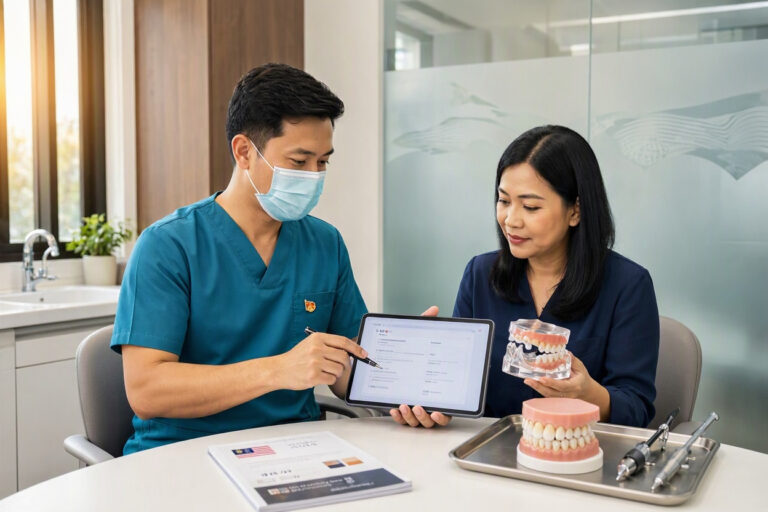
Sedation Implant Dentistry
If the thought of dental implants makes your hands sweat and your heart race, you are not alone. Millions of people avoid necessary dental work simply because they fear the sounds, the needles, or the feeling of being trapped in a chair.
Here is the good news: Sedation implant dentistry has changed everything.
Today, you can sleep through your entire implant procedure and wake up with the foundation for a brand-new smile. No shaking. No tears. No memory of the surgery.
This guide walks you through everything you need to know. We will cover the types of sedation, who needs it, what the process looks like, the real costs, and how to prepare. No complex medical jargon. Just honest, practical information from a friendly perspective.
Let us take the fear out of the equation.
What Is Sedation Implant Dentistry? A Simple Explanation
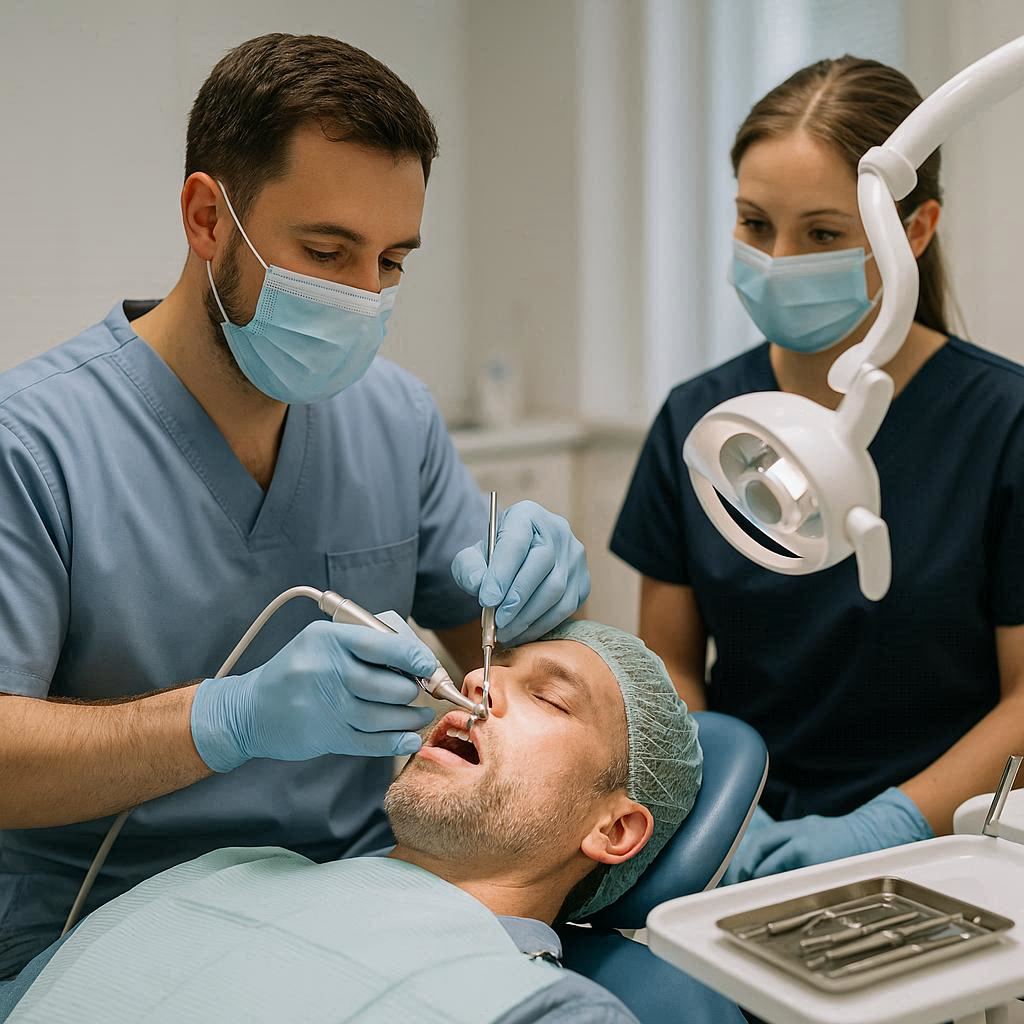
Sedation implant dentistry combines two things: dental implant surgery and medication-induced relaxation.
In simple terms, it means receiving dental implants while under the effects of a sedative. You remain technically alive and breathing on your own, but you feel deeply calm, relaxed, or even completely asleep depending on the level used.
Why Do People Choose This?
Fear is the number one reason. Other reasons include:
- A low pain threshold
- Sensitive gag reflex
- Difficulty getting numb with standard anesthesia
- Need for extensive work (multiple implants)
- Previous traumatic dental experiences
- Physical limitations (back or neck pain when sitting still)
“I never thought I could get implants. The sound of the drill alone made me panic. With sedation, I closed my eyes and woke up when it was all over. Life-changing.” — Real patient feedback
Does Sedation Replace Local Anesthesia?
No. This is a critical point.
Sedation relaxes you or puts you into a sleep-like state. However, the implant site itself still needs to be completely numb. Dentists always combine sedation with local anesthesia (numbing shots) to block pain signals. Sedation handles the anxiety and the memory. Local anesthesia handles the physical pain.
The Different Levels of Sedation for Implants (From Mild to Deep)
Not all sedation is the same. Depending on your anxiety level and the complexity of your case, your dentist will recommend one of these four levels.
Minimal Sedation (Awake but Relaxed)
You remain fully awake and aware of your surroundings. However, you feel deeply at ease. You can respond to questions and follow instructions.
- Method: Usually a pill (like Halcion or Valium) taken about an hour before surgery.
- Best for: Mild anxiety, single implant, short procedures.
- Memory effect: You remember most of the procedure but do not care about it.
Moderate Sedation (Conscious Sedation)
You drift in and out. You might slur your words slightly. You are conscious enough to respond to touch or verbal cues, but you do not remember much afterward.
- Method: Nitrous oxide (laughing gas) or an IV sedative.
- Best for: Moderate to high anxiety, multiple implants.
- Memory effect: Little to no memory of the surgery.
Deep Sedation
You are on the edge of consciousness but can still be woken up if needed. You will not feel anything nor remember the procedure.
- Method: IV medications administered by a specialized dental anesthesiologist.
- Best for: Severe fear, lengthy surgeries (full mouth reconstruction).
- Memory effect: Zero memory.
General Anesthesia (Complete Sleep)
You are fully unconscious. You do not breathe on your own without monitoring. This is typically reserved for hospital settings or advanced surgical centers.
- Method: IV or inhaled gas.
- Best for: Complex medical cases, patients with special needs.
- Memory effect: Complete amnesia.
Comparison Table: Levels of Sedation for Dental Implants
| Level | Awareness | Memory of Procedure | Best For | Typical Method |
|---|---|---|---|---|
| Minimal | Fully awake | Yes, but relaxed | Single implant | Oral pill |
| Moderate | Drowsy, responds | Little to none | 2-4 implants | Nitrous oxide or IV |
| Deep | Near unconscious | None | Full mouth reconstruction | IV sedation |
| General | Fully asleep | None | Hospital cases | IV or gas |
Important Note: Only trained professionals should administer deep sedation or general anesthesia. Always verify your dentist’s credentials before booking.
Who Is an Ideal Candidate for Sedation During Implant Surgery?
Almost anyone can benefit from sedation. However, some people are better candidates than others.
You Are a Good Candidate If:
- You have dental phobia (scoring high on the Modified Dental Anxiety Scale).
- You need multiple implants (four, six, or even ten).
- You have a bad gag reflex that makes impressions or drilling difficult.
- You struggle to get numb due to “hot” teeth or anatomical variations.
- You have sensitive teeth or gums.
- You want to complete everything in one long visit instead of multiple stressful short visits.
You Might Need Extra Evaluation If:
- You have sleep apnea (sedation can relax throat muscles further).
- You are pregnant (sedation is generally avoided unless absolutely necessary).
- You have severe heart or lung conditions.
- You take chronic opioids or benzodiazepines (tolerance issues).
- You have a BMI over 40 (airway management is more complex).
A responsible dentist will always request a medical history review and sometimes a pre-sedation physical from your primary doctor.
Types of Sedation Methods Used in Implant Dentistry (Detailed)
Let us dive deeper into the three most common methods you will encounter. Each has pros, cons, and ideal use cases.
1. Oral Sedation (The Pill Method)
You receive a prescription pill to take at home, usually an hour before your appointment. The most common drugs are triazolam (Halcion), lorazepam (Ativan), or zaleplon.
How it works:
The medication depresses your central nervous system just enough to melt away anxiety.
Pros:
- No needles for the sedation itself
- Very affordable compared to IV sedation
- Good for mild to moderate fear
Cons:
- Hard to predict the effect (some people feel too sleepy; others not enough)
- You will need someone to drive you home
- Cannot adjust the dose once you take it
Pro tip: Test the medication on a normal day (not before surgery) with your dentist’s approval to see how your body reacts.
2. Nitrous Oxide (Laughing Gas)
You breathe a mix of oxygen and nitrous oxide through a small mask over your nose. It works within minutes and wears off just as fast.
How it works:
It boosts GABA and endorphins in your brain, creating a floating, happy feeling.
Pros:
- You can drive yourself home after 15-20 minutes (wears off fast)
- You remain in control and awake
- Safe for children and most adults
- Dose can be adjusted in real time
Cons:
- Does not work well for severe phobia
- You still remember most of the procedure
- Not ideal for procedures longer than 1.5 hours
3. IV Sedation (The Gold Standard for Implant Cases)
A small catheter goes into a vein in your arm or hand. The dentist or anesthesiologist pushes medications like midazolam (Versed) or propofol (the same drug used for colonoscopies).
How it works:
The drug reaches your brain in seconds. You drift into a comfortable, dream-like state.
Pros:
- Highly predictable and adjustable
- You will remember almost nothing
- Works for 2-6 hour procedures
- Very safe when administered by a trained professional
Cons:
- More expensive (adds 400–800 to your bill)
- Requires fasting (no food or drink for 6–8 hours)
- Requires a companion to drive you home
- Small risk of side effects (nausea, dizziness)
Quick Recommendation Guide
| Your Situation | Best Sedation Method |
|---|---|
| One implant, a little nervous | Oral pill or nitrous oxide |
| Two to four implants, very scared | IV sedation |
| Full mouth implants, extreme fear | Deep IV sedation or general anesthesia |
| On a budget but nervous | Oral sedation |
| Need to drive yourself after | Only nitrous oxide (but not for high fear) |
The Step-by-Step Process: What Happens on Surgery Day
Knowing exactly what will happen reduces anxiety. Here is a realistic timeline of a typical sedation implant appointment.
Before the Appointment (Preparation)
- Fasting: If you chose IV sedation, do not eat or drink anything for 6 hours beforehand (except small sips of water for medications).
- Medication check: Tell your dentist about all supplements, vitamins, and drugs.
- Companion: Arrange for a trusted adult to drive you and stay with you for the first few hours at home.
- Clothing: Wear loose, comfortable clothes with short sleeves (for IV access).
Arrival and Setup (First 30 Minutes)
- You sign consent forms. Do not sign anything if you already took an oral sedative—bring someone to help you read.
- A nurse or assistant checks your blood pressure, heart rate, and oxygen levels.
- For IV sedation: A small needle goes into your arm. It feels like a quick pinch.
- The sedative starts. Within 60 seconds, you feel warm, heavy, and wonderfully calm.
The Implant Procedure (1 to 4 Hours)
While you are sedated:
- The dentist injects local anesthesia into your gum (you barely notice or remember).
- They make small incisions in your gum tissue.
- They drill precise holes into your jawbone.
- They place the titanium implant posts into those holes.
- They may place a healing cap or temporary crown.
- They suture (stitch) the gum tissue around the implants.
And you? You are either dreaming peacefully or staring at the ceiling without a care in the world.
Waking Up (Recovery Room)
After the last stitch:
- The sedative is stopped.
- You wake up gradually over 15 to 30 minutes.
- You will feel groggy, possibly a little dizzy.
- Your mouth is numb from the local anesthesia.
- You rest in a recovery chair until you can walk steadily.
Going Home
A staff member helps you to your companion’s car. You will not remember the drive. You will sleep for several more hours at home.
Important: Do not operate any machinery, sign legal documents, or make important decisions for 24 hours after sedation.
Recovery After Sedation Implant Surgery (Day by Day)
The sedation itself wears off within 24 hours. However, your mouth needs time to heal from the implant surgery. Here is a realistic timeline.
Day of Surgery (The Sleepy Day)
- Sedation effects: Grogginess, minor nausea (less than 10% of patients), dry mouth.
- Pain level: 2–4 out of 10 once local anesthesia wears off (2-3 hours after).
- What to do: Rest completely. Sleep with your head elevated. Use ice packs on your face for 15 minutes on, 15 off.
- Eating: Only cold, soft foods like yogurt, smoothies, or pudding.
- Don’t: Spit, use a straw, or rinse your mouth.
Day 1 to 3 (The Swelling Phase)
- Sedation effects: Gone completely after 24 hours.
- Pain level: 3–5/10. Take prescribed painkillers or ibuprofen.
- Swelling: Peaks on day 2. Your face may look like a chipmunk.
- Oral care: Gentle saltwater rinses (do not swish hard). No brushing near the implants.
- Food: Continue soft foods. Add scrambled eggs, mashed potatoes, oatmeal.
Day 4 to 7 (The Turning Point)
- Pain level: 1–3/10.
- Swelling: Goes down noticeably.
- Activity: You can return to desk jobs or light work.
- Oral care: Begin very gentle brushing with a soft toothbrush. Avoid the surgical sites.
Week 2 to 6 (Quiet Healing)
- Pain: Almost none.
- Activity: Full normal activity, including light exercise (no heavy lifting or contact sports).
- Checkup visit: Your dentist removes sutures and checks healing.
- What you feel: A strange awareness of the implants but no real pain.
Long-term Recovery (Osseointegration)
The implants fuse with your jawbone over the next 3 to 6 months. This is called osseointegration. You live normally during this time. You just cannot put heavy chewing pressure on the implants until your dentist gives the green light.
Recovery Timeline Summary Table
| Time Period | Sedation Effects | Pain Level | Eating | Activity Level |
|---|---|---|---|---|
| Day of surgery | High (groggy) | 2-4/10 | Cold liquids, yogurt | Bed rest |
| Days 1-3 | None | 3-5/10 | Soft foods only | Light home rest |
| Days 4-7 | None | 1-3/10 | Semi-soft foods | Desk work okay |
| Week 2-6 | None | 0-2/10 | Almost normal | Normal life |
| Month 3-6 | None | 0/10 | Full diet | Full activity |
Benefits of Choosing Sedation for Dental Implants
Why go through the trouble and expense of sedation? Here are the real, life-changing benefits.
1. Complete Amnesia (You Forget the “Trauma”)
Your brain simply does not record the procedure. No memory of drilling, pressure, or sounds. For phobic patients, this is priceless.
2. Fewer Appointments
Without sedation, some patients need 4–6 short visits because they cannot tolerate long sessions. With sedation, your dentist can place multiple implants in a single 2–3 hour appointment. Less time off work. Less repeated anxiety.
3. Better Work from the Dentist
When you are not flinching or gagging, the dentist works faster and more precisely. No sudden movements. No interrupted drilling. This leads to better implant placement and fewer complications.
4. Reduced Gag Reflex
If you gag when instruments touch the back of your mouth, sedation suppresses that reflex almost completely.
5. Lower Blood Pressure and Heart Rate
Fear raises your blood pressure. Sedation lowers it, making the surgery safer, especially for older adults or those with heart concerns.
6. Faster Perceived Recovery
Because you remember nothing, many patients feel like they healed “in no time.” The psychological burden disappears.
“I had four implants placed under IV sedation. I blinked, and the doctor said ‘all done.’ I actually asked when we were going to start.” — Verified patient review
Risks and Side Effects (Honest and Realistic)
No medical procedure is 100% risk-free. Let us talk honestly about what can go wrong. None of this is common, but you deserve to know.
Common Side Effects (More than 10% of patients)
- Drowsiness (expected, not a side effect)
- Dry mouth
- Slight nausea (especially with IV sedation or narcotic painkillers)
- Dizziness upon standing up too fast
Less Common Side Effects (1% to 10% of patients)
- Headache (usually resolves with hydration and rest)
- Paradoxical reaction (sedatives make you agitated or emotional instead of calm — very rare, more likely in children or elderly)
- Prolonged sleepiness (lasting more than 12 hours)
Rare but Serious Risks (Less than 0.5%)
- Respiratory depression (breathing becomes too slow — monitored with pulse oximetry)
- Allergic reaction to sedative medications
- Aspiration (stomach contents enter the lungs — prevented by fasting)
- Cardiac complications in patients with severe preexisting conditions
How Dentists Minimize These Risks
- Continuous monitoring of heart rate, blood pressure, and blood oxygen
- Emergency cart with reversal agents (Flumazenil for benzodiazepines, Naloxone for opioids)
- Requiring fasting before IV sedation
- Taking a thorough medical history
Note: If you have sleep apnea, always mention it. Your dentist may need to use a lower dose or monitor you with capnography (a device that measures carbon dioxide).
Cost of Sedation Implant Dentistry (What You Will Really Pay)
Money is a major concern. Let us break down real-world numbers in US dollars. Keep in mind that prices vary by region and clinic.
The Implant Itself (Without Sedation)
- Single implant with crown: 3,000–3,000–6,000
- Multiple implants (snap-on denture): 7,000–7,000–15,000 per arch
- Full mouth fixed implants (All-on-4): 20,000–20,000–45,000 per arch
The Sedation Fees (Added to the Above)
| Sedation Type | Typical Cost (per session) |
|---|---|
| Oral sedation (pill) | 150–300 |
| Nitrous oxide (laughing gas) | 100–250 per hour |
| IV sedation (moderate level) | 400–800 per session |
| Deep sedation / General anesthesia | 800–1,500 per session |
Total Example Costs
- Single implant with oral sedation: 3,150–6,300
- Three implants with IV sedation: 6,000–12,000 + 400−800 = 6,400–12,800
- Full arch All-on-4 with deep sedation: 20,000–45,000 + 1,000=21,000 – $46,000
Does Insurance Cover Sedation for Implants?
Usually, no. Most dental insurance plans consider sedation for anxiety “not medically necessary.” However, some plans cover it if:
- You have a documented medical need (e.g., severe gag reflex, developmental disability)
- Your dentist submits a prior authorization with detailed notes
Medical insurance might cover sedation if the implant surgery follows an accident or tumor removal. Check with your provider.
Ways to Make It Affordable
- Dental savings plans (discount plans, not insurance)
- CareCredit or other medical credit cards (6-12 months interest-free)
- In-house membership plans (some clinics offer sedation packages for 50–100/month)
- Dental schools (significant discounts, but longer appointments)
How to Choose the Right Sedation Dentist for Implants
Not every dentist offers sedation. Even fewer offer IV sedation. Here is a checklist to find a qualified provider.
Credentials to Look For
- DDS or DMD degree (standard)
- PALS or ACLS certification (advanced cardiac life support)
- State sedation permit (minimum level 2 for oral sedation, level 3 or 4 for IV)
- Board certification from the American Dental Society of Anesthesiology (ADSA) — ideal for deep sedation
Questions to Ask Before Booking
- “Who administers the sedation? You, a nurse, or a separate anesthesiologist?”
- “What monitoring equipment do you use during the procedure?”
- “What is your complication rate with sedation?”
- “Can you give me a total estimated cost in writing, including the sedation fee?”
- “What happens if I need more sedation during the procedure?”
- “Do you have a backup plan if the sedative doesn’t work well on me?”
Red Flags to Avoid
- A dentist who offers IV sedation without pulse oximetry monitoring.
- A clinic that does not require fasting before deep sedation.
- Pushy upselling (“You need sedation or we won’t treat you” without valid reason).
- No written consent form specifically for sedation.
Your safety first: Never choose a dentist based on price alone for sedation. Cutting corners on sedation can be dangerous.
Sedation Implant Dentistry vs. Traditional Implant Surgery (Head-to-Head)
Let us compare the two approaches side by side.
| Factor | Traditional (No Sedation) | With Sedation |
|---|---|---|
| Anxiety level | High for phobic patients | Very low to none |
| Memory of surgery | Full memory | Little to none |
| Procedure length | Often split into multiple visits | Combined into 1-2 visits |
| Gag reflex | Fully active | Suppressed |
| Cost | Lower (no sedation fee) | Higher (+150to1,500) |
| Recovery perception | Feels longer due to stress | Feels faster |
| Need for companion | No | Yes (for IV sedation) |
| Availability | Every dentist | Specialist sedation dentists only |
Which One Is Right for You?
Choose traditional if:
- You feel only mild nervousness (butterflies, not panic attacks)
- You are on a very tight budget
- You only need one small implant
Choose sedation if:
- You have postponed implants for years due to fear
- You need multiple implants or bone grafting
- You have a strong gag reflex
- You can afford the extra fee
Real Patient Scenarios (Case Examples)
These are realistic, anonymized examples to help you see yourself in the process.
Case 1: Sarah, 34, Single Implant
Fear level: Moderate (sweats at the sound of drills)
Solution: Oral sedation (Halcion 0.25 mg)
Result: She felt “tipsy but calm.” She remembers the procedure but didn’t care. Total cost: $3,800.
Case 2: Michael, 58, Full Arch (All-on-4)
Fear level: Extreme (panic attacks, avoided dentists for 12 years)
Solution: Deep IV sedation with a dental anesthesiologist
Result: He remembers nothing from the 3.5-hour surgery. Woke up with temporary teeth. He cried happy tears. Total cost: $32,000 including sedation.
Case 3: Linda, 47, Four Implants + Bone Graft
Fear level: Low, but she has a severe gag reflex
Solution: Nitrous oxide (laughing gas)
Result: The gas relaxed her throat enough to complete impressions and surgery without gagging. She drove herself home. Total cost: $9,200.
Frequently Asked Questions (FAQ)
Q1: Will I feel any pain during sedation implant surgery?
No. You will be under local anesthesia, so the surgical area is completely numb. Sedation prevents you from feeling anxious about the tugging and pressure.
Q2: Can I eat before sedation?
For oral sedation or nitrous oxide, a light meal 2–3 hours before is usually fine. For IV sedation or deep sedation, you must fast for 6 hours (no food, no liquids except small water sips for pills). Your dentist will give exact instructions.
Q3: Is sedation safe for elderly patients?
Yes, with proper medical evaluation. Dentists use lower doses and more monitoring for patients over 70 or those with heart/lung conditions.
Q4: How long does the sedation last?
Oral sedation: 4–6 hours of effects (grogginess). IV sedation: The deep sedative effect lasts only during the procedure. Grogginess lasts 2–4 hours after waking.
Q5: Can I get sedation if I am breastfeeding?
Most sedatives pass into breast milk in small amounts. Dentists usually recommend pumping and discarding milk for 24 hours after IV sedation. Always consult your pediatrician.
Q6: What if I have a cold or stuffy nose on surgery day?
Call your dentist. For nitrous oxide or deep sedation, a stuffy nose can complicate breathing. They may reschedule.
Q7: Will my insurance cover sedation for implants?
Rarely for anxiety alone. Sometimes for medical necessity (gag reflex, disability, trauma). Always request a pre-authorization.
Q8: Can I combine sedation with other procedures like wisdom teeth removal?
Absolutely. Many patients combine implant placement with extractions, bone grafts, or sinus lifts in one sedated session.
Q9: Is sedation implant dentistry available everywhere?
No. Small rural clinics may only offer nitrous oxide. Large metropolitan areas have multiple IV sedation providers. Use the ADA’s “Find a Dentist” tool and filter by sedation permit.
Q10: What happens if I wake up during the procedure?
With moderate and deep sedation, it is very rare (less than 1% of cases). If it happens, you will feel confused but not panicked. The dentist administers more medication immediately.
Additional Resources
For more reliable, non-sales information, visit the American Dental Association’s official page on sedation dentistry:
👉 https://www.ada.org/resources/careers/anesthesiology (external link, opens in new tab)
You can also check the American Society of Dental Anesthesiologists for a directory of board-certified sedation dentists near you.
Important Notes for Readers (Please Read)
- Do not self-prescribe sedatives. Never take someone else’s anxiety medication before a dental appointment. The wrong dose can dangerously lower your breathing rate.
- Sedation is a tool, not a magic wand. It removes fear but does not replace good oral hygiene. You still need to brush, floss, and attend checkups after your implants heal.
- You have the right to say no to sedation. Some dentists push it because it is profitable. If you feel calm and safe without it, save your money.
- Always bring a companion for IV sedation. This is non-negotiable. The clinic will cancel your appointment if you arrive alone.
- Be honest about drug use. If you use cannabis, opioids, or alcohol regularly, tell your dentist. It changes how sedatives work.
Conclusion
Sedation implant dentistry allows fearful patients to receive life-changing tooth replacement without trauma or memory of the surgery. With options ranging from a simple pill to complete IV sedation, almost anyone can find a safe, comfortable path to a new smile. Always choose a qualified, well-monitored provider and be honest about your medical history to ensure the best results.
Disclaimer
This article is for informational purposes only and does not constitute medical or dental advice. Sedation and implant dentistry involve real medical risks. Always consult a licensed dentist or dental anesthesiologist for a personal evaluation. The author and publisher are not responsible for any adverse effects or outcomes resulting from the use of information presented here. Your safety depends on a qualified professional who knows your full medical history.