Partial Teeth Implants: A Realistic Guide to Replacing Multiple Missing Teeth
Losing a tooth is never fun. Losing several teeth can feel overwhelming. You might worry about your smile, your ability to eat your favorite foods, or even your budget.
You are not alone.
Millions of adults face the challenge of missing multiple teeth. For a long time, the only solutions were old-school partial dentures or expensive full-mouth restorations. But today, we have a middle ground. A smart, stable, and surprisingly natural option.
We call them partial teeth implants.
This guide walks you through everything you need to know. No confusing medical terms. No unrealistic promises. Just honest, clear information to help you decide if partial implants are right for you.
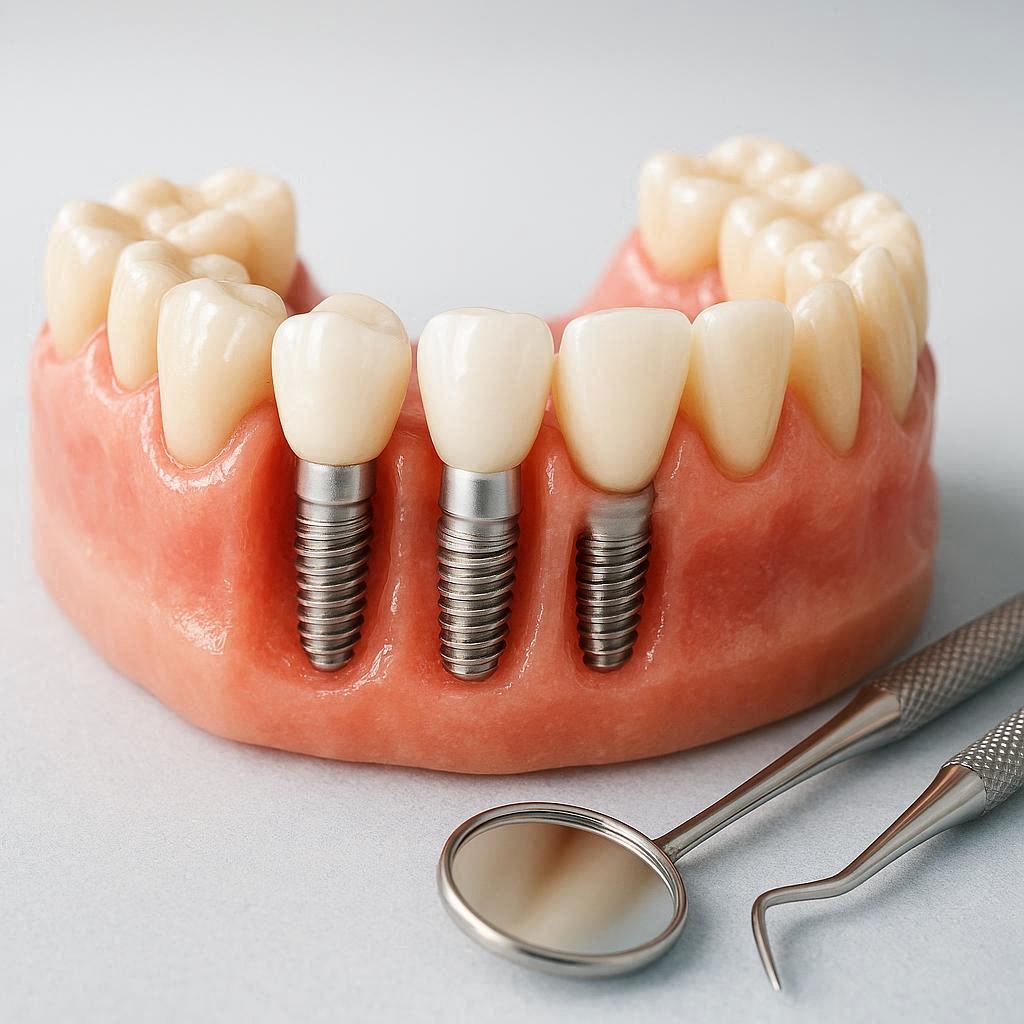
What Exactly Are Partial Teeth Implants?
Let’s clear up a common confusion first.
When people hear “dental implants,” they often think of replacing a single missing tooth with one screw and one crown. That is a single implant.
But what if you are missing three teeth in a row? Or four teeth spread across your jaw?
Putting an individual implant for every single missing tooth is possible. But it is expensive. And sometimes, it is not even necessary.
Partial teeth implants bridge this gap.
A partial implant solution means using a smaller number of implant posts to support a larger number of artificial teeth. Think of it like building a stable table. You do not need a leg under every inch of the tabletop. You just need enough legs to keep everything steady.
For example, two or three implant posts can support a bridge that replaces three or four missing teeth. This is often called an “implant-supported bridge” or “fixed partial denture.”
Important Note: Partial teeth implants are different from traditional partial dentures. Dentures rest on your gums. Implants fuse with your jawbone. That difference changes everything—from comfort to confidence.
How They Differ From Single Implants and Full Dentures
To truly understand partial implants, you need to see where they fit on the treatment spectrum.
| Feature | Single Implant | Partial Teeth Implants | Traditional Partial Denture |
|---|---|---|---|
| Number of missing teeth | One | Two or more (not all) | Two or more (not all) |
| Implant posts used | One | Two or three | Zero (uses metal clasps) |
| Bone stimulation | Yes | Yes | No |
| Removable? | No (fixed) | Usually fixed | Yes (daily removal) |
| Gum coverage | None | None or minimal | Covers palate/gums |
| Estimated lifespan | 20+ years | 20+ years | 3–8 years |
Partial implants live in the sweet spot. They give you the permanence of implants without the cost of replacing every single tooth individually.
The Basic Components of a Partial Implant System
Understanding the parts makes the process less mysterious.
Every partial implant solution has three main pieces:
- The Implant Post (The Root): A small screw, usually made of medical-grade titanium or zirconia. Your dentist places this into your jawbone. Over time, your bone grows around it. This creates a rock-solid anchor.
- The Abutment (The Connector): A small metal piece that screws into the top of the implant post. It sticks out just above your gum line. Think of it as the adapter between the post and your new teeth.
- The Prosthesis (The New Teeth): This is the part everyone sees. It is a bridge or a partial denture that attaches to the abutments. It holds two, three, or more artificial teeth in a single piece.
When these three parts work together, you get a solution that feels powerful, natural, and secure.
Who Is a Good Candidate for Partial Implants?
Not everyone is a perfect candidate right away. But many people are. And even if you are not, you might be after some preparation.
Let’s talk about who benefits most.
Ideal Situations for This Solution
You might be an excellent candidate if:
- You are missing two to five teeth in a row (like your lower front teeth or three molars on the upper right side).
- You have healthy gums with no active gum disease.
- You have enough jawbone density to support the implant posts.
- You want a fixed solution – something that does not click, slip, or need adhesive creams.
- You have tried partial dentures before and hated the feeling of plastic on your palate.
- You want to preserve your remaining natural teeth (implants do not require grinding down healthy adjacent teeth like traditional bridges do).
Realistic Check: Partial implants are rarely used for people who are missing teeth all over the mouth in separate, non-connected areas. If you have missing teeth on the left side and the right side with healthy teeth in between, you might need two separate partial implant solutions.
Medical and Bone Density Considerations
Here is where we get honest.
Implants require surgery. Surgery requires healing. And healing requires good general health.
Your dentist will check for:
- Uncontrolled diabetes: High blood sugar slows healing and increases infection risk. Controlled diabetes is usually fine.
- Smoking: Heavy smokers have higher failure rates. It is not impossible, but you must be realistic. Some dentists will ask you to quit before placing implants.
- Bone loss: If you have been missing teeth for years, the bone in that area has likely shrunk. You might need a bone graft first. This adds time and cost, but it is very common.
- Medications: Certain drugs (like bisphosphonates for osteoporosis) can interfere with bone healing. Always share your full medical history.
The good news? Most healthy adults are candidates. Age alone is not a barrier. Many people in their 70s and 80s successfully get partial implants.
When Partial Implants Are Not the Best Choice
Let’s be just as clear about the downsides.
Partial implants might not be ideal if:
- You are missing only one tooth (a single implant is usually better and simpler).
- You are missing most of your teeth (a full-arch solution like All-on-4 might make more sense).
- You have severe bone loss and are unwilling or unable to get a bone graft.
- You have active gum disease (this must be treated first).
- You have a very tight budget (a traditional partial denture, while inferior, costs much less upfront).
The Different Types of Partial Implant Solutions
Not all partial implants are the same. Your dentist will choose a design based on your specific gap, bone quality, and budget.
Let’s break down the most common types.
Implant-Supported Fixed Bridge
This is the most popular option.
Your dentist places two or three implant posts at specific points. Then, they create a solid bridge of artificial teeth that screws or cements onto those posts. You cannot remove it at home. Only a dentist can take it out.
Best for: Replacing 2–4 missing teeth in a row.
Pros:
- Feels completely natural.
- No plastic covering your palate.
- You clean it like natural teeth (flossing around the posts is necessary).
- Extremely stable.
Cons:
- Requires enough bone at both ends of the gap.
- Slightly harder to clean underneath compared to single implants.
Removable Implant-Supported Partial Denture
Yes, you read that right. “Removable” and “implant-supported” can go together.
In this design, your dentist places one or two small implant posts. Then, they create a partial denture (with metal or plastic clasps) that snaps onto those implants. You still take it out at night to clean it. But during the day, it stays put much better than a traditional denture.
Best for: People who want extra retention but do not have the bone or budget for a fixed bridge.
Pros:
- More stable than a regular partial denture.
- Lower cost than a fixed bridge.
- Easier to clean (you take it out).
Cons:
- Still feels like a denture (plastic base).
- Needs daily removal and soaking.
- Implants prevent bone loss only where they are placed, not under the whole denture.
Cantilever Implant Bridge
This is a niche but useful design.
Imagine you are missing three teeth. You place one implant at one end of the gap. Then, you build a bridge that “floats” off that single implant, replacing all three teeth.
Best for: Replacing 2–3 missing teeth when bone is only available on one side of the gap (common in back molar areas).
Pros:
- Uses fewer implants (saves money).
- Works in tricky bone situations.
Cons:
- More mechanical stress on the single implant.
- Not ideal for high-force areas (like grinding patients).
| Solution Type | Fixed or Removable | Number of Implants | Typical Cost (USD) |
|---|---|---|---|
| Implant-Supported Fixed Bridge | Fixed | 2–3 | 4,000–8,000 |
| Removable Implant Partial | Removable | 1–2 | 2,500–5,000 |
| Cantilever Bridge | Fixed | 1–2 | 3,500–6,500 |
Note: Prices vary widely by location, dentist, and materials. These are estimates for the US market.
The Step-by-Step Process of Getting Partial Implants
The journey from missing teeth to a full smile takes time. Do not let anyone rush you. A good partial implant process follows a predictable, careful timeline.
Initial Consultation and Imaging
Everything starts with a conversation.
Your dentist will:
- Examine your mouth, gums, and remaining teeth.
- Take x-rays or a 3D CT scan (this is crucial to see your bone).
- Ask about your medical history, medications, and habits.
- Discuss your goals, budget, and timeline.
This is also your chance to ask questions. Lots of them.
Pro Tip: Ask to see before-and-after photos of similar cases. A good dentist will have examples of partial implant work they have done.
Bone Grafting (If Needed)
Here is a reality many people face.
When a tooth is missing, the bone that used to surround it slowly melts away. This is called resorption. If you have been missing teeth for years, you may have lost 30-50% of the bone width.
A bone graft rebuilds that foundation.
Your dentist takes bone material (from a donor, animal source, or your own jaw) and packs it into the deficient area. Then, you wait. The graft heals and fuses with your natural bone over 4–9 months.
Is it painful? Mild to moderate discomfort for a few days. Most people manage with over-the-counter pain relievers.
Is it always necessary? No. Many people have enough bone naturally, especially if the teeth were lost recently.
Implant Placement Surgery
This is the main event.
On surgery day, your dentist will:
- Numb the area with local anesthetic (you stay awake but feel nothing).
- Make small incisions in your gum.
- Drill precise holes into your jawbone.
- Insert the implant posts.
- Place a healing cap on top.
- Stitch the gum closed.
The whole procedure usually takes 60–90 minutes for two or three implants.
What do you feel? Pressure, vibration, and sounds. No sharp pain. Many patients describe it as similar to a routine filling, just longer.
Osseointegration (The Healing Phase)
This is the most important part you cannot see.
Osseointegration is the process where your jawbone grows directly onto the surface of the implant. It turns the implant from a foreign object into a part of your body.
This takes time.
- Lower jaw: Usually 3–4 months.
- Upper jaw: Usually 4–6 months (bone is softer here).
During this time, you will wear a temporary partial denture or simply live with the gap. You must avoid putting heavy chewing pressure on the healing implants.
Warning sign: If you feel increasing pain, swelling, or the implant becomes mobile, call your dentist immediately.
Abutment Placement and Impression
Once osseointegration is complete, you return for a small second procedure.
Your dentist re-opens the gum to expose the top of each implant. Then, they screw on the abutments. You will see tiny metal posts sticking out of your gum.
Then comes the impression. Your dentist takes a very detailed mold (digital or physical) of your mouth. This mold goes to a dental laboratory. A skilled technician will craft your custom bridge or partial denture.
This step takes 2–3 weeks for the lab to finish.
Final Prosthesis Fitting
The day you have been waiting for.
Your dentist tries in your new partial implant bridge. They check:
- Fit (does it seat perfectly on the abutments?)
- Bite (do your new teeth meet your natural teeth correctly?)
- Color (does the porcelain match your existing teeth?)
- Appearance (are you happy with the shape and size?)
Once everything looks right, they permanently screw or cement the prosthesis onto the abutments. In a fixed solution, you will never remove it again.
You look in the mirror. You smile. It feels like your teeth.
Costs, Insurance, and Financing (Real Numbers)
Money is a real concern. Let’s avoid fake lowball numbers.
A partial implant solution is an investment. It costs more than a denture but less than replacing every tooth individually.
Breaking Down the Total Investment
Here is what goes into the final price:
- Consultation and CT scan: 200–500
- Bone graft (if needed): 500–3,000 per site
- Implant posts (each): 1,500–2,500
- Abutments (each): 300–600
- Custom bridge/prosthesis: 1,500–4,000
- Surgical guide (3D planning): 300–800
Typical total for a 2-implant, 3-tooth fixed bridge: 5,000–9,000.
Typical total for a 3-implant, 4-tooth fixed bridge: 7,000–12,000.
Note: These are out-of-pocket estimates without insurance. Prices in major cities or specialist offices (prosthodontists, periodontists) are at the higher end. Dental school clinics often charge 40-60% less.
Does Insurance Cover Partial Implants?
This is frustrating, but we will be honest.
Most traditional dental insurance plans do not cover implants. They call them “cosmetic” or “major restorative” with low lifetime maximums (1,000–1,500 per year).
However, things are changing slowly.
Some PPO plans now offer implant coverage at 50% after a waiting period. Others will cover the crown or bridge portion but not the implant post. Medicare does not cover implants (except in very rare medical necessity cases).
Your best bet: Ask your dentist’s insurance coordinator for a pre-treatment estimate. They will submit the plan to your insurance and tell you exactly what is covered.
Financing Options to Make It Manageable
Many people pay for partial implants over time.
- CareCredit: A healthcare credit card with 6, 12, or 18-month no-interest plans (if you pay on time).
- LendingClub or Prosper: Medical loans specifically for dental work.
- In-house financing: Some dental offices offer monthly payment plans directly. Always ask.
- Health Savings Account (HSA) or Flexible Spending Account (FSA): You can use pre-tax dollars for implants. This saves you 20-30% effectively.
Living With Partial Teeth Implants
The best part? Once healed, you mostly forget you have them.
But “forget” does not mean “ignore.” You need to care for them properly.
Daily Cleaning and Maintenance
Partial implants do not get cavities (they are made of metal and ceramic). But the gums around them can get infected. This is called peri-implantitis. It is serious and can cause implant failure.
To prevent this:
- Brush twice a day with a soft toothbrush. Pay special attention where the implant meets the gum.
- Floss daily – but you may need special tools like super floss or interdental brushes to clean underneath the bridge.
- Use a water flosser (Waterpik) on a low setting to flush out food debris around the posts.
- Avoid sticky, hard foods like caramel, hard candy, or ice (you can break the porcelain).
Quote from a real patient: “I was scared I would miss cleaning between my teeth like normal. But honestly, a water flosser takes 60 seconds. It is easier than flossing my natural teeth.”
Long-Term Success Rates and Longevity
Partial implants, when done well and cared for, are remarkably durable.
- 10-year success rate: 90-95% for fixed implant bridges.
- 20-year success rate: 85-90% for healthy non-smokers.
The prosthesis itself (the porcelain bridge) may need replacement after 10-15 years due to normal wear. But the implant posts, if healthy, can last a lifetime.
Compare that to a traditional partial denture, which often needs replacement every 5-8 years.
Common Problems and How to Avoid Them
No treatment is perfect. Here are realistic issues and solutions:
| Problem | Why It Happens | Solution |
|---|---|---|
| Gum redness around one implant | Poor cleaning, food trapping | Improve hygiene, see dentist for professional cleaning |
| The bridge feels loose | Screw loosening (rare but possible) | Dentist tightens screw (quick fix) |
| Porcelain chips | Biting hard objects (pens, ice, bones) | Repair or replace the crown |
| Bad taste or odor | Bacteria under the bridge | Water flosser and professional cleaning |
| Implant failure (mobility) | Infection, smoking, overloading | Remove implant, bone graft, try again after healing |
Most important rule: See your dentist every 6-12 months for implant checkups. They will take x-rays to check the bone levels around each implant. Catching problems early saves implants.
Partial Implants vs. Other Options: An Honest Comparison
You have choices. Let’s compare partial implants to the most common alternatives side-by-side.
Partial Implants vs. Traditional Removable Partial Dentures
- Stability: Implants win massively. No clicking, rocking, or flying out when you sneeze.
- Comfort: Implants have no plastic palate coverage. Partial dentures cover the roof of your mouth (annoying for taste and speech).
- Bone health: Implants preserve bone. Dentures accelerate bone loss over time.
- Cost: Dentures are cheaper upfront (800–2,000). Implants cost more upfront but last longer.
- Maintenance: Dentures need nightly soaking and adhesive creams. Implants need normal brushing and flossing.
Winner for quality of life: Partial implants.
Winner for immediate budget: Traditional partial denture.
Partial Implants vs. Traditional Fixed Bridge (on natural teeth)
A traditional bridge grinds down the healthy teeth next to the gap. You turn two good teeth into anchor points for a false tooth.
- Preservation of natural teeth: Implants do not touch neighboring teeth. Traditional bridges damage healthy enamel.
- Longevity: Implant bridges often outlast traditional bridges (which fail after 10-15 years due to decay under the crowns).
- Cost: Traditional bridges are often slightly cheaper (3,000–5,000) because they use no implants.
- Repairability: A failed traditional bridge often leads to losing the anchor teeth. A failed implant can often be replaced.
Winner: Partial implants, especially for younger patients or anyone wanting to protect healthy teeth.
Partial Implants vs. Resin-Bonded Bridge (Maryland Bridge)
This is a “conservative” bridge that bonds a false tooth to the back of adjacent teeth with wings.
- Invasiveness: Maryland bridge is less invasive (no drilling).
- Strength: Very weak. The wings detach easily.
- Longevity: 3-5 years typically. Not a long-term solution.
- Best for: Single missing front tooth in low-bite-force areas.
Winner: Partial implants for any area that actually chews food.
The Psychological and Functional Benefits
Let’s talk about the human side. Not just teeth. Not just bone.
Eating and Speaking With Confidence
Partial implants do not move.
You know that moment of hesitation before biting into an apple? The fear that your denture will fly into the middle of a restaurant?
That disappears.
Patients report:
- Eating steak, corn on the cob, and nuts again.
- Speaking without clicking sounds.
- Laughing without covering their mouth.
- No more adhesive creams that taste like medicine.
“I cried the first time I ate pizza with my partial implants. I had not bitten through a crust in seven years.” – Maria, 62.
Smile Aesthetics and Facial Support
Missing teeth do more than create gaps. They collapse your facial structure. The lower third of your face shortens. Your cheeks sink in. Wrinkles around your mouth deepen.
Partial implants, by preserving bone, maintain your natural face shape. You do not just look younger because your teeth look nice. You look younger because your bones remain intact.
Comparison Table: Quality of Life Factors
| Daily Activity | Partial Implants | Partial Denture | No Replacement |
|---|---|---|---|
| Chewing hard food | 90-95% of natural | 30-50% of natural | 10-20% of natural |
| Fear of movement | None | High | N/A |
| Speech clarity | Normal | Temporary lisp possible | Changes if front teeth missing |
| Gum health over 10 years | Stable | Increasing recession | Bone loss continues |
| Confidence smiling | High | Low to medium | Very low |
Risks and Realistic Limitations (No Sugarcoating)
You deserve honesty. So here are the real risks.
Surgical Risks (Small but Real)
Any surgery carries risks, even minor oral surgery.
- Infection: Occurs in 1-2% of cases. Treatable with antibiotics.
- Nerve damage: Rare in the lower jaw (can cause temporary or permanent lip numbness). Good 3D imaging reduces this risk to under 1%.
- Sinus perforation: When placing upper back implants, the implant can poke into your sinus cavity. This is usually fixable with a minor procedure.
- Implant failure to integrate: Happens in 3-7% of implants (higher for smokers). If the bone does not grow onto the implant, you remove it, graft, and try again.
Long-Term Biological Risks
- Peri-implantitis: This is gum disease around an implant. It destroys bone. It is preventable with excellent hygiene. But once it starts, it is hard to stop. Some implants eventually need removal.
- Excessive bone loss: Even with implants, you lose a small amount of bone over decades. But far less than with dentures.
Financial Risk
You are paying significant money. If an implant fails after 5 years, replacing it is expensive. Warranties vary by dentist. Some offer 1-5 years on the implant. Few offer lifetime guarantees.
Always ask: “What happens if this implant fails in two years? Do I pay full price again?”
A trustworthy dentist will offer a discounted replacement rate.
How to Choose the Right Dentist for Partial Implants
This is the most important decision you will make.
Not all general dentists place implants. Partial implants require more planning than single implants.
Questions You Must Ask Before Committing
Call or visit three offices. Ask these exact questions:
- “How many partial implant bridges (not single teeth) do you place per year?” (Look for 20+ cases annually).
- “Do you use a 3D CT scan for planning, or just x-rays?” (3D is the modern standard).
- “Who makes the final bridge? An in-house lab or an external lab?” (External specialist labs often do better work).
- “What is your protocol if an implant fails to integrate?”
- “Can I speak to a patient who got a similar partial implant bridge from you?”
Red Flags to Avoid
Run away if a dentist:
- Promises you can get implants and teeth in one day (for partial bridges, that is almost never true).
- Quotes a price that is 50% lower than everyone else.
- Says bone grafts are “never needed” without a CT scan.
- Cannot show you before-and-after photos.
- Does not discuss the risks of peri-implantitis.
Credentials to Look For
The best providers for partial implants are usually:
- Prosthodontists (specialists in replacement teeth, 3 extra years of training).
- Periodontists (specialists in gums and bone).
- Oral surgeons (if complex bone grafting is needed).
General dentists with advanced implant training can also do excellent work. But check their credentials. Look for “Fellow” or “Diplomate” status with the International Congress of Oral Implantologists (ICOI) or the American Board of Oral Implantology.
Frequently Asked Questions (FAQ)
Here are the questions people ask most often.
Q: Are partial teeth implants painful to get?
A: The surgery itself is not painful due to local anesthesia. Afterward, you will have soreness for 3-7 days, similar to a tooth extraction. Most people manage with ibuprofen or Tylenol.
Q: How long does the entire process take from start to finish?
A: Typically 6-12 months. Bone grafting adds time (4-9 months of healing). A simple case with no graft takes about 5-6 months from surgery to final teeth.
Q: Can I get partial implants if I already wear a partial denture?
A: Yes, in most cases. Your dentist will remove the denture and evaluate your bone. Many people transition from dentures to implants later.
Q: Will my insurance pay for any of this?
A: Some plans cover a portion of the bridge (30-50%) but rarely the implants themselves. Always verify with a pre-treatment estimate.
Q: Can partial implants be done on the same day?
A: For a full arch (like All-on-4), yes. For partial bridges, almost never. The implants need time to heal before attaching the final bridge.
Q: What happens if one implant in a partial bridge fails?
A: It depends. Sometimes the bridge can be modified to work with the remaining implants. In other cases, the bridge needs replacement and a new implant placed. Your dentist will plan for this possibility.
Q: Do partial implants look natural?
A: Yes, if made by a skilled lab technician. The porcelain mimics natural enamel, and since there are no metal clasps (unlike dentures), they look excellent.
Q: Can I smoke with partial implants?
A: You can, but you significantly increase failure risk. Smoking reduces blood flow to the bone. Heavy smokers have failure rates of 15-20% versus 3-5% for non-smokers.
Q: How do I clean underneath a fixed implant bridge?
A: Use super floss (has a stiff end to thread under the bridge), interdental brushes, or a water flosser. Your dentist will show you the technique. It takes an extra two minutes daily.
Q: Are partial implants worth the money?
A: For most people, yes. You pay more upfront, but you avoid bone loss, denture adhesives, embarrassment, and replacement costs every 5-10 years. Over 20 years, partial implants often cost the same or less than repeated denture replacements.
Conclusion
Partial teeth implants offer a stable, bone-preserving, and natural-feeling solution for people missing multiple teeth but not ready for full dentures. They cost more upfront than traditional options but provide superior comfort, function, and longevity when properly maintained. Choose an experienced implant dentist, commit to excellent daily hygiene, and you can expect a confident smile for decades.
Additional Resource
For further reading and to verify implant dentist credentials, visit the American Academy of Implant Dentistry (AAID) :
https://www.aaid.com
Here you can find patient guides, a “Find an Implant Dentist” directory, and downloadable PDFs explaining the science in plain language.
Disclaimer: This article is for informational purposes only and does not constitute medical or dental advice. Partial teeth implants require a personalized evaluation by a licensed dental professional. Results, costs, and timelines vary based on individual health, anatomy, and provider skill. Always seek the advice of your dentist or qualified health provider with any questions you may have regarding a dental condition or treatment. Do not disregard professional dental advice or delay seeking it based on anything you have read here.