Dental Implants In Roselle Park
Losing a tooth changes more than just your smile. It affects how you eat, how you speak, and even how you feel when you look in the mirror. You might find yourself hiding your laugh or choosing softer foods just to avoid discomfort. These small daily compromises add up. But a permanent, natural-looking solution exists right here in your community. Dental implants in Roselle Park offer a way to reclaim not just your teeth, but your confidence and quality of life.
This guide walks you through every aspect of the journey. We explore the technology, the process, the costs, and the remarkable benefits. Most importantly, we answer the questions that keep you up at night. Can I afford this? Will it hurt? How long will it last? By the end, you will possess the knowledge to make an informed decision about your oral health.
Understanding Dental Implants: More Than Just a Tooth Replacement
A dental implant does far more than fill a gap. It replaces the entire tooth structure from root to crown. This comprehensive approach sets implants apart from every other tooth replacement option available today.
Think of a natural tooth. It has a crown above the gum line and a root anchored securely in the jawbone. When you lose a tooth, you lose both parts. A bridge only replaces the crown. A denture sits on top of the gums. Only a dental implant recreates both the root and the visible tooth. This fundamental difference explains why implants feel, function, and look so natural.
The Three Components of a Dental Implant
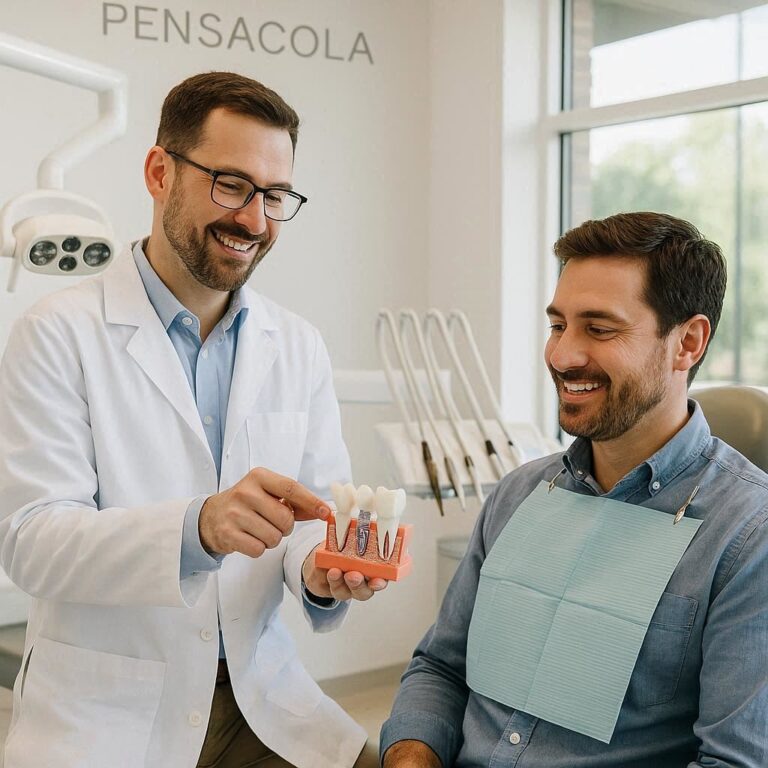
Every dental implant system consists of three distinct parts working together. Understanding these components helps you appreciate the engineering behind your new smile.
The Implant Fixture
This titanium post serves as the artificial root. A dental surgeon places it precisely into your jawbone during a minor surgical procedure. Titanium possesses a unique property called biocompatibility. Your body does not reject it. In fact, bone cells actively bond to the titanium surface through a process called osseointegration. This biological fusion creates an incredibly stable foundation.
The Abutment
The abutment acts as a connector piece. It attaches to the implant fixture and protrudes slightly above the gum line. The final crown secures to this abutment. Think of it as a small adapter that bridges the implant below the gums and the visible tooth above them.
The Prosthetic Crown
This is the part you see. Dental technicians custom-craft each crown to match the shape, size, and color of your natural teeth. Modern ceramics and porcelains reflect light just like natural enamel. No one will know you have an implant unless you tell them.
The Science of Osseointegration: Why Implants Last
The magic of dental implants lies in a biological process discovered by accident. In the 1950s, Swedish researcher Per-Ingvar Brånemark placed titanium chambers in rabbit bones for a study. When he tried to remove them later, he found the bone had fused so tightly to the titanium that removal proved impossible. He named this phenomenon osseointegration.
This discovery revolutionized dentistry. When bone cells lock onto the microscopic surface of a titanium implant, they create a connection as strong as a natural tooth root. The implant becomes part of your body. This explains why properly maintained dental implants can last a lifetime. The fusion resists the forces of chewing, speaking, and daily use without slipping or shifting.
“Dental implants are the closest thing to natural teeth. They provide the stimulation needed to preserve the jawbone and maintain facial structure.” — American Academy of Implant Dentistry
Why Choose Dental Implants Over Other Options?
When you face tooth loss, you encounter several replacement choices. Each option comes with distinct advantages and significant drawbacks. Understanding these differences helps you appreciate why implants represent the gold standard in modern dentistry.
Dental Implants vs. Dentures: A Generational Shift
For decades, dentures provided the only solution for extensive tooth loss. While modern dentures offer improved fit and appearance, fundamental problems remain. They rest on the gums without anchoring to the bone. This causes several issues.
Dentures can slip while eating or speaking. Adhesive creams attempt to solve this but create their own mess and inconvenience. The rubbing of dentures against gum tissue often causes sore spots and irritation. More critically, dentures provide no stimulation to the underlying jawbone. Without this stimulation, the bone slowly resorbs, or melts away. This process changes the shape of your face over time, leading to a sunken appearance.
Dental implants eliminate all these concerns. They stay fixed in place permanently. They stimulate the bone just like natural tooth roots. They allow you to eat any food without fear.
| Feature | Dental Implants | Traditional Dentures |
|---|---|---|
| Stability | Permanently fixed in bone | Can slip or shift |
| Bone Preservation | Stimulates and preserves bone | Bone loss continues |
| Eating Ability | Full chewing power, any food | Restricted to softer foods |
| Speech | Natural, no impediment | Can click or slip, affecting speech |
| Care Routine | Brush and floss like natural teeth | Remove nightly, soak, clean separately |
| Lifespan | 25+ years to lifetime | 5-8 years before replacement |
| Comfort | Feels like natural teeth | Can cause gum soreness |
| Confidence | Smile, laugh, eat without worry | Constant awareness of appliance |
Dental Implants vs. Fixed Bridges: Preserving Healthy Teeth
A fixed dental bridge appears to solve the problem of a missing tooth without the removability of a denture. However, a traditional bridge requires a significant sacrifice. The dentist must grind down the healthy teeth on either side of the gap to serve as anchors for the bridge. These teeth, which may have been perfectly sound, lose significant structure permanently.
A single-tooth dental implant stands independently. It does not rely on neighboring teeth for support. The healthy adjacent teeth remain untouched and intact. This independent support also makes cleaning easier. You can floss normally between an implant and a natural tooth. Flossing under a bridge requires threading floss through a small gap, a task many patients struggle with.
The long-term prognosis also favors implants. A bridge typically lasts 10 to 15 years before requiring replacement due to decay under the crowns or structural failure. An implant, with proper care, often lasts a lifetime. The initial cost of a bridge may be lower, but the repeat replacement costs and the permanent alteration of healthy teeth make implants the more conservative and often more economical choice over decades.
| Consideration | Dental Implant | Fixed Bridge |
|---|---|---|
| Impact on adjacent teeth | None, stands alone | Requires grinding down healthy teeth |
| Bone preservation | Yes, stimulates bone | No, bone loss continues under pontic |
| Longevity | 25+ years to lifetime | 10-15 years average |
| Hygiene access | Floss normally | Requires special flossing tools |
| Future dental health | Does not compromise other teeth | Increases risk to anchor teeth |
Types of Dental Implant Restorations
Dental implant technology offers solutions for every degree of tooth loss. Whether you miss a single tooth or all of your teeth, an implant-based restoration exists to meet your needs.
Single Tooth Implants
The single tooth implant stands as the most common implant procedure. A single titanium post replaces one missing root. A custom crown attaches to that post. The result looks and functions exactly like the tooth you lost.
This approach works beautifully for anyone missing one tooth due to injury, decay, or a failed root canal. The procedure leaves neighboring teeth completely untouched. You brush and floss the implant crown just like your natural teeth. From the outside, no one can tell the difference.
Implant-Supported Bridges
When you miss several teeth in a row, placing an individual implant for each missing tooth becomes unnecessarily costly and invasive. An implant-supported bridge offers an elegant solution. The dentist places two implants, one at each end of the gap. These implants support a bridge containing the replacement teeth spanning between them.
This approach provides fixed, permanent teeth without the need to grind down healthy natural teeth for support. It also distributes chewing forces across multiple implants, creating excellent stability. The restoration feels secure and functions like natural teeth.
Full Arch Restoration: All-on-4 and All-on-6
For patients who have lost all or most of their teeth in an arch, the All-on-4 or All-on-6 technique offers a life-changing solution. This approach uses four or six strategically placed implants to support a complete arch of prosthetic teeth.
The key innovation lies in the placement angle. The posterior implants tilt at specific angles to maximize contact with available bone. This often eliminates the need for bone grafting, even in patients with some bone loss. The patient receives a fixed, full set of teeth, often on the same day as implant placement.
The psychological impact of this procedure cannot be overstated. Patients who have suffered with failing teeth or ill-fitting dentures for years suddenly regain a beautiful, functional smile. They eat steak. They laugh without covering their mouth. They feel like themselves again.
“I had struggled with loose dentures for 15 years. The All-on-4 procedure gave me back my life. I eat anything I want now and I never worry about my teeth falling out.” — A patient’s story reflects thousands of similar experiences.
Implant-Retained Overdentures
An implant-retained overdenture represents a middle ground between traditional dentures and fixed full-arch implants. This option uses two to four implants to secure a removable denture. The denture snaps onto the implants for stability but can be removed for cleaning.
This approach provides dramatically better stability than a traditional denture. The denture does not slide or lift during eating or speaking. However, it remains removable for those who prefer this cleaning method. The cost sits lower than a fixed full-arch restoration, making it an attractive option for many patients.
| Restoration Type | Number of Implants | Best For | Removability |
|---|---|---|---|
| Single Crown | 1 | One missing tooth | Fixed |
| Implant Bridge | 2+ | Multiple missing teeth in a row | Fixed |
| All-on-4 | 4 per arch | Full arch of missing teeth | Fixed (dentist removable) |
| All-on-6 | 6 per arch | Full arch, need for extra stability | Fixed (dentist removable) |
| Overdenture | 2-4 per arch | Full arch, budget-conscious | Patient removable |
The Dental Implant Procedure: Step by Step
Understanding the process reduces anxiety. Knowing what to expect at each stage helps you prepare mentally and physically for your implant journey. While every case presents unique aspects, most implant procedures follow a predictable sequence.
Initial Consultation and Examination
Your implant journey begins with a comprehensive evaluation. The dentist needs to understand not just the gap in your smile, but your complete oral and medical health. This appointment typically lasts longer than a routine checkup.
The dentist examines your remaining teeth, gum health, and bite alignment. They review your medical history carefully. Certain conditions like uncontrolled diabetes or heavy smoking can affect healing and implant success. Medications you take also matter. Some drugs affect bone metabolism or healing capacity.
The most critical tool at this stage is 3D cone beam computed tomography, or CBCT imaging. This advanced scan provides a three-dimensional view of your jawbone, nerves, sinuses, and other vital structures. The dentist can measure bone height, width, and density with precision. This information determines whether you need preparatory procedures like bone grafting and exactly where to place the implants for optimal results.
Treatment Planning
After gathering all diagnostic information, the dentist develops your personalized treatment plan. This plan details every step of your journey, from any needed extractions through implant placement to final restoration. You receive a timeline, a cost breakdown, and answers to all your questions.
Digital implant planning software now allows dentists to virtually place your implants before touching a scalpel. They can determine the ideal position, angle, and depth for each implant while avoiding nerves and sinuses. Some dentists use this digital plan to create a surgical guide, a custom-fitted template that directs implant placement with sub-millimeter accuracy during surgery.
Important: A thorough treatment plan includes coordination between your implant surgeon and restorative dentist if these are different practitioners. Clear communication ensures the implants end up in positions that allow for optimal final restorations.
Preparatory Procedures
Some patients require additional procedures before implant placement. The most common preparatory step is tooth extraction. If your damaged tooth remains in place, the dentist must remove it. Often, they can place the implant immediately into the fresh extraction socket. This approach, called immediate implant placement, saves time and preserves bone.
If the tooth has been missing for some time, you may have experienced bone loss. The jawbone requires the stimulation of tooth roots to maintain its density. Without this stimulation, bone resorbs. In these cases, a bone graft procedure restores sufficient volume for implant placement.
Bone Grafting Explained
Bone grafting sounds intimidating, but it is a routine and well-tolerated procedure. The surgeon places bone graft material into the area of deficiency. This material can come from several sources. Autografts use your own bone from another site. Allografts use processed human donor bone. Xenografts use bovine bone material. Synthetic options also exist.
The graft material serves as a scaffold. Your body’s natural healing processes fill the scaffold with new bone cells over several months. Once the graft matures, the site offers adequate volume and density for implant placement.
Sinus Lift Procedure
In the upper back jaw, the maxillary sinus often expands after tooth loss, leaving insufficient bone height for implants. A sinus lift, or sinus augmentation, gently lifts the sinus membrane and places bone graft material underneath. This creates the vertical bone height needed for implant placement. Healing typically takes four to nine months before implant placement.
Implant Placement Surgery
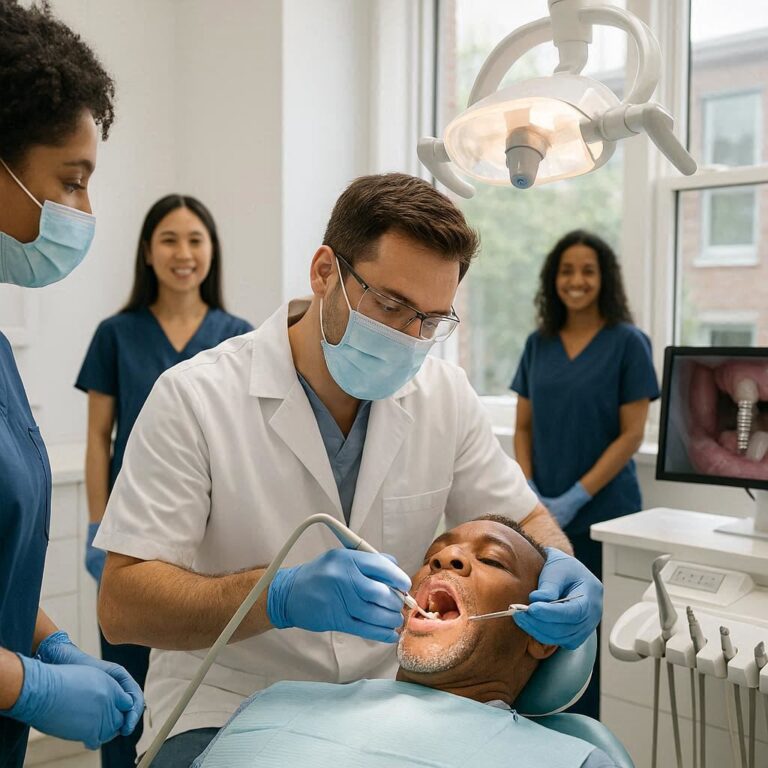
The day of implant placement marks a significant milestone. Despite being a surgical procedure, most patients find it far less daunting than they anticipated. Local anesthesia ensures complete numbness. Many dental offices offer sedation options for anxious patients, ranging from oral medication to IV sedation.
The surgeon makes a small incision in the gum tissue to expose the bone. Using precise drilling sequences, they create a channel of exactly the right diameter and depth. The implant fixture threads into this prepared site. The surgeon checks placement accuracy and stability. Finally, they close the gum tissue over the implant with a few sutures, leaving the implant to heal beneath the gums, or they may attach a small healing abutment that protrudes through the gum.
The surgery itself typically takes 30 to 60 minutes for a single implant. Post-operative discomfort is usually mild and manageable with over-the-counter pain relievers. Most patients return to work the next day.
Healing and Osseointegration
The weeks and months following implant placement require patience. No visible progress occurs, but beneath the gums, a remarkable biological process unfolds. Bone cells migrate to the implant surface and begin the process of osseointegration.
This healing period typically lasts three to six months. During this time, you must protect the implant from excessive force. Your dentist provides specific instructions. Soft foods. Gentle cleaning. No chewing on the implant site. Avoidance of tobacco products, which severely impair healing.
Regular follow-up visits allow the dentist to monitor healing progress. They check for any signs of infection or complications. The vast majority of implants integrate successfully without any issues.
Note: The waiting period can feel frustrating, but it is absolutely essential. Loading an implant with chewing forces before osseointegration is complete risks implant failure. The bone must fuse properly for long-term success.
Abutment Placement and Impressions
Once osseointegration is confirmed, the implant is ready for the abutment and crown. If the implant was buried under the gums, the surgeon makes a small incision to expose the top of the implant. They attach a healing abutment that shapes the gum tissue for the final crown. The gums need a few weeks to heal around this abutment before impressions.
Digital or physical impressions capture the exact position of the implant and surrounding teeth. Digital impressions use an intraoral scanner to create a 3D computer model. Physical impressions use impression material in a tray. Both methods provide the dental laboratory with the information needed to fabricate your custom crown.
Final Crown Delivery
The final appointment brings everything together. The dentist removes the healing abutment and attaches the final abutment. The custom crown seats onto the abutment and is secured with cement or a small screw. The dentist checks your bite carefully, making sure the new crown contacts opposing teeth with the right amount of pressure. They verify that floss passes easily between the implant crown and adjacent teeth.
You leave the office with a complete, functional, beautiful tooth. The journey from consultation to final crown typically spans four to eight months, depending on healing times and the need for preparatory procedures.
The Investment: Understanding Dental Implant Costs in Roselle Park
Cost represents one of the most significant concerns for anyone considering dental implants. The price tag initially seems high compared to other tooth replacement options. Understanding what drives these costs and the long-term value helps put the investment in perspective.
Factors That Influence Dental Implant Costs
No single price applies to all implant cases. Several variables affect the final cost of your treatment.
Number of Implants
A single implant costs less than multiple implants, though the cost per tooth often decreases with multiple restorations, especially with techniques like All-on-4.
Need for Preparatory Procedures
Bone grafting and sinus lifts add to the total cost. These procedures require additional surgical time, materials, and healing periods. Some patients need no preparatory work at all, while others require extensive bone reconstruction.
Materials Used
Implant fixtures themselves vary in cost based on manufacturer and design. Premium implant brands with decades of research behind them typically cost more. The crown material also affects cost. Porcelain fused to metal costs less than all-ceramic or zirconia restorations.
Technology and Expertise
Dentists who invest in advanced technology like CBCT imaging, intraoral scanners, and guided surgery software often produce better outcomes. This technology adds to overhead but also adds to precision and predictability. Similarly, experienced implant dentists with advanced training command higher fees, reflecting their expertise.
Insurance Coverage
Dental insurance plans vary widely in their coverage of implants. Some plans provide no implant coverage at all, viewing them as cosmetic. Others cover a portion, often comparable to what they would pay for a bridge or denture. Medical insurance may cover implant-related procedures in cases of trauma or congenital conditions.
Average Cost Ranges
Prices vary by geographic region and individual practice. The following ranges reflect typical costs in suburban New Jersey communities like Roselle Park. These figures include the implant placement, abutment, and crown for a single tooth.
| Procedure | Average Cost Range | Notes |
|---|---|---|
| Single implant (full process) | $3,000 – $6,000 | Includes fixture, abutment, and crown |
| Bone grafting | $400 – $1,200 per site | Depends on graft material and extent |
| Sinus lift | $1,500 – $3,000 per side | Unilateral or bilateral |
| Implant-supported bridge (3 teeth) | $5,000 – $9,000 | Two implants supporting a bridge |
| All-on-4 (per arch) | $12,000 – $25,000 | Full arch of fixed teeth |
| Implant overdenture (2-4 implants) | $6,000 – $15,000 | Includes implants and denture |
These ranges provide a starting point for understanding costs. Every case requires an individualized quote based on your specific anatomy, needs, and goals. Reputable dentists provide detailed written treatment plans with all costs clearly outlined.
Value Over Time: Why Implants Often Cost Less Long-Term
Comparing the upfront cost of implants to dentures or bridges misses the full financial picture. Implants offer remarkable longevity. A successful dental implant often lasts 25 years, 30 years, or an entire lifetime. Dentures need replacement every five to eight years. Bridges average 10 to 15 years.
Consider a 45-year-old patient choosing between an implant and a bridge for a single missing tooth. The implant costs $4,500 today. The bridge costs $3,000. The bridge will need replacement at least twice over the patient’s lifetime, at a cost of $9,000 or more in today’s dollars. The implant, properly maintained, likely needs no replacement. The implant also preserves bone and does not damage adjacent teeth, potentially preventing future dental costs.
When viewed through this lens of lifetime value, implants often emerge as the most economical choice despite higher initial costs.
Financing and Payment Options
Most dental practices understand that implant treatment represents a significant expense. They offer various payment options to make treatment accessible.
Dental Insurance
Check your policy carefully. Some plans cover a percentage of implant procedures. Coordinate with your dental office’s insurance coordinator to maximize any available benefits.
Payment Plans
Many practices offer in-house payment plans that divide the total cost into manageable monthly payments spread over the treatment timeline.
Third-Party Financing
Companies like CareCredit and LendingClub specialize in healthcare financing. They offer extended payment terms, sometimes with promotional interest-free periods. Your dental office can help you apply.
Health Savings Accounts and Flexible Spending Accounts
Dental implants qualify as a medical expense for HSA and FSA funds. Using pre-tax dollars effectively reduces your out-of-pocket cost by your tax rate.
Important: Do not make decisions based solely on price. An unusually low-cost implant may involve inferior materials, rushed procedures, or insufficient diagnostic work. The cost of treating a failed implant far exceeds the cost of doing it right the first time.
Finding the Right Implant Dentist in Roselle Park
The skill and experience of your implant dentist directly impact your outcome. Choosing the right provider matters as much as the decision to get implants themselves. Roselle Park and the surrounding Union County area offer numerous options. Knowing what to look for helps you make a confident choice.
Credentials and Training
Implant dentistry exists at the intersection of surgical and restorative disciplines. Look for practitioners with specific, advanced training in implantology.
Board Certification
The American Board of Oral Implantology/Implant Dentistry (ABOI/ID) offers rigorous board certification. Diplomates of this board have demonstrated extensive knowledge and skill through written and oral examinations. This credential represents the highest level of achievement in implant dentistry.
Professional Fellowships and Masterships
Organizations like the International Congress of Oral Implantologists (ICOI) offer fellowship and mastership designations based on documented education and clinical experience. These designations indicate a dentist who has invested significantly in implant-specific training beyond dental school.
Specialty Training
Oral surgeons and periodontists receive surgical implant training as part of their specialty residencies. Prosthodontists specialize in the restoration of implants and complex cases. General dentists may pursue extensive continuing education in implant dentistry. All can provide excellent care if properly trained.
Questions to Ask During Your Consultation
The consultation serves as your opportunity to evaluate the dentist. Come prepared with questions. A confident, competent dentist welcomes your inquiries and answers them thoroughly.
Experience Questions
Ask how many implant procedures the dentist performs annually. Inquire about their experience with cases similar to yours. Request to see before-and-after photos of their actual patients. A dentist confident in their work happily shares this documentation.
Technology Questions
Ask about the technology they use. Do they have a CBCT scanner in the office? Do they use digital planning software? Do they offer guided implant surgery? Technology does not guarantee a good outcome, but it indicates a commitment to precision and modern standards of care.
Process Questions
Ask about the timeline for your specific case. Who performs each phase of treatment if multiple practitioners are involved? What sedation options do they offer? How do they handle complications if they arise?
Financial Questions
Request a detailed, written treatment plan with all costs itemized. Ask about insurance coordination. Inquire about financing options. Understand the payment schedule. A transparent practice provides clear answers with no hidden fees.
Red Flags to Watch For
Certain warning signs should give you pause. Trust your instincts if something feels wrong during a consultation.
Avoid any dentist who pressures you to make an immediate decision before you have had time to consider your options. A reputable practice gives you the information and space to decide on your own timeline.
Be wary of prices that seem too good to be true. Implants require expensive materials, advanced technology, and skilled surgical time. Extremely low prices often mean corners are being cut somewhere.
Pay attention to cleanliness and organization. A modern, well-maintained facility reflects the practice’s overall standards. Observe how the staff treats you. Courteous, professional, and attentive staff indicate a well-run practice that values patients.
“The best implant dentist is not necessarily the cheapest or the most expensive. It is the one who listens carefully, explains things clearly, and has a track record of successful cases similar to yours.” — A guiding principle for patients beginning their implant journey.
Recovery and Aftercare: Protecting Your Investment
Your responsibility does not end when you leave the dental office with your new crown. Proper recovery and lifelong maintenance determine how long your implant lasts. The good news is that implant care closely resembles natural tooth care.
Immediate Post-Surgical Recovery
The days immediately following implant placement surgery require some adjustments. Most patients experience mild swelling, minor discomfort, and possibly some bruising. These symptoms typically peak around day two or three and then gradually subside.
The First 24 to 48 Hours
Apply ice packs to the outside of your face in 20-minute intervals. This reduces swelling. Take prescribed or recommended pain medication as directed. Eat only soft, cool foods like yogurt, smoothies, and applesauce. Avoid hot foods and beverages, which can increase bleeding. Do not rinse vigorously or spit forcefully. This protects the blood clot at the surgical site.
The First Week
Gradually advance to warm, soft foods as comfort allows. Begin gentle rinsing with warm salt water after the first 24 hours. Continue this several times daily to keep the area clean. Avoid chewing anywhere near the implant site. Brush your other teeth carefully, staying well away from the surgical area.
Warning Signs
While complications are uncommon, know what to watch for. Increasing pain after day three, rather than improvement. Swelling that worsens rather than subsides. Persistent bleeding. Fever or chills. Any of these symptoms warrant a call to your dentist. Prompt attention resolves most issues easily.
Long-Term Maintenance
Once your implant is fully restored, maintenance becomes straightforward. An implant cannot develop cavities, a significant advantage. However, it can fail due to gum disease or excessive forces.
Peri-Implant Disease
The gums around an implant can become inflamed and infected, just like gums around natural teeth. This condition, called peri-implant mucositis, is reversible with prompt treatment. If the inflammation progresses to involve the bone supporting the implant, it becomes peri-implantitis. This serious condition causes bone loss and can lead to implant failure.
Preventing peri-implant disease requires consistent oral hygiene. Brush twice daily, paying special attention to the implant area. Floss daily, using implant-specific floss or interdental brushes to clean around the abutment. Water flossers with non-metal tips work excellently for implant care.
Professional Maintenance
Continue regular dental checkups and cleanings, typically every six months. Your hygienist uses special instruments that do not scratch the implant surface. They also monitor the health of the gum tissue around your implant and measure pocket depths, just like they do for natural teeth.
Night Guards for Protection
If you grind or clench your teeth, a condition called bruxism, you need protection. The excessive forces from grinding can damage implant components and overload the supporting bone. A custom-fitted night guard distributes these forces and protects both your implants and natural teeth.
Common Concerns and Realistic Expectations
Patients approach dental implants with hopes, questions, and sometimes fears. Honest, realistic information helps set appropriate expectations and reduces anxiety.
Pain and Discomfort: The Honest Truth
Prospective implant patients often ask, “How much will it hurt?” The answer surprises many people. The implant surgery itself causes no pain because of local anesthesia. You feel pressure and vibration but no sharp sensation.
Post-operative discomfort varies among individuals. Most patients compare the feeling to having a tooth extracted. They manage the discomfort easily with ibuprofen or acetaminophen. Prescription pain medication is available but rarely necessary beyond the first day or two. Many patients return to work and normal activities the day after surgery.
The extended healing period causes no ongoing pain. Once the initial surgical discomfort resolves after a few days, you simply wait for the bone to heal. This phase is boring, not painful.
Success Rates and What They Mean
Dental implants enjoy remarkable success rates. Studies consistently report success rates of 95% to 98% for single implants in healthy patients. These figures represent one of the highest success rates for any surgical procedure.
What does success mean in this context? A successful implant integrates fully with the bone, supports its restoration without mobility, and remains free of infection. Most implants that succeed through the first year continue to function for decades.
Failure does occur in a small percentage of cases. Risk factors include smoking, uncontrolled diabetes, poor oral hygiene, and certain medications. Some failures result from surgical complications or poor implant positioning. When an implant fails, it can usually be removed, the site allowed to heal, and a new implant placed later.
Note: A small percentage of implants fail early, before or during osseointegration. An even smaller percentage fail later due to peri-implantitis or overload. Understanding these risks allows you to make informed decisions and commit to proper maintenance.
Age Considerations
No upper age limit exists for dental implants. Many patients in their 80s and 90s receive implants successfully. The determining factor is overall health, not chronological age. As long as a patient can tolerate a minor surgical procedure and heal adequately, implants remain a viable option.
For younger patients, dentists typically wait until jaw growth is complete before placing implants. This usually occurs around age 18 for girls and slightly later for boys. Placing an implant too early in a growing jaw risks the implant ending up in an unaesthetic position as the jaw continues to develop.
Medical Conditions and Medications
Certain medical conditions require careful evaluation before implant surgery. Diabetes does not preclude implants, but blood sugar should be well-controlled. Uncontrolled diabetes impairs healing and increases infection risk.
Osteoporosis and bisphosphonate medications used to treat it deserve special attention. These medications, particularly intravenous forms, can increase the risk of a rare but serious condition called medication-related osteonecrosis of the jaw (MRONJ). Your implant dentist coordinates with your physician to manage these risks.
Autoimmune conditions, radiation therapy to the jaws, and chemotherapy all affect implant candidacy. Each case requires individualized assessment. A thorough medical history review during your consultation identifies and addresses any concerns.
The Emotional Impact: More Than Just Teeth
The benefits of dental implants extend far beyond the physical restoration of chewing function. Patients consistently report profound psychological and social improvements after implant treatment.
Restored Confidence
Losing visible teeth affects how you present yourself to the world. You may smile with your lips closed or cover your mouth when you laugh. You might avoid social situations where people might see your missing teeth. These small adaptations accumulate and diminish your quality of life.
Dental implants remove this burden. Patients report feeling like themselves again after treatment. They smile freely in photographs. They laugh without self-consciousness. They engage in conversations without worrying about their appearance. This restoration of confidence permeates every social interaction.
Improved Quality of Life
The functional improvements of implants translate directly to daily quality of life. Eating becomes pleasurable again. You can order anything from a menu without calculating whether you can chew it. Steak, corn on the cob, crisp apples, and crusty bread all become accessible again.
Speech clarity improves as well. Missing teeth, particularly front teeth, affect pronunciation. Dentures can slip and cause slurring or clicking sounds. Implants remain fixed and stable, allowing clear, confident speech.
Comfort increases dramatically. No sore spots from denture rubbing. No adhesive mess. No food getting trapped under a partial denture. Implants simply feel like part of your body.
Preserving Facial Structure
One often-overlooked benefit of dental implants is their ability to preserve facial appearance. Bone loss after tooth extraction eventually changes facial contours. The jawbone shrinks. The face takes on a collapsed, aged appearance. Deep wrinkles form around the mouth. The chin rotates forward and upward.
Because implants stimulate the bone like natural tooth roots, they halt this process. They preserve bone volume and maintain the natural contours of your face. This benefit pays dividends for decades, helping you look younger and healthier.
Advancements in Implant Technology
Dental implant technology continues to evolve rapidly. Understanding current innovations helps you appreciate the options available from modern practices in Roselle Park.
Digital Workflow and Guided Surgery
Traditional implant placement relied on the surgeon’s experience and two-dimensional X-rays. Modern digital workflows transform this process. The dentist captures a CBCT scan and digital impressions of your teeth. Specialized software merges these datasets to create a virtual 3D model of your anatomy.
The dentist plans every implant virtually, determining the ideal position, angle, and depth. This digital plan converts into a surgical guide, a custom-fitted template fabricated by a 3D printer or milling unit. During surgery, the guide directs implant placement with precision unattainable by freehand techniques.
This technology increases safety. Vital structures like nerves and sinuses are visualized and avoided. It also increases predictability. The implants end up exactly where planned, allowing for restorations that fit perfectly and look natural.
Immediate Load Implants
Some cases allow for immediate loading, also called “teeth in a day.” With this protocol, the patient receives a temporary crown or bridge on the same day as implant placement. The restoration remains out of occlusion, meaning it does not contact the opposing teeth during chewing. This protects the implant from force while still providing the aesthetic benefit of an immediate tooth.
Immediate loading requires careful case selection. The implant must achieve high primary stability at placement. The patient must commit to a soft diet during healing. Not every case qualifies, but when applicable, this technique eliminates the embarrassment of a missing tooth during the healing period.
Zirconia Implants
Titanium has been the implant material of choice for decades. Its biocompatibility and strength are proven beyond doubt. However, some patients prefer a metal-free option. Zirconia implants, made from a ceramic material, offer an alternative.
Zirconia is white like natural teeth. For patients with thin gum tissue, this eliminates the risk of a gray titanium implant showing through the gums. Zirconia also appeals to patients with metal sensitivities or those seeking a holistic approach to their dental care. The technology and long-term data for zirconia implants continue to develop rapidly.
Important: Both titanium and zirconia implants demonstrate excellent biocompatibility and success rates. The choice depends on individual preference and clinical factors. Discuss both options with your implant dentist.
The Value of Local Care
Choosing a dentist close to home in Roselle Park offers practical advantages that improve your implant experience.
Convenience Through a Multi-Visit Process
The implant process requires multiple visits over several months. Consultation, any preparatory procedures, implant placement, follow-up checks, impression appointments, and final restoration delivery add up to six or more visits. A conveniently located practice minimizes travel time, traffic stress, and time away from work or family.
Emergency Access
While implant complications are rare, immediate access to your treating dentist provides peace of mind. If a temporary restoration loosens or you have a concern during healing, a short drive to a local office resolves the issue quickly.
Ongoing Relationship
Your implant dentist becomes a partner in your long-term oral health. Regular maintenance visits keep your implant and natural teeth healthy. This ongoing relationship builds trust and ensures consistent, high-quality care throughout your life.
Exploring Options in Roselle Park and Union County
When searching for dental implants in Roselle Park, you benefit from the community’s position within the broader Union County area. This suburban setting offers a balance of high-quality care and personalized service.
What to Expect from Local Practices
Dental practices serving Roselle Park understand the needs of the community. They offer flexible scheduling to accommodate working professionals and families. Many provide multilingual staff members to serve the diverse population. The atmosphere tends toward friendly and patient-centered rather than impersonal and corporate.
Continuing Care Commitment
The best implant practices view treatment as the beginning of a relationship, not a transaction. They schedule regular follow-up visits. They monitor your implant health over the years. They become a dental home where all your oral health needs receive attention. Look for a practice that emphasizes this long-term commitment to patient care.
A Personalized Decision
Every patient arrives at the decision to pursue dental implants through a unique path. Some have suffered with dentures for years and finally seek a permanent solution. Others face an unexpected extraction and want the best possible replacement immediately. Still others have lived with a gap for years and finally feel ready to address it.
Whatever your story, the decision belongs to you. This guide provides information, but your consultation with a qualified implant dentist provides the personalized evaluation essential to moving forward. They examine your specific anatomy, review your health history, and discuss your goals. Together, you develop a plan tailored to your needs, budget, and timeline.
The investment in dental implants pays dividends every day. Every meal you enjoy without difficulty. Every photograph where you smile with confidence. Every conversation where you speak without self-consciousness. These daily moments add up to a life lived fully, unencumbered by tooth loss.
Your Next Step
Schedule a consultation with an implant dentist in the Roselle Park area. Come prepared with the questions from this guide. Expect a thorough examination, honest answers, and a clear treatment plan. The path to a restored smile begins with that single step.
Frequently Asked Questions
How long does the entire dental implant process take?
The complete process typically takes four to eight months. This includes any necessary extractions, implant placement, a three-to-six-month healing period for osseointegration, and final crown delivery. Cases requiring bone grafting take longer, as the graft needs time to mature before implant placement.
Does dental insurance cover implants?
Coverage varies by plan. Some dental insurance policies cover a portion of implant treatment, often equivalent to what they would pay for a bridge or denture. Others exclude implants entirely. Your dental office’s insurance coordinator can help verify your specific benefits.
Am I a candidate for dental implants if I smoke?
Smoking significantly increases the risk of implant failure. It impairs healing and blood flow to the gums and bone. Most dentists strongly recommend smoking cessation before implant treatment. Some will not place implants in active smokers. If you quit, your candidacy improves dramatically.
Can dental implants be done in one day?
In selected cases, yes. Immediate load protocols allow placement of a temporary restoration on the same day as implant surgery. However, this is not appropriate for every case. The implant must achieve excellent primary stability, and the patient must commit to strict dietary restrictions during healing.
How do I care for my dental implant?
Care for your implant like a natural tooth. Brush twice daily with a soft-bristled brush. Floss daily, using implant-specific floss or interdental brushes. Visit your dentist regularly for professional cleanings and implant health assessments. Avoid using your implant to open packages or bite non-food objects.
Is the implant procedure painful?
The surgery itself causes no pain due to local anesthesia. Post-operative discomfort is usually mild to moderate and compares to having a tooth extracted. Most patients manage well with over-the-counter pain relievers and return to normal activities the next day.
How long do dental implants last?
With proper care and maintenance, dental implants can last a lifetime. Studies show success rates of 95% or higher after 10 years. The crown portion may eventually need replacement due to normal wear, but the implant fixture itself often remains healthy indefinitely.
What happens if an implant fails?
Implant failure is uncommon but possible. If an implant fails to integrate or develops problems later, the dentist removes it. The site is allowed to heal, often with bone grafting to restore lost volume. A new implant can usually be placed successfully after adequate healing. Most practices offer some form of warranty or replacement policy.
Disclaimer: The information provided in this article is for educational and informational purposes only. It is not a substitute for professional dental advice, diagnosis, or treatment. Always consult with a qualified dental professional regarding any dental concerns or before beginning any dental treatment. Individual results may vary based on health status, anatomy, and adherence to post-operative instructions.