How Long Do Teeth Whitening Syringes Last?
You have invested in a professional take-home whitening kit, and the dentist hands you a small box containing several slender, opaque syringes of viscous gel. You complete your initial two-week treatment cycle, achieve a satisfying shade, and then the kit goes into the medicine cabinet. Months later, you notice your teeth have lost some of their brilliance, and you retrieve a half-used syringe for a touch-up. The question looms: is that gel still good? Does it still have the chemical potency to whiten your teeth, or are you injecting an inert, watery fluid into your trays that offers nothing but false hope?
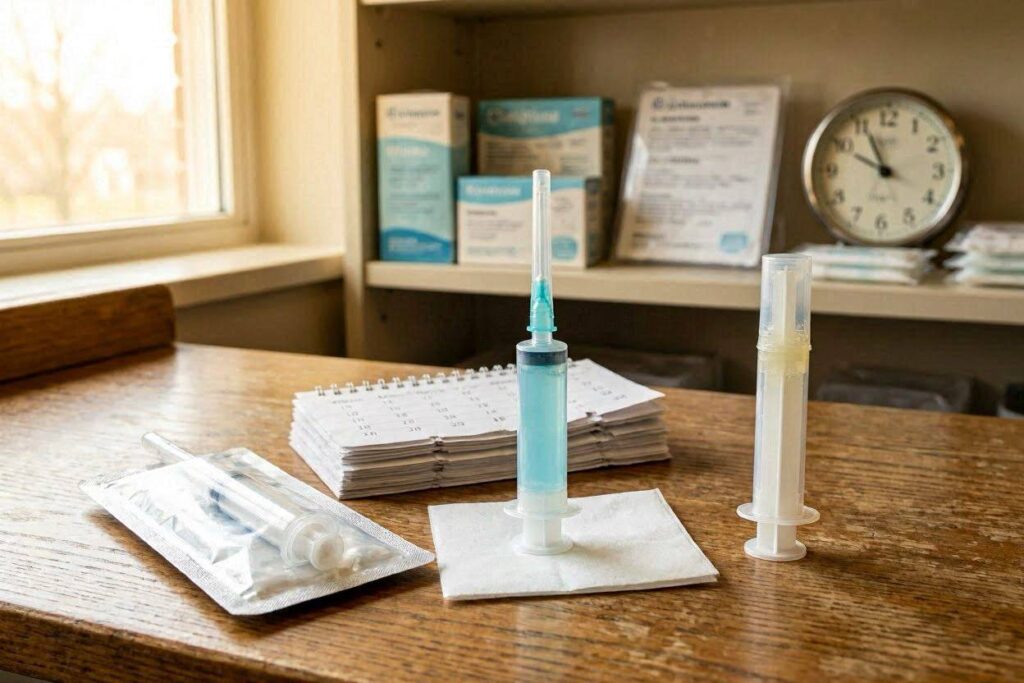
The longevity of a teeth whitening syringe is governed by two distinct metrics: the chemical shelf life (how long the peroxide remains active) and the usage life (how many individual whitening sessions one syringe provides). These two metrics are often conflated, leading to unrealistic expectations about how long a kit “lasts.” This article provides a detailed, evidence-based analysis of whitening syringe lifespan, explaining the chemical degradation timeline, the physical markers of expiration, and the storage protocols that maximize the functional life of your investment.
The Two Distinct Lifespans: Chemical Shelf Life vs. Session Count
Before analyzing specific numbers, we must disentangle the two ways a syringe can “end.” A syringe can be chemically expired—the peroxide has decomposed and the gel is no longer therapeutically active—yet still contain mechanically dispensable liquid. Conversely, a syringe can be chemically fresh but mechanically empty, with the plunger fully depressed and no gel remaining.
Chemical Shelf Life (The Potency Clock):
The active peroxide in the gel degrades via a first-order kinetic process. From the moment the gel is manufactured and sealed, the peroxide molecules are slowly and inexorably decomposing into water and oxygen. This degradation occurs even in an unopened, refrigerated syringe, though the rate is slow. Once the syringe is opened—meaning the cap is removed, the tip is exposed to air, and a small volume of gel is dispensed—the degradation rate accelerates because oxygen from the ambient air and moisture can now contact the gel in the barrel and wick back through the tip.
Session Count (The Volume Clock):
A syringe contains a finite volume of gel, typically 3 to 5 milliliters for a standard dental take-home syringe. Each whitening session consumes a specific volume, roughly 0.25 to 0.5 milliliters for a full-arch application in custom trays, depending on the number of teeth treated and the tray reservoir design. The number of sessions a syringe provides is simply the total volume divided by the per-session consumption volume, assuming no waste.
Chemical Shelf Life: How Long Does the Peroxide Stay Active?
The peroxide concentration in the gel decreases over time. The manufacturer’s expiration date, printed on the syringe or box, is the date until which the manufacturer guarantees that the gel retains at least 90% of its labeled peroxide concentration when stored under recommended conditions.
Unopened, Properly Stored Syringe:
A sealed, unopened syringe of carbamide peroxide or hydrogen peroxide gel stored in a refrigerator (2-8°C or 36-46°F) typically has a manufacturer-assigned shelf life of 12 to 24 months from the date of manufacture. Carbamide peroxide is inherently more chemically stable than direct hydrogen peroxide, trending toward the longer end of this range. At room temperature (20-25°C or 68-77°F), the shelf life of an unopened syringe is shorter, generally 6 to 12 months, because the thermal energy available to drive the decomposition reaction is greater.
Opened Syringe:
Once the syringe cap has been removed and gel has been extruded, the chemical clock accelerates markedly. An opened syringe of carbamide peroxide gel, stored refrigerated with the cap tightly replaced, retains acceptable potency for approximately 3 to 6 months. An opened syringe of hydrogen peroxide gel degrades faster, retaining potency for approximately 2 to 4 months refrigerated. At room temperature, an opened syringe may degrade to sub-therapeutic levels within 4 to 8 weeks. The introduction of atmospheric oxygen and moisture into the barrel tip initiates a slow hydrolysis and oxidation cascade that the cold of the refrigerator cannot entirely halt, only slow.
Physical Markers of Expired or Degraded Syringe Gel
You do not need access to a chemical titration lab to identify a gel that has lost its potency. The physical characteristics of the gel change in observable ways as the peroxide degrades and the polymer base destabilizes.
Watery, Thin Consistency:
A fresh whitening gel is thick, viscous, and syrupy. It holds its shape as a distinct bead when dispensed onto a surface. As the peroxide decomposes into water and oxygen, and as the carbomer or PVP polymer matrix hydrolyzes, the gel becomes progressively thinner and more watery. A gel that flows and runs like water, rather than standing up as a discrete droplet, has undergone significant chemical degradation. The active peroxide has been largely consumed, and the remaining liquid is primarily water, glycerin, and degraded polymer fragments.
Gas Bubbles or Pressurized Syringe:
The decomposition of hydrogen peroxide generates oxygen gas. In a sealed syringe, this gas has nowhere to escape. If you pick up a syringe and notice that the barrel appears distended, or if the plunger has backed out spontaneously, or if gel oozes out of the tip the moment you remove the cap without applying any pressure to the plunger—these are signs of active, ongoing peroxide decomposition and gas accumulation. The syringe is chemically degrading. While not necessarily completely inert, its peroxide concentration is significantly below the labeled value.
Phase Separation:
A stable gel is a homogeneous, clear to slightly translucent, uniform substance. A degraded gel may separate into distinct phases—a clear, watery supernatant floating above a thicker, granular, or clumpy sediment. This phase separation indicates that the polymer matrix has broken down and can no longer maintain a stable colloidal suspension. The gel will not deliver a uniform peroxide dose and may be difficult to apply evenly.
Absence of Foaming on Teeth:
When fresh peroxide gel contacts the organic biofilm and proteins on the teeth, it generates a visible micro-foam of oxygen bubbles. This foaming is a direct visual indicator of active peroxide decomposition at the tooth surface. A completely dead gel will sit on the tooth inertly, producing no visible foam or effervescence. If you apply the gel, insert the tray, and see no tiny bubbles forming along the gingival margin after a few minutes, the peroxide is likely exhausted.
Session Count: How Many Uses Per Syringe?
The number of whitening sessions a single syringe delivers depends on disciplined, conservative gel loading. The most common clinical recommendation for custom tray application is a rice-grain-sized droplet per tooth, placed in the facial reservoir of the tray.
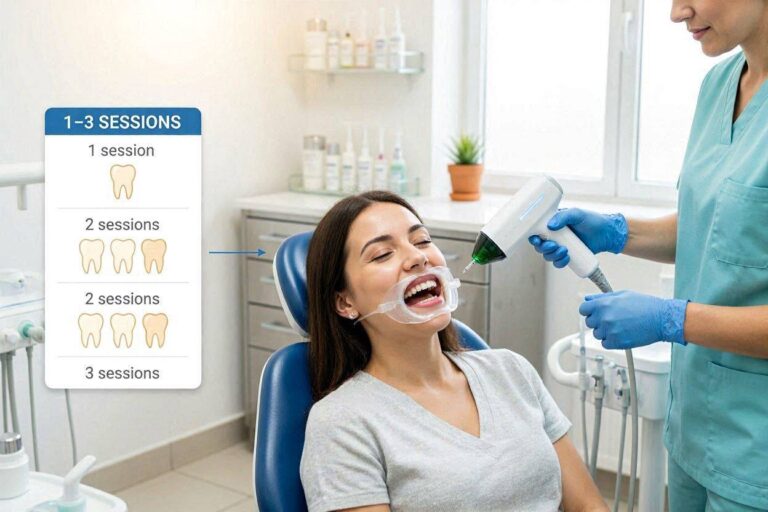
For a full upper arch (typically 10-14 teeth) and a full lower arch, a single session’s total gel consumption should be approximately 0.4 to 0.5 milliliters. A standard 3ml dental syringe, therefore, provides approximately 6 to 7 full dual-arch sessions. A larger 5ml syringe provides approximately 10 to 12 full dual-arch sessions.
The primary cause of premature syringe exhaustion is overloading. If you lay down a thick, continuous bead of gel along the entire tray, you may consume 1.0 to 1.5 milliliters per session, exhausting a 3ml syringe in just 2 or 3 uses. Overloading not only wastes gel but also floods the gums and increases sensitivity. Careful, minimalist loading dramatically extends the per-syringe session count and keeps the cost-per-session low.
Optimizing Syringe Storage for Maximum Longevity
The chemical life of your whitening syringes is directly under your control through proper storage. The three enemies of peroxide stability are heat, light, and air.
Temperature:
Store syringes in the refrigerator, ideally in a sealed plastic bag within the main compartment (not the door, where temperature fluctuates with opening). The cold temperature slows the kinetic rate of peroxide decomposition. If refrigerator storage is not possible, store syringes in the coolest, most temperature-stable part of the home—a basement storage room, a dark interior closet, a bedroom drawer away from exterior walls and heating vents. Never store whitening gel in a bathroom that steams up during hot showers.
Light:
Hydrogen peroxide is photolabile; ultraviolet and even visible blue light catalyze its decomposition. Always keep syringes in their original opaque box or in a light-proof container. Never leave them on a sunny bathroom counter. The opaque syringe barrel itself provides some protection, but the box provides redundancy.
Air (Oxidation):
After each use, wipe the syringe tip clean with a dry tissue to remove any gel residue. Immediately replace the cap tightly. Gel residue on the tip dries, cracks, and creates a channel for air to enter the barrel. Some dentists recommend dispensing a tiny “purge” droplet immediately before loading the trays for the next session. This purges the small volume of gel that has been sitting in the tip, exposed to the air pocket under the cap, and ensures the gel that goes into the tray is fresh from the sealed barrel reservoir.
Comparative Lifespan Table by Peroxide Type
| Peroxide Formulation | Unopened Shelf Life (Refrigerated) | Opened Shelf Life (Refrigerated) | Unopened Shelf Life (Room Temp) | Physical Sign of Degradation |
|---|---|---|---|---|
| 10% Carbamide Peroxide | 18-24 months | 4-6 months | 12 months | Watery consistency; no foam |
| 16% Carbamide Peroxide | 18-24 months | 4-6 months | 12 months | Watery consistency; no foam |
| 6% Hydrogen Peroxide | 12-18 months | 2-3 months | 6-9 months | Gas bubbles in barrel; phase separation |
| 9-10% Hydrogen Peroxide | 12-18 months | 2-3 months | 6-9 months | Gas bubbles; plunger back-out |
Using an “Expired” Syringe: Is It Dangerous or Just Ineffective?
A critical practical question: if you find an old, long-expired syringe, is it harmful to use? The answer is nuanced. The peroxide will have degraded. The gel base (glycerin, carbomer, water) is chemically stable and generally does not become toxic. The primary risk is not chemical burn from a dangerous degradation product; the risk is bacterial contamination.
Over months, an opened syringe tip can become colonized with oral bacteria from previous contact with trays or fingers, or environmental bacteria from the air. A contaminated gel base, lacking the antimicrobial oxidative punch of active peroxide, can serve as a growth medium. Injecting bacterially contaminated gel into a tray and wearing it against your gums for hours introduces a theoretical risk of gingival infection or abscess, particularly if you have any micro-abrasions or gum recession.
If the syringe is years past its expiration date, or if the gel looks cloudy, discolored (yellowing rather than clear), or has a foul, non-peroxide odor, discard it immediately. The cost of a new syringe is negligible compared to the cost and discomfort of treating a soft tissue infection.
Conclusion
- The lifespan of a whitening syringe is defined by both its chemical potency clock—12 to 24 months unopened and refrigerated, dropping to 2 to 6 months after opening—and its physical volume, which provides 6 to 12 full-arch sessions per syringe when loaded with a conservative, rice-grain-sized droplet per tooth.
- Observable physical markers of chemical degradation include a watery, thin consistency, spontaneous plunger back-out from internal gas pressure, phase separation into liquid and sediment layers, and a complete absence of micro-foaming upon tooth contact.
- Expired gel is primarily a risk of bacterial contamination rather than acute chemical toxicity; syringes exhibiting cloudiness, foul odor, or stored for years beyond expiry should be discarded, while recently expired but visually normal syringes are likely merely less potent rather than harmful.
Frequently Asked Questions
Can I freeze whitening syringes to make them last longer?
No. Freezing the aqueous gel can cause ice crystal formation that ruptures the polymer matrix, leading to phase separation and complete structural breakdown upon thawing. Refrigeration at 2-8°C (36-46°F) is the lowest safe storage temperature. Do not freeze.
Why did my new, unopened syringe arrive with a slightly watery first drop?
Some phase separation of the gel during shipping is normal, especially if the syringe was stored horizontally. The first tiny droplet may be a thin liquid that has separated from the bulk gel. Dispense and discard the first 2-3 millimeters of gel from the tip to clear this separated layer before loading your tray with the homogeneous, viscous gel behind it.
How do I know exactly how many milliliters are in my syringe?
The syringe barrel is graduated with volumetric markings (e.g., 1ml, 2ml, 3ml). You can visually track the plunger’s progression. If your syringe lacks markings, the total volume is printed on the syringe label or packaging. Dental whitening syringes are most commonly 3ml or 5ml.
Can I combine the last remnants of several old syringes to get one full dose?
No. Do not pool the last drops from multiple syringes that may be at different stages of chemical degradation and bacterial exposure. You will create a cocktail of unknown peroxide concentration and unknown microbiological safety. Each syringe should be used independently and discarded when its gel quality or expiration status is in question.
Does the color of the gel indicate its potency?
Not reliably. Some formulations are naturally clear, while others are dyed blue or green for visibility. Color fading may indicate dye degradation, not necessarily peroxide degradation. Rely on consistency, foaming activity, and expiration dating rather than color as your primary potency indicators.
Additional Resource:
For detailed information on the chemical stability and safe handling of peroxide-based dental materials, consult the safety data sheets provided by your gel manufacturer or the American Dental Association’s guidelines on professional whitening materials. <a href=”https://www.ada.org/resources/ada-library/oral-health-topics/whitening” target=”_blank” rel=”noopener noreferrer”>ADA Whitening Resources</a>
Disclaimer: This article is for informational and educational purposes only and does not constitute medical or dental advice. The specific shelf life and usage instructions for your whitening gel are provided by the manufacturer and your dental professional. Always adhere to the labeled expiration date and consult your dentist if you have any concerns regarding the safety or potency of your whitening product.