Why Some Dental Implants Are So Cheap?
You are shopping for a solution to your missing tooth. You receive quotes from different dental offices. One quotes $4,500 for a single implant and crown. Another, perhaps a chain clinic or a dental tourism package, quotes $999. The difference is staggering. Your rational mind whispers, “It is just a titanium screw and a crown. Why pay more?” Your cautious mind whispers back, “What are they cutting to get the price that low?”
You are right to be skeptical. A dental implant is a medical device surgically placed into your body. It is not a commodity like a gallon of milk. When the price seems too good to be true, corners are being cut somewhere. Understanding exactly where those corners are cut is essential to making an informed decision about your health.
This guide will dissect the economics of cheap dental implants. We will expose the hidden costs, the inferior materials, the rushed protocols, and the long-term risks that can turn a bargain implant into a financial and biological disaster.
The True Cost Components of a Quality Implant
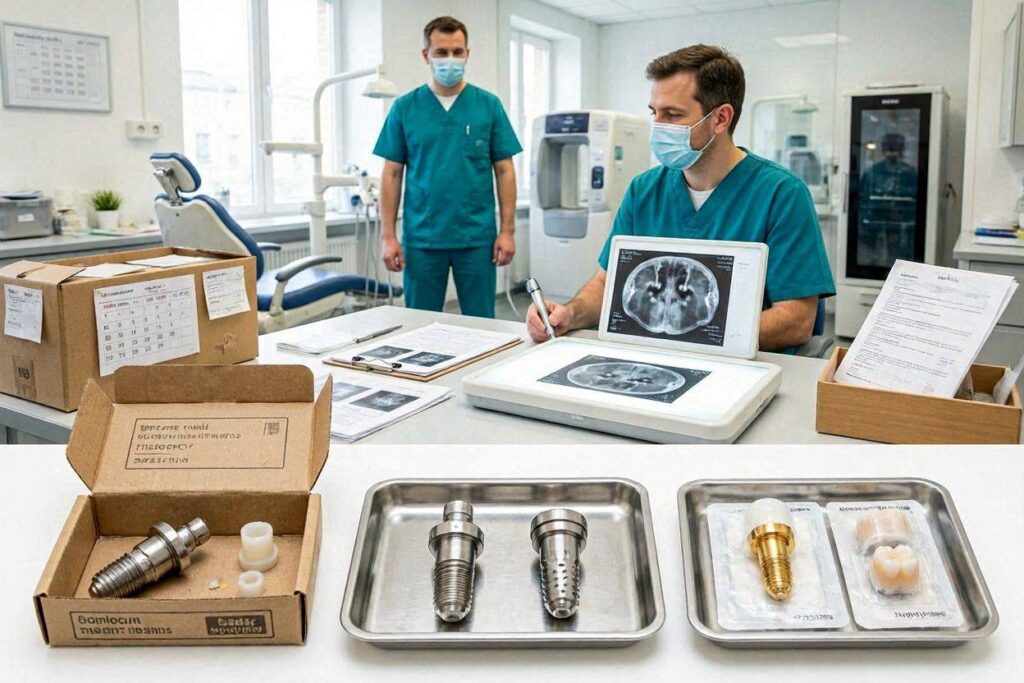
To understand cheap, you must first understand what goes into a fairly priced, high-quality implant. A legitimate fee for a single implant and crown in the United States typically ranges from $3,000 to $6,000. This fee covers far more than a piece of metal.
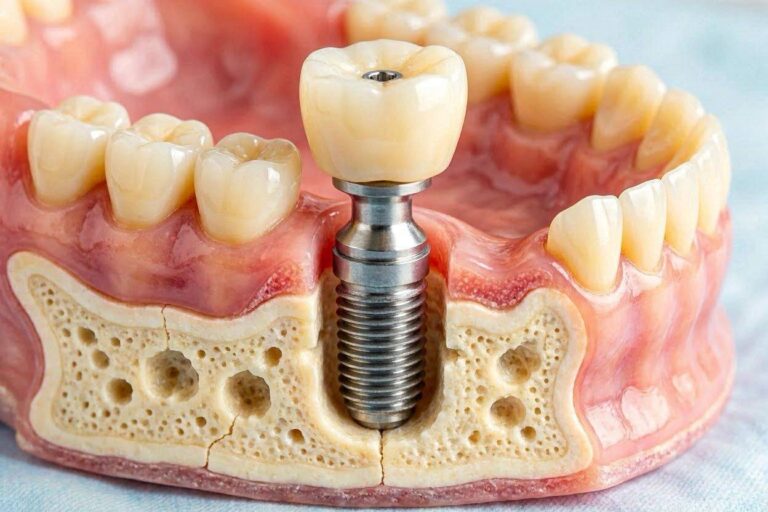
- The Implant Fixture: A precision-engineered titanium or zirconia post from a reputable manufacturer with decades of research, proven surface technology, and rigorous quality control.
- The Abutment: A custom or high-quality stock abutment, precision-machined to fit the implant perfectly.
- The Crown: A custom-fabricated ceramic or zirconia crown, layered to match your natural teeth, made in a high-quality dental laboratory.
- Diagnostics and Planning: A comprehensive exam, a cone beam CT scan, digital impressions, and careful virtual treatment planning.
- The Surgical Procedure: The time, skill, and overhead of an experienced surgeon using sterile technique, high-quality surgical drills, and appropriate anesthesia.
- The Restorative Procedure: Multiple appointments for impressions, try-ins, and final delivery of the crown.
- Follow-up Care: Post-operative visits, occlusion checks, and integration assessments.
This is the gold standard. When an implant is offered for a fraction of this cost, something is being removed or downgraded from this list.
Where Corners Are Cut: The Anatomy of a Cheap Implant
The low price is achieved through a combination of shortcuts. Understanding each one reveals the true risk.
1. The Implant Fixture Itself: Generic, Clone, or No-Name Implants
The most common way to slash the cost of the hardware is to use a generic or “clone” implant. These are implants manufactured by companies that did not invest in the original research and development. They copy the design of a major brand implant, often with lower-grade materials and less precise manufacturing tolerances.
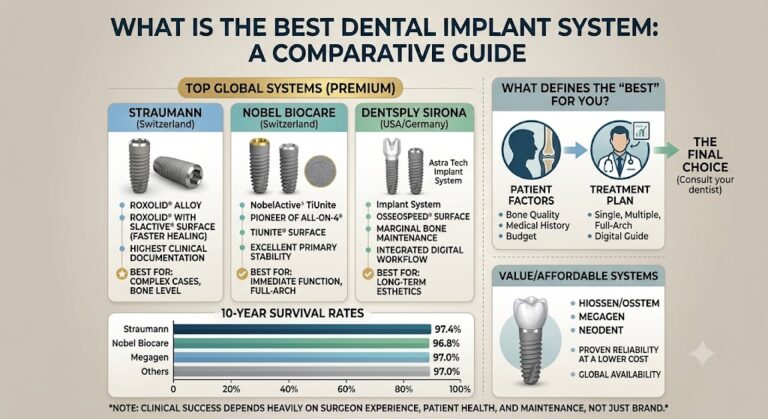
The major implant companies (Straumann, Nobel Biocare, Dentsply Sirona, Zimmer Biomet, BioHorizons) spend enormous sums on research, surface technology development, and quality assurance. Their implants have decades of documented clinical success. A clone implant may look similar, but microscopic differences in the surface texture, thread design, and implant-abutment connection can lead to:
- Poorer osseointegration.
- A higher risk of peri-implantitis.
- A higher risk of abutment screw fracture or loosening.
- Difficulty finding replacement components later if the clone company goes out of business.
Imagine receiving a generic hip replacement. You would be horrified. The same principle applies to your jaw.
2. Inferior Crown Materials and Laboratory Work
A high-quality, lifelike ceramic crown fabricated by a skilled dental technician in a reputable laboratory is expensive. Cheap implant packages often cut this cost by using:
- Lower-Grade Porcelain: More prone to chipping, wear, and staining.
- Stock, Non-Custom Abutments: These may not fit the emergence profile perfectly, creating a food trap and a cosmetic compromise.
- Overseas or Discount Laboratories: The technical skill, quality of materials, and attention to detail may be inferior.
- PMMA (Acrylic) Temporary-Like Crowns: In some extreme cases, a cheap acrylic crown is placed as the “permanent” restoration, which will wear down, stain, and fracture within a few years.
3. The Missing Cone Beam CT Scan
A CBCT scan provides a three-dimensional view of your jawbone, nerves, and sinuses. It is non-negotiable for safe implant planning. It allows the surgeon to measure bone precisely and avoid vital structures.
Some low-cost clinics skip the CBCT and rely solely on two-dimensional panoramic or periapical X-rays. This is like a pilot flying blind. The risk of nerve injury, sinus perforation, and placing an implant into inadequate bone increases dramatically. The cost of a CBCT machine and the time to interpret the scan are expenses a discount clinic may try to avoid.
4. Rushed or Inexperienced Clinicians
A skilled implant surgeon has years of advanced training, often a surgical specialty. Their time and expertise command a fee. Discount clinics may employ general dentists who have taken a weekend course and are placing implants to boost practice revenue. They may not have the experience to manage complications.
High-volume, low-cost clinics operate on an assembly-line model. The dentist is incentivized to move quickly. Surgical corners cut include:
- Inadequate anesthesia.
- Failure to use a surgical guide.
- Poor sterile technique.
- Shorter, less thorough surgical protocols.
A rushed surgery in less-experienced hands is a recipe for implant malposition, nerve damage, and early failure.
5. The Hard Sell and Hidden Fees
The $999 advertised price is often a bait-and-switch tactic. When you arrive for the consultation, you discover that the price only covers the implant fixture itself. The abutment, the crown, the CBCT scan, the surgical guide, the extraction, the bone graft, and the anesthesia are all additional. The final bill may approach or even exceed the cost at a reputable practice, but with inferior components.
Alternatively, the low price is for the absolute simplest case: a single implant in abundant, pristine bone with a cheap crown. If your case requires any additional steps, the price escalates rapidly.
The True Cost of a Failed Cheap Implant
The most expensive implant is the one that fails. A $1,000 implant that fails after three years is far more costly than a $4,500 implant that lasts a lifetime. Consider the cascade of costs and damage when a cheap implant goes wrong.
- Loss of the Implant: The failed implant must be surgically removed. There is a cost for this explantation procedure.
- Bone Loss: Peri-implantitis or a poorly placed implant can destroy significant bone. What was once a straightforward site now needs a major bone graft.
- Bone Grafting: Rebuilding the lost bone costs thousands of dollars and adds months of healing time.
- Nerve Damage Repair: If the inferior alveolar nerve was damaged due to lack of a CBCT scan, you may face chronic pain or numbness. Treatment for nerve injuries is complex, expensive, and often not fully successful.
- Re-treatment: You must now pay for a new, properly done implant. You have paid for the cheap one, paid for its removal, paid for the graft, and now pay for the proper one. The total cost can be triple what the legitimate implant would have cost initially.
“The bitterness of poor quality remains long after the sweetness of low price is forgotten.” — This aphorism is profoundly true in implant dentistry.
When a Lower Price Might Be Legitimate
Not every affordable implant is a scam. There are legitimate reasons why a price might be lower.
- Geographic Location: A rural practice with lower overhead costs may charge less than a practice in a high-rent urban center.
- Dental Schools: University dental schools offer implant treatment performed by residents under expert supervision at significantly reduced fees. The appointments are longer, but the quality is high.
- Insurance Coverage: Some dental insurance plans negotiate discounted fees with in-network providers.
- Clinician Philosophy: Some ethical, highly skilled clinicians operate on a lower-margin, higher-volume model, using efficient digital workflows to reduce lab costs without compromising quality.
The key is to ask questions. A legitimate provider will be transparent about the implant brand, the crown material, the diagnostic process, and their training. They will not pressure you with a limited-time offer.
Red Flags to Watch Out For
If you see any of these warning signs, proceed with extreme caution.
- Advertised prices significantly below the local market average.
- Pressure to “sign up today” for a limited-time deal.
- Refusal to disclose the specific implant brand and manufacturer.
- No mention of a CBCT scan or a surgical guide.
- A consultation that feels rushed, sales-oriented, not clinical.
- The dentist cannot or will not show you before-and-after cases of their own work.
- Online reviews that mention hidden fees or complications handled poorly.
The Wisdom of Investing in Quality
Your dental implant is a long-term investment in your health, function, and self-esteem. It is intended to be a permanent part of your body. You would not choose the cheapest heart surgeon or the cheapest parachute. Do not choose the cheapest implant.
Seek a clinician who inspires trust, who communicates openly about the process, and who uses high-quality, well-researched components. Financing options and payment plans can make a quality implant affordable over time. The peace of mind of knowing your implant was placed with precision, using the best materials, is worth far more than the money you might save by gambling on a bargain.
Conclusion
Cheap dental implants are cheap because corners are cut in the implant fixture quality, the crown materials, the diagnostic imaging, and the surgical skill. Generic clone implants, the absence of a CBCT scan, inferior laboratory work, and rushed, high-volume clinical protocols are common ways costs are slashed. While geographic location or dental schools can offer legitimate lower prices, an advertised bargain-basement fee is often a bait-and-switch or a setup for early failure, leading to significantly higher costs and biological damage in the long run.
FAQ
1. Are all implants from major brands the same?
No. The major global manufacturers (Straumann, Nobel Biocare, Dentsply Sironi, Zimmer Biomet, BioHorizons) have distinct designs, surface technologies, and connection geometries. However, they are all considered premium, well-researched systems. The difference is between these established brands and generic clones or unknown low-cost manufacturers.
2. Is dental tourism a safe way to get cheaper implants?
Dental tourism can offer significant savings, but it carries risks. Quality varies widely. If a complication occurs after you return home, your local dentist may not have the components or the familiarity to manage the specific implant system. Follow-up care is difficult. Due diligence on the foreign clinic’s credentials and implant system is essential.
3. What is a reasonable price range for a single quality implant and crown?
In the United States, a reasonable and common fee for a single, high-quality implant and crown, including all diagnostics, surgery, and restoration, typically ranges from $3,500 to $6,500. Fees vary significantly by region.
4. Can I ask my dentist which implant brand they use?
Absolutely. You have every right to know the make and model of the medical device being placed in your body. A reputable dentist will be happy to tell you and explain why they chose that particular system. If they are evasive, that is a red flag.
Additional Resource
For a patient guide on choosing a dental implant provider and understanding treatment costs, visit the American Academy of Implant Dentistry: https://www.aaid.com/