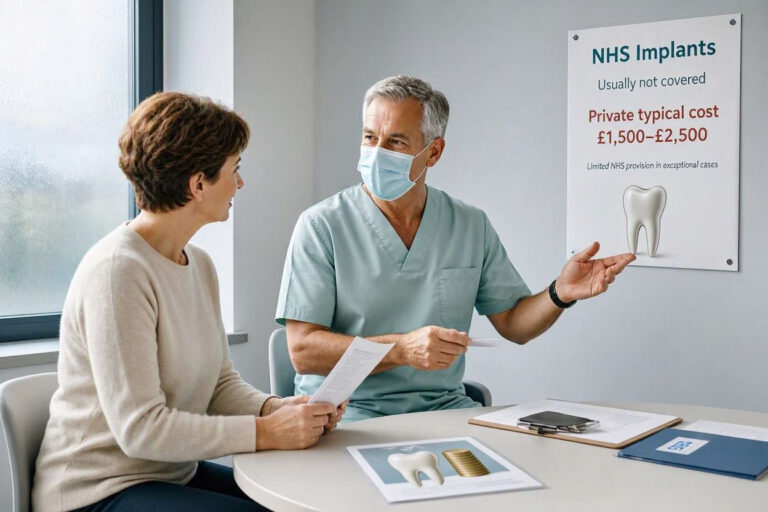
How Much Does A Full Dental Implant Cost?
If you’re reading this, chances are you or someone you love is facing the reality of missing teeth. Maybe you’ve been hiding your smile in photos. Perhaps you’ve stopped enjoying your favorite foods because chewing has become difficult. You might even feel embarrassed in social situations.
You’re not alone.
Millions of adults face tooth loss every year. Whether it’s due to injury, decay, gum disease, or simply the passage of time, losing teeth affects far more than just your appearance. It impacts how you eat, speak, and feel about yourself.
The good news? Dental implants have revolutionized how we replace missing teeth. They look natural, feel secure, and can last decades with proper care.
The confusing part? Figuring out how much they actually cost.
If you’ve started researching dental implants, you’ve probably noticed that prices seem all over the place. One website says $1,500 per implant. Another says $6,000. Your dentist’s office quoted you something different entirely. What gives?
I’m here to help you make sense of it all.
In this comprehensive guide, we’ll walk through everything you need to know about full dental implant costs. We’ll break down the numbers, explain what affects pricing, and help you understand what you’re actually paying for. No jargon. No sales pitch. Just honest, practical information you can use.

What Exactly Are Full Dental Implants?
Before we talk numbers, let’s make sure we’re on the same page about what dental implants actually are.
A dental implant is a small, screw-shaped post typically made of titanium. It’s surgically placed into your jawbone to serve as an artificial tooth root. Once healed, it supports a crown, bridge, or denture on top.
When people say “full dental implants,” they usually mean one of two things:
Individual implants for each missing tooth: If you’re missing several teeth, you might get a separate implant for each one. This is the most natural-feeling option but also the most expensive.
Full-arch restoration: If you’re missing all teeth in an arch (upper or lower), you might get a full set of teeth supported by implants. This often involves four to six implants holding a complete bridge or denture in place.
Both approaches have their pros and cons. Both come with significant costs. But they also offer something priceless: a permanent solution that lets you eat, smile, and live with confidence.
Why Dental Implants Cost More Than Other Options
You might wonder why implants cost so much more than dentures or bridges. The answer comes down to several factors:
Surgical procedure: Implants require a surgical procedure to place them in your jaw. This involves anesthesia, sterile equipment, and a trained professional.
Materials: Titanium and high-quality ceramic aren’t cheap. These materials need to be biocompatible, durable, and precise.
Time and expertise: Implant placement requires specialized training. Your dentist or oral surgeon has invested years in education and thousands of dollars in equipment.
Multiple appointments: The implant process takes months from start to finish. You’ll have consultations, surgery, healing periods, and final restoration appointments.
Long-term value: While the upfront cost is higher, implants can last 25 years or more with proper care. Dentures typically need replacement every 5-10 years.
When you look at cost per year of use, implants often come out ahead.
The Big Question: How Much Do Full Dental Implants Cost?
Alright, let’s get to the number you’ve been waiting for.
The honest answer is: it depends.
But that’s not helpful, is it? Let me give you some real ranges based on actual market data.
Average Cost Ranges in the United States
| Type of Implant | Low End | Average | High End |
|---|---|---|---|
| Single implant (including crown) | $1,500 | $3,000-$4,500 | $6,000+ |
| Full arch (per arch) | $15,000 | $25,000-$30,000 | $50,000+ |
| All-on-4 (per arch) | $12,000 | $20,000-$25,000 | $30,000+ |
| Implant-supported denture | $8,000 | $15,000-$20,000 | $30,000+ |
These numbers can feel overwhelming. I get it. But stay with me—we’ll talk about ways to manage these costs later.
What’s Included in That Price?
When you see a quoted price for dental implants, it’s important to know what’s actually included. Some offices quote the implant only. Others quote the full package.
A complete implant typically includes:
- Initial consultation and imaging (X-rays, CT scans)
- The implant post itself
- Abutment (the connector between implant and crown)
- The crown or restoration
- Surgical placement
- Follow-up visits
Some offices also include:
- Bone grafting (if needed)
- Sedation or anesthesia
- Temporary teeth during healing
- Final adjustments
Always ask for a written treatment plan with itemized costs. Don’t accept a verbal quote.
Why Prices Vary So Much
You might get quotes ranging from $2,000 to $6,000 for what sounds like the same procedure. Here’s why:
Geographic location: A implant in Manhattan costs more than one in rural Mississippi. Overhead costs, demand, and local economies all play a role.
Dentist’s experience: A seasoned implant specialist with decades of experience charges more than a general dentist just starting out.
Materials and brands: Premium implant systems from well-known manufacturers cost more than generic alternatives.
Complexity of your case: Simple cases cost less. Complex cases requiring bone grafting, sinus lifts, or multiple surgeries cost more.
Additional procedures: Extractions, bone grafts, and gum treatments add to the total.
Breaking Down the Costs: What You’re Actually Paying For
Let’s look at each component of a dental implant and what it typically costs.
The Implant Post
This is the titanium screw that goes into your jawbone.
Cost range: $1,000 – $3,000
The implant post itself is a precision-engineered medical device. Major brands like Straumann, Nobel Biocare, and Zimmer Biomet have decades of research behind them. Cheaper implants exist, but they may not have the same track record.
The Abutment
The abutment connects the implant post to the crown. It’s usually made of titanium or zirconia.
Cost range: $300 – $800
Some implant systems include the abutment in the package price. Others charge separately.
The Crown
This is the visible part of your new tooth. It’s custom-made to match your natural teeth.
Cost range: $800 – $2,500
Crowns can be made from different materials:
- Porcelain-fused-to-metal: $800 – $1,500
- All-ceramic (zirconia): $1,200 – $2,500
- Full metal: $600 – $1,200 (rarely used for visible teeth)
Surgical Fees
This covers the dentist’s time and expertise in placing the implant.
Cost range: $500 – $2,000 per implant
Some dentists bundle this into the total price. Others charge separately.
Imaging and Diagnostics
Before implant surgery, you need proper imaging to plan the procedure.
Cost range: $100 – $500
This typically includes:
- Panoramic X-ray
- CT scan (cone beam)
- Study models
Bone Grafting (If Needed)
If your jawbone isn’t thick or dense enough to support an implant, you’ll need a bone graft first.
Cost range: $500 – $3,000
The cost depends on:
- How much bone is needed
- Whether it’s a simple or complex graft
- The source of graft material (your own bone, donor bone, or synthetic)
Extraction (If Needed)
If the failing tooth is still in place, it needs to be removed first.
Cost range: $150 – $500 per tooth
Simple extractions cost less. Surgical extractions for impacted or broken teeth cost more.
Full Mouth Dental Implants: The Complete Picture
When you need all your teeth replaced, the costs add up quickly. Let’s look at the most common full-mouth options.
All-on-4 Implants
This popular technique uses just four implants to support a full arch of teeth. Two implants are placed straight, and two are angled to maximize bone contact.
How it works:
The dentist places four implants in your jaw. A temporary set of teeth goes on the same day. After healing, you get your permanent restoration.
Cost range: $12,000 – $30,000 per arch
Pros:
- Fewer implants means lower cost
- Often avoids need for bone grafting
- Same-day temporary teeth
- Shorter treatment time
Cons:
- Not suitable for everyone
- Less stable than more implants
- May not work if bone loss is severe
All-on-6 Implants
This uses six implants instead of four for added stability.
Cost range: $18,000 – $35,000 per arch
Pros:
- More stable than All-on-4
- Better force distribution
- Longer-lasting results
Cons:
- Higher cost
- May require bone grafting
- Longer surgery time
Implant-Supported Dentures
These are removable dentures that snap onto implants. Usually, two to four implants support each denture.
Cost range: $8,000 – $30,000 per arch
Pros:
- More affordable than fixed options
- Removable for cleaning
- Much more secure than regular dentures
Cons:
- Still removable (some people prefer fixed)
- Implants still require surgery
- Denture may need replacement over time
Fixed Implant Bridges
For patients missing several but not all teeth, a fixed bridge supported by implants may work.
Cost range: $5,000 – $15,000 per bridge section
Pros:
- Fixed and permanent
- Natural appearance
- Fewer implants than individual replacement
Cons:
- Requires healthy adjacent teeth
- More complex than single implants
- Higher cost than traditional bridges
Comparing Dental Implants to Other Tooth Replacement Options
Let’s put implant costs in perspective by comparing them to alternatives.
| Option | Initial Cost | Lifespan | Comfort | Appearance | Bone Health |
|---|---|---|---|---|---|
| Dental Implant | $3,000-$6,000 per tooth | 25+ years | Excellent | Excellent | Maintains bone |
| Traditional Bridge | $1,500-$5,000 | 10-15 years | Good | Good | Can cause bone loss |
| Partial Denture | $500-$2,500 | 5-10 years | Fair | Fair | Can cause bone loss |
| Full Denture | $1,000-$5,000 | 5-10 years | Fair | Fair | Causes bone loss |
| All-on-4 | $12,000-$30,000 | 20+ years | Excellent | Excellent | Maintains bone |
The Long-Term Math
Let’s say you’re 50 years old and missing a tooth. You expect to live another 30 years.
Option 1: Dental Implant
- Initial cost: $4,000
- Replacements needed: 0-1
- Total 30-year cost: $4,000 – $8,000
Option 2: Traditional Bridge
- Initial cost: $3,000
- Replacements needed: 2-3
- Total 30-year cost: $9,000 – $12,000
Option 3: Partial Denture
- Initial cost: $1,500
- Replacements needed: 3-6
- Total 30-year cost: $6,000 – $10,500
Suddenly, implants don’t look so expensive.
And remember: bridges and dentures don’t prevent bone loss. Implants do. That’s a health benefit you can’t put a price on.
Factors That Affect Your Final Cost
Many variables influence what you’ll actually pay. Let’s explore the most important ones.
Your Geographic Location
Prices vary dramatically by region. Here’s a rough comparison:
| Region | Single Implant Average |
|---|---|
| Northeast US (NYC, Boston) | $4,500 – $6,000 |
| West Coast (LA, SF, Seattle) | $4,000 – $5,500 |
| Midwest (Chicago, Columbus) | $3,000 – $4,500 |
| South (Atlanta, Dallas) | $2,800 – $4,000 |
| Rural areas | $2,500 – $3,500 |
Your Dentist’s Qualifications
A general dentist who places occasional implants charges less than a board-certified oral surgeon or periodontist. But experience matters. You want someone who has placed hundreds (or thousands) of implants successfully.
The Implant Brand
Premium implants from Straumann, Nobel Biocare, and Dentsply Sirona cost more. Budget implants from lesser-known manufacturers cost less. The difference? Research, quality control, and long-term success rates.
Your Bone Health
If you’ve lost bone density, you’ll need grafting before implants. This adds cost and time to your treatment.
Your Overall Health
Conditions like diabetes, autoimmune diseases, and smoking can affect healing. You may need additional appointments or treatments to ensure success.
The Type of Restoration
A single crown costs less than a full arch. A removable denture costs less than a fixed bridge. The more teeth you’re replacing, the higher the cost.
Additional Procedures
Common add-ons include:
- Sinus lift: $1,500 – $3,000
- Ridge expansion: $1,000 – $2,500
- Soft tissue grafting: $500 – $1,500
- Extractions: $150 – $500 per tooth
Dental Implant Costs by Country
If you’re considering dental tourism, here’s what implants cost in popular destinations.
| Country | Single Implant | Full Arch |
|---|---|---|
| United States | $3,000 – $6,000 | $20,000 – $50,000 |
| Canada | $2,500 – $5,000 | $18,000 – $40,000 |
| United Kingdom | $2,500 – $5,000 | $20,000 – $40,000 |
| Australia | $3,000 – $6,000 | $25,000 – $50,000 |
| Mexico | $1,000 – $2,500 | $8,000 – $20,000 |
| Costa Rica | $1,200 – $2,500 | $10,000 – $20,000 |
| Thailand | $1,500 – $3,000 | $12,000 – $25,000 |
| Hungary | $1,000 – $2,000 | $8,000 – $18,000 |
| Turkey | $800 – $1,800 | $6,000 – $15,000 |
| India | $700 – $1,500 | $5,000 – $12,000 |
Is Dental Tourism Worth It?
Traveling abroad for dental work can save thousands. But consider these factors:
Pros:
- Significant cost savings
- Often includes hotel and transportation
- Experienced dentists in popular destinations
Cons:
- Travel costs add up
- Follow-up care is difficult
- Language barriers
- Different quality standards
- No legal recourse if something goes wrong
If you’re considering dental tourism, do extensive research. Read reviews. Ask for credentials. Video call the dentist before booking.
Will Insurance Cover Dental Implants?
This is where many people get frustrated.
Traditional Dental Insurance
Most dental insurance plans classify implants as a “major” procedure. They may cover 50% after you meet your deductible. But there’s usually an annual maximum—often $1,000 to $2,000.
That means if your implant costs $4,000, insurance might pay $1,500 (after deductible). You’re left with $2,500.
Some plans specifically exclude implants. Check your policy carefully.
Medical Insurance
Medical insurance sometimes covers implants if they’re medically necessary. For example:
- Implants needed after a traumatic injury
- Implants required due to a congenital condition
- Implants as part of reconstructive surgery
Cosmetic replacement of missing teeth is usually not covered.
Medicare
Original Medicare (Part A and Part B) does not cover dental implants. Medicare Advantage plans may offer some dental coverage, but it varies widely.
Medicaid
Medicaid coverage for dental implants is limited. Some states offer coverage for medically necessary cases. Most do not cover elective implant procedures.
Dental Discount Plans
These aren’t insurance. You pay an annual fee (usually $100-$200) and get discounted rates from participating dentists. Savings are typically 10-30%.
How to Make Dental Implants More Affordable
Don’t let the price tag scare you away. Here are practical strategies to manage costs.
1. Get Multiple Quotes
Prices vary significantly between offices. Get at least three quotes before deciding.
2. Ask About Payment Plans
Many dental offices offer in-house financing. You might pay monthly with low or no interest.
3. Use a Health Savings Account (HSA)
If you have an HSA, you can use pre-tax dollars for dental implants. This effectively reduces your cost by your tax rate.
4. Look into CareCredit
CareCredit is a healthcare credit card with promotional financing options. You might get 6-24 months of interest-free payments.
5. Consider Dental Schools
Dental schools offer discounted treatment performed by supervised students. Savings can be 30-50%.
6. Negotiate
It never hurts to ask. Some dentists offer discounts for upfront payment or multiple implants.
7. Time It Right
If you have insurance with an annual maximum, spreading treatment across two calendar years can maximize benefits.
8. Prioritize
If you need multiple implants, you don’t have to do them all at once. Start with the most visible or functional teeth.
9. Consider All-on-4
If you need full-arch replacement, All-on-4 is often more affordable than individual implants for each tooth.
10. Travel if Appropriate
Dental tourism isn’t for everyone, but it can save thousands if you’re a good candidate.
The Dental Implant Process: What to Expect
Understanding the process helps you plan financially and emotionally.
Step 1: Initial Consultation
Your dentist examines your mouth, takes X-rays, and discusses your goals. You’ll get a treatment plan and cost estimate.
Timeline: 1-2 appointments
Step 2: Pre-Surgical Preparation
If needed, you’ll have extractions, bone grafting, or other preparatory procedures. This may require healing time before implant placement.
Timeline: 1-2 appointments, plus 3-6 months healing
Step 3: Implant Placement
The dentist surgically places the implant into your jawbone. This is usually done under local anesthesia, though sedation is available.
Timeline: 1-2 hours per implant
Step 4: Osseointegration
The implant fuses with your jawbone. This takes 3-6 months. You’ll wear a temporary tooth or denture during this time.
Timeline: 3-6 months
Step 5: Abutment Placement
The dentist attaches the abutment to the implant. This may require a minor procedure.
Timeline: 1 appointment
Step 6: Crown Fabrication
Impressions are taken, and your custom crown is made in a lab.
Timeline: 1-2 weeks
Step 7: Final Restoration
The crown is attached to the abutment. You now have a complete, functional tooth.
Timeline: 1 appointment
Total Timeline
From start to finish, the process usually takes 6-12 months. Some cases are faster. Complex cases take longer.
Are Dental Implants Worth the Cost?
This is a personal question only you can answer. But let’s consider the benefits.
Health Benefits
- Prevents bone loss: Implants stimulate your jawbone, preventing the shrinkage that occurs with missing teeth.
- Protects adjacent teeth: Unlike bridges, implants don’t require grinding down healthy teeth.
- Improves nutrition: You can eat a wider variety of foods.
- Supports overall health: Poor oral health is linked to heart disease, diabetes, and other conditions.
Quality of Life Benefits
- Confidence: You can smile, laugh, and speak without worry.
- Comfort: Implants feel like natural teeth.
- Convenience: No adhesives, no soaking, no removal at night.
- Durability: With proper care, implants can last a lifetime.
The Emotional Factor
Missing teeth affects more than your mouth. It affects your self-esteem, your relationships, and your willingness to engage with the world.
Many implant patients say it’s the best money they ever spent. Not because it’s cheap—but because it gave them their life back.
Common Questions About Dental Implant Costs
Why are dental implants so expensive?
Implants require surgery, specialized training, high-quality materials, and multiple appointments over several months. The cost reflects the expertise and resources needed to provide a safe, lasting solution.
Can I get dental implants for $1,000?
You might find discount offers, but be cautious. Very low prices often mean:
- Inferior materials
- Inexperienced providers
- Hidden fees
- No follow-up care
Quality implants cost what they cost for good reasons.
Do dental implants hurt?
The surgery is done under anesthesia, so you won’t feel pain during the procedure. Afterward, you’ll have some soreness and swelling, which can be managed with pain relievers.
How long do dental implants last?
With proper care, implants can last 25 years or more. Some last a lifetime. The crown may need replacement after 10-15 years.
Am I a candidate for dental implants?
Most healthy adults are candidates. You may not be a good candidate if you:
- Smoke heavily
- Have uncontrolled diabetes
- Have severe gum disease
- Have insufficient bone density (unless you get grafting)
How do I find a good implant dentist?
Look for:
- Board certification
- Extensive implant training
- Years of experience
- Positive patient reviews
- Before-and-after photos
- Transparent pricing
What if I can’t afford implants?
Consider:
- Payment plans
- Dental schools
- Dental tourism
- Alternative options (bridges, dentures)
- Saving up for treatment
Don’t rush into a cheap solution that may cause problems later.
Important Notes for Readers
Get Everything in Writing: Always request a written treatment plan with itemized costs. Verbal quotes mean nothing if there’s a dispute.
Ask About Guarantees: Some dentists offer warranties on their implant work. Ask what’s covered and for how long.
Don’t Skip Follow-Ups: Post-implant checkups are essential. Problems caught early are easier and cheaper to fix.
Maintain Good Oral Hygiene: Implants require the same care as natural teeth. Brush, floss, and see your dentist regularly.
Be Skeptical of Deals That Seem Too Good: If a price seems impossibly low, ask why. There’s usually a catch.
Consider the Total Cost: The cheapest implant isn’t always the best value. Factor in longevity, follow-up care, and the dentist’s experience.
Conclusion
Full dental implant costs range from $1,500 to $6,000 per tooth, or $12,000 to $50,000 for full-arch restoration. Prices depend on your location, dentist, bone health, and the complexity of your case. While implants are a significant investment, they offer decades of function, comfort, and confidence that alternatives can’t match. With payment plans, insurance, and careful planning, implants can be more accessible than you might think.
Frequently Asked Questions
How much does a full set of dental implants cost?
A full set of dental implants typically costs between $20,000 and $50,000 per arch, depending on the number of implants, the type of restoration, and your geographic location.
Are dental implants covered by insurance?
Most dental insurance plans cover 50% of implant costs after a deductible, up to an annual maximum of $1,000-$2,000. Some plans exclude implants entirely. Medical insurance may cover implants if they’re medically necessary.
Can I get dental implants if I have bone loss?
Yes, but you may need a bone graft first. This adds $500-$3,000 to your total cost and 3-6 months to your treatment timeline.
How long does it take to get dental implants?
The full process takes 6-12 months from consultation to final restoration. Some cases are faster with immediate-load implants.
What’s the cheapest way to replace missing teeth?
Removable partial dentures are the least expensive option, costing $500-$2,500. However, they don’t prevent bone loss and typically need replacement every 5-10 years.
Do dental implants feel like real teeth?
Yes. Most patients say implants feel indistinguishable from natural teeth after healing.
What happens if I don’t replace a missing tooth?
The jawbone can shrink, adjacent teeth can shift, and your bite can change. Missing teeth also affect nutrition, speech, and self-confidence.
Can I finance dental implants?
Yes. Many dental offices offer payment plans. You can also use CareCredit, HSA funds, or personal loans.
Additional Resources
For more information on dental implant costs and financing options, visit the American Dental Association’s consumer resources at ADA.org.