What To Look For In An Endodontist?
Tooth pain has a way of focusing your attention like little else can. When your dentist tells you that a root canal is necessary and refers you to an endodontist, you face a decision that affects both your immediate comfort and the long-term survival of your tooth. Choosing the right specialist matters. Endodontists are not interchangeable, and the differences between them can influence everything from your experience during the procedure to the likelihood that your tooth remains functional for decades to come.
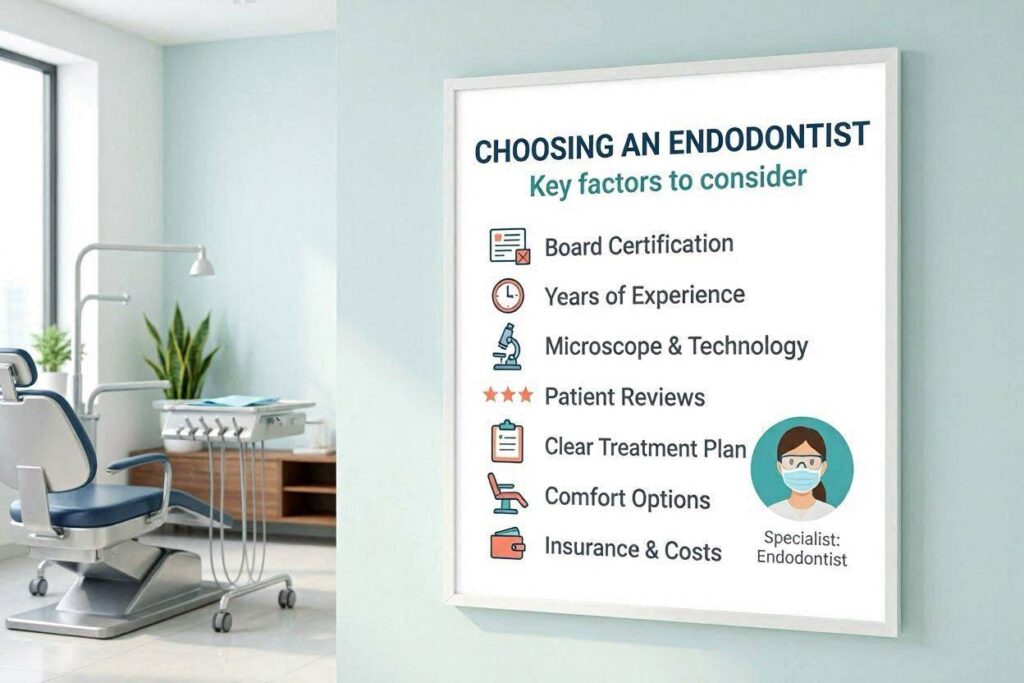
An endodontist is a dentist who has completed additional years of advanced training specifically in treating the interior of the tooth, the pulp chamber and root canals. Their expertise centers on saving teeth that would otherwise require extraction. When you need this level of specialized care, knowing what to look for helps you make a confident choice. This guide walks you through every factor worth considering, from credentials and technology to communication style and emergency availability.
Credentials and Qualifications
The most fundamental consideration when choosing an endodontist is verifying that they possess the proper training and credentials. Endodontics is a recognized dental specialty, and legitimate specialists have completed specific educational requirements beyond dental school.
Board Certification
Board certification represents the highest credential an endodontist can achieve. In the United States, the American Board of Endodontics confers board certification after the endodontist passes a rigorous series of written, clinical, and oral examinations. A board-certified endodontist has demonstrated mastery of the full scope of endodontic knowledge and techniques.
This certification is voluntary. Not every qualified endodontist pursues it. Those who do signal a commitment to excellence and a willingness to have their knowledge and skills evaluated by their peers. When you see the designation “Diplomate, American Board of Endodontics” after a practitioner’s name, you know they have met the highest standards the specialty offers.
Specialty Training
Endodontists complete two to three years of advanced specialty education in an accredited residency program after earning their dental degree. This training focuses intensively on root canal therapy, diagnosis of dental pain, management of traumatic dental injuries, and microsurgical endodontic procedures.
Confirm that the endodontist completed a program accredited by the Commission on Dental Accreditation. This accreditation ensures the program meets established educational standards. Most endodontists list their residency training on their website or in their office. If the information is not readily available, ask.
State Licensure and Continuing Education
Every practicing endodontist must hold a current dental license in the state where they practice. State dental boards maintain online databases where you can verify licensure status and check for any disciplinary actions. While disciplinary records are rare, checking provides peace of mind.
Endodontics evolves continuously. New techniques, materials, and technologies emerge regularly. An endodontist committed to staying current pursues continuing education beyond the minimum required for license renewal. Look for practitioners who attend major endodontic conferences, publish in professional journals, or teach at dental schools. These activities indicate engagement with the broader specialty community and exposure to the latest advances.
Experience and Case Volume
Experience matters in endodontics, but the quality of experience matters more than simple years in practice. An endodontist who performs root canal treatments every day, day after day, develops a level of proficiency that comes only from repetition.
Procedure Volume
Ask about the number of root canal procedures the endodontist performs in a typical week. A full-time endodontist may complete twenty to forty cases weekly. This high volume keeps skills sharp and exposes the practitioner to a wide range of anatomical variations and complications. Experience with the uncommon prepares an endodontist to handle the unexpected.
Experience with Your Specific Situation
Root canals vary enormously in complexity. A front tooth with a single straight root differs significantly from a molar with multiple curved, narrow, or calcified canals. If your case involves specific challenges, such as a tooth with existing failed root canal treatment that requires retreatment, a tooth with unusual anatomy, or a surgical approach, ask the endodontist about their experience with similar cases.
Retreatment cases deserve particular attention. Removing old filling materials, navigating around previous obstructions, and addressing persistent infection make retreatment more demanding than initial treatment. An endodontist who regularly handles retreatment cases brings valuable experience to your situation.
Success Rates and Tracking
Reputable endodontists track their outcomes. Ask about success rates for the type of procedure you need. While no practitioner achieves one hundred percent success, an experienced endodontist should be able to discuss expected outcomes based on their own data and the published literature. Transparency about success rates and the factors that influence them indicates professionalism and honesty.
Technology and Equipment
Endodontic treatment has been transformed by technology. The tools an endodontist uses directly affect the accuracy of diagnosis, the efficiency of treatment, and the quality of the outcome.
Cone-Beam Computed Tomography
Cone-beam computed tomography, or CBCT, provides three-dimensional images of teeth and surrounding structures. Unlike traditional two-dimensional X-rays, CBCT reveals anatomy in multiple planes, showing the exact number, shape, and location of root canals, as well as any pathology in the surrounding bone.
For complex cases, CBCT imaging has become the standard of care. It identifies canals that would be invisible on conventional radiographs, detects root fractures, and helps plan surgical approaches with precision measured in millimeters. An endodontist who uses CBCT in their practice demonstrates a commitment to thorough diagnosis and treatment planning.
Dental Operating Microscope
The operating microscope has revolutionized endodontics. It provides magnification and illumination that allow the endodontist to see details invisible to the naked eye. Finding calcified canals, identifying microscopic fractures, removing fractured instruments, and thoroughly cleaning the canal system all become possible with the enhanced visualization the microscope provides.
The microscope is not optional equipment for a modern endodontic practice; it is essential. Endodontists who use the microscope for every case achieve better outcomes than those who rely on loupes or unaided vision. When evaluating a practice, confirm that a microscope is used routinely, not just for selected cases.
Digital Radiography
Digital X-rays expose patients to significantly less radiation than traditional film X-rays and provide instant images. This immediacy allows the endodontist to verify working lengths, confirm filling quality, and make adjustments during the procedure without waiting for film development. Digital images can also be enhanced, magnified, and shared easily with referring dentists.
Electronic Apex Locators
Determining the precise length of the root canal is critical. Instrumentation and filling that extend too far beyond the root tip can cause inflammation and pain. Treatment that falls short leaves infected tissue behind. Electronic apex locators measure canal length accurately without the need for multiple X-rays. They have largely replaced the older method of estimating length from radiographs alone.
Ultrasonic Instrumentation
Ultrasonic devices use high-frequency vibration to remove posts, broken instruments, and calcifications from root canals. They also activate irrigating solutions, improving cleaning effectiveness. An endodontist equipped with modern ultrasonic technology can manage complex cases more predictably than one relying solely on hand instruments.
Rotary Instrumentation Systems
Nickel-titanium rotary files, driven by specialized motors, clean and shape root canals with greater efficiency and consistency than traditional stainless steel hand files. Modern rotary systems are more flexible and fracture-resistant than earlier generations. The specific system used is less important than the endodontist’s proficiency with it, but current technology indicates an updated practice.
Pain Management and Comfort
Fear of pain drives much of the anxiety surrounding root canal treatment. Ironically, the procedure itself relieves pain, and modern anesthesia techniques make the treatment comfortable. An endodontist’s approach to pain management and patient comfort deserves significant weight in your decision.
Anesthesia Expertise
Administering profound anesthesia in the presence of inflammation requires skill. Inflamed tissue alters the local environment and can make achieving numbness more challenging. Experienced endodontists are adept at supplemental anesthesia techniques, such as intraligamentary, intraosseous, or intrapulpal injections, for the rare cases when standard injections do not provide complete numbness.
Ask about the endodontist’s approach to ensuring patient comfort. A confident, specific answer that addresses both routine and challenging anesthesia situations indicates the practitioner takes pain control seriously.
Sedation Options
Some patients need more than local anesthesia to manage anxiety. Oral sedation, nitrous oxide, and intravenous sedation offer different levels of relaxation. If you anticipate significant anxiety about the procedure, ask what sedation options the practice offers and who administers them. IV sedation should be provided by a practitioner with appropriate training and credentials in sedation dentistry.
Patient Comfort Amenities
The environment and small comforts contribute to a positive experience. Noise-canceling headphones, blankets, television or music options, and a calm, unhurried atmosphere all help patients feel more at ease. While these amenities are not clinical necessities, they reflect a practice culture that prioritizes the patient experience.
Communication and Patient Education
How an endodontist communicates with you matters before, during, and after treatment. You need to understand your diagnosis, your options, and what to expect. An endodontist who communicates well builds trust and reduces anxiety.
The Consultation Experience
During your initial consultation, the endodontist should explain the diagnosis in terms you understand. They should review the relevant X-rays or CBCT images with you, pointing out the problem areas and what they show. A clear explanation of why the tooth needs treatment, what the procedure involves, and the expected prognosis helps you make an informed decision.
Pay attention to whether the endodontist listens to your concerns and answers your questions thoroughly. Do they rush through the explanation, or do they take the time to ensure you understand? A specialist who invests time in patient education at the outset is more likely to communicate well throughout your care.
Informed Consent
Before treatment, you should receive a thorough explanation of the risks, benefits, and alternatives to the proposed procedure. The endodontist should discuss the likelihood of success, what complications could arise, and what would be done if complications occur. You should also understand the alternative of tooth extraction and replacement, including the implications of that choice.
Informed consent is not just a form to sign. It is a conversation. The endodontist should welcome your questions and ensure you feel comfortable with the plan before proceeding.
Post-Treatment Communication
After your root canal, you need to know what to expect during recovery, how to manage any discomfort, and when to follow up with your restorative dentist for the permanent crown. The endodontist should provide clear written instructions and be available for questions that arise after you leave the office. A practice that provides an after-hours contact number for emergencies demonstrates commitment to patient care beyond business hours.
Office Environment and Staff
The endodontist does not work alone. The team that surrounds them contributes significantly to your overall experience and, in some aspects, to the quality of your care.
Staff Professionalism
From your first phone call, the front desk staff sets the tone. Are they courteous, helpful, and efficient? Do they assist you with insurance questions and help coordinate with your referring dentist? The administrative team’s competence affects scheduling, billing, and the flow of information before and after your procedure.
Dental Assistants
Endodontic assistants work closely with the endodontist during your treatment. Their skill in anticipating the practitioner’s needs, managing instruments and materials, and supporting you during the procedure matters. Experienced, well-trained assistants contribute to smoother, shorter appointments and better outcomes.
Sterilization and Infection Control
Infection control standards should be visible and impeccable. Instruments should arrive in sealed sterilization pouches. Surfaces should be cleaned and covered with disposable barriers. The team should wear appropriate personal protective equipment. A practice that is transparent about its sterilization protocols and maintains a visibly clean environment earns your confidence.
Office Atmosphere
The physical environment affects your comfort. A clean, organized, well-maintained office suggests attention to detail that likely extends to clinical care. The atmosphere should feel professional yet welcoming, not chaotic or disorganized.
Referral Relationship with Your General Dentist
Endodontic treatment is usually one step in a larger restorative plan. The endodontist treats the root canal system, and your general dentist places the permanent crown or final restoration. Coordination between these providers is essential.
Communication with Referring Dentist
A good endodontist communicates promptly and clearly with your general dentist. After your root canal, the referring dentist should receive a detailed report including what was done, any findings of note, and recommendations for the final restoration. X-rays should be shared. This communication ensures continuity of care and prevents misunderstandings about the treatment plan.
Willingness to Collaborate
In some cases, the endodontist and restorative dentist may need to discuss the case directly, particularly if the tooth presents restorative challenges or if the treatment plan requires coordination. An endodontist who welcomes this collaboration and maintains professional relationships with area dentists serves your interests better than one who operates in isolation.
Respect for the Referral Relationship
The endodontist should respect your relationship with your general dentist and not attempt to redirect your ongoing care. The role of the endodontist is to provide specialized treatment and return you to your dentist for completion of the restorative phase.
Location and Accessibility
Practical considerations affect your treatment experience. While clinical quality should be your primary focus, logistics matter, especially when multiple visits may be needed.
Office Location
An endodontist located conveniently to your home or workplace reduces the stress of travel and makes it easier to arrive on time for appointments. For patients in rural areas, the nearest endodontist may be some distance away. In such cases, weigh the travel burden against the quality of care available locally.
Appointment Availability
A root canal often needs to be done promptly. Delaying treatment of an infected tooth risks worsening pain and the spread of infection. Ask about typical wait times for new patient consultations and for treatment appointments. An endodontist who can see you within a reasonable timeframe addresses your problem before it escalates.
Emergency Access
Dental emergencies do not always occur during business hours. An endodontist who provides after-hours emergency coverage or who has a clear system for managing urgent situations offers important reassurance. Ask about the practice’s emergency policy before you need it.
Cost and Insurance Considerations
The financial aspect of endodontic care is a reality that must be addressed. While cost should not be the sole or primary factor in choosing a specialist, you need to understand what you will pay.
Fee Transparency
The endodontic practice should provide a clear estimate of fees before treatment begins. This estimate should include the examination, diagnostic imaging, the procedure itself, and any anticipated follow-up visits. You should know what you are paying and what is included before you consent to treatment.
Insurance Participation
Ask whether the practice participates in your dental insurance network. In-network providers have contracted rates that are typically lower than the fees charged to out-of-network patients. If the endodontist is out-of-network, ask for an estimate of your out-of-pocket costs after insurance reimbursement.
Payment Options
Many endodontic practices offer payment plans or work with healthcare financing companies to make treatment more affordable. If the cost of treatment presents a challenge, ask about available options before scheduling. Some practices offer discounts for payment in full at the time of service.
Value Perspective
The most expensive endodontist is not necessarily the best, and the least expensive is not necessarily a bargain. A root canal performed with outdated techniques or inadequate instrumentation may fail, requiring costly retreatment or tooth extraction and replacement. The long-term value of treatment done right the first time far exceeds any short-term savings from choosing based on price alone.
Online Reputation and Reviews
While online reviews should not be your sole source of information, they provide useful insight into the patient experience.
What to Look for in Reviews
Look for patterns rather than isolated comments. Multiple reviews that mention the same positive or negative aspects of the practice carry more weight than individual outlier reviews. Pay attention to comments about pain management, communication, wait times, and the friendliness of staff.
Professional Referrals
Your general dentist’s referral carries significant weight. Dentists refer to endodontists whose work they trust and whose patients return satisfied. Ask your dentist why they recommend a particular endodontist. They may have insight into the specialist’s clinical skills that patient reviews cannot provide.
Word of Mouth
Friends, family members, and colleagues who have undergone root canal treatment can share their experiences. Personal recommendations often provide candid assessments of what the experience was really like.
Second Opinions
If you have doubts about a recommended treatment plan, seeking a second opinion is reasonable and appropriate. A confident, ethical endodontist will not be threatened by a patient seeking additional information.
When a Second Opinion Is Valuable
Consider a second opinion if the recommended treatment is extensive, if you have been told a tooth cannot be saved and you want to explore all options, if you have had previous failed root canal treatment, or if something about the initial consultation did not feel right to you. Trusting your provider matters, and if that trust is not present, a second opinion can provide clarity.
How to Approach a Second Opinion
Provide the second endodontist with any X-rays, CBCT scans, or records from the first consultation. Be honest that you are seeking a second opinion. The endodontist should welcome the opportunity to provide their independent assessment.
Conclusion
Choosing an endodontist requires evaluating their credentials, particularly board certification and specialty training, their experience with cases similar to yours, and their use of modern technology including the dental operating microscope and CBCT imaging. Equally important are their communication style, approach to pain management, and the professionalism of their office team. The right endodontist combines clinical excellence with a commitment to patient comfort and education, ensuring that your root canal experience is as positive as possible and your tooth has the best chance of long-term survival.
FAQ
Do I really need to see an endodontist, or can my general dentist do the root canal?
General dentists perform root canals, and for straightforward anterior teeth, their outcomes can be excellent. Endodontists handle complex cases daily and possess specialized equipment and training for difficult anatomy, calcified canals, molars with multiple curved roots, and retreatment cases. Your general dentist refers you when they believe specialized care offers you a better outcome.
How do I verify that an endodontist is board-certified?
The American Board of Endodontics maintains a directory of board-certified diplomates on its website. You can search by name or location to confirm certification status. Board certification indicates the endodontist has passed rigorous examinations beyond the specialty training requirements.
Is a microscope really necessary for root canal treatment?
The operating microscope has become the standard of care in endodontics. It provides magnification and illumination that make it possible to find all canals, identify fractures, remove broken instruments, and clean the root canal system thoroughly. Studies demonstrate improved outcomes when the microscope is used routinely.
What if I cannot afford the endodontist my dentist recommended?
Discuss financial concerns with the practice. Many offer payment plans or financing options. You can also ask your dentist for a referral to another qualified endodontist whose fees may be more manageable. Dental schools with endodontic residency programs offer reduced-fee treatment performed by residents under faculty supervision.
Should I expect pain after a root canal?
Most patients experience minimal discomfort after root canal treatment, typically manageable with over-the-counter anti-inflammatory medication. The severe pain that prompted the root canal is usually relieved by the procedure. Post-operative discomfort generally resolves within a few days.
How do I know if a root canal has failed?
Signs of failure include return of pain, swelling, or the development of a pimple-like bump on the gum near the treated tooth. Sometimes failure is silent, detected only on follow-up X-rays that show persistent or new infection around the root. Regular dental checkups with X-rays allow monitoring of treated teeth.
Can an endodontist retreat a root canal done elsewhere?
Yes. Retreatment is a significant part of endodontic practice. The endodontist removes the previous filling materials, cleans and disinfects the canals again, and places a new filling. Retreatment requires specialized skills and equipment and often involves addressing issues missed or not fully managed during the initial treatment.
How soon after a root canal do I need to see my dentist for the crown?
Timely placement of the permanent restoration is critical to the success of the root canal. Most endodontists recommend seeing your restorative dentist within two to four weeks. Delaying the crown risks fracture of the tooth or recontamination of the canal system. Your endodontist will provide specific guidance based on your situation.
Additional Resource
For more information about endodontic specialists and to locate a board-certified endodontist, visit the American Association of Endodontists at aae.org. The site provides patient education resources, a specialist locator tool, and detailed explanations of endodontic procedures.