How To Remove Denture Polident Adhesive?
You pop your dentures out at the end of the day, ready to clean them and settle in for the night. But when you look in the mirror, your gums are still coated with a sticky, gummy layer of adhesive that refuses to budge. You rub at it with your finger, and it rolls into stubborn little balls. You rinse with water, and it just sits there. Denture adhesive does its job well, sometimes too well. Getting it off your gums and out of your mouth after removing your dentures can become a nightly frustration if you do not have the right technique.
Polident adhesive, along with other zinc-free denture creams, is formulated to create a strong, lasting seal between your dentures and your gums. That strength is exactly what you want during the day when you are eating, speaking, and smiling. But at the end of the day, you want it gone. This guide walks you through every effective method for removing adhesive residue completely, comfortably, and without damaging your gums or your dentures.
Polident adhesive, along with other zinc-free denture creams, is formulated to create a strong, lasting seal between your dentures and your gums. That strength is exactly what you want during the day when you are eating, speaking, and smiling. But at the end of the day, you want it gone. This guide walks you through every effective method for removing adhesive residue completely, comfortably, and without damaging your gums or your dentures.
Why Denture Adhesive Sticks So Tenaciously
Understanding what you are dealing with makes removal easier. Denture adhesives like Polident contain polymers that absorb water and swell to create a thin, cushioning layer between the denture and the gum. When hydrated with saliva, these polymers become sticky and form a bond. Throughout the day, the adhesive maintains this bond, preventing food particles from slipping under the denture and keeping the appliance stable.
When you remove your dentures, some adhesive typically remains on your gums because the bond between the adhesive and the gum tissue can be stronger than the cohesive bond within the adhesive itself. The adhesive splits, leaving residue behind. This residue is water-resistant enough that plain water rinsing does not dissolve it easily, which is why you need specific techniques to break it down and lift it away.
Step-by-Step Gum Cleaning Method
The most effective approach combines gentle mechanical action with warm water to soften and remove the adhesive without irritating your gum tissue. Follow these steps each time you remove your dentures.
Step One: Remove Dentures Carefully
Begin by rinsing your mouth with warm water. Take a sip, swish it around gently, and let it loosen the seal between the denture and your gums. To remove an upper denture, place your thumb against the front teeth and push upward and outward toward your nose. For a lower denture, use a gentle rocking motion while pulling upward. Never force the denture out, as this can damage both the appliance and your gums.
Step Two: Initial Rinse with Warm Water
Once the dentures are out, take another mouthful of warm water, not hot, and swish it vigorously around your mouth for thirty seconds. Spit the water out. This initial rinse removes loose adhesive and hydrates any remaining residue, beginning the softening process.
Step Three: Use a Soft Cloth or Gauze
Take a clean, soft washcloth, a piece of gauze, or a microfiber cloth. Moisten it with warm water. Starting at the back of your mouth on one side, gently wipe the gum ridge using a circular motion. Work your way around the entire arch where the denture sits. The cloth’s texture grips the adhesive and rolls it away from the gum tissue.
Change to a clean section of the cloth as the adhesive accumulates. Continue until the cloth no longer picks up residue. This mechanical removal is the most effective single step in the process.
Step Four: Target Stubborn Areas
Some areas, particularly the roof of the mouth for upper denture wearers and the ridge crest for lower denture wearers, tend to hold adhesive more stubbornly. For these spots, wrap the cloth or gauze over your fingertip and apply gentle but firm pressure in a circular motion. Do not scrub aggressively, as the gum tissue is delicate and can be irritated by excessive friction.
Step Five: Final Warm Water Rinse
After removing all visible adhesive, rinse your mouth once more with warm water. Swish thoroughly to flush away any remaining small particles. Your gums should feel smooth and clean.
Alternative Methods for Stubborn Adhesive
Some formulations of adhesive, or particularly thick applications, may require additional measures beyond the basic cloth-and-water technique. These methods provide extra cleaning power while remaining safe for daily use.
Warm Salt Water Rinse
Salt water helps break down adhesive and soothes gum tissue at the same time. Dissolve half a teaspoon of salt in a cup of warm water. Swish the solution around your mouth for thirty to sixty seconds, focusing on the areas where adhesive remains. The salt helps dissolve the adhesive polymers while the warmth keeps them soft. After swishing, use the cloth method described above to wipe away the loosened residue.
Salt water rinses offer the additional benefit of promoting gum health. The mild saline solution reduces bacteria and can soothe any minor irritation from wearing dentures all day. You can use this method daily without any concern about harshness.
Soft-Bristled Toothbrush for Gums
If a cloth does not provide enough texture to lift stubborn adhesive, use a very soft-bristled toothbrush reserved specifically for cleaning your gums. Wet the brush with warm water and use gentle circular motions along the gum ridge and palate. The bristles reach into the small contours of your gum tissue and dislodge adhesive that a cloth might pass over.
Do not use toothpaste on your gums. Toothpaste contains abrasives and detergents that can irritate delicate gum tissue. Water alone is sufficient when combined with the brush’s mechanical action. Rinse the brush thoroughly after each use and replace it regularly.
Aloe Vera Gel for Sensitive Gums
If your gums feel tender or irritated, aloe vera gel provides a soothing alternative for adhesive removal. Apply a small amount of pure aloe vera gel to a soft cloth or your fingertip and gently massage the gum tissue. The gel helps lubricate the area, making adhesive removal gentler, while its anti-inflammatory properties calm any irritation. Rinse thoroughly with warm water afterward.
Oil-Based Method
A tiny amount of food-grade oil can help break the bond between adhesive and gum tissue. Coconut oil, olive oil, or even a small dab of vegetable oil applied to a soft cloth can make adhesive removal easier. The oil interacts with the adhesive polymers and reduces their stickiness. This method is particularly helpful for very stubborn residue.
Apply a few drops of oil to a soft cloth or gauze. Gently rub the area where adhesive remains. The adhesive should begin to release and roll away. After removal, rinse your mouth thoroughly with warm water and clean your dentures well to remove any oily residue. This method works well but should be used only when water and a cloth prove insufficient, as oil residue on dentures can affect the next application of adhesive.
What Not to Do When Removing Adhesive
Well-intentioned but misguided removal attempts can damage your gums, cause irritation, or even lead to infection. Avoid these common mistakes.
Do Not Use Fingernails
Scraping at adhesive residue with your fingernails can scratch and cut the gum tissue. Even if it feels effective in the moment, the microscopic abrasions you create become sites for bacterial entry and can cause sore spots that make wearing your dentures uncomfortable the next day. Stick to soft cloths, gauze, or soft brushes.
Avoid Hot Water
Hot water can burn your gums, and the tissue inside your mouth is particularly sensitive to heat. Always use warm water, not hot. Test the temperature on your wrist before putting it in your mouth. Water that is comfortably warm to the touch is appropriate.
Do Not Use Solvents or Harsh Chemicals
Never use household cleaners, alcohol, nail polish remover, or any chemical solvent to remove adhesive from your gums. These substances are toxic, can cause chemical burns, and should never come into contact with oral tissues. If adhesive is so stubborn that you are tempted to reach for a solvent, contact your dentist instead.
Avoid Abrasive Scrubbing
Even with a soft cloth, aggressive scrubbing can abrade gum tissue. Use firm but gentle pressure. If adhesive does not release easily, soften it with warm water for longer rather than increasing the force of your rubbing. Patience prevents soreness.
Do Not Leave Adhesive on Your Gums Overnight
Adhesive left on the gums overnight traps bacteria and saliva against the tissue. This can lead to gum inflammation, fungal infections like denture stomatitis, and unpleasant odors. Always remove all adhesive before going to sleep. Your gums need time to rest and breathe without any coverage.
Cleaning Adhesive from Your Dentures
Adhesive removal from your gums is only half the task. Your dentures also need thorough cleaning to remove the adhesive that remains on their inner surface. Proper denture cleaning ensures a fresh start each morning.
Initial Rinse and Soak
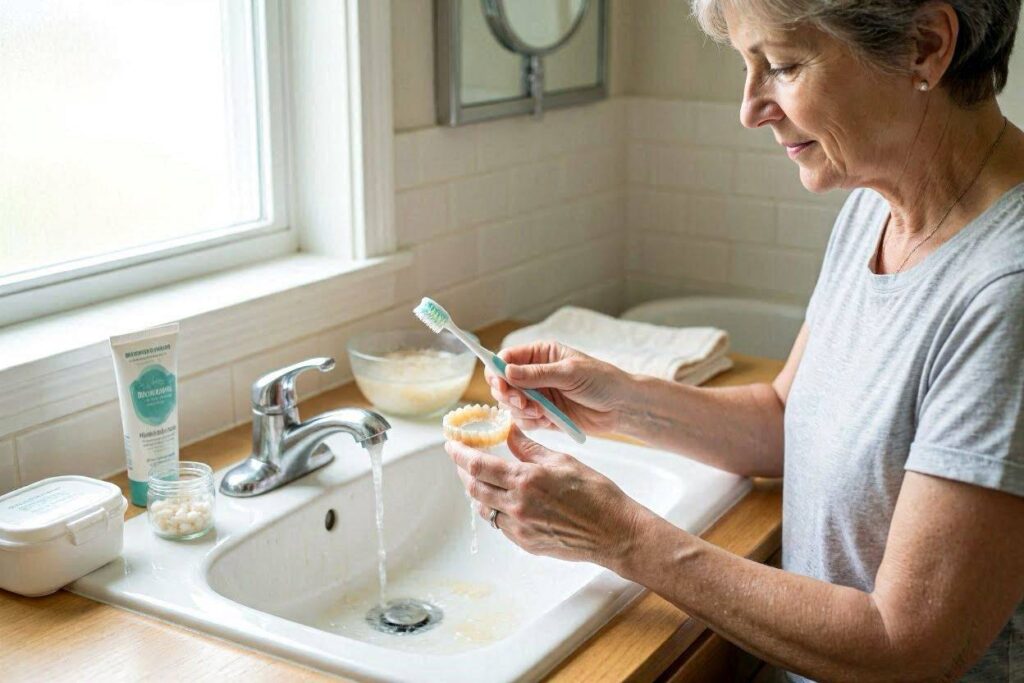
After removing your dentures, rinse them under warm running water to remove loose adhesive and food particles. Then place them in a denture cleaning solution or plain warm water while you clean your gums. The soaking softens the adhesive on the denture surface, making it easier to remove.
Brushing the Denture
Use a soft-bristled denture brush, not the same brush you use for your gums, and a denture cleaning paste or mild liquid soap. Never use regular toothpaste on dentures, as it contains abrasives that scratch the acrylic surface. Scratches create hiding places for bacteria and can make the denture appear cloudy over time.
Brush all surfaces of the denture, paying special attention to the tissue side where the adhesive was applied. Use circular motions and ensure you reach every crevice. Rinse thoroughly under running water to remove all traces of cleaning product and loosened adhesive.
Denture Cleaning Tablets
Effervescent denture cleaning tablets help break down adhesive and kill odor-causing bacteria. Drop one tablet into a glass of warm water, place your dentures in the solution, and let them soak for the time specified on the product instructions, typically fifteen to thirty minutes. After soaking, brush the dentures and rinse thoroughly.
The soaking solution reaches areas that brushing may miss, including the small crevices around clasps and between any remaining natural teeth for partial denture wearers. Overnight soaking provides the deepest clean.
Ultrasonic Cleaners
An ultrasonic denture cleaner uses high-frequency sound waves to create microscopic bubbles that gently dislodge debris from every surface of the denture. These devices provide a deeper clean than brushing alone and are particularly effective at removing adhesive from textured surfaces and hard-to-reach areas. While the initial cost is an investment, an ultrasonic cleaner can make daily denture care faster and more thorough.
Preventing Excessive Adhesive Buildup
The best way to manage adhesive removal is to minimize how much residue you have to remove in the first place. Proper application technique makes a significant difference.
Apply Adhesive Sparingly
More adhesive does not mean a better hold. In fact, using too much adhesive often results in a weaker bond because the thick layer of cream prevents the denture from seating properly against the gums. Apply adhesive in thin strips or small dots, leaving space between them. For a full upper denture, a thin continuous strip along the ridge and a few dots on the palate are typically sufficient. For a lower denture, three or four small dots spaced along the ridge work well.
Experiment to Find the Minimum Effective Amount
Each person’s mouth is different. Experiment with using slightly less adhesive each day until you find the minimum amount that still provides a secure hold throughout the day. You may be surprised at how little you actually need. Using less adhesive means less residue to remove and a more comfortable denture experience overall.
Allow Adhesive to Set Before Eating or Drinking
After inserting your dentures with fresh adhesive, wait at least five to ten minutes before eating or drinking. This waiting period allows the adhesive to hydrate from your saliva and form its initial bond. If you eat or drink immediately, you may disrupt this process, causing the adhesive to squeeze out around the edges of the denture and create more residue.
Keep Dentures Moist
Denture adhesive works best when the denture base is slightly moist before application. A completely dry denture can cause the adhesive to clump and apply unevenly, leading to more residue. After cleaning your dentures, shake off excess water but do not dry them completely before applying fresh adhesive.
Gum Care Between Adhesive Use
Your gums need attention beyond adhesive removal. Healthy gums provide a better foundation for dentures and may require less adhesive for a secure fit.
Give Your Gums a Break
Remove your dentures at night without exception. Your gum tissue needs time without pressure to maintain healthy circulation. Nighttime removal also allows your gums to be exposed to saliva’s natural antimicrobial properties, reducing the risk of fungal and bacterial infections.
Massage Your Gums
After removing adhesive, take an extra minute to gently massage your gum ridges and palate with a clean fingertip or a very soft toothbrush. This massage stimulates blood flow, which promotes healthy tissue and can help reduce soreness. It also helps you detect any tender spots or areas of irritation early, before they become painful problems.
Monitor for Irritation
Check your gums daily for any signs of redness, swelling, or sore spots that do not resolve quickly. Persistent irritation may indicate that your dentures need adjustment. A well-fitting denture should not require massive amounts of adhesive to stay in place. If you find yourself using more and more adhesive to compensate for looseness, schedule a dental appointment for a denture reline or replacement.
Stay Hydrated
Adequate water intake supports healthy saliva production, which benefits your gum tissue. A dry mouth makes gums more susceptible to irritation and can make adhesive more difficult to remove because it becomes drier and more tenacious. Drink water throughout the day.
When Adhesive Removal Problems Signal Bigger Issues
Sometimes difficulty removing adhesive points to an underlying problem that needs professional attention.
Excessive Adhesive Use
If you need to apply a thick layer of adhesive to keep your dentures in place, your dentures likely do not fit properly. Dentures that once fit well can become loose over time as the jawbone naturally resorbs. Using adhesive to compensate for poor fit is a temporary solution that can lead to increased bone loss because the unstable denture accelerates the resorption process.
A denture reline, which adds new material to the tissue side of the denture to improve fit, or a new denture may be necessary. Your dentist or prosthodontist can evaluate your situation and recommend the appropriate solution.
Gum Inflammation
If your gums are consistently red, swollen, or tender, adhesive may not be the only cause. Poorly fitting dentures, inadequate hygiene, or fungal infections can all contribute to gum inflammation. Leaving dentures in overnight, which is never recommended, dramatically increases the risk of denture stomatitis, a yeast infection that causes redness and soreness under the denture.
Allergic Reaction
Though uncommon, some individuals develop sensitivity or allergic reactions to ingredients in denture adhesive. If you notice persistent burning, redness, or irritation that correlates with adhesive use and resolves when you stop using it, you may be reacting to a component of the adhesive. Zinc-free formulations like Polident have reduced certain risks, but any product can potentially cause a reaction in sensitive individuals. Consult your dentist about alternative products.
Residual Adhesive and Infection
Adhesive that remains on the gums creates a film that traps bacteria. Over time, this can contribute to oral infections. If you notice a white coating that can be wiped away, persistent bad breath, or an unpleasant taste, you may have developed a fungal infection. A dentist can diagnose and prescribe antifungal treatment if needed.
Special Considerations for Different Adhesive Types
Polident offers several formulations, and while the removal methods described above work for all of them, slight differences exist.
Cream Adhesives
The original cream formulation is the most widely used. It spreads into a thin, even layer and typically removes relatively easily with the warm water and cloth method. Cream adhesives tend to hydrate more fully than powder formulations, which can make them easier to remove.
Powder Adhesives
Powder adhesives are sprinkled onto a wet denture surface. They typically create a thinner layer than creams and may leave less residue. However, the residue they do leave can sometimes feel grittier and require more thorough rinsing to remove completely. The same cloth-and-warm-water method works effectively.
Adhesive Strips or Cushions
Pre-formed adhesive strips or cushions are placed on the denture before insertion. These products are designed to provide cushioning as well as adhesion. They typically remove in one piece with the denture, leaving minimal residue on the gums. If pieces remain, the warm water and cloth method removes them.
Adhesive Type Application Method Typical Residue Amount Removal Notes
Cream Squeezed onto denture Moderate Softens well with warm water
Powder Sprinkled onto wet denture Light to moderate May require more rinsing
Strips/Cushions Pre-formed, placed on denture Minimal Usually removes with denture
Conclusion
Removing Polident denture adhesive effectively requires softening the residue with warm water, gently wiping the gums with a soft cloth or gauze using circular motions, and following up with a thorough rinse. For stubborn residue, salt water rinses, a soft toothbrush, or a small amount of food-grade oil can provide additional removal power. Consistent daily removal protects gum health, prevents infection, and ensures that your dentures feel fresh and comfortable each morning.
FAQ
Can I use toothpaste to remove adhesive from my gums?
No. Toothpaste contains abrasives and detergents that can irritate delicate gum tissue. Stick to warm water and a soft cloth, gauze, or soft-bristled brush without toothpaste.
What if adhesive residue remains in my mouth after trying everything?
If you have used warm water, a soft cloth, and salt water rinses and adhesive still remains, try the oil method with a small amount of coconut or olive oil on a cloth. If residue persists consistently, you may be using too much adhesive. Reduce the amount you apply and see if the problem resolves.
How do I remove adhesive from the roof of my mouth?
The palate can be tricky because the tissue is smooth and the adhesive forms a thin, wide layer. Use a moistened soft cloth wrapped over your index finger and apply firm, circular pressure across the entire palate. Work from front to back. A salt water rinse before wiping can help soften the adhesive.
Can I leave my dentures in overnight if I forget to remove them?
Remove them as soon as you remember, even if it is the middle of the night. Leaving dentures in overnight significantly increases the risk of gum inflammation and fungal infection. Make it a habit to remove and clean your dentures at the same time each evening.
Is it normal to have some adhesive residue every morning?
No. You should remove all adhesive from your gums and dentures before going to bed. Waking up with adhesive residue means the cleaning the night before was incomplete. Review your removal technique to ensure you are thorough.
Can I use mouthwash to help remove adhesive?
Mouthwash does not dissolve adhesive effectively, and alcohol-based mouthwashes can irritate gums that have been covered all day. Stick with warm water or salt water for adhesive removal. If you want to use mouthwash for freshness, do so after the adhesive is completely removed.
Why does my adhesive seem harder to remove over time?
If you are using more adhesive or the same adhesive is becoming harder to remove, your dentures may be losing their fit. Loose dentures often prompt increased adhesive use, which means more residue. Additionally, as the adhesive layer thickens, it becomes more difficult to hydrate and remove fully. Schedule a dental evaluation to check your denture fit.
What if my gums bleed when I remove adhesive?
Bleeding gums indicate inflammation or overly aggressive cleaning. Use lighter pressure and ensure your cloth or brush is soft. If bleeding persists, see your dentist. Bleeding gums under dentures can indicate ill-fitting appliances, infection, or other conditions that need professional attention.
Additional Resource
For more information on denture care and adhesive products, visit the American College of Prosthodontists at gotoapro.org. This organization provides patient education resources and a locator tool to find a prosthodontist, a specialist in denture care and tooth replacement.
Why Denture Adhesive Sticks So Tenaciously
Understanding what you are dealing with makes removal easier. Denture adhesives like Polident contain polymers that absorb water and swell to create a thin, cushioning layer between the denture and the gum. When hydrated with saliva, these polymers become sticky and form a bond. Throughout the day, the adhesive maintains this bond, preventing food particles from slipping under the denture and keeping the appliance stable.
When you remove your dentures, some adhesive typically remains on your gums because the bond between the adhesive and the gum tissue can be stronger than the cohesive bond within the adhesive itself. The adhesive splits, leaving residue behind. This residue is water-resistant enough that plain water rinsing does not dissolve it easily, which is why you need specific techniques to break it down and lift it away.
Step-by-Step Gum Cleaning Method
The most effective approach combines gentle mechanical action with warm water to soften and remove the adhesive without irritating your gum tissue. Follow these steps each time you remove your dentures.
Step One: Remove Dentures Carefully
Begin by rinsing your mouth with warm water. Take a sip, swish it around gently, and let it loosen the seal between the denture and your gums. To remove an upper denture, place your thumb against the front teeth and push upward and outward toward your nose. For a lower denture, use a gentle rocking motion while pulling upward. Never force the denture out, as this can damage both the appliance and your gums.
Step Two: Initial Rinse with Warm Water
Once the dentures are out, take another mouthful of warm water, not hot, and swish it vigorously around your mouth for thirty seconds. Spit the water out. This initial rinse removes loose adhesive and hydrates any remaining residue, beginning the softening process.
Step Three: Use a Soft Cloth or Gauze
Take a clean, soft washcloth, a piece of gauze, or a microfiber cloth. Moisten it with warm water. Starting at the back of your mouth on one side, gently wipe the gum ridge using a circular motion. Work your way around the entire arch where the denture sits. The cloth’s texture grips the adhesive and rolls it away from the gum tissue.
Change to a clean section of the cloth as the adhesive accumulates. Continue until the cloth no longer picks up residue. This mechanical removal is the most effective single step in the process.
Step Four: Target Stubborn Areas
Some areas, particularly the roof of the mouth for upper denture wearers and the ridge crest for lower denture wearers, tend to hold adhesive more stubbornly. For these spots, wrap the cloth or gauze over your fingertip and apply gentle but firm pressure in a circular motion. Do not scrub aggressively, as the gum tissue is delicate and can be irritated by excessive friction.
Step Five: Final Warm Water Rinse
After removing all visible adhesive, rinse your mouth once more with warm water. Swish thoroughly to flush away any remaining small particles. Your gums should feel smooth and clean.
Alternative Methods for Stubborn Adhesive
Some formulations of adhesive, or particularly thick applications, may require additional measures beyond the basic cloth-and-water technique. These methods provide extra cleaning power while remaining safe for daily use.
Warm Salt Water Rinse
Salt water helps break down adhesive and soothes gum tissue at the same time. Dissolve half a teaspoon of salt in a cup of warm water. Swish the solution around your mouth for thirty to sixty seconds, focusing on the areas where adhesive remains. The salt helps dissolve the adhesive polymers while the warmth keeps them soft. After swishing, use the cloth method described above to wipe away the loosened residue.
Salt water rinses offer the additional benefit of promoting gum health. The mild saline solution reduces bacteria and can soothe any minor irritation from wearing dentures all day. You can use this method daily without any concern about harshness.
Soft-Bristled Toothbrush for Gums
If a cloth does not provide enough texture to lift stubborn adhesive, use a very soft-bristled toothbrush reserved specifically for cleaning your gums. Wet the brush with warm water and use gentle circular motions along the gum ridge and palate. The bristles reach into the small contours of your gum tissue and dislodge adhesive that a cloth might pass over.
Do not use toothpaste on your gums. Toothpaste contains abrasives and detergents that can irritate delicate gum tissue. Water alone is sufficient when combined with the brush’s mechanical action. Rinse the brush thoroughly after each use and replace it regularly.
Aloe Vera Gel for Sensitive Gums
If your gums feel tender or irritated, aloe vera gel provides a soothing alternative for adhesive removal. Apply a small amount of pure aloe vera gel to a soft cloth or your fingertip and gently massage the gum tissue. The gel helps lubricate the area, making adhesive removal gentler, while its anti-inflammatory properties calm any irritation. Rinse thoroughly with warm water afterward.
Oil-Based Method
A tiny amount of food-grade oil can help break the bond between adhesive and gum tissue. Coconut oil, olive oil, or even a small dab of vegetable oil applied to a soft cloth can make adhesive removal easier. The oil interacts with the adhesive polymers and reduces their stickiness. This method is particularly helpful for very stubborn residue.
Apply a few drops of oil to a soft cloth or gauze. Gently rub the area where adhesive remains. The adhesive should begin to release and roll away. After removal, rinse your mouth thoroughly with warm water and clean your dentures well to remove any oily residue. This method works well but should be used only when water and a cloth prove insufficient, as oil residue on dentures can affect the next application of adhesive.
What Not to Do When Removing Adhesive
Well-intentioned but misguided removal attempts can damage your gums, cause irritation, or even lead to infection. Avoid these common mistakes.
Do Not Use Fingernails
Scraping at adhesive residue with your fingernails can scratch and cut the gum tissue. Even if it feels effective in the moment, the microscopic abrasions you create become sites for bacterial entry and can cause sore spots that make wearing your dentures uncomfortable the next day. Stick to soft cloths, gauze, or soft brushes.
Avoid Hot Water
Hot water can burn your gums, and the tissue inside your mouth is particularly sensitive to heat. Always use warm water, not hot. Test the temperature on your wrist before putting it in your mouth. Water that is comfortably warm to the touch is appropriate.
Do Not Use Solvents or Harsh Chemicals
Never use household cleaners, alcohol, nail polish remover, or any chemical solvent to remove adhesive from your gums. These substances are toxic, can cause chemical burns, and should never come into contact with oral tissues. If adhesive is so stubborn that you are tempted to reach for a solvent, contact your dentist instead.
Avoid Abrasive Scrubbing
Even with a soft cloth, aggressive scrubbing can abrade gum tissue. Use firm but gentle pressure. If adhesive does not release easily, soften it with warm water for longer rather than increasing the force of your rubbing. Patience prevents soreness.
Do Not Leave Adhesive on Your Gums Overnight
Adhesive left on the gums overnight traps bacteria and saliva against the tissue. This can lead to gum inflammation, fungal infections like denture stomatitis, and unpleasant odors. Always remove all adhesive before going to sleep. Your gums need time to rest and breathe without any coverage.
Cleaning Adhesive from Your Dentures
Adhesive removal from your gums is only half the task. Your dentures also need thorough cleaning to remove the adhesive that remains on their inner surface. Proper denture cleaning ensures a fresh start each morning.
Initial Rinse and Soak
After removing your dentures, rinse them under warm running water to remove loose adhesive and food particles. Then place them in a denture cleaning solution or plain warm water while you clean your gums. The soaking softens the adhesive on the denture surface, making it easier to remove.
Brushing the Denture
Use a soft-bristled denture brush, not the same brush you use for your gums, and a denture cleaning paste or mild liquid soap. Never use regular toothpaste on dentures, as it contains abrasives that scratch the acrylic surface. Scratches create hiding places for bacteria and can make the denture appear cloudy over time.
Brush all surfaces of the denture, paying special attention to the tissue side where the adhesive was applied. Use circular motions and ensure you reach every crevice. Rinse thoroughly under running water to remove all traces of cleaning product and loosened adhesive.
Denture Cleaning Tablets
Effervescent denture cleaning tablets help break down adhesive and kill odor-causing bacteria. Drop one tablet into a glass of warm water, place your dentures in the solution, and let them soak for the time specified on the product instructions, typically fifteen to thirty minutes. After soaking, brush the dentures and rinse thoroughly.
The soaking solution reaches areas that brushing may miss, including the small crevices around clasps and between any remaining natural teeth for partial denture wearers. Overnight soaking provides the deepest clean.
Ultrasonic Cleaners
An ultrasonic denture cleaner uses high-frequency sound waves to create microscopic bubbles that gently dislodge debris from every surface of the denture. These devices provide a deeper clean than brushing alone and are particularly effective at removing adhesive from textured surfaces and hard-to-reach areas. While the initial cost is an investment, an ultrasonic cleaner can make daily denture care faster and more thorough.
Preventing Excessive Adhesive Buildup
The best way to manage adhesive removal is to minimize how much residue you have to remove in the first place. Proper application technique makes a significant difference.
Apply Adhesive Sparingly
More adhesive does not mean a better hold. In fact, using too much adhesive often results in a weaker bond because the thick layer of cream prevents the denture from seating properly against the gums. Apply adhesive in thin strips or small dots, leaving space between them. For a full upper denture, a thin continuous strip along the ridge and a few dots on the palate are typically sufficient. For a lower denture, three or four small dots spaced along the ridge work well.
Experiment to Find the Minimum Effective Amount
Each person’s mouth is different. Experiment with using slightly less adhesive each day until you find the minimum amount that still provides a secure hold throughout the day. You may be surprised at how little you actually need. Using less adhesive means less residue to remove and a more comfortable denture experience overall.
Allow Adhesive to Set Before Eating or Drinking
After inserting your dentures with fresh adhesive, wait at least five to ten minutes before eating or drinking. This waiting period allows the adhesive to hydrate from your saliva and form its initial bond. If you eat or drink immediately, you may disrupt this process, causing the adhesive to squeeze out around the edges of the denture and create more residue.
Keep Dentures Moist
Denture adhesive works best when the denture base is slightly moist before application. A completely dry denture can cause the adhesive to clump and apply unevenly, leading to more residue. After cleaning your dentures, shake off excess water but do not dry them completely before applying fresh adhesive.
Gum Care Between Adhesive Use
Your gums need attention beyond adhesive removal. Healthy gums provide a better foundation for dentures and may require less adhesive for a secure fit.
Give Your Gums a Break
Remove your dentures at night without exception. Your gum tissue needs time without pressure to maintain healthy circulation. Nighttime removal also allows your gums to be exposed to saliva’s natural antimicrobial properties, reducing the risk of fungal and bacterial infections.
Massage Your Gums
After removing adhesive, take an extra minute to gently massage your gum ridges and palate with a clean fingertip or a very soft toothbrush. This massage stimulates blood flow, which promotes healthy tissue and can help reduce soreness. It also helps you detect any tender spots or areas of irritation early, before they become painful problems.
Monitor for Irritation
Check your gums daily for any signs of redness, swelling, or sore spots that do not resolve quickly. Persistent irritation may indicate that your dentures need adjustment. A well-fitting denture should not require massive amounts of adhesive to stay in place. If you find yourself using more and more adhesive to compensate for looseness, schedule a dental appointment for a denture reline or replacement.
Stay Hydrated
Adequate water intake supports healthy saliva production, which benefits your gum tissue. A dry mouth makes gums more susceptible to irritation and can make adhesive more difficult to remove because it becomes drier and more tenacious. Drink water throughout the day.
When Adhesive Removal Problems Signal Bigger Issues
Sometimes difficulty removing adhesive points to an underlying problem that needs professional attention.
Excessive Adhesive Use
If you need to apply a thick layer of adhesive to keep your dentures in place, your dentures likely do not fit properly. Dentures that once fit well can become loose over time as the jawbone naturally resorbs. Using adhesive to compensate for poor fit is a temporary solution that can lead to increased bone loss because the unstable denture accelerates the resorption process.
A denture reline, which adds new material to the tissue side of the denture to improve fit, or a new denture may be necessary. Your dentist or prosthodontist can evaluate your situation and recommend the appropriate solution.
Gum Inflammation
If your gums are consistently red, swollen, or tender, adhesive may not be the only cause. Poorly fitting dentures, inadequate hygiene, or fungal infections can all contribute to gum inflammation. Leaving dentures in overnight, which is never recommended, dramatically increases the risk of denture stomatitis, a yeast infection that causes redness and soreness under the denture.
Allergic Reaction
Though uncommon, some individuals develop sensitivity or allergic reactions to ingredients in denture adhesive. If you notice persistent burning, redness, or irritation that correlates with adhesive use and resolves when you stop using it, you may be reacting to a component of the adhesive. Zinc-free formulations like Polident have reduced certain risks, but any product can potentially cause a reaction in sensitive individuals. Consult your dentist about alternative products.
Residual Adhesive and Infection
Adhesive that remains on the gums creates a film that traps bacteria. Over time, this can contribute to oral infections. If you notice a white coating that can be wiped away, persistent bad breath, or an unpleasant taste, you may have developed a fungal infection. A dentist can diagnose and prescribe antifungal treatment if needed.
Special Considerations for Different Adhesive Types
Polident offers several formulations, and while the removal methods described above work for all of them, slight differences exist.
Cream Adhesives
The original cream formulation is the most widely used. It spreads into a thin, even layer and typically removes relatively easily with the warm water and cloth method. Cream adhesives tend to hydrate more fully than powder formulations, which can make them easier to remove.
Powder Adhesives
Powder adhesives are sprinkled onto a wet denture surface. They typically create a thinner layer than creams and may leave less residue. However, the residue they do leave can sometimes feel grittier and require more thorough rinsing to remove completely. The same cloth-and-warm-water method works effectively.
Adhesive Strips or Cushions
Pre-formed adhesive strips or cushions are placed on the denture before insertion. These products are designed to provide cushioning as well as adhesion. They typically remove in one piece with the denture, leaving minimal residue on the gums. If pieces remain, the warm water and cloth method removes them.
| Adhesive Type | Application Method | Typical Residue Amount | Removal Notes |
|---|---|---|---|
| Cream | Squeezed onto denture | Moderate | Softens well with warm water |
| Powder | Sprinkled onto wet denture | Light to moderate | May require more rinsing |
| Strips/Cushions | Pre-formed, placed on denture | Minimal | Usually removes with denture |
Conclusion
Removing Polident denture adhesive effectively requires softening the residue with warm water, gently wiping the gums with a soft cloth or gauze using circular motions, and following up with a thorough rinse. For stubborn residue, salt water rinses, a soft toothbrush, or a small amount of food-grade oil can provide additional removal power. Consistent daily removal protects gum health, prevents infection, and ensures that your dentures feel fresh and comfortable each morning.
FAQ
Can I use toothpaste to remove adhesive from my gums?
No. Toothpaste contains abrasives and detergents that can irritate delicate gum tissue. Stick to warm water and a soft cloth, gauze, or soft-bristled brush without toothpaste.
What if adhesive residue remains in my mouth after trying everything?
If you have used warm water, a soft cloth, and salt water rinses and adhesive still remains, try the oil method with a small amount of coconut or olive oil on a cloth. If residue persists consistently, you may be using too much adhesive. Reduce the amount you apply and see if the problem resolves.
How do I remove adhesive from the roof of my mouth?
The palate can be tricky because the tissue is smooth and the adhesive forms a thin, wide layer. Use a moistened soft cloth wrapped over your index finger and apply firm, circular pressure across the entire palate. Work from front to back. A salt water rinse before wiping can help soften the adhesive.
Can I leave my dentures in overnight if I forget to remove them?
Remove them as soon as you remember, even if it is the middle of the night. Leaving dentures in overnight significantly increases the risk of gum inflammation and fungal infection. Make it a habit to remove and clean your dentures at the same time each evening.
Is it normal to have some adhesive residue every morning?
No. You should remove all adhesive from your gums and dentures before going to bed. Waking up with adhesive residue means the cleaning the night before was incomplete. Review your removal technique to ensure you are thorough.
Can I use mouthwash to help remove adhesive?
Mouthwash does not dissolve adhesive effectively, and alcohol-based mouthwashes can irritate gums that have been covered all day. Stick with warm water or salt water for adhesive removal. If you want to use mouthwash for freshness, do so after the adhesive is completely removed.
Why does my adhesive seem harder to remove over time?
If you are using more adhesive or the same adhesive is becoming harder to remove, your dentures may be losing their fit. Loose dentures often prompt increased adhesive use, which means more residue. Additionally, as the adhesive layer thickens, it becomes more difficult to hydrate and remove fully. Schedule a dental evaluation to check your denture fit.
What if my gums bleed when I remove adhesive?
Bleeding gums indicate inflammation or overly aggressive cleaning. Use lighter pressure and ensure your cloth or brush is soft. If bleeding persists, see your dentist. Bleeding gums under dentures can indicate ill-fitting appliances, infection, or other conditions that need professional attention.
Additional Resource
For more information on denture care and adhesive products, visit the American College of Prosthodontists at gotoapro.org. This organization provides patient education resources and a locator tool to find a prosthodontist, a specialist in denture care and tooth replacement.