How Much Does A Private Tooth Filling Cost?
A twinge when you sip something cold. A dark spot you spotted in the mirror. Your dentist confirms it: you need a filling. Then comes the question that determines how you proceed. Do you go with the NHS option, if one is available to you, or do you choose private treatment? Private fillings offer advantages in materials, appointment availability, and often the time the dentist can spend on the procedure, but those advantages come at a cost. Understanding what drives that cost, what you are paying for, and the range you can expect across different situations helps you make a confident, informed decision.
The price of a private tooth filling in the UK varies widely, influenced by the size and location of the cavity, the material used, the dentist’s experience and practice location, and the complexity of the procedure. This guide breaks down every factor, compares material options, and explains the private treatment experience so you know exactly what to anticipate when you book that appointment.
The Cost Range for Private Fillings
Private filling costs differ across the country, across practices, and across individual cases. However, a general range provides a starting point for your expectations.
Typical Price Bracket
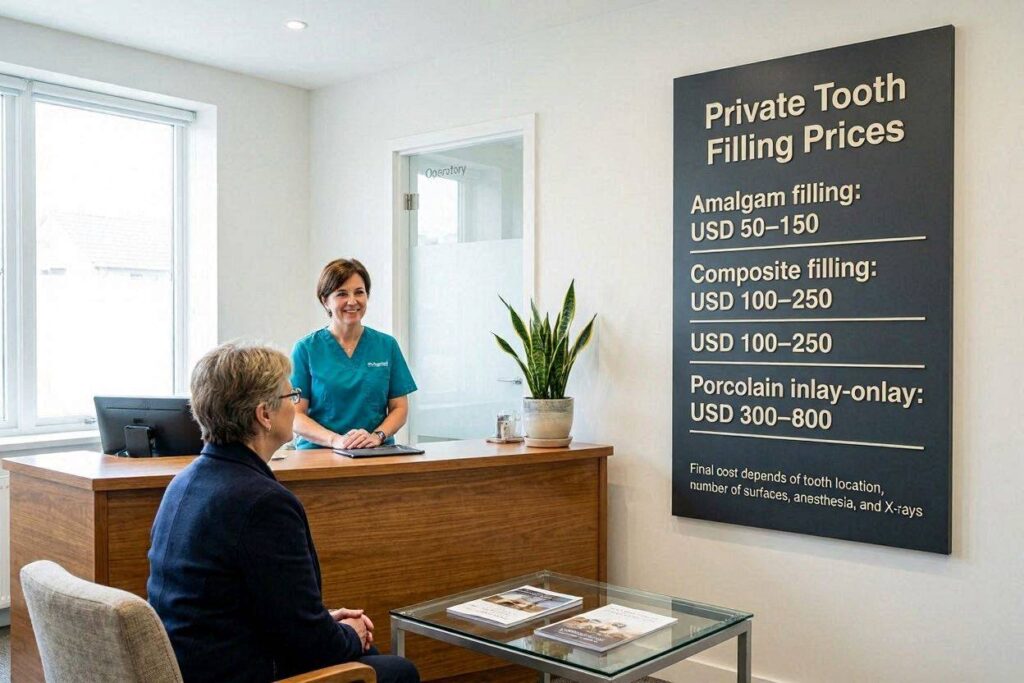
For a standard private filling, you can expect to pay between £100 and £350 per tooth. Small, straightforward fillings fall at the lower end. Large fillings, those involving multiple tooth surfaces, or those placed in difficult-to-access areas rise toward the upper end. Complex cases involving deep decay close to the nerve may exceed this range.
These figures reflect the cost at an average private dental practice. High-end practices in central London or other affluent areas charge more, sometimes significantly so. Practices in smaller towns and rural areas often charge less. The dentist’s individual pricing structure, overhead costs, and the materials used all influence the final figure.
What the Fee Includes
The quoted fee for a private filling typically covers the entire procedure from start to finish. This includes the local anaesthetic, the removal of decay, the preparation of the tooth, the placement of the filling material, and the shaping and polishing of the final restoration. Follow-up adjustments, if needed, are usually included within a reasonable time frame.
Some practices quote an all-inclusive price. Others break down the fee, charging separately for the consultation, the X-ray, and the filling itself. Always ask for a written treatment plan and estimate before agreeing to proceed so you understand exactly what is covered.
Factors That Determine the Cost
Several variables affect the final price of a private filling. Understanding these factors helps you interpret the estimate your dentist provides.
Size and Complexity of the Filling
Fillings are classified by the number of tooth surfaces they cover. A single-surface filling, such as a small cavity on the biting surface of a molar, is the least expensive. A two-surface filling, which extends onto the side of the tooth, costs more. Three-surface and four-surface fillings, which rebuild a significant portion of the tooth, cost the most.
The amount of remaining healthy tooth structure influences complexity. A small cavity in an otherwise intact tooth is straightforward. A large cavity that requires extensive rebuilding, possibly including pins or additional retention features, demands more time and skill, and the fee reflects that.
Location in the Mouth
Front teeth present aesthetic challenges because the filling must match the surrounding tooth perfectly in shade and translucency. This requires additional time for shade matching and more meticulous placement technique. Back teeth present access challenges. Molars are harder for the dentist to see and reach, and the filling must withstand the heavy forces of chewing. Fillings on back teeth, particularly those involving the biting surface, require careful attention to the occlusion to ensure the bite feels normal.
The Dentist’s Experience and Training
A dentist with advanced training in restorative dentistry, a special interest in cosmetic dentistry, or many years of experience placing aesthetic fillings commands higher fees. Their expertise may produce a result that is indistinguishable from natural tooth structure, which is particularly valuable for visible front teeth. You are paying not just for the procedure but for the skill and judgment that comes with training and experience.
Practice Location and Overheads
Dental practices in central London, affluent suburbs, and other high-cost areas face higher rents, higher staff salaries, and higher business rates. These overheads are reflected in the fees charged to patients. A practice in a modest location with lower overheads can charge less while maintaining the same quality of care.
Technology and Equipment
Practices that invest in advanced technology, such as digital X-rays, intraoral scanners, operating microscopes, and computer-aided design and manufacturing systems, may charge higher fees. This technology can improve the accuracy of diagnosis and the quality of the final restoration, but the equipment must be paid for through the fees the practice charges.
Filling Materials and Their Costs
The material you choose, in consultation with your dentist, significantly affects the cost. Each material has its own advantages, limitations, and price point.
Amalgam Fillings
Amalgam, the silver-colored material that has been used in dentistry for over a century, is the least expensive option. A private amalgam filling typically costs between £100 and £200 depending on size.
Amalgam is durable, long-lasting, and relatively quick to place. It withstands the heavy forces of chewing well, making it suitable for large fillings in back teeth. However, its metallic color makes it conspicuous, particularly in front teeth or when a patient has a wide smile that reveals back teeth. Some patients also have concerns about the mercury content, although the scientific consensus is that amalgam is safe for the vast majority of patients.
Amalgam use is declining, and some practices no longer offer it, particularly in private settings where patients tend to prefer tooth-colored options.
Composite Fillings
Composite resin, the tooth-colored material that bonds directly to the tooth, has become the standard for private fillings. Prices typically range from £150 to £350 per filling, depending on size and location.
Composite offers excellent aesthetics because the material can be matched to the shade of the surrounding tooth. The dentist can layer different shades of composite to replicate the natural translucency and color variations of real enamel. Composite bonds chemically to the tooth, which means the preparation can be more conservative than for amalgam, preserving more healthy tooth structure.
The placement of composite requires more time and technical precision than amalgam. The tooth must be kept completely dry during placement, which requires isolation techniques. The material is applied in thin layers, each hardened with a curing light, and then shaped and polished. This additional time contributes to the higher cost compared to amalgam.
Composite fillings are not as wear-resistant as amalgam on chewing surfaces, although modern materials have improved significantly. They may need replacement sooner than amalgam, particularly in patients who grind their teeth or have a heavy bite.
Glass Ionomer Fillings
Glass ionomer cement is a tooth-colored material that releases fluoride over time. Prices typically range from £100 to £200. Glass ionomer bonds to the tooth and has the advantage of ongoing fluoride release, which helps protect the surrounding tooth structure from further decay.
This material is less aesthetic than composite and less durable than both composite and amalgam. It is most commonly used for fillings below the gumline, for root surface cavities, and for children’s teeth. In private practice, it may be used as a temporary or interim filling rather than as a definitive long-term restoration.
Ceramic and Porcelain Inlays and Onlays
For larger cavities, a ceramic inlay or onlay fabricated in a dental laboratory represents the premium option. Inlays fit within the cusps of the tooth, while onlays cover one or more cusps. Prices range from £400 to £800 or more per tooth.
Ceramic restorations offer the best aesthetics and excellent durability. They are custom-made to fit the cavity precisely and are bonded to the tooth. The fabrication process requires two appointments: one to prepare the tooth and take an impression, and a second to bond the finished restoration in place. A temporary restoration is worn between appointments.
The cost is significantly higher because of the laboratory work involved, the materials used, and the additional clinical time. For large cavities where a filling would compromise the tooth’s strength, an inlay or onlay provides a restoration that strengthens rather than weakens the tooth.
Gold Inlays and Onlays
Gold remains an option for patients who prioritize longevity and function over aesthetics. Gold inlays and onlays cost between £500 and £900 or more. Gold wears at a rate similar to natural tooth enamel, is extremely biocompatible, and can last for decades. The cost reflects the precious metal content and the laboratory work required. Gold restorations are uncommon in modern private practice, but some dentists and patients continue to favor them for their unmatched durability in posterior teeth.
| Material | Cost Range | Aesthetics | Durability | Best For |
|---|---|---|---|---|
| Amalgam | £100 – £200 | Poor, metallic | Excellent | Large posterior fillings |
| Composite | £150 – £350 | Excellent, tooth-colored | Good | All areas, particularly visible teeth |
| Glass Ionomer | £100 – £200 | Fair | Moderate | Root surfaces, below gumline |
| Ceramic Inlay/Onlay | £400 – £800+ | Excellent | Excellent | Large cavities, cusp replacement |
| Gold Inlay/Onlay | £500 – £900+ | Poor, metallic | Superior | Posterior teeth, maximum longevity |
The Private Filling Procedure
Knowing what happens during the appointment helps you understand what you are paying for and reduces any anxiety about the experience.
Examination and Diagnosis
The process begins with an examination. The dentist may take an X-ray to determine the extent of decay and its proximity to the nerve. The dentist explains the findings, discusses material options, and provides a cost estimate. You have the opportunity to ask questions and make an informed decision about how to proceed.
Anaesthesia
Local anaesthetic ensures comfort during the procedure. The dentist waits for the anaesthetic to take full effect before beginning. Patients who are particularly anxious may discuss sedation options, which add to the cost but make the experience more comfortable. Private practices are often able to offer sedation more readily than NHS settings.
Decay Removal and Tooth Preparation
The dentist removes the decayed portion of the tooth using a dental drill. Modern practices may use air abrasion or laser techniques for smaller cavities, which can be quieter and more comfortable. The cavity is shaped to retain the filling material. For composite fillings, the preparation is conservative because the bonding process does not require the mechanical retention features that amalgam needs.
Filling Placement
The specific technique depends on the material. For composite, the dentist isolates the tooth to keep it dry, applies bonding agents, and layers the composite into the cavity. Each layer is hardened with a bright curing light. The dentist shapes the composite to match the contours of the natural tooth.
For amalgam, the material is mixed and condensed into the cavity. The dentist carves the anatomy of the tooth and checks the bite.
Finishing and Polishing
After the filling material is placed, the dentist adjusts the bite to ensure the filling does not interfere with your normal occlusion. The filling is polished to a smooth finish that feels comfortable against your tongue and resists staining. The dentist checks your bite with articulating paper and makes fine adjustments.
Aftercare
The dentist provides instructions for aftercare. With white fillings, you can eat and drink immediately, though you should be cautious while the anaesthetic is still working to avoid accidentally biting your lip or cheek. Any sensitivity to hot and cold should resolve within a few days to a week. The dentist may schedule a follow-up to check the filling if the cavity was deep.
Private vs. NHS Fillings
Understanding the differences between private and NHS fillings helps you decide which route to take.
Cost Comparison
NHS fillings fall under Band 2 treatment, which currently costs a set fee. This fee covers all fillings needed during the course of treatment, regardless of number. For a single small filling, the NHS band charge is often lower than the private fee. For multiple fillings, the NHS system provides significant savings because you pay the band charge once, not per filling.
Private fillings are charged per tooth, so the cost multiplies with each filling needed. The advantage of private treatment is not primarily financial.
Material Choice
NHS fillings provide clinically appropriate materials. Amalgam is standard for back teeth, while composite is used for front teeth and, increasingly, for back teeth when clinically indicated. The choice of white fillings on back teeth for purely cosmetic reasons is typically not available on the NHS.
Private treatment allows you to choose the material based on your preferences. You can have composite fillings on all teeth, including back teeth, for aesthetic reasons. You can choose ceramic inlays or onlays for large cavities. The choice is made collaboratively with your dentist based on what you value, not limited by NHS prescribing guidelines.
Appointment Time
Private appointments typically allow more time. The dentist can spend longer on shade matching, layering, and polishing, which contributes to a more aesthetic result. The pace is unhurried. NHS appointments are structured to provide clinically sound treatment within the time constraints of the NHS contract. The result is functional and professional, but the time available for meticulous aesthetic finishing may be less.
Continuity of Care
In private practice, you generally see the same dentist at each visit. This continuity builds a relationship and ensures the dentist who knows your mouth is treating you. In NHS practice, you may see different dentists within the same practice, particularly in larger clinics.
Additional Costs to Consider
The filling itself may not be the only expense. Several associated costs can arise.
Initial Consultation and X-Rays
If you are a new patient to the practice, there may be a separate fee for the initial examination and any X-rays taken. This fee often ranges from £40 to £100. Some practices include the examination fee in the treatment cost if you proceed with the recommended work.
Temporary Fillings
If the decay is deep and the dentist wants to observe the tooth’s response before placing a permanent restoration, a temporary filling may be placed. The temporary filling fee is usually absorbed into the cost of the permanent restoration if placed within a short time.
Sedation
Anxious patients may opt for sedation. Oral sedation, nitrous oxide, or intravenous sedation adds to the overall cost. Sedation fees vary widely, from around £50 for simple oral sedation to several hundred pounds for intravenous sedation provided by a qualified sedationist.
Follow-Up and Adjustments
A filling that feels slightly high in the bite may need adjustment. Most practices provide this follow-up care without additional charge within a reasonable period after placement. Confirm this policy when you agree to treatment.
Dental Insurance and Payment Plans
Private filling costs can be managed through insurance or practice payment plans, making treatment more affordable.
Dental Insurance
Private dental insurance policies typically cover a percentage of restorative treatment costs, often fifty to eighty percent, up to an annual maximum. There may be a waiting period before restorative coverage begins and a deductible or excess to pay. Check your policy documents to understand what portion of a private filling cost you would bear.
Practice Payment Plans
Many private dental practices offer membership plans. You pay a monthly fee, and in return you receive regular checkups, hygiene appointments, and a discount on restorative treatments such as fillings. These plans smooth out the cost of care and make budgeting predictable. The discount on fillings typically ranges from ten to twenty percent.
Financing Options
For extensive treatment involving multiple fillings or more complex restorations, some practices offer financing through third-party providers. Interest-free periods of six to twelve months are common, allowing you to spread the cost without paying extra.
How to Find a Good Private Dentist for Fillings
The dentist you choose directly affects the quality of your filling and your overall experience.
Ask for Recommendations
Personal recommendations from friends, family, or colleagues who have had similar treatment provide candid insight. Online reviews offer additional perspective, though individual reviews should be weighed against the overall pattern.
Look for Specific Expertise
If you are seeking aesthetic composite fillings, look for a dentist with a special interest in cosmetic or restorative dentistry. Membership in organizations such as the British Academy of Cosmetic Dentistry indicates a commitment to excellence in aesthetic dentistry.
Review Before-and-After Cases
Many dentists display photographs of their work on their website or in the practice. These images demonstrate the quality of their aesthetic results. Ask to see examples of fillings similar to what you need.
Ask About Materials and Techniques
During your consultation, ask what materials the dentist uses and why. A dentist who can explain the advantages of specific composite systems, bonding protocols, and finishing techniques demonstrates a depth of knowledge that suggests attention to detail.
Conclusion
The cost of a private tooth filling in the UK typically ranges from £100 to £350 per tooth for direct fillings, with ceramic inlays and onlays reaching £400 to £900 or more. The price depends on the size and location of the cavity, the material chosen, the dentist’s expertise, and the practice location. Private treatment offers advantages in material choice, appointment length, and aesthetic outcomes, while NHS treatment provides quality care at a set band price. Understanding these factors allows you to make an informed choice that balances your oral health needs, aesthetic preferences, and budget.
FAQ
How long does a white filling last compared to a silver one?
Composite white fillings typically last seven to ten years, while amalgam silver fillings often last ten to fifteen years or longer. The lifespan depends on the size of the filling, the forces it endures, and the patient’s oral hygiene. Modern composite materials have narrowed the longevity gap considerably.
Does getting a private filling hurt?
The procedure is performed under local anaesthetic and should not be painful. The dentist ensures the tooth is completely numb before beginning. Post-operative sensitivity is usually mild and resolves within a few days. Private appointments allow the dentist to work at a comfortable pace without rushing.
Can I get a white filling on the NHS instead of paying privately?
White fillings are available on the NHS for front teeth and for back teeth when there is a specific clinical reason, such as an allergy to amalgam or a cavity that requires a conservative preparation better suited to composite. Cosmetic preference alone does not qualify for a white filling on a back tooth under the NHS.
Why do private fillings cost more than NHS fillings?
Private fees reflect the full cost of the treatment, including the dentist’s time, materials, laboratory work, practice overheads, and a profit margin. NHS fees are subsidised by the government, and the banded charge may not cover the full cost of the treatment, particularly for multiple procedures.
How do I know if I need a filling or a crown?
The dentist evaluates how much healthy tooth structure remains. If more than half the visible tooth structure is missing or the tooth is cracked, a crown may provide better long-term protection than a large filling. The dentist explains the options and recommendations based on the specific condition of your tooth.
Can a filling be replaced if I do not like the colour?
Yes. If a composite filling does not match the surrounding tooth as well as expected, the dentist can replace it. Discuss your concerns, and the dentist may be able to adjust the shade by replacing the surface layer or, if necessary, redoing the filling entirely.
Will my dental insurance cover the full cost of a private filling?
Most dental insurance policies cover a percentage, not the full cost. Check your policy for the restorative coverage percentage, the annual maximum, and any waiting periods or excess amounts that apply.
How soon after a filling can I eat and drink?
With composite fillings, you can eat and drink immediately because the material is hardened by the curing light during the procedure. Be cautious while the anaesthetic is working to avoid biting your lip or cheek. With amalgam fillings, the dentist may advise waiting an hour before eating to allow the material to set fully.
Additional Resource
For guidance on choosing a private dentist and understanding dental fees, visit the General Dental Council at gdc-uk.org and the British Dental Association at bda.org. Both organisations provide patient information resources and uphold professional standards for UK dentistry.