How Much Does A Standard Mouthguard Cost?
You’re getting ready for sports season. Your coach says you need a mouthguard. Or maybe your dentist recommended one because you grind your teeth at night. Perhaps your child is starting football, hockey, or lacrosse, and the league requires mouth protection.
Whatever the reason, you’re probably wondering: How much does a standard mouthguard cost?
The answer ranges from a few dollars to several hundred, depending on what you need and where you get it. A basic boil-and-bite guard from a sporting goods store might cost $10. A custom-made guard from your dentist could cost $500 or more. And there are many options in between.
In this comprehensive guide, we’ll break down everything you need to know about mouthguard costs. We’ll look at different types, real prices, what affects costs, and how to choose the right one. We’ll also cover insurance, care instructions, and how to save money.
What Is a Mouthguard?
A mouthguard is a protective appliance that covers your teeth and gums. It’s designed to absorb and distribute the force of impact, reducing the risk of dental injuries. Mouthguards are used in sports and for medical purposes like teeth grinding.
There are three main types:
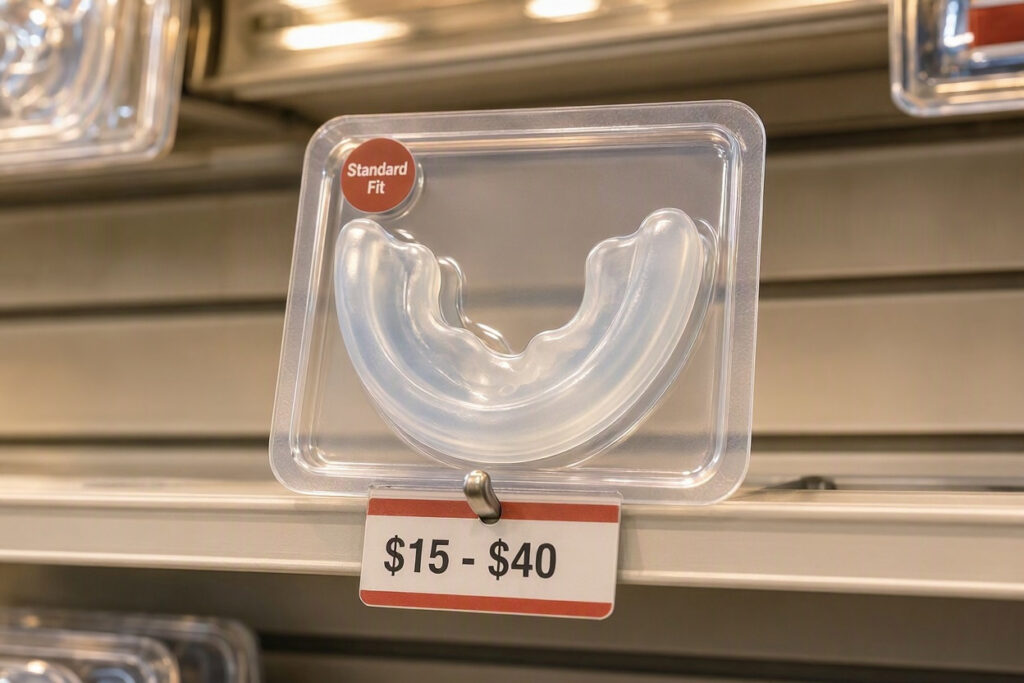
Stock mouthguards: Pre-formed, ready to wear. They’re the cheapest but offer the least protection and comfort.
Boil-and-bite mouthguards: You soften them in hot water and mold them to your teeth. They offer a better fit than stock guards but aren’t as precise as custom ones.
Custom mouthguards: Made by a dentist from an impression of your teeth. They offer the best fit, comfort, and protection.
Mouthguards are used for:
- Contact sports (football, hockey, boxing, lacrosse, basketball)
- Non-contact sports (skateboarding, gymnastics, mountain biking)
- Teeth grinding (bruxism)
- TMJ disorders
- Protecting dental work (braces, crowns, implants)
As one dentist explains, “A mouthguard is the cheapest insurance you can buy for your teeth. A custom guard costs a few hundred dollars. Fixing a knocked-out tooth can cost thousands.”
The Big Question: How Much Does a Standard Mouthguard Cost?
Now let’s get to the numbers. Mouthguard costs vary widely depending on the type, where you buy it, and whether it’s custom-made.
Here are typical price ranges:
| Type of Mouthguard | Low End | Average | High End |
|---|---|---|---|
| Stock Mouthguard | $5 | $10-$20 | $30 |
| Boil-and-Bite Mouthguard | $10 | $20-$40 | $60 |
| Custom Mouthguard (Dentist) | $150 | $300-$500 | $800 |
| Custom Mouthguard (Sports) | $100 | $200-$400 | $600 |
| Night Guard (Dentist) | $250 | $400-$700 | $1,200 |
| Dual-Laminate Guard | $400 | $600-$800 | $1,200 |
| TMJ Splint | $500 | $800-$1,200 | $2,500 |
These prices are approximate and vary by location, provider, and complexity. Always ask for a written estimate.
What’s Included in a Custom Mouthguard?
When you get a custom mouthguard from a dentist, the price usually includes:
- Consultation and examination
- Impressions or digital scans
- The mouthguard itself
- Fitting appointment
- Adjustments (usually)
Some dentists charge separately for each step. Always ask for a breakdown.
What About Over-the-Counter Guards?
Over-the-counter guards are available at sporting goods stores, pharmacies, and online. They’re cheaper but less precise. They may not provide adequate protection, especially for contact sports.
Mouthguard Costs by Type
Let’s look at each type in more detail.
Stock Mouthguards
Stock mouthguards are pre-formed and ready to wear. They come in small, medium, and large sizes. They’re the cheapest option but often fit poorly.
Cost: $5 – $30
Pros:
- Very cheap
- Available everywhere
- No preparation needed
Cons:
- Poor fit
- Uncomfortable
- Can fall out
- Minimal protection
- May interfere with breathing and speaking
Best for: Emergency use, very low-impact activities.
Boil-and-Bite Mouthguards
Boil-and-bite guards are softened in hot water and then molded to your teeth. They offer a better fit than stock guards.
Cost: $10 – $60
Pros:
- Better fit than stock
- Affordable
- Easy to make at home
- Available at most sporting goods stores
Cons:
- Fit isn’t as precise as custom
- Can be bulky
- May need replacement more often
- Not ideal for braces or complex dental work
Best for: Recreational sports, children, budget-conscious athletes.
Custom Mouthguards (Dentist-Made)
Custom mouthguards are made by a dentist from an impression of your teeth. They offer the best fit, comfort, and protection.
Cost: $150 – $800
Pros:
- Precise fit
- Maximum comfort
- Best protection
- Durable
- Can be made for braces or dental work
Cons:
- Most expensive
- Requires a dental visit
- Takes 1-2 weeks to make
Best for: Contact sports, athletes, people with braces or dental work, people who grind their teeth.
Custom Mouthguards (Sports-Specific)
Some companies make custom mouthguards directly from a kit you order online. You take your own impression and send it in. They’re cheaper than dentist-made guards but more expensive than boil-and-bite.
Cost: $100 – $600
Pros:
- Better fit than boil-and-bite
- Cheaper than dentist-made
- Convenient
Cons:
- You take your own impression (can be tricky)
- Less professional supervision
- Quality varies
Best for: Athletes who want a better fit without the dentist visit.
Night Guards
Night guards are a type of mouthguard used to protect teeth from grinding and clenching. They’re usually made by a dentist.
Cost: $250 – $1,200
Pros:
- Protects teeth from grinding
- Reduces jaw pain and headaches
- Custom-made for comfort
Cons:
- Expensive
- Requires a dental visit
- May take time to get used to
Best for: People who grind their teeth at night.
What Affects the Cost of a Mouthguard?
Many factors influence what you’ll pay. Let’s look at the most important ones.
1. Type of Mouthguard
Stock guards are cheapest. Boil-and-bite are next. Custom guards are the most expensive.
- Stock: $5 – $30
- Boil-and-bite: $10 – $60
- Custom: $100 – $1,200
2. Where You Get It
Prices vary by provider.
- Sporting goods store: $5 – $60
- Online: $10 – $100
- Dentist: $150 – $1,200
- Orthodontist: $200 – $800
- Specialist (TMJ): $500 – $2,500
3. Your Location
Prices vary by city and region. Urban areas cost more than rural areas.
4. Dentist’s Experience
A specialist charges more than a general dentist. But experience matters for complex cases.
5. Materials
Different materials have different costs.
- EVA (ethylene vinyl acetate): Common, affordable
- Polyurethane: Durable, more expensive
- Silicone: Comfortable, mid-range
- Dual-laminate: Soft inner layer, hard outer layer, most expensive
6. Additional Features
Some mouthguards have extra features:
- Breathing channels: $20 – $50 extra
- Custom colors: $10 – $30 extra
- Team logos: $20 – $50 extra
- Name printing: $10 – $20 extra
7. Complexity of Your Case
If you have braces, crowns, implants, or other dental work, you may need a specialized guard, which costs more.
8. Number of Guards
Some dentists offer discounts if you order multiple guards (e.g., one for you and one for your child).
9. Time of Year
Sports season is busier. Some providers offer promotions in the off-season.
10. Insurance Coverage
If you have dental insurance, a night guard may be covered. Sports guards usually aren’t.
Custom vs. Over-the-Counter Mouthguards
Let’s compare custom and over-the-counter options.
| Feature | Custom Dentist Guard | Boil-and-Bite | Stock Guard |
|---|---|---|---|
| Cost | $150 – $800 | $10 – $60 | $5 – $30 |
| Fit | Precise | Moderate | Poor |
| Comfort | Excellent | Fair | Poor |
| Protection | Excellent | Moderate | Minimal |
| Durability | 2-5 years | 6-12 months | 1-6 months |
| Adjustments | Included | None | None |
| Best For | Contact sports, braces, grinding | Recreational sports | Emergency use |
Why Custom Is Better
Precision: Custom guards are made from an exact impression of your teeth. They fit perfectly and stay in place.
Comfort: Because they fit precisely, custom guards are more comfortable. You’re more likely to wear them.
Protection: Custom guards provide better protection for your teeth and jaw.
Durability: Custom guards are made from high-quality materials. They last longer.
Professional supervision: Your dentist can adjust the guard and monitor your dental health.
When OTC Might Be Okay
- You play low-impact sports
- You’re on a tight budget
- You need a temporary solution
- Your child is still growing (jaw changes)
As one dentist explains, “A custom guard is an investment. But it’s one of the best investments you can make in your dental health. A cheap guard that doesn’t fit properly can actually cause more harm than good.”
Does Insurance Cover a Mouthguard?
Insurance coverage for mouthguards varies. Let’s break it down.
Dental Insurance
Some dental insurance plans cover night guards (for grinding) but not sports guards. It depends on your plan.
If covered, it’s usually classified as a “major” or “basic” procedure. You might pay 50% after your deductible. There may be an annual maximum.
Some plans require pre-authorization. Your dentist submits a treatment plan, and the insurer approves (or denies) coverage before the guard is made.
Medical Insurance
Medical insurance rarely covers sports mouthguards. It might cover a night guard if it’s for a medical condition like TMJ disorder. You’ll need a diagnosis and documentation.
Medicare
Original Medicare does not cover dental night guards. Medicare Advantage plans may offer some coverage, but it varies.
Medicaid
Medicaid coverage for mouthguards is limited. Some states cover them for medically necessary cases. Most do not.
What If You Don’t Have Insurance?
You’ll pay the full cost. But many dentists offer payment plans. Ask about these options.
Flexible Spending Accounts (FSA) and Health Savings Accounts (HSA)
If you have an FSA or HSA, you can use pre-tax dollars for a mouthguard. This effectively reduces your cost by your tax rate.
How to Save on a Mouthguard
You don’t have to pay full price. Here are practical ways to reduce your costs.
1. Get Multiple Quotes
Prices vary. Get at least three quotes before deciding.
2. Consider a Dental School
Dental schools offer discounted treatment, including custom mouthguards. Savings can be 30-50%.
3. Ask About Payment Plans
Many dentists offer in-house financing. Ask about interest-free options.
4. Use an HSA or FSA
If you have a Health Savings Account or Flexible Spending Account, you can use pre-tax dollars.
5. Choose Boil-and-Bite
If you play recreational sports, a boil-and-bite guard may be sufficient. It costs much less than a custom guard.
6. Look for Promotions
Some dentists and sporting goods stores offer promotions during sports season. Ask about discounts.
7. Buy in Bulk
If you have multiple children in sports, some providers offer family discounts.
8. Take Care of Your Guard
A well-cared-for guard lasts longer. Clean it regularly and store it properly.
9. Consider a Sports-Specific Custom Guard
These are cheaper than dentist-made guards but offer a better fit than boil-and-bite.
10. Prevent Problems
The best way to save is to protect your teeth. A mouthguard is cheaper than fixing a broken tooth.
The Process: What to Expect When Getting a Custom Mouthguard
Understanding the process helps you plan and budget.
Step 1: Consultation
Your dentist examines your teeth and discusses your needs. They may recommend a specific type of guard.
Time: 15-30 minutes
Step 2: Impressions
Your dentist takes an impression of your teeth. This may be done with traditional impression material or a digital scanner.
Time: 10-20 minutes
Step 3: Lab Fabrication
The impression is sent to a dental lab. The lab creates your custom guard. This takes 1-2 weeks.
Time: 1-2 weeks
Step 4: Fitting
Your dentist tries the guard in your mouth. They check the fit and make adjustments if needed.
Time: 15-30 minutes
Step 5: Follow-Up
You may need a follow-up appointment to check for comfort and effectiveness.
Time: 1-2 weeks
Total Timeline
From start to finish, expect 2-4 weeks. Some dentists offer same-day guards using CAD/CAM technology, but these may cost more.
How to Care for Your Mouthguard
Proper care extends the life of your mouthguard and keeps it hygienic.
Daily Care
- Rinse your mouthguard with cool water before and after each use.
- Clean it with a soft toothbrush and mild soap or denture cleaner.
- Don’t use hot water, which can warp the guard.
- Don’t use harsh chemicals or bleach.
Storage
- Store your mouthguard in a ventilated case when not in use.
- Don’t leave it in direct sunlight or in a hot car.
- Don’t store it in a plastic bag, which can trap moisture and bacteria.
Regular Checks
- Inspect your mouthguard regularly for signs of wear or damage.
- Replace it if it becomes loose, cracked, or uncomfortable.
- Bring it to your dental checkups so your dentist can inspect it.
When to Replace
- Stock guards: every few months
- Boil-and-bite: every 6-12 months
- Custom guards: every 2-5 years (depending on wear)
Important Notes for Readers
Get Everything in Writing: Always request a written treatment plan with itemized costs. Verbal quotes mean nothing if there’s a dispute.
Ask About Guarantees: Some dentists offer warranties on their guards. Ask what’s covered and for how long.
Wear It Every Time: A mouthguard only works if you wear it. Wear it during practices and games.
Clean It Regularly: A dirty mouthguard can harbor bacteria. Clean it after every use.
Store It Properly: Keep your guard in its case when you’re not wearing it.
Bring It to Appointments: Bring your guard to your dental checkups. Your dentist can check for wear and tear.
Replace It When Needed: A worn-out guard doesn’t protect your teeth. Replace it when it shows signs of damage.
Don’t Share It: A mouthguard is personal. Don’t share it with anyone else.
Consider the Long Term: A mouthguard is an investment in your dental health. It can save you thousands of dollars in dental work down the road.
Ask About Braces: If you have braces, you need a special mouthguard. Ask your orthodontist.
Frequently Asked Questions
How much does a standard mouthguard cost?
A standard mouthguard costs between $5 and $60, depending on the type. Stock guards are cheapest. Boil-and-bite guards are mid-range. Custom guards cost $150 to $800.
What is the best mouthguard for sports?
A custom mouthguard from your dentist offers the best fit, comfort, and protection. Boil-and-bite guards are a good affordable option.
How much does a custom mouthguard cost?
A custom mouthguard from a dentist costs between $150 and $800, depending on your location and the complexity of your case.
Does insurance cover mouthguards?
Some dental insurance plans cover night guards for grinding. Sports guards are usually not covered. Check your policy.
How long does a mouthguard last?
Stock guards last a few months. Boil-and-bite guards last 6-12 months. Custom guards last 2-5 years with proper care.
Can I wear a mouthguard with braces?
Yes, but you need a special mouthguard designed for braces. Ask your orthodontist.
How do I clean my mouthguard?
Rinse it with cool water. Clean it with a soft toothbrush and mild soap or denture cleaner. Don’t use hot water.
How do I store my mouthguard?
Store it in a ventilated case. Don’t leave it in direct sunlight or in a hot car.
Can I get a mouthguard at a dental school?
Yes. Dental schools offer discounted custom mouthguards.
What is the difference between a mouthguard and a night guard?
A mouthguard protects teeth during sports. A night guard protects teeth from grinding and clenching at night. They’re different appliances.
Can a mouthguard help with TMJ?
Yes. A specially designed TMJ splint can reduce jaw pain and reposition the jaw. These are made by a dentist.
How much does a night guard cost?
A night guard from a dentist costs between $250 and $1,200, depending on the type and complexity.
Can I buy a mouthguard online?
Yes. You can buy stock and boil-and-bite guards online. Some companies also offer custom guards made from a kit you order.
How do I know if my mouthguard fits properly?
A properly fitting mouthguard should feel comfortable, stay in place, and not interfere with breathing or speaking.
What if my mouthguard doesn’t fit?
If your mouthguard doesn’t fit, see your dentist. They can adjust it or make a new one.
Can I wear a mouthguard if I have crowns or implants?
Yes. A custom mouthguard can be made to fit over crowns and implants. It’s important to protect your dental work.
How often should I replace my mouthguard?
Replace stock guards every few months. Replace boil-and-bite guards every 6-12 months. Replace custom guards every 2-5 years.
Are mouthguards required for sports?
Many sports leagues require mouthguards for contact sports. Check with your coach or league.
What sports require mouthguards?
Football, hockey, lacrosse, boxing, wrestling, basketball, and many other contact sports require mouthguards.
Can I play sports with a night guard?
No. A night guard is not designed for sports. Wear a sports mouthguard instead.
How do I find a good dentist for a custom mouthguard?
Look for recommendations, read reviews, and ask about their experience with mouthguards.
Conclusion
A standard mouthguard costs between $5 and $60 for over-the-counter options, or $150 to $800 for a custom guard from your dentist. The best choice depends on your sport, your budget, and your dental needs. Custom guards offer the best fit, comfort, and protection. Over-the-counter guards are affordable but less effective. With proper care, a mouthguard can protect your teeth and save you thousands in dental work.
Additional Resources
For more information on mouthguards and dental protection, visit the American Dental Association at ada.org.