When Do You Consider a Dental Implant?
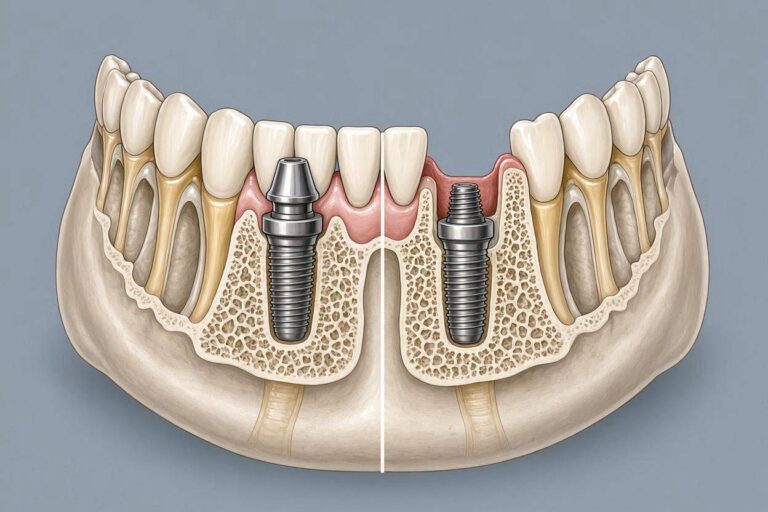
A tooth fails. Perhaps it fractures beyond repair. Perhaps deep decay reaches the point where a root canal and crown cannot save it. Perhaps gum disease loosens it beyond salvation. The patient faces a choice: live with a gap, get a bridge, wear a removable partial denture, or get a dental implant. This decision point represents a crossroads where clinical factors, personal preferences, financial realities, and timing all intersect.
This guide explores the considerations that lead a patient and their dental team to choose a dental implant. We examine the indications, the contraindications, the alternatives, the timing of placement, and the patient-specific factors that sway the decision one way or another. The goal is to provide a thorough framework for understanding when an implant is the right choice.
The Foundational Principle: Tooth Preservation First
Before considering an implant, the dental team must answer a prior question: Can this tooth be saved?
Exhausting All Reasonable Salvage Options
Modern dentistry offers remarkable tools for tooth preservation. Root canal therapy, performed by a skilled endodontist using a microscope, can save teeth with complex anatomy or previous failed treatment. Crown lengthening can expose sound tooth structure for restoration. Periodontal surgery can regenerate lost bone and attachment. Orthodontic extrusion can bring a fractured root above the gum line.
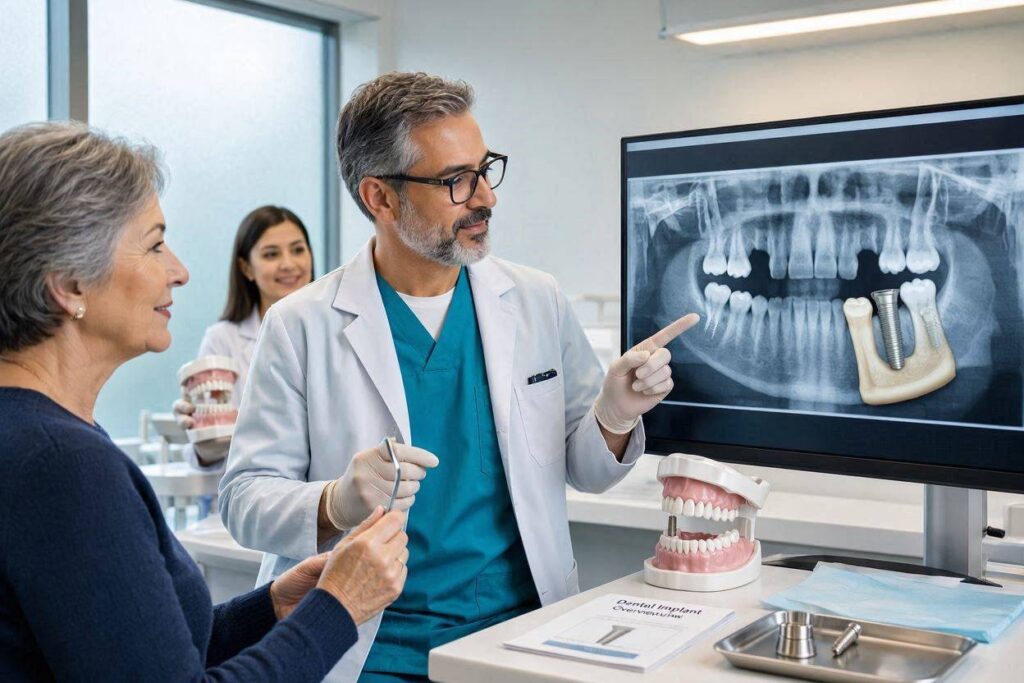
The decision to extract and place an implant should come only after the treating dentists have reasonably concluded that the tooth cannot be predictably saved. This conclusion requires a thorough diagnostic workup, including radiographs, a cone-beam CT scan in many cases, a periodontal examination, and an assessment of the tooth’s strategic value within the dental arch.
The Restorability Assessment
A tooth may have a salvageable root but insufficient remaining coronal tooth structure to support a crown. The dentist measures the ferrule effect, the band of sound tooth structure above the gum line that a crown can grip. If deep decay or fracture extends too far subgingivally, achieving a proper ferrule becomes impossible. At this point, extraction and implant replacement enter the conversation.
Indications: Clear Clinical Scenarios Favoring Implants
Several situations point clearly toward implant treatment.
The Unrestorable Tooth
The tooth has a vertical root fracture extending through the root and into the furcation. A root canal separated instrument has caused a perforation that cannot be repaired. Caries extends into the furcation of a multi-rooted tooth. Extraction is the only option, and an implant is the ideal replacement.
Congenitally Missing Teeth
A patient is born without one or more permanent teeth, most commonly maxillary lateral incisors or second premolars. The primary tooth that erupted in its place eventually fails, or there was never a tooth there. An implant provides the first permanent replacement for that site.
The Edentulous Patient Struggling with Dentures
A patient with a full denture, particularly a lower denture, complains of inability to chew, constant movement, gagging, and social embarrassment. The lower denture rests on a shrinking ridge with little retention. Two implants to stabilize the denture transform the patient’s quality of life. This is one of the most predictable and life-changing applications of implant dentistry.
Traumatic Tooth Loss
A healthy tooth is avulsed in an accident and cannot be successfully replanted. The surrounding bone is intact. The patient is otherwise healthy. An implant can be placed immediately or after a short healing period, providing an esthetic and functional replacement with minimal impact on adjacent teeth.
The Distal Extension Missing Tooth
A patient is missing the last tooth in the arch. A conventional bridge requires support from teeth on both sides of the gap. With no posterior abutment, a bridge is either impossible or requires a cantilever design, which places heavy leverage forces on the anterior abutment tooth. An implant eliminates the need for a cantilever and preserves the anterior tooth.
Contraindications: When an Implant Is Not the Right Choice
Equally important is recognizing when not to place an implant.
Absolute Contraindications
Some conditions make implant placement unacceptably risky.
Recent or active chemotherapy or radiation to the jaws: Patients with active malignancy or who have recently completed radiation therapy, especially to the head and neck, face a high risk of osteoradionecrosis. Implant surgery is contraindicated during active treatment and requires careful consideration even after treatment.
Severe uncontrolled systemic disease: Uncontrolled diabetes with hemoglobin A1c consistently above a level that impairs healing, severe immunosuppression, or active intravenous bisphosphonate therapy for cancer metastasis management are strong contraindications.
Unrealistic patient expectations: A patient who expects a guarantee of success, who will not commit to oral hygiene and maintenance, or who wants an implant for purely cosmetic reasons when functional alternatives exist may not be a suitable candidate.
Relative Contraindications
These increase risk but may be managed with proper precautions.
Heavy smoking: Smokers have significantly higher implant failure rates. Smoking cessation counseling and documented cessation before surgery improve outcomes. Some clinicians set a firm limit, such as less than ten cigarettes per day, while others require complete cessation.
Inadequate bone volume: With advanced grafting techniques, bone deficiency is rarely an absolute contraindication. However, the extent of grafting needed, the cost, the extended timeline, and the increased surgical risk may tip the balance toward alternative treatments.
Bruxism and parafunctional habits: Heavy clenching and grinding place extreme forces on implants. These patients can still have implants, but the prosthetic design must account for the forces, and a protective night guard is mandatory.
Adolescence: Implants should not be placed until jaw growth is complete, typically late teens for females and early twenties for males. Placing an implant too early results in it becoming submerged relative to the adjacent natural teeth as the jaw continues to grow.
Comparing Alternatives: Implant Versus Bridge Versus Partial
The decision is rarely between implant and nothing. It is between implant and other tooth replacement options.
The Fixed Bridge
A traditional fixed bridge involves preparing the teeth on either side of the gap for crowns and fabricating a connected prosthesis that spans the space. The bridge is cemented in place and is not removable by the patient.
Advantages over an implant: A bridge can be completed in two to three weeks, compared to months for an implant. No surgery is required. The cost is often lower, especially if the adjacent teeth already need crowns.
Disadvantages compared to an implant: Healthy adjacent teeth must be reduced. This irreversible enamel removal predisposes those teeth to future decay, root canal, and fracture. The bridge does not stimulate the underlying bone, leading to ridge resorption under the pontic. Cleaning under the pontic is challenging. The average lifespan of a bridge is ten to fifteen years, after which it often needs replacement due to decay or failure of the abutment teeth.
The Removable Partial Denture
A partial denture replaces missing teeth with an appliance that the patient removes for cleaning. It clasps onto remaining teeth or uses precision attachments.
Advantages over an implant: Lower cost. No surgery. Can replace multiple missing teeth in different areas of the mouth with a single appliance. Can be fabricated quickly.
Disadvantages compared to an implant: Less stable and less comfortable. Clasps can be visible and can damage the abutment teeth over time. The partial denture does not prevent bone loss. Many patients find partials unacceptable due to bulk, taste alteration, and gagging.
No Replacement
Leaving the space empty is an option, though often a poor one.
Consequences of non-replacement: Adjacent teeth drift and tilt into the space. The opposing tooth supra-erupts because it has nothing to bite against. The bite collapses. The drifting teeth create food traps and periodontal problems. The missing tooth site loses bone volume over time, making future implant placement more difficult. A single missing posterior tooth may be tolerated by some patients with stable occlusion. Multiple missing teeth or a missing anterior tooth almost always require replacement.
The Timing Decision: When to Place the Implant
Assuming the decision for an implant is made, the next question is when.
Immediate Implant Placement
The implant is placed into the extraction socket at the same appointment as the tooth removal.
Ideal for: Intact sockets without active infection, adequate bone beyond the socket apex for primary stability, and thin-walled sockets where immediate placement helps preserve the buccal bone plate.
Contraindicated for: Purulent infection, large periapical lesions, inadequate bone apical to the socket to engage the implant, and when primary stability cannot be achieved.
Advantages: Fewer surgeries, reduced total treatment time, and potential preservation of soft and hard tissue contours.
Early Implant Placement
The implant is placed four to eight weeks after extraction, allowing soft tissue healing but before significant bone resorption.
Ideal for: Sockets with some infection or inflammation that needs to resolve before implant placement, but where the bone is adequate.
Advantages: Allows resolution of infection. Soft tissue closure over the site provides a better environment. The bone has not yet undergone significant resorption.
Delayed Implant Placement
The implant is placed three to six months or more after extraction, after complete bone and soft tissue healing.
Ideal for: Sites that required extensive bone grafting after extraction, large infections, or when the patient’s health status needs optimization before elective surgery.
Advantages: The site is fully healed and stable. Any bone grafting has matured. The risk of surgical complications related to the extraction socket is eliminated.
Patient-Specific Factors That Influence the Decision
Beyond the tooth and the bone, the patient’s overall profile matters.
Age and Life Expectancy
A healthy thirty-year-old with a single missing tooth should strongly consider an implant. The implant may last a lifetime. The cumulative cost and biologic cost of replacing a bridge every ten to fifteen years far exceeds the initial investment in an implant.
An eighty-five-year-old with multiple medical comorbidities who has been functioning adequately with a partial denture may not be a good candidate for an implant. The surgical risk, the healing period, and the cost may not be justified by the expected benefit over the patient’s remaining years.
Medical and Dental History
A patient with well-managed diabetes, controlled hypertension, and a history of good wound healing can proceed with implants. A patient with poorly controlled diabetes, a history of bisphosphonate use for osteoporosis, or long-term steroid use requires a more cautious approach and medical consultation.
Oral Hygiene and Maintenance Commitment
A patient who has lost teeth to neglect and shows no interest in improving hygiene is a poor implant candidate. Implants fail in a dirty mouth. The patient must demonstrate a commitment to daily care and regular professional maintenance before implant treatment begins.
Financial Considerations
Implants require a significant upfront investment. A patient who cannot afford the implant now but can afford a bridge might choose the bridge, understanding that it may need replacement later. A removable partial denture provides a low-cost interim solution while the patient saves for an implant.
Psychological Factors
Dental anxiety, fear of surgery, and inability to tolerate long appointments may sway the decision toward a non-surgical alternative. Conversely, a patient who is highly motivated to have a fixed, permanent replacement and who fears the loss of additional tooth structure for a bridge may strongly prefer an implant.
The Role of the Dental Team in the Decision
The decision for an implant is rarely made by a single clinician.
The Restorative Dentist’s Perspective
The general dentist or prosthodontist who will restore the implant evaluates the patient’s overall oral condition. They assess the strategic value of the missing tooth, the condition of adjacent teeth, the occlusion, and the esthetic demands. They determine whether an implant is the best restorative option and whether the patient is a candidate.
The Surgical Specialist’s Perspective
The oral surgeon or periodontist who will place the implant evaluates the bone, the anatomy, and the patient’s surgical risk. They determine whether implant placement is surgically feasible and safe. They assess the need for grafting and the likelihood of achieving primary stability.
The Collaborative Treatment Plan
In an ideal scenario, the restoring dentist and the surgeon communicate before any treatment begins. They agree on the implant position based on the desired crown position. They use cone-beam CT imaging and virtual implant planning software to design the case. This prosthetically driven approach ensures that the implant serves the restoration, not the other way around.
Table: Decision Matrix for Tooth Replacement Options
| Factor | Implant | Fixed Bridge | Removable Partial | No Replacement |
|---|---|---|---|---|
| Impact on adjacent teeth | None | Irreversible enamel removal | Clasps may damage teeth | Adjacent teeth drift |
| Bone preservation | Yes | No | No | No |
| Surgical requirement | Yes | No | No | No |
| Treatment duration | 3-12 months | 2-4 weeks | 2-4 weeks | N/A |
| Relative cost | Highest | Moderate | Lowest | None |
| Longevity | 20+ years potential | 10-15 years average | 5-10 years | N/A |
| Stability and comfort | Excellent | Good | Fair | Poor |
| Esthetics | Excellent | Good | Variable, clasps visible | Poor |
The Informed Consent Discussion
Once the decision leans toward an implant, the patient must understand what they are agreeing to.
What Patients Must Be Told
- The expected success rate and the factors that could lower it.
- The number of surgical procedures required.
- The total treatment time from extraction to final crown.
- The potential complications, including implant failure, peri-implantitis, nerve injury, sinus perforation, and prosthetic complications.
- The need for lifelong maintenance and professional recall visits.
- The total cost and what insurance will and will not cover.
- The alternatives and their respective risks and benefits.
Documenting the Conversation
The consent discussion should be documented in the patient’s record. A signed consent form is standard. The patient should have time to consider their options and ask questions without pressure.
Special Considerations for Specific Teeth
The decision varies by location in the mouth.
Maxillary Lateral Incisors
Congenitally missing laterals present a unique challenge. The canine often erupts adjacent to the central incisor. The space is limited. Orthodontics is usually required to open adequate space for an implant. The bone in this area is often thin, requiring grafting. The esthetic demands are extremely high. The implant must harmonize perfectly with the adjacent natural teeth. This is one of the most technically demanding implant scenarios.
Maxillary First Molars
The maxillary first molar is the most commonly extracted tooth in adults. The sinus lies directly above it. Bone height after extraction is often inadequate, requiring a sinus lift. The occlusal forces are high. An implant in this site must be of adequate diameter and length. A bridge from the second premolar to the second molar is a viable alternative, but it commits the second molar, which may be the last tooth in the arch.
Mandibular Incisors
The narrow space and thin bone between mandibular incisors make implant placement challenging. A mini implant may be needed. A resin-bonded bridge (Maryland bridge) is a common alternative that avoids tooth preparation and is less expensive.
Conclusion
A dental implant should be considered when a tooth cannot be saved and the patient has adequate bone, acceptable health status, and the motivation to maintain the implant for life. Implants offer unparalleled advantages in preserving bone, avoiding damage to adjacent teeth, and providing a stable, esthetic, long-lasting replacement. The decision involves weighing these advantages against the surgical requirements, longer treatment timeline, and higher initial cost compared to bridges and partial dentures. The best decision emerges from a collaborative process between the patient, the restoring dentist, and the surgical specialist, guided by thorough diagnosis, honest discussion of alternatives, and realistic expectations.
Frequently Asked Questions
Can I get an implant the same day my tooth is extracted?
In many cases, yes. Immediate implant placement is possible if the socket is free of active infection, there is adequate bone beyond the socket apex, and primary stability can be achieved. Not every extraction site qualifies.
How long can I wait after an extraction to get an implant?
Bone resorption begins immediately after extraction and accelerates in the first six months. Placing an implant within this window is ideal. Waiting longer often requires bone grafting. There is no absolute time limit, but the longer you wait, the more complex the procedure becomes.
Is there an age limit for dental implants?
There is no upper age limit. Healthy older adults with adequate bone can successfully receive implants. The lower age limit is determined by jaw growth, typically late teens for females and early twenties for males.
What if I do not have enough bone for an implant?
Bone grafting procedures can create adequate bone volume in most cases. The trade-off is additional surgery, cost, and healing time. If grafting is extensive, the total treatment time can extend to a year or more.
Can a failed root canal tooth be replaced with an implant?
Yes. The tooth is extracted atraumatically. If the infection is contained and the bone is adequate, immediate implant placement may be possible. If there is significant periapical pathology, a delayed approach with socket grafting and healing before implant placement is safer.
Additional Resources
American College of Prosthodontists – Missing Teeth
https://www.gotoapro.org
Information on tooth replacement options, including dental implants, from the specialists in restoring and replacing teeth.