Can Dental Implants Be Whitened?
A patient who has enjoyed their dental implant for several years notices that their natural teeth have yellowed over time. The implant crown, however, remains as white as the day it was placed. The mismatch becomes increasingly noticeable. The patient wonders: Can I whiten my implant crown to match my natural teeth? Or should I whiten my natural teeth to match the implant?
The answer is definitive: dental implant crowns cannot be whitened. The materials from which they are made, ceramic or porcelain, do not respond to whitening agents the way natural tooth enamel does. This guide explains why implant restorations cannot be whitened, what options exist for managing color mismatch, and how to plan for long-term esthetic harmony between implants and natural teeth.
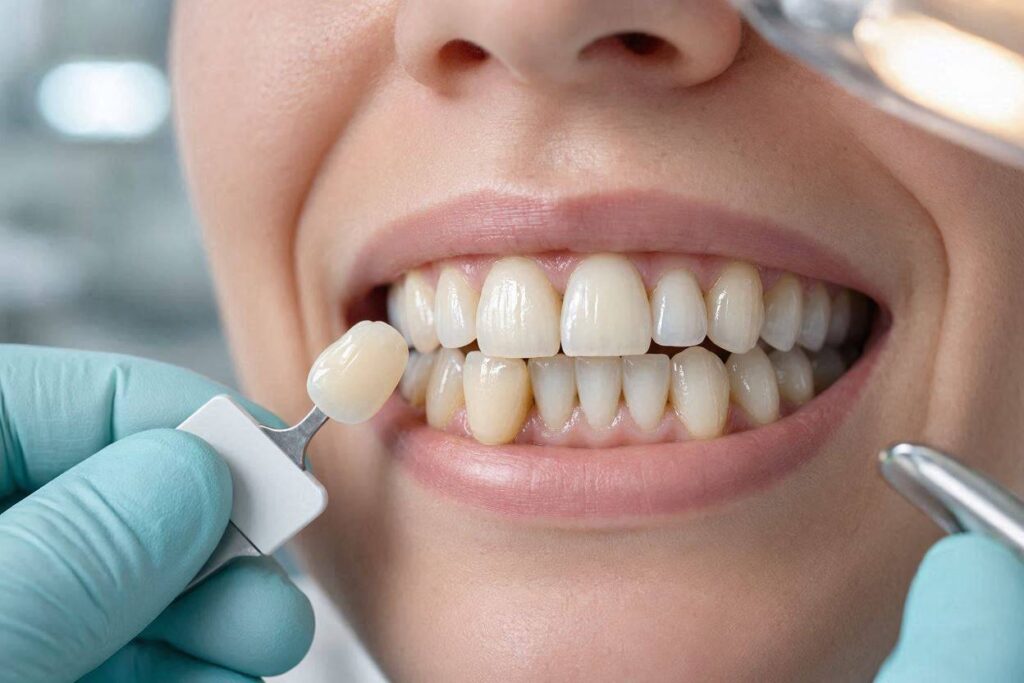
The Fundamental Difference in Material Properties
To understand why implants cannot be whitened, one must understand the difference between natural tooth structure and implant crown materials.
How Natural Teeth Respond to Whitening
Natural tooth enamel is a porous, crystalline structure composed primarily of hydroxyapatite. Over time, chromogens, which are pigmented molecules from food, drink, tobacco, and the natural aging process, penetrate the enamel and deposit in the dentin layer beneath. Whitening agents, typically hydrogen peroxide or carbamide peroxide, release oxygen free radicals that break down these chromogens into smaller, less pigmented molecules. The tooth becomes lighter, not because the enamel is bleached in the laundry sense, but because the stain molecules are chemically broken apart.
This process works on natural tooth structure. It is a chemical reaction within the organic and inorganic matrix of the tooth.
Why Implant Crowns Cannot Be Whitened
Implant crowns are fabricated from dental ceramics: porcelain fused to metal, lithium disilicate, monolithic zirconia, or layered zirconia with porcelain. These materials are chosen precisely because they are dense, non-porous, and color-stable. They do not absorb stain molecules the way natural enamel does. They do not contain the organic matrix that reacts with peroxide.
Whitening agents have no effect on dental ceramics. Applying whitening gel to an implant crown does nothing except possibly damage the glaze or surface finish. The crown will remain exactly the same color.
The Glaze and Surface Finish
A dental ceramic crown has a glazed surface that mimics the light-reflecting properties of natural enamel. This glaze is created during the final firing in the dental laboratory. Abrasive whitening toothpastes or acidic whitening gels can roughen this glaze, making the crown more susceptible to surface stain accumulation and less esthetic over time. Attempting to whiten an implant crown is not just ineffective; it can be damaging.
The Problem of Color Mismatch Over Time
The inability to whiten implant crowns creates a clinical challenge.
Natural Teeth Change Color
Natural teeth darken and yellow with age. This occurs due to:
- Enamel wear revealing the yellower dentin beneath.
- Accumulation of extrinsic stains from coffee, tea, red wine, and tobacco.
- Intrinsic changes in the dentin over time.
These changes are gradual but real. A patient who had an implant crown placed in their thirties may find that by their fifties, the implant crown is noticeably lighter than the adjacent natural teeth.
Implant Crowns Do Not Change Color
A well-made ceramic crown maintains its original shade indefinitely. It does not darken. It does not yellow. It does not accumulate intrinsic stain. It remains a fixed reference point while the natural teeth shift around it.
The Resulting Esthetic Discrepancy
The mismatch can become cosmetically significant. A single anterior implant crown that is visibly lighter than the natural teeth draws attention to itself. It may appear artificial. The patient, who was once delighted with their implant, becomes self-conscious about the color difference.
The Solution: Whiten Natural Teeth First
The clinical approach to managing color with implant restorations is proactive and sequential.
The Rule: Whitening Precedes Implant Restoration
Whenever a patient is considering an implant in the esthetic zone and is interested in whitening their natural teeth, the whitening must be completed before the implant crown is fabricated. The crown is then matched to the newly whitened shade of the natural teeth.
This sequence is critical. If the crown is made first and the patient whitens later, the natural teeth become lighter and the crown becomes the dark element. The crown cannot then be whitened to catch up. The only solution is to remake the crown at additional cost.
Timing the Whitening Process
The dentist should discuss the patient’s long-term esthetic goals at the initial treatment planning consultation. If the patient is dissatisfied with the color of their natural teeth, the sequence should be:
- Complete any necessary restorative or periodontal treatment.
- Perform whitening to the desired shade.
- Allow a stabilization period of two to four weeks after whitening for the shade to settle. Whitened teeth may rebound slightly.
- Shade match the implant crown to the stabilized, whitened natural teeth.
- Fabricate and deliver the implant crown.
Maintaining Whitening After the Crown Is Placed
The patient can continue to whiten their natural teeth after the implant crown is placed. The natural teeth will respond. The crown will not. However, if the patient maintains the natural teeth at a shade close to the crown, the discrepancy is minimal. Periodic touch-up whitening can keep the natural teeth in the range of the crown.
What If the Mismatch Already Exists?
A patient presents with an existing implant crown that is too light compared to their now-darkened natural teeth. Options exist.
Whiten the Natural Teeth to Match the Crown
The most conservative approach is to whiten the natural teeth to as close to the implant crown shade as possible. This does not alter the crown and can be effective if the natural teeth are not severely stained and if the shade gap is not too large. The limitation is that the natural teeth can only be whitened to a certain degree. If the crown is extremely light and the natural teeth are deeply stained, they may never match.
Replace the Crown
If the natural teeth cannot be whitened sufficiently to match the crown, the crown must be remade to match the current shade of the natural teeth, or the natural teeth must be further whitened and the crown remade to the new shade. This is the definitive solution but involves the cost and time of a new crown.
Consider Veneers or Crowns on Adjacent Teeth
In cases of generalized color mismatch, or when the patient desires a complete smile makeover, veneers or crowns on the adjacent natural teeth can create a uniform, harmonious appearance. The implant crown may be retained and matched to the new restorations, or it may be replaced as part of the comprehensive treatment.
Care and Maintenance of Implant Crown Color
While the crown cannot be whitened, it can be kept clean and free of surface stain.
Professional Cleaning
Regular professional hygiene visits remove surface stain that accumulates on the crown, just as on natural teeth. The hygienist uses polishing paste and techniques appropriate for ceramic restorations to maintain the crown’s surface luster.
Avoiding Abrasive Products
The patient should avoid abrasive whitening toothpastes on the implant crown. These products contain silica or other abrasives designed to scrub extrinsic stain from enamel. On a ceramic crown, they can dull the glaze over time, making the crown more likely to accumulate stain.
Avoiding Staining Habits
Ceramic crowns are more stain-resistant than natural enamel, but they are not completely impervious to surface staining over years, particularly if the glaze has been compromised. Limiting consumption of dark-colored beverages, avoiding tobacco, and rinsing with water after consuming stain-causing foods and drinks help preserve the crown’s appearance.
The Material Factor: Different Ceramics and Color Stability
Not all implant crown materials are equally color-stable.
Porcelain Fused to Metal
The traditional PFM crown has a metal substructure covered with layers of feldspathic porcelain. The porcelain is color-stable. However, over many years, the metal margin at the gum line may become visible if gingival recession occurs. This is not a color change in the porcelain but an exposure of the underlying metal.
Lithium Disilicate
This glass-ceramic material, used in monolithic or layered form, is highly esthetic and color-stable. It does not change color over time.
Monolithic Zirconia
Full-contour zirconia is extremely strong and color-stable. It does not have the translucency of layered ceramics but resists staining and wear.
Layered Zirconia with Porcelain
Zirconia substructures veneered with feldspathic porcelain combine strength with esthetics. The outer porcelain layer is color-stable, though the junction between the zirconia and the porcelain can occasionally be a site for surface stain accumulation if oral hygiene is poor.
Table: Whitening and Color Management Strategies
| Clinical Scenario | Recommended Approach |
|---|---|
| Implant planned, patient wants whiter teeth | Whiten natural teeth first, then match crown |
| Implant in place, crown matches | Maintain natural teeth with periodic whitening touch-ups |
| Implant crown too light, natural teeth darkened | Whiten natural teeth to match if possible; replace crown if not |
| Implant crown too dark (rare) | Replace crown; natural teeth may need whitening to allow lighter match |
| All teeth including implant crowns appear dull | Professional polish; evaluate glaze integrity; consider new crowns if glaze is worn |
Conclusion
Dental implant crowns cannot be whitened. The ceramic materials from which they are made are color-stable and non-porous, which is an advantage for longevity but a limitation when the natural teeth surrounding them change color. The correct clinical approach is to whiten natural teeth before the implant crown is fabricated, matching the crown to the desired shade. For existing mismatches, whitening the natural teeth toward the crown shade or replacing the crown are the available solutions. Patients with implants should maintain their natural teeth with periodic whitening to preserve harmony and should avoid abrasive products on the implant crown itself.
Frequently Asked Questions
Can I use whitening strips on my implant crown?
You can, but they will have no whitening effect on the crown. They will whiten your natural teeth only. Avoid placing whitening gel directly on the crown for prolonged periods, as it may affect the glaze.
Will my implant crown stain over time?
Ceramic crowns are highly stain-resistant, but surface stain can accumulate, especially if the glaze is worn. Professional cleanings remove this surface stain. The crown will not develop intrinsic discoloration like a natural tooth.
Why is my implant crown darker than my natural teeth?
This is unusual. If the crown was matched correctly at placement, it should not darken. If it appears darker, the natural teeth may have been whitened after the crown was placed, or there may be metal showing through if it is a PFM crown with thin porcelain.
Should I whiten my teeth before getting an implant crown?
Yes. If you are considering whitening, do it before the crown is fabricated. The crown can then be matched to your whitened shade. Whitening after crown placement will create a mismatch.
How often can I whiten my natural teeth to keep them matching my implant crown?
Touch-up whitening can be done as often as every few months or as directed by the whitening product manufacturer. Maintaining your natural teeth close to the crown shade prevents noticeable mismatch.
Additional Resources
American Academy of Cosmetic Dentistry – Whitening Information
https://www.aacd.com
Information on professional and at-home teeth whitening, including how to plan whitening in conjunction with restorative dental treatment.