Which Dental Implant Is Located Beneath The Mandible?
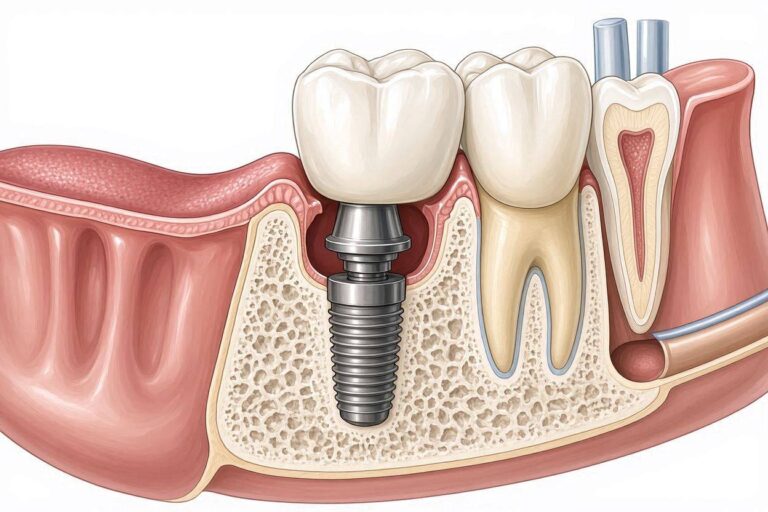
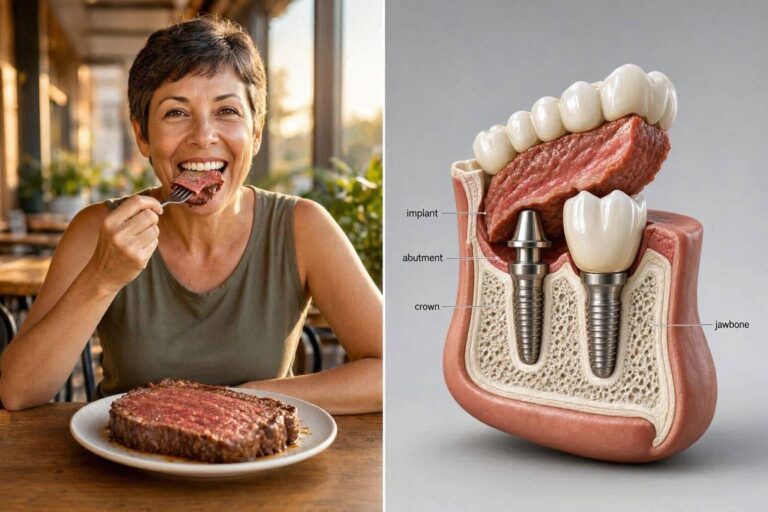
The vast majority of modern dental implants are placed into the jawbone, but a specific category of implants is located not within the bone, but beneath it or traversing it entirely. The question of which dental implant is located beneath the mandible touches on two distinct, historically significant, and highly specialized types of implants: the subperiosteal implant, which rests on top of the bone under the gum tissue, and the transmandibular implant, which passes completely through the lower jawbone. These are not the common endosteal root-form implants that represent over 95% of modern implant dentistry. They are salvage solutions for the most severe cases of jawbone atrophy, where a patient has been told they “do not have enough bone” for conventional implants and cannot or will not undergo extensive bone grafting. This guide provides a detailed, clinical exploration of these beneath-the-mandible implant types, their history, their modern role, and why they are both a last resort and a remarkable solution for a specific, desperate patient population.
The Anatomical Problem: The Severely Atrophic Edentulous Mandible
To understand an implant that is beneath the mandible, you must first understand the clinical catastrophe it is designed to solve. When all the teeth in the lower jaw are lost, the alveolar ridge, the bone that once held the teeth, undergoes a relentless, progressive process of resorption. The body, in a cruel biological irony, dissolves the bone that is no longer stimulated by the mechanical forces of chewing. Over decades, the once-tall, broad ridge of the lower jaw can resorb down to a flat, pencil-thin, or even concave basin. The mandible itself can become dangerously thin, placing it at risk of a pathologic fracture from the normal forces of chewing.
In such a patient, a conventional endosteal implant, which is a screw placed into the bone, has nowhere to go. The bone is simply too thin in width and too short in height. A CBCT scan would reveal a mandible that is only a few millimeters tall, with the inferior alveolar nerve canal running precariously close to the surface. For these patients, a massive autogenous bone graft, harvested from the hip, is the standard of care to rebuild the ridge. But this surgery is major, with a long healing period and significant morbidity. Some patients, due to advanced age, medical frailty, or a strong refusal to undergo the grafting surgery, are not candidates. It is for this specific, narrow group that the subperiosteal implant was developed, and for whom the transmandibular implant exists as an even more robust option.
The Subperiosteal Implant: A Custom Framework Resting on the Bone
The subperiosteal implant is a custom-fabricated, patient-specific metal framework that is designed to sit directly on top of the residual mandibular bone, completely beneath the gum tissue. It does not penetrate the bone for primary stability; it derives its stability from its intimate, passive fit over the entire bony contour of the jaw, like a saddle on a horse. Posts protrude from this framework, through the gum tissue, into the mouth, where a denture or fixed bridge is attached.
The process of creating a traditional subperiosteal implant was a two-stage surgical ordeal. In the first surgery, the gum was opened, and a direct impression was taken of the exposed bone surface. The bone was literally molded with impression material. The gum was then sutured closed, and the impression was sent to a dental laboratory, where a custom chrome-cobalt or titanium framework was cast. In a second surgery weeks later, the gum was re-opened, the framework was seated on the bone, and the gum was sutured around the protruding posts. The patient healed with the framework permanently embedded under the soft tissue.
In the modern era, this barbaric-sounding process has been completely transformed by digital technology. A CBCT scan is taken of the patient’s jaw. From this 3D data, a stereolithic model of the mandible is 3D-printed in a medical-grade resin. The custom subperiosteal framework is then digitally designed, and the final implant is 3D-printed directly in titanium using laser sintering technology. The surgery is now a single-stage procedure. The gum is reflected, the prefabricated, perfectly-fitting titanium framework is seated and secured with small fixation screws, and the soft tissue is closed. The fit is passive and precise, and the surgery is far less traumatic. The modern, CAD/CAM-fabricated, custom titanium subperiosteal implant is a highly advanced medical device, far removed from its early predecessors.
“The subperiosteal implant is not a treatment I offer lightly. It is for the patient who has been wearing a completely non-functional, floating lower denture for years, who has a severely atrophic, knife-edge mandible, and for whom a hip graft is medically contraindicated. For that patient, when I seat the custom titanium framework and clip on a fixed set of teeth, the transformation in their quality of life is immediate and profound. They go from being a dental cripple to having a functional, fixed smile in a single surgery.” — An Oral and Maxillofacial Surgeon Specializing in Complex Implant Reconstruction
The Transmandibular Implant (Transosseous Implant): Passing Through the Bone
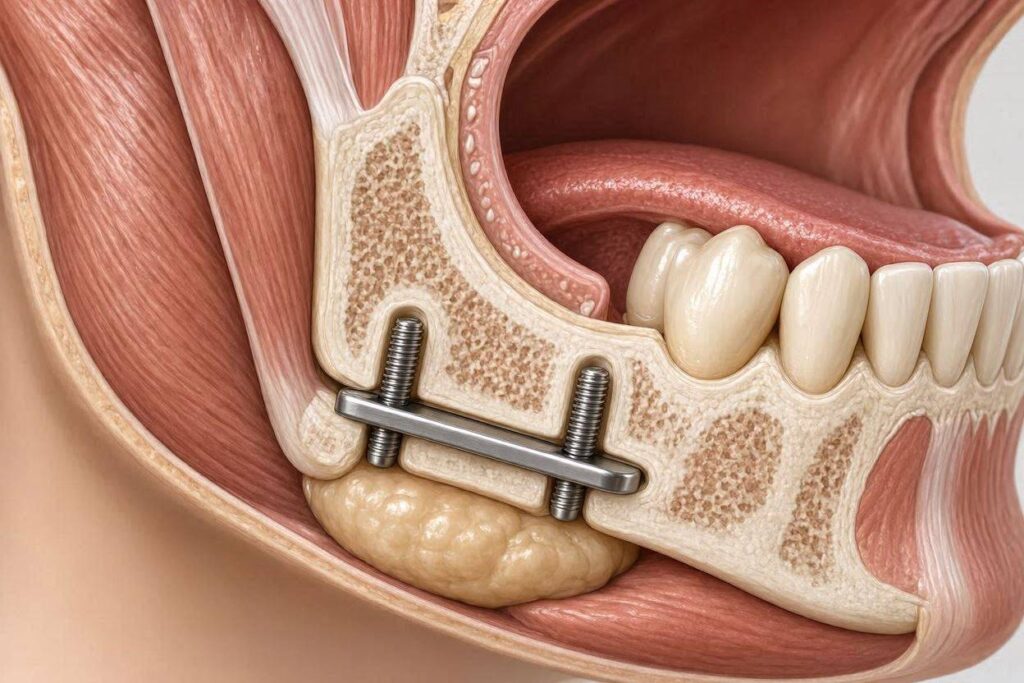
If the subperiosteal implant rests on the bone, the transmandibular implant, also known as the transosseous implant, passes completely through it. This is an even more specialized, rarely used, and aggressively engineered solution. The transmandibular implant is a rigid, one-piece titanium frame that consists of a horizontal base plate that sits on the inferior border of the mandible, truly beneath the chin, and a series of vertical posts that pass through the full height of the mandibular bone and emerge into the mouth to support a full-arch fixed prosthesis.
The placement of a transmandibular implant requires an extraoral surgical approach. The surgeon makes an incision under the chin, in the skin of the submental region. The inferior border of the mandible is surgically exposed. A series of vertical channels are precisely drilled through the entire mandible, from the bottom up, carefully avoiding the mental nerve. The custom or standard titanium frame is then seated from below, with the vertical posts passing through the bone. The base plate is secured to the inferior border with bone screws. The skin incision is closed, leaving a small, well-hidden scar. The posts now protrude into the mouth, providing an extremely rigid, stable foundation for a full-arch bridge.
The transmandibular implant bypasses the resorbed alveolar ridge entirely and anchors directly to the dense, cortical bone of the inferior mandibular border, which is the last bone to resorb and remains strong even in the most atrophic mandibles. It provides a level of stability that is unmatched for this patient population. The biomechanical principle is brilliant: the implant engages the strongest bone, and the forces of chewing are distributed across the entire framework, not a few isolated screw points. However, the surgery is significant, the need for a chin incision is a cosmetic and psychological barrier for many, and the number of surgeons proficient in the technique is small. In the modern era, it is a niche procedure, often supplanted by the less invasive digital subperiosteal implant or by guided, graftless solutions using short, angled implants.
The table below compares the two beneath-the-mandible implant types.
| Feature | Subperiosteal Implant | Transmandibular Implant |
|---|---|---|
| Position | Rests on top of the mandibular bone, under the gum | Passes through the mandible; base plate on the inferior border |
| Primary Stability Mechanism | Passive, intimate fit over the bone contour; small fixation screws | Rigid fixation to the dense cortical bone of the inferior border |
| Surgical Approach | Intraoral (through the mouth); single-stage with digital workflow | Extraoral (through an incision under the chin); surgically invasive |
| Modern Fabrication | 3D-printed titanium from a CBCT scan | Custom-milled or standard titanium frame |
| Ideal Patient | Severely atrophic maxilla or mandible; medically unable to tolerate a hip graft | Extremely atrophic mandible; patient demands a highly stable, fixed solution |
The Critical Distinction: These Are Not “Bone-Anchored” Implants in the Conventional Sense
The defining characteristic of a subperiosteal implant is that it does not osseointegrate in the way a conventional endosteal implant does. There is no drilled osteotomy into which a titanium screw is placed, and there is no intimate, microscopic bond between the implant surface and the internal bone. The subperiosteal framework is stabilized by a combination of its precise fit, the overlying periosteum and gum tissue that encapsulate it, and a fibrous connective tissue interface that forms between the framework and the bone surface. The bone does not grow into the subperiosteal framework; the framework rests on the bone, and the soft tissue holds it in place. This is a fundamentally different, and biologically less intimate, mode of retention. The transmandibular implant, by contrast, does involve bone contact along the full length of the vertical posts, and the inferior border screws achieve bicortical stabilization, which can lead to some degree of osseointegration. However, the primary stability is mechanical, not biological. The base plate is the mechanical foundation.
This lack of true osseointegration is the subperiosteal implant’s greatest vulnerability. Over time, the fibrous tissue interface can break down. The gum tissue around the protruding posts can become inflamed, a condition analogous to peri-implantitis, but driven by the movement of the framework against the soft tissue. Bacterial infiltration down the posts can lead to chronic infection, bone resorption under the framework, and eventual mobility of the entire structure. The long-term survival of subperiosteal implants is inferior to that of endosteal implants. This is why they are a last resort, not a first-line therapy. When a patient has the bone volume for a conventional endosteal implant, even a short one, that is always the preferred treatment.
Important Note: If a dentist suggests a subperiosteal implant but you have not had a thorough CBCT evaluation for conventional implants, including an assessment for short implants (less than 8mm), zygomatic implants for the upper jaw, or bone grafting, seek a second opinion from an experienced oral surgeon or periodontist. A subperiosteal implant should only be considered when all conventional bone-anchored options have been genuinely exhausted and the patient has been fully informed of the inferior long-term data.
The Modern Renaissance: Digital Subperiosteal Implants and the Graftless Revolution
There is a quiet, modern renaissance in the subperiosteal implant, driven entirely by the fusion of CBCT imaging, 3D printing of titanium, and sophisticated digital design software. The “old” subperiosteal implant, with its two-stage surgery and its cast chrome-cobalt framework fabricated from an intraoperative bone impression, had an unacceptable failure rate due to poor fit. The “new” digital subperiosteal implant is a different animal entirely.
The digital workflow eliminates the guesswork. The CT scan provides a perfect 3D model of the bone. The implant is designed with a passive fit, meaning it contacts the bone in a completely stress-free state, which is critical for the long-term health of the underlying bone and soft tissue. The 3D-printed titanium has a surface that can be treated to encourage soft tissue attachment at the post level. The surgery is a single, less morbid procedure. Early data on these digitally fabricated implants is promising, with reports of higher survival rates than the historical counterparts. For the right patient, the modern digital subperiosteal implant, executed by a highly skilled surgical and digital team, can be a life-changing, same-day solution for a jaw that was previously considered beyond reconstruction.
Conclusion
The dental implant located beneath the mandible is the subperiosteal implant, a custom-fabricated, patient-specific metal framework that rests directly on the bone surface under the gum, with posts that protrude to support a fixed dental prosthesis, designed for severely atrophic jaws where conventional endosteal implants are impossible. A related but more invasive type is the transmandibular implant, which passes completely through the mandible and anchors to the inferior border via a chin incision. Both are last-resort, salvage solutions for patients who cannot undergo bone grafting, with the modern digitally designed and 3D-printed titanium subperiosteal implant representing a significant advancement over its historical cast-metal predecessor.
Frequently Asked Questions (FAQ)
Q: Is a subperiosteal implant the same as a bone-anchored implant?
A: No. A conventional endosteal implant is anchored within the bone through osseointegration. A subperiosteal implant rests on top of the bone and is stabilized by its precise fit and the overlying gum tissue, forming a fibrous, not a calcified, interface.
Q: How long does a subperiosteal implant last?
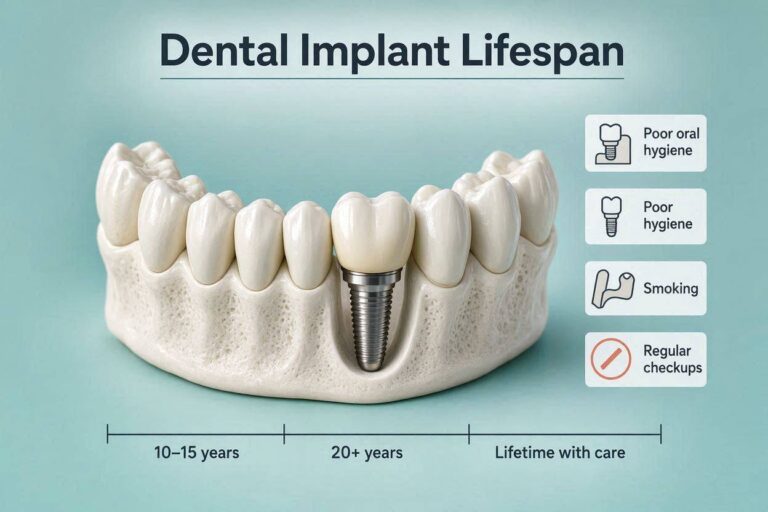
A: The long-term survival data for traditional subperiosteal implants is significantly lower than for conventional implants, with many studies reporting survival rates of 50-70% at 10 to 15 years. The modern, digitally fabricated titanium versions have shown improved early results, but they lack the multi-decade data of endosteal implants. They are considered a long-term temporary solution, not a lifetime device.
Q: Can a subperiosteal implant be used for a single missing tooth?
A: No. A subperiosteal implant is designed to replace a full arch of missing teeth or, in some cases, a large segment of missing teeth. The framework needs a large surface area of bone to derive stability. It is not suitable for single-tooth replacement.
Q: What is the recovery like for a transmandibular implant?
A: The recovery is more involved than a conventional implant surgery due to the extraoral chin incision. There will be facial swelling and bruising for a week to ten days. The chin scar is permanent but typically heals well and is hidden in the natural skin crease under the chin. The dental prosthesis can often be attached immediately, which is a significant quality-of-life advantage.
Additional Resource:
For further reading on the history and modern applications of subperiosteal implants, the PubMed database provides access to clinical case series and reviews: PubMed – Subperiosteal Implants.