Does Delta Dental HMO Cover Implants?
You hold a Delta Dental HMO insurance card in your hand. You need a dental implant. Perhaps you lost a tooth to decay or an accident, and your dentist has recommended an implant as the best replacement option. You call the Delta Dental customer service number or search their website, and you are met with a confusing mix of plan types, limitations, and exclusions. The question is simple: Will your specific Delta Dental HMO plan pay for a dental implant? The answer is frustratingly complex, and it depends entirely on the details of your specific policy. This article will guide you through the labyrinth of Delta Dental HMO plans and help you understand your coverage for implants.

The Fundamental Difference: HMO vs. PPO
Before we can answer the coverage question, you must understand the fundamental difference between a Dental Health Maintenance Organization (HMO) and a Preferred Provider Organization (PPO). These two plan types operate on entirely different models.
A Delta Dental PPO plan allows you to see any licensed dentist, but you receive the highest level of coverage, the lowest out-of-pocket cost, when you see a dentist within the Delta Dental PPO network. You can see an out-of-network dentist, but you will pay more. PPO plans typically cover a percentage of the cost of major procedures, including implants, after a waiting period and up to an annual maximum benefit.
A Delta Dental HMO, often marketed as DeltaCare USA, operates on a capitation model. You must select a primary care dentist from the HMO network. This dentist is paid a fixed monthly amount per enrolled patient, regardless of whether you seek care. When you need a procedure, you pay a fixed copayment as listed in your plan’s schedule of benefits. The copayments for covered services are typically significantly lower than the fees you would pay under a PPO, and there is often no annual maximum or deductible. However, the HMO model is built around providing essential, cost-effective care. It covers basic, preventive, and many restorative services with low copays. Major, complex procedures like dental implants are frequently excluded from HMO plans entirely, or they are covered only under very specific, limited circumstances.
The General Rule for Delta Dental HMOs
The general rule is that most Delta Dental HMO plans do not cover dental implants. The standard DeltaCare USA plan lists implants as a non-covered service. If you choose to get an implant, you will pay the full fee out of pocket, though you may have access to a reduced fee negotiated by Delta Dental with the network dentist. This reduced fee is not the same as coverage; it is a discount. You are still paying 100% of the discounted fee.
The Delta Dental HMO is designed to provide affordable access to routine and necessary dental care. It covers cleanings, exams, X-rays, fillings, simple extractions, root canals on anterior teeth, and sometimes crowns and bridges. Dental implants are considered a major, often elective, procedure. The HMO plan, with its low monthly premiums and low copays, does not have the financial structure to subsidize the high cost of implant surgery and restoration.
The Specific Language to Look For in Your Plan
You must obtain your specific plan’s Evidence of Coverage (EOC) or Summary of Benefits document. Do not rely on a customer service representative’s verbal statement alone. Read the fine print. Look for sections titled “Exclusions,” “Services Not Covered,” or “Limitations.”
You are looking for specific procedure codes. Dental implants are represented by codes like D6010 (surgical placement of implant body), D6056 (prefabricated abutment), D6057 (custom abutment), and D6058 (implant-supported crown). If these codes are listed in the exclusion section or are marked as “Not Covered” in the schedule of benefits, your plan does not cover them.
Some Delta Dental HMO plans offer a rider or an enhanced plan that adds limited coverage for implants. If your employer offers a choice of plans, you may have selected a higher-tier HMO that includes some implant benefit. The coverage may be limited to a single implant per arch, or it may be subject to a separate, lower annual maximum for implant services. The documentation will specify this.
The Coverage for the Crown vs. the Implant Fixture
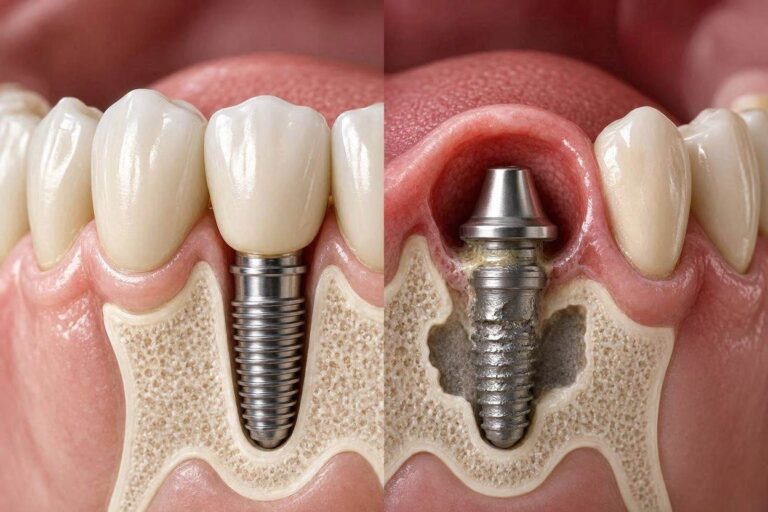
An area of potential confusion is the distinction between the implant fixture, the titanium post surgically placed in the bone, and the implant crown, the visible tooth attached to the implant. Some HMO plans that exclude the implant fixture may still cover the implant-supported crown as a major restorative service. Or they may cover the implant crown but classify it as a separate benefit with a different copayment.
You must examine how your plan handles the restorative portion. If your plan covers a crown on a natural tooth, it may also cover a crown on an implant, viewing the crown as the restoration regardless of what it is attached to. The surgical placement of the implant remains an excluded service, but the restorative crown may have a defined copayment. This can reduce your total out-of-pocket cost for the entire implant process.
The Role of the Primary Care Dentist in an HMO
In a Delta Dental HMO, your primary care dentist is the gatekeeper. If you need a specialist, such as an oral surgeon or a periodontist to place the implant, your primary care dentist must refer you. The specialist must also be in the HMO network. If the implant placement is not a covered service, a referral may not be required, as you will be paying out of pocket regardless. However, if there is partial coverage, for example, for the extraction of the tooth before implant placement, the referral process must be followed.
Your primary care dentist can also help you understand the plan’s limitations. They deal with Delta Dental HMO plans daily. They can tell you definitively whether an implant is a covered benefit and, if not, what your out-of-pocket cost will be using the plan’s negotiated fee schedule.
The Negotiated Fee Advantage
Even if your HMO plan does not cover an implant, the fact that you are a Delta Dental member gives you access to the network’s negotiated fees. The network dentist has agreed to accept a certain fee for each procedure, which is typically lower than their standard, non-insured fee. When you receive a non-covered service, you are responsible for the full amount, but that amount is the negotiated fee, not the full retail price. This is a significant, often overlooked, benefit of having an HMO plan. It acts like a discount plan for non-covered services. The savings can be 20% to 40% off the dentist’s usual fee.
Alternatives Within the HMO Network
If your HMO does not cover implants, what are your covered alternatives for tooth replacement? Your plan likely covers a fixed dental bridge or a removable partial denture. These are traditional tooth replacement options that are less expensive and are standard benefits on most HMO plans.
A three-unit fixed bridge, which replaces one missing tooth by crowning the two adjacent teeth, may have a defined copayment. A removable partial denture, a plate with a false tooth attached, will also have a copayment. These copayments are significantly lower than the full cost of an implant. If your budget is constrained and you must maximize your insurance benefits, the covered bridge or partial denture may be your most practical option. Your primary care dentist can discuss the clinical trade-offs between these options and an implant, but from a purely financial perspective, the covered alternatives will cost you far less out of pocket.
Employer-Sponsored HMO Plans vs. Individual Plans
There is a difference between a Delta Dental HMO you purchase individually on the open market and a group HMO plan provided by a large employer. Large employers have the bargaining power to customize their dental benefits. Some large employers include limited implant coverage in their HMO plans as a competitive benefit to attract and retain employees. If you work for a large corporation, a university, or a government entity, your HMO plan may have richer benefits than a standard individual plan.
Check with your employer’s human resources department. Ask them directly: “Does our Delta Dental HMO plan include any coverage for dental implants?” The HR benefits manager can provide you with the summary plan description that outlines any enhanced benefits.
The Waiting Period and Missing Tooth Clause
Even if your HMO plan has some implant coverage, you must check for a waiting period. Some plans require you to be enrolled for 12 months before major services are covered. If you need an implant now and you just enrolled in the plan three months ago, the waiting period may delay your treatment or result in a denial of coverage.
Another critical exclusion is the missing tooth clause. Many dental insurance plans, including HMOs, will not cover the replacement of a tooth that was missing before the policy’s effective date. If you lost the tooth before you had this specific Delta Dental plan, the plan may consider the implant a pre-existing condition and exclude coverage. You cannot buy dental insurance to cover a tooth that is already gone. This clause is designed to prevent adverse selection, where people only buy insurance when they need an expensive procedure.
Special Situations: Medical Necessity and Accident
There are rare exceptions where a dental implant might be covered under a Delta Dental HMO or, more likely, under your medical insurance. If the tooth loss was due to a traumatic accident, such as a car crash or a fall, your medical insurance may cover the reconstruction. Your auto insurance may also cover it if the injury occurred in a vehicle. If the implant is required as part of a medical procedure, such as reconstruction after jaw surgery for cancer, your medical insurance is the primary payer. The Delta Dental HMO’s exclusion for implants is irrelevant in these medical scenarios because the claim is submitted to medical insurance, not dental insurance.
Questions to Ask Delta Dental Directly
When you call the Delta Dental member services number on the back of your card, ask these specific questions.
1. “Does my specific plan provide any coverage for procedure code D6010, the surgical placement of a dental implant?”
2. “If the implant itself is not covered, does my plan cover the implant crown, codes D6058 or D6065?”
3. “Are there any waiting periods or missing tooth exclusions that apply to implant services?”
4. “If the service is not covered, can you tell me what the negotiated network fee is for D6010 so I know my out-of-pocket cost?”
5. “Are there any alternative tooth replacement procedures that are covered under my plan?”
Write down the answers. Ask for the representative’s name and a reference number for the call. Document everything.
The Realistic Patient Strategy
If you have a standard Delta Dental HMO and you need an implant, your realistic strategy is to expect to pay for the implant out of pocket. Use your HMO plan for the covered portions of the treatment, such as the initial exam, the X-rays, the tooth extraction, and any necessary fillings or cleanings. These have defined, low copays. For the implant surgery and the implant crown, pay the negotiated network fee. This hybrid approach maximizes your HMO benefits while accepting the plan’s limitations. Do not delay necessary implant treatment solely because your HMO does not cover it. The long-term health consequences of not replacing a missing tooth can be more costly than the implant itself.
Summary of Delta Dental HMO Implant Coverage
- Standard Delta Dental HMO (DeltaCare USA) plans generally do not cover dental implants as a standard benefit.
- Some enhanced employer-sponsored HMO plans may offer limited implant coverage; check your specific Evidence of Coverage.
- Even without coverage, HMO members benefit from negotiated network fees, reducing out-of-pocket costs.
- The HMO will typically cover alternative tooth replacements like bridges or partial dentures.
- Missing tooth clauses and waiting periods can exclude coverage even if the plan otherwise offers an implant benefit.
- Traumatic tooth loss may be covered by medical insurance, bypassing the dental HMO’s exclusions.
Conclusion
Most Delta Dental HMO plans do not cover dental implants, as they are designed to provide cost-effective basic and preventive care rather than major elective procedures. However, your membership still provides value through the negotiated fee schedule that reduces the cost of non-covered services. You must carefully review your specific plan documents, check for waiting periods and missing tooth clauses, and speak directly with your primary care dentist and Delta Dental member services to understand your full financial responsibility. If an implant is not covered, discuss the covered alternatives like bridges and partial dentures, or plan to fund the implant through savings, financing, or your HSA or FSA.
Frequently Asked Questions (FAQ)
1. Does Delta Dental HMO cover the extraction before an implant?
Yes, extractions are typically a covered service with a defined copayment under an HMO plan, even if the subsequent implant is not covered.
2. Can I upgrade my Delta Dental HMO to a PPO that covers implants?
You can only change plans during your employer’s open enrollment period or if you have a qualifying life event. If you purchased an individual plan, you can switch plans during the annual open enrollment period.
3. If my HMO does not cover the implant, can I go to an out-of-network oral surgeon?
Since you are paying out of pocket for a non-covered service, you can usually see any licensed provider. However, you will lose the negotiated fee benefit if you go out of network. You should ask the out-of-network provider for their fee and compare it to the in-network negotiated fee.
4. Does Delta Dental HMO cover All-on-4 or full arch implant bridges?
Almost never. Full-arch implant prostheses are even more complex and expensive than single implants and are consistently excluded from HMO plans.
5. Is a bone graft covered by Delta Dental HMO?
A bone graft performed at the time of extraction to preserve the ridge may be covered if it is considered part of the extraction service. A standalone bone graft in preparation for an implant that is not covered is also likely not covered. Check your plan’s specific language.
6. How can I find the Delta Dental HMO negotiated fee for an implant?
Ask your in-network dentist’s office. They have the fee schedule and can provide you with a treatment plan showing the negotiated fee you will pay.
7. Does Delta Dental offer any HMO plans that specifically include implants?
Delta Dental offers various plan designs. Some employers select higher-tier HMO plans with an implant rider. You must check with your employer or Delta Dental directly.
Additional Resource
To find your specific Delta Dental plan’s benefits and search for an in-network provider, visit the official Delta Dental website:
Delta Dental – Find a Dentist