What Kind Of Dental Implant Is This?
Patients with dental implants often have questions about the specific hardware in their mouths. Whether you need maintenance, are experiencing complications, or are simply curious about your dental work, knowing what type of implant you have is valuable information. Identifying your implant requires understanding the different implant systems, components, and where to find identifying information.
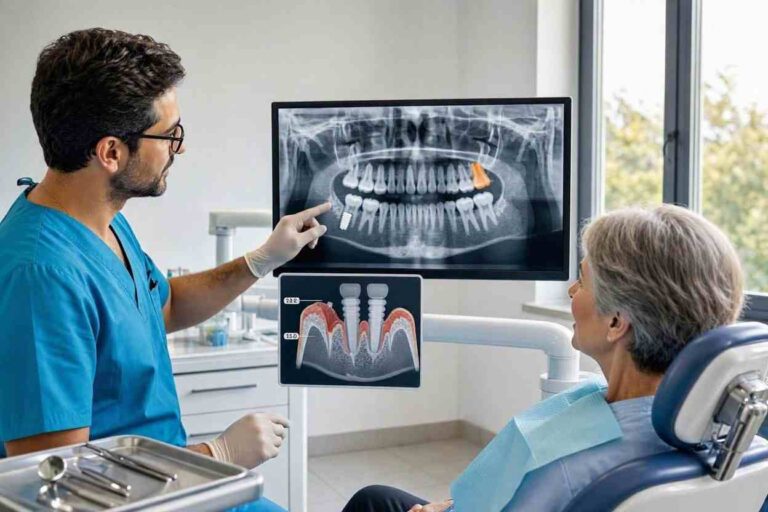
To determine what kind of dental implant you have, start by checking your dental records, which should specify the implant manufacturer, system, and component details. If records are unavailable, your dentist can often identify the implant through clinical and radiographic examination. Different implant systems have distinctive features visible on X-rays, and the restorative components often carry manufacturer markings. The most common implant brands include Straumann, Nobel Biocare, Zimmer Biomet, BioHorizons, and various other major manufacturers.
Why Identifying Your Implant Matters
Knowing your implant type is not merely a matter of curiosity. Several practical situations require this information.
Maintenance and Component Replacement
Implant restorations require periodic maintenance. Screws may need retightening or replacement. Abutments may need to be changed. Crowns, bridges, or denture attachments eventually wear out and require replacement.
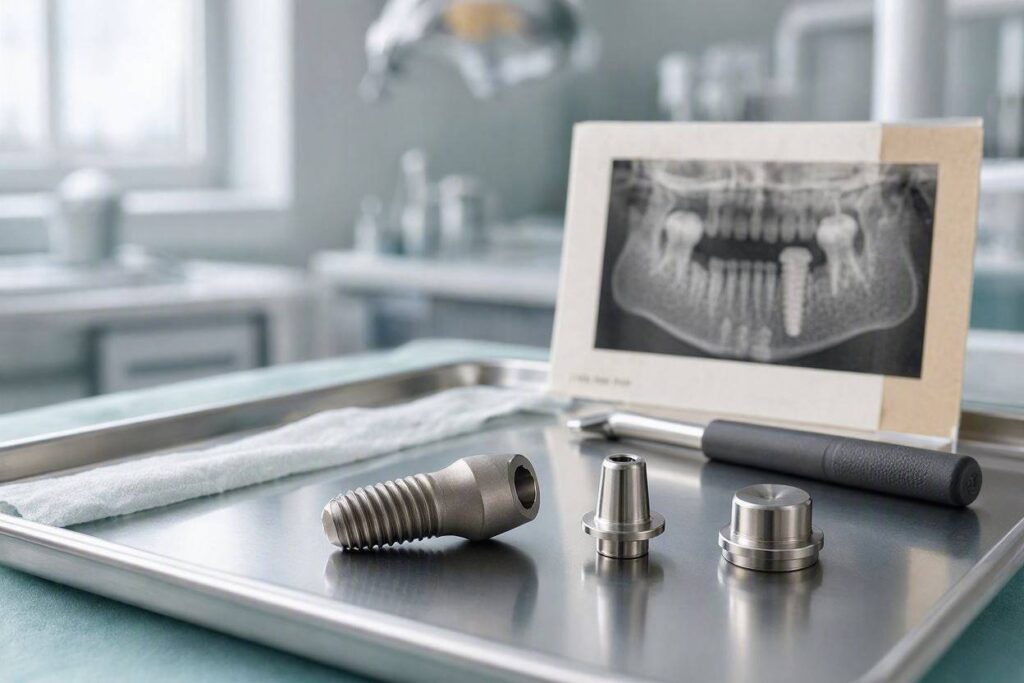
Each of these components is specific to the implant system. Abutments from one manufacturer do not fit implants from another. Even within the same manufacturer’s product line, different implant models may use different connections. Using incompatible components compromises fit, risks damage to the implant, and can lead to mechanical or biological complications.
Treating Complications
When an implant develops problems, knowing the implant system helps the treating dentist order appropriate replacement parts, access manufacturer-specific tools for component removal, plan surgical intervention if needed, and coordinate with the original treating dentist if different from the current provider.
Emergency Situations
If an implant crown or bridge fractures, loosens, or comes out entirely, rapid repair depends on identifying the implant system to order correct replacement components. Patients who know their implant type can provide this information to any dentist, not just the original provider.
Continuity of Care
Patients move, dentists retire, and records sometimes become unavailable. Knowing your implant type ensures continuity of care regardless of changes in your dental providers.
Major Dental Implant Manufacturers
The dental implant market includes several major manufacturers with distinctive product lines. Understanding the landscape helps you recognize what you might have.
Straumann
Straumann is a Swiss company and one of the largest implant manufacturers globally. Their implants are widely used by specialists and general dentists.
Distinctive Features:
Straumann implants often feature a sandblasted, acid-etched surface called SLA (or SLActive for the hydrophilic version). The internal connection is typically a Morse taper with a specific color-coded system for prosthetic components. The Straumann Bone Level implant has a distinctive collar design visible on X-rays.
Common Straumann Systems:
Straumann Bone Level Implant. Straumann Tissue Level Implant. Straumann BLX and TLX (newer systems).
Nobel Biocare
Nobel Biocare, now part of Danaher Corporation, was founded by Professor Per-Ingvar Brånemark, who discovered osseointegration and placed the first modern dental implants.
Distinctive Features:
Nobel implants often feature a distinctive anodized surface called TiUnite. The external hex connection was the original Brånemark design, though internal connections are now more common. The NobelActive implant has a unique expanding tapered design.
Common Nobel Biocare Systems:
NobelParallel Conical Connection. NobelActive. NobelReplace Conical Connection. Brånemark System (legacy).
Zimmer Biomet
Zimmer Biomet resulted from the merger of Zimmer Dental and Biomet 3i, creating one of the largest implant companies.
Distinctive Features:
Zimmer implants often feature a specific surface technology and internal connection design. Biomet 3i implants historically featured a distinctive hex-lobed internal connection called Certain.
Common Zimmer Biomet Systems:
Zimmer TSV (Tapered Screw-Vent). Zimmer Trabecular Metal. Biomet 3i T3 and Tapered Internal.
BioHorizons
BioHorizons is known for its Laser-Lok surface technology, which features laser-created microchannels designed to support tissue attachment.
Distinctive Features:
The Laser-Lok collar is visible under magnification and creates a distinctive pattern. The internal connection is a conical hex design.
Dentsply Sirona
Dentsply Sirona markets several implant lines including Astra Tech and Xive.
Distinctive Features:
Astra Tech implants feature a specific OsseoSpeed surface and a conical connection design called Conical Seal Design.
Other Manufacturers
Numerous other manufacturers produce dental implants, including MegaGen, Osstem, Neodent, MIS Implants, Hiossen, and many regional and national brands. Each has distinctive features that a knowledgeable dentist can often identify.
| Manufacturer | Notable Features | Common Connection Types |
|---|---|---|
| Straumann | SLA/SLActive surface, Morse taper | CrossFit connection, specific color coding |
| Nobel Biocare | TiUnite surface | Internal conical, external hex (legacy) |
| Zimmer Biomet | TSV design, Trabecular Metal | Internal hex, Certain connection |
| BioHorizons | Laser-Lok surface | Internal conical hex |
| Dentsply Sirona (Astra) | OsseoSpeed surface | Conical Seal Design |
How to Identify Your Dental Implant
Several approaches help determine what implant you have.
Check Your Dental Records
The simplest and most reliable method is checking your original treatment records. After implant treatment, patients should receive documentation including the implant manufacturer and model, implant dimensions (diameter and length), implant lot or serial number, abutment type and specifications, and the restoring dentist’s contact information.
If you did not receive this information, contact the dentist who placed your implant. Dental practices typically maintain detailed records of implant procedures including the specific implant components used. Even practices that have closed or transferred ownership may have records available through dental record retention requirements.
Ask Your Current Dentist
A dentist experienced with implants can often identify the implant system through clinical examination. Visible components such as healing abutments, impression copings, or restorative abutments may carry manufacturer markings. The internal connection geometry is distinctive for different systems. Radiographic appearance of the implant body provides identification clues.
Even if the dentist cannot determine the exact model from examination alone, they can often narrow it down to one or two likely manufacturers. If components need to be ordered, the dentist can attempt identification through dental laboratory consultation or by sending photographs to implant supply companies.
Radiographic Identification
Different implant systems have characteristic appearances on X-rays.
Thread Pattern:
The shape, pitch, depth, and design of the implant threads are often manufacturer-specific. Some systems use aggressive, widely spaced threads. Others use finer, more closely spaced threads.
Implant Body Shape:
Tapered versus parallel-walled designs are evident radiographically. The degree of taper and the specific contour of the implant body provide identification clues.
Collar Design:
The portion of the implant near the crest of the bone varies between systems. Some have smooth collars; others have textured collars extending to the implant platform. The presence and design of microthreads or other collar features are manufacturer-specific.
Apex Design:
The shape of the implant tip differs between systems. Some have rounded apices; others have cutting features or specific apical designs.
Physical Examination of Components
When components are removed for maintenance or repair, they can be examined directly.
Abutment Markings:
Many abutments carry laser-etched markings indicating the manufacturer, platform size, and other specifications. These markings may be visible with magnification.
Connection Geometry:
The internal connection of the implant is essentially a fingerprint. The specific combination of features (hex, octagon, conical, splined) and their dimensions identify the system.
Dental Laboratory Consultation:
Dental laboratory technicians work with multiple implant systems daily and are often skilled at identifying implants from photographs, X-rays, or impressions. Your dentist can send information to the laboratory for identification.
Information You Should Keep About Your Implants
After implant treatment, patients should maintain a personal record of their implant information.
Essential Information to Document
Implant manufacturer and model name. Implant dimensions (diameter, length). Implant lot or serial number if available. Date of implant placement. Name and contact information of the placing surgeon. Name and contact information of the restoring dentist. Abutment type and specifications. Crown or restoration details including material and cement type if applicable.
This information should be kept with your important personal records. A copy should be provided to any new dentist you visit.
What to Do If Records Are Unavailable
If you have no records of your implant treatment and cannot contact the original provider, your current dentist can work to identify the implant through clinical and radiographic examination. Many implant components can be identified through careful measurement and comparison with known systems.
If identification proves impossible and components need replacement, the dentist may need to take an impression and work with a dental laboratory to create custom components or to identify compatible off-the-shelf parts. In the worst case, if an implant cannot be identified and needs servicing, the existing restoration may need to be replaced with one that uses identifiable components.
Frequently Asked Questions
How do I find out what kind of dental implant I have?
Check your dental records first. If unavailable, your dentist can often identify the implant through clinical and radiographic examination.
Are dental implants serialized or labeled?
Implants themselves carry lot numbers on their packaging but are not labeled once placed. Abutments and other components may carry laser-etched markings.
Can any dentist tell what implant I have?
An experienced implant dentist can often identify major implant systems. Some systems are more distinctive than others, and definitive identification is not always possible from examination alone.
Does it matter if I don’t know my implant type?
It matters when components need replacement, complications arise, or you change dentists. Knowing your implant type facilitates maintenance and problem-solving.
What if my implant cannot be identified and needs repair?
Custom components can be fabricated. In some cases, the restoration may need replacement with one that uses identifiable components. The underlying implant remains functional.
Can an X-ray identify my implant?
Often, yes. Thread patterns, body shape, collar design, and other features visible on X-rays are characteristic of specific manufacturers and models.
Should I receive an implant identification card after treatment?
Reputable practices provide documentation of implant placement including manufacturer, model, and dimensions. Request this information if it was not provided.
What are the most common dental implant brands?
Straumann, Nobel Biocare, Zimmer Biomet, BioHorizons, and Dentsply Sirona (Astra Tech) are among the most widely used implant systems.
Additional Resources
For more information about dental implant identification:
- International Congress of Oral Implantologists: www.icoi.org
- American Academy of Implant Dentistry: www.aaid.com
- Academy of Osseointegration: www.osseo.org