All On 4 Dental Implants Main Line
Losing teeth can affect much more than your smile. It changes the way you eat, speak, and feel about yourself. Many people on the Main Line have lived with dentures that slip or bridges that feel unstable. They often miss the simple joy of biting into an apple or laughing without worry.
Fortunately, modern dentistry offers a powerful solution. It is called All On 4. This technique allows you to replace an entire arch of teeth using only four implants. The results are stable, beautiful, and long-lasting.
In this guide, we will walk you through everything you need to know about All On 4 dental implants on the Main Line. You will learn how the procedure works, what it costs, who is a good candidate, and how to find the right specialist. No fluff. No fake promises. Just clear, honest information.
What Exactly Are All On 4 Dental Implants?
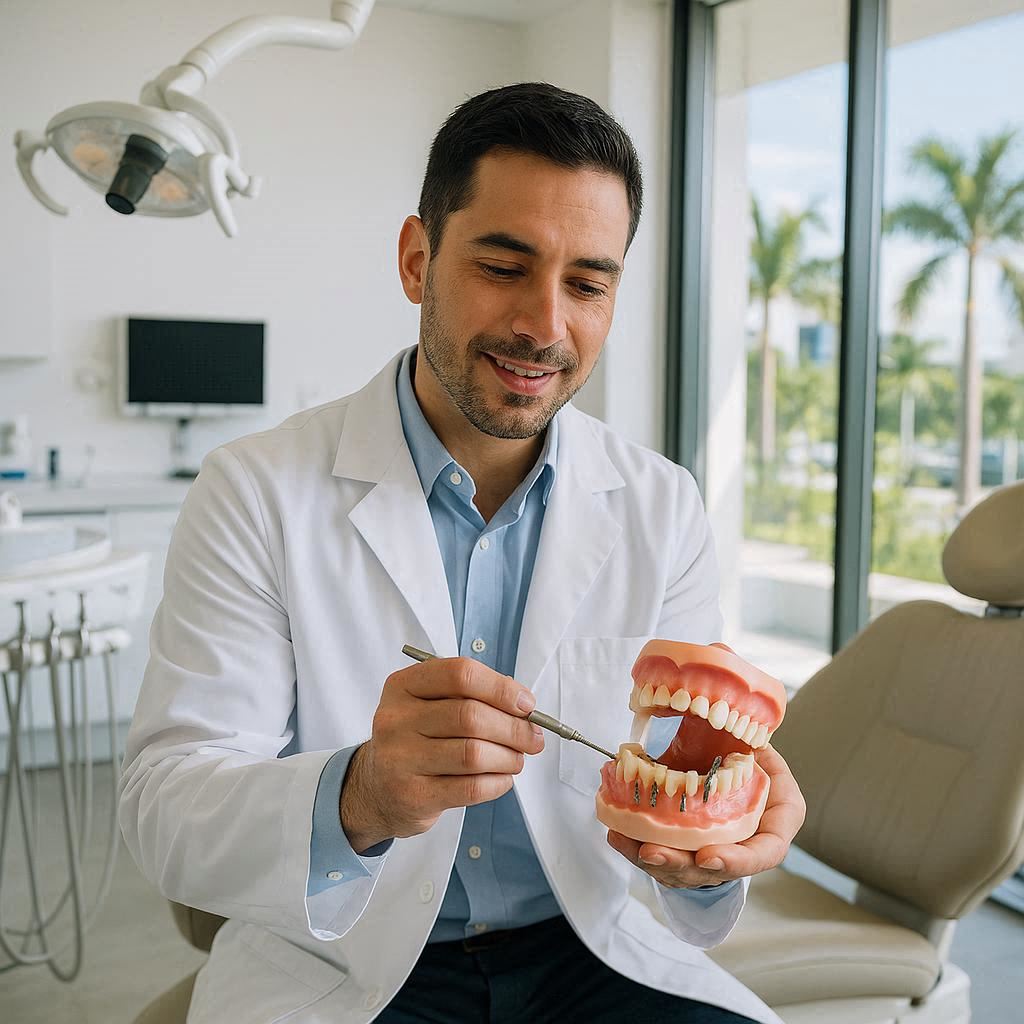
All On 4 is a revolutionary procedure designed to replace a full set of missing teeth. Traditional implants often require one implant per missing tooth. That can mean ten to twelve implants for a single arch. The All On 4 concept simplifies this dramatically.
The name tells you the basics: “All” refers to all your teeth on one jaw (upper or lower). “On 4” means they are supported by four dental implants. These implants act as artificial tooth roots. They are made of biocompatible titanium or zirconia.
The magic lies in the angles. The two front implants go in straight. The two back implants are tilted at about 30 to 45 degrees. This angle allows the surgeon to use longer implants. It also avoids important anatomical structures like the sinus cavity in your upper jaw or the nerve canal in your lower jaw.
Important note: The tilted design is not a shortcut. It is a smart engineering solution that increases bone contact and support without needing bone grafting.
A full fixed bridge is then screwed onto these four implants. You cannot remove it yourself. A dentist must unscrew it for maintenance. This makes it much more stable than traditional dentures.
How All On 4 Differs from Traditional Dentures
Traditional dentures rest on your gums. They rely on suction or adhesive creams to stay in place. Over time, they can become loose. They also accelerate bone loss because they do not stimulate the jawbone.
All On 4 implants fuse with your bone through a process called osseointegration. They become part of your body. This stops bone deterioration and preserves your facial shape. You will never worry about your teeth falling out during dinner.
Same-Day Teeth: A Game Changer
One of the most attractive features of All On 4 is the possibility of same-day teeth. In many cases, you can walk into a clinic on the Main Line with failing teeth and walk out that same afternoon with a fixed provisional bridge.
Yes, you read that correctly.
The surgeon extracts any remaining bad teeth. They place the four implants. Then they attach a temporary fixed bridge. You leave with a complete smile. This provisional bridge allows you to eat soft foods and smile confidently while your implants heal.
After about four to six months, the implants fully bond with your bone. Your dentist then replaces the temporary bridge with a permanent one made of advanced materials like zirconia or acrylic reinforced with fiber.
Who Is a Good Candidate for All On 4 on the Main Line?
Many people assume they are not candidates for implants. They think they have too little bone or too many health issues. That is often not true.
You are likely a good candidate if:
- You are missing all or most of your teeth in one or both jaws
- Your current dentures are loose or uncomfortable
- You have advanced gum disease that has led to tooth loss
- You want to avoid bone grafting procedures
- You are a non-smoker or willing to quit temporarily
- You have reasonable overall health
Even people with significant bone loss can often get All On 4. The tilted implants take advantage of the bone you have left. This is why the procedure is so popular among older adults and those who have worn dentures for years.
However, certain conditions can affect your candidacy:
- Uncontrolled diabetes
- Severe autoimmune diseases
- Active radiation therapy to the jaw
- Heavy smoking (more than one pack per day)
- Drug or alcohol abuse
If you have any of these, do not lose hope. Many patients can still receive implants after stabilizing their health. A good specialist on the Main Line will evaluate you carefully and give you an honest answer.
The Step-by-Step Process of Getting All On 4 Implants
Understanding the process removes fear and uncertainty. Here is exactly what happens from your first phone call to your final smile.
Step 1: Initial Consultation and Imaging
Your journey begins with a comprehensive exam. The dentist will take 3D CBCT (Cone Beam Computed Tomography) images. These scans show every millimeter of your jawbone, nerves, and sinuses. They are essential for safe and precise implant placement.
The doctor will discuss your goals, medical history, and any medications you take. This is also when you will receive a preliminary quote and timeline.
Step 2: Treatment Planning
Using specialized software, your surgical team plans every implant position on a computer. They simulate the surgery before touching your mouth. This level of planning reduces surprises and increases success rates.
If you have infections or painful teeth, the plan may include extractions.
Step 3: Surgery Day
On surgery day, you will receive sedation or anesthesia. Many patients choose IV sedation because they remember nothing about the procedure. The surgery typically takes two to three hours per arch.
The surgeon makes small incisions in your gums. They drill precise holes based on the computer plan. Then they insert the four implants. Two are straight, and two are angled.
Next, they attach abutments and a temporary bridge. You wake up with a fixed smile.
Quote from a Main Line patient: “I was terrified before the surgery. But the sedation worked beautifully. I blinked, and it was over. My new teeth looked better than my natural ones ever did.”
Step 4: Healing Period (Osseointegration)
The next four to six months are critical. Your bone grows tightly around the implants. During this time, you will follow a soft-food diet. You will also learn special cleaning techniques.
You will return for occasional check-ups. The dentist will ensure everything is healing correctly.
Step 5: Final Bridge Placement
Once healing is complete, your dentist removes the temporary bridge. They take digital impressions of your implants. A dental lab fabricates your final bridge. This bridge is stronger, more aesthetic, and customized to your bite.
After trying it in for fit and comfort, the dentist screws it permanently in place.
Congratulations. You now have teeth that look, feel, and function like natural ones.
All On 4 vs. Other Tooth Replacement Options
Many Main Line patients ask how All On 4 compares to other methods. Here is a clear breakdown.
| Feature | All On 4 | Traditional Dentures | Implant-Supported Dentures | Individual Implants |
|---|---|---|---|---|
| Number of implants per arch | 4 | 0 | 4 to 6 | 10 to 14 |
| Removable by patient? | No (fixed) | Yes | Sometimes (snap-on) | No |
| Bone grafting often needed? | Rarely | No | Often yes | Usually yes |
| Same-day teeth possible? | Usually yes | Yes (immediate denture) | No | Rarely |
| Stability while eating | Excellent | Poor | Good | Excellent |
| Prevents bone loss? | Yes | No | Yes | Yes |
| Average lifespan | 20+ years | 5-7 years | 10-15 years | 20+ years |
| Cost range (per arch) | 15k−30k | 500−3k | 10k−20k | 30k−60k |
Living with All On 4 Implants: Realistic Expectations
Let us be honest about what daily life looks like after All On 4.
The Good
- You eat normally again. Steak, corn on the cob, nuts, and apples are back on the menu.
- No more adhesives. No sticky creams, no embarrassing slips.
- Clear speech. Dentures can cause clicking or slurring. Implants feel like natural teeth.
- No hidden food. Food does not get trapped under a plate.
- High success rate. Over 98% at the five-year mark for healthy patients.
The Challenges
- You must clean them daily. Just because they are fixed does not mean they are maintenance-free. You need special brushes and floss to clean under the bridge.
- Regular dental visits are mandatory. Your dentist must check the screws and clean the abutments every six months.
- Repairs are possible. The bridge can chip or break, though this is rare with modern materials.
- Initial adaptation period. For the first few weeks, your mouth will feel different. Some patients report mild soreness or speech adjustments.
Important note: All On 4 is not “tooth replacement for lazy people.” It requires commitment to oral hygiene. Neglect can lead to peri-implantitis, an infection around the implants that can cause failure.
Cost Breakdown of All On 4 Dental Implants Main Line
Let us talk about money directly. The cost of All On 4 on the Main Line varies based on several factors. However, you can expect realistic numbers.
Average Price Range
- Single arch (upper or lower): 15,000to30,000
- Full mouth (both arches): 30,000to55,000
Why such a wide range? The difference depends on:
- Materials: Acrylic bridges cost less than zirconia. Zirconia is stronger and more natural-looking.
- Temporary bridge quality: Some practices include a premium temporary bridge. Others use a basic model.
- Extractions and bone work: Removing teeth or minor bone shaping adds cost.
- Sedation type: IV sedation costs more than oral sedation.
- Dentist expertise: Highly experienced prosthodontists or oral surgeons charge more. This is usually worth it.
What Is Usually Included?
A transparent practice will include these items in your quoted price:
- Initial consultation and 3D CBCT scan
- Extractions of remaining teeth
- Four implants per arch
- Temporary fixed bridge
- Healing period follow-ups
- Final bridge (acrylic or high-quality hybrid)
- One-year warranty on materials
What Is Not Included?
- Permanent zirconia bridge upgrade (add 5,000–10,000 per arch)
- Additional implants (if more than four are needed)
- General dental work on natural teeth in the opposite arch
- Long-term maintenance plans
Does Insurance Cover All On 4?
Traditional dental insurance rarely covers the full cost. Most plans have a yearly maximum of 1,000to2,000. However, you may get coverage for extractions, diagnostic imaging, and temporary dentures.
Medical insurance may help if tooth loss resulted from an accident, tumor removal, or congenital condition. Always submit both dental and medical claims.
Many Main Line practices offer financing through third-party companies like CareCredit, LendingClub, or Alphaeon. Monthly payments can range from 300to800 depending on the loan terms.
Choosing the Right All On 4 Provider on the Main Line
Not all dentists who place implants are equally skilled. All On 4 is an advanced procedure. You want a team that does it regularly.
What to Look For
- Advanced training: Look for “diplomate” status from the American Board of Oral Implantology or a fellowship in the International Congress of Oral Implantologists.
- High volume: Ask how many All On 4 cases they perform per month. A practice doing 5+ cases per week is preferable.
- In-house lab: Practices with on-site dental labs fabricate your temporary bridge the same day. This eliminates waiting and second appointments.
- CBCT scanner on-site: You should not have to travel to another office for essential scans.
- Clear before-and-after photos: Ask to see cases similar to your situation. Look for natural aesthetics, not “chicklet” teeth.
- Patient testimonials: Read Google reviews and RealSelf ratings. Pay attention to comments about pain management, follow-up care, and final results.
Questions to Ask During Your Consultation
- How many All On 4 surgeries have you personally performed?
- What is your success rate at the five-year mark for this specific procedure?
- Do you offer a warranty on implants and the bridge? How long?
- What type of sedation do you use? Is an anesthesiologist present?
- Will I see a digital smile preview before surgery?
- What is the estimated timeline from extraction to final teeth?
- How do you handle after-hours emergencies like a loose bridge?
Quote from a prosthodontist in Bryn Mawr: “Patients often say yes to the first low price they find. But All On 4 is a surgical and artistic procedure. A cheap job with poor alignment or improper implant angles will cost you double in repairs later. Invest in proven skill.”
Recovery and Aftercare: What You Need to Know
Recovery from All On 4 is easier than most people fear. However, you must follow instructions precisely.
First 24 Hours
- Expect mild to moderate swelling. Ice packs help.
- You will eat only cold, soft foods like yogurt, smoothies, or pudding.
- Do not spit, use a straw, or rinse vigorously. This can dislodge blood clots.
- Take prescribed pain medication before the anesthesia wears off.
Weeks 1 to 2
- Swelling peaks around day two or three, then subsides.
- Switch to warm soft foods: mashed potatoes, scrambled eggs, soup, oatmeal.
- Brush your temporary bridge gently with a soft toothbrush.
- Use a prescribed antimicrobial mouthwash.
- Sleep with your head elevated to reduce swelling.
Weeks 3 to 6
- Most patients return to normal activities within three to five days. However, healing continues.
- You can introduce semi-soft foods like pasta, fish, and cooked vegetables.
- Avoid crunchy, sticky, or hard foods (nuts, popcorn, caramel, ice).
- Begin using a water flosser on a low setting to clean under the bridge.
Months 3 to 6 (Before Final Bridge)
- Your dentist will check osseointegration with X-rays.
- If healing is complete, you proceed to final bridge fabrication.
- You may wear a temporary bridge during the lab phase (two to three weeks).
Long-Term Maintenance
Once your permanent bridge is in place:
- Clean under the bridge daily using super floss or implant-specific floss.
- Use a water flosser on medium pressure.
- Visit your dentist every six months for professional cleaning. They will unscrew the bridge, clean the abutments, and retorque the screws.
- Replace the screw-retained holes with composite filling material as needed (every few years).
- Wear a night guard if you grind your teeth. Grinding can crack the bridge or loosen screws.
Common Myths About All On 4 Implants
Let us clear up some misinformation circulating online and in local Main Line coffee shops.
Myth 1: “All On 4 looks fake.”
Reality: Modern materials like multilayered zirconia mimic natural tooth enamel. A skilled ceramist can create translucency, texture, and color gradients that look indistinguishable from natural teeth. The fake “dentures look” comes from cheap materials or rushed work.
Myth 2: “If you smoke, you cannot get implants.”
Reality: Smoking does increase failure rates. But many practices accept patients who smoke, provided they understand the risks. Some ask smokers to stop for one week before and eight weeks after surgery. Heavy smokers (over 20 cigarettes daily) are often advised to consider alternatives or quit.
Myth 3: “All On 4 hurts terribly.”
Reality: Most patients report less pain than expected. The procedure is done under sedation. Post-operative discomfort is typically managed with over-the-counter ibuprofen or a short course of prescription meds. Many say a tooth extraction hurts more.
Myth 4: “Implants can reject like an organ transplant.”
Reality: Implants are made of titanium, which is biologically inert. Your body does not “reject” it in the immune sense. Failure is almost always due to infection, poor bone quality, excessive loading, or smoking.
Myth 5: “You can never eat hard foods again.”
Reality: After full healing, you can eat almost anything. The one exception is extremely hard items like ice cubes, hard candy, or bones. But natural teeth should not chew those either. Many patients enjoy steak, apples, and nuts without hesitation.
Advantages of Choosing a Main Line Specialist
The Main Line is known for excellent healthcare. Dental implant care is no exception. Choosing a local provider offers unique benefits.
Convenience
You will need multiple appointments over several months. Driving into Philadelphia or traveling to another state adds stress and cost. A Main Line practice keeps everything within a short commute from Ardmore, Wayne, Radnor, Bryn Mawr, Haverford, or Paoli.
Personalized Care
Main Line practices tend to be boutique or medium-sized. You see the same surgeon and restorative dentist throughout your care. You are not a number in a high-volume chain.
Access to Top Labs
Several high-end dental laboratories serve the Main Line area. This means faster turnaround for your final bridge and better quality control. Many practices use local technicians who can adjust the bridge in person while you wait.
Strong Referral Networks
If you need additional specialists like a periodontist or anesthesiologist, Main Line providers have trusted partners. They work together seamlessly.
Potential Risks and Complications
Honesty demands we discuss risks. All On 4 is very safe, but it is still surgery.
Immediate Risks (First 30 Days)
- Bleeding: Usually mild and controlled with gauze.
- Swelling and bruising: Normal and expected.
- Infection: Uncommon (under 2%) if you take prescribed antibiotics.
- Nerve injury: Temporary numbness in the lower lip can occur. Permanent damage is rare (under 0.5%) with CBCT planning.
Long-Term Risks
- Peri-implantitis: This is gum disease around implants. It causes bone loss and, if untreated, implant failure. Good hygiene prevents it.
- Screw loosening: The screws holding your bridge can loosen over time. Your dentist can tighten them in minutes.
- Fractured bridge: Acrylic bridges can break under extreme force. Zirconia is much stronger but can chip if you bite metal or glass.
- Implant failure: The five-year failure rate is about 2-3% for healthy patients. Failed implants often can be replaced with a new one.
Important note: Do not let fear of rare complications stop you from improving your quality of life. Ask your dentist for their actual complication rates. A transparent provider will gladly share them.
All On 4 for the Lower Jaw vs. Upper Jaw
The procedure is similar for both jaws, but differences exist.
Lower Jaw All On 4
- Advantage: Denser bone means faster healing and higher success rates.
- Challenge: The mandibular nerve runs through the lower jaw. The two back implants must avoid it. Skilled surgeons navigate this easily using CBCT.
- Outcome: Extremely stable. Many patients say the lower All On 4 feels stronger than their natural teeth ever did.
Upper Jaw All On 4
- Advantage: The two angled implants avoid the maxillary sinuses. This eliminates the need for sinus lifts in most cases.
- Challenge: Upper bone is softer than lower bone. Healing can take slightly longer.
- Outcome: Excellent, though you may need a longer temporary bridge to account for initial bone healing.
Full Mouth (Both Jaws)
Doing both arches at once costs more upfront. However, it saves money compared to doing them separately. Many patients choose this route because they recover once instead of twice.
The healing period for full-mouth All On 4 requires more dietary adjustment. You cannot chew on either side during the first few weeks. But the final result is a complete transformation.
How to Prepare Financially for All On 4 Implants
Cost is the biggest barrier for many Main Line residents. Here is a practical approach to planning.
Step 1: Get Two or Three Consultations
Do not accept the first quote you receive. Consultations are often free or low-cost (100–300). Compare not just price but also included services, materials, and warranties.
Step 2: Ask for an Itemized Estimate
A good estimate lists every component: extractions, CBCT, sedation, implants, abutments, temporary bridge, final bridge, follow-ups, and warranty.
Step 3: Check Your Insurance
Call your dental and medical insurers. Ask specifically about coverage for “implant-supported full-arch prostheses” and “oral surgery for functional restoration.”
Step 4: Explore Financing
- CareCredit: 6, 12, or 18 months no interest if paid in full.
- LendingClub: Fixed rates from 5% to 24%, terms 24 to 84 months.
- Proceed Finance: Specializes in dental implants. May approve patients with lower credit scores.
- In-house membership plans: Some Main Line practices offer discounts for uninsured patients who pay annually.
Step 5: Consider a Dental Tourism Alternative? Be Careful.
You have probably heard of flying to Mexico, Costa Rica, or Turkey for cheaper implants. Prices may be 8,000–12,000 per arch. However, consider these risks:
- No long-term follow-up with the surgeon who placed them.
- Different sterility and material standards.
- If something fails, a local dentist may refuse to touch another doctor’s work.
- Travel costs and time off add up.
If you go this route, choose a clinic accredited by the Joint Commission International (JCI). Also, budget for potential revisions at home.
Success Stories: Realistic Outcomes from Real People
Let us share anonymized composite stories based on typical Main Line cases.
Case 1: Carol, 68, Retired Teacher
Before: Carol wore dentures for 12 years. She could not eat in restaurants because food would loosen them. She stopped smiling in family photos.
Procedure: All On 4 upper and lower. Same-day temporary bridges.
After one year: Carol eats everything. She laughs openly. Her face looks fuller because the implants restored her jawbone. She says, “I feel twenty years younger.”
Complications: Minor screw loosening at month nine. Tightened in ten minutes.
Case 2: James, 55, Sales Executive
Before: James had advanced gum disease. His remaining teeth were loose and painful. He worried about closing deals because his breath smelled and his teeth looked bad.
Procedure: All On 4 upper only (lower had enough healthy teeth for individual crowns). IV sedation. Temporary bridge same day.
After six months: James landed three new accounts. He said, “My confidence skyrocketed. I no longer cover my mouth when I talk.”
Complications: None.
Case 3: Maria, 72, Smoker (½ pack per day)
Before: Maria had worn a lower denture for eight years. It floated constantly. She was told she could not have implants because of smoking and bone loss.
Procedure: All On 4 lower with a specialist experienced in smokers. She quit smoking for three months before and six months after surgery.
After two years: Two of the four implants failed on one side. The dentist replaced them with new implants (no charge under warranty). Now stable. Maria smokes again but only three cigarettes daily. Her bridge remains secure.
Takeaway: Smoking increases failure risk, but success is still possible with commitment and a good warranty.
All On 4 vs. All On 6 vs. All On 3: What Is the Difference?
You may hear other “All On X” terms. Here is a quick comparison.
| Procedure | Number of Implants | Best For | Typical Bone Graft Needed |
|---|---|---|---|
| All On 3 | 3 | Very small jaws or extreme bone loss | Yes |
| All On 4 | 4 | Most patients, average bone volume | Rarely |
| All On 6 | 6 | Large jaws, high bite force, heavy grinders | Sometimes |
For the average Main Line patient, All On 4 hits the sweet spot. It provides excellent support without overtreating. All On 6 is stronger but costs more and requires more surgery.
Frequently Asked Questions (FAQ)
How long do All On 4 implants last?
With proper maintenance, the titanium implants can last a lifetime. The bridge typically lasts 15 to 25 years before needing replacement due to wear or material aging.
Can I get All On 4 if I have osteoporosis?
Yes, if it is well-managed. However, certain medications for osteoporosis (bisphosphonates like Fosamax or Boniva) increase the risk of a rare but serious complication called osteonecrosis of the jaw. Your dentist must consult your prescribing physician.
Is the procedure painful?
During the surgery, you feel nothing due to sedation or anesthesia. Afterward, most patients describe mild to moderate soreness similar to having a tooth extracted. Over-the-counter pain relievers usually suffice.
How do I clean under the bridge?
You will use a water flosser (Waterpik), super floss with stiff ends, and implant-specific brushes. Your dentist will train you thoroughly before sending you home.
Will my speech change?
For the first few days, you may notice a slight lisp or excess saliva. Your tongue adapts quickly. Within a week, most patients speak better than they did with dentures because the bridge does not cover the palate (upper arch).
Can I get All On 4 on the NHS?
The National Health Service (NHS) does not operate in the US. In the Main Line area, All On 4 is a private, fee-for-service procedure. Medicare and Medicaid rarely cover it except in cases of congenital deformity or trauma.
What happens if an implant fails?
Your dentist will remove the failed implant, let the area heal, and place a new one. With a good warranty, this costs you nothing. The bridge remains attached to the three healthy implants while healing occurs.
Can I have All On 4 if I am diabetic?
Uncontrolled diabetes (HbA1c above 8.0) is a risk factor. However, well-controlled diabetics have success rates nearly equal to non-diabetics. Your dentist will request a letter from your endocrinologist.
Additional Resources
For more trusted information about All On 4 dental implants, we recommend this external resource:
🔗 American Academy of Implant Dentistry (AAID) – Patient Education Library
Visit: aaid-implant.org/patient-resources
This organization represents implant dentists who have completed advanced, accredited training. Their library includes videos, FAQs, and a search tool to find qualified implant providers near the Main Line.
Conclusion
All On 4 dental implants on the Main Line offer a realistic, life-changing solution for people who have lost most or all of their teeth. Unlike traditional dentures, this fixed, implant-supported bridge restores function, appearance, and confidence without bone grafting in most cases. With proper planning, an experienced provider, and good daily hygiene, your new smile can last for decades.
Disclaimer: This article is for informational purposes only. It does not constitute medical advice. Always consult with a licensed dental professional to determine the best treatment for your specific health situation. Results and costs vary based on individual factors. The author and publisher are not liable for any decisions made based on this content.