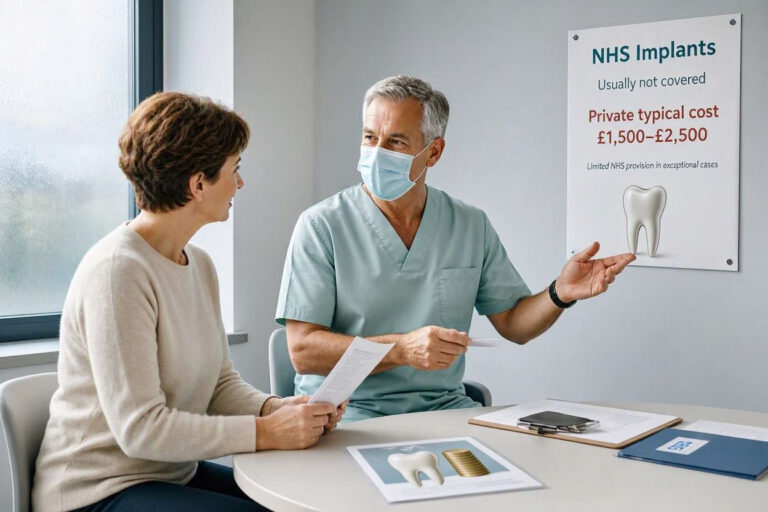
Does Jordan Valley Do Dental Implants?
Jordan Valley Medical Center and its associated clinics serve communities in Utah and surrounding regions with a range of healthcare services. Patients seeking dental care through Jordan Valley facilities naturally ask whether implant dentistry is available within this healthcare system. Understanding what services are offered, which providers deliver them, and how to access care helps patients make informed decisions about tooth replacement.
Jordan Valley Medical Center in Utah provides dental implant services through its network of community health centers and affiliated dental providers. Jordan Valley Community Health Center offers comprehensive dental care including implant placement and restoration at multiple locations. Implant services are available on a sliding fee scale for qualifying patients, making them more accessible to underserved populations. However, the specific scope of implant services, provider availability, and eligibility requirements vary by location.
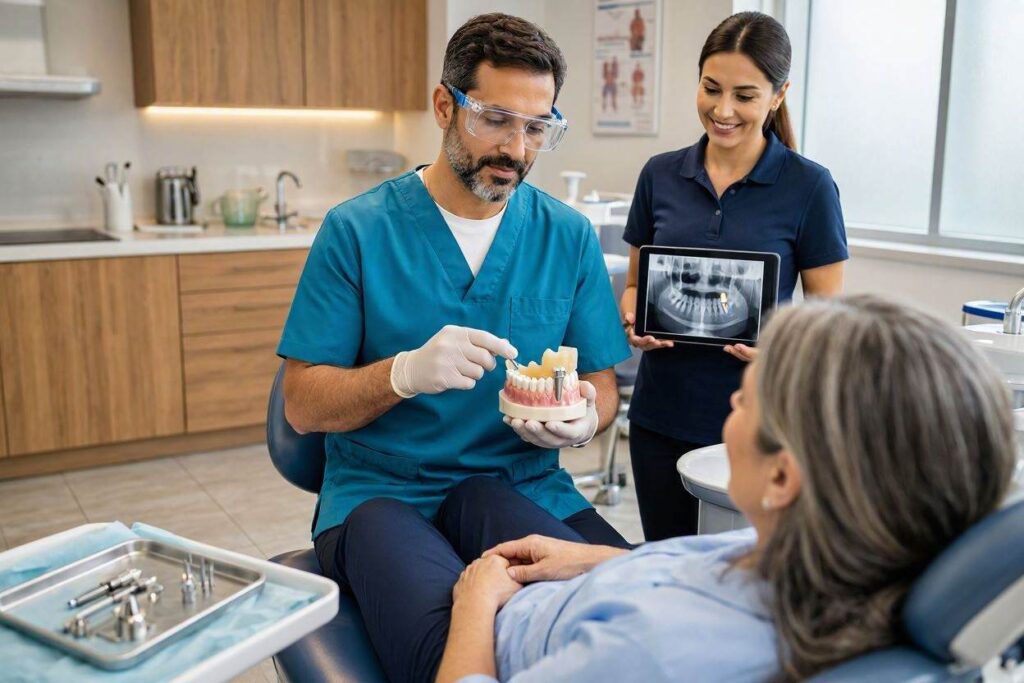
Understanding Jordan Valley’s Dental Services
Jordan Valley operates as a Federally Qualified Health Center system, providing medical, dental, and behavioral health services to communities in Utah and, through separate organizations, in Missouri.
Jordan Valley Community Health Center (Utah)
The Jordan Valley Community Health Center in Utah provides dental services through several clinic locations. As an FQHC, the organization’s mission includes serving underserved populations and offering sliding fee discounts based on income and family size.
Dental Services Typically Offered:
Preventive care including examinations, cleanings, and X-rays. Restorative care including fillings and crowns. Oral surgery including extractions. Periodontal treatment for gum disease. Pediatric dental care. Emergency dental services. Denture services including complete and partial dentures.
Implant services are available but may not be offered at every location. The availability of implant treatment depends on the specific clinic, the providers currently practicing there, and whether the patient’s case meets clinical and financial criteria.
Jordan Valley Medical Center (Utah)
Jordan Valley Medical Center in West Jordan, Utah, is an acute care hospital. The medical center itself does not provide routine dental services. Dental care is delivered through the affiliated community health center clinics rather than the hospital setting.
Hospital-based dental services at the medical center are typically limited to emergency treatment, medically necessary oral surgery, and dental care for hospitalized patients. Elective implant dentistry is performed in the outpatient clinic setting, not in the hospital.
Jordan Valley Community Health Center (Missouri)
A separate organization with a similar name operates in Missouri, providing medical and dental services in the Springfield area. This organization should not be confused with the Utah-based Jordan Valley. Patients in Missouri should contact this organization directly for information about its dental implant services.
Accessing Implant Services at Jordan Valley
Navigating the process for obtaining dental implants through a community health center requires understanding the eligibility, referral, and financial systems.
Patient Eligibility
As a Federally Qualified Health Center, Jordan Valley serves all patients regardless of insurance status or ability to pay. However, implant services may have specific eligibility requirements beyond basic dental care.
Patients with dental insurance may have implant coverage through their plans. Jordan Valley likely participates with major insurance carriers including Medicaid, Medicare (for qualifying services), and private dental insurance.
Uninsured patients may qualify for the sliding fee discount program. The discount is based on household income relative to the Federal Poverty Level. Patients must complete an application and provide income documentation to receive discounted fees.
Making an Appointment for Implant Evaluation
The process typically begins with a comprehensive dental examination. Patients should:
Contact the dental clinic directly to inquire about implant services. Schedule an initial examination appointment. Bring insurance information and income documentation if seeking sliding fee discounts. Be prepared to discuss their medical and dental history. Have X-rays or imaging from previous dental providers if available.
During the examination, the dentist evaluates the patient’s oral health, discusses tooth replacement options, and determines whether implant treatment is appropriate. If the specific clinic does not offer implant services, the patient may be referred to another Jordan Valley location or to an external specialist.
The Referral Process
Some Jordan Valley dental clinics provide implant services on-site through general dentists with implant training. Others may refer patients to specialists within or outside the Jordan Valley system.
In-house implant treatment offers coordinated care within the same health system. Referral to external specialists may be necessary for complex cases involving significant bone grafting, full-arch reconstruction, or patients with medical complexities.
Cost of Dental Implants at Jordan Valley
Community health center pricing for dental implants is typically more affordable than private practice fees, particularly for patients who qualify for sliding fee discounts.
Estimated Costs for Implant Treatment
Precise costs require an individualized treatment plan and cannot be provided without examination. However, community health center implant fees typically range from 30% to 50% below private practice rates.
Estimated Ranges (Sliding Fee Scale):
These figures are approximate and vary based on the specific procedure, clinic location, and the patient’s income qualification level.
| Procedure | Full Fee (Approximate) | Sliding Fee Discounted (Approximate) |
|---|---|---|
| Single Implant (Complete) | $2,500 – $4,500 | $1,000 – $3,000 |
| Implant Placement Surgery | $1,200 – $2,500 | $500 – $1,800 |
| Implant Crown | $1,000 – $2,000 | $400 – $1,400 |
| Bone Grafting (per site) | $400 – $1,500 | $150 – $1,000 |
Insurance and Payment Options
Jordan Valley accepts most insurance plans including Medicaid, CHIP, Medicare (for qualifying services), and private dental insurance. The clinic billing staff verifies coverage and provides cost estimates before treatment begins.
For patients without insurance, the sliding fee discount program adjusts fees based on income. Payment plans may be available through the clinic or through third-party healthcare financing.
Comparison to Private Practice Costs
Community health center implant treatment offers significant savings compared to private practice. A single implant that costs $4,500 in private practice might cost $2,500-$3,500 at the health center without sliding fee discounts, or $1,000-$2,500 for patients who qualify for the highest discount levels.
The trade-offs may include longer wait times for appointments, treatment provided by general dentists rather than specialists (depending on the specific clinic), and potentially more limited restoration options compared to premium private practices.
Alternative Tooth Replacement Options at Jordan Valley
For patients who are not candidates for implants or who prefer alternative treatments, Jordan Valley provides several tooth replacement options.
Partial and Complete Dentures
Dentures are the most commonly provided tooth replacement option in community health center settings. Both complete dentures (replacing all teeth) and partial dentures (replacing some teeth while natural teeth remain) are available.
Denture fees are also subject to sliding fee discounts, making them highly affordable for qualifying patients. Denture services typically include impressions, fabrication, delivery, and adjustment appointments.
Fixed Bridges
Fixed dental bridges that attach to adjacent teeth are available for patients missing one or a few teeth. Bridges avoid implant surgery but require preparation of healthy adjacent teeth. Fees are lower than implant treatment and are also subject to sliding fee discounts.
Extractions Without Replacement
For patients with limited financial resources, extraction of problematic teeth without replacement is the most basic service provided. This addresses pain and infection but does not restore function or aesthetics.
Dental Residency and Educational Programs
Some Jordan Valley locations may participate in dental residency or educational programs. Dental residents are licensed dentists pursuing advanced training who provide care under faculty supervision.
Residency program involvement can expand the scope of services available, including implant treatment. Patients treated by residents receive care at reduced fees while contributing to the education of future dental professionals. The level of supervision ensures treatment quality while providing cost savings.
Availability of resident-provided implant treatment varies by location and program affiliation. Patients should inquire directly about current educational program participation and whether implant treatment is available through these programs.
Frequently Asked Questions
Does Jordan Valley Dental offer implants?
Jordan Valley Community Health Center offers dental implant services at select locations. Contact your local clinic to verify current availability.
How much do implants cost at Jordan Valley?
Costs vary based on the procedure, patient income qualification for sliding fee discounts, and insurance coverage. Community health center fees are typically 30-50% below private practice rates.
Does Jordan Valley accept Medicaid for implants?
Jordan Valley accepts Medicaid. Coverage for implants under Utah Medicaid varies. The clinic billing staff verifies coverage before treatment.
Can I get All-on-4 implants at Jordan Valley?
Full-arch implant treatment may be available at select locations or through referral. Complex full-arch cases may be referred to external specialists.
Is there a waiting list for dental implants at Jordan Valley?
Wait times vary by location and demand. Initial examinations are typically available within weeks. Implant treatment scheduling depends on provider availability and case complexity.
Do I need a referral to get implants at Jordan Valley?
A comprehensive dental examination at Jordan Valley is the first step. The examining dentist determines whether implant treatment is appropriate and available.
What if my local Jordan Valley clinic does not offer implants?
Patients may be referred to another Jordan Valley location with implant services or to an external specialist. The referral coordinator assists with this process.
Are implant services the same quality as private practice?
Community health center dentists are licensed professionals who meet the same standards as private practitioners. Some locations may have general dentists rather than specialists, which may limit complex cases.
Additional Resources
For more information about Jordan Valley dental services:
- Jordan Valley Community Health Center (Utah): www.jordanvalleychc.org
- Jordan Valley Medical Center (Utah): Hospital services information
- National Association of Community Health Centers: www.nachc.org
Meta Description
Learn whether Jordan Valley provides dental implant services. Discover how to access implant treatment through Jordan Valley Community Health Center, understand costs with sliding fee discounts, and explore alternative tooth replacement options.
Can Dental Implants Fix An Overbite?
Dental implants are primarily designed to replace missing teeth, not to correct jaw alignment problems. However, the relationship between implants and bite correction is more nuanced than a simple yes or no answer. Patients with overbites who also need tooth replacement must understand what implants can and cannot do for their specific situation.
Dental implants cannot correct an overbite by themselves. An overbite is a skeletal or dental malocclusion involving the relationship between the upper and lower jaws and the position of the teeth within them. Implants replace missing teeth but do not move teeth or reshape jaws. However, implants can play an important supporting role in comprehensive treatment plans that address overbites. When combined with orthodontic treatment or orthognathic surgery, implants restore missing teeth within a corrected bite relationship.
Understanding Overbite: What It Actually Is
The term “overbite” is used colloquially to describe several different conditions. Understanding which condition you have clarifies what treatment is needed.
Deep Overbite (Vertical Overbite)
A deep overbite, also called a deep bite, refers to excessive vertical overlap of the front teeth. When the back teeth are closed together, the upper front teeth cover too much of the lower front teeth, sometimes to the point where the lower teeth touch the roof of the mouth.
Normal Overbite: Upper front teeth cover approximately 2-3 millimeters or 20-30% of the lower front teeth.
Deep Overbite: Upper front teeth cover more than 3 millimeters or a higher percentage of the lower front teeth.
Severe Deep Overbite: Upper front teeth completely cover the lower front teeth, or the lower teeth contact the palate.
A deep overbite can cause excessive wear of the front teeth, trauma to the gum tissue behind the upper front teeth, jaw joint problems, and aesthetic concerns.
Overjet (Horizontal Overbite)
What many patients call an “overbite” is technically an overjet. This is the horizontal distance between the upper and lower front teeth. The upper teeth protrude forward relative to the lower teeth, creating a horizontal gap.
“Buck teeth” is the colloquial term for excessive overjet. This condition is often what patients mean when they ask whether implants can fix an overbite. Overjet is typically caused by a combination of skeletal jaw relationship and tooth position.
Skeletal vs. Dental Malocclusion
Understanding whether your overbite is primarily skeletal or dental determines appropriate treatment.
Dental Malocclusion:
The jaw relationship is normal, but the teeth are positioned incorrectly within the jaws. This type of overbite responds well to orthodontic treatment alone. Braces or clear aligners move teeth into proper positions within the existing jaw structure.
Skeletal Malocclusion:
The upper and lower jaws themselves are disproportionate or malpositioned. The upper jaw may be too far forward, the lower jaw too far back, or both. Skeletal overbites require more comprehensive treatment including orthognathic surgery (jaw surgery) to reposition the jaws, combined with orthodontic treatment to align teeth within the repositioned jaws.
What Dental Implants Can and Cannot Do
Understanding the mechanical capabilities and limitations of implants clarifies their role in treating overbites.
What Implants Cannot Do
Dental implants are fixed in bone. They cannot be moved through bone like natural teeth move through orthodontic treatment. Once an implant is placed and integrated, its position is permanent. Implants cannot be used to apply orthodontic forces to move other teeth. They serve as anchors that resist movement, not as active orthodontic appliances.
Implants cannot change jaw position. Placing implants does not alter the relationship between the upper and lower jaws. Skeletal discrepancies remain unchanged by implant treatment.
Implants do not correct the underlying causes of overbite. They replace missing teeth but do not address the developmental, habitual, or skeletal factors that created the malocclusion.
What Implants Can Do
Within a comprehensive treatment plan, implants serve important functions.
Replace Missing Teeth in a Corrected Bite:
After orthodontic treatment or jaw surgery has corrected the overbite, implants can replace any teeth that are missing or were extracted as part of the treatment plan.
Provide Anchorage for Orthodontic Treatment:
In some cases, strategically placed implants or temporary anchorage devices (TADs) serve as fixed anchor points against which orthodontic forces move other teeth. This is not the same as a tooth-replacing implant but is a related application of implant technology.
Restore Function and Aesthetics:
In patients whose overbites have been stable for years and who have lost teeth, implants restore chewing function and smile aesthetics within the existing bite relationship, even if that relationship includes some degree of overbite.
Prevent Further Deterioration:
When teeth are lost, adjacent teeth shift and opposing teeth over-erupt. These changes can worsen an existing overbite. Implants replace missing teeth and prevent these secondary changes.
Treatment Scenarios Combining Implants and Overbite Correction
Several clinical scenarios involve both implants and overbite management.
Scenario One: Missing Teeth With Stable, Acceptable Overbite
A patient has a mild to moderate overbite that has been stable for years, is not causing symptoms, and is not progressing. The patient loses one or more teeth to decay, trauma, or other causes.
Treatment Approach:
Implants are placed to replace the missing teeth within the existing bite relationship. Orthodontic correction of the overbite is not required. The overbite is monitored over time but not actively treated.
This is a common scenario. Many adults with stable malocclusions receive implants without comprehensive bite correction. The key is ensuring the overbite is truly stable and is not contributing to the tooth loss or other dental problems.
Scenario Two: Missing Teeth With Overbite Requiring Correction
A patient has an overbite that is causing problems: excessive tooth wear, gum trauma, jaw joint pain, or aesthetic concerns. The patient also needs tooth replacement.
Treatment Approach:
Orthodontic treatment first corrects the tooth positions within the jaws. If the overbite is skeletal, orthognathic surgery repositions the jaws. After the bite is corrected and stable, implants are placed to replace missing teeth in their ideal positions.
This comprehensive approach addresses both the bite problem and the missing teeth. The sequence is important. Implants placed before bite correction will be in the wrong position after the teeth and jaws are moved. Orthodontic treatment must come first, with implant placement following correction.
Scenario Three: Implant-Supported Full-Arch Rehabilitation
A patient with an overbite loses all teeth in one or both arches and seeks full-arch implant treatment. The patient may or may not want the overbite addressed.
Treatment Approach:
Full-arch implant restorations (All-on-4 or similar) can be designed to accommodate a stable existing overbite or to correct a dental component of the overbite. The restoration is fabricated in the optimal position for function and aesthetics, even if the underlying bone and implant positions do not perfectly align with the ideal tooth positions. The prosthesis compensates for some degree of skeletal discrepancy.
This prosthetic compensation has limits. Severe skeletal overbites cannot be fully corrected through prosthetic design alone. In these cases, jaw surgery before implant treatment may be recommended for optimal results. Patients must decide whether they want only tooth replacement or comprehensive bite correction.
Scenario Four: Congenitally Missing Teeth With Overbite
A patient has a skeletal or dental overbite and is also missing teeth that never developed (congenital absence). This combination is common because certain genetic conditions affect both jaw development and tooth formation.
Treatment Approach:
A multidisciplinary team including an orthodontist, oral surgeon, and prosthodontist coordinates treatment. Orthodontic treatment and possible jaw surgery correct the overbite while creating appropriate space for the missing teeth. Implants replace the congenitally missing teeth after growth is complete and bite correction is stable.
This complex treatment requires careful planning and staging. The orthodontist creates the correct amount of space for the future implant, considering the implant diameter and the need for adequate bone. The prosthodontist guides implant positioning to ensure optimal restoration. The surgeon places the implant at the appropriate time after growth cessation.
The Role of Temporary Anchorage Devices
A specialized type of implant-related device deserves mention in the context of overbite correction.
What TADs Are
Temporary anchorage devices, also called mini-implants or micro-screws, are small titanium screws placed into the jawbone to serve as fixed anchor points for orthodontic treatment. They are not dental implants intended for tooth replacement.
How TADs Help Correct Overbites:
TADs provide stable anchorage against which orthodontic forces move teeth. In overbite correction, TADs can help retract protruding upper front teeth, intrude over-erupted teeth, close spaces, and control unwanted tooth movement during complex orthodontic mechanics.
How TADs Differ From Dental Implants:
TADs are smaller in diameter (typically 1.5-2.5mm). They are designed to be removed after orthodontic treatment is complete. They do not integrate with bone to the same degree as tooth-replacing implants. They cannot support dental restorations.
Patients who are told they need “implants” as part of orthodontic treatment may be hearing about TADs, not tooth-replacing implants. Clarifying which is being discussed avoids confusion.
Choosing Between Implants and Overbite Correction
Some patients must prioritize limited resources between addressing their overbite and replacing missing teeth.
Factors to Consider
Stability of the Overbite:
An overbite that is stable and not causing damage may not require treatment before implant placement. An overbite that is actively causing tooth wear, tissue trauma, or jaw symptoms should be addressed.
Number and Location of Missing Teeth:
A single missing tooth in a patient with a stable mild overbite can typically be replaced with an implant without bite correction. Multiple missing teeth or full-arch tooth loss creates an opportunity to address both problems simultaneously.
Patient Age and Health:
Orthodontic treatment and jaw surgery are more predictable in younger, healthy patients. Older patients with medical complexities may choose implant treatment alone even if their overbite is not ideal.
Financial Considerations:
Comprehensive overbite correction plus implant treatment costs significantly more than implants alone. Patients must weigh the additional investment against the functional and aesthetic benefits of full correction.
Aesthetic Goals:
Some patients are satisfied with tooth replacement alone. Others want the facial profile improvements that accompany overbite correction. Aesthetic expectations influence treatment decisions.
Frequently Asked Questions
Can dental implants straighten my teeth?
No. Implants are fixed in bone and do not move teeth. Orthodontic treatment with braces or clear aligners is required to straighten teeth.
Can I get braces if I have dental implants?
Implants cannot be moved by braces. Orthodontic treatment can still be performed on natural teeth around implants, but the implant acts as a fixed anchor. Treatment planning must account for the immovable implant.
Will implants fix my overbite if all my teeth are replaced?
Full-arch implant restorations can be designed to create an improved bite relationship prosthetically, but they do not change the underlying jaw position. Severe skeletal overbites may require jaw surgery for optimal correction.
Should I fix my overbite before getting implants?
If your overbite requires correction, orthodontic treatment or jaw surgery should be completed before implant placement. Implants placed before bite correction will be in the wrong position after treatment.
Can Invisalign fix an overbite before implants?
Invisalign can correct many dental overbites. After the teeth are in proper position, implants can replace missing teeth. Skeletal overbites may require additional intervention beyond aligner treatment.
How long after orthodontic treatment can I get implants?
Implants are placed after the bite is stable, typically 3-6 months after active orthodontic treatment is complete. Ongoing retention is required to prevent relapse.
Can I have orthognathic surgery if I already have implants?
Existing implants complicate but do not necessarily prevent jaw surgery. The surgeon must work around the implants. Ideally, jaw surgery is completed before implants are placed.
What if I cannot afford both overbite correction and implants?
Discuss priorities with your treatment team. Some patients proceed with implants alone, accepting their current bite relationship. Others prioritize bite correction and pursue implant treatment later.
Additional Resources
For more information about overbite correction and dental implants:
- American Association of Orthodontists: www.aaoinfo.org
- American College of Prosthodontists: www.gotoapro.org
- American Association of Oral and Maxillofacial Surgeons: www.aaoms.org
- American Academy of Implant Dentistry: www.aaid.com