Can The Jaw Bone Be Broken By A Dental Implant?
Dental implants are a safe and effective treatment for replacing missing teeth. However, like any surgical procedure, they carry some risks. One concern that patients sometimes raise is whether a dental implant can break the jaw bone. This is a serious question that deserves a thorough answer.
This guide examines the relationship between dental implants and jaw bone fractures. You will learn about the risks, the circumstances that can lead to fractures, and how to minimize your chances of complications.
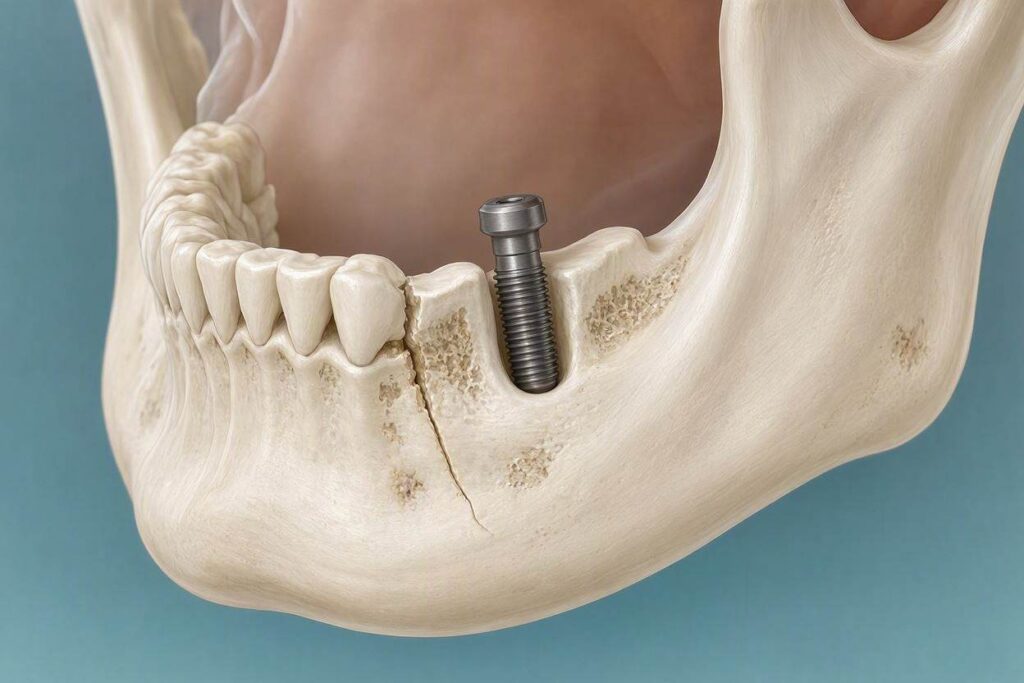
Understanding the Jaw Bone and Dental Implants
The jaw bone provides the foundation for dental implants. When an implant is placed, a hole is drilled into the bone, and the titanium post is inserted. Over time, the implant fuses with the bone through osseointegration.
The jaw bone is strong but not indestructible. It can fracture under extreme force, such as from trauma. The question is whether the presence of a dental implant increases the risk of fracture.
Can a Dental Implant Break the Jaw Bone?
The short answer is that a dental implant itself does not break the jaw bone under normal circumstances. However, certain situations can increase the risk of jaw fracture, both during surgery and after the implant has healed.
During Surgery
During implant placement, the dentist drills into the jaw bone. If the bone is very thin or if excessive force is used, the bone can crack or fracture. This is a rare complication, but it can occur, especially in patients with significant bone loss.
After Healing
Once the implant has integrated with the bone, it becomes part of the bone structure. The implant itself is strong and does not break. However, the bone around the implant can fracture if subjected to extreme force, such as a blow to the face.
Long-Term Risks
In rare cases, long-term complications like peri-implantitis can weaken the bone around the implant. Severe bone loss from infection can make the jaw more susceptible to fracture.
Risk Factors for Jaw Bone Fracture
Several factors increase the risk of jaw bone fracture related to dental implants.
Insufficient Bone Density
Patients with low bone density or thin jaw bones are at higher risk. The bone may not be strong enough to support the implant, and drilling can cause fractures.
Over-Preparation of the Implant Site
If the dentist drills too aggressively or prepares the implant site too large, the bone can crack. This is why precise surgical technique is essential.
Excessive Force During Placement
Applying too much force when inserting the implant can cause the bone to fracture. Experienced implant dentists know how to apply the right amount of pressure.
Trauma After Healing
A significant blow to the face, such as from a car accident or sports injury, can fracture the jaw bone, whether or not implants are present.
Bruxism
Patients who grind their teeth excessively place significant force on their implants and surrounding bone. Over time, this can lead to bone loss and increased fracture risk.
How Common Is Jaw Bone Fracture with Implants?
Jaw bone fracture during or after dental implant placement is rare. Studies report the incidence of mandibular fractures during implant surgery at less than 1%.
During Surgery
Fractures during surgery are most common in the lower jaw, particularly in patients with thin bone or when multiple implants are placed close together.
After Surgery
Fractures after surgery are extremely rare. They usually result from significant trauma rather than normal chewing forces.
Types of Jaw Bone Fractures
Understanding the types of fractures helps explain the risks.
Hairline Fractures
A hairline fracture is a small crack in the bone. It may heal on its own with rest and a soft diet. In some cases, the implant may need to be removed to allow healing.
Complete Fractures
A complete fracture is a break that extends through the entire bone. This is a serious injury that requires surgical repair. The implant may need to be removed.
Pathological Fractures
A pathological fracture occurs in bone weakened by disease, such as severe osteoporosis or a tumor. Implants placed in weakened bone may increase the risk.
How to Minimize the Risk of Jaw Bone Fracture
While the risk of jaw bone fracture is low, there are steps you can take to minimize it further.
Choose an Experienced Provider
Select a dentist or oral surgeon with extensive experience in implant placement. Experienced providers use precise techniques that reduce the risk of complications.
Get a Thorough Evaluation
Before implant placement, your dentist should perform a comprehensive evaluation, including 3D imaging. This allows them to assess bone density and plan the implant placement precisely.
Address Bone Loss
If you have insufficient bone, your dentist may recommend bone grafting before implant placement. This strengthens the bone and reduces fracture risk.
Manage Bruxism
If you grind your teeth, wear a night guard to protect your implants and surrounding bone. This reduces the force placed on the bone.
Avoid Trauma
Wear a mouthguard during sports. Avoid activities that put your face at risk of injury.
Maintain Good Oral Health
Prevent peri-implantitis by brushing, flossing, and visiting your dentist regularly. Healthy bone around the implant is less susceptible to fracture.
Signs of a Potential Problem
If you experience any of the following symptoms after implant placement, contact your dentist immediately.
Severe Pain
Some discomfort after surgery is normal. However, severe or worsening pain may indicate a problem, including a fracture.
Swelling or Bruising
Significant swelling or bruising that does not improve may indicate a complication.
Difficulty Opening or Closing Your Mouth
If you have difficulty moving your jaw, this could indicate a fracture or other problem.
Numbness
Numbness in the lip, chin, or tongue can indicate nerve damage or a fracture affecting the nerve.
Implant Mobility
A properly integrated implant should be stable. If the implant feels loose, contact your dentist.
Important Notes for Patients
- Jaw bone fracture from dental implants is rare but possible.
- The risk is highest during surgery in patients with thin bone.
- Choosing an experienced provider reduces the risk significantly.
- Trauma after healing is the most common cause of jaw fractures, with or without implants.
- Good oral health and management of bruxism protect the bone around implants.
Frequently Asked Questions
Can a dental implant crack your jaw?
Yes, in rare cases, the jaw bone can crack during implant placement, especially if the bone is thin or excessive force is used. This is an uncommon complication.
How common is jaw fracture during implant surgery?
Jaw fracture during implant surgery occurs in less than 1% of cases. It is more common in the lower jaw of patients with thin bone.
Can I break my jaw after getting dental implants?
Yes, but only with significant trauma, such as a blow to the face. Normal chewing does not break the jaw, even with implants.
What are the signs of a jaw fracture after implant surgery?
Signs include severe pain, swelling, difficulty moving the jaw, numbness, and implant mobility. Contact your dentist immediately if you experience these symptoms.
Can a dental implant cause bone loss that leads to fracture?
Peri-implantitis, a form of gum disease around implants, can cause bone loss. Severe bone loss can weaken the jaw and increase fracture risk. Good oral hygiene prevents this.
Is it safe to get dental implants if I have osteoporosis?
Patients with osteoporosis can get dental implants, but they should be evaluated carefully. Bone density medications may affect healing. Discuss your condition with your dentist.
Can grinding my teeth break my dental implant?
Teeth grinding does not typically break the implant itself, but it can cause bone loss around the implant over time. Wearing a night guard protects the bone.
What happens if my jaw breaks during implant surgery?
If a fracture occurs during surgery, the dentist will stabilize the bone. The implant may need to be removed. The bone typically heals with proper treatment.
Conclusion
A dental implant does not break the jaw bone under normal circumstances. However, jaw fractures can occur in rare cases during surgery, particularly in patients with thin bone. After healing, fractures only occur with significant trauma. Choosing an experienced provider, addressing bone loss, and maintaining good oral health minimize the risk. If you experience signs of a problem, contact your dentist immediately.
Additional Resource
For more information on dental implant safety and finding a qualified provider, visit the American Association of Oral and Maxillofacial Surgeons at www.aaoms.org. This professional organization offers patient education resources and a directory of certified oral surgeons.