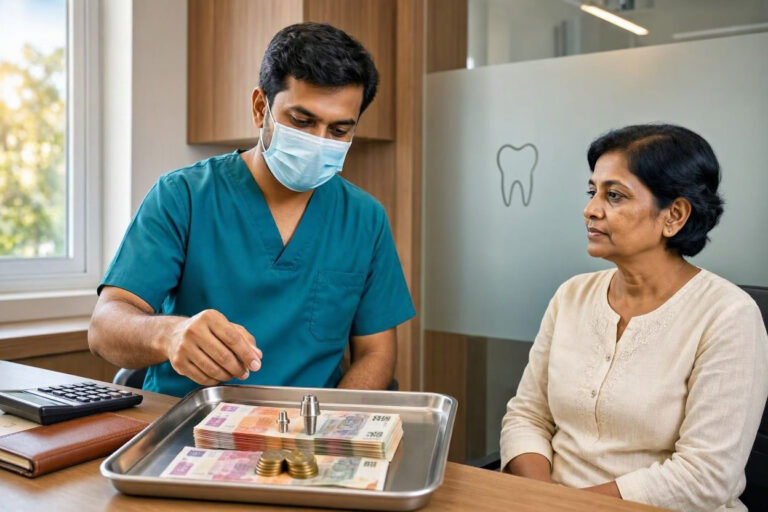
What Is The Cost Of A Dental Implant In Tucson?
A single dental implant in Tucson typically costs between $3,000 and $6,000. This price usually includes the implant post, the abutment, and the crown. If you need bone grafting or a sinus lift, add $500 to $3,000. Full-mouth implant solutions range from $20,000 to $60,000 or more. The final price depends on the dentist you choose, the materials used, your insurance coverage, and the complexity of your case. This guide breaks down the real costs in Tucson, Arizona, and shows you how to save money without sacrificing quality.

Why Dental Implants Are Popular In Tucson
Tucson is a vibrant city with a growing population. Many residents want a permanent solution for missing teeth. Dental implants look, feel, and function like natural teeth. They also help preserve jawbone density and prevent facial collapse. Unlike bridges, implants do not require grinding down healthy neighboring teeth. That is why more and more people in Tucson are choosing implants over other tooth replacement options.
The cost of implants in Tucson is generally lower than in Phoenix or Scottsdale. However, it is still a significant investment. Understanding the local market helps you plan your budget and avoid surprises.
Types Of Dental Implants And Their Costs In Tucson
Dentists in Tucson offer several implant options. Each has a different price, complexity, and purpose. Here is a comparison.
| Type of Implant | Typical Cost in Tucson | How Long It Lasts | Best For |
|---|---|---|---|
| Single implant (post + abutment + crown) | $3,000–$6,000 | 20+ years | One missing tooth |
| Multiple implants (2–4 teeth) | $6,000–$20,000 | 20+ years | Several missing teeth |
| Full-arch fixed implant bridge (All-on-4) | $20,000–$35,000 per arch | 20+ years | Full arch replacement |
| Full-mouth implants (both arches) | $40,000–$60,000+ | 20+ years | Complete smile restoration |
| Mini implants (for denture stabilization) | $1,500–$4,000 | 10–15 years | Loose dentures |
| Zygomatic implants | $20,000–$40,000 | 20+ years | Severe bone loss |
Single implants are the most common. They replace one tooth. Multiple implants replace several teeth. Full-arch solutions like All-on-4 use four implants to support a full bridge. Mini implants are smaller and used to anchor dentures. Zygomatic implants are anchored in the cheekbone and are used when there is not enough jawbone for standard implants.
Typical Cost Ranges In Tucson
Prices vary by clinic and neighborhood. Here is a realistic breakdown for Tucson in 2025.
| Procedure | Low Estimate | Average Estimate | High Estimate |
|---|---|---|---|
| Single implant (all-inclusive) | $3,000 | $4,500 | $6,000 |
| Implant post only | $1,500 | $2,500 | $3,500 |
| Abutment and crown | $1,500 | $2,500 | $3,500 |
| Bone grafting (minor) | $500 | $1,000 | $1,500 |
| Bone grafting (major) | $1,500 | $2,500 | $3,000 |
| Sinus lift | $1,500 | $2,500 | $3,500 |
| Sedation (IV) | $500 | $800 | $1,200 |
| CT scan (3D imaging) | $200 | $400 | $600 |
| Extraction (if needed) | $150 | $300 | $500 |
These prices usually include the dentist’s time, lab work, and the implant components. They may not include the initial exam, X-rays, or follow-up visits. Always ask for a written estimate before treatment.
What Affects The Price In Tucson?
Many factors change the final cost. Knowing them helps you compare quotes fairly.
Dentist’s Experience And Specialty
A general dentist may charge less than a periodontist or oral surgeon. Specialists have advanced training in implant placement. They often charge higher fees. A dentist with many years of experience and a strong reputation may also charge more. Some clinics in Tucson offer lower prices to attract new patients.
Location Within Tucson
A clinic in a wealthy area like the Foothills or Oro Valley may charge more than one in Midtown or South Tucson. Rent, salaries, and overhead vary by neighborhood. You may pay 20–30% more for the same procedure in a high-end area.
Implant Brand And Materials
Nobel Biocare, Straumann, and Zimmer are premium implant brands. They cost more but have a long track record. Generic or “house brand” implants are cheaper but may have fewer long-term studies. The crown material also matters. Porcelain fused to metal is cheaper. Full zirconia or lithium disilicate crowns cost more but look better.
Bone Grafting And Sinus Lifts
Many patients in Tucson need bone grafting before implants. Bone loss is common after tooth extraction. If the bone is too thin, the implant cannot be placed safely. A sinus lift may be needed for upper back teeth. These procedures add $500 to $3,500 to the total bill.
Sedation And Comfort Options
Some patients need sedation to manage anxiety. IV sedation, oral sedation, or nitrous oxide add to the cost. IV sedation is the most expensive, ranging from $500 to $1,200 per session. Local anesthesia is usually included in the implant fee.
Insurance Coverage
Dental insurance often covers part of the implant cost. Many plans pay 50% for the crown and 50% for the implant placement. Annual maximums of $1,000–$2,000 apply. Some plans exclude implants entirely. Medicare generally does not cover implants. Medicaid in Arizona may cover implants in certain cases. Always check with your insurance company before treatment.
How The Process Works In Tucson
Knowing the steps helps you understand where your money goes.
- Consultation and exam. The dentist checks your teeth and gums. X-rays and a CT scan may be needed. Cost: $100–$400.
- Treatment planning. The dentist designs your implant plan. This may include a surgical guide. Cost: $200–$500.
- Bone grafting (if needed). The dentist adds bone material to the jaw. This must heal for 3–6 months. Cost: $500–$3,000.
- Implant placement. The dentist surgically places the implant post in the jaw. Cost: $1,500–$3,500.
- Healing period. The implant fuses with the bone. This takes 3–6 months. Cost: included.
- Abutment placement. The dentist attaches the abutment to the implant. Cost: $500–$1,000.
- Crown placement. The dentist makes and attaches the custom crown. Cost: $1,000–$2,500.
- Follow-up. You may need one or two visits to check the fit. Cost: usually included.
Some dentists offer same-day implants. Others use a two-stage approach. The process affects the total price.
How To Save Money On Dental Implants In Tucson
You do not have to pay the highest price. Here are practical ways to lower your costs.
- Ask for a cash discount. Many dentists in Tucson offer 5–10% off if you pay upfront.
- Use a dental school. The Arizona School of Dentistry & Oral Health in Mesa offers low-cost implant care. Students work under close supervision.
- Compare at least three quotes. Call different offices in Tucson and ask for a written estimate for the same service.
- Choose a single-stage implant. Some implants can be placed and restored in one visit. This saves time and money.
- Consider mini implants for dentures. They are cheaper than full-size implants and can stabilize loose dentures.
- Check your insurance. Even if your plan does not cover implants, it may cover the exam, X-rays, or crown.
- Use an HSA or FSA. Health savings accounts and flexible spending accounts let you pay with pre-tax dollars.
- Ask about payment plans. Many Tucson offices offer zero-interest financing for 6–12 months.
- Negotiate. Do not be afraid to ask for a lower fee or a bundled price for multiple implants.
- Consider dental tourism. Many Tucson residents travel to Los Algodones, Mexico, for cheaper implants. The cost can be 50% lower. Research the dentist carefully.
Important note: Do not choose a dentist based only on price. Poorly placed implants can fail, cause infection, and damage your jawbone. Quality matters. A cheap implant that needs to be replaced in two years is not a bargain.
Real-World Examples
Example 1: Single implant in Midtown Tucson.
A patient needs one implant for a missing molar. The dentist is a general dentist. The total cost is $4,200. Insurance pays 50% after a $50 deductible. The patient pays $2,100.
Example 2: Two implants in Oro Valley.
A patient needs two implants for missing premolars. The dentist is a periodontist. The total cost is $9,500. Insurance pays 50% up to an annual maximum of $2,000. The patient pays $7,500.
Example 3: All-on-4 in South Tucson.
A patient needs a full-arch restoration. The dentist uses the All-on-4 technique. The total cost is $24,000. Insurance does not cover it. The patient travels to Los Algodones for the same procedure at $12,000. The patient pays the full amount and saves $12,000.
These examples show how much prices can vary. Your own quote will depend on your unique needs.
Quotations From Dental Professionals In Tucson
“Patients often ask me about the cheapest implant. I tell them that the implant itself is only part of the cost. The dentist’s skill and the quality of the crown matter just as much. A bargain implant can end up costing more in repairs.” — Dr. Michael R., general dentist in Tucson.
“I recommend a CT scan before any implant. It helps me see the bone density and avoid nerves. Skipping this step to save money is dangerous.” — Dr. Lisa M., periodontist in Tucson.
Frequently Asked Questions
How long do dental implants last in Tucson?
With good oral hygiene and regular dental visits, implants can last 20 years or more. The crown may need to be replaced after 10–15 years.
Does getting a dental implant hurt?
The procedure is not painful because the dentist uses local anesthesia or sedation. You may feel mild soreness afterward. This usually goes away in a few days.
Can I eat with a dental implant?
Yes. Once the implant has healed and the crown is placed, you can eat most foods. Avoid biting on very hard objects like ice or pens.
Will my insurance pay for a dental implant in Tucson?
Many dental plans cover part of the cost. They may pay 50% for the implant and 50% for the crown. Annual maximums apply. Check with your insurance company.
What if I do not have enough bone for an implant?
You may need bone grafting or a sinus lift. These procedures add to the cost but make the implant possible. Some patients may need zygomatic implants instead.
How long does the whole process take?
The process usually takes 3–6 months for healing, plus additional visits for the abutment and crown. Some cases take longer if bone grafting is needed.
Can I get a dental implant if I smoke?
Smoking increases the risk of implant failure. Your dentist will advise you to quit before and after surgery. Some dentists may refuse to place implants in heavy smokers.
What is the difference between a dental implant and a bridge?
An implant replaces the tooth root and does not affect neighboring teeth. A bridge requires grinding down healthy teeth. Implants are more expensive but often a better long-term solution.
How do I care for my dental implant?
Brush and floss around the implant just like your natural teeth. Use a soft toothbrush and mild toothpaste. Visit your dentist every six months for a checkup.
Are mini implants a good option?
Mini implants are cheaper and less invasive. They are often used to stabilize dentures. They may not be as strong as full-size implants for replacing individual teeth.
Additional Resources
For more information on dental implants and costs in Tucson, visit the Arizona Dental Association at azdental.org. You can also check with the American Academy of Implant Dentistry at aaid.com for a list of qualified implant dentists.
Conclusion
A single dental implant in Tucson costs between $3,000 and $6,000, with full-mouth solutions ranging from $20,000 to $60,000. The price depends on the dentist, materials, bone grafting, and insurance. Always get a written estimate and choose a qualified provider. With careful planning, you can restore your smile without breaking your budget.