Are The Screws On Dental Implants Hidden?
When you look at a beautiful smile restored with dental implants, you see the white teeth and the pink gums. You do not see the metal. You do not see the screws. This creates a common question among patients considering the procedure: Are the screws on dental implants hidden?
It is a perfectly logical question. No one wants a metal bolt sticking out of their tooth. The idea of having a screw in your mouth sounds industrial and uncomfortable. But the reality of modern dentistry is much more sophisticated.
The short answer is yes. The screws are completely hidden from view. Whether you have a single crown or a full set of implant dentures, the hardware is buried inside the restoration or under the gum line. You cannot see it, and neither can anyone else.
However, the way these screws are hidden depends heavily on the type of restoration you have. There is a difference between the “screw” that is the implant itself and the “screw” that holds the tooth to the implant. Let’s break down how this works and why you should not worry about visible metal.
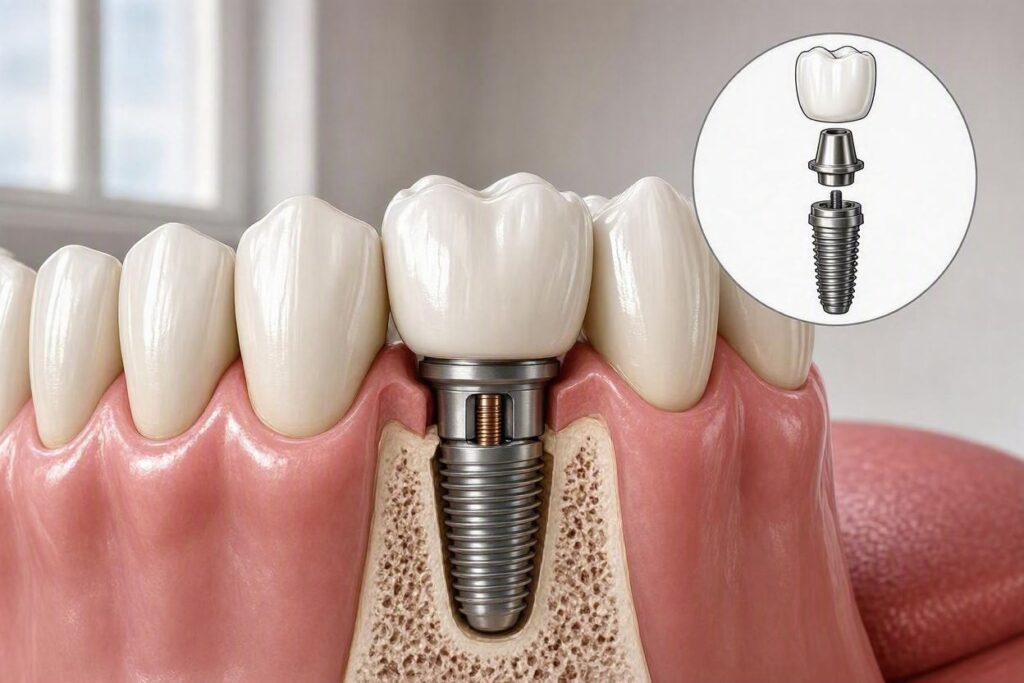
Understanding the Different Types of “Screws”
To understand what is hidden, you need to understand the components of a dental implant. Many people use the word “screw” to describe everything, but in dentistry, each part has a specific name and function.
There are generally three distinct parts:
- The Implant Fixture: This is the actual “screw” that goes into the bone. It is threaded like a screw because those threads help it grip the jawbone. It is entirely submerged below the gum line.
- The Abutment: This is a connector piece. It screws into the implant fixture and sticks up through the gum. You could think of it as a stub that the final tooth will sit on.
- The Prosthesis (The Crown/Denture): This is the white tooth part that you see.
The “hiding” of the hardware happens in the connection between these parts.
The Implant Fixture: Buried in Bone
The actual implant post is never visible. Once the surgery is complete and the gum tissue heals, the implant is completely covered by the gum. It is hidden inside your jawbone.
You will not feel it. You will not see it. It functions as the root of the tooth. The only time this part is visible is if a surgical complication occurs, such as severe gum recession, which is rare with proper care.
The Abutment: The Transition Point
The abutment is the unsung hero of the implant system. It is usually made of titanium, zirconia, or gold. One end fits into the implant fixture; the other end looks like a small, prepared tooth stump.
In most cases, the abutment is designed to mimic the shape of a natural tooth that has been filed down for a crown. The gum tissue grows around the base of the abutment, creating a natural “collar” of tissue. This seals out bacteria and hides the metal underneath.
The Crown: The Camouflage
The crown (the fake tooth) is the final layer. It is either cemented onto the abutment or screwed through the abutment.
This is where the “hidden screw” question becomes interesting. Let’s look at the two primary methods of attaching the tooth.
Cement-Retained vs. Screw-Retained Restorations
There are two main ways a dentist attaches the visible tooth to the hidden implant. Both methods hide the hardware, but they hide it in different ways.
Method 1: Cement-Retained (Hidden Hardware)
In this traditional method, the dentist:
- Screws the abutment into the implant.
- Places the ceramic crown over the abutment.
- Glues (cements) the crown onto the abutment.
Where is the screw?
The screw that holds the abutment is hidden inside the crown. It is completely sealed off. There is no visible hole.
Why do some dentists prefer this?
- Aesthetics: The top of the tooth is completely solid porcelain. There is no risk of a shadow or a grey spot showing through the top of the tooth.
- Simplicity: It is very similar to how traditional dental crowns are made, so the lab work is standard.
- Passive Fit: If the implant is slightly angled, the crown can compensate easier.
The Downside:
If the abutment screw ever loosens or the implant gets infected, the dentist must cut the crown off to access the screw. This usually means the crown is destroyed and must be remade.
Method 2: Screw-Retained (Access Hole)
In this modern method, the dentist:
- Screws the abutment onto the crown outside of the mouth.
- Places the entire unit (crown + abutment) into the mouth.
- Inserts a small screw through the top (or back) of the crown, securing it to the implant.
Where is the screw?
The screw is hidden in a small “chimney” or “access hole” that runs through the crown. The dentist fills this hole with a soft filling material (usually Teflon tape or cotton) and then seals it with a tooth-colored composite resin.
Why do many specialists prefer this?
- Retrievability: This is the big one. If something goes wrong—if the porcelain chips or the screw loosens—the dentist can simply scrape out the filling material, access the screw, and remove the crown without breaking it. This makes maintenance much easier and cheaper.
- No Cement Trapping: Sometimes, excess cement gets trapped under the gum, causing “peri-implantitis” (gum disease around the implant). Screw-retained restorations eliminate this risk.
The Downside:
The access hole is usually on the “biting surface” of the tooth. While it is filled with tooth-colored material, it is technically a “weak spot” in the porcelain. If the bite forces are too heavy, the porcelain can fracture around the hole.
How Do They Hide Screws on Full Dentures (All-on-4)?
When you have a full arch of teeth (a denture) supported by implants, the hiding process is slightly different. The denture is usually made of a metal bar (titanium) covered in pink acrylic (the fake gums) and white teeth.
Here is how the hardware is concealed:
- The Implants: Buried in the bone, as usual.
- The Multi-Unit Abutments: These are special posts that screw into the implants. They stick up above the gum line.
- The Denture: The denture is lowered onto these posts. Inside the denture, there are “sleeves” or “housings” that fit perfectly over the abutments.
- The Screws: The dentist inserts small screws through the denture into the abutments.
Where are these screws hidden?
The screws go through the pink acrylic (the fake gum) or through the white teeth. Once the screws are tightened, the dentist fills the holes with a light-cured plastic resin.
The Result:
The surface of the denture is smooth. If the screw hole was in a tooth, the dentist shapes the filling to look like the natural grooves of the tooth. If it was in the pink gum, it is polished smooth. It is virtually impossible for a casual observer to see where the screws are.
Can You Feel the Screws?
This is often the next question. If the screws are there, can you feel them with your tongue?
For Single Crowns:
Usually, no. The crown is polished smooth. If the access hole is filled and polished correctly, your tongue will not detect it. You should not feel any roughness or sharpness.
For Full Dentures:
Because the palate (roof of the mouth) is often open in a fixed implant bridge, your tongue has more room. The surface of the denture where the screws are located is smooth. However, if the dentist leaves a rough edge or does not polish the resin properly, it can irritate the tongue. This is a quality issue, not a design flaw.
Important Note: If you ever feel a sharp edge, a rough spot, or a hole on your implant tooth, contact your dentist immediately. The filling material may have fallen out. Leaving the screw hole open allows food and bacteria to get inside the implant, which can cause bad breath and infection. It also allows the screw to loosen.
The Aesthetic Concern: Will the Metal Show Through?
One of the biggest fears patients have is the “grey gum” effect. This happens when the titanium implant or abutment casts a shadow through the gum tissue.
Why this happens:
Gum tissue is translucent. If you have thin gums, or if the implant is placed too far forward, the dark metal can show through as a grey line at the gum line.
How dentists hide the metal:
This is a major concern for front teeth. To combat this, dentists now use Zirconia (Ceramic) Implants or Zirconia Abutments.
- Titanium: Strong, proven, but dark grey.
- Zirconia: White, very strong, and looks like a natural tooth root.
If you are replacing a front tooth, it is often worth paying extra for a zirconia abutment. It ensures that even if the gum recedes slightly or is thin, the only thing you will see is white, not metal. This is the ultimate “hiding” of the hardware.
The Risk of Screws Loosening
Even though they are hidden, screws can sometimes loosen. This is not necessarily a failure of the product; it is physics. When you chew, you put massive force on the teeth. Vibration can cause screws to back out slightly.
If a screw loosens:
- The crown or denture may feel “spongy” or wobbly.
- You might hear a clicking sound.
- The gum might become irritated because the loose crown is moving against it.
What to do:
Do not ignore it. A loose screw is like a loose lug nut on a car wheel. If it continues to move, it will eventually break. If the screw breaks inside the implant, it is a very difficult and expensive repair.
Return to your dentist. They will:
- Remove the filling from the access hole.
- Retrieve the loose screw.
- Check the fit.
- Replace the screw (often with a new one, as they are cheap insurance).
- Re-torque it to the correct pressure (measured in Newton centimeters).
- Re-seal the hole.
This is why many dentists prefer screw-retained restorations. It makes dealing with this common issue a minor inconvenience rather than a major surgery.
Summary
So, are the screws on dental implants hidden?
Yes, completely. The engineering of modern dental restorations is designed around invisibility. The screws are either buried inside the tooth structure, covered with resin fillings, or sealed under the gum line.
The only time you will see a screw is if:
- You are looking in a mirror with the crown removed.
- You are looking at a model of an implant in a dental office.
You can eat, smile, laugh, and kiss with confidence. The hardware is there to hold things together, but it remains invisible to the outside world.
Frequently Asked Questions
Q: Does the screw hole in a crown smell?
A: It should not. If the access hole is sealed properly, there is no space for bacteria. If you notice a bad odor or taste coming from a specific implant crown, it likely means the seal has failed or the screw is loose and fluid is seeping in. See your dentist.
Q: Are the screws in implant dentures noticeable to the tongue?
A: In a high-quality restoration, no. The surface should be flush and smooth. If you feel a dip or a rough patch, the dentist needs to repolish or refill the area.
Q: Do the screws ever come out of the bone?
A: This is called implant failure. The screw (implant fixture) is fused to the bone. It should not come out unless there is severe infection or trauma.
Q: Can an MRI be done with dental implant screws?
A: Yes. Titanium and zirconia are non-ferromagnetic (they are not magnetic). They will not be pulled out by an MRI machine. However, they can sometimes distort the image of the brain or neck on the scan, so always tell the technician you have implants.
Additional Resource:
To see visual diagrams of how abutments and screws fit together, you can visit the American Dental Association’s patient resource library at https://www.mouthhealthy.org/.