Should Seniors Get Dental Implants?
Age brings wisdom, experience, and unfortunately, often a higher risk of dental problems. Tooth loss is more common in older adults. By the time many people reach their 60s and 70s, they are missing several teeth or are struggling with ill-fitting dentures. This leads to an important question: “Should seniors get dental implants?” The answer, in most cases, is a resounding yes. Age alone is not a barrier to dental implants. In fact, seniors often have the most to gain from this life-changing treatment. This guide will explore the benefits, the specific considerations, and the factors that determine candidacy for older adults.
Dispelling the Myth: You Are Not “Too Old” for Implants
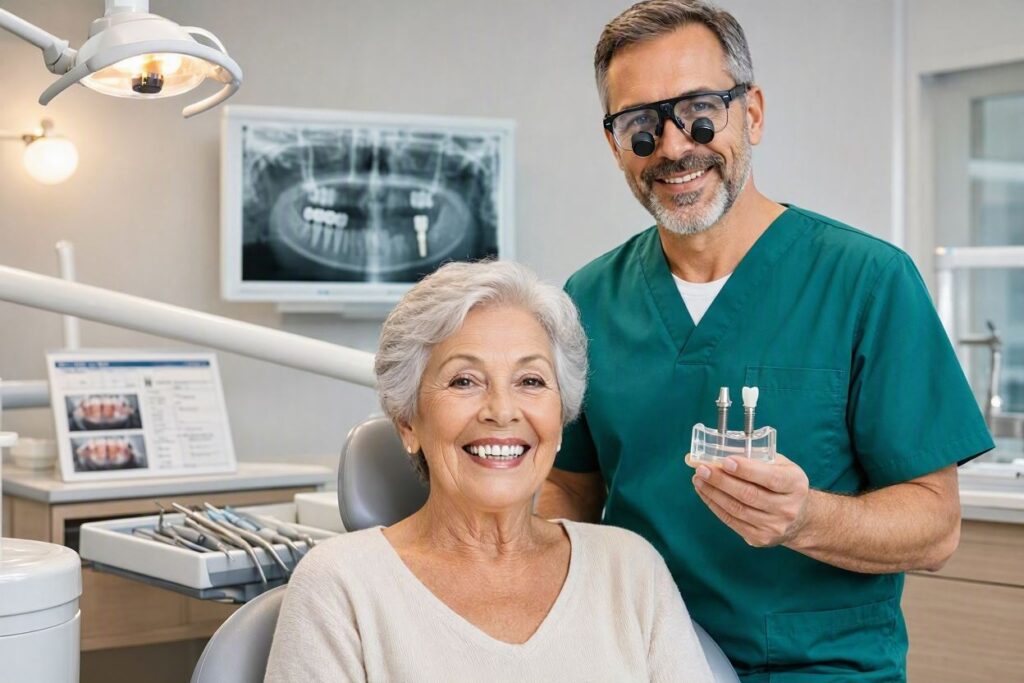
One of the most persistent myths in dentistry is that dental implants are only for younger people. This is simply not true. There is no upper age limit for dental implants.
The key factor is not your chronological age, but your overall health. A healthy 80-year-old can be an excellent candidate for implants, while an unhealthy 50-year-old might not be. The success rate of dental implants in older adults is comparable to that of younger patients.
The Unique Benefits for Seniors
Seniors often experience the consequences of tooth loss more acutely than younger people. This makes the benefits of implants even more profound.
1. Improved Nutrition and Overall Health
This is perhaps the most important benefit for seniors. Missing teeth or unstable dentures make it difficult to chew. Many seniors restrict their diets to soft, processed foods that are easy to eat but lack essential nutrients. They may avoid fruits, vegetables, and lean meats. This can lead to malnutrition, weight loss, and a decline in overall health.
Dental implants restore nearly full chewing power. Seniors with implants can eat a balanced, healthy diet again. They can enjoy salads, apples, and steak. This has a direct and positive impact on their physical health, energy levels, and immune function.
2. Enhanced Quality of Life and Social Confidence
Tooth loss and dentures can be socially isolating. Seniors may feel embarrassed to smile, laugh, or eat in public. They may withdraw from social activities. Dentures can slip at inopportune moments, causing anxiety and embarrassment.
Dental implants provide a permanent, stable solution. They look and feel like natural teeth. Seniors can smile with confidence, speak clearly, and enjoy social gatherings without worry. This has a significant impact on their mental and emotional well-being.
3. Preservation of Jawbone and Facial Structure
Bone loss is a natural consequence of tooth loss. Over time, the jawbone shrinks. This can lead to a “sunken in” facial appearance, making a person look older than they are. Dentures accelerate this process because they do not stimulate the bone.
Dental implants act like natural tooth roots. They stimulate the jawbone and prevent bone resorption. This helps preserve the natural contours of the face and maintains a more youthful appearance.
4. Long-Term Cost-Effectiveness
While the upfront cost of implants is higher, they can be more cost-effective in the long run. Dentures require ongoing maintenance, relines, and replacement. Adhesives are a recurring expense. Implants, with proper care, can last a lifetime. For a senior on a fixed income, this long-term value is significant.
Specific Considerations for Seniors
While age is not a barrier, there are health factors that need to be considered more carefully in older adults.
1. Bone Density and Bone Grafting
Seniors are more likely to have experienced bone loss due to years of missing teeth or wearing dentures. This may mean they require a bone graft before an implant can be placed. Bone grafting adds time and cost to the procedure. However, it is often successful, even in older patients. The bone in the jaw is capable of healing at any age, provided the patient is healthy.
2. Chronic Medical Conditions
Certain medical conditions are more common in seniors and can affect healing.
- Diabetes: Well-controlled diabetes is not a contraindication. However, poorly controlled diabetes impairs healing and increases the risk of infection.
- Osteoporosis: This condition weakens bones. It does not necessarily prevent implant placement, but it may affect the density of the jawbone. Medications for osteoporosis (bisphosphonates) can, in rare cases, cause a condition called medication-related osteonecrosis of the jaw (MRONJ). This is a serious complication. Your dentist and physician must communicate about your medications.
- Heart Conditions: If you have a history of heart problems, you may be on blood thinners. Your dentist will need to coordinate with your cardiologist to manage your medications around the time of surgery.
3. Healing Time
Healing may take slightly longer in older adults. The body’s regenerative capacity naturally slows with age. This means the osseointegration process (bone fusing to the implant) might take a few extra weeks. This requires patience, but it does not affect the final outcome.
4. Oral Hygiene Ability
Good oral hygiene is essential for the long-term success of implants. If a senior has limited manual dexterity due to arthritis or other conditions, they may find it difficult to brush and floss effectively. A water flosser can be an excellent tool for these patients. It is important to have a realistic plan for maintaining oral hygiene.
The Alternative: Implant-Supported Dentures
For seniors who are missing all of their teeth, a full set of individual implants is often not necessary. Implant-supported dentures are a more practical and affordable solution.
- Snap-On Dentures: These are removable dentures that snap onto 2-4 implants. They are much more stable than traditional dentures.
- Fixed Hybrid Bridges (All-on-4): These are permanently fixed bridges supported by 4-6 implants. They feel most like natural teeth.
These options provide many of the benefits of implants (stability, bone preservation, improved chewing) with fewer implants and a lower cost.
A Geriatric Dentist’s Perspective
“I have placed implants in patients in their 80s and 90s. The transformation is incredible. They come in malnourished and withdrawn. They leave smiling and eating properly again. It is never too late to improve your quality of life.” – Dr. Harold Green, DDS, Geriatric Dentistry Specialist
Questions Seniors Should Ask Their Dentist
If you are a senior considering dental implants, here are important questions to ask:
- Am I a good candidate for implants given my medical history?
- Do I need a bone graft?
- What are the risks and how can we manage them?
- What type of implant solution is best for me (single implant, implant-supported denture)?
- What will the total cost be, and what financing options are available?
- How will my medications affect the procedure and healing?
- What is the plan for maintaining my oral hygiene after the procedure?
Important Notes for Readers
- Age Is Not a Disease: Do not let your age discourage you from exploring your options. A consultation with an experienced implant dentist is the first step.
- Coordinate Your Care: Your dentist and your physician should communicate. This is especially important if you have chronic medical conditions or take multiple medications.
- The Investment Is in Your Health: Dental implants are not just a cosmetic luxury. For seniors, they are an investment in nutrition, health, and quality of life.
- Choose Experience: Look for a dentist who has experience treating older adults. They will be familiar with the specific challenges and considerations.
The Bottom Line
Should seniors get dental implants? Yes, absolutely. Age alone is not a determining factor. Dental implants offer profound benefits for older adults, including improved nutrition, enhanced quality of life, and preservation of facial structure. While there are specific health considerations to address, most seniors can successfully receive implants. The result is often a dramatic improvement in physical health, mental well-being, and overall happiness.
Frequently Asked Questions (FAQ)
Q: Is there an upper age limit for dental implants?
A: No. There is no upper age limit. The decision is based on overall health, not chronological age. A healthy 85-year-old can be a great candidate.
Q: Can I get dental implants if I have osteoporosis?
A: Yes, in many cases. Osteoporosis does not automatically disqualify you. However, your dentist will need to evaluate your bone density. You should discuss your medications, especially bisphosphonates, with both your dentist and your physician.
Q: Are dental implants safe for seniors with heart conditions?
A: Yes, with proper precautions. Your dentist will coordinate with your cardiologist. You may need to adjust your blood thinner medication around the time of surgery.
Q: What is the most affordable implant option for seniors missing all their teeth?
A: A removable implant-supported denture (Snap-On Denture) is often the most affordable option. It uses fewer implants (usually 2-4) and provides significantly better stability than a traditional denture.
Additional Resource
For information on oral health for older adults, visit the American Dental Association’s MouthHealthy site: https://www.mouthhealthy.org/en/az-topics/a/aging-and-dental-health