How Long Before Dental Implants After Braces?
The journey to a perfect smile often involves multiple steps. For some patients, this journey includes orthodontic treatment (braces or aligners) to straighten their teeth, followed by a dental implant to replace a missing tooth. This is a common and logical sequence. You want your teeth to be in their ideal, final positions before you place a permanent, non-movable implant.
However, this combination of treatments raises a critical question: How long do you have to wait after your braces come off before you can get your dental implant?
The answer is not a simple number of days or weeks. It depends on several factors, including the stability of your teeth, the condition of your bone, and the specific plan your orthodontist and surgeon have developed. This guide will explain the timeline, the reasons for the wait, and what you can expect from the process.
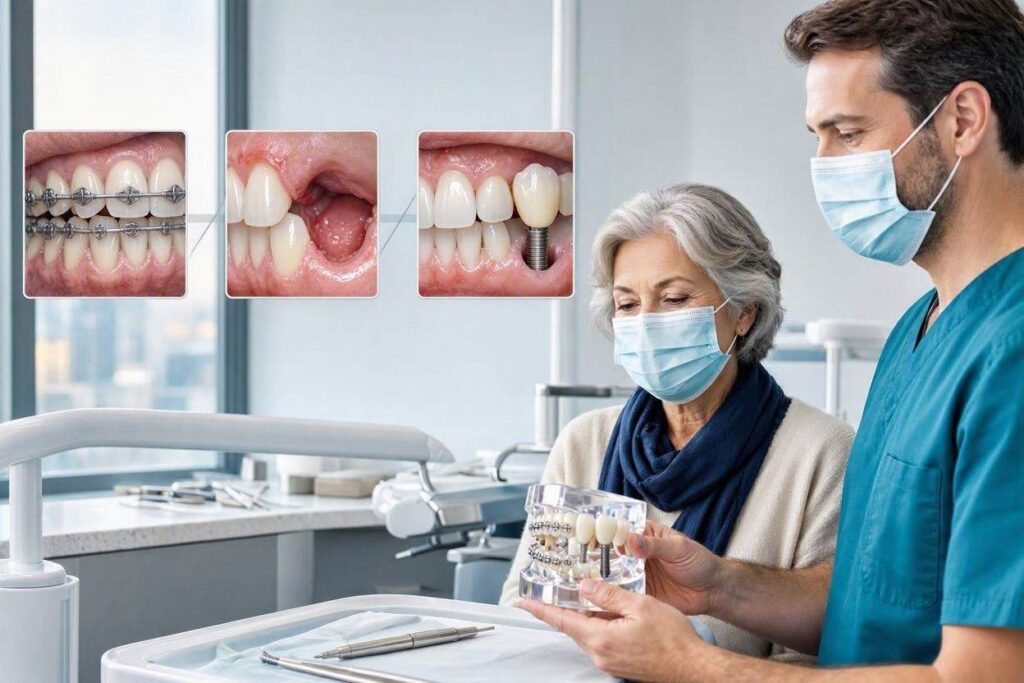
Why the Sequence Matters: Braces First, Implant Later
The order of treatment is crucial. You always move the natural teeth first, then place the implant.
A dental implant is a titanium post that fuses to your jawbone. It is rigid and immovable. It cannot be moved with braces. Natural teeth, on the other hand, can be moved.
If you were to get an implant first, and then get braces, the braces could move the natural teeth, but the implant would stay put. This would lead to misalignment. The implant would be stuck in its old position while the teeth around it shifted.
Therefore, the rule is simple: Orthodontics first. Implant second.
The Timeline: How Long After Braces Do You Wait?
Once your braces are removed, the active movement of your teeth stops. However, the process is not finished. Your teeth need time to stabilize in their new positions.
Here is a general timeline of what to expect:
| Stage | Timeframe | Description |
|---|---|---|
| Braces Removed | Day 0 | Your teeth are straight. You are given a retainer. |
| Initial Stabilization | 1-3 Months | The bone and ligaments around the teeth begin to adapt to the new positions. |
| Implant Consultation & Planning | 3-6 Months | You see the oral surgeon. X-rays and scans are taken to assess bone quality. |
| Implant Surgery | 4-12 Months (after braces) | The implant is placed. |
| Healing (Osseointegration) | 3-6 Months (after surgery) | The bone fuses to the implant. |
| Final Crown Placement | 3-6 Months (after surgery) | The visible tooth is attached. |
In most cases, you will wait between 3 to 6 months after your braces are removed before the implant surgery is performed. This waiting period is essential for success.
The Role of the Retainer
The moment your braces come off, you enter the “retention” phase of orthodontic treatment. You will be given a retainer, which you must wear diligently.
The teeth have a memory. They want to drift back to their original, crooked positions. The retainer holds them in place while the bone and gums stabilize. If you do not wear your retainer, your teeth will shift. If they shift, the space that was planned for your implant may close or change shape, making the implant impossible or more difficult to place.
You must be committed to wearing your retainer full-time during this waiting period.
What Happens During the Waiting Period?
The time between braces removal and implant surgery is not wasted time. It is a period of active planning.
1. The Orthodontist “Opens” the Space
Often, when a tooth is missing, the adjacent teeth drift into the empty space. The orthodontist’s job is to use braces to move those teeth back and “reopen” the space to its original width. This ensures there is enough room for the implant and the new crown.
2. Monitoring Stability
Your orthodontist will want to see that your teeth are stable. They will check your retainer fit and ensure the space is not closing.
3. Referral to the Surgeon
Once the orthodontist is satisfied that the teeth are stable, they will refer you to an oral surgeon or periodontist. The surgeon will take a 3D X-ray (CBCT scan) to evaluate the bone density and volume in the area of the missing tooth.
4. The Surgical Plan
Based on the scan, the surgeon will determine if you need a bone graft. If you have been missing the tooth for a long time, the bone may have shrunk. A bone graft may be required to build up the bone before the implant can be placed.
Can You Get the Implant Immediately After Braces?
Some patients are eager to finish their treatment and ask if the implant can be placed the very day the braces come off. In almost all cases, the answer is no.
Placing an implant too soon is risky because the bone around the newly moved teeth is still soft and remodeling. There is also a risk that the teeth will shift slightly during the healing phase, which could put pressure on the new implant. The 3-6 month waiting period allows the bone to harden and the teeth to settle into their final, stable positions.
The “Temporary Tooth” Solution
Waiting several months with a visible gap in your smile can be a concern, especially for front teeth. Your dental team has a solution: a temporary tooth.
- A Flipper: A removable partial denture with a single fake tooth. It is cheap and easy to make. You pop it in and out.
- A Bonded Bridge (Maryland Bridge): A fake tooth is attached to the back of the adjacent teeth with a resin cement. It is fixed and looks natural.
- A Retainer with a Tooth: Sometimes, your orthodontic retainer can be designed with a fake tooth attached to it. This holds your teeth in place and fills the gap simultaneously. This is a very elegant solution.
Your orthodontist will discuss the best temporary option for your situation.
The Benefits of a Combined Orthodontic and Implant Plan
While the combined treatment time might seem long (braces for 1-2 years, waiting for 3-6 months, implant healing for 3-6 months), the end result is worth the wait. You achieve a smile that is both straight and complete. The implant is placed in the ideal position, and the bite is perfectly aligned. This maximizes the longevity of both your orthodontic work and your implant.
Conclusion
The standard wait time for a dental implant after braces is between 3 and 6 months. This period allows your teeth and bone to stabilize in their new positions. Rushing the process can compromise both the orthodontic result and the success of the implant. By following the recommended timeline, you ensure that your investment in a beautiful smile is a lasting one.
Frequently Asked Questions (FAQ)
Q: Can I get braces if I already have a dental implant?
A: Yes, but it is more complicated. The implant will not move. The orthodontist must plan the treatment around the implant, using it as a fixed anchor point. This is often done, but the sequence is easier if you do the braces first.
Q: Will the space for my implant close up while I wait?
A: No. Your orthodontist will provide a retainer that maintains the space. It is your responsibility to wear the retainer as instructed.
Q: Do I need a bone graft if I had braces?
A: It depends on how long the tooth has been missing and the natural bone density in that area. The surgeon will evaluate this with a 3D scan. Braces do not eliminate the need for a bone graft if significant bone loss has occurred.
Q: Can I get a temporary tooth while I wait for the implant?
A: Yes. Options include a flipper (removable) or a bonded bridge (fixed). In many cases, the orthodontic retainer can be made with a tooth attached to fill the gap.
Q: How do I find a dentist who does both braces and implants?
A: Typically, two different specialists are involved: an orthodontist (for braces) and an oral surgeon or periodontist (for the implant). They will often work as a team. Your orthodontist can refer you to a trusted surgeon.
Additional Resource:
For more information on the coordination of orthodontic and restorative care, you can visit the American Association of Orthodontists (AAO): https://aaoinfo.org/